
Reviewed · EL BORN TOURS
El Born – Historic Heart of Barcelona
El Born is where Barcelona’s past feels close enough to touch. This 2.5-hour walk connects the Arc de Triomf, medieval churches, the old market, 1714 memorials, and Ciutadella Park, with a guide turning each stop into part of the city’s larger story.
I like the small-group limit of 15, which makes it easier to hear the guide and ask questions. I also like the mix of grand sights and everyday Barcelona, especially the Santa Caterina Market, where you can buy your own snack or drink and see how the neighborhood eats.
The main drawback is that most food, drinks, and the entrance to Santa Maria del Mar cost extra. The walk also needs good weather, and the 11 a.m. start may not suit you if you prefer cooler mornings or a later city outing.
Key points to know before you book
- The route links major eras: You move from the 1888 Arc de Triomf to medieval churches, Modernist design, the 1714 defeat, and a former fortress turned public park.
- Paulo and Alessio are named guide options: Paulo is described as lively and theatrical, while Alessio brings special attention to food, markets, and local customs.
- Santa Caterina Market is your best food pause: You can stop for tapas or drinks, but these are paid separately.
- The tour ends at Ciutadella Park: This gives you an easy place to continue exploring after the walk.
- The group can reach 15 people: That is still fairly manageable, though it is not a private tour.
- The price is modest for a guided city walk: At $21.63 per person, the value comes from the historical context and local suggestions rather than included admissions or meals.
Why El Born makes a good walking-tour subject
El Born is compact, but its story is not simple. In a few blocks, you encounter religious power, Catalan identity, architectural ambition, war, food culture, and the remains of a medieval city.
That makes this route more useful than a walk that only points out pretty buildings. A guide can explain why the neighborhood looks the way it does, how Barcelona changed after the War of the Spanish Succession, and how old structures now serve modern city life.
I especially like the route’s shape. You begin at the Arc de Triomf and finish inside Ciutadella Park, so the walk has a clear direction rather than circling back to the starting point. You can then continue toward the park, the waterfront, or nearby El Born streets without arranging another transfer.
The guides named for this experience are Paulo and Alessio. Paulo’s approach is energetic and visual. He has used an umbrella as a pretend sword while explaining a battle, which gives you an idea of the lively style you may encounter. Alessio is particularly good for food-focused context, including market traditions and ways to avoid tourist-oriented places.
More El Born Tours in Barcelona:
- Barcelona: El Born and Gothic Quarter Wine & Tapas Bar Tour
★ 4.8 · 674 reviews - Barcelona: El Born Food Walking Tour with Tapas and Drinks
★ 4.9 · 662 reviews - Barcelona Historical Walking Tour: Gothic Quarter and El Born
★ 5.0 · 217 reviews
Arc de Triomf: a strong start at 11 a.m.
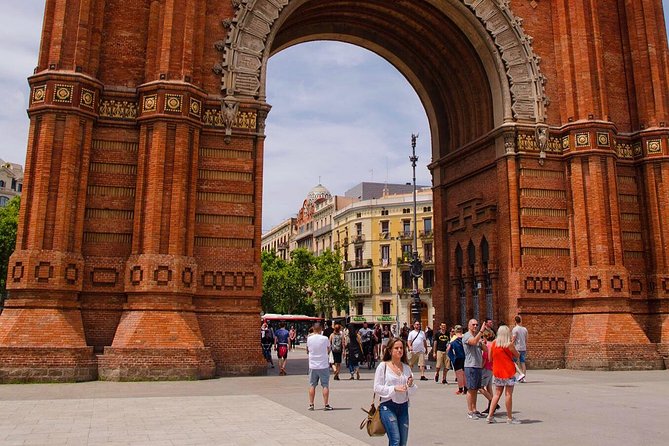
The meeting point is on Passeig de Lluís Companys beside Barcelona’s Arc de Triomf. Built for the 1888 Universal Exposition, the red-brick arch is an excellent first photo stop and a clear marker for the beginning of the old city.
The guide uses the monument to set up the walk. You get an introduction to Barcelona before heading toward El Born, with the arch providing a useful visual link to the city’s period of international ambition.
Allow a few minutes before the official start to find the meeting point and take photographs. The tour begins at 11 a.m., and the promenade offers an open, easy place to gather.
Sant Pere de les Puel·les and medieval Barcelona
The first stop in El Born is the old monastery of Sant Pere de les Puel·les. Its origins reach back to 945, making it one of the clearest points on the route for understanding medieval Barcelona.
The stop is focused on the role of religion in city life. You are not simply looking at an old church. You are considering how monasteries shaped neighborhoods, daily routines, and the power structure of the medieval city.
The visit is listed as an exterior stop with no admission charge. That matters because the tour is designed around explanation and observation rather than a series of paid interior visits.
If you want extensive time inside every church, this walk may feel too brief. Each stop lasts about 20 minutes, so the guide needs to keep the group moving.
The Palace of Catalan Music: Barcelona’s Modernist flourish
The route then reaches the Palace of Catalan Music, one of Barcelona’s best-known Modernist buildings. Its decorative style gives the walk a sharp change of mood after the medieval monastery.
This is a good place to see how Barcelona’s cultural confidence appeared in architecture. The building was created as a musical palace, and its elaborate design reflects the city’s Modernist period.
The tour gives you about 20 minutes here. That is enough for an explanation and photographs, but not a full performance or extended interior visit. The stop works best if you want to understand Barcelona’s architecture in context rather than spend the morning studying one building.
The palace also helps balance the tour. El Born is not presented as a frozen medieval quarter. You see how different periods sit close together, often within a short walk.
More Barcelona History Walks:
- Barcelona: Tapas Walking Tour with Food, Wine, and History
★ 4.8 · 4,261 reviews - Barcelona Tapas Walking Tour: Food, Wine & History
★ 4.5 · 1,928 reviews - Barcelona: 2.5-Hour Bike or E-Bike Historical Tour
★ 4.5 · 1,262 reviews - Barcelona Erotic Museum – Explore Art, History & Fun
★ 4.4 · 450 reviews
Santa Caterina Market: the most practical pause
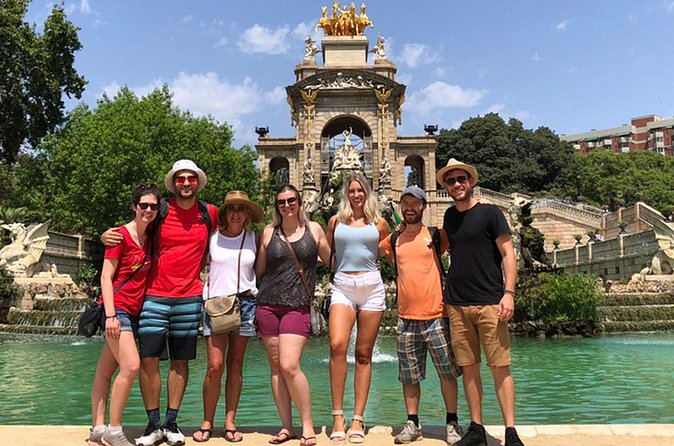
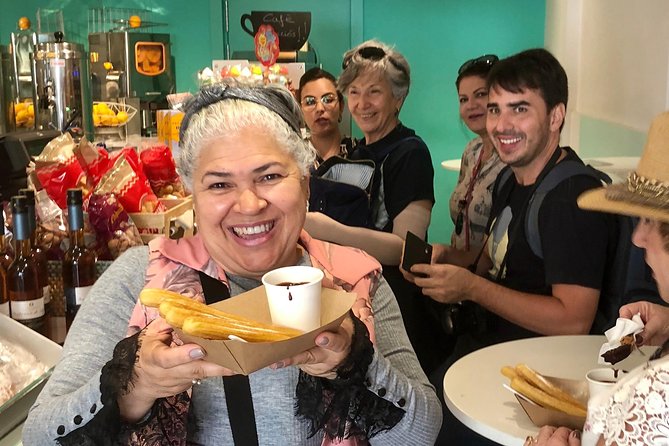
Santa Caterina Market is the route’s most useful break. You can stop for tapas, drinks, or a quick snack, and there is also a chance to use the toilet.
Food is not included, so plan to pay directly for anything you buy. That can be a benefit if you prefer choosing your own portion and price. It also means the final cost depends on how much you eat.
I would save room for a small purchase here rather than treating the market as a full meal stop. The point is as much the local setting as the food itself. Alessio’s market-focused style may be especially useful if you want advice about authentic local eating and avoiding tourist traps.
Keep in mind that a 20-minute stop is short. You may have time for a drink or a small bite, but not an unhurried market lunch. If you have dietary needs, the supplied information does not specify arrangements, so you should plan carefully.
Santa Maria del Mar and the story of perseverance

The Basilica of Santa Maria del Mar is one of the major landmarks in the old town. The guide uses the church to tell a broader story about Barcelona’s perseverance and faith.
This is one of the tour’s strongest history stops because the building gives the subject physical weight. You hear about the city’s past while looking at one of its most important religious buildings.
Admission is not included. The tour schedule allows about 20 minutes, and the visit may focus on the exterior unless you choose to pay for entry. Check the current admission arrangements when booking if entering the basilica is important to you.
For many people, this will be a highlight. It has the scale and presence you expect from a major Barcelona church, while its location in El Born keeps it tied to the neighborhood rather than treating it as an isolated monument.
El Fossar de les Moreres and the events of 1714
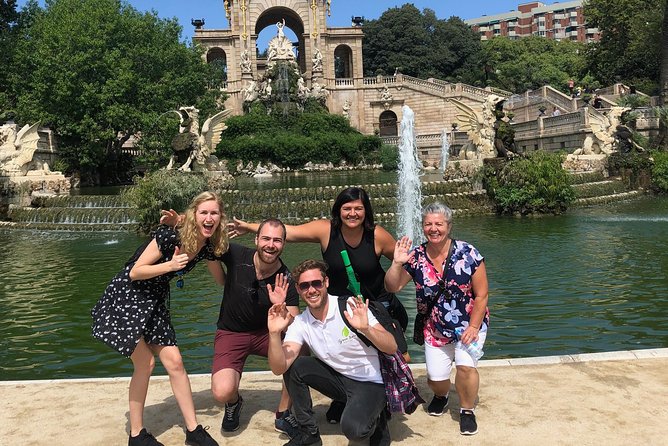
At El Fossar de les Moreres, the route turns toward one of the most important chapters in Catalan memory. The site commemorates the defeat of Barcelona on September 11, 1714, during the War of the Spanish Succession.
This is not a casual photo stop. It is a place where the guide can explain how military defeat, political change, and Catalan identity remain connected in the city.
The stop is free and lasts about 20 minutes. The value comes from having someone explain the meaning of the monument rather than passing it with no context.
This part of the tour may be more serious than the market or architecture stops. That is a strength if you want to understand Barcelona beyond its buildings and food. If you only want light sightseeing, the historical detail may feel heavier than expected.
El Born Centre: medieval ruins beneath a former market

El Born Centre de Cultura i Memòria occupies a former market and preserves remains of medieval Barcelona. It is one of the route’s most useful places for seeing the city beneath the modern streets.
The archaeological remains help connect earlier stories to a physical setting. You can see how the old city existed before later rebuilding changed the neighborhood.
The guide allows about 15 minutes here. That is enough for an introduction and an overview, but not a long museum visit. If you want to examine the displays at length, plan to return on your own.
I like this stop because it brings the route’s history down to street level. Churches and monuments can feel removed from ordinary life. At the Born Centre, the surviving city blocks make the past easier to picture.
Ciutadella Park and the route’s natural finish
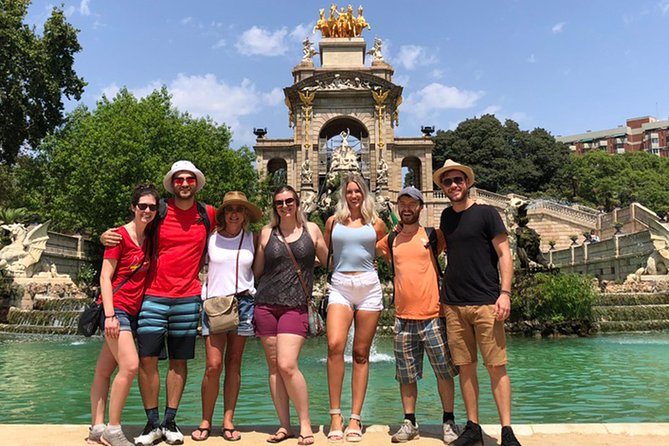
The walk ends in Ciutadella Park, about 15 minutes after the Born Centre. The park occupies the site of an old fortress built after the War of the Spanish Succession and later became a central location for the 1888 Universal Exposition.
That gives the final stop a useful contrast. The tour begins with an exhibition monument and ends in a park shaped by another period of city change.
The end point is on Passeig de Picasso, inside the park area. You are not returned to Arc de Triomf, so remember that when planning the rest of your day. The park provides a pleasant place to continue walking, but the supplied details do not include a planned meal or a final group lunch.
What the $21.63 price really includes
At $21.63 per person, this is a reasonably priced guided introduction to El Born. You are paying mainly for the guide’s storytelling, route planning, historical explanation, photographs and images used during the walk, and a list of restaurant recommendations.
You are not paying for snacks, bottled water, tips, or the basilica admission. Those exclusions keep the basic price low, but you should bring water and a little extra money if you want to eat at Santa Caterina Market or enter Santa Maria del Mar.
The value is strongest if you are new to Barcelona or have already seen the major headline sights and want more context. A guide can connect the city’s architecture, food, and political past in a way that a self-guided map may not.
The value is weaker if you prefer to move at your own pace, spend a long time inside museums, or avoid scheduled stops. With eight planned locations, the route is structured and the timing is fairly firm.
Group size, pace, and practical comfort
The maximum group size is 15. That is small enough for a more personal feel, especially compared with large coach-style outings, though you should not expect a private conversation with the guide at every stop.
Most people can take part, and the meeting point is near public transportation. Service animals are allowed. The supplied details do not give a precise walking distance, so comfortable shoes remain a sensible choice for a 2.5-hour city walk.
The tour requires good weather. If poor weather cancels it, you are offered another date or a full refund. You can also cancel for a full refund up to 24 hours before the start time, while cancellations or changes made later are not refunded.
The experience also needs a minimum number of participants. If that minimum is not reached, you are offered another date or experience, or a full refund.
The tour is offered in English. It is recommended to 100 percent of customers in the supplied booking information and has a 5 rating based on 16 reviews, with especially strong praise for the guides’ enthusiasm, history presentations, local food advice, and small-group atmosphere.
Who will enjoy this El Born walk most?
I would recommend it to you if you want a guided introduction to El Born without spending a full day on a city tour. It suits first-time Barcelona visitors, repeat visitors who want a less familiar neighborhood, and anyone interested in the relationship between architecture, Catalan history, and food.
It is also a good choice if you appreciate an animated guide. Paulo’s style includes stories, gestures, and occasional acting, while Alessio’s approach gives extra attention to markets and eating well.
Families with older children may like the variety. An arch, church, market, ruins, memorial, and park provide more changing scenery than a walk devoted to one subject.
You should think twice if you need extensive interior access, a guaranteed meal, or a slow photographic tour. The schedule gives each place a short window, and extra costs apply at the market and basilica.
Should you book the El Born Historic Heart tour?
Book it if you want a compact, affordable walk that explains why El Born matters. The route does more than string together pretty buildings. It takes you from the 1888 Arc de Triomf through medieval religion, Modernist culture, market life, the memory of 1714, and the former fortress that became Ciutadella Park.
The best reason to go is the guide-led connection between those places. At $21.63, the tour is good value if Paulo or Alessio gives you the lively, story-driven experience described in the available information.
Skip it if your priority is long museum visits or included food. Otherwise, bring water, allow extra money for a snack and possible basilica entry, and meet at Arc de Triomf ready for a brisk morning walk through one of Barcelona’s most rewarding historic districts.
FAQ
How long is the El Born Historic Heart tour?
The tour lasts approximately 2 hours and 30 minutes.
Where does the tour begin?
It begins at Barcelona’s Arc de Triomf on Passeig de Lluís Companys in Ciutat Vella.
Where does the tour end?
It ends inside Ciutadella Park at Passeig de Picasso, 21, near the end of the promenade connecting the park area with Arc de Triomf.
What time does the tour start?
The scheduled start time is 11 a.m.
Are food and drinks included?
No. Snacks, bottled water, tapas, and drinks at Santa Caterina Market are not included. Tips are also not included.
Can I cancel for a full refund?
Yes. You can cancel at least 24 hours before the experience starts for a full refund. Later cancellations and changes are not refunded. If poor weather or an insufficient minimum number of participants causes cancellation, you are offered another date or experience, or a full refund.
Recently added around Barcelona
- Montserrat very early : Hiking, Abbey, very small group★ 5.0 · 127 reviews
- Guided Private Yacht Tour in Barcelona Spain★ 5.0 · 6 reviews
- Private Tour from Barcelona to Montserrat (with guide)★ 4.5 · 6 reviews
- Private Tour from Barcelona to Costa Brava (with guide)★ 5.0 · 5 reviews
- Street Art, Sculptures & Crime Stories Walking Tour – Barcelona★ 5.0 · 11 reviews
- Andorra Tour★ 4.0 · 7 reviews
- Barcelona Gaudi Tour: Sagrada Familia, Casa Batllo & Casa Mila★ 5.0 · 4 reviews
- Wine Tasting in Barcelona (Catalan Varieties) Small Groups★ 5.0 · 10 reviews
El Born Tours, compared.
El Born and Gothic Quarter Wine & Tapas Bar Tour
Read our review →
El Born Food Walking Tour with Tapas and Drinks
Read our review →
Barcelona Historical Walking Tour: Gothic Quarter and El Born
Read our review →
Luca’s Hidden Old Barcelona: the Gothic and El Born Tour
Read our review →
The Timeless Beauty of Barcelona’s Gothic and Born Quarters
Read our review →
Photo Walking Tour Barcelona Cathedral Gothic Quarter El Born
Read our review →Browse the lists this tour appears in