
Reviewed · EL BORN TOURS
Barcelona: El Born Ghost Walking Tour.
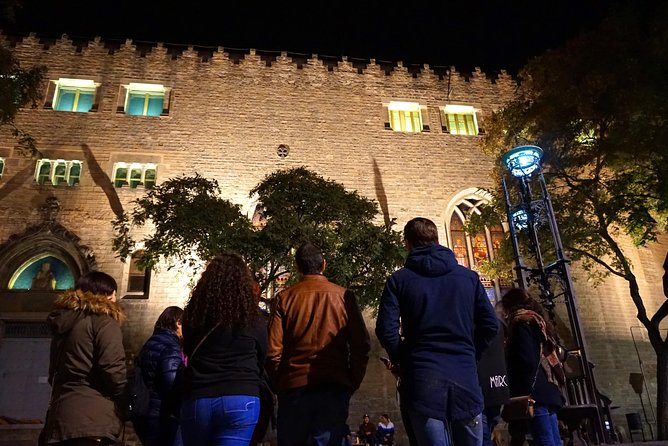
Barcelona’s El Born Ghost Walking Tour is really a nighttime history walk with a supernatural edge. You follow narrow streets through Sant Pere, Santa Caterina, and the Ribera district, hearing tales of ghostly nuns, witchcraft, exorcisms, sailors, merchants, and the Inquisition.
I like two things here: the route takes you into corners you might otherwise miss, and the best guides, especially Christina, turn local folklore into lively storytelling. The Church of Santa Maria del Mar and the Arc de Triomf also give the walk a strong beginning and ending.
The main caution is simple: this is more folklore and urban history than a frightening haunted-house experience. Some stories are eerie, but the tour may feel mild if you want jump scares or recent paranormal cases. Past groups have also sometimes been large or bilingual, so confirm the language arrangement if that matters to you.
Key points to know before booking
- The route begins at the Arc de Triomf and ends at Santa Maria del Mar, so you do not return to the starting point.
- The ghost stories are rooted in Barcelona’s legends and history, not staged special effects or guaranteed encounters with spirits.
- Christina has received especially warm praise for her friendly, lively, and engaging storytelling.
- You walk through narrow lanes and over cobblestones, with several street crossings and no scheduled food or bathroom stop.
- The $21.60 price is fair for a two-hour guided walk, particularly if you value local stories and lesser-known streets more than formal monument interiors.
- Friday and Saturday departures are late evening, at 8:30 p.m. on Friday and 8 p.m. on Saturday.
What kind of ghost tour is this?
If you picture a theatrical scare tour, reset your expectations. This experience uses old stories, local superstition, and Barcelona’s darker past. You hear about apparitions, bewitched convents, brutal exorcisms, and places with reputations for strange activity, but the tone depends heavily on the guide.
That distinction matters. Some people find the legends entertaining and atmospheric, while others want a more frightening night. The strongest part of the experience is usually the combination of storytelling and walking through real streets where the tales are set. You are not standing in a dark attraction waiting for an actor to leap out.
The stories draw on places described in Sylvia Lagarda-Mata’s book Fantasmes de Barcelona. That gives the walk a local frame rather than a collection of generic ghost stories. You are hearing about Barcelona’s own myths, religious institutions, old roads, merchants, prisoners, and neighborhood legends.
I would treat the supernatural claims as folklore. The tour works best when you enjoy the question of how a story grows around an old building or street. If you need proof of paranormal activity, you may leave disappointed. If you like legends tied to actual places, the route has plenty to offer.
More El Born Tours in Barcelona:
- Barcelona: El Born and Gothic Quarter Wine & Tapas Bar Tour
★ 4.8 · 674 reviews - Barcelona: El Born Food Walking Tour with Tapas and Drinks
★ 4.9 · 662 reviews - Barcelona Historical Walking Tour: Gothic Quarter and El Born
★ 5.0 · 217 reviews
Meeting the guide beneath the Arc de Triomf
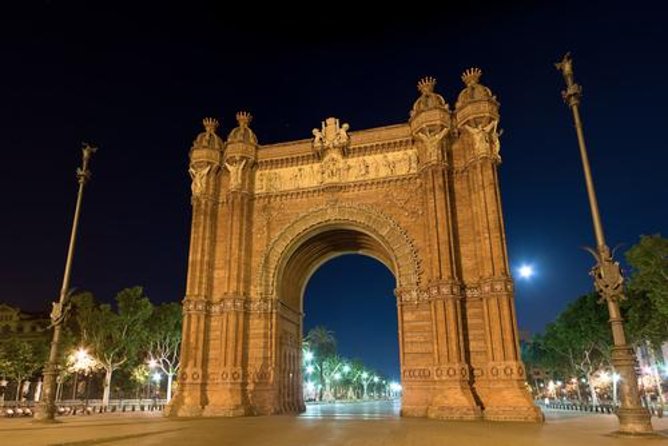
The walk starts on Passeig de Lluís Companys, beneath Barcelona’s redbrick Arc de Triomf. This is a practical meeting point. The monument is large, open, and easy to identify, although it sits in a broad area where a guide could be hard to spot in a crowd.
A useful detail is that the guide may carry a red umbrella, making the meeting easier. Arrive with enough time to find the exact position under the arch, especially at night when a large square can feel less precise than it looks on a map.
The Arc de Triomf itself gives the tour a striking opening. Built for the 1888 Universal Exposition, it uses Neo-Mudéjar forms and red brick, reflecting the decorative style popular in Barcelona at the time. It once marked the main approach to the fair at Parc de la Ciutadella.
The monument is not medieval, so it does not belong to the oldest stories on the route. Still, it provides useful context. Barcelona’s haunted tales are not confined to one period. The city layers Roman roads, medieval religious life, industrial neighborhoods, and modern urban growth on top of one another.
Sant Pere and Carrer del Portal Nou after dark
From the Arc de Triomf, the route moves toward Sant Pere and Santa Caterina. These neighborhoods were major centers of commerce and textile work. During the 19th century, more than 280 textile businesses operated in the two areas, including silk and cotton factories and printing workshops.
This background adds weight to the ghost stories. You are not wandering through a decorative old quarter with no connection to daily life. These were working streets filled with production, trade, noise, and people arriving from elsewhere.
Carrer del Portal Nou has even older roots. It followed an entrance into the city connected with an old Roman road from France. In the 15th and 16th centuries, porticoes supported shops and street commerce, though many were removed in the early 19th century.
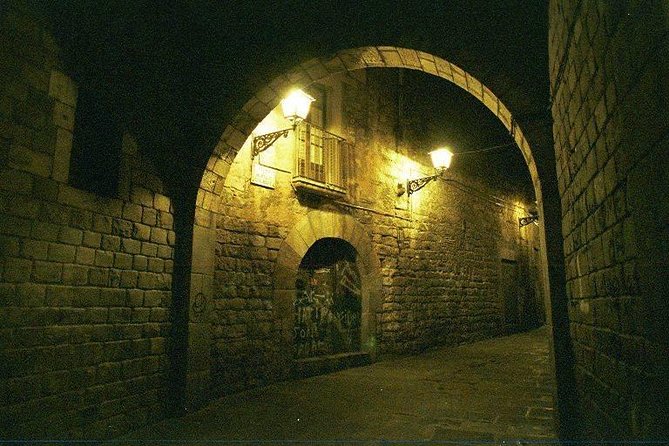
As you walk, look at the scale of the lanes and the traces of older construction. Only a few of the old porticoes remain, but the street plan helps you picture how enclosed and active this part of Barcelona once was. The atmosphere comes less from dramatic ruins than from the close walls, uneven paving, and knowledge that these streets have served the city for centuries.
A practical note: several parts of the route use narrow lanes and cobblestones. Wear shoes with firm soles. The walk is not presented as difficult, and most people can take part, but anyone with walking problems should take the surface seriously.
The ghostly nuns of Sant Pere Square
Sant Pere Square occupies the site of the former Monastery of Sant Pere de les Puel·les. Founded before the year 1000 as a refuge for noble nuns, the monastery was repeatedly damaged by invasions, wars, and fires.
It was rebuilt several times and had a period of renewed prosperity after its reconsecration in 1143. Later, the institution was confiscated and used as a prison. The nuns were forced to leave for good, creating the setting for one of the route’s most memorable legends: ghostly nuns unable to rest after centuries of suffering.
This stop shows why the tour can be more interesting than a standard ghost walk. The legend is connected to institutional change, religious life, war, and imprisonment. You get a small lesson in how Barcelona’s past is remembered through stories, even when the original buildings have changed or vanished.
The square also offers a pause from the tightest lanes. You can take in the layout of the neighborhood while the guide explains how the old monastery shaped local memory. The story may not frighten you, but it gives the walk emotional texture.
More Barcelona Walking Tours:
- Barcelona Tapas and Wine Experience Small-Group Walking Tour
★ 5.0 · 5,804 reviews - Barcelona: Tapas Walking Tour with Food, Wine, and History
★ 4.8 · 4,261 reviews - Barcelona Tapas Walking Tour: Food, Wine & History
★ 4.5 · 1,928 reviews - Barcelona: Tapas Food Crawl Walking Tour with Tastings
★ 4.9 · 1,798 reviews
The street where Barcelona bought snow
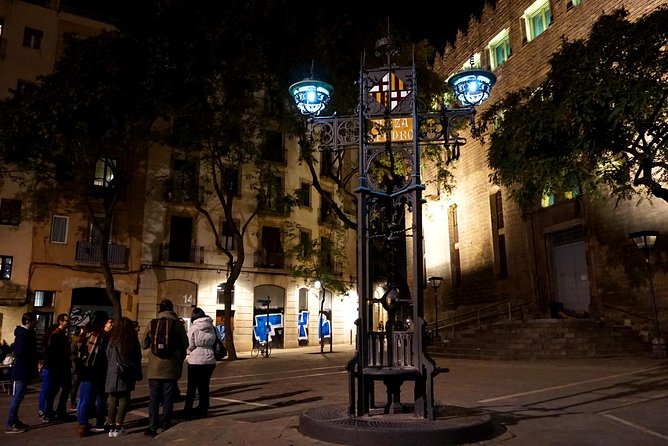
One of the route’s more unusual stops is a narrow street in El Born once associated with the sale of real snow. Before refrigerators, people bought snow to cool drinks, preserve food, and make ice cream.
This detail is a welcome change from ghosts and executions. It reminds you that a historic street can hold practical stories as well as sinister ones. The old neighborhood was a place where people worked, bought goods, ate, prayed, and argued, not just a backdrop for legends.
You may find this stop especially useful if you plan to return to El Born during daylight. Several visitors have enjoyed using the night walk to notice small lanes and shops they would have missed, then coming back the next day to look around with more time.
Roman roads, Hostal Flor de Lliri, and Plaça d’En Marcús
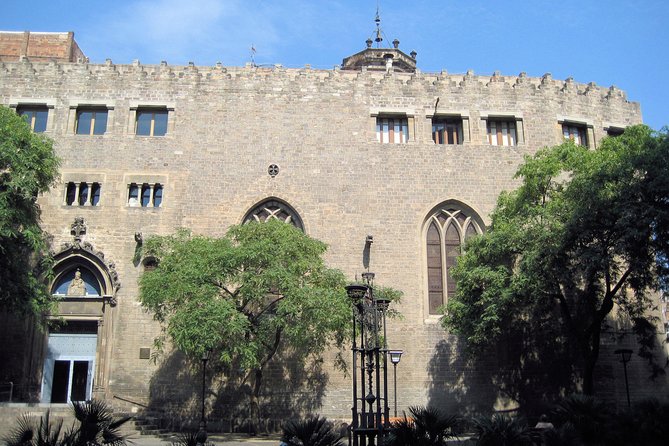
The route next reaches a corner connected with the old Roman road toward Europe. This was a natural corridor into and out of Barcelona, and its importance helps explain why the quarter developed into a busy commercial zone.
The area also has a darker association with the once-famous Hostal Flor de Lliri. The tour presents this corner as mysterious and linked to old reports and local reputation. The appeal is the setting: a real urban crossroads with layers of trade, travel, lodging, and rumor.
At Plaça d’En Marcús, the story shifts toward Bernat Marcús, a wealthy 12th-century benefactor. He funded charitable works, including a chapel and a hospital serving poor people and pilgrims. This is one of the route’s more human stops, showing the religious and charitable network that once supported people passing through the city.
For me, these locations are where the tour’s value becomes clearest. Even if you do not believe the supernatural stories, you are moving through a district shaped by Roman routes, medieval charity, commerce, and religious institutions. The ghost stories give you a reason to pay close attention.
Camí del Born and the Inquisition
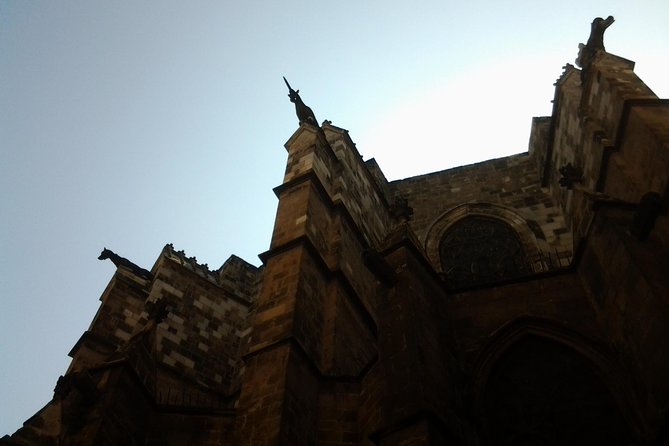
The walk continues to an area now associated with galleries and museums. Its earlier identity was the 11th-century coastal path called Camí del Born, in the former settlement known as Vilanova del Mar. Later, the land was granted to influential citizens by Count Ramon Berenguer IV.
That change from coastal route to urban quarter reflects Barcelona’s growth. Streets that seem compact today once marked the edge of the settled city or connected it with the shoreline. A good guide can make this shift easy to picture while keeping the tone light enough for an evening outing.
Passeig del Born is among the route’s most recognizable locations. It was once used for medieval jousts, then became associated with the Inquisition. Today, it is a pleasant and lively public space, but the tour asks you to consider what happened beneath that attractive surface.
This is also where the experience may feel less spooky than advertised. Several stories are connected to old religious or political events rather than recent sightings. The setting is atmospheric, but you will not necessarily feel afraid. The reward is seeing a familiar public space through a different lens.
Santa Maria del Mar, the grand finale
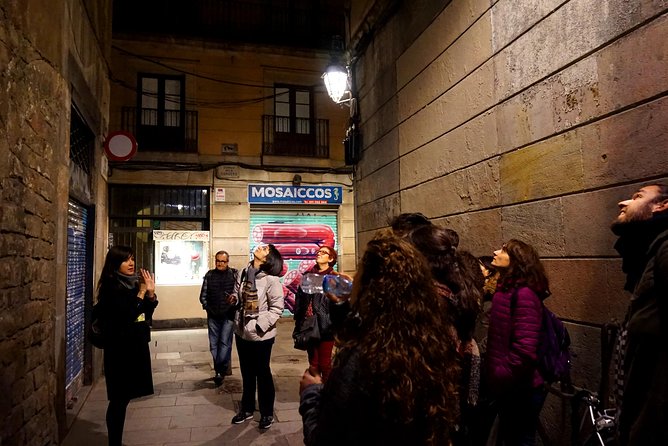
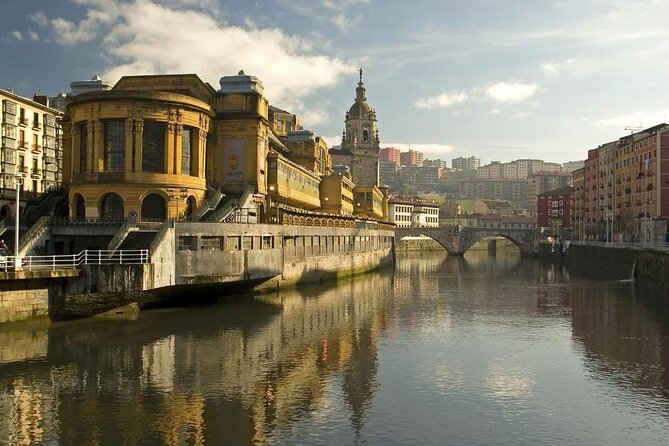
The walk ends at the square of Santa Maria del Mar, outside the Basilica of Santa Maria del Mar. Built between 1329 and 1384, the church is one of Barcelona’s finest examples of Catalan Gothic architecture.
Its construction was closely tied to the people of the Ribera district. The bastaixos, workers who carried heavy stones from Montjuïc, played an important role in building it. Unlike Barcelona Cathedral, Santa Maria del Mar was closely associated with local residents and their community, which gives the church a different character.
The tour presents the basilica from its darker side, focusing on stories and secrets connected with the building rather than simply praising its beauty. That contrast works well. The church’s broad Gothic form and calm square look very different from the grim tales attached to it.
You should know that the tour ends here. It does not take you back to the Arc de Triomf. That is not a problem if you are comfortable continuing through the city, but it is an important planning detail. The end point is near public transportation, restaurants, and the wider El Born area.
The guides make or break the evening
The guide is the most important part of this experience. The route has good material, but old legends need timing, expression, and a sense of place. Christina is named in several especially positive comments, with praise for her friendly manner, historical knowledge, enthusiasm, and ability to include everyone in the story.
With a strong guide, the walk can feel lively even when the tale is more folklore than fright. A good storyteller points out physical traces, varies the pace, and explains what is known, what is legend, and what is simply part of local tradition.
Not every departure will have Christina, and the supplied information does not guarantee a particular guide. Some past outings have also included bilingual storytelling. That can be helpful for a mixed group, but it may slow the route and weaken the mood if each story is repeated in two languages.
The advertised language is English. If you want a strictly English-language experience, confirm that arrangement before booking. A large group can also make it harder to hear in narrow streets, so stay close to the guide at crossings and crowded corners.
Is $21.60 good value?
At $21.60 per person, this is a reasonable price for a two-hour guided walk in central Barcelona. You are paying for a professional guide, a carefully arranged route, and stories that connect several neighborhoods and landmarks.
The value is strongest if you would otherwise spend the evening walking El Born without knowing what you were seeing. The tour gives structure to streets that can feel confusing, then leaves you near Santa Maria del Mar, where you can continue exploring on your own.
The value is weaker if you expect a polished theatrical production, private access inside monuments, or a high level of fear. Food and drinks are not included, and there is no planned coffee or bathroom break. Plan accordingly before setting out.
The experience is described as private, with only your group participating, but past departures have included sizable groups. If an intimate walk is essential, confirm the group setup at booking rather than assuming the word private guarantees a small party.
Timing, weather, and walking comfort
The tour lasts about two hours and operates in all weather. Friday departures are at 8:30 p.m., while Saturday departures begin at 8 p.m. The later schedule suits an evening in El Born, but check the light and weather for your date. Some departures may begin while there is still a little daylight, which can reduce the spooky mood.
You will spend the whole tour outdoors. Wear comfortable shoes and dress for the conditions. The cobblestones, narrow lanes, and repeated street crossings are manageable for most people, but they are not ideal for anyone who struggles with uneven ground.
Service animals are allowed, public transportation is nearby, and most people can participate. The route does not include food or drinks. If you need a break, take care of it before the meeting time.
Free cancellation is available up to 24 hours before the start time. Cancellations or changes inside that window are not refundable, and the tour requires a minimum number of participants to operate.
Who should book this Barcelona night walk?
I would choose this tour if you enjoy local folklore, old religious stories, and seeing a city after dark without needing a formal museum visit. It suits couples, solo visitors, and families with older children or teenagers who can handle a two-hour walk.
It is also a good choice for repeat visitors. One strong point is the route itself. Even people who already know Barcelona can find unfamiliar corners in Sant Pere, Santa Caterina, and El Born.
I would skip it if you want a genuinely scary experience, modern paranormal investigations, or a route with dramatic effects. You may also want another option if bilingual narration or a larger group would bother you.
Should you book it?
Book the El Born Ghost Walking Tour if you want a story-led introduction to Barcelona’s older neighborhoods and you like your ghost tales mixed with architecture, religion, commerce, and local history. The strongest memories are likely to come from the streets, Santa Maria del Mar, and the guide’s delivery rather than from actual scares.
Go with comfortable shoes, keep your expectations focused on legends instead of proof, and remember that the route ends at the basilica rather than returning to the Arc de Triomf. At $21.60, it is a solid evening activity for curious walkers, especially if Christina is leading and the group is conducted in English.
FAQ
Where does the El Born Ghost Walking Tour begin?
The tour begins on Passeig de Lluís Companys beneath the Arc de Triomf in Barcelona’s Ciutat Vella.
Where does the tour finish?
It finishes at the Basilica of Santa Maria del Mar, at Plaça de Santa Maria, 1. You do not return to the Arc de Triomf.
How long does the tour last?
The walking tour lasts approximately two hours.
What time does the tour leave on Friday and Saturday?
Friday departures are at 8:30 p.m. Saturday departures are at 8 p.m.
Is the tour conducted in English?
The experience is offered in English. Some past departures have included bilingual narration, so confirm the language arrangement if a single-language tour is important to you.
Is food or drink included?
No. Food and drinks are not included unless specifically stated.
What should I wear?
Wear comfortable shoes and dress appropriately for the weather. The route includes narrow streets and cobblestones, and the tour operates in all weather conditions.
Can I cancel for a refund?
You can cancel up to 24 hours before the experience begins for a full refund. Cancellations or changes made less than 24 hours before the start time are not accepted for a refund.
Recently added around Barcelona
- Montserrat very early : Hiking, Abbey, very small group★ 5.0 · 127 reviews
- Guided Private Yacht Tour in Barcelona Spain★ 5.0 · 6 reviews
- Private Tour from Barcelona to Montserrat (with guide)★ 4.5 · 6 reviews
- Private Tour from Barcelona to Costa Brava (with guide)★ 5.0 · 5 reviews
- Andorra Tour★ 4.0 · 7 reviews
- Barcelona Gaudi Tour: Sagrada Familia, Casa Batllo & Casa Mila★ 5.0 · 4 reviews
- Street Art, Sculptures & Crime Stories Walking Tour – Barcelona★ 5.0 · 11 reviews
- Wine Tasting in Barcelona (Catalan Varieties) Small Groups★ 5.0 · 10 reviews
El Born Tours, compared.

El Born and Gothic Quarter Wine & Tapas Bar Tour
Read our review →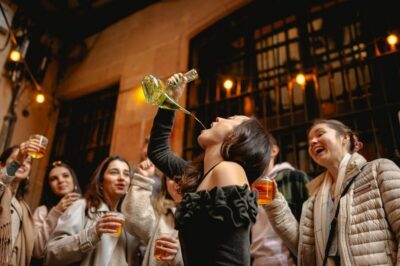
El Born Food Walking Tour with Tapas and Drinks
Read our review →
Barcelona Historical Walking Tour: Gothic Quarter and El Born
Read our review →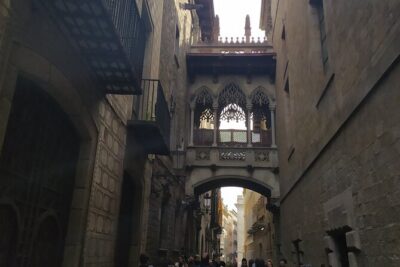
Luca’s Hidden Old Barcelona: the Gothic and El Born Tour
Read our review →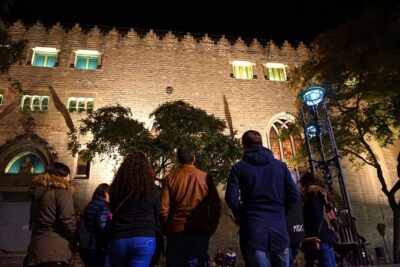
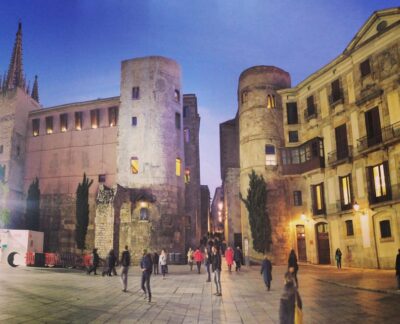
The Timeless Beauty of Barcelona’s Gothic and Born Quarters
Read our review →
Photo Walking Tour Barcelona Cathedral Gothic Quarter El Born
Read our review →
Barcelona Walking Tour of Gothic and Born District
Read our review →Browse the lists this tour appears in