
Reviewed · BARCELONA GOTHIC QUARTER TOURS
The Timeless Beauty of Barcelona’s Gothic and Born Quarters
Barcelona’s oldest streets tell several stories at once. Roman columns sit beside medieval churches, Civil War scars remain visible in a quiet square, and narrow lanes lead from the Gothic Quarter into El Born. This two-hour walking tour connects those pieces with a local guide who has spent more than 20 years leading tours in Barcelona and other European cities.
I like the focus on real historical layers, especially the Temple of Augustus, the ancient synagogue, and Sant Felip Neri. I also like the personal approach: Luca BCN is a one-man operation, so the experience is built around one guide’s storytelling rather than a large company script.
The main caution is pace and consistency. There is a moderate amount of walking on uneven streets, and one recent report described a shortened 90-minute tour with a loud presentation. Confirm the full two-hour schedule at the start, and stay close enough to hear clearly.
Key points to know before you book
- Roman Barcelona appears early: See the Temple of Augustus and learn about Barcino, the Roman city beneath today’s streets.
- The old Jewish Quarter adds depth: The tour visits Barcelona’s ancient synagogue and explains the area’s medieval past.
- Sant Felip Neri carries painful Civil War history: This small square is one of the tour’s most sobering stops.
- El Born gives the walk a livelier finish: Artisan shops, restaurants, bars, and Santa Maria del Mar round out the route.
- The guide brings a broad European outlook: Luca BCN’s guide has led tours in Italy, London, Berlin, and Barcelona.
- The price is modest: At $14, this is a useful orientation walk, though it does not include food, drinks, or interior admission fees.
A two-hour walk through Barcelona’s oldest quarters
This is not a bus tour or a fast checklist of famous sights. You move on foot from Plaça de Sant Jaume through the Gothic Quarter and into El Born, with short stops for stories, photographs, and questions.
The route is especially useful if you are new to Barcelona. It gives you a working map of the old center and helps you understand how Roman, Jewish, medieval, Catalan, and modern political history overlap. You finish at the Basilica of Santa Maria del Mar, close to some of El Born’s restaurants and small shops.
The guide describes the experience as a personal, one-man operation. That can be a strength. You are not being passed from one guide to another, and the walk has a clear individual voice. The guide also draws on years of work in Italy, London, Berlin, and Barcelona, with interests ranging from the Berlin Wall and Henry VIII to Michelangelo and Antoni Gaudí.
At $14 per person, I see this as a low-cost introduction rather than a complete study of Barcelona. Two hours is enough for a well-paced overview, but not enough to enter every church, explain every street, or stop for a long museum visit. You are paying mainly for interpretation and orientation.
More El Born Tours in Barcelona:
- Barcelona: El Born and Gothic Quarter Wine & Tapas Bar Tour
★ 4.8 · 674 reviews - Barcelona: El Born Food Walking Tour with Tapas and Drinks
★ 4.9 · 662 reviews - Barcelona Historical Walking Tour: Gothic Quarter and El Born
★ 5.0 · 217 reviews
Starting at Plaça de Sant Jaume
The meeting point is in front of Starbucks at Plaça de Sant Jaume. This central square is a fitting place to begin because it links Barcelona’s political past and present. It is also an easy landmark to find in the old center.
From here, the route enters the Gothic Quarter. Expect narrow lanes, stone façades, small plazas, tapas bars, and medieval architectural details overhead. This is a part of Barcelona where the pleasure comes from looking closely. Gargoyles, doorways, fragments of older walls, and changing street levels often matter as much as the major monuments.
You should arrive ready to walk. The historic center has uneven pavement and tight passages, and the group may need to pause or gather in places where space is limited. Keep your belongings close. The busy old-center streets can attract pickpockets, particularly when a group stops to listen.
Roman Barcino beneath the Gothic Quarter
One of the most valuable parts of the tour is the explanation of ancient Barcino, the Roman settlement that shaped the city’s earliest street plan. You will not simply hear that Barcelona is old. You will see how Roman remains survive inside the later medieval quarter.
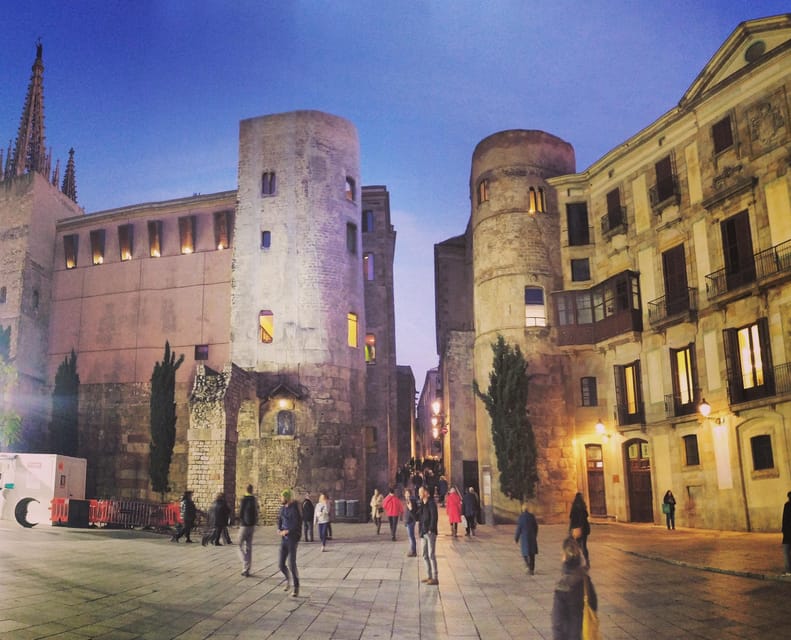
The Temple of Augustus is a major stop. Its surviving columns are easy to miss if you do not know where to look, which makes a guide useful here. The setting also shows how Barcelona built new neighborhoods around old foundations rather than clearing everything away.
The scheduled stop at the Temple of Augustus is short, about five minutes. That is enough for a clear explanation and a few photographs, but not a long archaeological lesson. If Roman history is your main interest, treat this as a starting point and plan extra time elsewhere.
The route also includes Palau Reial Major, the former royal complex in the old city. The stop is brief, but it helps explain Barcelona’s role as a seat of medieval power. The Gothic Quarter is easier to understand when you recognize that it was not only a residential district. It was also a center of religion, government, trade, and royal ceremony.
The ancient synagogue and Barcelona’s Jewish past
The visit to the ancient synagogue adds an important layer that many quick city walks leave out. Barcelona’s medieval Jewish Quarter was once a distinct part of the old city, and the synagogue helps you picture the community that lived and worshipped here.
The stop is listed at around ten minutes. That gives the guide time to explain the site without allowing it to take over the walk. You should expect historical context rather than a long indoor visit or a formal religious service.
This part of the route is valuable because the Gothic Quarter can otherwise appear to be only a Christian medieval district. Learning about Jewish Barcelona gives you a broader picture of the people and traditions that shaped the city.
As with the Roman remains, the setting is compact and easy to overlook. Keep your ears open and do not wander too far from the guide while taking photographs. The lanes are narrow, and a group can separate quickly.
More Barcelona Gothic Quarter Tours:
- Barcelona all included: Sagrada, Park Güell, Montjuic & Gothic
★ 5.0 · 2,169 reviews - Barcelona Gothic Quarter Tapas & Taverns Food & Wine Tour
★ 5.0 · 1,470 reviews - Barcelona: Gothic Quarter Ghosts and Legends Walking Tour
★ 4.7 · 1,443 reviews - Barcelona: Old Town and Gothic Quarter Walking Tour
★ 4.8 · 1,393 reviews
Sant Felip Neri and the darker side of the city
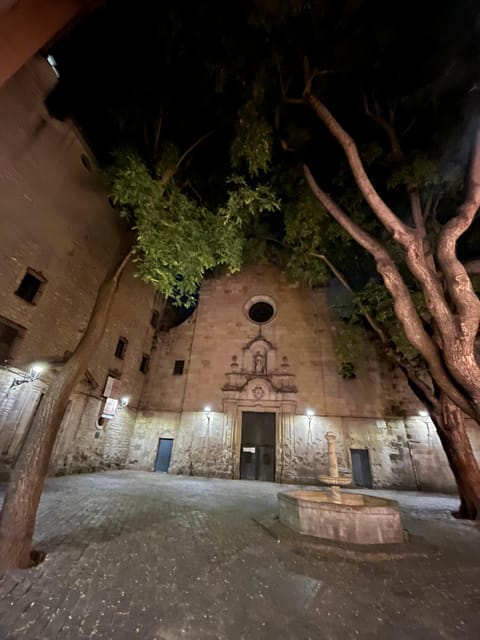
Plaça de Sant Felip Neri changes the mood of the walk. It is a small, quiet square with a history linked to Barcelona’s resistance during Franco’s uprising in the Civil War. The guide uses the setting to discuss the city’s heroic resistance and the violence that followed.
This is one of the stops where a local guide can add real value. The square does not explain its whole past at a glance. You need the story to understand why the place feels so different from the nearby shopping streets and tourist routes.
The stop is scheduled for about ten minutes. That is a sensible amount of time for a serious subject, though the quality depends on how clearly the guide presents it. One recent account described a loud delivery and omitted details, so stand where you can hear and ask for clarification if needed.
I appreciate that the route does not present Barcelona as a city of pretty façades alone. Its political history remains part of the experience, and Sant Felip Neri gives you a quiet place to consider that.
Bishop’s Bridge and the medieval center
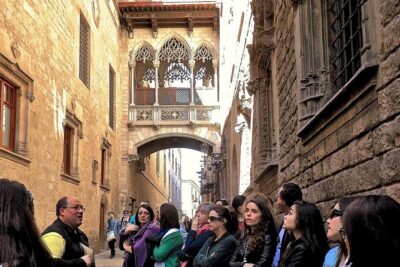
The Bishop’s Bridge is a short stop, listed at about five minutes, but it is one of the most recognizable photographic points in the Gothic Quarter. Its ornate design fits the medieval look of the surrounding streets, even though the structure belongs to a later period.
The guide can use it to explain how Barcelona’s old center has been shaped, restored, and reinterpreted over time. That distinction matters. Not every medieval-looking detail in the Gothic Quarter is as old as it appears, and a good explanation helps you separate original remains from later additions.
This is also a practical photography stop. The bridge, surrounding stonework, and narrow streets create strong images, especially when you frame the structure with the buildings around it. Do not expect a long pause, though. The route has several important stops still ahead.
Barcelona Cathedral and the city’s sacred heart
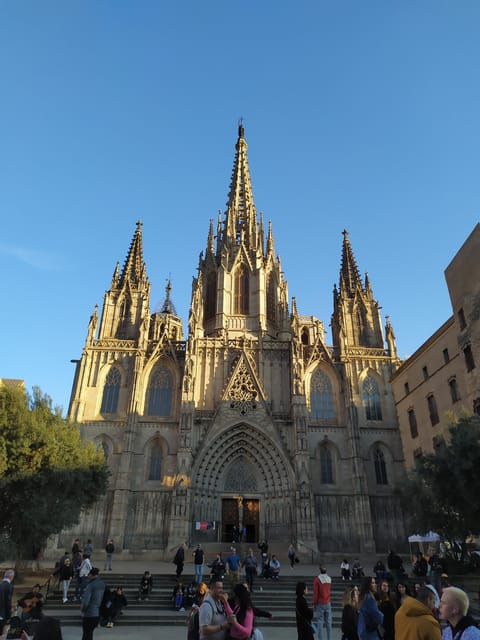
Barcelona Cathedral receives about ten minutes on the route. Its scale and Gothic detail make it one of the clearest symbols of the old city, and the guide places it within the wider religious and civic story of Barcelona.
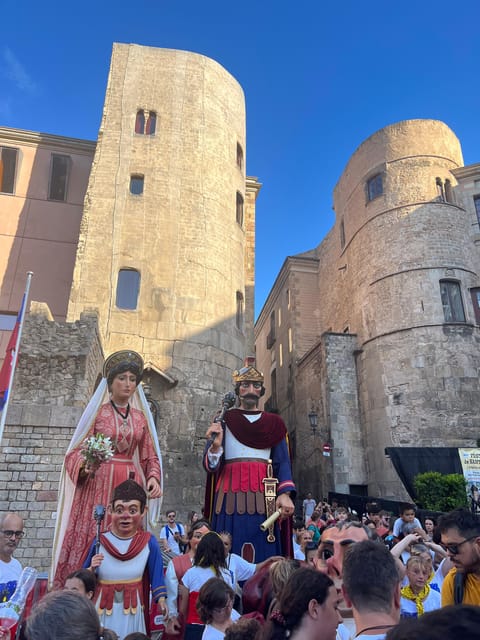
The tour also refers to local heroes and legends, including Santa Eulalia, the city’s patron saint. You will hear stories connected with her, Sant Jordi, Wilfred the Hairy, and the Catalan figure known as el Caganer. These characters help explain how history, religion, folklore, and humor meet in Catalan culture.
The short timing means this is primarily an exterior explanation unless your booking includes something different. Food, drinks, and separate admissions are not included, so you should not assume that an entry ticket to the cathedral is part of the $14 price.
The cathedral stop is best for getting context and deciding if you want to return later. If you care about stained glass, chapels, cloisters, or interior architecture, save extra time for an independent visit.
Into La Ribera and El Born
After the Gothic Quarter, the walk moves into Barri de La Ribera and the El Born district. This shift is one of the tour’s strengths. You move from narrow medieval lanes into an area known for small artisan shops, bars, restaurants, and a more creative street life.
The guide uses El Born to discuss Catalan culture and present-day Barcelona. That balance is useful. You learn about old customs and legends, but you also get a sense of where people go to eat, shop, and spend an evening now.
The route does not include food or drink, but the finish gives you plenty of options to continue on your own. Ask the guide for suggestions if you want to stay in the area after the walk. The tour itself is not a tapas crawl, so budget separately for anything you order afterward.
The Born section also offers good photography. Look for changing textures, old façades, small storefronts, and the contrast between historic buildings and modern businesses. The guide points you toward the story, while you can use the pauses to take pictures.
Santa Maria del Mar, the people’s church
The tour finishes at the Basilica of Santa Maria del Mar, often called the Cathedral of the Sea. This church has a strong place in Barcelona’s cultural imagination and has gained new attention through books and screen adaptations.
The guide presents it as a spiritual temple of the people, built in the 14th century. That framing gives the church a different feel from Barcelona Cathedral. It connects the building to ordinary residents, maritime trade, and the life of the surrounding district.
The final stop is a good place to end because it gives the walk a clear destination. You are not returned to the starting point, so plan your next move from El Born. The basilica is also a useful landmark for finding food, drinks, and further walks through La Ribera.
Again, admission is not listed as included. If you want to go inside, confirm opening arrangements and any fee separately. The walking tour can introduce the building, but it is not a full interior visit.
What the guide’s style means for you
The guide’s background is broad and bookish, with more than two decades of tour work across Europe. That suggests a story-led walk rather than a purely academic lecture. You can expect connections between Barcelona and wider European history, along with legends and personal interpretation.
The strongest part of the experience is the amount of information packed into a short route. Clear explanations are especially useful in places such as the ancient synagogue, the Temple of Augustus, and Sant Felip Neri, where the setting alone does not tell you enough.
The possible weakness is presentation. The guide works alone, and the experience may depend heavily on that day’s delivery, group size, and ability to hear. One recent report described the walk as only 90 minutes instead of two hours and criticized the volume and limited detail. That is not a reason to reject the tour outright, but it is a reason to confirm the finishing time and stay near the guide.
Who should book this Barcelona walk?
I would choose this tour if you want a low-cost first look at the old city and prefer stories over a list of photo stops. It suits independent visitors who want to learn the layout of the Gothic Quarter and El Born before exploring on their own.
It is also a good fit if you enjoy history that reaches beyond famous architecture. Roman Barcelona, the medieval Jewish Quarter, Catalan legends, Civil War memory, and present-day El Born all appear in the same walk.
I would think twice if you need step-free access, dislike uneven streets, or want extended visits inside major churches. The route is not suitable for wheelchair users or people with mobility impairments because of the historic lanes and moderate walking.
Wear comfortable shoes and bring water, sunscreen, and a camera. For cooler or rainy weather, take a jacket or umbrella. The tour is offered in English, and free cancellation is available up to 24 hours before the start. You can also reserve now and pay later, which helps if your Barcelona schedule is still changing.
Is this $14 tour worth booking?
Yes, if you see it as a compact orientation walk with a strong historical focus. At $14, the price is fair for two hours with a live English-speaking guide, especially when the route includes Roman ruins, the old synagogue, Sant Felip Neri, Barcelona Cathedral, El Born, and Santa Maria del Mar.
Book it for the stories and the city context, not for long interior visits or a relaxed photography session. Arrive ready to walk, keep close to the guide, and confirm that the full two-hour route will run. If you want a friendly introduction to Barcelona’s oldest neighborhoods, this is a sensible use of a small part of your first day.
FAQ
How long does the Barcelona Gothic and Born tour last?
The advertised duration is two hours. One recent booking report described a 90-minute finish, so you may wish to confirm the expected end time with the guide at the beginning.
What is the tour price?
The price is $14 per person.
Where does the tour begin?
The meeting point is in front of Starbucks at Plaça de Sant Jaume.
Where does the tour finish?
The tour finishes at the Basilica of Santa Maria del Mar in El Born.
What language is the tour offered in?
The live tour guide speaks English.
Which main areas does the walk visit?
The route covers Barcelona’s Gothic Quarter, Barri de La Ribera, and El Born.
Does the tour include food or drinks?
No. Food and drinks are not included.
Is hotel pickup included?
No. Hotel pickup and drop-off are not included.
Is the tour suitable for wheelchair users?
No. The tour is not suitable for people with mobility impairments or wheelchair users because of the narrow historic streets and moderate amount of walking.
Recently added around Barcelona
- Montserrat very early : Hiking, Abbey, very small group★ 5.0 · 127 reviews
- Guided Private Yacht Tour in Barcelona Spain★ 5.0 · 6 reviews
- Private Tour from Barcelona to Montserrat (with guide)★ 4.5 · 6 reviews
- Private Tour from Barcelona to Costa Brava (with guide)★ 5.0 · 5 reviews
- Andorra Tour★ 4.0 · 7 reviews
- Barcelona Gaudi Tour: Sagrada Familia, Casa Batllo & Casa Mila★ 5.0 · 4 reviews
- Street Art, Sculptures & Crime Stories Walking Tour – Barcelona★ 5.0 · 11 reviews
- Wine Tasting in Barcelona (Catalan Varieties) Small Groups★ 5.0 · 10 reviews
Barcelona Gothic Quarter Tours, compared.
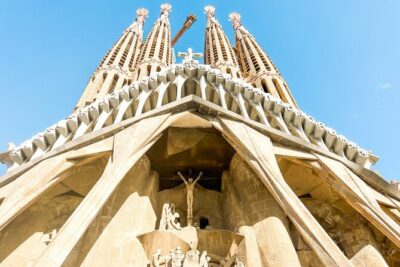
Barcelona all included: Sagrada, Park Güell, Montjuic & Gothic
Read our review →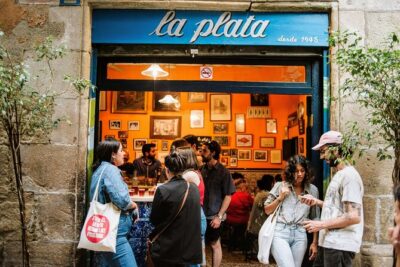
Barcelona Gothic Quarter Tapas & Taverns Food & Wine Tour
Read our review →
Gothic Quarter Ghosts and Legends Walking Tour
Read our review →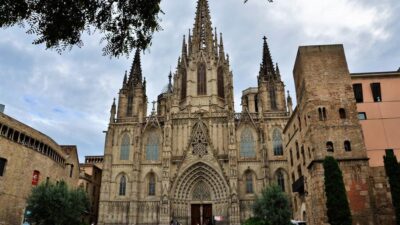
Barcelona Old Town & Gothic Quarter Small Group Tour
Read our review →
Ramblas, Old Town, Gothic and Gaudi Architecture Walking Tour
Read our review →
El Born and Gothic Quarter Wine & Tapas Bar Tour
Read our review →
Kids and Family Gothic Quarter Walking Tour in Barcelona
Read our review →Browse the lists this tour appears in