
Reviewed · BARCELONA GOTHIC QUARTER TOURS
Barcelona: Old Town and Gothic Quarter Walking Tour
Barcelona reveals itself best on foot, and this tour takes you from the city’s Roman roots to its medieval lanes, food markets, grand churches, and modern café life. You’ll see the old political center at Plaça de Sant Jaume, trace sections of Roman wall, and finish in El Born.
I love the small group limit of 15, which gives you a better chance to hear the guide in narrow streets. I also like the mix of major sights and easy-to-miss details, including Roman baths, carved figures, medieval squares, and local food advice from guides such as Alba, Joris, Nilo, and Ane.
The main consideration is pace. A walk covering the Gothic Quarter, La Rambla, La Boqueria, El Born, and several churches involves plenty of standing and walking. The route may last 2.5 to 4 hours, and large bags are not allowed.
Key points to know before you book
- Roman Barcelona comes first: Begin around Plaça de Sant Jaume and the ancient walls before moving into the medieval city.
- The route mixes famous and less obvious sights: You pass Barcelona Cathedral and La Rambla, but also see Pati Llimona’s Roman baths and small details in the old lanes.
- Boqueria is part of the experience: You can see more than 300 stalls selling local food and produce, though the market can be crowded.
- Guides shape the experience: Alba, Joris, Nilo, Ane, Laura, Steven, Isabel, and others are praised for clear storytelling, humor, and restaurant suggestions.
- The finish in El Born is useful: You end at Passeig del Born, close to more food, shops, and historic sights.
- At $21, it is strong value: You get several hours with a live guide rather than paying separate admission for a string of sights.
Why this Barcelona walk works well on a first visit
Barcelona can feel like several cities at once. There is the Roman settlement, the medieval trading center, the grand Catalan Gothic churches, the famous boulevard of La Rambla, and the food-focused streets around El Born. This walk links those pieces in a way that helps you understand the map.
I would place it early in a Barcelona stay. After a few hours with a guide, streets that first seemed like a maze begin to make sense. You learn where the Gothic Quarter ends, how El Born differs from the older core, and why La Rambla remains such a central axis.
The tour is also a good answer to a common Barcelona problem: the city’s best details are often at eye level or tucked into a side street. A guide can point out surviving Roman masonry, old civic buildings, unusual carvings, and architectural clues that you might pass without noticing.
The tone appears to vary by guide, but the strongest pattern is clear. Guides such as Alba and Isabel are praised for passion and vivid storytelling, while Steven is noted for humor and interactive puzzles. Joris and Nilo are praised for answering questions and keeping the group involved. You should expect an informative walk, but not a dry lecture.
More Barcelona Old Town Tours:
- Barcelona in 1 Day: Sagrada Familia, Park Guell,Old Town & Pickup
★ 5.0 · 13,541 reviews - Barcelona: Sagrada Familia, Modernism, and Old Town Tour
★ 4.7 · 1,621 reviews - Barcelona Helicopter, Sailboat & Old Town Private Walking Tour
★ 5.0 · 1,395 reviews
Plaça de Sant Jaume and the Roman beginning
The walk begins at or near the Movistar Centre, though the exact meeting point can vary with the option you book. The historical focus starts around Plaça de Sant Jaume, one of the most important squares in Barcelona.
This is where the Roman Forum once stood, and the square has remained a political center for more than 2,000 years. That long continuity gives the opening real purpose. You are not simply looking at an attractive public space. You are standing where public power has gathered across Roman, medieval, and modern Barcelona.
The guide uses this setting to explain the city’s Roman origins and the way Roman planning still affects the old center. I like this approach because it gives you a framework before you enter the tight Gothic streets.
Plaça de Sant Jaume is also a practical place to begin. The open square lets the group gather before the route moves into narrower lanes. Once the walk enters the old quarter, staying close to the guide becomes more important.
Roman walls and Pati Llimona’s ancient baths
One of the more rewarding sections follows a well-preserved stretch of Roman wall. Barcelona’s Roman remains are not presented as an isolated museum display. They appear as part of the living city, built into later streets and buildings.
That layering is the point. Medieval Barcelona grew around Roman foundations, and modern Barcelona grew around the medieval city. Your guide can help you read those changes instead of seeing only a wall and a few old stones.
The Roman baths at Pati Llimona add a more human side to the story. Here, the focus shifts from emperors and city planning to everyday life. Baths were social places as well as practical ones, and this stop helps turn Roman Barcelona from an abstract date into a place where people worked, met, washed, and carried on with daily routines.
The exact amount of time at each stop can depend on the guide and the group. If you want detailed explanations, ask questions early. Guides are repeatedly praised for making room for questions and adjusting their explanations to the group.
Gothic Quarter lanes and Plaça del Rei
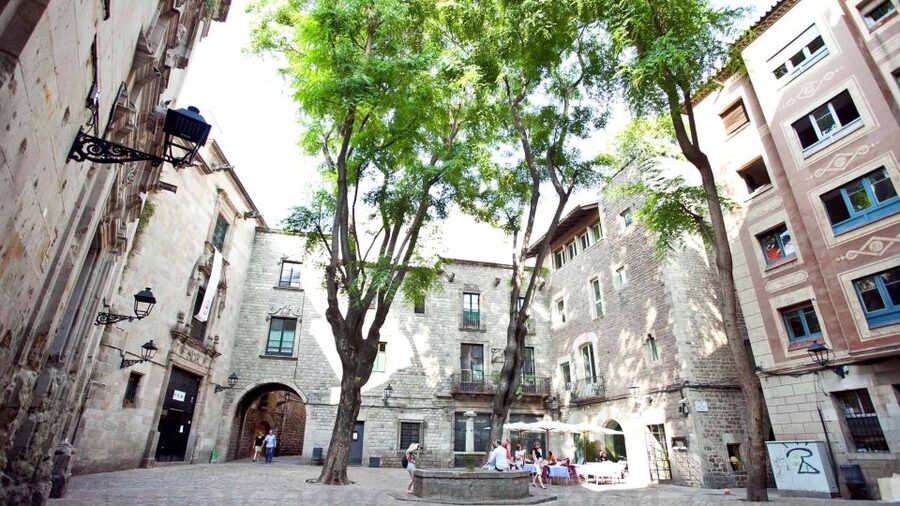
The Gothic Quarter is the heart of the walk. Its lanes can be striking, but they can also blur together if you explore without context. The guide’s job is to connect the buildings, squares, and street plan so you see more than a series of old façades.
Plaça del Rei is one of the strongest stops. The square is tied to the Palace of the Viceroy and the Palau Reial, giving you a close look at the political and royal side of medieval Barcelona.
The square also carries a famous connection to Christopher Columbus, who was welcomed by the Catholic Monarchs there after his journey to the Americas. That story opens the door to a wider discussion of Barcelona, Catalonia, Spain, and the city’s place in European history.
I would pay attention to how the guide handles stories like this. The best explanations do not simply list dates. Guides including Isabel, Laura, and Jose Carlos are praised for adding context about architecture, society, and local traditions. That is useful because the Gothic Quarter is full of grand claims, old legends, and layers of interpretation.
The narrow lanes are part of the charm, but they create two practical issues. It may be hard to hear if the group spreads out, and you will often be stopping rather than walking at a steady pace. Stay near the guide and wear shoes with good support.
More Barcelona Gothic Quarter Tours:
- Barcelona all included: Sagrada, Park Güell, Montjuic & Gothic
★ 5.0 · 2,169 reviews - Barcelona Gothic Quarter Tapas & Taverns Food & Wine Tour
★ 5.0 · 1,470 reviews - Barcelona: Gothic Quarter Ghosts and Legends Walking Tour
★ 4.7 · 1,443 reviews - Barcelona Old Town & Gothic Quarter Small Group Tour
★ 5.0 · 1,308 reviews
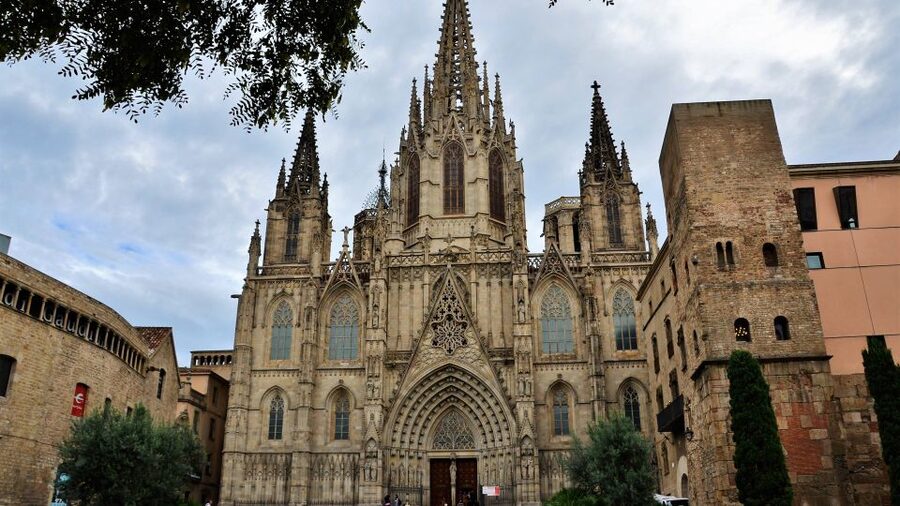
Barcelona Cathedral and Catalan Gothic style
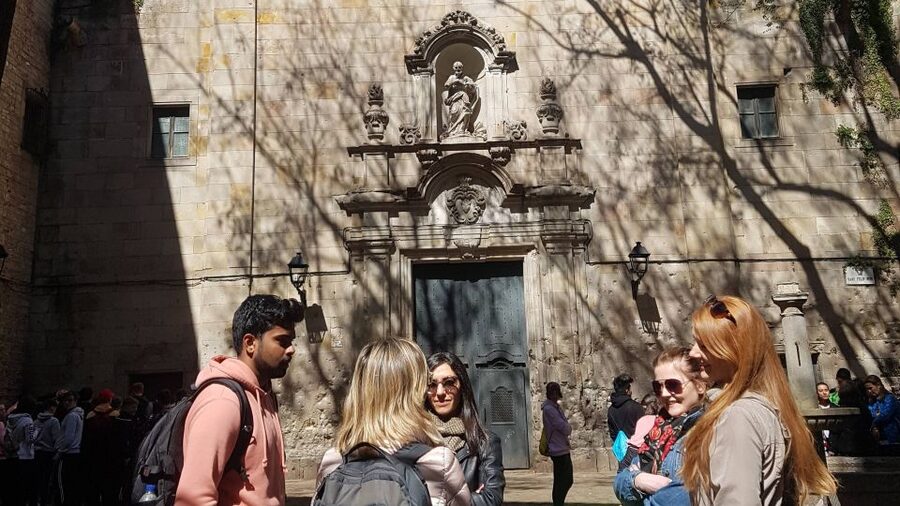
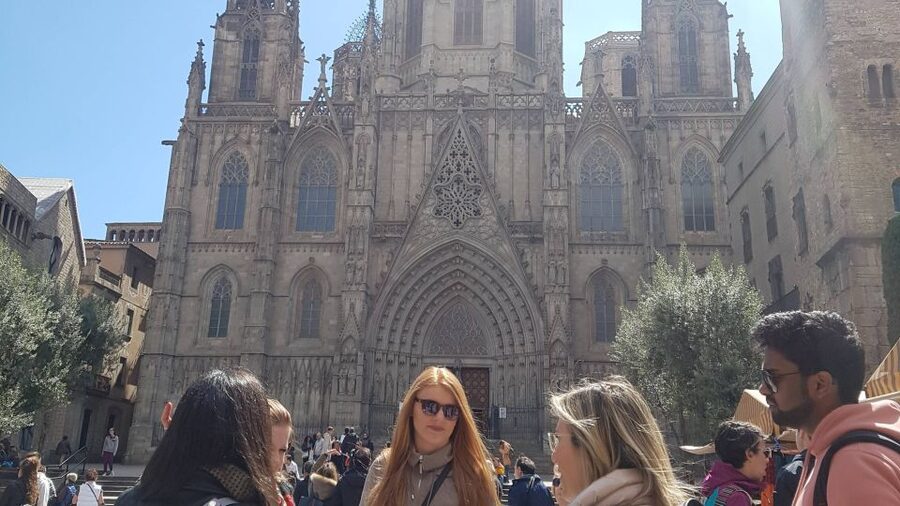
Barcelona Cathedral appears as a major architectural stop, though the route information describes it as a sight you pass rather than a guaranteed interior visit. That distinction matters. The experience is built around seeing and explaining the city from outside, not around a list of paid admissions.
The cathedral offers a useful chance to understand Catalan Gothic architecture. The style is known for strong spaces, broad proportions, and a different feel from the sharply vertical Gothic churches many people associate with northern Europe. Your guide can point out the details that make the building part of Barcelona’s own architectural tradition.
This is also a good moment to look up. The old center is not only about street-level lanes. Towers, façades, courtyards, and carved figures reward attention above the shops and cafés.
The pace can feel full here, especially if you are trying to take photographs while listening. I would treat the tour as an introduction, then return to the cathedral later if you want a slower look.
Santa Maria del Mar and the character of El Born
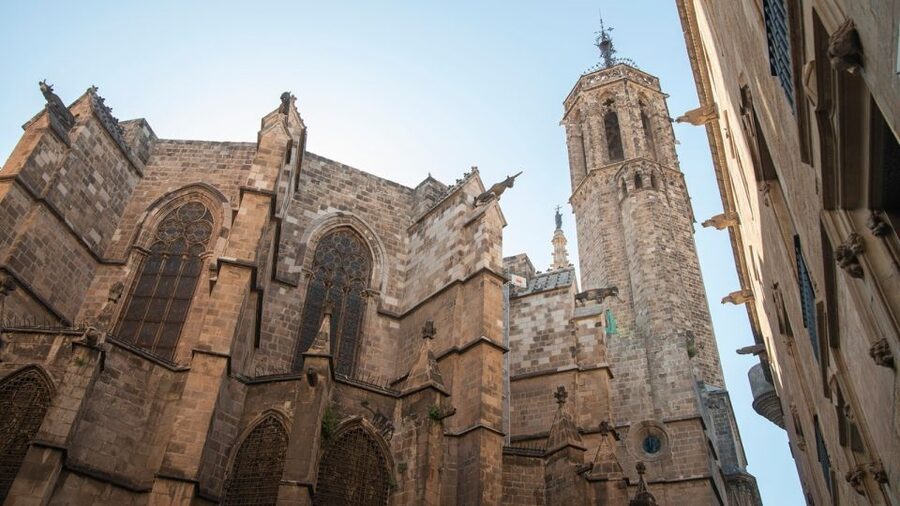
The route continues toward Santa Maria del Mar, one of Barcelona’s finest Catalan Gothic churches. Its story is especially interesting because it was built in a remarkably short period for a medieval church of its scale.
That fact gives the building a practical angle. Medieval construction required planning, labor, materials, and engineering on a huge scale. Hearing how quickly the church rose helps you appreciate not only its appearance but also the organization behind it.
Santa Maria del Mar also helps mark the shift toward El Born. This district has a different feel from the more formal spaces around the cathedral and royal buildings. The route passes through streets with cafés, small shops, and a more relaxed local rhythm.
You may not get a long stop inside every church, so set your expectations accordingly. This is a city walk with historical interpretation, not a church interiors tour. Still, seeing these buildings in sequence makes the differences between Barcelona’s medieval districts easier to grasp.
El Born is a particularly useful finish because it leaves you in an area where you can continue exploring on your own. The walk ends at Passeig del Born, a convenient place to pause for food, coffee, or another look at the neighborhood.
La Rambla and the food stalls of La Boqueria
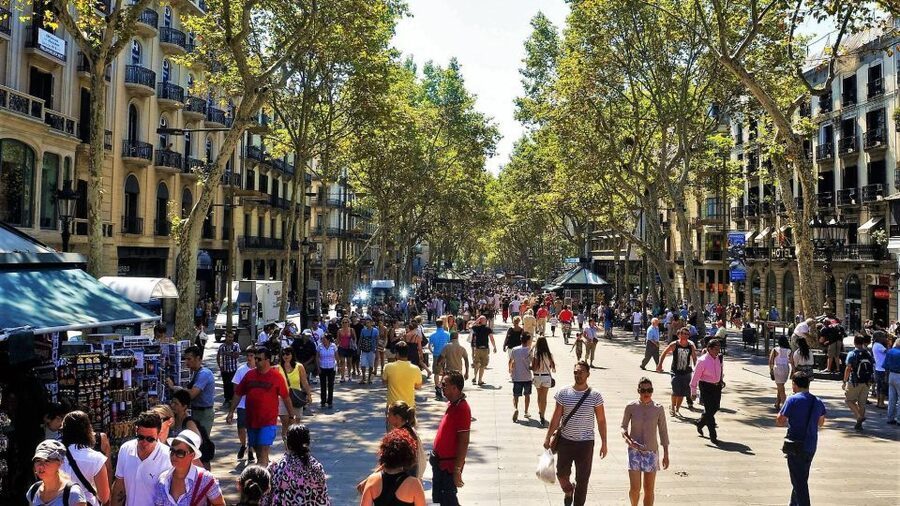
La Rambla provides a change of scene. This famous boulevard is lined with flower stalls, outdoor cafés, entertainers, and places to eat. The tour passes along it rather than treating the whole boulevard as a long formal stop.
That is probably the right approach. La Rambla is best understood through movement and atmosphere. You can see how it connects the old city to the waterfront while watching the constant mix of shoppers, performers, workers, and people heading toward the market.
The guide should also help you understand the boulevard’s place in Barcelona rather than presenting it as a photo stop alone. Keep your belongings secure in crowded areas, and do not expect the same quiet pace you get in the Gothic lanes.
La Boqueria is one of the route’s most appealing stops. More than 300 stalls sell local products, fresh food, and ingredients linked to Catalan cooking. The market is a feast for the eyes, but it is also a working food market, so the experience can be crowded and noisy.
I would not plan a full meal here during the guided portion. You may have time to look, ask questions, and perhaps buy something, but the group still needs to stay together. If you want to eat at the market, return later with enough time to browse at your own pace.
The food recommendations offered by guides are a useful extra. Alba, Ane, Laura, Steven, and Nilo are specifically praised for suggesting places to eat and things to do after the walk. Take notes when a recommendation fits your budget and location, since those details are easy to forget by the end.
Palace of Catalan Music and the final stretch
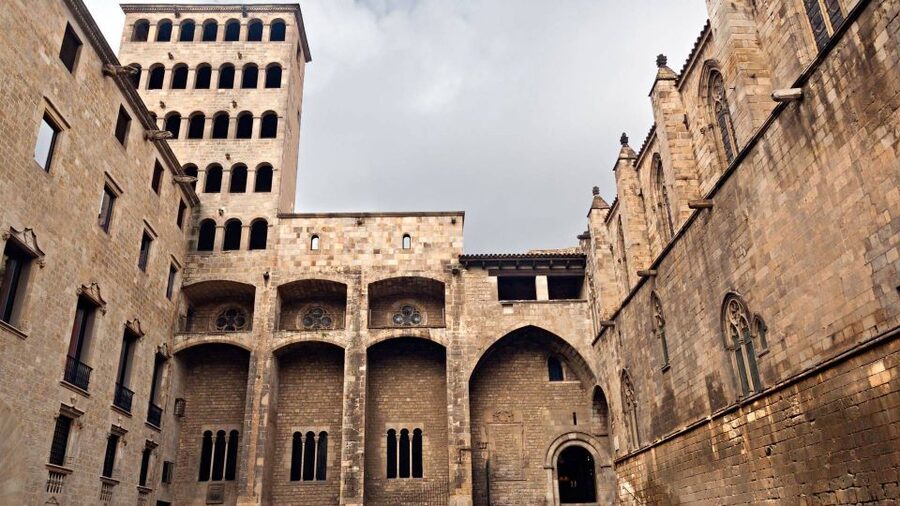
The route also passes the Palace of Catalan Music, another reminder that Barcelona’s identity is closely tied to art, music, and distinctive architecture. The information provided does not promise an interior visit, so think of this as an exterior sight and a brief part of the wider city story.
This section helps connect the old center to Barcelona’s later cultural life. You are not only moving from one historic building to another. You are seeing how the city continued to express itself through public spaces, churches, music halls, markets, and commercial streets.
The walk ends in El Born at Passeig del Born. That finish is more practical than a return to the starting point. You can continue on foot, stop for a drink, or use the area as a base for further exploring.
Because the start and finish are different, check your plans before booking. The route is designed as a one-way walk through the old center, not a loop back to the Movistar Centre.
What $21 gets you
At $21 per person, this is a good-value introduction to central Barcelona. You are paying for 2.5 hours in the standard description, with some departures listed as lasting up to 4 hours, plus a live English or Spanish-speaking guide and a route that covers a large number of important areas.
The value comes from the connections. You could walk past Roman walls, Plaça del Rei, the cathedral, La Rambla, Boqueria, and El Born on your own, but you would need to research the background and plan the route yourself. Here, the guide gives those sights a shared story.
You should not treat the price as covering admissions, meals, or personal purchases. Those costs are separate. The tour is mainly about access to explanation, orientation, and local suggestions.
A private group option is available if you want the route shaped more closely around your interests. The regular small group, capped at 15 people, should suit most people who want a social experience without a large crowd.
Who should book this walk
I would recommend it to first-time visitors who want a clear introduction to Barcelona’s oldest districts. It also suits history fans, architecture students, curious food lovers, and anyone who prefers learning a city through streets rather than from a bus window.
The tour works especially well for people who enjoy stories, questions, and small visual details. The guides use humor, local anecdotes, puzzles, and architectural observations, so the experience is not limited to a formal list of dates.
It may be less suitable if you have limited mobility, dislike several hours on foot, or want extended time inside museums and churches. The exact duration can stretch toward four hours, and the route includes old streets where surfaces and crowds may slow you down.
Bring comfortable shoes and leave large luggage behind. Free cancellation is available up to 24 hours before the start, and you can reserve now and pay later, which helps if your Barcelona plans are still moving.
Should you book the Barcelona Old Town and Gothic Quarter tour?
Yes, if you want a well-priced orientation to Barcelona’s Roman, medieval, and Gothic center. The strongest reason to book is the combination of major landmarks and small details, supported by guides who are repeatedly praised for clear explanations, humor, local passion, and useful food advice.
Book it early in your stay if you can. You will finish in El Born with a better sense of where to eat, what to revisit, and which streets deserve a second look. Skip it only if you need a slow, self-guided day or want interior visits to be the main focus.
FAQ
How long does the Barcelona Old Town and Gothic Quarter tour last?
The tour is described as lasting 2.5 hours, while available options may run from 2.5 to 4 hours. Check the available start times and duration when choosing your option.
What languages are available?
The live guide speaks English or Spanish. The guides named in the available information include Alba, Joris, Nilo, Ane, Laura, Steven, Isabel, and others.
Where does the tour begin?
The listed starting location is the Movistar Centre, but the meeting point may vary depending on the option you book.
Where does the tour finish?
The walk finishes at Passeig del Born, 08003 Barcelona, in the El Born area.
What sights are included?
The route covers the Gothic Quarter, La Rambla, La Boqueria, Plaça Reial, Barcelona Cathedral, El Born, Santa Maria del Mar, the Palace of Catalan Music, Roman walls, and the Roman baths at Pati Llimona. Some sights are passed from outside rather than visited inside.
How large is the group?
The standard tour is a small-group experience with a maximum of 15 participants. A private group option is also available.
What should I bring?
Wear comfortable shoes for several hours of walking. Large bags and luggage are not allowed. Children under 2 can join for free.
More Barcelona Walking Tours
- Barcelona Tapas and Wine Experience Small-Group Walking Tour
★ 5.0 · 5,804 reviews - Barcelona: Tapas Walking Tour with Food, Wine, and History
★ 4.8 · 4,261 reviews - Barcelona Tapas Walking Tour: Food, Wine & History
★ 4.5 · 1,928 reviews - Barcelona: Tapas Food Crawl Walking Tour with Tastings
★ 4.9 · 1,798 reviews
Recently added around Barcelona
- Montserrat very early : Hiking, Abbey, very small group★ 5.0 · 127 reviews
- Guided Private Yacht Tour in Barcelona Spain★ 5.0 · 6 reviews
- Private Tour from Barcelona to Montserrat (with guide)★ 4.5 · 6 reviews
- Private Tour from Barcelona to Costa Brava (with guide)★ 5.0 · 5 reviews
- Andorra Tour★ 4.0 · 7 reviews
- Barcelona Gaudi Tour: Sagrada Familia, Casa Batllo & Casa Mila★ 5.0 · 4 reviews
- Street Art, Sculptures & Crime Stories Walking Tour – Barcelona★ 5.0 · 11 reviews
- Wine Tasting in Barcelona (Catalan Varieties) Small Groups★ 5.0 · 10 reviews
Barcelona Gothic Quarter Tours, compared.
Barcelona all included: Sagrada, Park Güell, Montjuic & Gothic
Read our review →
Barcelona Gothic Quarter Tapas & Taverns Food & Wine Tour
Read our review →
Gothic Quarter Ghosts and Legends Walking Tour
Read our review →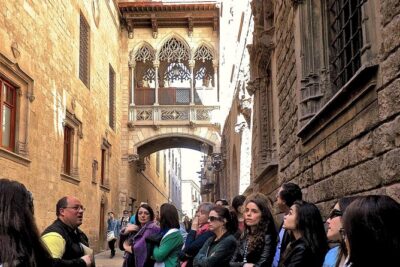
Barcelona Old Town & Gothic Quarter Small Group Tour
Read our review →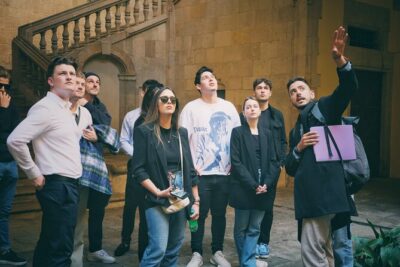
Ramblas, Old Town, Gothic and Gaudi Architecture Walking Tour
Read our review →
El Born and Gothic Quarter Wine & Tapas Bar Tour
Read our review →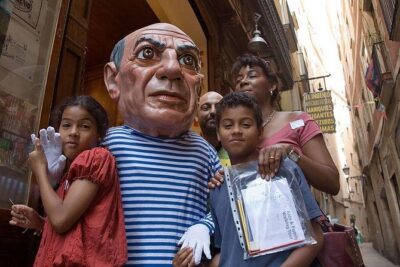
Kids and Family Gothic Quarter Walking Tour in Barcelona
Read our review →
Browse the lists this tour appears in