
Reviewed · BARCELONA WALKING TOURS
Barcelona in 2 Hours: Guided Walk Through History and Sights
Barcelona’s old center is best understood on foot, one narrow lane and battered stone wall at a time. This two-hour walk links the Gothic Quarter with El Born, using places such as Els 4 Gats, Plaça Sant Felip Neri, the former Jewish quarter, and Santa Maria del Mar to explain how art, religion, war, trade, and Catalan identity shaped the city.
I like the route for two clear reasons: it gives you far more context than a quick photo stop, and it packs major sights with lesser-known corners into a short morning or afternoon. Guides including Darren, Petra, Jorge, Sonia, Sonja, Lydia, Sarah, Vanessa, and Rolene have led this walk, with special praise for their storytelling and local recommendations. The main consideration is pace: eleven stops in about two hours means you’ll usually hear an introduction rather than receive a full visit inside every building.
Key things to know before you book
- Picasso and Gaudí’s café: Els 4 Gats introduces Barcelona’s modernist art scene through a real meeting place, not just a monument.
- A compact old-city route: The walk connects the Gothic Quarter and El Born without wasting time on long transfers.
- Catalan identity is central: La Diada, the 1714 defeat, independence, government, and local saints all appear along the way.
- Eleven stops in two hours: Expect a brisk overview with roughly ten minutes at each listed location.
- Small enough to follow: The maximum group size is 20, with a private upgrade available.
- Bring practical gear: Good walking shoes and sun protection matter, and street noise can make a guide harder to hear.
Why this short Barcelona walk works
At $22.99 per person, this is priced as an affordable orientation rather than a full museum tour. You are paying for a local guide who connects scattered streets and buildings into one story. That matters in Barcelona, where Roman walls, medieval institutions, Catholic tradition, modernist art, and Catalan politics often sit within a few minutes of one another.
I especially like the route for a first day in the city. Jorge, for example, has been praised for pointing out small details and offering useful local tips, while Vanessa’s approach included archaeology, government, art, religious buildings, and Catalan tensions. You can use the walk to decide which places deserve a longer return visit.
The group limit of 20 is helpful in narrow Gothic Quarter lanes. Still, this is an outdoor walking tour, and the old center can be noisy. One participant found that background sound made some explanations difficult without a speaker or audio guide. Stay close to the guide, and consider asking for clarification if you miss a point.
More Barcelona Walking Tours:
- Barcelona Tapas and Wine Experience Small-Group Walking Tour
★ 5.0 · 5,804 reviews - Barcelona: Tapas Walking Tour with Food, Wine, and History
★ 4.8 · 4,261 reviews - Barcelona Tapas Walking Tour: Food, Wine & History
★ 4.5 · 1,928 reviews
Els 4 Gats and Barcelona’s artistic past
The walk begins at Plaça del Vuit de Març and quickly reaches Els 4 Gats, a historic café and restaurant associated with artists including Pablo Picasso and Antoni Gaudí. Its Art Nouveau design gives you an early glimpse of the creative spirit that helped make Barcelona famous.
The value here is not simply the façade. A café can tell you how artists met, argued, showed work, and built reputations. Picasso’s connection makes the stop especially useful for anyone interested in Barcelona’s artistic identity, while Gaudí’s presence ties the café to the broader modernist culture of the city.
You should expect about ten minutes here, with free admission to the stop. That short time is enough for an explanation and photographs, but not a leisurely meal or extended interior visit.
El Món Neix en Cada Besada and the memory of 1714
The next stop, El Món Neix en Cada Besada, is a large photomosaic that may first look like a simple social-media backdrop. The guide gives it a more serious frame by connecting the artwork to Catalonia’s defeat on September 11, 1714.
That date is tied to La Diada, Catalonia’s national day. The stop helps explain why public art in Barcelona often carries political and emotional meaning. You are not just looking at a colorful wall. You are being asked to consider how a city remembers loss, identity, and the wish for self-government.
This is one of the tour’s best examples of its method: take a popular picture stop and add the story beneath it. Admission is free, and the visit lasts about ten minutes.
Barcelona Cathedral and the story of Saint Eulalia
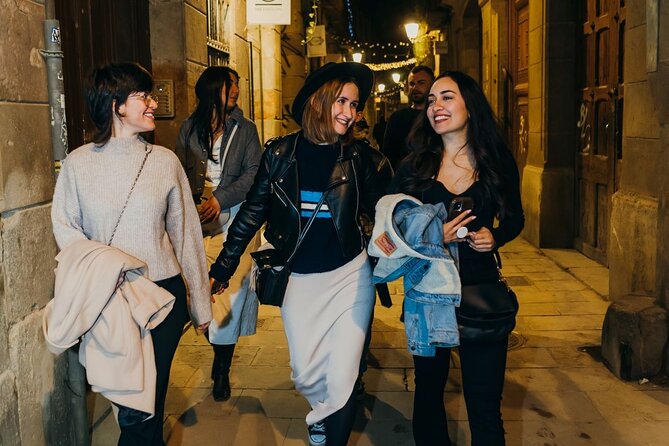
Barcelona Cathedral brings you into the religious heart of the Gothic Quarter. Built over centuries, the Gothic church is linked to Saint Eulalia, Barcelona’s patron saint, whose death made her a martyr.
The guide’s role here is to give you the essential story and show how the cathedral fits into the city’s past. You should not expect a detailed architectural lecture or a long interior visit in this format. The listed stop lasts about ten minutes, and admission is not included.
That extra cost matters if you plan to enter. If you only want the outside and the historical setting, the walk still gives you a useful introduction. If the cathedral is high on your personal list, note its location and return later with more time.
More 2-Hour Experiences in Barcelona:
- Barcelona: Two-Hour Midday or Sunset Sailing Cruise
★ 4.8 · 1,732 reviews - Barcelona: 2-Hour City Sights Guided Segway Tour
★ 4.9 · 453 reviews - Barcelona: 2-Hour Sailboat Tour with Snacks and Drinks
★ 4.8 · 357 reviews - Barcelona: Jewish Quarter 2-Hour Walking Tour
★ 4.8 · 333 reviews
Casa de l’Ardiaca and Roman Barcelona
Casa de l’Ardiaca is a small architectural stop with Gothic and Renaissance elements. It also preserves traces of Roman Barcelona, including sections of the old wall and arches from the aqueduct that supplied water to Barcino.
I like this part because it compresses several eras into one view. You can move from modern Barcelona to the medieval city and then back to Roman foundations without crossing a museum or taking public transport. The remains help you picture Barcelona as an ancient settlement rather than a city that began with its famous churches and boulevards.
The stop is free and lasts roughly ten minutes. Since the site is small, the guide’s explanation is the main event.
Pont del Bisbe and a Gothic Quarter legend
Pont del Bisbe, or Bishop’s Bridge, is one of the most photographed corners in the old city. Its stone span joins buildings above the lane and has a legend attached to the figure carved into its structure.
The story is designed to entertain both superstitious visitors and skeptics. Pay attention before walking underneath, since the point is not only the bridge’s appearance but also the belief surrounding it. This is a good pause in the route because it breaks up the heavier political and religious material with a local tale.
The visit is free and takes about ten minutes. Expect a photo opportunity, but also expect other people in the lane. The bridge is famous precisely because it is easy to photograph and easy to reach.
Plaça Sant Felip Neri and the city’s scars
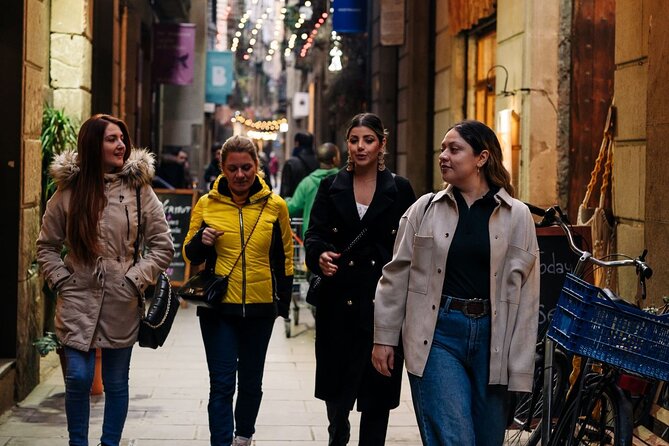
Plaça Sant Felip Neri is quieter in mood. Its past is tied to a tragic event and to the wider struggle over Catalan independence. The square still bears visible scars, giving the guide a chance to discuss how political conflict can remain present in the walls of a city.
This is the kind of place that benefits from a guide. Without context, you might simply see a small square with damaged stone. With context, you can connect the setting to Barcelona’s painful memory and its continuing political identity.
The stop is free and lasts around ten minutes. Because the subject is sombre, the tone here is more reflective than at Els 4 Gats or Pont del Bisbe.
El Call and the former Jewish quarter
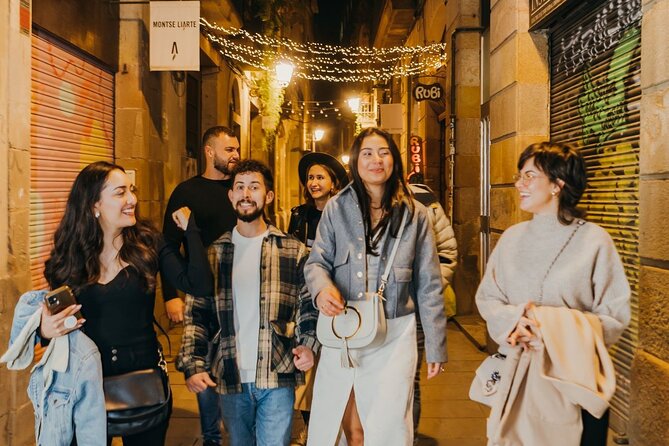
MUHBA El Call takes you into the former Jewish district, where narrow streets and medieval buildings preserve part of Barcelona’s religious and social past. The area is compact, so you can notice how the street plan differs from the wider squares and grand civic spaces elsewhere on the route.
This stop adds needed range to the tour. Barcelona’s story is not only about Catalan institutions, Catholic churches, or modernist artists. The Jewish quarter points to a community that once formed an important part of the city and gives you another way to read the old streets.
Admission to the stop is free. Allow about ten minutes, and keep an eye on the guide as the lanes can make a group spread out.
Plaça de Sant Jaume and Catalan public life
Plaça de Sant Jaume is Barcelona’s main civic square. It contains the seat of the Catalan government and City Hall, and it has served as a setting for both celebration and protest.
This is where the political thread of the walk becomes especially clear. Earlier stops introduce the events of 1714 and the idea of Catalan identity. Here, you see the institutions connected to present-day public life. The guide also links the square to an important figure celebrated during one of Catalonia’s beloved holidays.
The square is free to visit and open to the city around it. You may find it busy with public activity, so listen carefully. The setting itself is part of the lesson: this is not a sealed historic site but a working civic space.
Plaça del Rei and the Royal Palace
Plaça del Rei has a grander feel, with the Royal Palace forming its main historic focus. The square also opens a darker chapter through its connection to the Spanish Inquisition.
This pairing is useful because it keeps the tour from treating royal power as decoration alone. The architecture suggests ceremony and authority, while the Inquisition story reminds you that power could also be harsh and frightening. A good guide can make that contrast clear without turning the stop into a long academic lecture.
The visit is free and lasts about ten minutes. If you are drawn to royal interiors or museum collections, use the stop as a marker for a later visit rather than expecting a full palace tour.
Plaça de l’Àngel and the legend of Saint Eulalia
Plaça de l’Àngel once served as a grain-trading hub and was formerly known as Wheat Square. Its present name comes from a story about a heavenly apparition during the procession of Saint Eulalia’s body.
This stop returns to the life of Barcelona’s patron saint, but from a public-square angle rather than a cathedral setting. It also shows how names preserve old functions and legends. A place that once handled grain now carries a religious story in its name.
The stop is free, and the scheduled visit lasts about ten minutes. It is a short but useful bridge between the Gothic Quarter and the final destination in El Born.
Santa Maria del Mar and the maritime city
The walk ends at the Basilica de Santa Maria del Mar in El Born. This Gothic basilica is closely tied to the neighborhood and to Barcelona’s maritime past, making it a fitting final stop after the royal, religious, political, and commercial sites earlier in the walk.
The ending also shifts the atmosphere. The route begins with artists and cafés, moves through Roman and medieval layers, confronts political memory, and finishes with a church linked to the sea. The basilica gives you a strong visual endpoint and places you in one of Barcelona’s most useful areas for continuing your own exploration.
Admission is not included, and the listed stop lasts about ten minutes. You can treat the basilica as the end of the orientation, then decide if you want to enter or explore El Born on your own.
Guides, group size, and the feel of the walk
The strongest guide feedback centers on clear explanations, lively delivery, and useful local advice. Darren has been praised for explaining in English with clarity and enthusiasm. Petra brought Catalan culture into the story, while Sonia added an archaeological viewpoint and offered a successful tapas recommendation.
Lydia’s style has been described as conversational and energetic. Sarah was noted for her spirited approach, and Vanessa handled a wide range of subjects while answering questions from the group. Rolene received praise for making a large amount of history and culture fun, although one assessment found the content less strong on an early outing. These details tell you something practical: the guide shapes the experience, and individual styles may vary.
The maximum group size is 20. That is not the same as a private walk, but it is more manageable than a large coach group, especially in tight lanes. A private upgrade is available if you want personalized attention or have specific interests.
The tour is offered in English. It is near public transportation, confirmation arrives when you book, and most people can participate. Wear comfortable shoes, use sunblock, and stay near the guide when street noise rises.
Is $22.99 good value?
For $22.99, I see this as a good-value introduction to Barcelona’s oldest central districts. You receive two hours of guided context, eleven listed stops, and a route that would be hard to assemble efficiently on your first day.
The value is strongest if you want orientation and stories rather than entrance-heavy sightseeing. Two cathedral admissions are not included, and the short schedule means you will not explore each building at length. That is a limitation, but it also keeps the price modest.
The walk is less useful for someone who already knows the Gothic Quarter well or wants extended time inside churches and museums. In that case, a private tour or a focused specialist visit may suit you better.
Should you book it?
I would book this walk for a first or second day in Barcelona, especially if you want the Gothic Quarter and El Born to make sense before exploring them alone. You’ll get art, Roman remains, Jewish history, royal power, Catalan politics, religious stories, and maritime culture in one compact route.
Book it if you enjoy stories, local context, and small details more than simply checking off famous buildings. Skip it if you dislike brisk group walks or want long interior visits. At this price, it is a sensible way to get your bearings, identify places worth revisiting, and begin Barcelona with more than postcard views.
FAQ
How long is the Barcelona walking tour?
The tour lasts approximately two hours.
What is the price?
The listed price is $22.99 per person.
What language is the tour offered in?
The tour is offered in English.
Where does the tour start?
It starts at Plaça del Vuit de Març in Ciutat Vella, Barcelona.
Where does the tour end?
It ends at Basílica de Santa Maria del Mar, Plaça de Santa Maria, 1, in Ciutat Vella.
What places are included on the route?
The route includes Els 4 Gats, El Món Neix en Cada Besada, Barcelona Cathedral, Casa de l’Ardiaca, Pont del Bisbe, Plaça Sant Felip Neri, MUHBA El Call, Plaça de Sant Jaume, Plaça del Rei, Plaça de l’Àngel, and Basilica de Santa Maria del Mar.
Are entrance tickets included?
Admission is not included for Barcelona Cathedral or Basilica de Santa Maria del Mar. The other listed stops have free admission.
How large is the group?
The tour has a maximum of 20 participants. A private tour upgrade is available.
Can I cancel for a full refund?
Yes. You can cancel at least 24 hours before the experience start time for a full refund. Cancellations or changes made less than 24 hours before the start time are not accepted for a refund.
More Barcelona History Walks
- Barcelona: 2.5-Hour Bike or E-Bike Historical Tour
★ 4.5 · 1,262 reviews - Barcelona Erotic Museum – Explore Art, History & Fun
★ 4.4 · 450 reviews - Andorra Original History and Sightseeing Tour (Private, Pickup)
★ 5.0 · 350 reviews - Barcelona: Dark History Night Walking Tour
★ 4.8 · 344 reviews
Recently added around Barcelona
- Montserrat very early : Hiking, Abbey, very small group★ 5.0 · 127 reviews
- Guided Private Yacht Tour in Barcelona Spain★ 5.0 · 6 reviews
- Private Tour from Barcelona to Montserrat (with guide)★ 4.5 · 6 reviews
- Private Tour from Barcelona to Costa Brava (with guide)★ 5.0 · 5 reviews
- Andorra Tour★ 4.0 · 7 reviews
- Barcelona Gaudi Tour: Sagrada Familia, Casa Batllo & Casa Mila★ 5.0 · 4 reviews
- Street Art, Sculptures & Crime Stories Walking Tour – Barcelona★ 5.0 · 11 reviews
- Wine Tasting in Barcelona (Catalan Varieties) Small Groups★ 5.0 · 10 reviews
Barcelona Walking Tours, compared.

Barcelona Tapas and Wine Experience Small-Group Walking Tour
Read our review →
Tapas Walking Tour with Food, Wine, and History
Read our review →
Barcelona Tapas Walking Tour: Food, Wine & History
Read our review →

Gothic Quarter Ghosts and Legends Walking Tour
Read our review →
Barcelona Helicopter, Sailboat & Old Town Private Walking Tour
Read our review →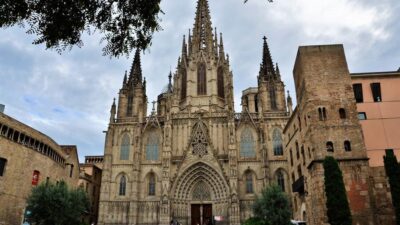

Helicopter Flight, Boat Ride, and Walking Tour
Read our review →Browse the lists this tour appears in