
Reviewed · BARCELONA WALKING TOURS
The Spanish Civil War & Franco Barcelona Walking Tour
Barcelona’s Civil War story is written in places you could easily pass without noticing. This 2.5-hour walking tour links Plaça de Catalunya, La Rambla, the old hospital, Santa Maria del Pi, and Plaça Sant Felip Neri to the political violence, working-class struggles, and Franco-era repression that shaped the city.
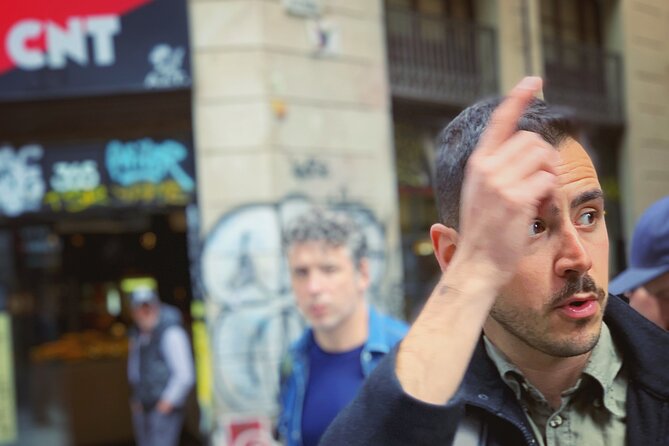
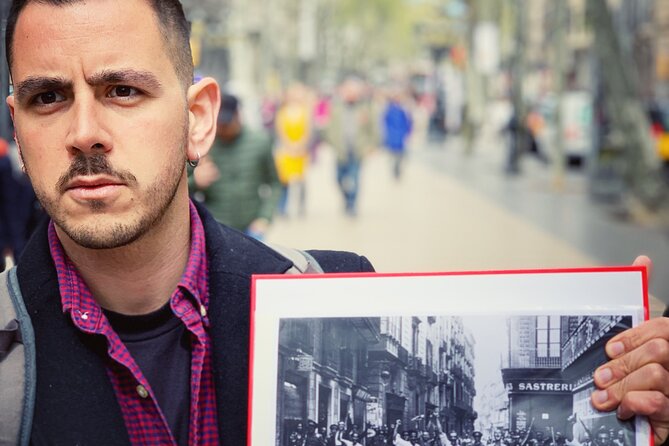
I like the way the tour uses historic photographs to connect today’s streets with wartime scenes. I also like its effort to explain the many Republican factions, anarcho-syndicalists, nationalists, and Franco’s dictatorship rather than reducing the conflict to a simple good-versus-bad tale.
The main drawback is that this is a serious, information-heavy walk. You need comfortable shoes, patience with complicated politics, and enough focus to follow a dense story. A €1 guide-radio fee is also paid separately at the meeting point.
Key points at a glance
- Plaça de Catalunya sets the political stage: The tour begins at one of Barcelona’s key Civil War locations, not just a convenient central square.
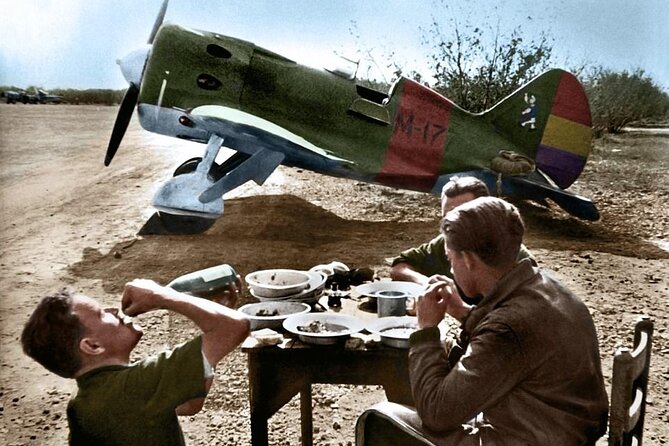
- Historic photos make the past visible: Your guide uses wartime images and posters to show how familiar streets were affected.
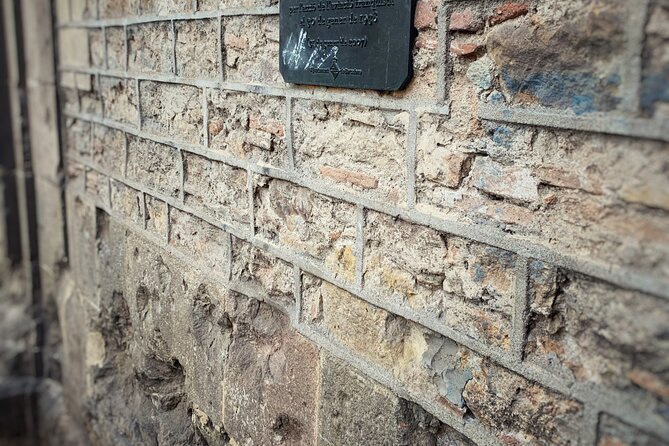
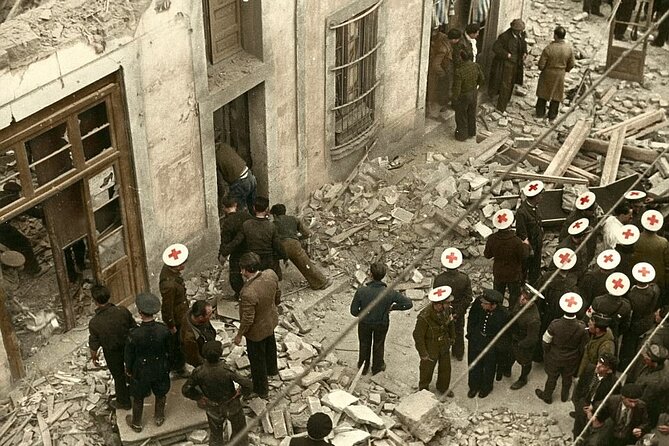
- The Old Town carries the physical scars: Plaça Sant Felip Neri offers one of the clearest reminders of wartime destruction.
- The politics get proper attention: You’ll sort through the competing Republican groups, anarcho-syndicalism, Franco’s forces, and the social pressures behind the conflict.
- Guide quality matters: Henrieta, Filipa, Chrysa, Evan, Yannis, Evangelos, Onno, and other guides have led this experience, with especially strong praise for clear explanations and passionate storytelling.
- Plan for an active outing: The route lasts about 2 hours 30 minutes, has a maximum of 25 people, and requires a fair amount of walking.
Why this tour changes the way you see Barcelona
Most first walks through Barcelona focus on Gaudí, medieval lanes, food, or the city’s Roman remains. This outing takes a different route through the city’s 20th-century wounds. You still see familiar Old Town sights, but your guide asks you to notice bullet marks, damaged facades, political symbols, and places where ordinary people were caught in the conflict.
That shift is the tour’s real value. Barcelona can feel like a polished holiday city, yet the streets also carry memories of barricades, air raids, factional fighting, hunger, political idealism, and dictatorship. The guide helps you connect those subjects to the pavement beneath your feet.
You do not need a strong background in Spanish history. Several guides are praised for making the subject understandable to people starting from scratch. If you already know the broad story, you can still gain something from the local focus, especially the events that took place in Barcelona between 1936 and late 1938.
The subject is sensitive, and the tour treats it that way. It does not present the war as a neat lesson with one uncomplicated explanation. Instead, you’ll hear how different political groups within the Republican side disagreed, sometimes violently, even while fighting Franco’s forces.
More Barcelona Walking Tours:
- Barcelona Tapas and Wine Experience Small-Group Walking Tour
★ 5.0 · 5,804 reviews - Barcelona: Tapas Walking Tour with Food, Wine, and History
★ 4.8 · 4,261 reviews - Barcelona Tapas Walking Tour: Food, Wine & History
★ 4.5 · 1,928 reviews
Plaça de Catalunya: starting with a city under pressure
The meeting point is outside Foot Locker at Plaça de Catalunya, 20. This is an easy place to reach by public transportation, but give yourself time to find the exact meeting spot in the busy square.
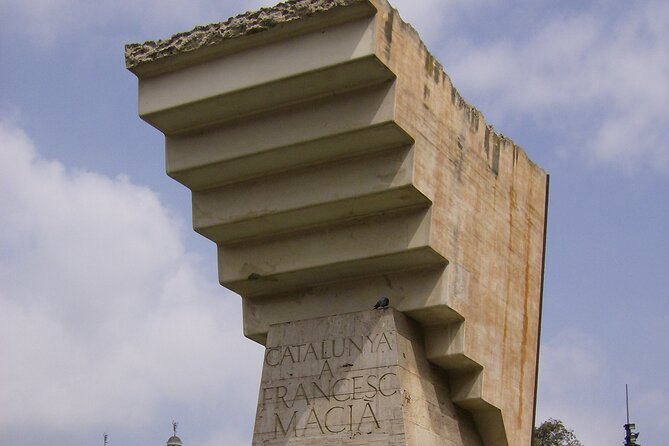
The opening stop lasts about 10 minutes. Plaça de Catalunya is presented as an important Civil War location, giving your guide a chance to establish the setting before the walk moves into the Old Town. This is where the tour begins to explain Barcelona’s working-class politics, the rise of anarcho-syndicalism, and the social tensions that helped shape the city before and during the war.
I appreciate this kind of opening because it gives you a basic map of the conflict. Without it, names and factions can blur together. The introduction helps explain why Barcelona became such an important center of political activity and why the war was not simply a military contest between two tidy sides.
Your guide may use maps, photographs, or posters here and at later stops. Pay attention to these visual aids. The city itself has changed, and many events lack large monuments or clear signs. The images help fill in what the buildings no longer show.
La Rambla: familiar ground, unfamiliar stories
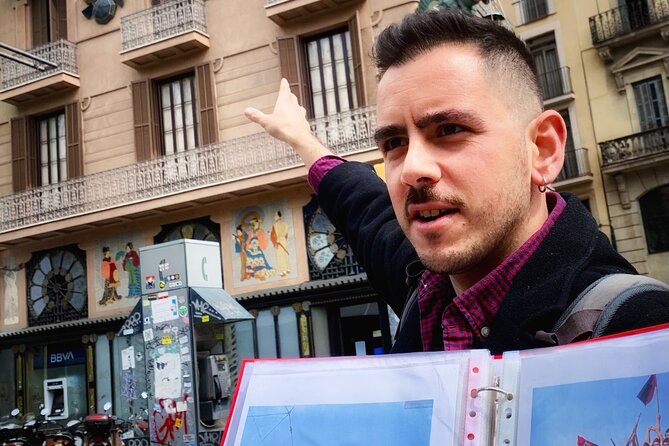
The next stop is La Rambla, where the guide points out several Civil War-related places. The listed visit lasts about 10 minutes, though the value comes less from seeing a single monument than from understanding how a famous public street functioned during the conflict.
La Rambla is easy to treat as a route between attractions. This tour asks you to see it as a place where politics, commerce, crowds, and violence met. Your guide connects the street to the wider struggle between different factions on the Republican side, as well as to the pressures faced by Barcelona’s working class.
This is also where the tour’s use of old images can be especially useful. A photograph or poster can show you a street filled with wartime signs, uniforms, barricades, or political messages, then bring your eyes back to the same area today.
Do not expect a museum-style display at every stop. The city has few formal markers for many of these events. That can be frustrating if you prefer large plaques and preserved rooms, but it also makes the guide’s role more important. You are learning to read a modern street through evidence and explanation.
The old hospital and the quieter layers of the route
The Antic Hospital de la Santa Creu is a 15th-century hospital and the third listed stop. The visit is brief, about five minutes, but it adds a useful layer to the route. Barcelona’s Civil War story did not unfold only in government offices or on battle lines. Hospitals, public buildings, churches, and ordinary streets all became part of the wartime experience.
The building also helps place the 20th-century story within the much longer life of the city. Barcelona’s medieval and early modern architecture can make the Civil War feel distant. Your guide works against that distance by showing how modern political events took place inside and around old structures.
This is a good moment to listen for the connection between social history and military history. The tour includes the region’s working-class past and the anarcho-syndicalist period, so the focus is not limited to generals and politicians. You’ll hear about the ideals, anger, hardship, and competing visions of society that gave the conflict its force.
A different sort of day out in Barcelona:
- Barcelona: Park Güell Admission Ticket
★ 4.4 · 76,534 reviews - Barcelona: Casa Batlló Entry with Self-Audioguide Tour
★ 4.7 · 25,359 reviews - Barcelona: 24 or 48-Hour Hop-On Hop-Off Bus Tour
★ 4.4 · 20,872 reviews - Barcelona: Park Guell Guided Tour with Skip The Line Entry
★ 4.7 · 17,563 reviews
Santa Maria del Pi and the value of an unexpected connection
The Basilica de Santa Maria del Pi is an old church with a lesser-known connection to the Civil War. The stop lasts around five minutes, and admission is not included, so treat this as an exterior or guide-led stop unless your booking details tell you otherwise.
Its place on the route shows one of the tour’s strengths: it looks for traces beyond the obvious battle sites. A church can carry political, social, and wartime meaning even when there is no large memorial explaining it.
The short visit also keeps the walk moving. This is not a series of long interior tours. The guide gives you a focused explanation, then continues through the streets where the larger story unfolds.
Plaça Sant Felip Neri: beauty beside destruction
Plaça Sant Felip Neri is likely to be the most emotionally striking stop. It is a small, atmospheric square, but its walls also preserve visible scars connected with the destruction of the Civil War.
Here, the tour’s central method becomes clear. You are not only hearing dates and political labels. You are standing in a place where the physical damage still speaks, even within one of Barcelona’s most picturesque corners.
The square can feel almost too beautiful for the history attached to it. That tension is part of what makes the stop memorable. Your guide explains what happened and helps separate the peaceful appearance of the present from the violence of the past.
Allow yourself time to look closely at the walls while listening. This is not a stop to rush through for a photograph. It gives the tour an emotional anchor after the earlier explanations of factions and political movements.
Making sense of the factions and Franco’s dictatorship
The Spanish Civil War is difficult to explain in a short tour because the political divisions do not fit into two simple camps. The guide covers the main groups and explains how disagreements within the Republican side affected Barcelona. You’ll also hear about the forces supporting Franco and the dictatorship that followed.
This political work is the tour’s biggest challenge and its biggest reward. Some guides, including Evan, Yannis, Evangelos, and Henrieta, are praised for taking time to explain who people were and why the factions mattered. Chrysa is noted for answering questions carefully and handling the subject with thoughtfulness. Filipa is praised for connecting political and social pressures to the wider story of 20th-century Spain.
Guide style can vary. One poor experience described a messy sequence of names and events, with too little use of the maps and images. That is worth taking seriously. A subject this complex depends heavily on clear structure, and your experience may depend on the particular guide assigned that day.
The stronger approach is to ask questions as you go. The guides are expected to welcome them, and several are described as flexible when participants need a point clarified. If you are lost, say so. It is better to pause over one faction than to carry confusion through the rest of the walk.
How the guides shape the experience
The named guides associated with this tour include Henrieta, Filipa, Chrysa, Evan, Yannis, Evangelos, and Onno. Their backgrounds and presentation styles differ, but the strongest pattern is clear explanation paired with enthusiasm for the subject.
Henrieta is described as giving a detailed account of both sides of the war, including the different Republican groups and events from 1936 through late 1938. Evan is praised for explaining difficult political material slowly and clearly, while Yannis is noted for connecting the past with everyday life in Barcelona.
Chrysa is described as patient, engaging, and thoughtful when handling difficult questions. Filipa is praised for bringing Spain’s 20th-century politics and social pressures to life. Onno is noted for adjusting the route to address questions, when possible.
That range matters because this is not a tour where the buildings do all the work. Your guide is the interpreter, lecturer, and storyteller. The best guides make the sequence clear, use images at the right moment, and avoid assuming that you already know the difference between the various political groups.
The group is capped at 25 people. That is not tiny, but it is manageable for a city walk. A radio headset costs €1 per person and is paid separately to an outside provider at the meeting point. I would pay it, especially if the group is near the maximum or if street noise makes it hard to hear.
Walking conditions, timing, and value
The tour lasts about 2 hours 30 minutes and covers several Old Town locations. One guide-led account describes the walking as minimal, while another calls it walking-intensive, so your experience may depend on the route and pace that day. Either way, comfortable shoes are a sensible choice.
At $47.16 per person, this is not a cheap orientation walk. You are paying for a specialist subject, an English-speaking guide, visual material, and a carefully connected story rather than a general introduction to Barcelona.
I think the price makes sense if you are genuinely interested in the Spanish Civil War, Franco’s dictatorship, Catalan identity, or the political history of Barcelona. It is less convincing if you want a light sightseeing stroll with plenty of time for photographs and casual conversation.
The tour includes the guide, the Civil War sites, historical context, images, and stories from the dictatorship. It does not include admission to the Basilica de Santa Maria del Pi, and the €1 headset charge is extra. Group discounts may be available, which could improve the cost for families or larger parties.
Book early if the schedule matters to you. This experience is booked around 26 days ahead on average, suggesting that leaving it until the last day of a short Barcelona visit may not work.
Who should take this walk?
I would choose this tour near the start of a Barcelona visit if the subject interests you. It gives you a set of historical references that can change how you interpret the Old Town for the rest of your stay.
It suits adults and older students who enjoy political history, local memory, architecture, and social movements. It also works for people who know little about Franco’s dictatorship and want a clear starting point rather than a dense academic book.
You should think twice if you dislike long explanations, sensitive subjects, or stories with many political actors. The tour is not designed as a cheerful break between attractions. It asks you to concentrate.
Most people can participate, service animals are allowed, and the route is near public transportation. Still, the practical issue is stamina and hearing. Wear good shoes, stay close to the guide, and use the radio headset if offered.
Should you book the Spanish Civil War and Franco Barcelona Walking Tour?
Book it if you want Barcelona to make more sense beyond its famous architecture and food. The strongest parts are the site-specific storytelling, the old photographs, Plaça Sant Felip Neri, and the effort to explain internal political divisions rather than glossing over them.
I would not book it simply because you have two spare hours. The subject is serious, the price is higher than a basic city walk, and guide quality can affect how easy the history is to follow.
For the right audience, though, this is a worthwhile use of an afternoon. You leave with more than a list of dates. You gain a clearer sense of how Barcelona’s streets, working-class movements, political conflicts, and Franco-era memories fit together.
FAQ
How long is the Spanish Civil War and Franco Barcelona Walking Tour?
The tour lasts approximately 2 hours 30 minutes.
What language is the tour offered in?
The tour is offered in English.
How much does the tour cost?
The listed price is $47.16 per person.
Where does the tour begin?
It begins at Foot Locker, Plaça de Catalunya, 20, Ciutat Vella, Barcelona.
Where does the tour finish?
The activity ends at a different location, but the supplied details do not specify the exact ending point.
What places does the tour visit?
The route includes Plaça de Catalunya, La Rambla, the Antic Hospital de la Santa Creu, the Basilica de Santa Maria del Pi, and Plaça Sant Felip Neri.
Is admission to the Basilica de Santa Maria del Pi included?
No. Admission is listed as not included.
Is there an extra charge for the guide headset?
Yes. A €1 per person guide-radio fee is paid at the meeting point to an outside provider.
How large is the group?
The maximum group size is 25 people.
Can I cancel for a full refund?
Yes, if you cancel at least 24 hours before the experience start time. Cancellations made less than 24 hours before the start time are not refunded. If poor weather or an insufficient number of participants causes the operator to cancel, you are offered another date or a full refund.
Recently added around Barcelona
- Montserrat very early : Hiking, Abbey, very small group★ 5.0 · 127 reviews
- Guided Private Yacht Tour in Barcelona Spain★ 5.0 · 6 reviews
- Private Tour from Barcelona to Montserrat (with guide)★ 4.5 · 6 reviews
- Private Tour from Barcelona to Costa Brava (with guide)★ 5.0 · 5 reviews
- Andorra Tour★ 4.0 · 7 reviews
- Barcelona Gaudi Tour: Sagrada Familia, Casa Batllo & Casa Mila★ 5.0 · 4 reviews
- Street Art, Sculptures & Crime Stories Walking Tour – Barcelona★ 5.0 · 11 reviews
- Wine Tasting in Barcelona (Catalan Varieties) Small Groups★ 5.0 · 10 reviews
Barcelona Walking Tours, compared.

Barcelona Tapas and Wine Experience Small-Group Walking Tour
Read our review →
Tapas Walking Tour with Food, Wine, and History
Read our review →
Barcelona Tapas Walking Tour: Food, Wine & History
Read our review →

Gothic Quarter Ghosts and Legends Walking Tour
Read our review →
Barcelona Helicopter, Sailboat & Old Town Private Walking Tour
Read our review →

Helicopter Flight, Boat Ride, and Walking Tour
Read our review →Browse the lists this tour appears in