
Reviewed · BARCELONA GOTHIC QUARTER TOURS
Private Barcelona Old Town and Gothic Quarter Walking Tour
Barcelona’s oldest streets hold the city’s best surprises: Roman walls tucked beside modern shops, quiet medieval squares, political landmarks, and grand churches reached by narrow lanes. This private walk connects those pieces, from Plaça de Catalunya to the Born district, in about two and a half hours.
I like the private format, which lets you ask questions, slow down for photos, or skip subjects you already know. I also like the guide-led context: Montse, Olga, Isabel, Baggio, and others have been praised for explaining Catalonia’s relationship with Spain, pointing out overlooked details, and offering practical tips for tapas, flamenco, tea, and later sightseeing.
The main consideration is the price, $96.75 per person, which is a serious spend for a walking tour that does not include food, drinks, or entry tickets. It can make good sense for a first day in Barcelona, but less so if you only want a quick stroll or already know the Old Town well.
Five things to know before you book
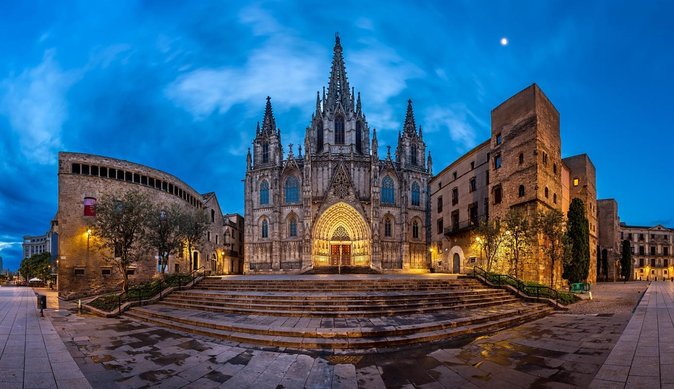
- Roman Barcelona appears beneath the Gothic Quarter: Expect ancient walls, columns, and traces of the city’s first settlement among later buildings.
- Your group stays private: The guide can adjust the pace and focus instead of following a fixed script for strangers.
- The route covers a lot: Ciutat Vella, the Gothic Quarter, Las Ramblas, La Boqueria, Barcelona Cathedral, Plaça del Rei, Plaça Reial, Santa Maria del Mar, and the Born district are all part of the experience.
- Guide quality is central: Past guides including Isabel, Montse, Olga, Baggio, Juan, Alba, and Nilufar have been praised for warmth, humor, clear explanations, and local advice.
- Plan for a real walk: The tour lasts about 2 hours 30 minutes, and one experience was described as long enough that eating beforehand was wise.
From Plaça de Catalunya into Barcelona’s oldest streets
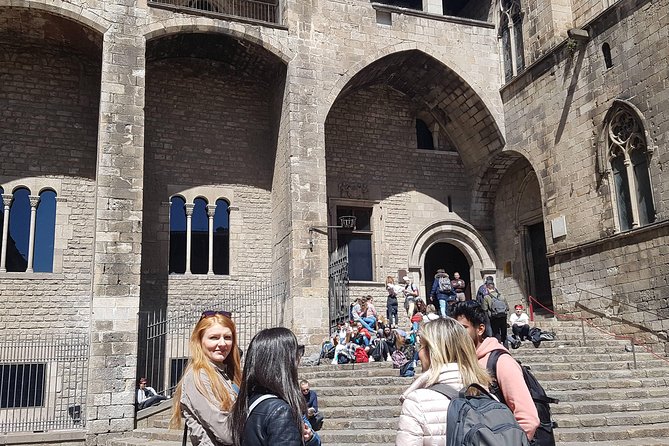
The stated meeting point is Carrer de Fontanella, 2, close to Plaça de Catalunya in Ciutat Vella. That is a useful place to begin because it sits between the modern city and the old quarter. You are not spending the first part of the tour getting out to a distant neighborhood.
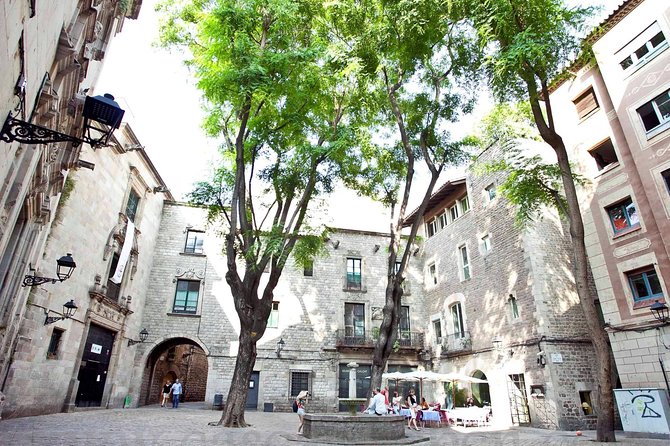
From there, the guide leads you into Ciutat Vella, the Old Town. This is where the route earns its keep. Barcelona’s oldest district is not a single preserved medieval set piece. It is a layered part of town, with Roman remains, medieval lanes, later buildings, businesses, bars, and small shops all sharing the same tight streets.
The opening section lasts about 30 minutes. That is enough time to get your bearings and understand how Roman Barcelona grew into the medieval city. Your guide may point out pieces you would easily walk past alone, including parts of the former Roman wall, old stonework, aqueduct traces, and other remains set into newer structures.
I find this kind of introduction more useful than a rapid list of dates. The streets make more sense once you understand that the ground beneath you has been occupied and rebuilt for centuries. A guide can also explain why the lanes feel so irregular, instead of leaving you to assume they were simply designed that way.
The private setup matters here. If your group is curious about Roman life, medieval trade, Catalan identity, or the changes made to the district in more recent decades, you can stay with that subject. If you are traveling with children, the guide can also adjust the delivery. Baggio was praised for making the history accessible and enjoyable for a child without talking down to anyone else.
More Barcelona Old Town Tours:
- Barcelona in 1 Day: Sagrada Familia, Park Guell,Old Town & Pickup
★ 5.0 · 13,541 reviews - Barcelona: Sagrada Familia, Modernism, and Old Town Tour
★ 4.7 · 1,621 reviews - Barcelona Helicopter, Sailboat & Old Town Private Walking Tour
★ 5.0 · 1,395 reviews
The Gothic Quarter, where old stone meets daily life
The Gothic Quarter, or Barri Gòtic, is the heart of the route. It once formed part of Roman Barcelona, and its streets still contain evidence of that earlier settlement. But do not expect every building to be genuinely medieval. Some structures were altered or built much later, including work from the 20th century, which gives the district its mixed appearance.
That mixture is part of the appeal. You may move from a Roman wall to a medieval-looking lane, then pass a small boutique, restaurant, or bar. The tour helps you read those changes instead of treating the whole area as a stage set.
Guides have also used this part of the walk to explain the city’s political and cultural identity. Montse, for example, discussed the wall around the old city, ancient Roman remains, the history of Catalonia, Barcelona’s traditional leading families, and the complicated relationship between Catalonia and Madrid. Those subjects add weight to what you are seeing. A square or doorway becomes more than a photo stop.
You may also encounter small details that reward close attention, such as St. Jordi’s door, a photomosaic tile wall, and drawings associated with Picasso’s old restaurant. The exact stops can vary because this is a private experience, but that flexibility is one of the better reasons to choose it.
If you have visited Barcelona before, tell the guide what you have already seen. Antonio was praised for avoiding familiar sights and showing a returning visitor different parts of the Gothic Quarter. That is a useful feature, since a standard first-timer route can feel repetitive on a second visit.
La Rambla and La Boqueria: Barcelona’s public stage
The route then reaches Las Ramblas, the famous pedestrian boulevard running through the Old Town. This is the liveliest part of the walk, with street performers, cafés, shops, and a steady flow of people.
La Rambla can feel crowded and tourist-oriented, so the guide’s explanation helps put it in context. You are not being asked to treat the boulevard as an untouched local secret. Instead, you see why it became such a major public corridor and how it connects the old city with the market and surrounding neighborhoods.
La Boqueria is included as a stop outside the market. The tour information does not promise a food tasting or a full market visit, so you should not book this expecting a guided meal. Food and drinks are not included.
Still, stopping at the market entrance gives you a useful introduction to Catalan food culture. The colorful stalls, cured Iberian ham, produce, and prepared foods show why La Boqueria has become one of Barcelona’s best-known food addresses. Berta, one of the guides associated with a food-focused outing, was praised for explaining the dishes being eaten and connecting them with nearby historic sights. On this walking tour, you can ask for similar food suggestions, but any purchases are your responsibility.
A practical tip: if you want to explore the market after the tour, save time and appetite for it. The main walk keeps moving, and this stop is not presented as a long tasting session.
Barcelona Cathedral and the story of Saint Eulalia
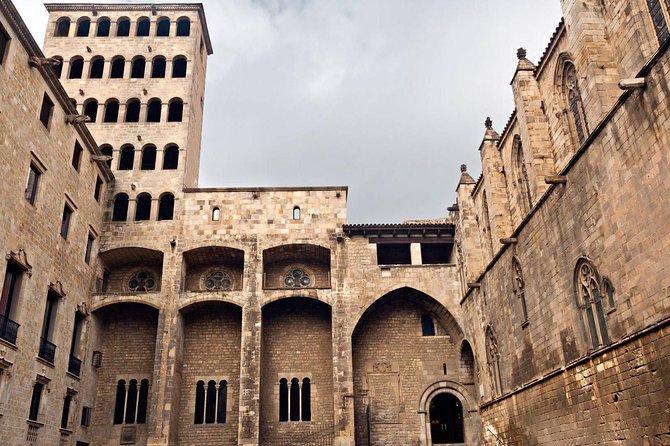
Barcelona Cathedral is another major landmark along the way. The cathedral is dedicated to Saint Eulalia and serves as the seat of the city’s archbishop. Its towers and gargoyles give you plenty to examine from outside, especially if you enjoy Gothic details.
The guide’s role here is to explain the cathedral’s place in Barcelona rather than simply point a camera toward the facade. You can ask about the saint, the building’s religious role, and how it fits into the surrounding quarter.
The available information does not include an interior admission or a guaranteed visit inside the cathedral. Treat this as an exterior stop unless your guide confirms otherwise. That distinction matters if you are hoping for a full church visit.
Still, the location works well in the route. After the narrow lanes and Roman traces, the cathedral gives you a strong visual anchor. It also helps you understand the scale and power of medieval Barcelona.
More Barcelona Gothic Quarter Tours:
- Barcelona all included: Sagrada, Park Güell, Montjuic & Gothic
★ 5.0 · 2,169 reviews - Barcelona Gothic Quarter Tapas & Taverns Food & Wine Tour
★ 5.0 · 1,470 reviews - Barcelona: Gothic Quarter Ghosts and Legends Walking Tour
★ 4.7 · 1,443 reviews - Barcelona: Old Town and Gothic Quarter Walking Tour
★ 4.8 · 1,393 reviews
Plaça de Sant Jaume and Catalan public life
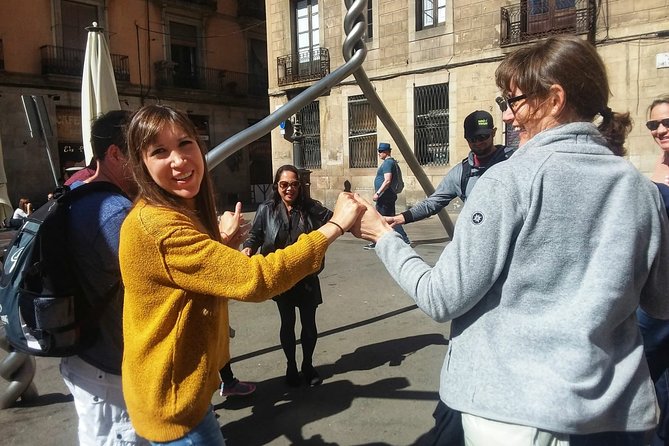
Plaça de Sant Jaume is one of the city’s oldest and most important squares. It remains a center of Catalan political life, making it a worthwhile stop for anyone who wants more than architecture.
This is where the tour can connect old Barcelona with present-day identity. The square has been tied to political power for centuries, and a guide can explain why it still matters in Catalan public life.
I would pay close attention here if you are trying to understand Barcelona beyond Gaudí and grand churches. The city’s identity is not just decorative. Language, regional politics, cultural traditions, and the relationship with the Spanish state all shape what you see and hear.
Because the tour is private, you can ask direct questions without worrying about holding up a large group. That is especially helpful with subjects that can be complex or sensitive. Montse was praised for giving visitors a clearer sense of Barcelona, Catalonia, and their place within Spain.
Three very different squares: Reial, the King, and Born
Plaça Reial offers a change of mood. Palm trees, elegant lampposts, a fountain, and yellow facades give the square a more open and polished feel than the tight lanes nearby. It is a natural place to pause and take in the contrast.
The square is also useful for understanding how Barcelona’s Old Town shifts from medieval spaces to later urban design. You can ask your guide about the buildings, the layout, or places to eat nearby. The tour does not include a meal, but local food advice is one of the practical benefits repeatedly associated with the guides.
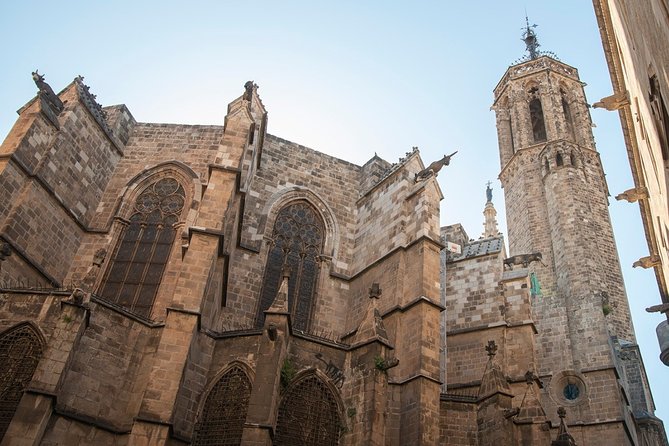
Plaça del Rei feels different again. It is a quieter Gothic setting framed by the Royal Palace and surrounding buildings. The square conveys the medieval courtly side of Barcelona, with a more enclosed and formal atmosphere than Plaça Reial.
These two plazas are close enough in the wider Old Town route to show how varied the district can be. One feels social and open, the other solemn and historical. A guide helps you notice that difference rather than rushing through both as interchangeable photo stops.
The final destination is Passeig del Born in the Born district. The route description identifies the Old Town walk as including both the Gothic Quarter and Born, although the listed stops focus more heavily on the Gothic side. That means you should ask at the start how much time will be given to the Born area if it is a priority for you.
Santa Maria del Mar and the Born district
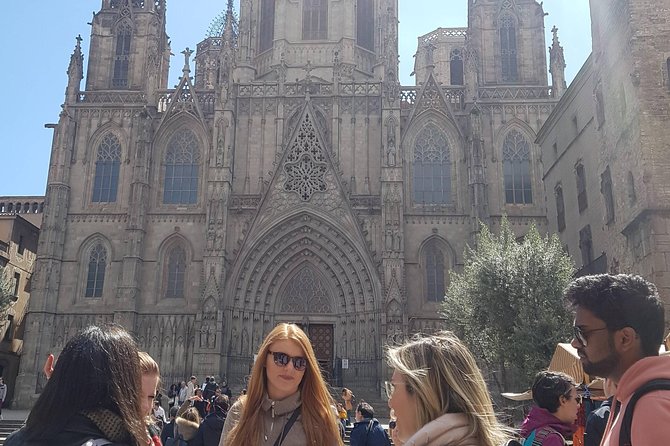
The Basilica of Santa Maria del Mar is one of the key sights on the walk. It is an important example of Catalan Gothic architecture and is closely tied to the citizens who helped raise it. That civic connection gives the basilica a different character from a royal or cathedral project.
The church is a strong stop for architecture lovers. Look for the broad Gothic form and the sense of scale as you approach. The guide can explain why Santa Maria del Mar matters within Catalan Gothic art and how it relates to the surrounding Born neighborhood.
The tour ends on Passeig del Born, a central location in the old city. There is no hotel pickup or drop-off, so you will need to make your own way back or continue exploring from there. Ending in the Born is convenient for extending your afternoon with more shops, food, or nearby sights, but those extras are not part of the tour price.
The route’s end also gives you a useful chance to ask for recommendations. Guides have offered tips on local tapas, authentic flamenco venues, tea, and places to continue exploring. Treat these as personal suggestions, not included services.
What $96.75 buys you
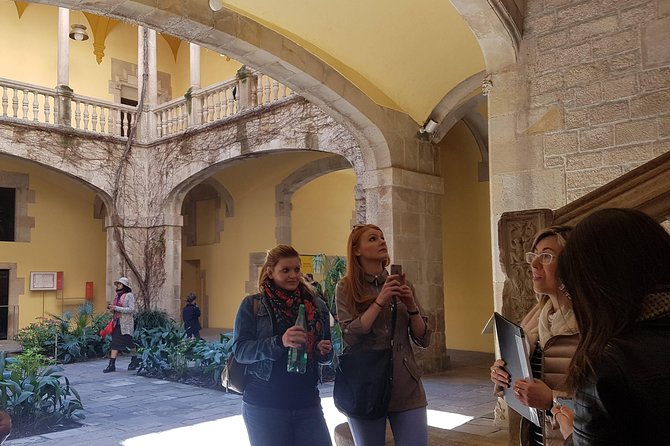
At $96.75 per person, this is not the cheapest way to see the Gothic Quarter. You are paying for a private guide, a small personal setting, and the chance to shape the walk around your group.
That value improves if you are traveling with several people. A private tour can cost more than a shared group walk for one person, but the difference becomes easier to justify when the guide’s time is divided only among your group. Group discounts are available, and child pricing applies when children share with two paying adults. The first child is free, while the second and additional children receive 50 percent off the price based on two adults.
You are not paying for entry tickets, food, or drinks, which keeps the price straightforward but means you should budget for anything you want to consume or visit inside. The route is mainly about interpretation, orientation, and local advice.
I would book it for a first or second day in Barcelona, especially if you want the Old Town to make sense before exploring on your own. I would be less likely to book it if your main goal is to enter several monuments, eat at La Boqueria, or cover the whole city in one outing.
How the private guide changes the walk
The strongest part of this experience is the guide. The praise has been especially consistent around clear explanations, good humor, patience, and the ability to adapt.
Isabel has been described as warm and reassuring with quieter groups, while also explaining Barcelona’s past, present, and future in a way that encouraged later independent visits. Olga was praised for adding local history and offering a better experience than a bus-based city tour. Alba was noted for steering away from crowds and using emotion and humor to make the past easier to follow.
Other guides bring different strengths. Juan has been praised for high energy, Miguel for thorough historical explanations, Stephanie for enthusiasm and clear subject knowledge, and Nilufar for finding places that are easy to miss alone. This range suggests that the experience can feel personal rather than mechanically repeated, although your exact guide will affect the tone.
The private arrangement also helps with pace. Joris was praised for keeping a moderate rhythm and avoiding information overload. Another guide adjusted the route to fit a family’s interests and available time. That flexibility is valuable in a district where you can easily spend too long on one lane or rush past something important.
One small warning: the start time should be confirmed carefully. One participant was told to arrive by 9:00 a.m., while the guide understood the tour to begin at 9:30. The published duration is about 2 hours 30 minutes, though one description referred to roughly three hours. Confirm the exact start and expected finish before setting up another activity.
Who should take this Barcelona walk?
I would recommend it most strongly to:
- First-time visitors who want the Old Town explained, not just photographed.
- Couples, families, or friends who value a private pace.
- Repeat visitors who tell the guide which famous sights they have already seen.
- History-minded visitors interested in Roman Barcelona, medieval power, Catalan identity, and local politics.
- Families with children, since the guide can adjust explanations and pace.
- Visitors who want restaurant, tapas, market, or evening recommendations from a local guide.
You should think twice if you dislike walking, want a food tour, or need guaranteed interior access to the cathedral or basilica. The route is also not a full Barcelona overview. It concentrates on Ciutat Vella, the Gothic Quarter, Las Ramblas, and Born.
The tour is offered in English, with other languages available on request. Service animals are allowed, public transportation is nearby, and most people can participate. Children must be with an adult.
Should you book this private Old Town tour?
Book it if you want Barcelona’s oldest neighborhoods placed in context by a guide who can answer questions and adjust the walk to your interests. The best reasons are the private format, the broad route, and the chance to connect Roman remains, Gothic architecture, Catalan politics, food culture, and modern city life in one outing.
Skip it if you are looking for a bargain, a tasting tour, or a series of interior visits. At $96.75 per person, the value depends on how much you want personal attention.
For a first day in Barcelona, I think the tour makes a strong orientation walk. Ask about the starting time, tell the guide what you have already seen, and mention any priorities such as Roman remains, Santa Maria del Mar, Catalan history, La Boqueria, or local food. That is how you get the most from the private format.
FAQ
How long does the private Barcelona Old Town tour last?
The tour lasts approximately 2 hours and 30 minutes. One description refers to roughly three hours, so confirm the expected start and finish times before booking another activity.
Where does the tour begin and end?
It begins at Carrer de Fontanella, 2, in Ciutat Vella, near Plaça de Catalunya. It ends at Passeig del Born in the Born district.
Is this a private tour?
Yes. Only your group participates, allowing the guide to adjust the pace and focus to your interests.
What places are included?
The route includes Ciutat Vella, the Gothic Quarter, Las Ramblas, La Boqueria, Barcelona Cathedral, Santa Maria del Mar, Plaça de Sant Jaume, Plaça Reial, Plaça del Rei, and the Born district.
Are food, drinks, or entrance tickets included?
No. Food and drinks are not included. The listed stops are free, and the experience does not specify included admission to the cathedral, basilica, or market interiors.
What is the cancellation policy?
You can cancel up to 24 hours before the experience for a full refund. Cancellations or changes made less than 24 hours before the start time are not accepted for a refund.
More Barcelona Walking Tours
- Barcelona Tapas and Wine Experience Small-Group Walking Tour
★ 5.0 · 5,804 reviews - Barcelona: Tapas Walking Tour with Food, Wine, and History
★ 4.8 · 4,261 reviews - Barcelona Tapas Walking Tour: Food, Wine & History
★ 4.5 · 1,928 reviews - Barcelona: Tapas Food Crawl Walking Tour with Tastings
★ 4.9 · 1,798 reviews
Recently added around Barcelona
- Montserrat very early : Hiking, Abbey, very small group★ 5.0 · 127 reviews
- Guided Private Yacht Tour in Barcelona Spain★ 5.0 · 6 reviews
- Private Tour from Barcelona to Montserrat (with guide)★ 4.5 · 6 reviews
- Private Tour from Barcelona to Costa Brava (with guide)★ 5.0 · 5 reviews
- Andorra Tour★ 4.0 · 7 reviews
- Barcelona Gaudi Tour: Sagrada Familia, Casa Batllo & Casa Mila★ 5.0 · 4 reviews
- Street Art, Sculptures & Crime Stories Walking Tour – Barcelona★ 5.0 · 11 reviews
- Wine Tasting in Barcelona (Catalan Varieties) Small Groups★ 5.0 · 10 reviews
Barcelona Gothic Quarter Tours, compared.
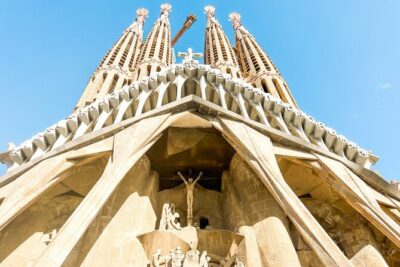
Barcelona all included: Sagrada, Park Güell, Montjuic & Gothic
Read our review →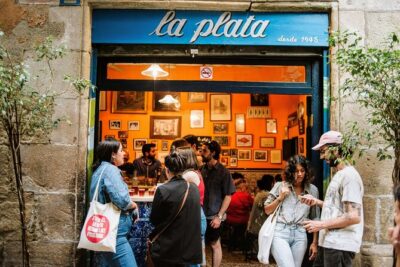
Barcelona Gothic Quarter Tapas & Taverns Food & Wine Tour
Read our review →
Gothic Quarter Ghosts and Legends Walking Tour
Read our review →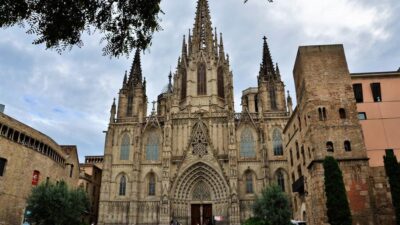
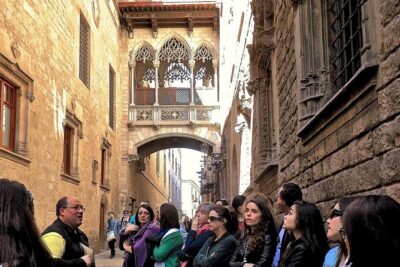
Barcelona Old Town & Gothic Quarter Small Group Tour
Read our review →
Ramblas, Old Town, Gothic and Gaudi Architecture Walking Tour
Read our review →
El Born and Gothic Quarter Wine & Tapas Bar Tour
Read our review →
Kids and Family Gothic Quarter Walking Tour in Barcelona
Read our review →Browse the lists this tour appears in