
Reviewed · SITGES DAY TRIPS FROM BARCELONA
From a Roman Village to a Resort Town: A Self-Guided Walking Tour of Sitges
Sitges tells its story in a compact stretch of seafront, old lanes, churches, galleries, and grand Modernist buildings. This self-guided audio walk links those pieces without forcing you into a group or fixed schedule. You start by the beach and finish near the promenade, with plenty of chances to pause for photos or a drink.
I like the geo-aware VoiceMap app, which plays the next section as you reach each place, and I like the mix of beach culture, Bacardi history, military defenses, and Catalan art. The main catch is simple: you need your own smartphone and headphones, and the route includes some hills.
Key points to know before you go
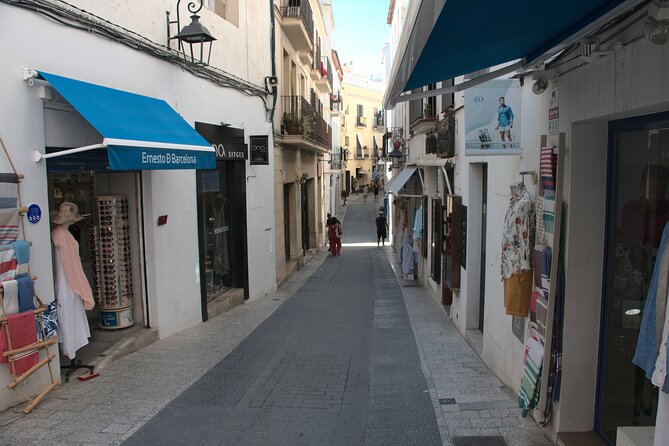
- A short route with real variety: Cover the boardwalk, Bacardi Monument, old defenses, church, palaces, museums, and central squares in about 45 minutes to one hour.
- John provides the audio narration: The commentary is clear, easy to follow, and gives you both older history and more recent local stories.
- The app works offline: Download the audio, maps, and location data before walking, so you are not dependent on a live connection.
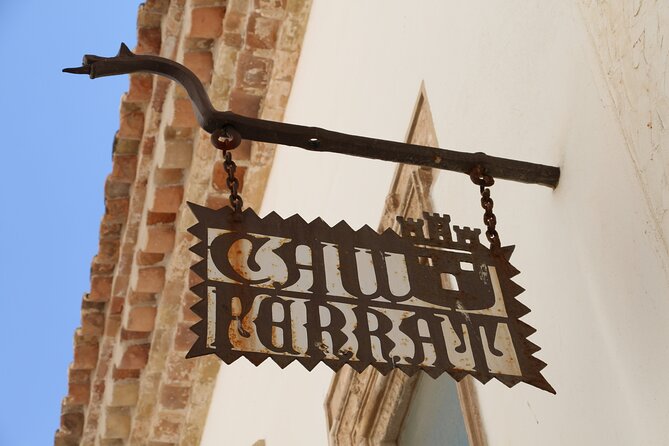
- Sitges Modernism gets proper attention: Museu de Maricel, Cau Ferrat, Palau de Maricel, and Santiago Rusinol help explain the town’s artistic identity.
- You set the pace: Walk straight through, stop for photos, or pause at a café without holding up a group.
- Budget for separate admissions: Museum and attraction tickets, food, drinks, transport, your phone, and headphones are not included.
A beach start with Sitges in front of you
The walk begins outside Restaurant Pic Nic, at Passeig de la Ribera 73, near Pic Nic beach bar. That is a practical starting point because you are right on the boardwalk, with Platja de la Ribera beside you and the sea providing an immediate sense of place.
The opening audio introduces Sitges and explains how the tour works. You do not need to meet a guide or wait for a scheduled departure. Open the VoiceMap app, load the route, and begin when you are ready.
The first part follows the boardwalk along Platja de la Ribera. As you walk, the narration lays out centuries of Sitges history. This is a good use of an audio tour because you can look at the beach, waterfront buildings, and passing town life instead of keeping your eyes on a guide’s flag.
The route is short enough for a quick orientation, but it is not just a list of postcard stops. Its main theme is how Sitges changed from an older coastal settlement into a resort town shaped by artists, visitors, and local families with international connections.
More Sitges Day Trips from Barcelona:
- Tarragona and Sitges Tour with Small Group and Hotel Pick Up
★ 5.0 · 1,211 reviews - From Barcelona: Tarragona & Sitges Full Day Tour with Pickup
★ 4.8 · 428 reviews - Tarragona and Sitges Small Group Tour – Roman History & Culture
★ 4.5 · 339 reviews
Bacardi’s Sitgetan connection
One of the more unusual stops is the Monumento a Bacardi. Here you learn about Facundo Bacardi Masso, a Sitgetan associated with Bacardi rum and credited with inventing the world’s first white rum.
That connection gives the walk a welcome local angle. Bacardi is a global name, but the tour brings the story back to Sitges and shows how a person from this town became part of a major international business story.
The monument is also a useful reminder that Sitges is not only about beaches and nightlife. Its identity has been shaped by people who left, built careers elsewhere, and remained connected to their home town.
You pass Xiringuito, described as the first beach bar in Spain. It fits the route’s broader theme: Sitges developed a beach culture that became central to its appeal. You should not expect a long stop here, but the place helps connect the historic town with the resort character you see today.
From the beach to Baluard Plaza
As the route leaves the waterfront, the setting changes. At Baluard Plaza, the audio explains the imposing structure used to defend Sitges in the 1700s.
This part gives the town some needed military context. The beach and resort image can make Sitges seem relaxed and modern, but the defensive structure points to an earlier period when the coast had more serious concerns than sunbathing.
You will also begin to notice the physical effort of the route. The walk includes hills, so comfortable shoes matter. This is not a demanding hike, but sandals with poor support could become annoying once you move away from the flat boardwalk.
A useful feature of the format is that you can stop the audio when you need to catch your breath or take a photograph. A live group would keep moving according to its schedule. Here, the route waits for you.
The Church of St Bartholomew and Saint Tecla
The Church of St Bartholomew and Saint Tecla is the most photographed site in Sitges and one of the walk’s visual high points. Its position gives the route a strong landmark, while the surrounding area helps you see how the town’s religious and civic identity meet the sea.
The audio tells you what to look for and places the church within Sitges rather than treating it as an isolated photo stop. If you are taking pictures, this is a natural place to pause before continuing.
Because the tour does not include entrance fees, check your expectations. The supplied information promises the chance to see the church, but it does not promise an interior visit or admission. Think of this stop mainly as an exterior landmark and a key part of the town’s profile.
More Barcelona Walking Tours:
- Barcelona Tapas and Wine Experience Small-Group Walking Tour
★ 5.0 · 5,804 reviews - Barcelona: Tapas Walking Tour with Food, Wine, and History
★ 4.8 · 4,261 reviews - Barcelona Tapas Walking Tour: Food, Wine & History
★ 4.5 · 1,928 reviews - Barcelona: Tapas Food Crawl Walking Tour with Tastings
★ 4.9 · 1,798 reviews
Palau de Maricel and Sitges as an artists’ town
Palau de Maricel brings the focus from defense and religion to art. The building was created to attract even more artists to Sitges, which tells you something important about the town’s ambitions.
The route does not simply point out a grand façade. It connects Palau de Maricel with the artistic movement that helped shape modern Sitges. That context makes the building more meaningful, especially if you are trying to understand why this small coastal town has so many galleries, museums, and striking architectural details.
You can look at the exterior during the walk, but entrance tickets are not included. If you want a museum visit, treat this tour as an introduction and plan admission separately. The audio route is useful for orientation, but it does not replace time inside the collections.
Museu de Maricel and the Modernist story
The route passes prominent galleries and museums, including Museu de Maricel. The commentary explains how the artists and art movement connected with Sitges shaped the town you see today.
This is one of the strongest parts of the experience for curious visitors. You get more than isolated facts about buildings. The story links people, architecture, museums, and the town’s change into a place known for art and culture.
The audio format works well here because museums can be visited later, at your own pace. You can make a note of the places that catch your attention, then decide if you want to return for a paid visit. Since museum admission is not part of the $11.99 price, this choice keeps the walk affordable for people who only want an introduction.
Cau Ferrat and Santiago Rusinol
You pass Museu del Cau Ferrat, once the home of Santiago Rusinol, a leading figure in the Catalan Modernist movement in Sitges. This is an important stop because it gives the artistic story a person at its center.
The tour also passes a monument to Rusinol and includes stories about his hedonistic lifestyle. That detail adds personality to what could otherwise become a dry architecture lesson. Rusinol was not presented only as an important artist. His way of life and role in Sitges help explain the town’s reputation as a place that attracted creative people and unconventional social circles.
You should expect the audio to provide an exterior introduction rather than museum access. If Cau Ferrat interests you, the smart plan is to finish the walk first, then consider returning with a separate ticket.
Cap de la Vila, once the end of town
The final stretch leads to Cap de la Vila plaza. Its name once referred to the end of the village, while today it sits within the town center.
That change neatly fits the walk’s larger story. Sitges grew beyond its older limits, and places that once marked the edge became part of everyday central life. The plaza also gives you a practical finish point, rather than leaving you at a remote monument.
The tour ends on Carrer Primer de Maig by the promenade, near Queen Apartment by Blausitges. That location is convenient if you want to continue exploring the center, return toward the seafront, or find somewhere to eat. Food and drinks are not included, so the end of the route is a natural time to make your own plans.
How the VoiceMap format works
VoiceMap provides the app for Android and iOS, along with offline access to the audio, map, and geodata. Downloading everything before you start is the sensible move. It reduces the risk of a weak connection interrupting the walk.
The app is geo-aware. In practical terms, the commentary is designed to play as you reach the relevant locations. One of the most useful points about this is that you can keep walking without constantly checking a written guide.
The narration is presented by John, whose delivery is described as easy to listen to and well presented. The commentary aims for just enough insight into both recent and distant history, rather than turning a short town walk into a lecture.
Still, this is not a fully guided personal tour. Nobody is there to answer a question, adjust the route for your interests, or point out something outside the programmed path. You trade personal contact for privacy and flexibility.
Price, timing, and what you really receive
At $11.99 per person, the tour is priced as a low-cost introduction to Sitges. The value is strongest if you want a structured orientation but do not want to pay for a private guide or join a larger group.
You receive lifetime access in English. That matters if you plan to return to Sitges or want to pause the route and finish it later. It also means the cost can make sense for a couple who wants to use the route slowly, with stops for photos and cafés.
The advertised walking time is 45 minutes to one hour. That is the uninterrupted route time, not a promise that your entire outing will fit into one hour. Add time for pictures, museum exteriors, a break, or a detour.
The price does not cover:
- Museum or attraction admission
- Transportation
- Food or drinks
- A smartphone
- Headphones
Those exclusions are normal for an audio walk, but they affect your budget. The route begins and ends in Sitges, so you need to arrange your own transport to town. The activity itself does not provide a vehicle or transfer.
Who will like this walk most
I would choose this for an independent visitor who wants context while walking but does not want a fixed group schedule. It suits solo visitors, couples, and small private groups who are comfortable using a phone app.
It is also a good fit if you have limited time. In less than an hour of walking, you can get a useful first look at the waterfront, central landmarks, Bacardi connection, defensive history, and Modernist institutions.
Art lovers will get the most from the museum and Rusinol sections. Anyone interested mainly in beach time may find the cultural material more than they need, though the first and last parts keep the sea and promenade close.
Families may appreciate the freedom to pause, but adults should handle the app and navigation. The route includes some hills, so comfortable footwear is worth taking seriously. Most people can participate, but the information does not provide detailed accessibility notes, so anyone with specific mobility needs should check before booking.
Who should choose a different option
You may prefer a live guide if you want conversation, detailed questions answered on the spot, or a tour adjusted to your interests. This experience is intentionally private in the sense that only your group takes part, but it is still self-guided.
You may also want something else if your priority is entering every museum. Admission is not included, and the route mainly introduces the sites from outside while explaining their place in Sitges culture.
Finally, do not choose it if you dislike phone-based tours. The app is central to the experience, and you need your own phone and headphones. The format is simple, but it is not entirely hands-off.
Should you book this Sitges audio walk?
Book it if you want an inexpensive, flexible way to understand Sitges beyond the beach. The best parts are the geo-aware audio, John’s clear narration, the Bacardi connection, and the way the route ties Palau de Maricel, Museu de Maricel, Cau Ferrat, and Santiago Rusinol into one story.
Skip it if you want a live person, interior museum visits, or transport included. For $11.99, though, it offers a well-focused town introduction with lifetime access and offline maps. Download it before you start, wear comfortable shoes, and leave room in your schedule for the stops that deserve more than a quick glance.
FAQ
Where does the Sitges audio tour start?
It starts at Restaurant Pic Nic, Passeig de la Ribera 73, 08870 Sitges, Barcelona, in front of Pic Nic beach bar on the boardwalk.
Where does the tour finish?
It ends on Carrer Primer de Maig by the promenade, near Queen Apartment by Blausitges.
How long does the walking tour take?
The route takes about 45 minutes to one hour, depending on your pace and whether you stop along the way.
What language is the tour offered in?
The tour is offered in English.
Is this a guided group tour?
No. It is a self-guided audio tour, and only your group participates.
Which app do I need?
You need the VoiceMap app, available for Android and iOS.
Can I use the tour offline?
Yes. The tour includes offline access to the audio, maps, and geodata.
Are museum tickets included?
No. Tickets and entrance fees for museums and other attractions along the route are not included.
Do I need to bring anything?
You need your own smartphone and headphones. Food, drinks, and transportation are also not included.
Can I cancel for a full refund?
Yes, if you cancel at least 24 hours before the experience start time. Changes or cancellations made less than 24 hours in advance are not accepted for a refund.
More Barcelona Self-Guided Tours
- Barcelona: Palau de la Música Self-Guided Tour
★ 4.6 · 3,603 reviews - Casa Batllo Admission Ticket with Intelligent Audio Guide
★ 4.5 · 3,168 reviews - Barcelona: Mies van der Rohe Pavilion Ticket and Audio Guide
★ 4.6 · 380 reviews - Barcelona: Montjuïc Cable Car Ticket with Audio Guide
★ 3.9 · 270 reviews
Recently added around Barcelona
- Montserrat very early : Hiking, Abbey, very small group★ 5.0 · 127 reviews
- Guided Private Yacht Tour in Barcelona Spain★ 5.0 · 6 reviews
- Private Tour from Barcelona to Montserrat (with guide)★ 4.5 · 6 reviews
- Private Tour from Barcelona to Costa Brava (with guide)★ 5.0 · 5 reviews
- Street Art, Sculptures & Crime Stories Walking Tour – Barcelona★ 5.0 · 11 reviews
- Andorra Tour★ 4.0 · 7 reviews
- Barcelona Gaudi Tour: Sagrada Familia, Casa Batllo & Casa Mila★ 5.0 · 4 reviews
- Wine Tasting in Barcelona (Catalan Varieties) Small Groups★ 5.0 · 10 reviews
Sitges Day Trips from Barcelona, compared.

Tarragona and Sitges Tour with Small Group and Hotel Pick Up
Read our review →

Tarragona and Sitges Small Group Tour – Roman History & Culture
Read our review →
Montserrat Monastery with Easy Hike & Sitges Tour from Barcelona
Read our review →
Bike Tour and Winery Visit with Free Hotel Pick Up.
Read our review →

Sitges & Montserrat Monastery Tour with Easy Hike
Read our review →
Paella Class, Winery & Bike Ride – Free Hotel Pickup from Sitges
Read our review →Browse the lists this tour appears in