
Reviewed · SITGES DAY TRIPS FROM BARCELONA
Tarragona and Sitges Tour with Small Group and Hotel Pick Up
Tarragona gives you ancient Rome by the sea, while Sitges brings a very different mood: whitewashed lanes, Modernist buildings, beach terraces, and a relaxed Mediterranean feel. This small-group day trip connects both places without the fuss of driving or working out train connections.
I like the hotel pickup and the group limit of eight, which can make a long day feel personal rather than mechanical. I also like the contrast between the Roman aqueduct, walls, forum, and amphitheater in Tarragona and the easygoing beach time in Sitges. The catch is simple: this is a walking-heavy day, with cobbles, stairs, hills, and uneven ground.
Key points to know before booking
- Roman Tarragona comes first: See the Devil’s Bridge, Roman walls, old town, amphitheater, circus, market, and cathedral area.
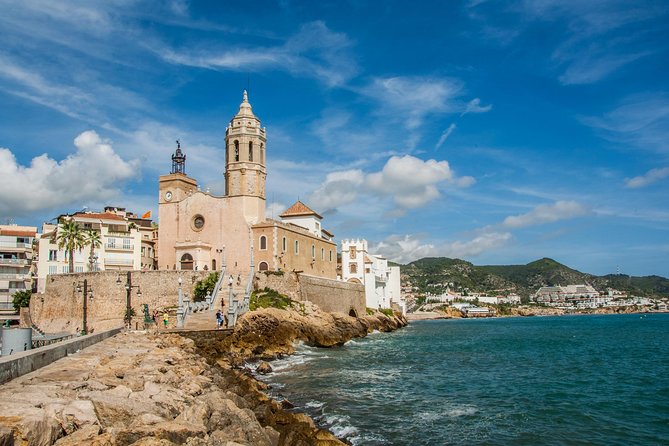
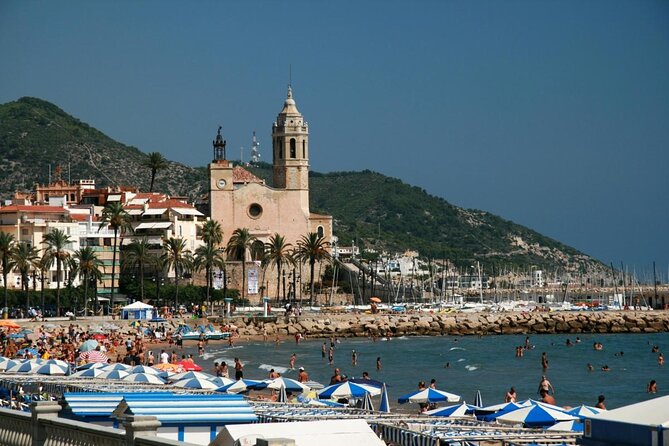
- Sitges is the softer second half: Walk the historic center, see Casa Bacardi and the church of Sant Bartomeu and Santa Tecla, then spend time by the sea.
- Pickup saves time: Collection and return are offered at hotels or apartments within Barcelona city.
- Eight people or fewer: A small vehicle and small group allow more room for questions and a less rigid pace.
- Bring walking shoes and swimwear: You may walk for hours, and sunny days offer time at San Sebastian Beach.
- Budget for meals: Food and drinks are not included, so lunch, coffee, or a beachside drink will add to the $120.29 price.
Why Tarragona and Sitges make a smart pairing
Barcelona can easily fill several days, but staying in the city the whole time means missing Catalonia’s Roman past and coastal towns. This tour gives you both in one outing, with the driving handled for you.
Tarragona is the serious history stop. The Roman city was called Tarraco and served as one of the major centers of ancient Hispania. Sitges then changes the rhythm. Instead of ruins and military walls, you get old-town lanes, Modernist architecture, shops, cafés, and a broad view of the Mediterranean.
That contrast is the main reason I find the route appealing. You are not spending ten hours looking at variations of the same monument. The morning has stones, emperors, gladiators, and aqueducts. The afternoon has beach air, cocktails, and a town long associated with art and health tourism.
The price is $120.29 per person. For that sum, you get transportation, hotel pickup and drop-off, a professional local guide, the walking tours, and entry to Tarragona’s amphitheater and circus. It is not a bargain in the strictest sense, especially once you add lunch and drinks, but it is fair if you value convenience and guiding. A rental car would bring its own costs and duties, while independent rail travel would not cover the out-of-town aqueduct as easily.
More Tarragona Day Trips from Barcelona:
- From Barcelona: Tarragona & Sitges Full Day Tour with Pickup
★ 4.8 · 428 reviews - Tarragona and Sitges Small Group Tour – Roman History & Culture
★ 4.5 · 339 reviews - Tarragona & Sitges Small Group Full-Day Tour
★ 4.5 · 79 reviews
Morning pickup and the road south
Pickup takes place at your Barcelona hotel or apartment between 8 and 9 a.m. You need to provide the full address, even if your accommodation is not shown in the booking field. The exact pickup time, guide’s name, and phone number are sent through the booking system the day before.
The route gives you a quick view of central Barcelona as you leave. Depending on the drive, you may pass Catalunya Square, Barcelona Cathedral, Passeig de Gracia, and Gaudí buildings such as Casa Batlló and La Pedrera. This is not a full Barcelona sightseeing tour, but it helps you connect the city you are staying in with the towns beyond it.
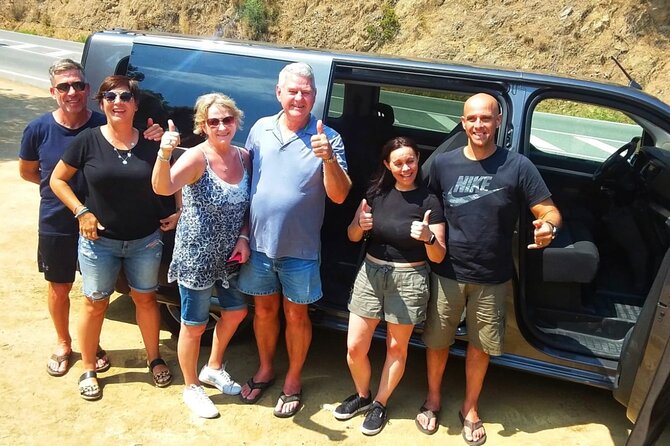
The vehicle is air-conditioned, and the small-group limit is eight people. That matters on a ten-hour outing. You can ask a question without shouting across a coach, and the guide can often respond to the group’s energy and interests. Guides named in the experience include Eduardo, Diego, Miquel, Ramon, Luis or Lluís, and Eduard. Your assigned guide will depend on the departure date.
The Devil’s Bridge: Tarragona’s Roman engineering lesson
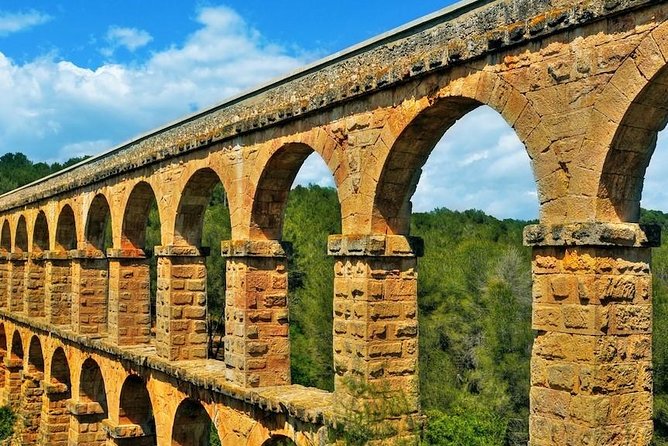
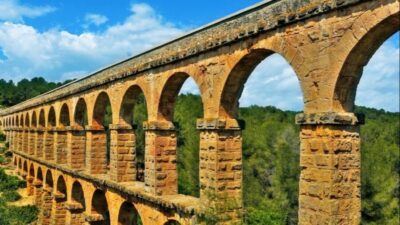
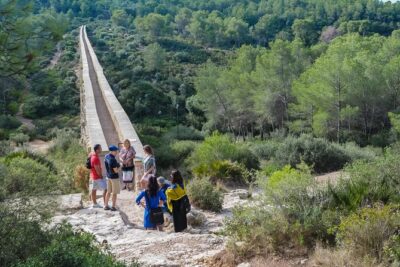
Before entering Tarragona, the tour stops at Pont del Diable, or the Devil’s Bridge. This Roman aqueduct stretches about 217 meters and reaches roughly 26 meters high. Its job was practical: carry water to Tarragona. The structure remained in use until the 18th century.
You get about 30 minutes here, enough for photographs and a look at the aqueduct among the surrounding woodland. It is a good first stop because it shows Roman engineering in a clear, almost startling way. You are not just hearing that Tarraco was important. You are seeing the infrastructure that helped the city function.
The stop is outdoors and involves walking, so wear shoes with a firm sole. The tour data does not promise a particular weather alternative, and the bridge is best enjoyed on a dry day. On the other hand, even a short visit gives the morning a strong start.
Tarragona’s old town and the Roman amphitheater
In Tarragona, the walking tour enters the old town through narrow cobbled streets and shaded squares. The setting shifts between medieval and Roman layers, with the city’s past appearing in walls, stones, street plans, and surviving monuments.
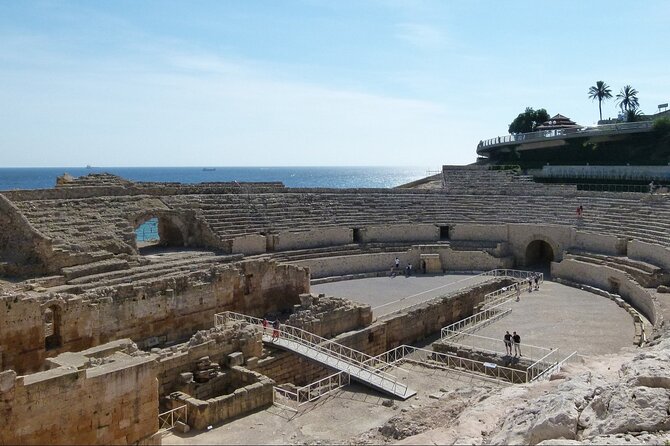
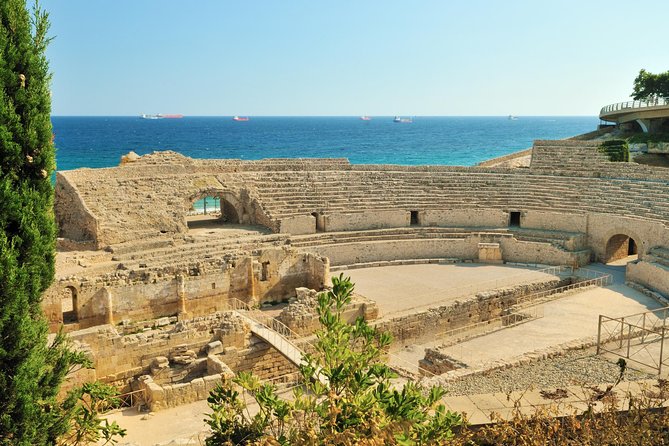
The Roman amphitheater is the dramatic centerpiece. Cut into the slope above the beach and built in the early second century, it once hosted gladiator contests and public executions. You have access inside, and the guide explains how the site worked as an events venue. You also receive entry to Tarragona’s Roman circus, another major part of the ancient complex.
The amphitheater is valuable because it joins history to place. You can look from the arena toward the sea and understand why Tarraco was both a Roman city and a coastal power center. It is not a polished museum display. The remains are open, substantial, and exposed to the weather.
Allow for stairs and uneven surfaces. One person described the day as involving a large amount of walking up and down hills and chose to skip two areas because of a sore hip and knee. Another guide was praised for adjusting the pace for limited mobility, but you should not count on every section being easy. If you have knee, hip, or balance concerns, ask the guide early about the most demanding parts.
The Roman walls are another key stop. They are among the oldest surviving structures in Tarragona and trace back to the original military camp or the period soon after its foundation. Their scale helps you understand that Tarraco was not simply a small provincial outpost.
More Sitges Day Trips from Barcelona:
- Montserrat Monastery with Easy Hike & Sitges Tour from Barcelona
★ 5.0 · 179 reviews - From Sitges: Bike Tour and Winery Visit with Free Hotel Pick Up.
★ 5.0 · 101 reviews - Paella Class, Winery & Bike Ride – Free Hotel Pickup from Sitges
★ 5.0 · 69 reviews - Barcelona: Sitges & Montserrat Monastery Tour with Easy Hike
★ 4.9 · 69 reviews
Cathedral, Castellers, and the modern city
The Cathedral of Tarragona is a useful reminder that the city did not stop being important after Rome. It is a National Monument and a Cultural Good of National Interest. You will see it as part of the old-town route, along with streets that show how the medieval city grew over the Roman one.
The tour also passes a monument to the Castellers, the Catalan tradition of building human towers. This particular sculpture has 219 figures, reaches about 11 meters, and weighs around 12 tons. Your guide explains the tradition, and the stop adds local culture to a morning that could otherwise feel like a pure archaeology lesson.
The Mercat Central, housed in a Modernist building from 1915, gives you another view of Tarragona. This is where local produce and seasonal food come together, and the one-hour stop can help you see the city as a living place rather than an open-air Roman site. Food is not included, so treat the market as a chance to look around or buy something at your own expense.
You also pass the National Archaeological Museum and see the Tarraco Model, a scale model showing the Roman city at its height. The model can make the ruins easier to read. After seeing scattered walls and monuments, you can picture the roads, buildings, and public spaces as a connected city.
What the Tarragona schedule feels like
The Tarragona section is full. You may spend about 30 minutes at the aqueduct, around 90 minutes in the old town, about 90 minutes at the amphitheater, 30 minutes around the Roman walls, and about an hour near the central market, with additional cathedral, museum, and model stops along the route.
Do not expect a slow café morning. This is an active sightseeing block, and the guide’s explanations are a major part of its value. Guides such as Ramon, Miquel, Luis, Eduardo, and Diego have been praised for combining Roman context with humor and local stories. That style matters here because Tarragona has many remains, and a good explanation turns broken stone into a readable city.
Sitges: from fishing town to artistic resort
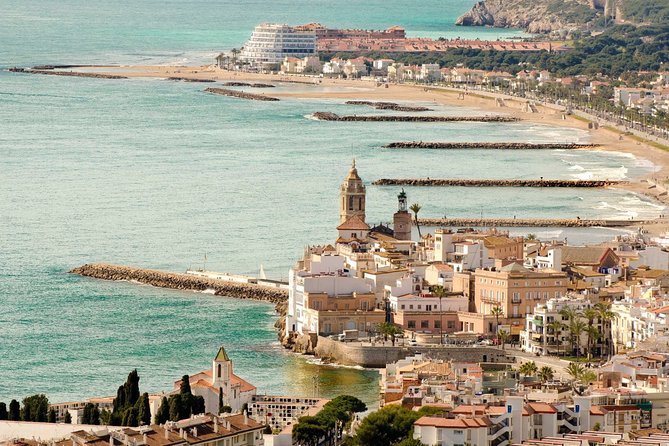
After Tarragona, the route heads back up the coast toward Sitges. The change is immediate. Sitges began as a fishing town and later attracted people seeking the benefits of sea air and nearby mountains. Its old center now has a polished but still relaxed feel, with shops, restaurants, music, and Modernist architecture.
The walking tour takes you through the historic center and its less obvious corners. Casa Bacardi is one of the named stops, with a story tied to the Bacardi family. The experience may also include an optional cocktail opportunity made by professional bartenders, but the drink is not part of the tour price.
The church of Sant Bartomeu and Santa Tecla is Sitges’ best-known landmark. Built in the 17th century, it sits above the waterfront and gives you one of the town’s most recognizable views. It is also a useful orientation point: from here, the old town, beach, and Mediterranean all fit into one picture.
You have roughly three hours in Sitges, plus about an hour designated for the beach. That makes the afternoon less rushed than the Tarragona portion. You can follow the walking tour, take photographs, browse, stop for lunch, or spend time near the water.
San Sebastian Beach and the value of free time
San Sebastian Beach is an urban beach, not a remote strip requiring a separate transfer. On a sunny day, you can sit on the sand, admire the coast from a terrace, or swim in the Mediterranean if conditions suit you.
The beach time is what keeps this from being an all-history outing. After several hours of Roman sites, you get a chance to slow down. Families may appreciate the change of pace, and solo visitors can enjoy a little independent time without being separated from the route for long.
There is a practical limit. The tour does not include food or drinks, and a beachside lunch or cocktail costs extra. The exact balance between walking, lunch, and swimming may depend on the group and the day. If swimming is important to you, tell the guide early rather than assuming the schedule will leave a long water break.
Sitges also works well in cooler months. Winter visits can bring fewer people and a quieter feel, although beach swimming becomes less appealing and weather can affect the experience. A December outing was still considered worthwhile because the lower crowd levels made the old town and historic sites easier to enjoy.
Guides, group size, and the human side of the day
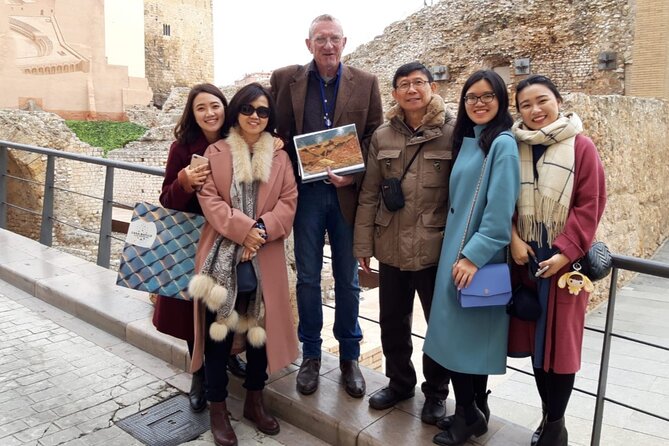
The small group is more than a marketing label here. With no more than eight people, the guide can explain a Roman structure while standing with the group rather than addressing a crowd. You can also ask for a bathroom stop, clarify a historical point, or discuss lunch without holding up a large bus.
Several guides have been praised for driving smoothly, arriving on time, helping with personal issues, and offering local food suggestions. Eduardo is noted for humor, history, and practical help. Miquel is associated with an easygoing approach and strong local recommendations. Diego is praised for his regional knowledge and friendly manner, while Lluís is singled out for careful explanations and a comfortable vehicle.
That does not guarantee that you will get one particular guide or a private tour. A small group may sometimes become private if few people book, but that depends on the date. The listed maximum is eight, and the tour is offered in English.
Walking demands, food, and timing
This is a ten-hour day, with pickup beginning between 8 and 9 a.m. and return to Barcelona after Sitges. The long duration is useful because Tarragona and Sitges are not squeezed into a rushed half-day, but it can be tiring.
Wear shoes for cobbles and stairs. Bring water, sun protection, and a light layer for the vehicle and coastal weather. If you want to swim, pack a swimsuit and towel, though the supplied details do not promise changing facilities.
Food and drinks are not included. Guides have sometimes recommended local restaurants, tapas, treats, or reasonably priced meals, but you should treat those as suggestions rather than guaranteed inclusions. Bring a payment method and leave room in your budget for lunch.
The tour is suitable for most people who can manage a full day of walking. It may not suit anyone who needs step-free access or frequent long rests. Public transport is nearby, but the real convenience is not having to use it for the whole route.
Cancellation and booking details
Confirmation arrives at booking. You can cancel at least 24 hours before the local start time for a full refund. Cancellations or changes made within 24 hours are not accepted for a refund.
Because pickup depends on your Barcelona address, enter the accommodation details carefully. The provider can collect from hotels or apartments in Barcelona city, even if the property is not already listed.
Should you book the Tarragona and Sitges tour?
I would choose this tour if you want two very different day trips combined into one manageable outing. It is especially useful if you have already seen Barcelona’s main sights and want Roman ruins, Catalan culture, and a coastal town without renting a car.
The strongest reasons to book are the hotel pickup, maximum group of eight, access to Tarragona’s amphitheater and circus, and the balance between serious history and beach time. The main reasons to hesitate are the price once meals are added, the ten-hour schedule, and the amount of walking on uneven ground.
Book it if your ideal day includes aqueducts, old walls, local stories, sea views, and a guide who can handle questions. Skip it if you want a slow beach day or if stairs and cobbles will make the Roman sites stressful. For most active visitors with one free day beyond Barcelona, this is a well-shaped route with plenty of substance.
FAQ
How long is the Tarragona and Sitges tour?
The tour lasts approximately 10 hours, including pickup, sightseeing, and the return to Barcelona.
Where does pickup take place?
Pickup and drop-off are offered at hotels or apartments within Barcelona city. You need to provide the complete accommodation address when booking.
What time does pickup happen?
Pickup takes place between 8 and 9 a.m. The specific time is sent through the booking system the day before departure.
How many people can join the tour?
The tour has a maximum of eight people.
What language is the tour offered in?
The tour is offered in English.
Is transportation included?
Yes. An air-conditioned vehicle, hotel or apartment pickup, and drop-off in Barcelona city are included.
Are entrance tickets included?
Admission to Tarragona’s amphitheater and Roman circus is included. Other stops listed in the route are described as free or outside visits.
Are food and drinks included?
No. You pay separately for meals, drinks, cocktails, and anything purchased at the market or beach area.
Can I cancel for a full refund?
Yes. You can cancel at least 24 hours before the experience’s local start time for a full refund. Changes or cancellations made less than 24 hours before departure are not accepted for a refund.
Recently added around Barcelona
- Montserrat very early : Hiking, Abbey, very small group★ 5.0 · 127 reviews
- Guided Private Yacht Tour in Barcelona Spain★ 5.0 · 6 reviews
- Private Tour from Barcelona to Montserrat (with guide)★ 4.5 · 6 reviews
- Private Tour from Barcelona to Costa Brava (with guide)★ 5.0 · 5 reviews
- Andorra Tour★ 4.0 · 7 reviews
- Barcelona Gaudi Tour: Sagrada Familia, Casa Batllo & Casa Mila★ 5.0 · 4 reviews
- Street Art, Sculptures & Crime Stories Walking Tour – Barcelona★ 5.0 · 11 reviews
- Wine Tasting in Barcelona (Catalan Varieties) Small Groups★ 5.0 · 10 reviews
Sitges Day Trips from Barcelona, compared.
Tarragona and Sitges Small Group Tour – Roman History & Culture
Read our review →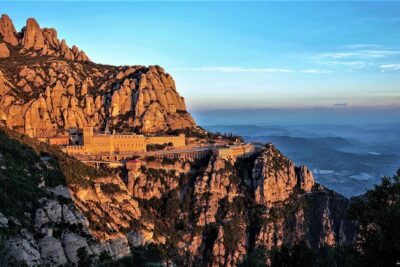
Montserrat Monastery with Easy Hike & Sitges Tour from Barcelona
Read our review →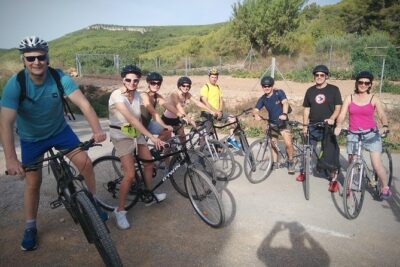
Bike Tour and Winery Visit with Free Hotel Pick Up.
Read our review →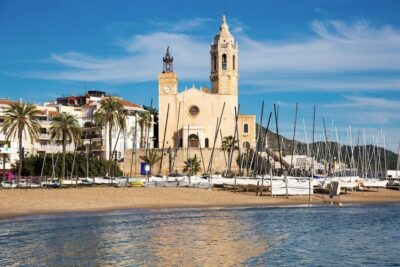

Sitges & Montserrat Monastery Tour with Easy Hike
Read our review →
Paella Class, Winery & Bike Ride – Free Hotel Pickup from Sitges
Read our review →
Photo Walking Tour Sitges Experience Beaches and Town
Read our review →Browse the lists this tour appears in