
Reviewed · BARCELONA WALKING TOURS
Barcelona: The Spanish Civil War Historical Walking Tour
Barcelona’s polished Gothic lanes hide a much harder story. On this 2.5-hour walking tour, you follow the streets where anarchists, communists, fascists, republicans, and ordinary residents fought over Spain’s future. The route brings George Orwell’s Homage to Catalonia into view, not as a book on a shelf, but as a guide to real corners of the old city.
I like two things in particular. First, the guides make the factions understandable without flattening them into simple heroes and villains. Second, the tour uses old photographs to show the scars and changes that are easy to miss while admiring Barcelona’s grand façades. The main drawback is that you spend plenty of time standing, and the subject is heavy, political, and sometimes upsetting.
Key points at a glance
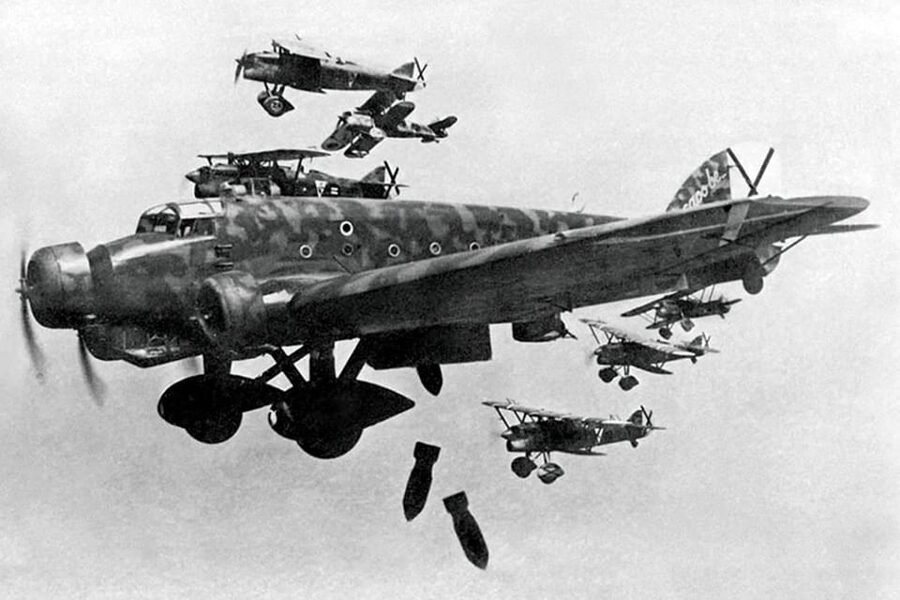
- Barcelona beyond the postcard: See how familiar Gothic Quarter streets were shaped by war, bombing, revolution, and dictatorship.
- A clear guide to tangled politics: Learn how fascists, republicans, anarchists, communists, trade unions, the Catholic Church, and foreign powers fit into the conflict.
- Orwell’s Barcelona brought to life: Visit places connected with the street fighting described in Homage to Catalonia.
- Strong use of visual material: Historical photographs help you compare the city of the 1930s with the streets in front of you.
- A tour that reaches beyond 1939: The story continues through Franco’s 36-year dictatorship and Spain’s current struggle with historical memory.
- Good for serious curious minds: The material suits history fans, older teenagers, and anyone who wants context for the Barcelona they are already exploring.
Starting at Plaça de Catalunya
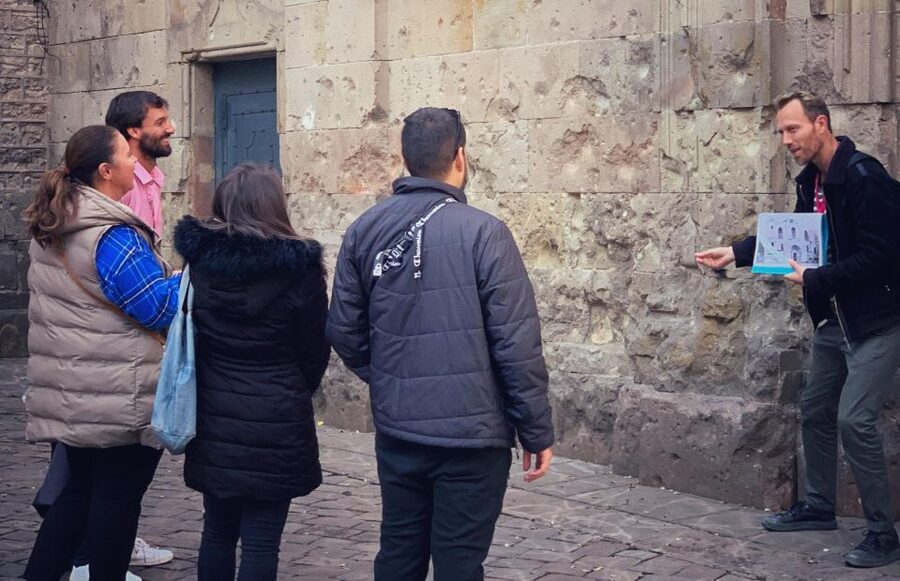
The meeting point is on the sidewalk in front of Foot Locker at Plaça de Catalunya. Look for a guide with a white umbrella. This is a busy central square, so allow a few minutes to find the exact spot rather than arriving at the last second.
From there, the group heads into the old town. The route is conducted in English, and the guide may use a wireless listening system. If that system is used, expect an extra charge of €1 per person at the start, payable by card or cash.
The tour is designed as a walk, but do not picture 150 minutes of constant marching. You walk between stops, then pause while the guide explains what happened there. The pace is manageable for most people, though your feet will be standing on hard pavement for much of the time. Comfortable shoes matter more than athletic fitness.
More Barcelona Walking Tours:
- Barcelona Tapas and Wine Experience Small-Group Walking Tour
★ 5.0 · 5,804 reviews - Barcelona: Tapas Walking Tour with Food, Wine, and History
★ 4.8 · 4,261 reviews - Barcelona Tapas Walking Tour: Food, Wine & History
★ 4.5 · 1,928 reviews
Barcelona before the war
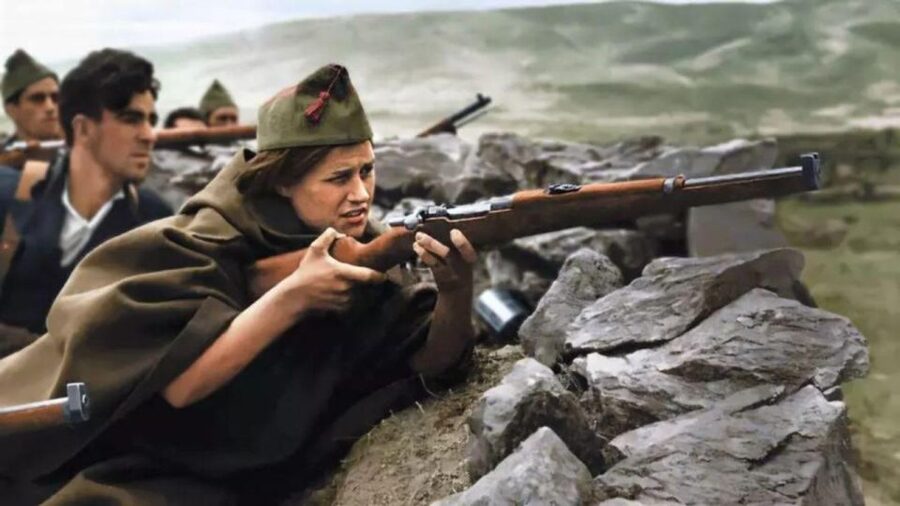
A good guide has to begin before 1936. The Spanish Civil War did not appear from nowhere, and the strongest part of this experience is its effort to explain the social and political pressures that came first.
You learn about industrial Barcelona, the growth of labor movements, class divisions, political unrest, and the competing visions of Spain held by republicans, monarchists, conservatives, anarchists, communists, and fascists. That background helps you understand why the conflict became so bitter, especially in Catalonia.
I appreciate this opening because it gives you a map for the rest of the tour. Without it, the names and factions can become a blur. With it, you begin to see that the conflict was not simply two neat teams facing one another. Several groups opposed the military uprising, but they did not all agree about politics, economics, religion, or how the war should be fought.
The guide also explains the role of Catalonia within Spain. Barcelona had its own political and social tensions, and its experience of the war differed from events in other parts of the country. That regional focus gives the tour a useful edge over a general lecture about the war.
Reading the street fighting through Orwell
One of the tour’s most distinctive features is its connection to George Orwell’s Homage to Catalonia. Orwell arrived in Spain to fight against fascism and wrote about his experiences in Barcelona, including the tense street fighting between rival groups on the republican side.
The tour takes you to places linked with those events. Instead of treating Orwell’s book as a separate literary subject, the guide uses it to explain what was happening on the ground. You can connect the words on the page to streets, buildings, barricades, and public spaces in the old city.
This part works best if you have read the book, but you do not need to know it beforehand. Guides such as Javier, Chrisa, Yannis, Filipa, and Henrieta have been praised for explaining difficult material in plain English and for stopping to check that the group is keeping up.
The physical setting is not a preserved battlefield. Barcelona has changed, buildings have been repaired, and daily life continues around you. That is both the strength and the limitation of a city walking tour about war. You will not see a museum room filled with original objects at every stop. Instead, you learn to notice fragments, locations, and absences.
Making sense of the rival factions
The political vocabulary is the hardest part of the subject. You will hear about fascists, republicans, anarchists, communists, socialists, trade unions, and the International Brigades. The tour’s value depends heavily on how clearly those groups are explained.
The guides do not reduce the conflict to a simple battle between good and bad. They discuss why different groups joined the republican cause, why those alliances broke down, and how political arguments turned into violence inside Barcelona itself.
You also hear about the role of Hitler and Mussolini, whose support helped Franco’s forces. The International Brigades receive attention as well, along with the response of the Western Allies. These international connections show why the Spanish Civil War matters beyond Spain. It became a testing ground for political ideas and military methods before the Second World War.
The Catholic Church is another major part of the discussion. Its relationship with the conflict cannot be treated as a side note, and the tour places religion within the wider political struggle. This is useful context when you are looking at Barcelona’s churches and civic buildings later in your stay.
The best guides allow questions without letting the tour lose its shape. Evan, for example, is praised for handling difficult questions with a measured sense of humor, while Chrisa is noted for making the factional story easy to follow. That combination matters. You want a guide who can explain detail without turning the walk into a political argument.
More Barcelona History Walks:
- Barcelona: 2.5-Hour Bike or E-Bike Historical Tour
★ 4.5 · 1,262 reviews - Barcelona Erotic Museum – Explore Art, History & Fun
★ 4.4 · 450 reviews - Andorra Original History and Sightseeing Tour (Private, Pickup)
★ 5.0 · 350 reviews - Barcelona: Dark History Night Walking Tour
★ 4.8 · 344 reviews
Photographs, bombings, and the city’s missing memorials
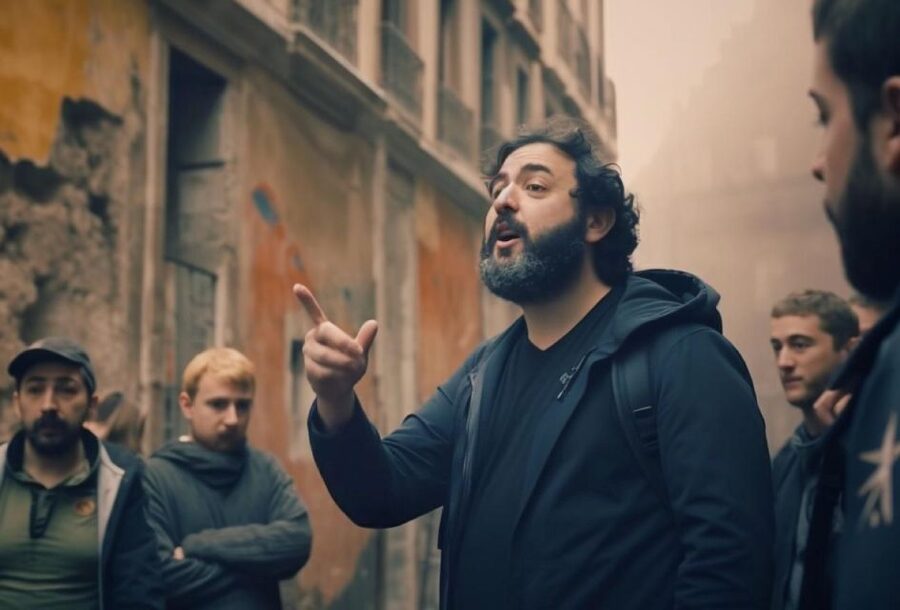
The guide uses photographs and other visual material during the walk. These images are not decoration. They help you see how streets looked during the conflict and how much has changed.
Barcelona suffered fascist bombing, and the old town saw fighting during the internal struggle among republican factions. Looking at a present-day street while seeing its wartime appearance gives the history a physical weight. A place that seems ordinary can become a reminder of civilian fear, political repression, or armed conflict.
The tour also points to what is missing. Spain has relatively few official museums and public memorials devoted to the Civil War compared with the scale of the subject. That absence is part of the story. Franco’s dictatorship lasted 36 years, and public discussion of the period remained difficult long after the fighting ended.
This does not mean every street has a visible scar. You should not book the tour expecting ruins or a large memorial at each stop. Much of the experience depends on listening, comparing photographs, and understanding why an unremarkable corner matters.
From military victory to Franco’s dictatorship
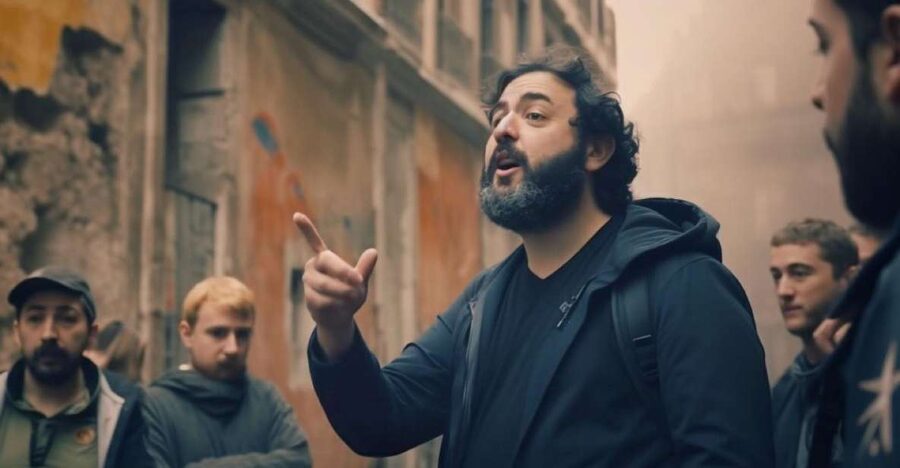
The tour does not stop when the war ends. That is important. A short account of the Civil War can leave you with the impression that the story concluded in 1939. Here, the guide explains the dictatorship that followed and lasted for 36 years.
You learn how the outcome affected political life, social groups, regional identities, and public memory. The discussion also reaches into present-day Spain, including the question of how the country deals with its past.
This section can be especially helpful if you are seeing Barcelona’s architecture and public spaces without knowing why some subjects remain sensitive. The war and dictatorship are not just distant events in a textbook. They continue to shape arguments about memory, identity, democracy, and the meaning of public symbols.
The discussion is presented as history rather than a party-political speech. Still, you should expect a serious conversation. One guide connects the period with the rise of far-right movements in Europe and the need to learn from past political violence. If you prefer a tour that avoids current affairs, this may feel more political than a standard sightseeing walk.
How much walking is involved?
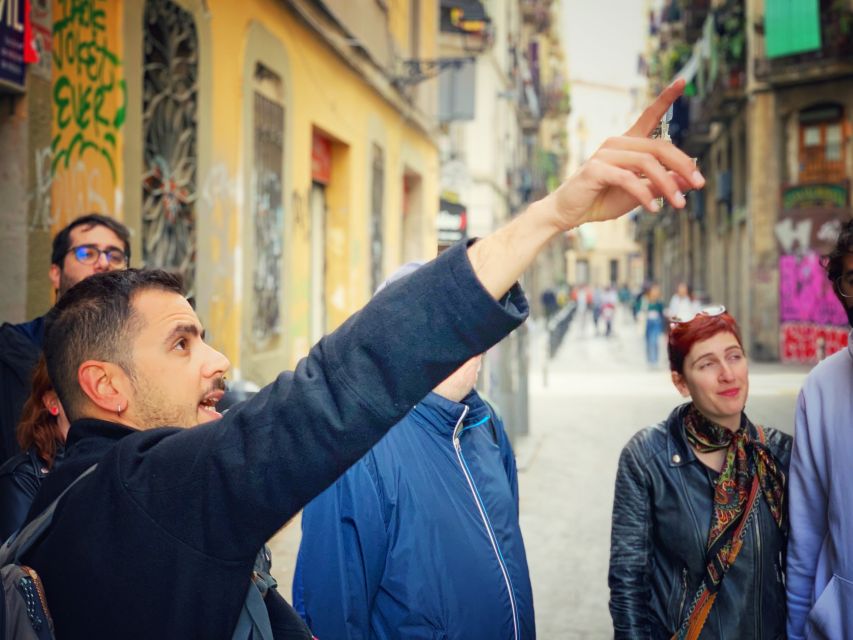
The tour is described as a walking experience, but several people find the actual walking modest. You move from one location to another, then remain in place while the guide speaks. That makes it more accessible than a continuous march through the city.
The larger concern is standing. Bring supportive shoes and dress for the weather. The tour operates rain or shine, and a cold or wet day can make the waiting periods uncomfortable. Barcelona’s old-town streets do not always offer a convenient place to sit.
The activity is wheelchair accessible, according to the tour information. If you need specific assistance, confirm the arrangements when booking, since historic streets can vary in surface and width.
Children may join, but the experience is not aimed at young children. The subjects include war, dictatorship, political violence, and repression. Older teenagers with an interest in history may get a lot from it, while small children are likely to struggle with both the content and the amount of standing.
What the $46 price gets you
At $46 per person, this is not the cheapest way to walk around central Barcelona. You are not paying for entry to a major monument, a meal, or hotel transport. The main service is the guide’s preparation and ability to turn streets into a readable historical record.
For the right person, that is good value. Barcelona has plenty of tours focused on Gaudí, tapas, churches, and architecture. This one fills a gap. It gives you a way to understand the political forces behind the buildings and neighborhoods you might otherwise see only as scenery.
The price makes the most sense if you are genuinely interested in modern Spanish history or want a stronger framework for the rest of your visit. It is less worthwhile if you want a relaxed stroll with light facts and plenty of time for photographs.
There is an optional €1 charge for the wireless guiding system when it is used. Food, drinks, and hotel pickup are not included. The tour finishes in the middle of the Gothic Quarter near Barcelona city hall, which is convenient for continuing your day with lunch, more sightseeing, or a museum visit.
Choosing the right guide and preparation
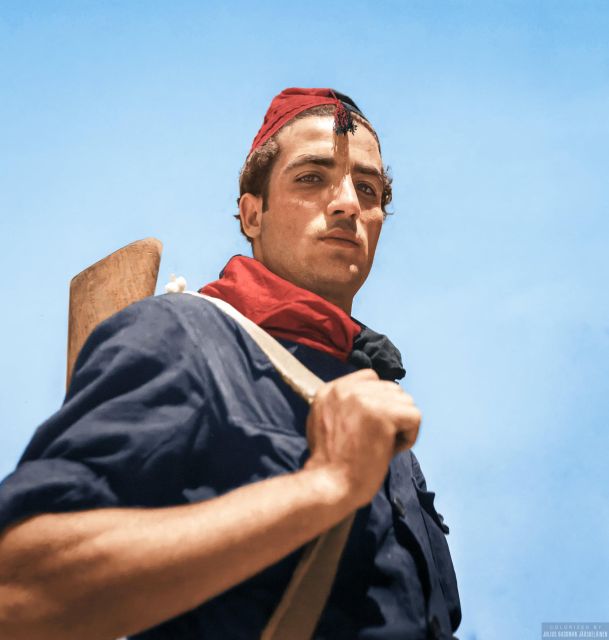
The guide can shape the experience because this subject requires explanation, not just a list of dates. Javier is praised for making the subject enjoyable and accessible, including for people who arrived with little interest in the war. Chrisa is noted for clear explanations, strong voice projection, and thoughtful discussion of women’s political roles and Mujeres Libres.
Yannis is described as especially detailed on the revolution, industrial Barcelona, and the links between past and present. Filipa brings strong interest in Franco’s Spain, while Henrieta is praised for answering questions and making the material understandable in clear English. The guide assigned to your departure may vary.
You do not need to read a book before joining. Still, a little preparation helps. Read a short introduction to the Spanish Civil War, or at least learn the basic difference between the republican side and Franco’s forces. One useful approach is to arrive with questions rather than a fixed opinion.
Bring water, weatherproof clothing, and comfortable shoes. If the weather is cold, wrap up well. The group may wait outdoors at the starting point before moving off, and rain does not automatically cancel the activity.
Who should book this Barcelona history walk?
I would choose this tour if you want to understand Barcelona as a political city, not just a beautiful one. It suits history enthusiasts, readers of Orwell, students, and people who find that ordinary sightseeing feels incomplete without social context.
It also works for beginners. The subject is advanced in places, but a strong guide can break it into steps. You should be willing to concentrate, ask questions, and accept that the story is complicated.
I would think twice if you are traveling with very young children, dislike political discussion, or want a gentle introduction to Barcelona. The tour is not a cheerful break between attractions. It asks you to think about violence, ideology, dictatorship, and the long shadow of national trauma.
The private-group option may suit families or small groups who want more control over the discussion. For a regular departure, expect an English-speaking group and a guide-led format rather than a self-guided audio walk.
Should you book it?
Yes, if you want the Barcelona that does not appear on the souvenir posters. The tour’s greatest strength is its ability to connect street corners with the Civil War, the Franco years, Orwell’s writing, and Spain’s continuing debate over memory.
Book it early in your stay if possible. The historical context can change how you look at the Gothic Quarter, churches, civic buildings, and even the city’s silences afterward. Just wear good shoes, prepare for standing, and come ready for a serious subject.
Skip it if your ideal Barcelona tour is all architecture, food, and easygoing stories. For everyone else, especially anyone curious about how ordinary people lived through one of Europe’s defining political conflicts, the $46 cost buys an unusually useful afternoon.
FAQ
Where does the Spanish Civil War walking tour meet?
The meeting point is on the sidewalk in front of Foot Locker at Plaça de Catalunya. Your guide will be carrying a white umbrella.
How long does the tour last?
The walking tour lasts about 2.5 hours and finishes in the Gothic Quarter near Barcelona city hall.
What language is the tour conducted in?
The live tour guide speaks English. An English audio guide may also be available.
Is the tour suitable for children?
Children are allowed to join, but the tour is not advised for young children because it deals with politics, war, dictatorship, and political violence.
Does the tour operate in bad weather?
Yes. The tour takes place rain or shine, so bring suitable clothing and shoes.
Is the tour wheelchair accessible?
The activity is listed as wheelchair accessible. Contact the provider if you need to confirm details for your particular requirements.
Recently added around Barcelona
- Montserrat very early : Hiking, Abbey, very small group★ 5.0 · 127 reviews
- Guided Private Yacht Tour in Barcelona Spain★ 5.0 · 6 reviews
- Private Tour from Barcelona to Montserrat (with guide)★ 4.5 · 6 reviews
- Private Tour from Barcelona to Costa Brava (with guide)★ 5.0 · 5 reviews
- Street Art, Sculptures & Crime Stories Walking Tour – Barcelona★ 5.0 · 11 reviews
- Andorra Tour★ 4.0 · 7 reviews
- Barcelona Gaudi Tour: Sagrada Familia, Casa Batllo & Casa Mila★ 5.0 · 4 reviews
- Wine Tasting in Barcelona (Catalan Varieties) Small Groups★ 5.0 · 10 reviews
Barcelona Walking Tours, compared.

Barcelona Tapas and Wine Experience Small-Group Walking Tour
Read our review →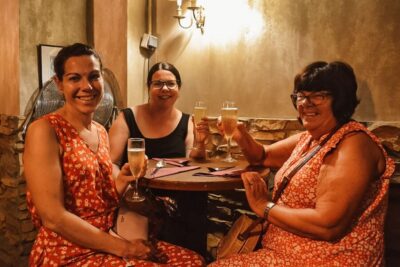
Tapas Walking Tour with Food, Wine, and History
Read our review →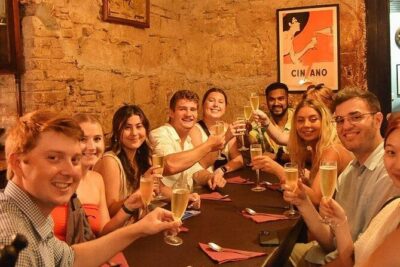
Barcelona Tapas Walking Tour: Food, Wine & History
Read our review →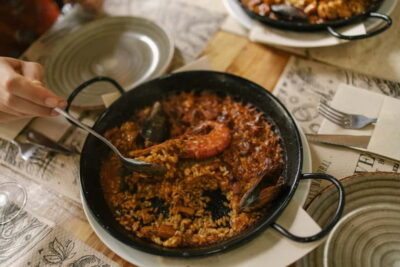

Gothic Quarter Ghosts and Legends Walking Tour
Read our review →
Barcelona Helicopter, Sailboat & Old Town Private Walking Tour
Read our review →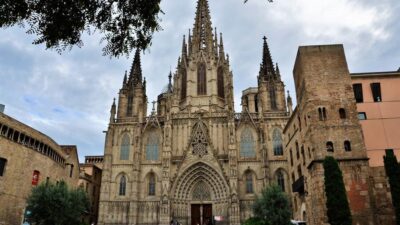

Helicopter Flight, Boat Ride, and Walking Tour
Read our review →Browse the lists this tour appears in