
Reviewed · BARCELONA GOTHIC QUARTER TOURS
Barcelona: Gothic Quarter’s Deepest Secrets Tour and Sangria
Barcelona’s Gothic Quarter is at its best when you stop treating it as a corridor between major sights. This tour takes you into the narrow lanes, Roman traces, political stories, and local traditions that give the old center its character, then ends with complimentary sangria and advice on where to eat.
I like the wide mix of subjects, from the Spanish Civil War and Catalan politics to religion, art, food, and neighborhood customs. I also like the route’s useful ending at Pasa Tapas Barceloneta, rather than dropping you in the middle of the old town with no idea what to do next.
The main consideration is pace. The activity is advertised as two hours, while the detailed route describes about two and a half hours, and the walk covers many stops. You will get a lively introduction, but not a slow visit inside every landmark. Cathedral entry is not included.
Key points at a glance
- Roman Barcelona appears beneath the medieval streets: See the Roman cemetery, the Augustus Temple, and the area around Plaça Nova.
- The stories go beyond architecture: The guide discusses Catalan culture, the Spanish Civil War, political intrigue, religion, art, and local traditions.
- The route links famous places with small corners: Expect Las Ramblas, Canaletas Fountain, Petritxol Street, Bishop’s Bridge, and Plaça Sant Felip Neri.
- The tour finishes with a drink and practical advice: Sangria comes at the end, along with suggestions for food and places to visit.
- English and Spanish tours are available: Guides named Valentina and Juliana are specifically associated with highly praised tours, so check the guide details when booking.
- The route ends near the port: Finish at Restaurant Pasa Tapas Barceloneta, giving you an easy next stop for food or a walk by the waterfront.
Starting at Café Zurich and Plaça Catalunya
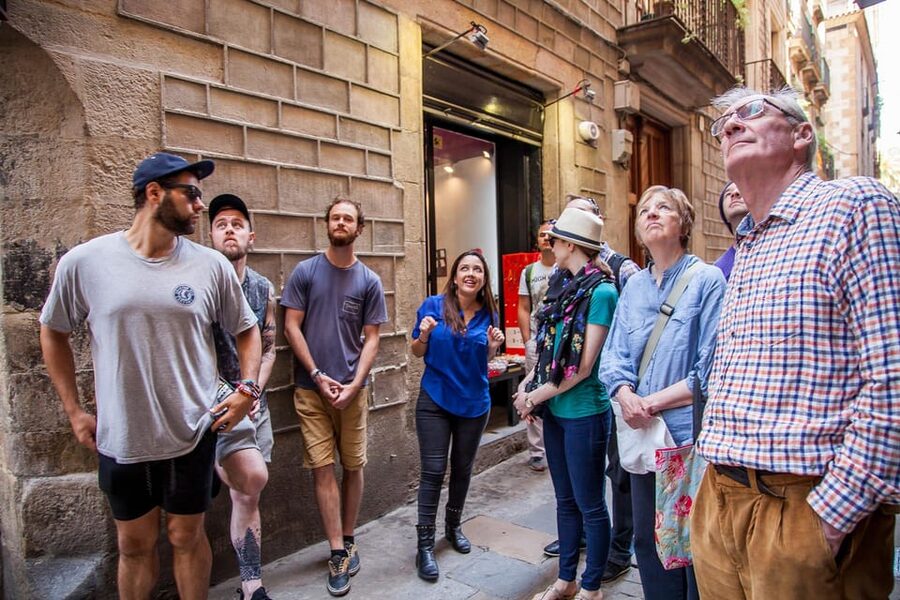
Your meeting point is outside Café Zurich in Plaça Catalunya. The guide waits in front of the metro station and wears a purple name tag, a useful detail in one of Barcelona’s busiest central meeting areas.
Plaça Catalunya is a sensible place to begin. It connects the newer Eixample district with the old center, so you can quickly see how Barcelona changes from broad urban avenues to tight medieval lanes. If you arrive early, use the square as your orientation point, but keep an eye out for the purple tag rather than assuming every tour group is yours.
The guide speaks English or Spanish. The activity is described as a small-group walking tour, though a specific maximum group size is not provided. That means the experience should feel more personal than a large coach excursion, but you should not assume a private or very small party.
I would schedule this near the start of your Barcelona stay. The guide’s restaurant and sightseeing suggestions are most useful when you still have several days left. The walk also gives you a working map of the center, from Las Ramblas to Barceloneta.
More Barcelona Gothic Quarter Tours:
- Barcelona all included: Sagrada, Park Güell, Montjuic & Gothic
★ 5.0 · 2,169 reviews - Barcelona Gothic Quarter Tapas & Taverns Food & Wine Tour
★ 5.0 · 1,470 reviews - Barcelona: Gothic Quarter Ghosts and Legends Walking Tour
★ 4.7 · 1,443 reviews
Las Ramblas, Canaletas Fountain, and the turn into the old city
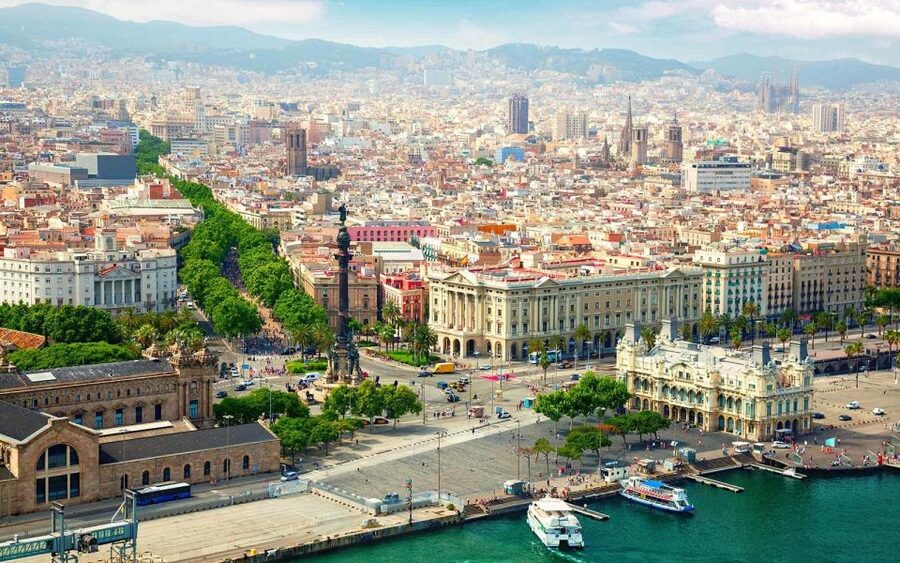
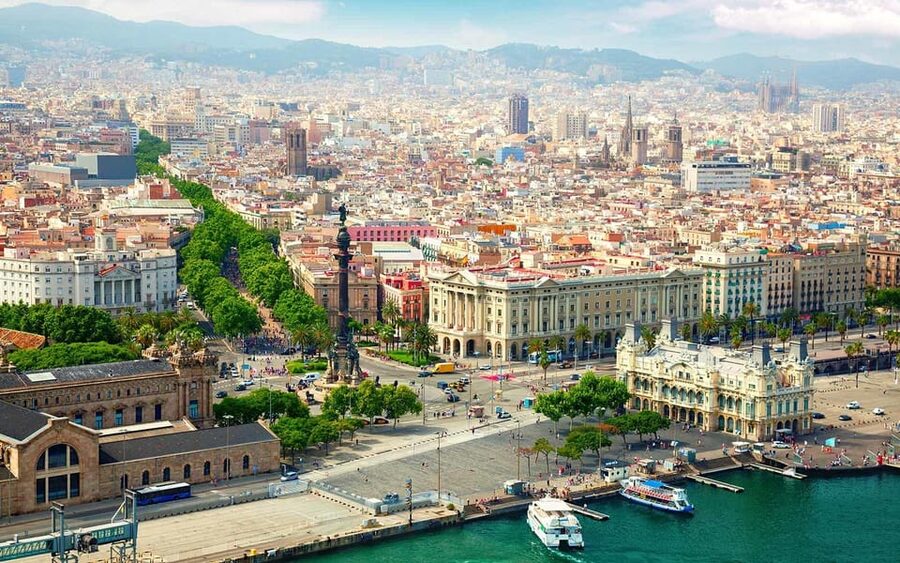
The route passes along Las Ramblas, Barcelona’s famous central promenade. It is one of the city’s best-known spaces, but its value on this tour is partly geographical: you see the public face of central Barcelona before turning into the older quarter.
Canaletas Fountain adds a local tradition to the walk. It is associated with a popular Barcelona football custom, but the wider point is that the guide connects a simple street feature with the city’s social life. This kind of explanation can make an ordinary-looking stop more memorable than a quick photograph.
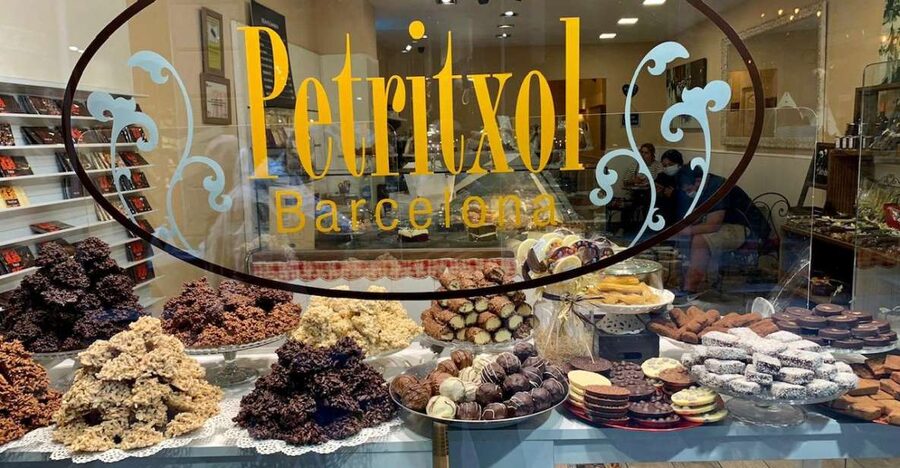
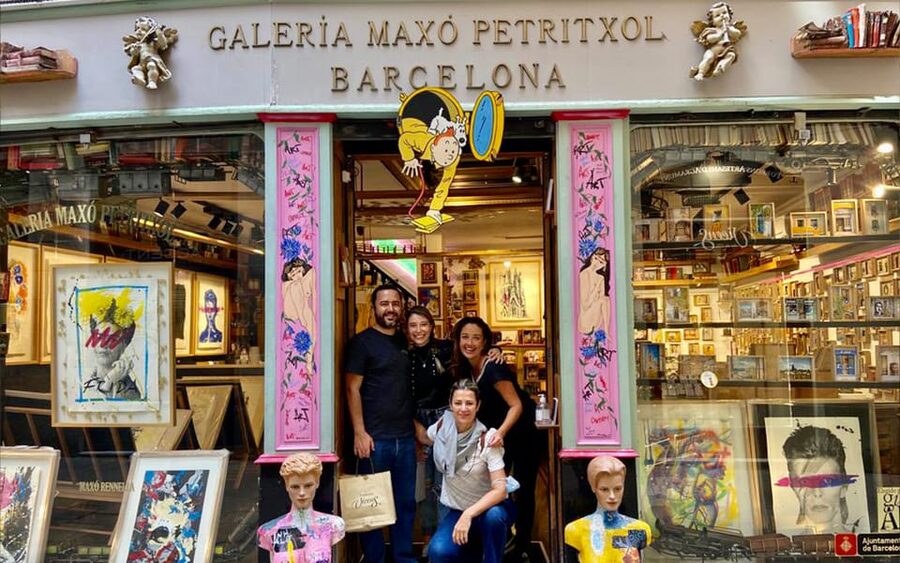
From here, the mood changes quickly. Petritxol Street is narrower and more intimate, with the kind of old-city setting that makes a walking tour worthwhile. The route is not only about checking off famous buildings. It is about understanding how Barcelona’s streets, customs, and public spaces fit together.
You should wear comfortable shoes. The route includes narrow historic streets and several areas where you will stop to listen, so shoes that handle uneven pavement will make the walk easier. The supplied information lists the activity as wheelchair accessible, but the exact route conditions are not described. If you use a wheelchair, confirm the current route and access arrangements before booking.
Roman remains around Plaça Nova and the Augustus Temple
Barcelona’s Gothic Quarter is medieval in appearance, but its story reaches much further back. The Roman cemetery and the Augustus Temple help show how many layers sit beneath the modern city.
The Roman cemetery is especially useful because it makes ancient Barcelona visible at street level. You do not need a long museum visit to understand that the present-day quarter grew over an older settlement. The Augustus Temple offers another glimpse of that Roman past, though entry details are not provided, so expect to view the listed sites as part of the walking route rather than assume an interior visit.
Plaça Nova brings you close to Barcelona Cathedral and the old entrance area of the quarter. This is where the route’s name makes sense: the most interesting details are not always the largest sights. A guide can point out how the Roman and medieval city overlap, then explain why the cathedral area mattered to religious and civic life.
Cathedral entry is not included in the $64 price. That is worth noting if the interior is high on your list. You can still see the cathedral from the route, learn about its place in the city, and decide later if you want to return and pay for admission separately.
Barcelona Cathedral and the Crown of Aragon
The cathedral is one of the central sights on this walk, but this is an exterior-focused introduction unless you arrange separate admission. The surrounding lanes give you a strong sense of the old religious center, while the guide fills in the political and cultural background.
The Archive of the Crown of Aragon adds a different layer. The name points to Barcelona’s role in the political life of the Crown of Aragon, and it gives the guide a natural opening to discuss power, regional identity, and the long relationship between Catalonia and the Spanish state.
This is one of the tour’s strengths. You are not hearing only a sequence of dates and building names. The subjects include religion, politics, local customs, art, and personalities, so you can connect a street corner with wider questions about how Barcelona developed.
The guide’s personality matters here. The strongest feedback names Valentina as professional and excellent, while Juliana is also singled out as one of the best guides on a wider trip. Another booking describes the guide as kind and fun. Those comments suggest that the human side of the tour is a major part of its appeal, but guide assignments can change, so treat those names as useful details to check rather than a guarantee.
A different sort of day out in Barcelona:
- Barcelona: Park Güell Admission Ticket
★ 4.4 · 76,534 reviews - Barcelona: Casa Batlló Entry with Self-Audioguide Tour
★ 4.7 · 25,359 reviews - Barcelona: 24 or 48-Hour Hop-On Hop-Off Bus Tour
★ 4.4 · 20,872 reviews - Barcelona: Park Guell Guided Tour with Skip The Line Entry
★ 4.7 · 17,563 reviews
Bishop’s Bridge and Plaça Sant Felip Neri
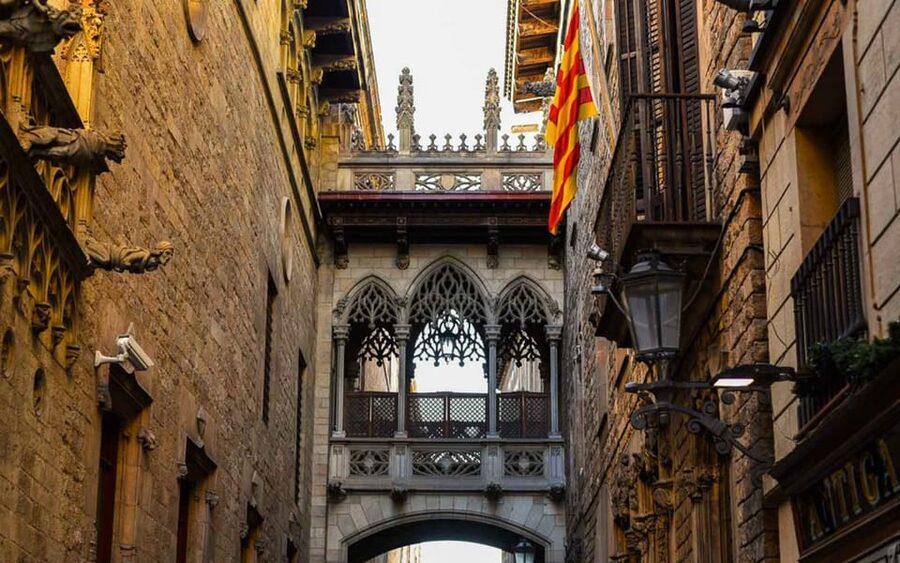
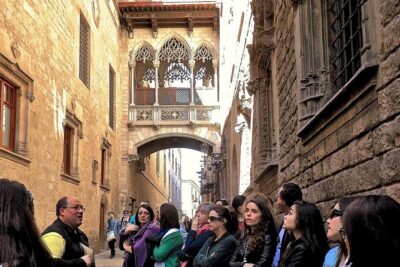
Bishop’s Bridge is one of the Gothic Quarter’s most photographed features. Its dramatic stonework makes a quick stop almost inevitable, but the guide can give it more meaning by placing it within the old civic and religious center.
Plaça Sant Felip Neri is quieter in tone. It is known for its beauty and for the marks left by the Spanish Civil War, making it one of the most serious stops on the route. The tour uses this square to connect Barcelona’s architecture with a difficult period in its past.
That balance is important. You will hear about food and local traditions, but also about war and political conflict. The result is not a lightweight sightseeing circuit. At the same time, the tour is only two to two and a half hours, so expect a concise account rather than a full seminar on the Civil War.
I like this part of the route because it asks you to look closely. A pretty square can also carry painful memories. You leave with a better sense of why old Barcelona cannot be reduced to medieval stone and attractive photographs.
Ferran Street, the School of Arts, and George Orwell Square
Ferran Street shifts the focus back toward everyday city life. It connects the old quarter with the more commercial parts of central Barcelona, and its position helps explain how people move through the historic center today.
The School of Arts brings creativity into the story. Barcelona’s artists, writers, and wider cultural life are part of the guide’s subject list, so this stop helps broaden the tour beyond kings, churches, and wars.
George Orwell Square offers a more modern political reference. Its name points to Barcelona’s complicated twentieth-century story and gives the guide another chance to discuss ideology, conflict, and the city’s place in political writing.
These stops are valuable because they break up the usual Gothic Quarter checklist. You see the cathedral and Roman remains, but you also hear about people, ideas, and events that shaped the city’s reputation. If you prefer a tour built around art, political stories, and personalities, this route should suit you better than a walk focused only on architecture.
Ending at Barceloneta, with sangria and local advice
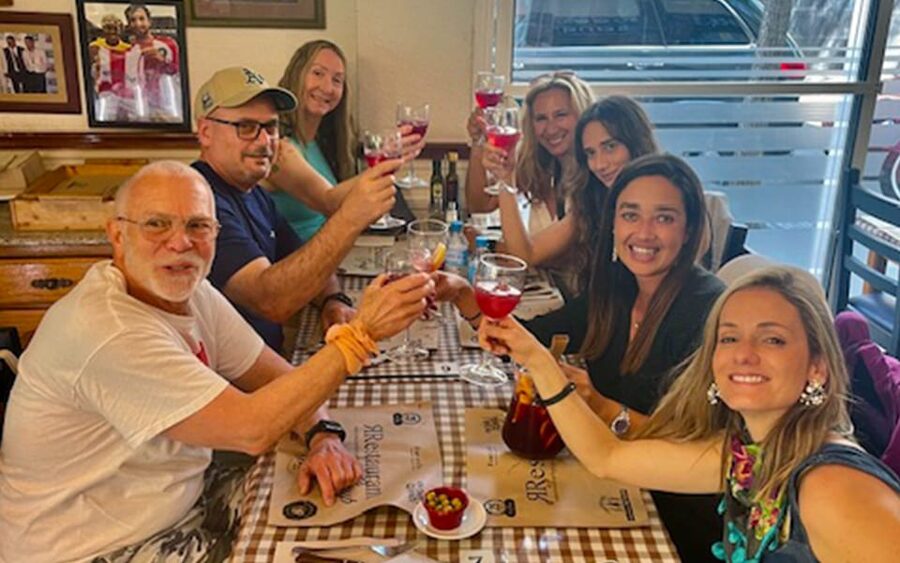
The walk finishes at Restaurant Pasa Tapas Barceloneta. This is a practical ending. Instead of returning to the starting point, the route carries you toward the port and the Barceloneta area, where you can continue with a meal or explore on your own.
Sangria is included at the end. It is more than a pleasant extra because it creates time for questions and conversation after the formal walk ends. The guide also shares suggestions about what to see and where to eat during your stay.
The phrase finest sangria in town is promotional language, so I would not book the tour solely for the drink. The real value is the combination of a guided introduction and a relaxed finish. You get a chance to ask about restaurants, local dishes, and places that fit your schedule before making your next plan.
Food after the tour is not included. You receive the sangria, but any further meal at Pasa Tapas or elsewhere is your own expense. If you are hungry, budget for that separately.
Is $64 a fair price?
At $64 per person, this is not the cheapest way to walk through the Gothic Quarter. You can see many of the streets and squares without a guide. The price makes more sense if you want an organized route, historical context, bilingual instruction, and a useful conversation about the rest of your visit.
The cost includes the guide and sangria, but not cathedral admission or food after the walk. Because the route covers so many subjects and named locations, you are paying for interpretation and structure rather than entry tickets.
I see the best value for a first visit, especially if you want to understand Barcelona beyond its postcard sights. A repeat visitor who already knows the Gothic Quarter may find the price harder to justify unless the Civil War stories, political background, and local recommendations appeal strongly.
You can reserve now and pay later, and cancellation is free up to 24 hours in advance for a full refund. Those terms reduce the risk if your plans are still shifting. Check the available start times before committing, since the listed duration and actual guided route length are not presented identically.
Who should book this Gothic Quarter walk?
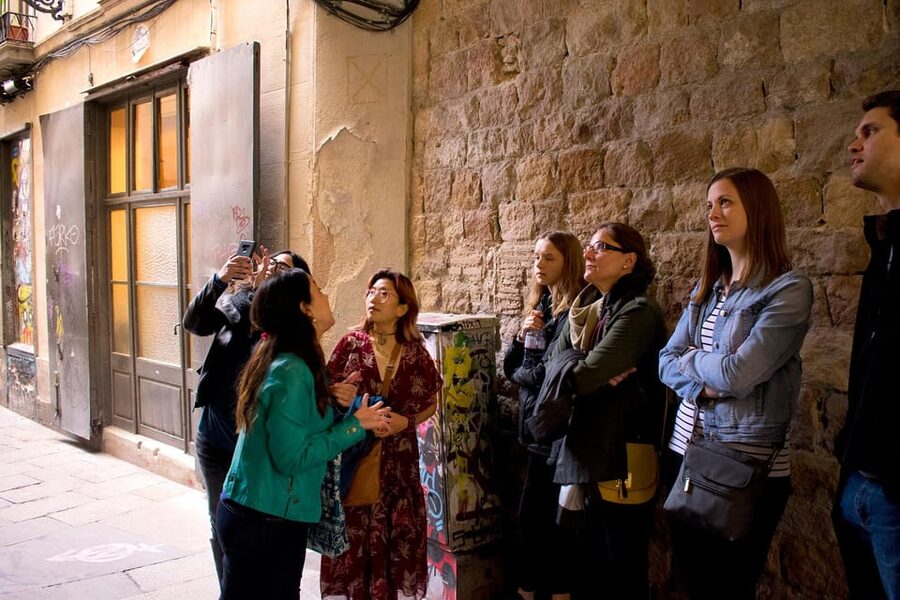
I would choose this tour if you want a broad introduction with a friendly guide and plenty of context. It suits solo visitors, couples, and families who prefer a walking conversation to a formal lecture.
It is also a good match if you care about:
- Catalan culture and local traditions
- Spanish Civil War stories and political history
- Roman and medieval Barcelona
- Art, religion, food, and notable personalities
- Restaurant suggestions for the rest of your stay
- A route that ends near Barceloneta instead of returning to Plaça Catalunya
You may want another option if your priority is cathedral admission, a long pause at each site, or a tightly focused architectural tour. The route is ambitious, and the short duration means some stops will be brief.
Should you book it?
Book this tour if you want Barcelona explained through stories rather than simply pointed out on a map. The route covers major sights, Roman remains, small squares, political landmarks, and local customs, then gives you sangria and practical advice at the end.
I would especially consider it for your first or second day in the city. The guide’s recommendations can shape the rest of your visit, and the route helps you understand how Plaça Catalunya, Las Ramblas, the Gothic Quarter, and Barceloneta connect.
Skip it if you mainly want to enter the cathedral or spend a long time at one monument. For everyone else, $64 is a reasonable price for a guided introduction with a strong human element, provided you are comfortable with a fast-moving walk and a route that may run closer to two and a half hours.
FAQ
Where does the tour begin?
Meet the guide outside Café Zurich in Plaça Catalunya, in front of the metro station. The guide wears a purple name tag.
Where does the tour finish?
The walk finishes at Restaurant Pasa Tapas Barceloneta.
How long does the tour last?
The activity information lists a duration of two hours. The detailed guided route describes approximately two and a half hours, so check the current timing when booking.
What languages are available?
The live guide speaks English or Spanish.
Is sangria included?
Yes. Sangria is included at the end of the walking tour.
Is food included after the sangria?
No. Food after the tour is not included.
Is cathedral admission included?
No. Entry to Barcelona Cathedral is not included in the tour price.
Is the tour wheelchair accessible?
The activity is listed as wheelchair accessible.
Can I cancel for a full refund?
Yes. You can cancel up to 24 hours in advance for a full refund. You can also reserve now and pay later.
Recently added around Barcelona
- Montserrat very early : Hiking, Abbey, very small group★ 5.0 · 127 reviews
- Guided Private Yacht Tour in Barcelona Spain★ 5.0 · 6 reviews
- Private Tour from Barcelona to Montserrat (with guide)★ 4.5 · 6 reviews
- Private Tour from Barcelona to Costa Brava (with guide)★ 5.0 · 5 reviews
- Andorra Tour★ 4.0 · 7 reviews
- Barcelona Gaudi Tour: Sagrada Familia, Casa Batllo & Casa Mila★ 5.0 · 4 reviews
- Street Art, Sculptures & Crime Stories Walking Tour – Barcelona★ 5.0 · 11 reviews
- Wine Tasting in Barcelona (Catalan Varieties) Small Groups★ 5.0 · 10 reviews
Barcelona Gothic Quarter Tours, compared.
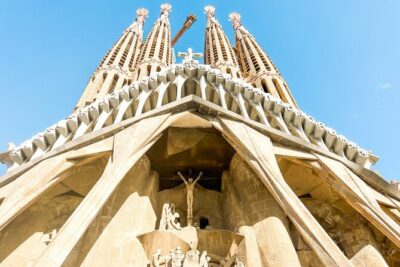
Barcelona all included: Sagrada, Park Güell, Montjuic & Gothic
Read our review →
Barcelona Gothic Quarter Tapas & Taverns Food & Wine Tour
Read our review →
Gothic Quarter Ghosts and Legends Walking Tour
Read our review →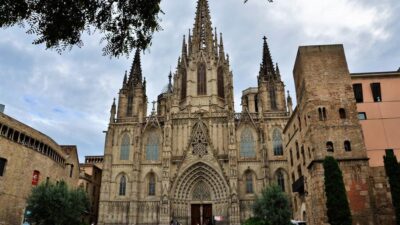
Barcelona Old Town & Gothic Quarter Small Group Tour
Read our review →
Ramblas, Old Town, Gothic and Gaudi Architecture Walking Tour
Read our review →
El Born and Gothic Quarter Wine & Tapas Bar Tour
Read our review →
Kids and Family Gothic Quarter Walking Tour in Barcelona
Read our review →Browse the lists this tour appears in