
Reviewed · BARCELONA GOTHIC QUARTER TOURS
Barcelona: Gothic Quarter Walking Tour
Barcelona’s oldest center is best understood on foot, one narrow lane and Roman wall at a time. This two-hour walk links the Gothic Quarter, La Rambla, La Boqueria, El Born, and two major churches, giving you a useful first look at the city’s layered past.
I like the route’s mix of major sights and tucked-away alleys, and I like that guides such as Teresa and Adele bring the history to life in several languages. The main consideration is time: two hours moves quickly, so most stops are guided looks rather than long interior visits.
Key points to know before booking
- Roman walls beneath the medieval city: See remains that connect today’s Gothic Quarter with its Roman beginnings.
- A smart first-day orientation: The route covers Ciutat Vella, La Rambla, La Boqueria, and El Born in one compact walk.
- Guides praised for personal attention: Teresa and Adele have been singled out for clear explanations, warmth, and useful restaurant advice.
- Two famous Catalan Gothic churches: Barcelona Cathedral and Santa Maria del Mar give the tour strong architectural highlights.
- Food market stop included: La Boqueria brings color, noise, and local food culture, but food and drinks cost extra.
- Flexible booking: The tour costs $29 per person, lasts two hours, and can be canceled up to 24 hours before departure for a full refund.
Why this walk makes sense early in your Barcelona stay
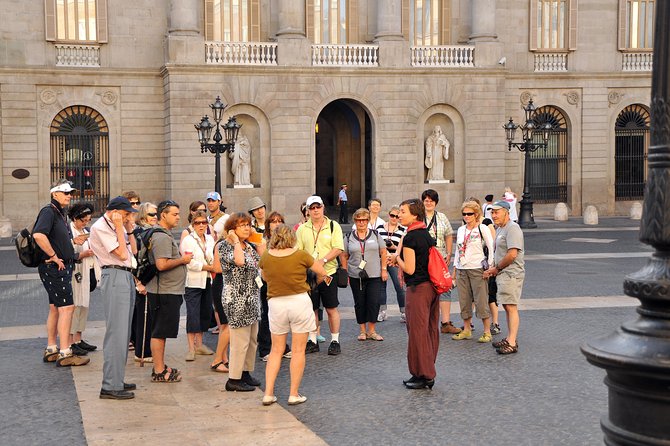
Barcelona’s old center can feel confusing at first. The lanes twist, several neighborhoods blend together, and grand buildings often hide behind plain stone facades. A guide gives you a map in your head before you start exploring alone.
This tour begins at Plaça d’Urquinaona, then works through the Gothic Quarter and Ciutat Vella before reaching La Rambla, La Boqueria, Plaça Reial, the cathedral, El Born, and Santa Maria del Mar. You return to the same starting point, which makes it easier to continue sightseeing or head back to your hotel.
I especially like the route for a first morning or afternoon in Barcelona. You get the city’s main old-town themes in one outing: Roman foundations, medieval streets, public squares, food, religious architecture, and the transition from old neighborhoods to modern city life.
The experience is guided rather than self-paced. That matters here because the most interesting details are not always obvious. A plain wall may contain Roman stonework. A quiet lane may be tied to a medieval guild or local legend. Without context, you can walk past much of the story.
More Barcelona Gothic Quarter Tours:
- Barcelona all included: Sagrada, Park Güell, Montjuic & Gothic
★ 5.0 · 2,169 reviews - Barcelona Gothic Quarter Tapas & Taverns Food & Wine Tour
★ 5.0 · 1,470 reviews - Barcelona: Gothic Quarter Ghosts and Legends Walking Tour
★ 4.7 · 1,443 reviews
Starting at Plaça d’Urquinaona
The meeting point is Pl. d’Urquinaona, 6. From there, the tour heads toward the historic center, where modern Barcelona gives way to older streets and buildings.
The starting point is useful because the walk does not begin deep inside the maze. You ease into the old city before reaching the tight medieval lanes. I would arrive ready to walk, with comfortable shoes and as little luggage as possible.
The tour is listed as wheelchair accessible, but the old center contains narrow streets and historic surfaces. Since the activity description does not specify the exact accessibility arrangements at every stop, it is sensible to confirm your needs when booking.
Roman Barcelona beneath the Gothic Quarter
The Gothic Quarter is not simply a medieval district. Its story reaches back to a Roman settlement, and Roman remains appear throughout the area. Your guide explains how the early settlement developed into the medieval city you see today.
That explanation is one of the strongest reasons to book a guided walk instead of wandering alone. You are not only looking at old stones. You are learning how one city grew over many centuries, with each period leaving something behind.
The Roman remains also give the neighborhood a useful sense of scale. Modern Barcelona is large and planned, while the old center grew in tighter stages. The result is a maze of lanes, small openings, stone walls, and buildings that do not always line up in a neat pattern.
I would pay close attention during this part of the walk, even if Roman ruins are not your main interest. They provide the basic plot for everything that follows.
Ciutat Vella and the pleasure of getting slightly lost
Ciutat Vella means Old City, and this section takes you through the historic core beyond one single landmark. The appeal is the street-level detail: older facades, small lanes, courtyards, and traces of different periods placed close together.
Several people who took the tour specifically appreciated finding little streets they would not have reached on their own. That is a useful clue for you. The value here is not only in seeing famous buildings. It is in having someone lead you away from the most obvious route and point out places that are easy to miss.
The guide also helps keep the neighborhood in perspective. A medieval alley can look picturesque, but it was once part of a working city filled with homes, shops, churches, and local trades. Good guiding turns a pretty walk into a clearer picture of daily life.
Because the route covers a lot in two hours, do not expect a long stop at every lane or ruin. Think of this portion as a guided orientation, with ideas and locations to revisit later.
More Barcelona Walking Tours:
- Barcelona Tapas and Wine Experience Small-Group Walking Tour
★ 5.0 · 5,804 reviews - Barcelona: Tapas Walking Tour with Food, Wine, and History
★ 4.8 · 4,261 reviews - Barcelona Tapas Walking Tour: Food, Wine & History
★ 4.5 · 1,928 reviews - Barcelona: Tapas Food Crawl Walking Tour with Tastings
★ 4.9 · 1,798 reviews
La Rambla, Barcelona’s famous public stage
The route continues to La Rambla, the broad avenue that runs through the old center. Bars, restaurants, street artists, and constant foot traffic give it a very different feel from the narrow lanes of the Gothic Quarter.
La Rambla is one of those places that is more useful when you understand its role than when you simply take a quick photograph. It connects several major parts of central Barcelona and acts as a natural passage between the old neighborhoods and the waterfront direction.
I like seeing La Rambla as part of a larger route rather than treating it as the whole Barcelona experience. It is lively and central, but it can also feel crowded and commercial. Keep your belongings close, stay aware of your surroundings, and do not assume every restaurant along the avenue offers the best value.
The guide’s commentary helps balance the spectacle. You see the famous avenue, then move toward places with a more local, everyday rhythm.
La Boqueria: a quick taste of Barcelona’s food culture
Mercat de la Boqueria is one of the route’s most colorful stops. The market is filled with produce, prepared foods, seafood, sweets, and other items arranged for both daily shopping and curious visitors.
You should treat this as a guided market visit, not a full food tour. Food and drinks are not included, so you pay separately if you want a juice, snack, or other purchase. The short stop is still useful because it shows how food fits into the city’s public life.
I would avoid arriving hungry with the expectation of a long meal. Two hours is not enough for an extended market crawl, and the market can be busy. Instead, use the stop to look around, learn what the stalls sell, and note anything you want to try later.
La Boqueria also gives the route a needed change of pace. After Roman stones and medieval lanes, you get color, scent, movement, and the practical side of local life.
Plaça Reial and a pause in the old city
Plaça Reial is a grand square near La Rambla, created during the Napoleonic era. Its arcaded buildings and open layout make it feel very different from the cramped lanes nearby.
The square has long drawn artists and visitors, and it remains a natural place to pause. On this tour, it works as a visual reset between the market and the major historic buildings ahead.
I would listen for the contrast between the square’s formal design and the irregular streets around it. Barcelona’s old center is not one single style. It is a collection of urban ideas placed side by side, from Roman settlement to medieval quarter to later public squares.
There may not be time to sit for long, especially if the group is keeping to the schedule. Still, Plaça Reial gives you a clear sense of how Barcelona created open civic spaces within a dense old district.
Barcelona Cathedral and its stone guardians
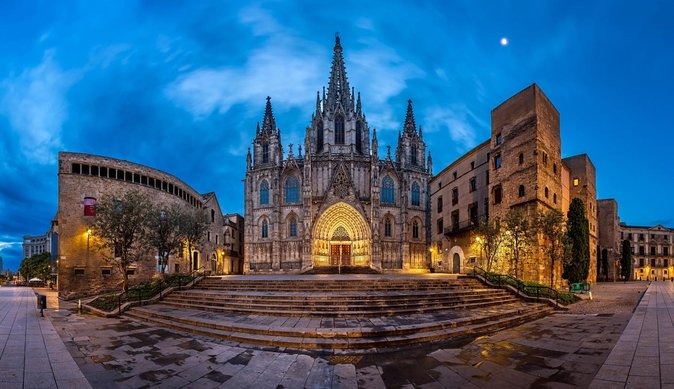
Barcelona Cathedral is one of the major visual highlights. Its Gothic architecture, tall structure, and gargoyle sculptures give the stop a strong dramatic quality.
The gargoyles are particularly useful details to look for. They are not decorative in a vague, storybook way. They add character to the building and make the cathedral’s upper sections worth examining carefully.
The tour centers on guided sightseeing, so you should not assume that a long interior visit is included. The supplied details describe the cathedral as a stop on the walking route, but they do not promise admission or extended time inside.
That distinction matters if you want a detailed architectural visit. You can enjoy the outside with the group, then return independently if you want to spend more time there. The guide’s explanation should help you know what deserves a second look.
El Born, where old Barcelona meets the present
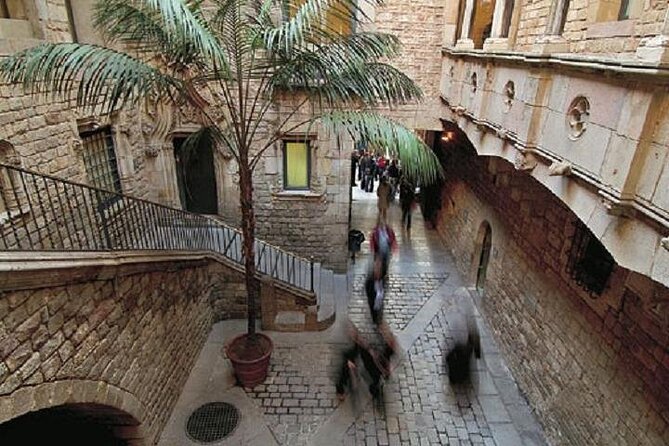
The route then reaches El Born, a neighborhood known for its blend of older buildings and newer city life. It is a natural bridge between the Gothic Quarter and the area around Santa Maria del Mar.
This part of the walk helps prevent Barcelona’s old center from feeling like a museum. People still live, eat, shop, and meet in these districts. The contrast between historic walls and modern activity is part of the neighborhood’s appeal.
A guide can also help you understand how El Born differs from the Gothic Quarter. The two areas are close, but they do not feel identical. Seeing them in one walk gives you a better sense of Barcelona’s internal variety.
The route’s coverage is ambitious for two hours. If El Born interests you, I would mark the streets and places you want to revisit after the tour. A first pass gives you orientation. A later, slower walk gives you atmosphere.
Santa Maria del Mar and Catalan Gothic design
The final major stop is the Basilica of Santa Maria del Mar, often called St. Mary of the Sea. It is a fine example of Catalan Gothic architecture and is especially notable because local people built it themselves.
That detail gives the church a different meaning from a royal or state-sponsored monument. The building is tied to the neighborhood and to the people who worked, traded, and worshipped there.
I find this a fitting end to the tour. You begin with the Roman foundations of Barcelona and finish with a church shaped by the community around it. Along the way, you see how the city changed from settlement to medieval center to modern urban district.
Again, the activity details do not promise a long interior visit or admission ticket. You should regard the basilica as a guided stop unless your booking confirmation says otherwise. If you want to study the interior closely, plan a separate visit.
Guides, languages, and the personal side of the walk
The tour is available in English, French, Italian, and Spanish. That broad language choice is important in a history walk because subtle explanations are easier to follow in the language you use most comfortably.
Teresa has received particular praise for her commitment and passion for Barcelona’s past. Adele has also been singled out for clear explanations, friendliness, and advice about less visited places and restaurants. Those details suggest that the guide can add value beyond a memorized route.
The tour is customizable, and private groups are available. That gives you more control if you want a private pace or have a specific interest in architecture, Roman remains, churches, or food culture. The exact customization options are not specified, so ask what can be changed before booking.
The overall rating is 4.8 from 16 ratings. I would not treat a score alone as a guarantee, but the repeated praise for friendly guides, precise explanations, and lesser-known lanes points to the tour’s strongest feature: the person leading it.
Is $29 a fair price?
At $29 per person, this is a reasonable price for a two-hour guided walk in central Barcelona. You are paying for an organized route, a live guide, and the time saved by finding key areas without studying a map first.
The value is strongest if you are new to Barcelona or have only a short stay. In two hours, you cover several districts and can decide which ones deserve a longer return visit.
The price does not include food or drinks, and the details do not confirm entrance tickets for the cathedral or basilica. That keeps the cost clear, but you should budget separately if you want market snacks or paid interior visits.
I would compare this tour with a free self-guided walk only if you are comfortable doing your own research. The paid option earns its keep through context, route planning, and the chance to ask questions.
Who should book this Barcelona walk?
I would recommend it to first-time visitors, couples, families who want a short introduction, and anyone who likes history explained while walking through the actual streets where it happened.
It is also a good fit for a first day in the city. Adele’s advice about places to visit and restaurants to try shows how the walk can help shape the rest of your stay.
You should think twice if you want long museum visits, a leisurely food experience, or detailed church interiors. The route is broad and efficient, not slow and specialized.
Wear comfortable shoes. The tour covers old streets and several neighborhoods in two hours, so this is a walking experience rather than a sit-down history talk. You can cancel up to 24 hours before the start for a full refund, and the reserve-now, pay-later option helps if your plans are still shifting.
My verdict: book it for orientation and local context
I would book this tour if you want Barcelona’s old center explained in a compact, practical way. The Roman remains, Gothic lanes, La Rambla, La Boqueria, Plaça Reial, Barcelona Cathedral, El Born, and Santa Maria del Mar make a strong route for $29.
The biggest strength is the guide. Teresa and Adele are praised for warmth, clear history, and useful local suggestions, which is exactly what makes a short walking tour worthwhile.
Book it early in your visit, wear sensible shoes, and treat the route as a well-guided introduction rather than a complete visit to every monument. If that sounds like the right pace, this is a solid way to get your bearings in Barcelona’s oldest districts.
FAQ
Where does the tour start?
The tour starts at Pl. d’Urquinaona, 6, in Barcelona.
How long does the tour last?
The walking tour lasts two hours.
How much does the tour cost?
The listed price is $29 per person.
Which languages are available?
The live guide can lead the tour in English, French, Italian, or Spanish.
Is the tour private?
Private groups are available, and the tour is described as customizable.
What is included in the price?
A customizable tour and a live guide are included.
Are food and drinks included?
No. Food and drinks are not included, including any purchases you may want to make at La Boqueria.
Is the tour wheelchair accessible?
Yes, the activity is listed as wheelchair accessible.
What should I bring?
Bring comfortable shoes for the two-hour walking route.
Recently added around Barcelona
- Montserrat very early : Hiking, Abbey, very small group★ 5.0 · 127 reviews
- Guided Private Yacht Tour in Barcelona Spain★ 5.0 · 6 reviews
- Private Tour from Barcelona to Montserrat (with guide)★ 4.5 · 6 reviews
- Private Tour from Barcelona to Costa Brava (with guide)★ 5.0 · 5 reviews
- Street Art, Sculptures & Crime Stories Walking Tour – Barcelona★ 5.0 · 11 reviews
- Andorra Tour★ 4.0 · 7 reviews
- Barcelona Gaudi Tour: Sagrada Familia, Casa Batllo & Casa Mila★ 5.0 · 4 reviews
- Wine Tasting in Barcelona (Catalan Varieties) Small Groups★ 5.0 · 10 reviews
Barcelona Gothic Quarter Tours, compared.
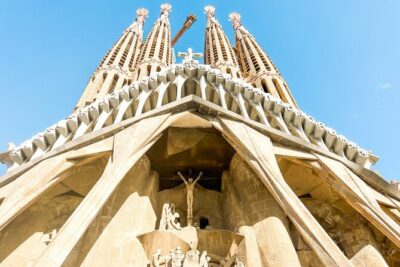
Barcelona all included: Sagrada, Park Güell, Montjuic & Gothic
Read our review →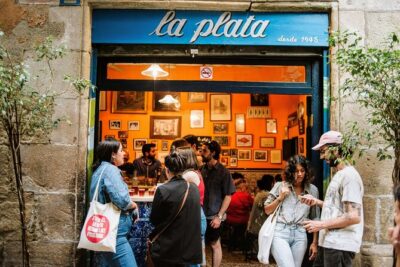
Barcelona Gothic Quarter Tapas & Taverns Food & Wine Tour
Read our review →
Gothic Quarter Ghosts and Legends Walking Tour
Read our review →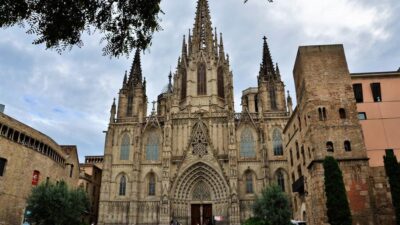
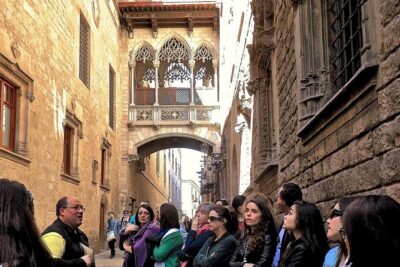
Barcelona Old Town & Gothic Quarter Small Group Tour
Read our review →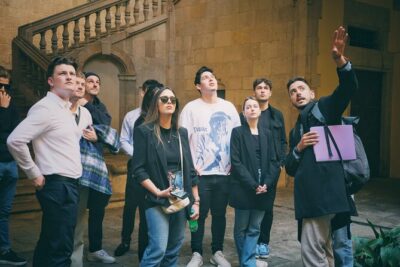
Ramblas, Old Town, Gothic and Gaudi Architecture Walking Tour
Read our review →
El Born and Gothic Quarter Wine & Tapas Bar Tour
Read our review →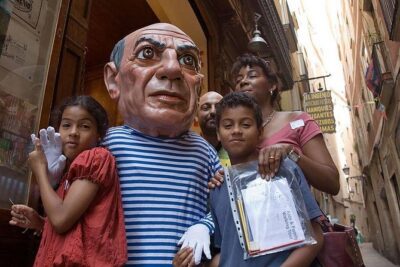
Kids and Family Gothic Quarter Walking Tour in Barcelona
Read our review →Browse the lists this tour appears in