
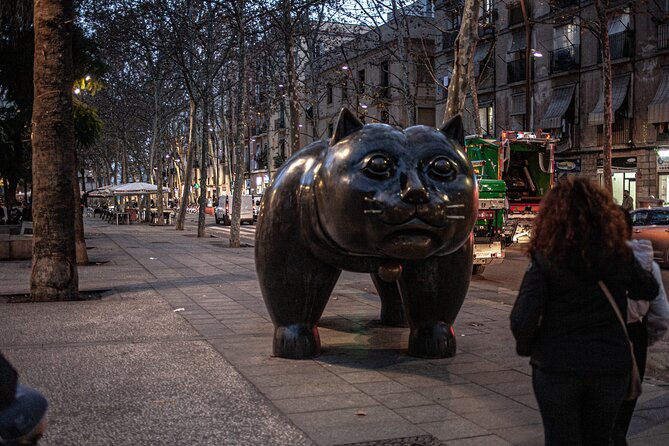
Reviewed · BARCELONA WALKING TOURS
Barcelona El Raval Dark History Walking Tour
Barcelona’s El Raval is not the postcard version of the city. On this two-hour walk, you follow old lanes and broad avenues tied to abandoned babies, notorious crime, autopsies, violent religious history, nightlife, industry, and street art. It is an engaging way to see the city’s less polished side without treating the neighborhood as a sideshow.
I like two things here: the route takes you to places you may pass without noticing, and the guides bring plenty of human detail to the stories. Eoghan is often singled out for his humor, passion, and useful restaurant and activity suggestions, while Zeynep, Callum, Andres, and Cal have also led warm, well-organized walks.
The main consideration is the subject matter. This is a dark-history tour, so stories of murder, abandoned infants, autopsies, and vice are part of the package. The six stops are also brief, about 20 minutes each, so you get a broad introduction rather than a long visit inside major sights.
Key points at a glance
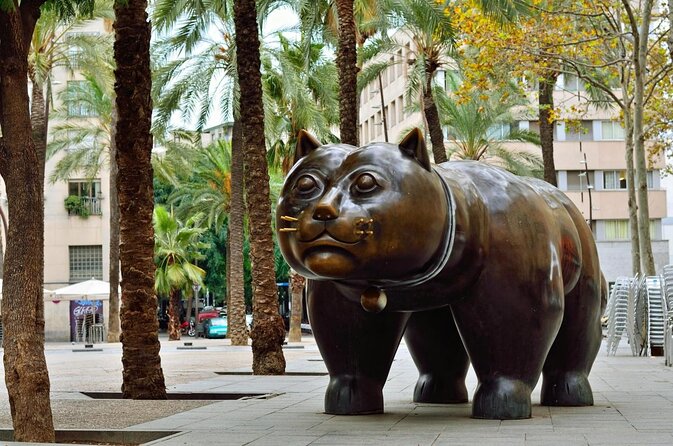
- The foundling wheel: Learn how Barcelona dealt with unwanted infants at the former Casa de Misericòrdia.
- The Vampire of the Raval: Hear the grim story linked to Carrer de Joaquín Costa.
- Old medicine and autopsies: Visit the former Hospital de la Santa Creu area and the Royal Academy of Medicine.
- Sant Pau del Camp: See one of Barcelona’s oldest churches and hear about its violent past.
- Paralelo after dark: Understand why Avenida del Paralelo became associated with nightlife and the city’s old Chinese district.
- A strong finish: End at the Three Chimneys Gardens, an industrial site now known for large-scale graffiti.
Why this Raval walk is different
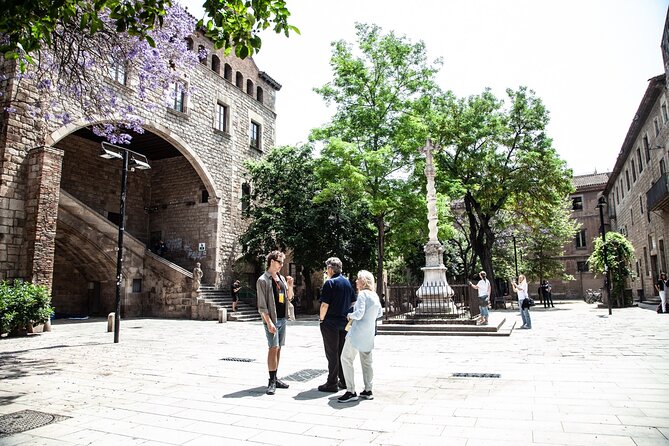
Many Barcelona walks concentrate on Gaudí, the Gothic Quarter, or the grand streets around Plaça de Catalunya. This one asks you to look at how ordinary people lived, suffered, worked, and sought entertainment in the city’s western center.
The tone is less about polished architecture and more about the marks left by poverty, medicine, crime, religion, migration, industry, and social change. That gives the tour its value. You are not simply collecting buildings. You are learning why this part of Barcelona has such a complicated reputation.
The route begins at the Parish of Sant Pere Nolasc Mercedaris on Plaça de Castella and ends at Plaça de les Tres Xemeneies on Avenida del Paral·lel. The walk is limited to 15 people, which matters on narrow streets. A small group also gives you a better chance to ask about places to eat, nightlife, or sights to visit afterward.
The guides set the mood. Eoghan has earned especially strong praise for his storytelling, humor, love of Barcelona, and ability to make people feel at ease. Other named guides include Zeynep, also listed as Zaynab, Callum, Andres, and Cal. The exact guide may vary, but the experience clearly depends on a personable leader who can connect grim facts with the city you see around you.
More Barcelona Walking Tours:
- Barcelona Tapas and Wine Experience Small-Group Walking Tour
★ 5.0 · 5,804 reviews - Barcelona: Tapas Walking Tour with Food, Wine, and History
★ 4.8 · 4,261 reviews - Barcelona Tapas Walking Tour: Food, Wine & History
★ 4.5 · 1,928 reviews
The foundling wheel at Casa de Misericòrdia
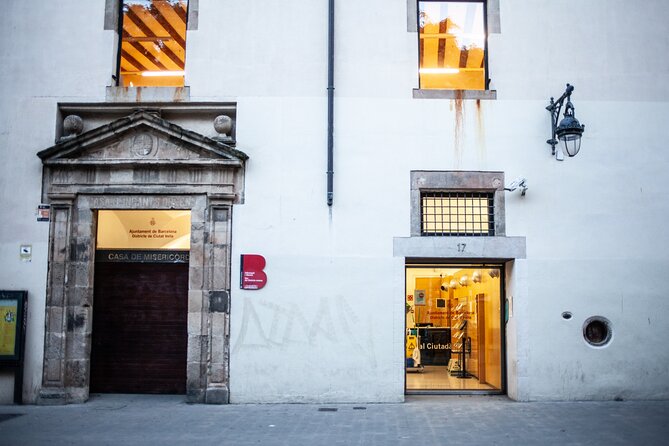
The first stop is the Fundació Privada Casa de Misericòrdia de Barcelona, where a former foundling wheel is hidden in plain sight. This is one of the tour’s most arresting details because it turns a quiet architectural feature into evidence of a hard social problem.
Foundling wheels were used for leaving unwanted babies anonymously. The stop gives you a way to think about poverty, family crisis, and the limited choices available to desperate parents in earlier Barcelona.
You do not visit this stop for grand decoration. You visit it for the story and the act of noticing. The guide points out what is easy to miss, then explains how the building fits into the city’s old charitable and religious systems.
This is a good opening because it establishes the tour’s method: look closely, listen carefully, and expect history to appear in places that seem ordinary. If you prefer a tour built around famous interiors and long architectural visits, this may feel too brief. If you enjoy overlooked details, it is an excellent start.
Carrer de Joaquín Costa and the Raval’s darker reputation
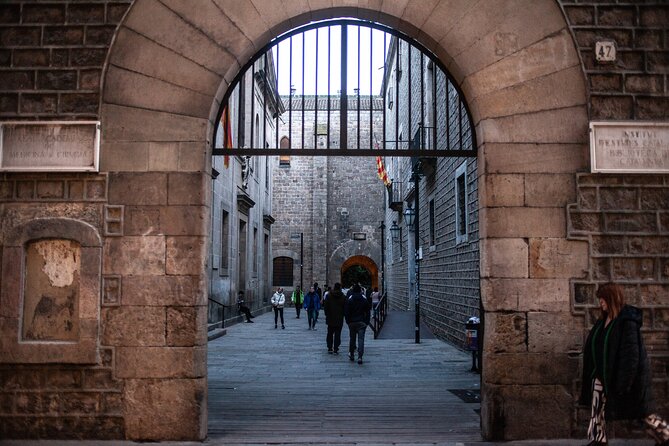
The second stop moves to Carrer de Joaquín Costa, once associated with a criminal figure whose story gave the tour much of its sinister edge. The guide connects the street with the so-called Vampire of the Raval, Barcelona’s own answer to the era’s notorious villains.
The point is not just to repeat a frightening tale. The story helps explain how El Raval gained its reputation for danger, poverty, prostitution, and disorder. It also lets you compare past and present. The same streets now hold bars, shops, apartments, and creative spaces, yet their older reputation still shapes how outsiders see the neighborhood.
This part will suit you if you like social history told through individual lives. It is also where the guide’s delivery matters most. A flat list of crimes would grow tiresome, while a good storyteller can explain the setting without turning real suffering into a cheap thrill.
Eoghan’s humor and dramatic storytelling have been especially appreciated here, but the tour is not only about one guide. The other named leaders are described as friendly, attentive, and able to keep the group involved. That personal contact is useful in a neighborhood some visitors may approach with caution.
Former Hospital de la Santa Creu and the Royal Academy of Medicine
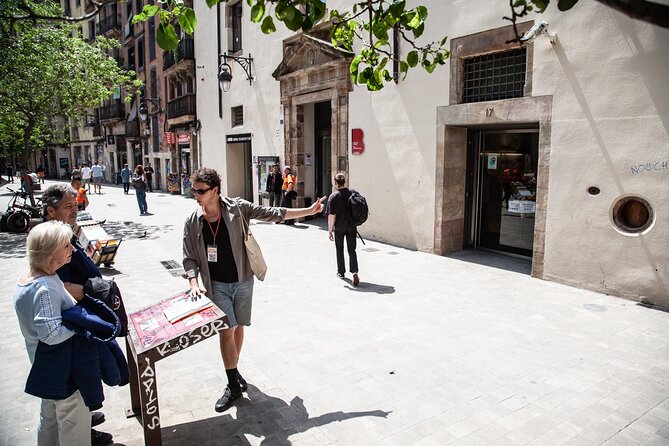
The third stop is the Real Academia de Medicina de Cataluña, part of the former Hospital de la Santa Creu. Its connection with autopsies brings the tour into the history of medicine, death, and public health.
This stop adds welcome range. Without it, the walk could become a string of crime stories. Here, you see how the city’s medical institutions dealt with the body and with medical study. The setting also links practical science with the religious and charitable institutions that once served Barcelona’s poor.
Expect an exterior-focused explanation rather than a full museum visit. The tour moves at a steady pace, and each stop receives roughly 20 minutes. You get enough time to understand why the location matters, but not enough for a detailed examination of every architectural feature.
I like this balance because it keeps the route moving. You cover a lot of ground and topics in two hours. The tradeoff is that you may leave with questions you want to explore later, especially if medical history interests you.
More Barcelona History Walks:
- Barcelona: 2.5-Hour Bike or E-Bike Historical Tour
★ 4.5 · 1,262 reviews - Barcelona Erotic Museum – Explore Art, History & Fun
★ 4.4 · 450 reviews - Andorra Original History and Sightseeing Tour (Private, Pickup)
★ 5.0 · 350 reviews - Barcelona: Dark History Night Walking Tour
★ 4.8 · 344 reviews
Sant Pau del Camp and a monastery with a violent past
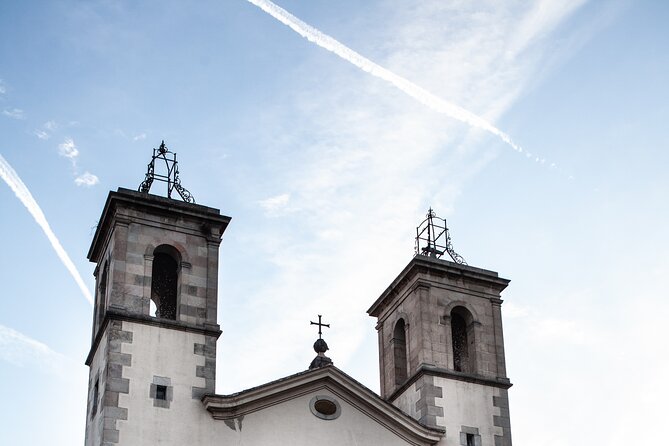
Sant Pau del Camp is one of the route’s most important historic stops. It is described as Barcelona’s oldest church and was once a monastery. Its age and religious setting provide a sharp contrast to the crime stories and urban nightlife that come later.
The church gives you a chance to see a quieter side of the Raval. It is a reminder that this neighborhood was not created only by factories, taverns, and crowded housing. Religious foundations also shaped its streets and institutions.
The violent history associated with the former monastery keeps the stop within the tour’s darker theme. You are not getting a standard church visit focused only on artistic beauty. Instead, the guide uses the site to show how religion, power, conflict, and daily life overlapped.
If you want time for prayer, photography, or a close look at the church, plan a separate visit. The walking tour treats Sant Pau del Camp as one chapter in a larger story. That is useful for orientation, but it is not the same as a dedicated church tour.
Avenida del Paralelo and old Barcelona nightlife
The route then reaches Avenida del Paralelo, once associated with the Chinese district and the seedier nightlife of 20th-century Barcelona. This is where the tour shifts from medieval and institutional history to entertainment, vice, migration, and the city after dark.
The avenue helps you understand why Barcelona’s social life cannot be reduced to its museums and churches. Theatres, clubs, drinking spots, and other forms of nightlife made this area a major outlet for people looking for amusement outside respectable daytime society.
The phrase Chinese district may need context from your guide, since names and reputations can carry old assumptions. Listen for the explanation of how the area was labeled and what that label meant in its period. The value of the stop lies in seeing how a district’s identity can be shaped by outsiders, popular culture, and the businesses that gather there.
This part also makes the tour practical. Guides such as Eoghan are known for offering suggestions about places to eat and things to do. If you take the walk early in your stay, keep a note on your phone for recommendations. The route ends in a different part of the city, so you can continue exploring instead of simply returning to the starting point.
Three Chimneys Gardens and industrial Barcelona
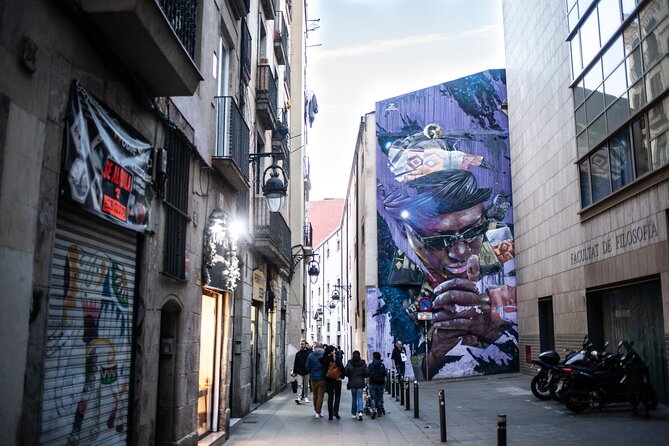
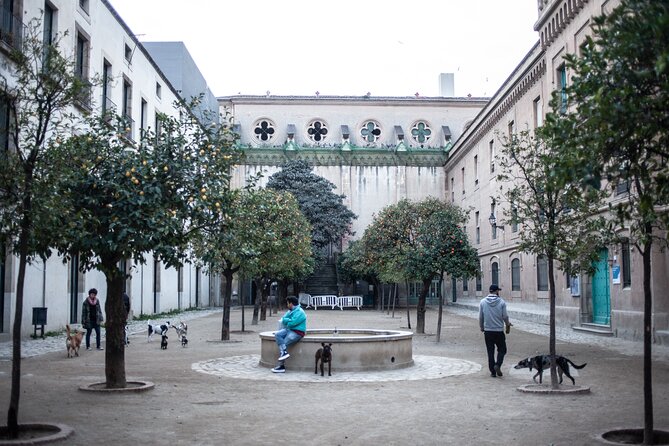
The final stop is Jardins de les Tres Xemeneies, or the Three Chimneys Gardens, at Plaça de Les Tres Xemeneies. This was once an industrial center. Today, it is known as a strong place to see graffiti art.
The ending works because it brings the tour into the present. After stories about monasteries, hospitals, crime, and nightlife, you see how former industrial space can become public art space. The large chimney structures preserve the memory of work and industry, while the graffiti reflects current creative life.
For many people, this may be the most photogenic stop. Still, keep your expectations realistic. The tour does not promise a formal street-art lesson or a curated gallery visit. Conditions can change, and the art you see depends on what is present when you arrive.
The end point is also useful for planning. You finish on Avenida del Paral·lel, not back at Plaça de Castella. Check your next destination before the tour begins, especially if you have dinner reservations or a timed ticket elsewhere.
What the $33.42 price delivers
At $33.42 per person, this is not the cheapest way to spend two hours in Barcelona. You are paying for a local guide, a small group capped at 15, and a route that combines several parts of the Raval and Paral·lel that are not usually covered in a first-time city walk.
The value depends on how you use it. If you want entry to major monuments, this is not the right purchase. Admission is not the focus, and the listed stops are presented from the outside or as short story points. If you want context, orientation, and access to an unusual side of the city, the price is more defensible.
A good way to get full value is to schedule it near the beginning of your stay. You can use the guide’s suggestions for later meals, clubs, and neighborhoods. You also gain a clearer sense of where El Raval fits within Barcelona before exploring it independently.
The tour lasts about two hours, but allow extra time for reaching the meeting point and continuing from the end. Wear comfortable shoes. This is a city walk with six stops, not a seated lecture.
Who will enjoy this walk most
I would recommend it to you if you have already seen, or plan to see, Barcelona’s famous sights but want a more complicated picture of the city. It is especially suitable for history fans, curious first-time visitors, couples, friends, and older children who can handle serious subjects.
It is also a useful choice if you feel unsure about exploring El Raval alone. The guide provides structure and local context, while the small group keeps the experience personal. One guide, Cal, was specifically praised for helping people feel safe and welcome in an area that can seem intimidating from guidebook descriptions.
I would be more cautious about booking it for young children or anyone sensitive to stories involving murder, infant abandonment, autopsies, and prostitution. The title is accurate. The tour may have a light touch and friendly introductions, but the subject matter remains dark.
It is not ideal for someone seeking a slow architecture tour, a food walk, or a deep visit inside each church and historic building. You will see and discuss many places, but the pace is brisk and the emphasis is storytelling.
Practical details before you go
The starting point is Parròquia de Sant Pere Nolasc Mercedaris, Plaça de Castella 6, in Ciutat Vella. The finish is Plaça de Les Tres Xemeneies, Avenida del Paral·lel 49, in Sants-Montjuïc.
A mobile ticket is provided, and confirmation arrives at booking. The meeting point is near public transportation. Service animals are allowed, and the activity states that most participants can take part.
The tour requires a minimum number of people. If that number is not reached, the operator offers another date or experience, or a full refund. You can cancel for a full refund up to 24 hours before the start time. Changes or cancellations inside that 24-hour window are not accepted for a refund.
Since the walk takes place outdoors, check the forecast and bring water. Lunch is not included, so plan to eat before or after. The finish near the Three Chimneys Gardens gives you a natural point for continuing into the Paral·lel area.
Should you book the Barcelona Raval Dark History Walking Tour?
Book it if you want Barcelona beyond Gaudí and grand squares. The route gives you crime, medicine, religion, industry, nightlife, and graffiti in one compact walk. Its greatest strength is the guide’s ability to turn ordinary streets into places with a story.
I especially like it as an early-trip activity. The small group, strong guide feedback, and useful local suggestions can help you get your bearings fast. Just choose it with clear expectations: this is a brisk outdoor history walk, not a monument admission tour, and some stories are genuinely grim.
If that sounds like your kind of Barcelona, $33.42 is a fair price for two hours of unusual context and a part of the city you might otherwise skip.
FAQ
How long does the Barcelona El Raval Dark History Walking Tour last?
The tour lasts approximately two hours.
Where does the tour begin?
It begins at Parròquia de Sant Pere Nolasc Mercedaris, Plaça de Castella 6, Ciutat Vella, Barcelona.
Where does the tour end?
It ends at Plaça de Les Tres Xemeneies, Avenida del Paral·lel 49, at Jardines de las Tres Chimeneas.
How many people can join the tour?
The group has a maximum of 15 participants.
Is lunch included?
No. Lunch is not included in the tour price.
Can I cancel for a full refund?
Yes. You can cancel up to 24 hours before the experience starts for a full refund. Cancellations or changes made less than 24 hours before the start time are not accepted for a refund.
Recently added around Barcelona
- Montserrat very early : Hiking, Abbey, very small group★ 5.0 · 127 reviews
- Guided Private Yacht Tour in Barcelona Spain★ 5.0 · 6 reviews
- Private Tour from Barcelona to Montserrat (with guide)★ 4.5 · 6 reviews
- Private Tour from Barcelona to Costa Brava (with guide)★ 5.0 · 5 reviews
- Barcelona Gaudi Tour: Sagrada Familia, Casa Batllo & Casa Mila★ 5.0 · 4 reviews
- Street Art, Sculptures & Crime Stories Walking Tour – Barcelona★ 5.0 · 11 reviews
- Andorra Tour★ 4.0 · 7 reviews
- Wine Tasting in Barcelona (Catalan Varieties) Small Groups★ 5.0 · 10 reviews
Barcelona Walking Tours, compared.

Barcelona Tapas and Wine Experience Small-Group Walking Tour
Read our review →
Tapas Walking Tour with Food, Wine, and History
Read our review →
Barcelona Tapas Walking Tour: Food, Wine & History
Read our review →

Gothic Quarter Ghosts and Legends Walking Tour
Read our review →
Barcelona Helicopter, Sailboat & Old Town Private Walking Tour
Read our review →

Helicopter Flight, Boat Ride, and Walking Tour
Read our review →Browse the lists this tour appears in