
Reviewed · BARCELONA WALKING TOURS
Barcelona’s Dark History Walking Tour in El Raval
El Raval’s darker side is not locked away in a museum. It runs along narrow lanes, old courtyards, faded façades, political murals, and bars that have survived for centuries. This two-hour walk uses the neighborhood’s legends and rough-edged past to explain how Barcelona changed.
I like the mix of history and street art, especially the Keith Haring mural and the graffiti around Three Chimneys. I also like the story-driven route, which brings abandoned children, a notorious alleged vampire, old cabarets, and a troubled church into one compact walk. The main drawback is that the subject matter can be grim, and some stories sit somewhere between documented fact and local legend.
Key points at a glance
- Hear the Vampiress of El Raval legend, tied to the neighborhood’s most infamous alleged serial killer.
- Enter the old Hospital de la Santa Creu, with its courtyard, garden, and unsettling past.
- See Keith Haring’s AIDS mural, one of Barcelona’s most important pieces of public art.
- Visit Sant Pau del Camp, a Romanesque church more than 1,000 years old.
- Pass Bar Marsella, a more than 200-year-old watering hole linked with famous artists and writers.
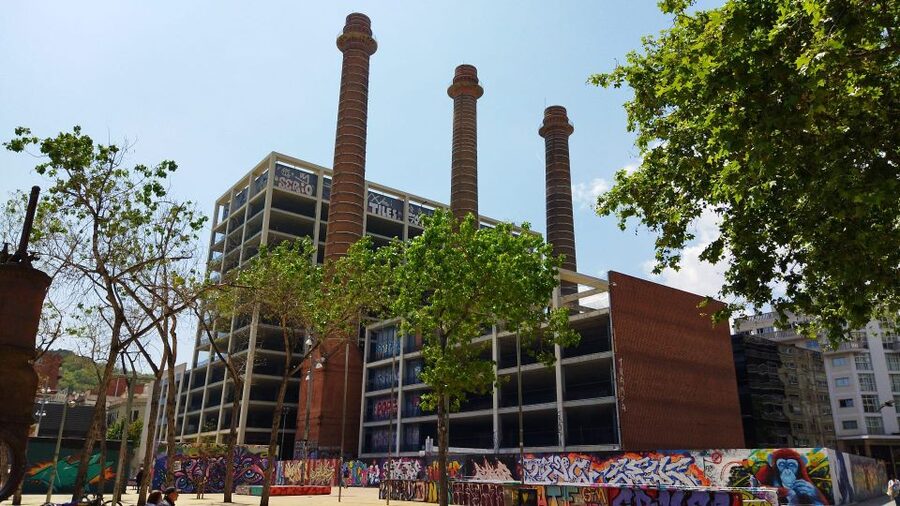
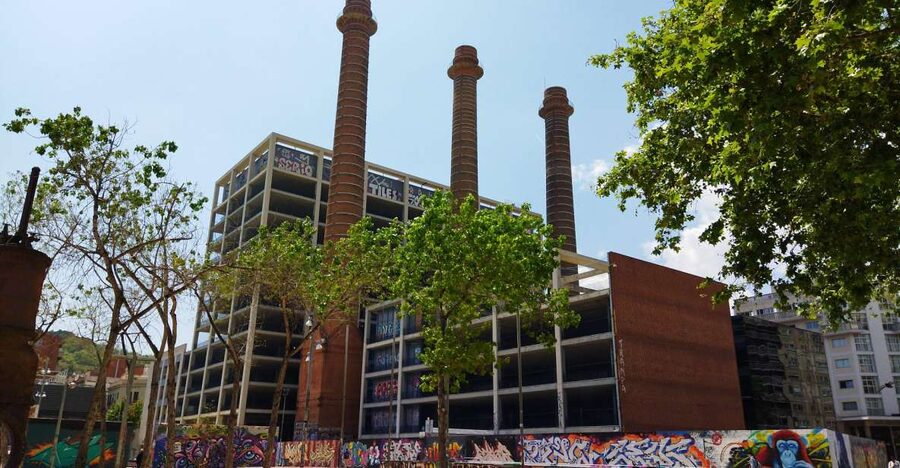
- Finish near Three Chimneys, where political graffiti and changing street art give the tour a modern edge.
Why El Raval makes such a good setting
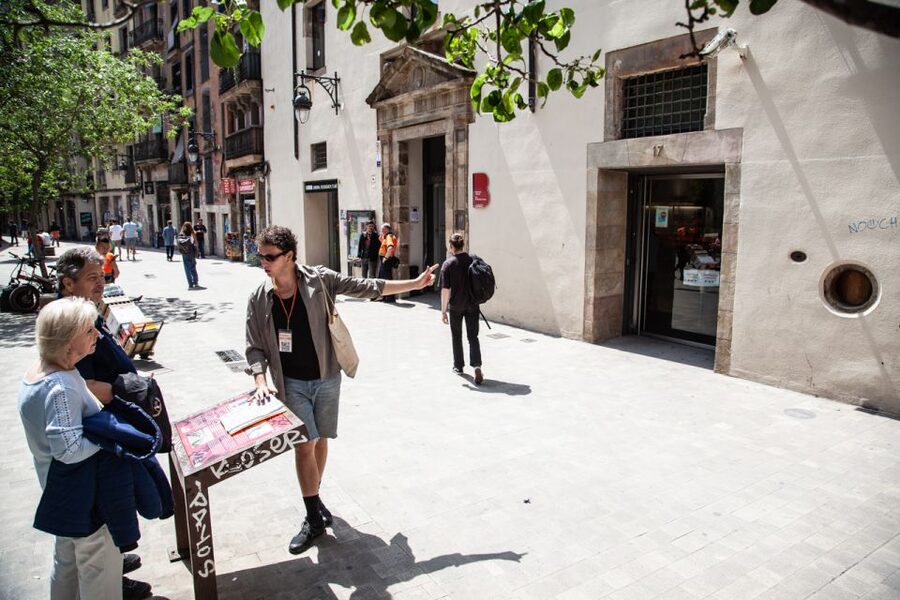
El Raval sits just west of La Rambla, but it feels like another Barcelona. Its older streets are tight, irregular, and full of contrasts. You move from grand civic buildings to small shops, from old religious institutions to political murals, and from tourist routes to streets with a more local, lived-in feel.
That contrast gives the tour its purpose. This is not simply a walk past spooky buildings. The stories show how poverty, religion, public health, crime, nightlife, and politics shaped the neighborhood.
I appreciate that the route does not treat El Raval as a stage set for ghost stories. The darker tales are mixed with art, architecture, and social history. You get a better sense of the area as a changing part of Barcelona, not just a place to visit after dark.
The walk covers about two miles at a relaxed pace. That is manageable for most people, though the narrow streets and frequent stops mean you should wear comfortable shoes. The tour is wheelchair accessible, and it runs in rain unless extreme weather forces cancellation.
More Barcelona Walking Tours:
- Barcelona Tapas and Wine Experience Small-Group Walking Tour
★ 5.0 · 5,804 reviews - Barcelona: Tapas Walking Tour with Food, Wine, and History
★ 4.8 · 4,261 reviews - Barcelona Tapas Walking Tour: Food, Wine & History
★ 4.5 · 1,928 reviews
Starting at Sant Pere Nolasc near Plaça de Castella
The meeting point is outside the Church of Sant Pere Nolasc Mercedaris, beside Plaça de Castella. This is a practical place to begin because the square provides a clear reference point near the center of El Raval.
Your guide sets the mood here before leading you into the neighborhood. The English-language tour depends heavily on narration, so the guide matters. Andreas has been praised for balancing information with humor, while Owen, also identified as Eoghan, is noted for a vivid and exciting storytelling style. Guide assignments can vary, but these names give you a useful sense of the approach to expect.
This is not a tour built around long museum visits. You will spend most of the time outdoors, stopping at sites while the guide explains what happened there. That format keeps the pace moving, but it also means you should expect some stories to be told from the street rather than viewed through a large collection of objects.
Casa de la Misericòrdia and the abandoned children
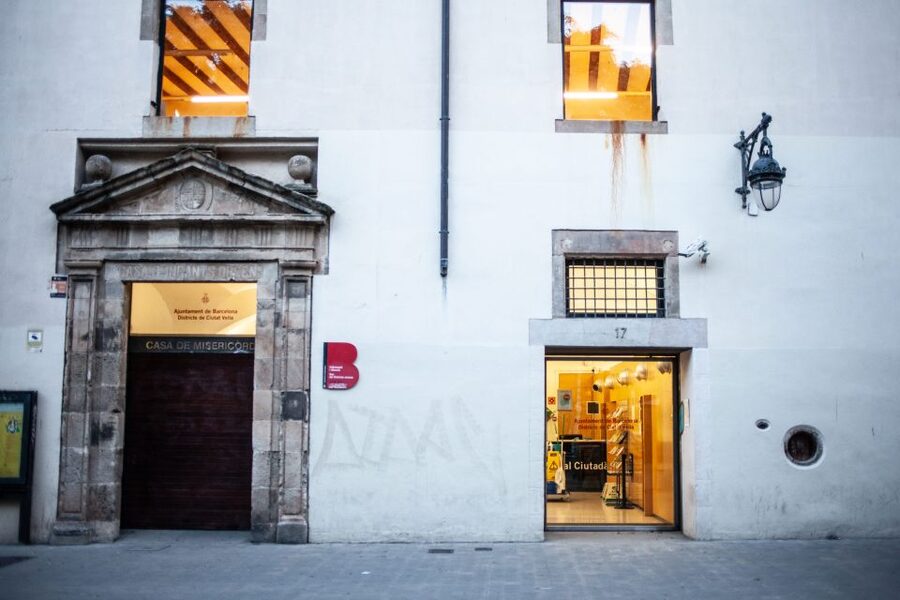
The first major stop is the Casa de la Misericòrdia, a former house of mercy. Its past is linked with children who were abandoned and taken into care. The building’s reputation has also given rise to stories that some of those children never truly left.
This is where the tour shifts from ordinary sightseeing to darker local history. The tale works because it connects a real institution with the fears that grew around it. You are not simply hearing a ghost story in isolation. You are hearing how a place associated with hardship, illness, and vulnerable children gained a frightening reputation.
I like this early stop because it establishes the tour’s method: documented locations, human suffering, and legends that grew over time. Still, you should expect a spooky presentation rather than a full academic account of the institution. The emphasis is on atmosphere and storytelling.
From here, the route moves through El Raval’s medieval streets. Look around as you walk. The architecture changes quickly, and the narrow lanes help explain why the neighborhood has long carried an image of secrecy and danger. Shops, façades, and small side streets become part of the story.
MACBA and Keith Haring’s political mural
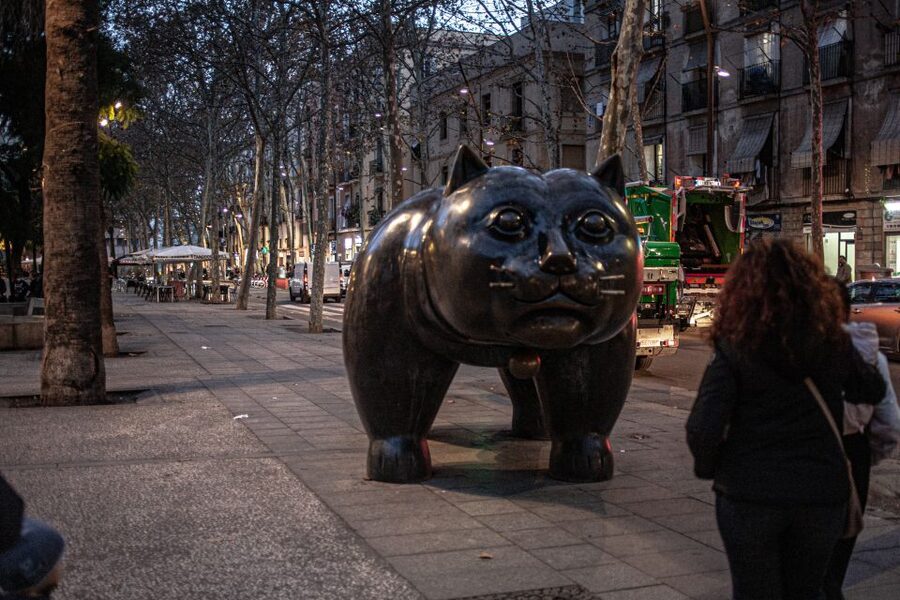
Near the Barcelona Museum of Contemporary Art, known as MACBA, the tour pauses at a very different kind of landmark. The area is popular with skateboarders, and the open space around the museum creates a sharp contrast with the older streets nearby.
Behind the museum is the MURAL DEL SIDA, a major public artwork by Keith Haring. Its simple stick-like figures are easy to recognize, but the message is serious and political. The mural addresses AIDS and remains one of the city’s most important examples of public art.
This stop gives the walk useful range. After stories about old institutions and alleged hauntings, you are looking at a modern work about disease, public awareness, and social action. I especially like this part because it shows that El Raval’s difficult history did not end with its medieval buildings or old drinking houses.
The mural is also a good reminder to look behind famous attractions. Many visitors come to MACBA for the building or the skating scene, then miss the art nearby. Your guide helps place the mural in the neighborhood rather than treating it as a quick photo stop.
More Barcelona History Walks:
- Barcelona: 2.5-Hour Bike or E-Bike Historical Tour
★ 4.5 · 1,262 reviews - Barcelona Erotic Museum – Explore Art, History & Fun
★ 4.4 · 450 reviews - Andorra Original History and Sightseeing Tour (Private, Pickup)
★ 5.0 · 350 reviews - Barcelona: Dark History Night Walking Tour
★ 4.8 · 344 reviews
Carrer de Joaquín Costa and the Vampiress of El Raval
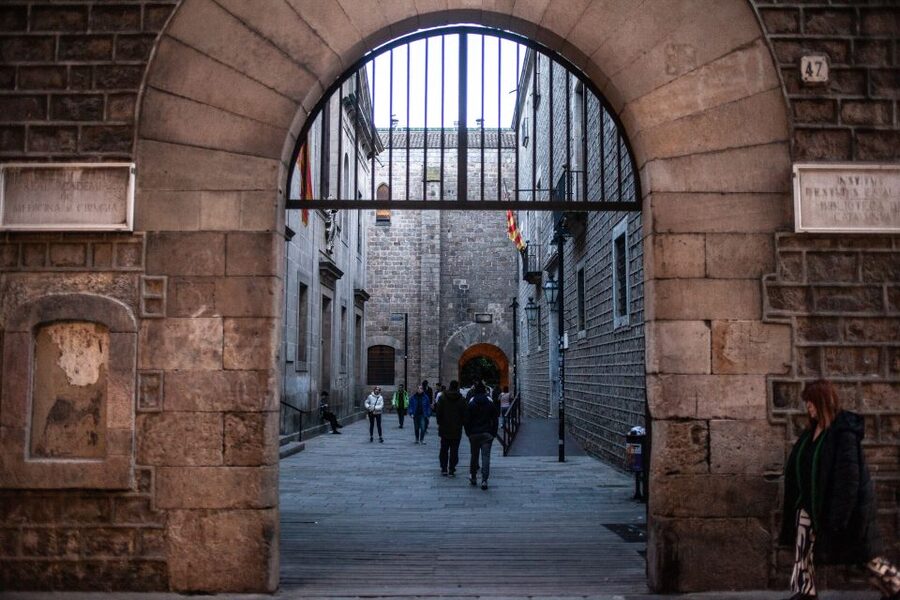
The story of the Vampiress of El Raval is the tour’s headline tale. The route passes the place where she once lived, along Carrer de Joaquín Costa, and explores the story of Barcelona’s most infamous alleged serial killer.
The account blurs fact and legend. That is part of its appeal, but it is also where you should keep a critical ear. The tour presents the tale as a piece of local memory and urban folklore, not as a simple supernatural fact. The question of whether vampires ever die gives the story its theatrical edge, while the real-world accusations make it much darker than a standard ghost tale.
I like that the story is tied to an actual street rather than told as a free-floating anecdote. You can see the setting, follow the guide’s explanation, and think about how a notorious figure becomes part of a neighborhood’s identity.
If you prefer strictly documented history, this section may feel less satisfying. If you enjoy legends with a strong connection to place, it will likely be one of the most memorable parts of the walk.
The old Hospital de la Santa Creu
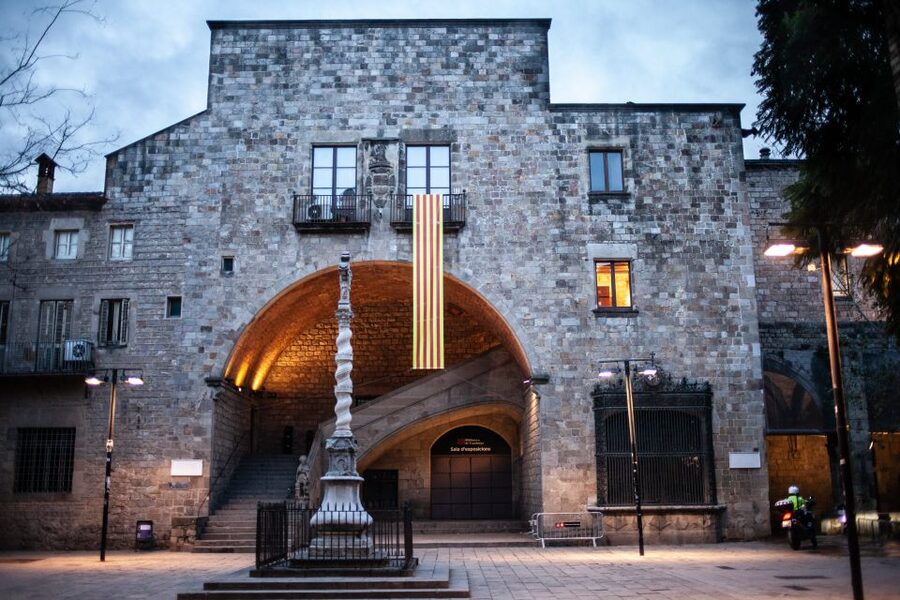
The former Hospital de la Santa Creu is one of the route’s most important historical stops. You will walk through its grounds and garden, a quieter space that once hosted events associated with spells and macabre performances.
The hospital itself adds weight to the tour. Medical buildings often gather stories about death, illness, fear, and unusual treatment, and this site gives those themes a physical setting. Its courtyards and garden also offer a change of pace after the tighter streets.
This is a place where the guide’s explanation matters more than a quick look at the walls. Ask questions if you want to separate the building’s documented use from the legends that later grew around it. The stop can feel atmospheric without needing theatrical effects.
The hospital is also valuable for visitors who want more than ghost stories. It helps explain how care, religion, and public life overlapped in old Barcelona. The tour does not turn this into a full medical history lesson, but it gives the site a darker context than you would get from passing by alone.
Bar Marsella and El Raval’s creative past
The route then reaches Bar Marsella, described as the oldest bar in Barcelona. It has been open for more than 200 years and is linked with famous creative figures including Dalí, Gaudí, and Picasso.
You may only see the bar from the outside or pause for the guide’s account, so do not assume that a drink is included. The value here is the connection between the building and El Raval’s long nightlife tradition. This was a place where artists and other creative figures could meet, drink, and exchange ideas.
Bar Marsella helps balance the tour’s grim material. El Raval was not shaped only by poverty, crime, and fear. It also attracted artists, night owls, and people drawn to its less polished character.
I like this stop because it gives you an easy way to picture the neighborhood in another period. The old bar becomes a link between the city’s artistic reputation and its less respectable entertainment districts.
Sant Pau del Camp and a thousand-year-old church
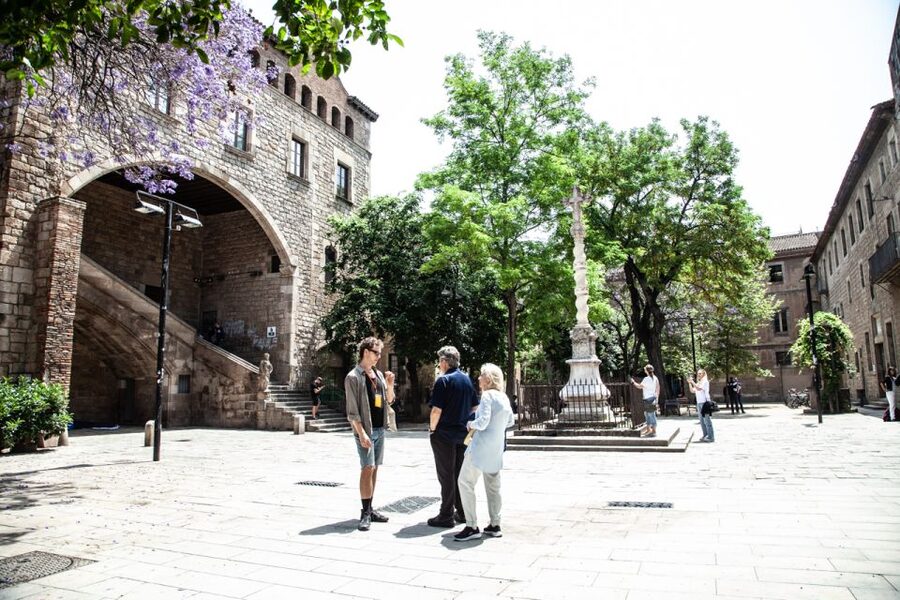
From the bar, the route continues toward Sant Pau del Camp, one of Barcelona’s oldest churches. The Romanesque building is more than 1,000 years old and carries a troubled past tied to a local legend.
This stop shifts the mood again. The church’s age makes it one of the clearest reminders that Barcelona existed long before the modern boulevards, museums, and tourist crowds. Its Romanesque form is more severe and intimate than the grand Gothic buildings many visitors seek in the city center.
The local legend gives the church a place in the tour’s darker thread, but the building is worth attention even if you are not interested in supernatural stories. Look at its age, setting, and simplicity. The church shows how much of Barcelona’s past survives in small, easily missed places.
The stop may be brief, so I would not book this walk expecting a long interior visit or a detailed architectural lecture. Its strength is the combination of old stone, local story, and neighborhood context.
Raval’s south side, cabarets, and political graffiti
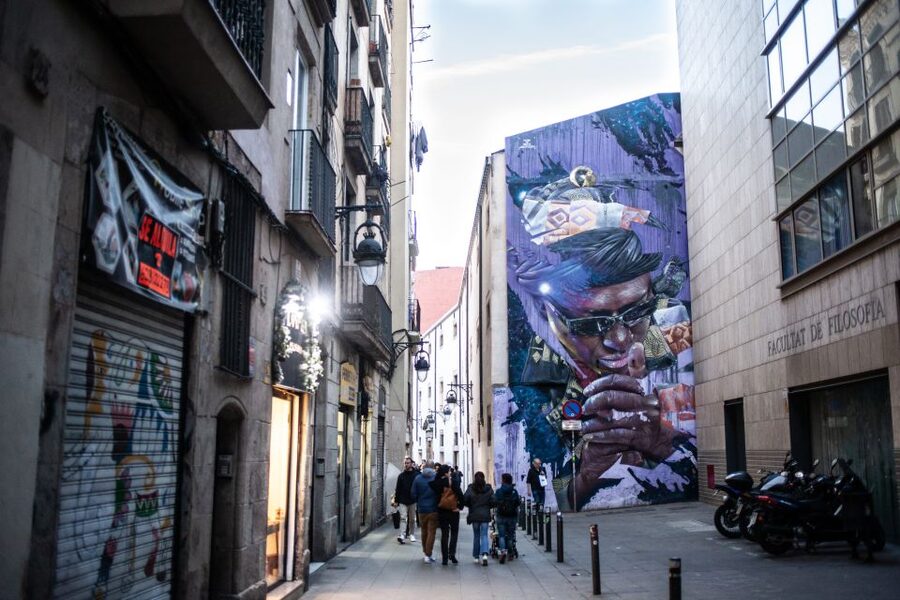
The final section explores the south side of El Raval, once known for clubs, cabarets, and casinos. Some reminders of that entertainment past have survived into the modern city, and your guide points them out along the way.
This part is useful because it explains why El Raval has long had a reputation for nightlife and vice. The neighborhood’s image was shaped not only by its buildings but also by what happened inside them after dark.
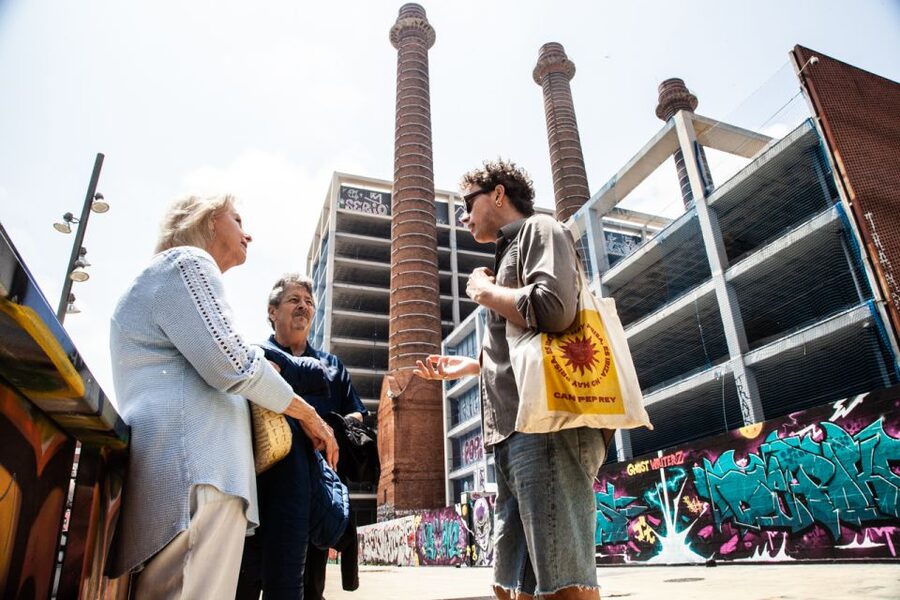
The walk finishes near the Three Chimneys, close to a former power factory. This is one of the best places on the route for street art. Graffiti changes constantly, so the exact work you see will depend on the day. You might also see artists working, though that is not guaranteed.
I like ending here. The route moves from old legends to modern political expression, showing that El Raval still gives artists and activists space to make public statements. The changing walls also keep the ending from feeling too tidy. The neighborhood is still being written and rewritten.
The supplied meeting details give two different descriptions of the finish: the route points to Jardins de les Tres Xemeneies, while the meeting information says the activity ends back at the starting point. Confirm the end point when you book, especially if you have timed transport or another reservation.
What the $33 price gets you
At $33 per person, this is a reasonable price for a two-hour guided walk if you want interpretation rather than a simple neighborhood stroll. You are paying for a guide who connects several sites and makes sense of stories that would be easy to miss on your own.
The value is strongest if you enjoy history told through places. The tour includes no meal, drink, museum ticket, or other extra. Bar Marsella is a stop, not an included refreshment, and the walk should be treated as an outdoor storytelling experience.
Two hours is long enough to cover the route without turning the day into a major commitment. It is also short enough to fit before dinner, after a museum visit, or between other plans. Tips are not included, but you can tip if the guide does an outstanding job.
You can reserve now and pay later, and cancellation is free up to 24 hours before the start time. Within 24 hours, cancellation or rescheduling is not allowed without costs. Since the tour runs in ordinary rain, bring suitable clothing if the forecast looks uncertain.
Who should book this walk
I would choose this tour if you want a different view of Barcelona than Gaudí, beaches, and grand churches. It suits adults and older children who can handle stories about death, abandoned children, crime, disease, and old nightlife.
It is also a good fit for repeat visitors. If you have already seen the major sights, El Raval offers a more local and less polished setting. The combination of Keith Haring, an ancient church, an old hospital, graffiti, and legends gives you several ways into the neighborhood.
You may want to skip it if you dislike spooky stories, are looking for a formal architectural tour, or want a relaxed walk with little narration. The route is not frightening in a theme-park sense, but its subject matter can be unsettling.
FAQ
Where does the tour begin?
Meet your English-speaking guide outside the Church of Sant Pere Nolasc Mercedaris in Plaça de Castella, Barcelona.
How long is the walking tour?
The tour lasts two hours and covers about two miles at a leisurely pace.
What language is the tour in?
The live guided tour is conducted in English.
Is the tour wheelchair accessible?
Yes, the activity is listed as wheelchair accessible.
What are the main sights on the route?
The route includes Casa de la Misericòrdia, Keith Haring’s MURAL DEL SIDA, Carrer de Joaquín Costa, the old Hospital de la Santa Creu, Bar Marsella, Sant Pau del Camp, and the Three Chimneys.
Can I cancel the booking?
You can cancel up to 24 hours before the tour begins for a full refund. The tour runs in rain, but if extreme weather forces the operator to cancel, you receive a full refund.
Should you book Barcelona’s Dark History Walking Tour?
Book it if you want El Raval explained through stories, art, and old buildings, rather than viewed only from the edge of La Rambla. The strongest parts are the Vampiress legend, the old hospital, Keith Haring’s mural, and the final street-art section.
At $33, it offers solid value for a compact, guide-led introduction to a complicated neighborhood. Just keep the legends in perspective, prepare for grim subjects, wear comfortable shoes, and confirm the finishing point before setting your schedule.
Recently added around Barcelona
- Montserrat very early : Hiking, Abbey, very small group★ 5.0 · 127 reviews
- Guided Private Yacht Tour in Barcelona Spain★ 5.0 · 6 reviews
- Private Tour from Barcelona to Montserrat (with guide)★ 4.5 · 6 reviews
- Private Tour from Barcelona to Costa Brava (with guide)★ 5.0 · 5 reviews
- Street Art, Sculptures & Crime Stories Walking Tour – Barcelona★ 5.0 · 11 reviews
- Andorra Tour★ 4.0 · 7 reviews
- Barcelona Gaudi Tour: Sagrada Familia, Casa Batllo & Casa Mila★ 5.0 · 4 reviews
- Wine Tasting in Barcelona (Catalan Varieties) Small Groups★ 5.0 · 10 reviews
Barcelona Walking Tours, compared.

Barcelona Tapas and Wine Experience Small-Group Walking Tour
Read our review →
Tapas Walking Tour with Food, Wine, and History
Read our review →
Barcelona Tapas Walking Tour: Food, Wine & History
Read our review →

Gothic Quarter Ghosts and Legends Walking Tour
Read our review →
Barcelona Helicopter, Sailboat & Old Town Private Walking Tour
Read our review →

Helicopter Flight, Boat Ride, and Walking Tour
Read our review →Browse the lists this tour appears in