
Reviewed · BARCELONA WALKING TOURS
Horta Labyrinth Walking Tour in Barcelona
Barcelona’s Horta Labyrinth Park is more than a quick maze stop. It is a historic garden with palace grounds, mythological statues, shaded paths, fountains, and elegant pavilions, all tucked into the northern Horta-Guinardó district. Its story reaches back to 1794, when architect Domenico Bagutti shaped the grounds in French Neoclassical and English Romantic styles.
I like two things here in particular: the chance to see an older, quieter side of Barcelona, and the way the route connects the garden’s family history with Greek mythology. I also like the reasonable $16.22 price, especially if you want a guide to explain what you are seeing rather than simply wandering through the park.
The main drawback is scale. The labyrinth and park may feel smaller than you expect, and parts of the cypress hedge are not thick enough to prevent a little cheating. If you have already seen Barcelona’s main sights, this can be a pleasant outing. If you are making a special trip only for a large maze, it may feel brief.
Key points to know before you book
- The garden dates to 1794: Domenico Bagutti designed the grounds for the Desvalls and Lupià family.
- The route covers more than the maze: Expect fountains, statues, plazas, towers, a palace, and Palladian-inspired architecture.
- The meeting time is 10:00 am: Start at Pg. de la Vall d’Hebron, 169, beside Horta Labyrinth Park.
- The group can reach 20 people: That is small enough for a guided walk, though not a private visit.
- The labyrinth is the finale: You first see the surrounding gardens before reaching the cypress maze.
- The visit lasts about 1 hour 45 minutes: The park portion itself is listed at about 1 hour 30 minutes.
Why Horta Labyrinth Park is worth your time
Barcelona is packed with famous buildings and crowded central sights. Horta Labyrinth Park offers a different kind of stop. You come here for a garden walk, not a landmark checklist. The pleasure is in the changing mood of the grounds: formal hedges, small plazas, woodland paths, old stonework, and playful references to Greek mythology.
The park is described as Barcelona’s oldest garden, with origins in 1794. That date gives the visit useful context. You are not simply entering a modern recreation area with a maze added for children. The labyrinth belongs to a much older estate shaped by aristocratic taste, garden design, and classical ideas.
The original owners were the Desvalls and Lupià family. A guide explains their connection to the property and points out how the grounds reflect the period in which they were built. That added explanation matters because many of the park’s features are easy to pass without understanding their purpose.
I especially like the mix of formal and informal design. The French Neoclassical influence appears in the ordered paths, plazas, and trimmed cypresses. The English Romantic influence brings a less rigid feeling, with woodland corners, water, and small structures intended to surprise you as you walk.
More Barcelona Walking Tours:
- Barcelona Tapas and Wine Experience Small-Group Walking Tour
★ 5.0 · 5,804 reviews - Barcelona: Tapas Walking Tour with Food, Wine, and History
★ 4.8 · 4,261 reviews - Barcelona Tapas Walking Tour: Food, Wine & History
★ 4.5 · 1,928 reviews
Starting at Pg. de la Vall d’Hebron
The tour begins at 10:00 am at Pg. de la Vall d’Hebron, 169, in Barcelona’s Horta-Guinardó district. The meeting point is near public transportation, which makes this practical if you are staying outside the old center.
The end point is at the Horta Velodrome, Pg. de la Vall d’Hebron, 185. It is at the park exit, in front of the entrance to the velodrome. This is useful because you do not finish in an unknown corner of the city. You know where the walking tour ends and can plan your next move from there.
The mobile ticket keeps things simple. Confirmation is provided at booking, so you can keep the ticket on your phone. I would still arrive with enough time to locate the entrance and meeting point, since the park is away from the most familiar central Barcelona sights.
This is a morning activity. That timing suits the park well. The grounds include shaded woodland paths and water features, and a morning visit can be more comfortable than walking through the maze during the hottest part of the day. The experience requires good weather, so keep the forecast in mind when choosing your date.
The Desvalls and Lupià family estate
The first part of the walk introduces the original owners, the Desvalls and Lupià family. Their former estate gives the park much of its character. The guide, described as a specialized #bcnlover, explains the history of the family and the way the property developed.
You also learn how the garden uses mythology. Greek figures and stories appear in sculptures, fountains, and architectural details. This gives the route a theme beyond simple landscaping. A statue or ornament that might seem decorative on its own becomes part of a larger idea about classical culture, nature, and the educated taste of the estate’s owners.
The route includes the palace of the Marqués de Alfarrás. The palace helps you picture the park as a private country property rather than a public garden built from scratch. You may find the contrast with central Barcelona especially striking: here, the city feels farther away, even though you remain within Barcelona.
The Subirana Tower is another named feature along the route. The supplied details do not state whether you enter the tower, so expect it to be part of the guided explanation and exterior sightseeing rather than assume access inside.
Fountains, plazas, and small garden rooms
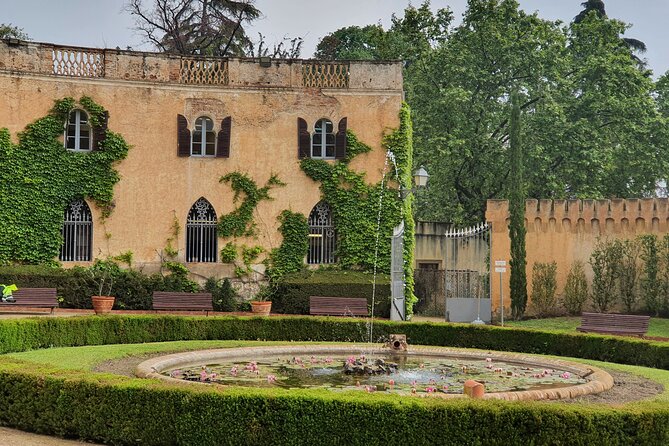
Horta Labyrinth Park is made up of several distinct spaces. The heraldic fountain of the Pelican is one of the more unusual names on the route. The domestic garden offers a different scale, moving away from grand estate features toward a more practical and intimate garden setting.
The Plaza de los Leones, the Garden of the Boxes, and the Plaza del Reloj add variety to the walk. These areas break up the hedges and wooded paths. You are not spending the full visit inside one maze, and that is important when deciding if the tour is right for you.
I like this sequence because it lets you see how a historic garden can work as a series of rooms. One space may feel formal and ceremonial, while another is quieter and more enclosed. The guide provides the connecting story, helping you notice why these areas were laid out differently.
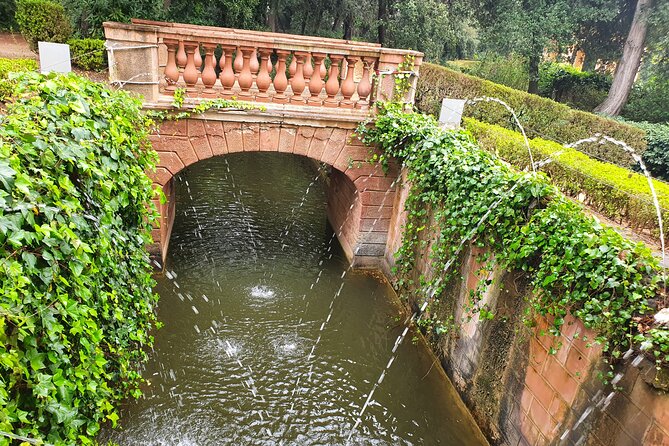
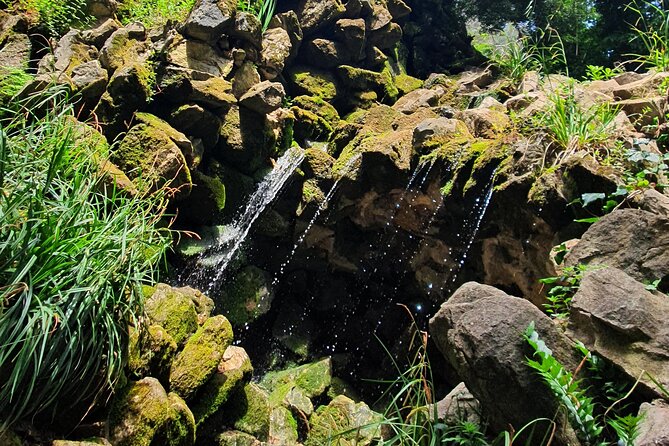
The park also has small paths where a source of water flows through the grounds. This contributes to the cool, restful feeling of the wooded sections. You might find this especially appealing if you want a pause from Barcelona’s hard pavement and busy streets, though you should not expect a full-day escape or a vast country estate.
A different sort of day out in Barcelona:
- Barcelona: Park Güell Admission Ticket
★ 4.4 · 76,534 reviews - Barcelona: Casa Batlló Entry with Self-Audioguide Tour
★ 4.7 · 25,359 reviews - Barcelona: 24 or 48-Hour Hop-On Hop-Off Bus Tour
★ 4.4 · 20,872 reviews - Barcelona: Park Guell Guided Tour with Skip The Line Entry
★ 4.7 · 17,563 reviews
Climbing toward the Belvedere
The route continues uphill to the park’s Belvedere. The exact amount of walking difficulty is not specified, so anyone concerned about slopes should keep in mind that the itinerary includes an ascent.
The Belvedere gives the garden a sense of progression. You begin among the lower paths, fountains, and formal features, then move upward toward a viewpoint. The value is not only the view itself. Reaching the higher part of the park helps you understand the garden’s placement and its relationship to the surrounding city.
The pavilion of Carlos IV is another highlight. It was inspired by the architecture of Palladio, the Italian architect whose work became a major reference point for classical European design. You do not need a background in architecture to enjoy the pavilion. Its importance is that it shows the estate’s owners were building a carefully planned setting, not merely planting hedges around a country house.
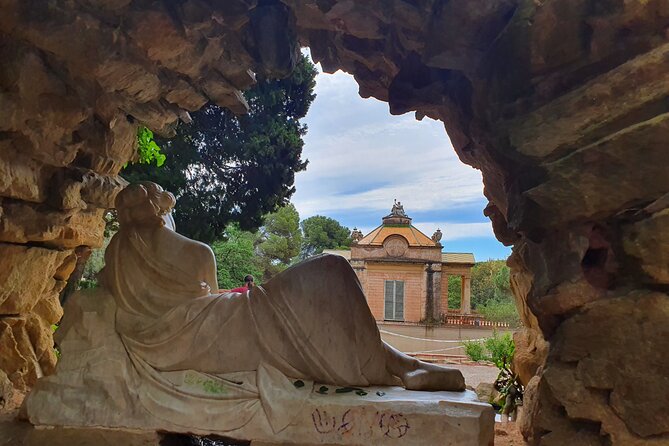
The cave of the nymph Egeria adds a more theatrical note. It brings mythology and nature together in a single feature. This is the kind of detail that makes a guided walk more useful than a quick solo visit. Without an explanation, the cave might appear to be a curious garden ornament. With context, it becomes part of the park’s classical program.
Reaching the famous cypress labyrinth
The labyrinth comes at the end of the visit. It is formed by clipped cypresses and has been used as a playful feature of the park for generations. The grounds have been associated with royal visits, including Carlos IV, Fernando VII, and Alfonso XII.
The maze is fun for children and adults, but keep your expectations measured. The park is not described as huge, and the cypress growth is not equally dense in every section. In places, you may be able to see through the shrubs or work out a shortcut. That takes away some of the suspense, but it does not erase the appeal of walking through a historic maze in an old garden.
I would treat the labyrinth as the finishing touch rather than the sole reason to pay for the tour. The complete experience includes the palace grounds, mythology, pavilions, plazas, tower, fountain, and garden rooms. If you come expecting a large puzzle maze that takes most of an afternoon, you could be disappointed.
For families, the maze gives the walk a clear reward at the end. Younger children may not follow every detail about the Desvalls and Lupià family or Palladian design, but they can enjoy the movement, statues, paths, and final challenge. Adults who enjoy garden history may value the full route more than the maze itself.
What the $16.22 price really buys you
At $16.22 per person, the cost is modest for a guided outing lasting roughly 1 hour 45 minutes. The included item specifically listed is liability insurance, while the park itinerary indicates admission is free for the activity. Because park admission rules can change, check the current entry conditions when booking.
There is also a useful local cost comparison. The park is described as free on Wednesdays and Sundays, with admission under €2.50 on other days. If you visit independently on a free or low-cost day, the guided tour is clearly not the cheapest way through the gates.
The reason to pay is the explanation. You receive a planned route through parts of the estate that could otherwise blur together. The guide brings together the family story, mythology, garden design, royal connections, and architectural references. If you like wandering without commentary, save the fee and go on your own. If you want the park to make sense, the price is fair.
The group size is limited to 20 people. That is not a private tour, but it is small enough to make a guided walk manageable. With a full group, you may need to stay close to hear the explanation, especially in open garden areas.
Practical points for different types of visitors
Most people can participate, and service animals are allowed. The available information does not give detailed step-free access or mobility notes, so you should ask the provider directly if you need specific accessibility information.
This tour suits you best if you:
- Want a quieter Barcelona activity away from the central sights
- Enjoy gardens, architecture, mythology, or estate history
- Are traveling with children who need a playful element
- Have about two hours for a guided outing
- Prefer a small group rather than a large coach tour
It may not suit you if you want a major architectural landmark, a long nature hike, or a large and difficult maze. The route is focused and fairly short. I would add it to a Barcelona schedule when you have time to explore beyond the center, not replace the city’s major sights with it.
The park is also a good choice for someone who has already seen the Sagrada Família, Gothic Quarter, and other headline attractions. It gives you a look at Barcelona’s northern side and a different sense of how the city’s older estates were designed.
Booking, weather, and cancellation details
You can cancel for a full refund if you do so at least 24 hours before the 10:00 am start time. Changes or cancellations made less than 24 hours before the experience are not accepted for a refund.
The activity depends on good weather. If poor weather causes the tour to be canceled, you are offered another date or a full refund. Since much of the visit takes place outdoors, this condition is reasonable. Keep your schedule flexible if the forecast is uncertain.
Bring your mobile ticket and allow time to reach the Horta-Guinardó meeting point. The tour begins at Pg. de la Vall d’Hebron, 169, and ends at the Horta Velodrome, Pg. de la Vall d’Hebron, 185. The nearby public transportation makes the location practical, though it is not a central old-town meeting point.
Should you book the Horta Labyrinth walk?
Book it if you want a short, guided look at one of Barcelona’s older gardens, especially if you enjoy classical design, statues, water features, and stories tied to an aristocratic estate. The best reason to go is the complete garden route, not the maze alone.
Skip it if your only goal is a large, challenging labyrinth or if you have very little time in Barcelona. The maze may be smaller and less enclosed than expected, and some visitors can find shortcuts through thinner hedges.
For the price, the tour offers a sensible way to understand Horta Labyrinth Park in about two hours. I would choose it on a clear morning, particularly if you have already covered Barcelona’s central landmarks and want a calmer outing with a bit of history and playful garden design.
FAQ
Where does the Horta Labyrinth walking tour begin?
It begins at Pg. de la Vall d’Hebron, 169, in Barcelona’s Horta-Guinardó district.
What time does the tour start?
The start time is 10:00 am.
Where does the tour finish?
It ends at the Horta Velodrome, Pg. de la Vall d’Hebron, 185, at the park exit in front of the velodrome entrance.
How long does the experience last?
The tour lasts approximately 1 hour 45 minutes. The park portion is listed as about 1 hour 30 minutes.
What does the tour include?
The listed inclusion is liability insurance. The route covers Horta Labyrinth Park and its gardens, monuments, fountains, pavilions, and labyrinth.
Is park admission included?
The activity information lists admission as free for the itinerary. Park entry conditions can change, so confirm the current policy when booking.
How much does the tour cost?
The stated price is $16.22 per person.
How many people can join the tour?
The maximum group size is 20 people.
Is the tour suitable for most people?
Most people can participate. Service animals are allowed, and the meeting point is near public transportation.
Can I cancel for a refund?
Yes. You can receive a full refund if you cancel at least 24 hours before the experience start time. Poor weather cancellations offer a different date or a full refund.
Recently added around Barcelona
- Montserrat very early : Hiking, Abbey, very small group★ 5.0 · 127 reviews
- Guided Private Yacht Tour in Barcelona Spain★ 5.0 · 6 reviews
- Private Tour from Barcelona to Montserrat (with guide)★ 4.5 · 6 reviews
- Private Tour from Barcelona to Costa Brava (with guide)★ 5.0 · 5 reviews
- Andorra Tour★ 4.0 · 7 reviews
- Barcelona Gaudi Tour: Sagrada Familia, Casa Batllo & Casa Mila★ 5.0 · 4 reviews
- Street Art, Sculptures & Crime Stories Walking Tour – Barcelona★ 5.0 · 11 reviews
- Wine Tasting in Barcelona (Catalan Varieties) Small Groups★ 5.0 · 10 reviews
Barcelona Walking Tours, compared.

Barcelona Tapas and Wine Experience Small-Group Walking Tour
Read our review →
Tapas Walking Tour with Food, Wine, and History
Read our review →
Barcelona Tapas Walking Tour: Food, Wine & History
Read our review →

Gothic Quarter Ghosts and Legends Walking Tour
Read our review →
Barcelona Helicopter, Sailboat & Old Town Private Walking Tour
Read our review →

Helicopter Flight, Boat Ride, and Walking Tour
Read our review →Browse the lists this tour appears in