
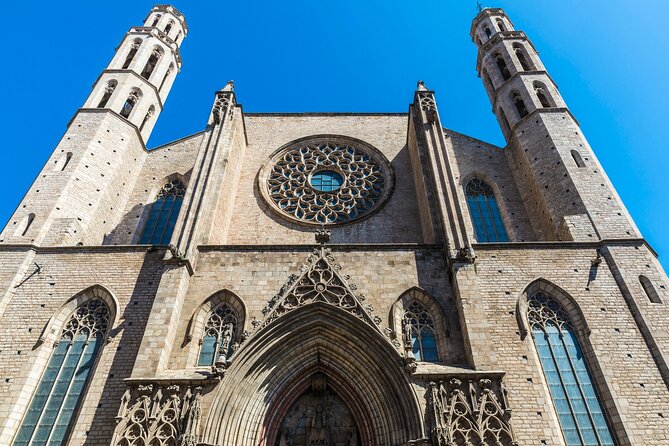
Reviewed · BARCELONA WALKING TOURS
Half Day Barcelona Private Walking Tour
Barcelona makes more sense when you connect its old stone lanes with its wild Modernisme façades. This private walking tour does just that, moving from the Gothic Quarter’s 2,000 years of history to the creative world of Gaudi and his Catalan contemporaries. Patrick Taggart leads the experience, with an emphasis on why the city developed as it did, not just on what each building looks like.
I like the private format, since your group alone takes part and the guide can focus on your questions. I also like the clear historical thread, from industrialization and Barcelona’s social changes to Gaudi’s methods, motives, and religious ideas. The main consideration is that Casa Batllo admission is not included, and the five-hour walk requires good weather and reasonable comfort on foot.
Key points to know before booking
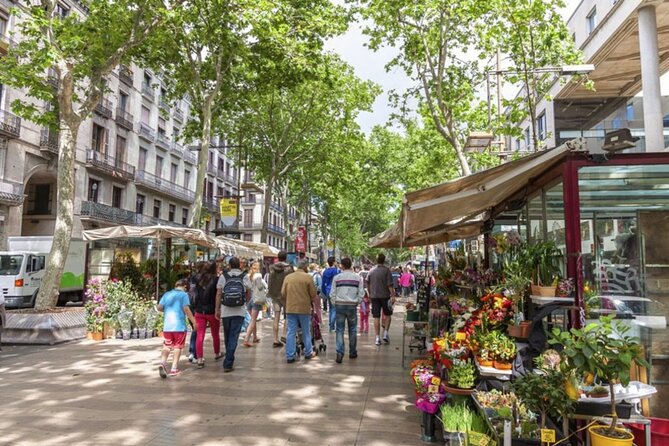
- A five-hour link between two Barcelonas: Follow the city from its Gothic Quarter origins to the Modernisme era.
- Patrick Taggart as your private guide: His approach connects architecture with politics, religion, industry, and daily life.
- Casa Batllo receives focused attention: You get about 10 minutes of description, with admission charged separately.
- The Sagrada Familia area is the finish: The tour ends outside the basilica on Carrer de Lepant.
- Your group stays together: This is a private activity, with group discounts available.
- Weekday timing matters: The stated operating hours are Monday through Friday, from 9:00 a.m. to 3:00 p.m.
Why this Barcelona walk works
The best reason to choose this tour is the story it tries to tell. Barcelona is not simply a collection of pretty buildings. Its Gothic lanes, expanding boulevards, industrial wealth, Catalan identity, and Modernisme architecture all belong to the same city story.
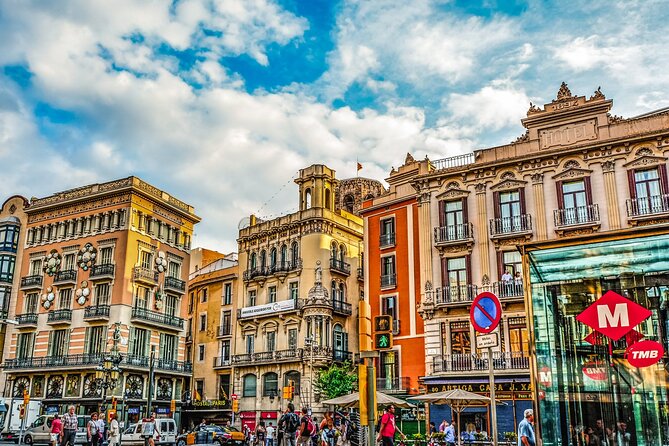
You begin near R+J Heart Tree on Carrer de Rivadeneyra, in the Ciutat Vella. That location puts you close to the old center, a sensible place to begin a walk through Barcelona’s earlier centuries. From there, the experience builds toward the architecture of the late 19th and early 20th centuries.
I like this setup because you are not asked to treat Gaudi as an isolated genius. His work is placed inside the social, political, and religious world of his time. That context can change the way you look at a façade. Instead of seeing only unusual shapes and bright details, you begin to ask why the architect used them and what they meant.
The tour lasts about five hours. That is long enough for a substantial city walk, but it is not a full-day commitment. You still have part of the afternoon for another museum, a meal, or time at one of Barcelona’s markets. The trade-off is simple: five hours on foot can feel demanding, especially if you prefer short sightseeing stops.
More Barcelona Walking Tours:
- Barcelona Tapas and Wine Experience Small-Group Walking Tour
★ 5.0 · 5,804 reviews - Barcelona: Tapas Walking Tour with Food, Wine, and History
★ 4.8 · 4,261 reviews - Barcelona Tapas Walking Tour: Food, Wine & History
★ 4.5 · 1,928 reviews
Starting in the Gothic Quarter
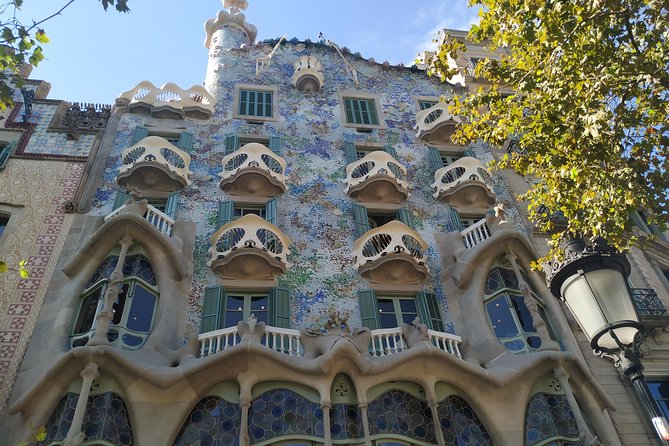
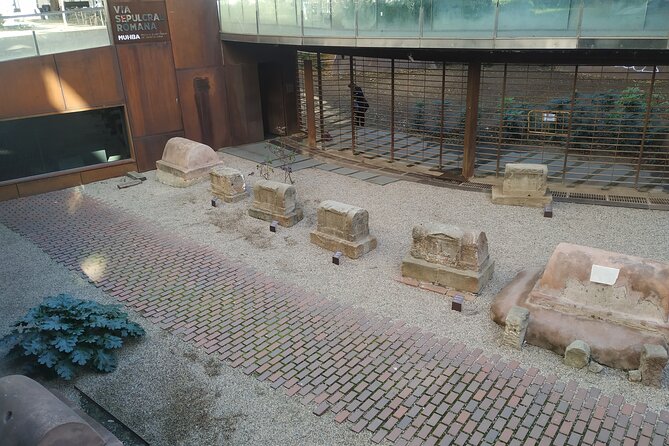
The Gothic Quarter is the right setting for the first half of this story. Its streets reflect Barcelona’s long past, and the tour promises an account reaching back roughly 2,000 years. You should expect the emphasis to be on how the city changed over time, rather than on a single monument or one famous viewpoint.
A private walk can be especially useful here. The Gothic Quarter is easy to enter but less easy to understand. Narrow streets can make the area feel like a maze, and a guide gives you a framework for what you are seeing. Patrick’s role is to connect the old city with the later growth that eventually pushed Barcelona beyond its medieval core.
The supplied details do not list each Gothic Quarter stop by name, so you should not book this expecting a fixed checklist of every major landmark. The value lies in the explanation of Barcelona’s development and in the ability to ask about the places you pass.
This is also where the tour’s focus on culture matters. You are not only looking at stone walls. The story includes art, architecture, and the forces that shaped city life. A guide who links the past with the present can help you understand why Barcelona still feels so distinct from other Spanish cities.
From medieval city to industrial Barcelona
The move from old Barcelona to Modernisme is more than a change in architectural style. It reflects the city’s growth during industrialization, when new wealth and new ambitions reshaped urban life.
That is one of the strongest ideas in this experience. You learn about the energy created by industrialization and how that energy helped produce a new kind of Barcelona. The city’s architecture became a way to express Catalan culture, personal wealth, religious belief, and confidence in the future.
I appreciate tours that explain this kind of connection. A façade can look eccentric when you see it alone. Once you understand the period that produced it, the design begins to look like part of a larger argument about identity and progress.
The private format helps here. With only your group taking part, you can pause for clarification rather than waiting for a large party to regroup. The experience is not described as a lecture, but it does promise substantial interpretation. If you enjoy asking why a city looks the way it does, this is likely to suit you better than a quick photo walk.
Casa Batllo and Gaudi’s design choices
Casa Batllo is the named architectural stop, and the tour allows about 10 minutes for a description of the building, its construction, and its place in the art movement. Admission is not included, so this portion should be understood as an exterior explanation or a short focused stop unless you arrange entry separately.
The building is important here because it brings together the themes of the tour: Modernisme, construction, artistic invention, and the cultural setting of late 19th and early 20th century Barcelona. The goal is not simply to point out an unusual roof or colorful surface. You are meant to understand how Gaudi worked and what he was trying to achieve.
The time allocation is worth noting. Ten minutes is enough for a clear introduction, but not enough for a long interior visit or a detailed study of every feature. If Casa Batllo is your main priority, ask before booking how the stop is handled and whether the visit is intended to remain outside.
That limitation does not make the stop unhelpful. In fact, a short explanation can give you a useful lens for a later independent visit. You will know to look beyond decoration and pay attention to the relationship between structure, symbols, materials, and movement.
The tour also places Gaudi among his contemporaries. That is useful because Barcelona’s Modernisme was not the work of one person alone. The experience promises an understanding of the wider artistic movement, as well as Gaudi’s special methods and ability.
A different sort of day out in Barcelona:
- Barcelona: Park Güell Admission Ticket
★ 4.4 · 76,534 reviews - Barcelona: Casa Batlló Entry with Self-Audioguide Tour
★ 4.7 · 25,359 reviews - Barcelona: 24 or 48-Hour Hop-On Hop-Off Bus Tour
★ 4.4 · 20,872 reviews - Barcelona: Park Guell Guided Tour with Skip The Line Entry
★ 4.7 · 17,563 reviews
Understanding Gaudi beyond the postcard
Gaudi is often reduced to a few familiar images: curved walls, bright surfaces, strange chimneys, and the Sagrada Familia. This tour aims for something more thoughtful. It addresses his methods, his motives, and his artistic skill within the religious, political, and social setting of the period.
That approach matters if you want more than a series of photographs. You may find yourself looking at buildings differently after the walk, especially if you enjoy learning why design choices were made. The guide’s stated focus is interpretive, not merely descriptive.
Patrick Taggart’s strongest reported quality is his ability to make Barcelona’s history feel connected to the present. One account describes leaving the experience thinking about buildings in a new way. Another says the history became engaging even for someone who normally does not enjoy the subject. That suggests Patrick may be especially effective for people who want a story with energy rather than a list of dates.
Still, the experience is built around explanation. If you want to spend most of your time inside buildings, taking photographs, or moving quickly between landmarks, this may feel too talk-focused. The tour’s purpose is to help you see, think, and connect.
Ending near the Sagrada Familia
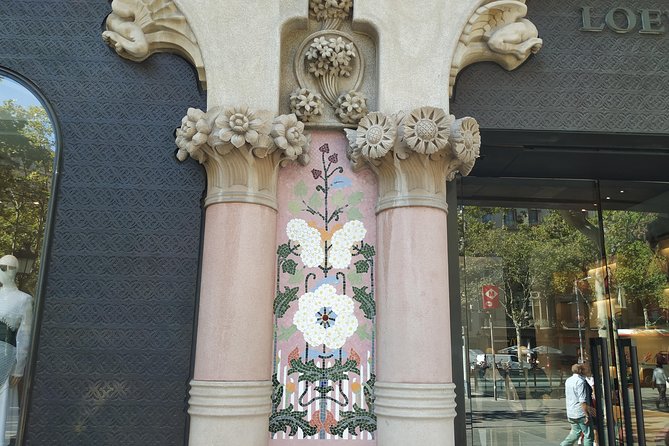
The walk ends at Carrer de Lepant, 275, outside the Sagrada Familia in L’Eixample. Finishing here gives the tour a strong architectural endpoint, even though the supplied details do not promise entry into the basilica.
The Sagrada Familia area also makes practical sense as a final location. You finish in a different part of Barcelona from where you began, having followed the city’s movement from its old center toward its later expansion. The end point can also help you plan the rest of your day, though no onward transport arrangements are included.
You should treat the Sagrada Familia as the tour’s final reference point, not assume that a ticket or interior visit is part of the package. The confirmed itinerary names Casa Batllo as the stop with a specific time allocation, while the end point is outside the basilica.
This distinction is important when comparing tours. Some Barcelona experiences focus on admission to one major attraction. This one is more concerned with the connection between neighborhoods, architecture, and historical change.
What the private format is worth
The listed price is $116, with group discounts available. The value depends on how many people are in your party and how much you value personal attention. For a private five-hour experience, the price can make sense for a family or small group that would otherwise book several separate activities.
You are paying for interpretation, not a package of attraction tickets. Casa Batllo admission is excluded, and the supplied information does not include entry to the Sagrada Familia. Build those costs into your budget if you plan to visit interiors.
The private arrangement also removes a common problem with city tours: the pace is not set by a large public group. You have one guide and your own party. That can be valuable when you want to stop and ask about architecture, Catalan culture, or the period’s political and religious setting.
Group discounts may improve the value for larger parties, but the exact discount is not stated. Check the final price for your group before you commit.
Timing, meeting point, and walking demands
The tour operates Monday through Friday from 9:00 a.m. to 3:00 p.m., according to the stated schedule covering November 22, 2024 through June 17, 2026. That window makes it suited to a morning start or an early afternoon finish.
You meet at R+J Heart Tree, Carrer de Rivadeneyra, 21, in Ciutat Vella. The tour ends outside the Sagrada Familia at Carrer de Lepant, 275, in L’Eixample. Since the beginning and end are in different parts of the city, plan around the finish rather than expecting to return to the starting point.
The activity is near public transportation, but no specific route is provided. You receive confirmation at booking, and a mobile ticket is available. Keep the meeting details handy on your phone, especially since city-center streets can be confusing.
The tour requires good weather. If poor weather causes cancellation, you are offered another date or a full refund. You can cancel for a full refund up to 24 hours before the start time. Inside that window, the amount paid is not refunded, and changes are not accepted.
Most people can take part, and service animals are allowed. The practical point is that this remains a walking experience of about five hours. Wear shoes you can use comfortably for an extended city walk and consider the weather before booking.
Who will enjoy this experience most
I would choose this tour if you want Barcelona explained rather than simply photographed. It suits first-time visitors who want a broad foundation, as well as repeat visitors who have seen Gaudi’s buildings but never connected them to industrial Barcelona and the Gothic Quarter.
It is also a good choice for people who are unsure how much history they want. Patrick’s reported style appears to make the subject accessible, even if you do not normally seek out historical tours. The focus on buildings gives the story something concrete to hold on to.
Families and small groups may benefit from the private format, especially if different people in the group have different levels of interest. You can ask questions without worrying about holding up strangers.
I would look elsewhere if your priority is a full interior visit to Casa Batllo or the Sagrada Familia. The available details do not include those admissions. I would also think twice if five hours of walking and discussion sounds tiring.
Should you book the Barcelona private walking tour?
Book it if you want to understand how Barcelona moved from an old Gothic city into the Modernisme era, and if you value a guide who connects architecture with social, political, religious, and industrial change. Patrick Taggart’s ability to make the city’s past feel relevant is the main reason to consider it.
The best value comes when you are traveling with a private group and want a flexible, thoughtful introduction rather than a ticket bundle. Just budget separately for attraction admissions, confirm how Casa Batllo is handled, and remember that the tour runs on foot and depends on good weather.
FAQ
How long is the Barcelona private walking tour?
The tour lasts approximately five hours.
Is this a private tour?
Yes. Only your group takes part in the activity.
Who provides the tour?
The experience is provided by Patrick Taggart.
Where does the tour begin?
It begins at R+J Heart Tree, Carrer de Rivadeneyra, 21, Ciutat Vella, Barcelona.
Where does the tour end?
It ends at Carrer de Lepant, 275, in L’Eixample, outside the Sagrada Familia.
Is admission to Casa Batllo included?
No. Admission to Casa Batllo is not included in the tour price.
What happens if bad weather cancels the tour?
You will be offered a different date or a full refund. You can also cancel up to 24 hours before the start time for a full refund.
Recently added around Barcelona
- Montserrat very early : Hiking, Abbey, very small group★ 5.0 · 127 reviews
- Guided Private Yacht Tour in Barcelona Spain★ 5.0 · 6 reviews
- Private Tour from Barcelona to Montserrat (with guide)★ 4.5 · 6 reviews
- Private Tour from Barcelona to Costa Brava (with guide)★ 5.0 · 5 reviews
- Street Art, Sculptures & Crime Stories Walking Tour – Barcelona★ 5.0 · 11 reviews
- Andorra Tour★ 4.0 · 7 reviews
- Barcelona Gaudi Tour: Sagrada Familia, Casa Batllo & Casa Mila★ 5.0 · 4 reviews
- Wine Tasting in Barcelona (Catalan Varieties) Small Groups★ 5.0 · 10 reviews
Barcelona Walking Tours, compared.

Barcelona Tapas and Wine Experience Small-Group Walking Tour
Read our review →
Tapas Walking Tour with Food, Wine, and History
Read our review →
Barcelona Tapas Walking Tour: Food, Wine & History
Read our review →

Gothic Quarter Ghosts and Legends Walking Tour
Read our review →
Barcelona Helicopter, Sailboat & Old Town Private Walking Tour
Read our review →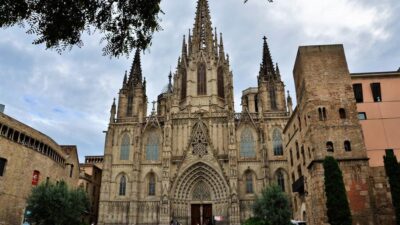

Helicopter Flight, Boat Ride, and Walking Tour
Read our review →Browse the lists this tour appears in