
Reviewed · BARCELONA GOTHIC QUARTER TOURS
Barcelona Gothic Quarter From Roman Walls to Hidden Courtyards
Barcelona’s Gothic Quarter packs Roman ruins, royal power, religious legends, and wartime scars into a tight maze of lanes. This walking tour brings those layers together, from the Roman wall and cathedral courtyard geese to a medieval synagogue and the famous skull on Pont del Bisbe.
I like the way a guide takes the pressure off finding your way through the narrow streets, and I like the small details that make the walk memorable, especially the thirteen white geese and the stone turtle said to bring good luck. Guide Victoria has earned warm praise for making the area’s past easy to follow.
The main consideration is pace. The tour lasts about 2 to 3 hours, but most stops are brief, often 10 to 20 minutes. You get a broad introduction rather than long visits inside each site, and admission to major interiors is not listed as part of the tour.
Key points at a glance
- Roman beginnings: Start near Casa de l’Ardiaca and connect Barcelona’s modern streets with the old Roman wall and Barcino remains.
- Thirteen white geese: Hear the cathedral legend and see the courtyard symbol tied to Barcelona’s patron saint.
- Royal and Jewish Barcelona: Visit Plaça del Rei and the former Jewish Quarter, including one of Europe’s oldest surviving synagogues.
- War and cinema: See the shrapnel-marked walls of Saint Philip Neri, a square used in films including Perfume and Vicky Cristina Barcelona.
- Local legends: Look for the hidden skull on Pont del Bisbe and rub the turtle at Casa de l’Ardiaca for luck.
- Small-group format: The maximum group size is 20, which matters in streets where a large crowd can quickly become awkward.
Why this Gothic Quarter walk works
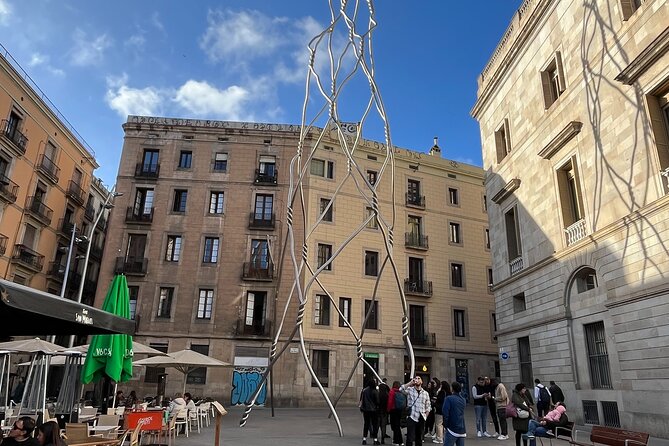
You do not need a full day to get a useful first reading of Barcelona’s old center. This route covers the main stories in roughly two to three hours, with a local guide explaining what you are seeing as you move between compact squares and shadowy lanes.
That guided structure matters here. The Gothic Quarter is easy to enter and surprisingly easy to lose yourself in. Its streets do not always follow a clear modern grid, and plain-looking walls can hide Roman remains, medieval institutions, or a story about religious and political power.
The tour is offered in English and uses a mobile ticket. It is a walking experience, so wear shoes you can manage on old city surfaces and expect regular stops rather than one long lecture. The group can reach 20 people, large enough to offer company but small enough to remain practical in tight passageways.
The current price is $29.57 per person. I see that as fair value if you want orientation, context, and local tales in one compact outing. It is less compelling if you already know the quarter well or want extended time inside the cathedral, synagogue, or museums. The strength is the connected story, not a long interior visit at any one stop.
More Barcelona Gothic Quarter Tours:
- Barcelona all included: Sagrada, Park Güell, Montjuic & Gothic
★ 5.0 · 2,169 reviews - Barcelona Gothic Quarter Tapas & Taverns Food & Wine Tour
★ 5.0 · 1,470 reviews - Barcelona: Gothic Quarter Ghosts and Legends Walking Tour
★ 4.7 · 1,443 reviews
From Casa de l’Ardiaca to Barcelona Cathedral
The meeting point is at the Roman Aqueduct and La Casa de l’Ardiaca, on Carrer de Santa Llúcia. That is a fitting place to begin because the tour quickly asks you to look beneath the present-day city.
At Barcelona Cathedral, you see the Gothic church built on the site of the first Christian basilica, along with a section of Roman wall marking the city’s early foundations. The contrast is the point: Roman Barcelona, Christian Barcelona, and medieval Barcelona all occupy the same small patch of ground.
The courtyard’s thirteen white geese are one of the tour’s most appealing details. Your guide explains the legend behind them and their link to the cathedral. This is the kind of small fact that helps a place stick in your mind long after the larger dates have blurred.
You have about 15 minutes here. That is enough for an explanation and photographs against the ancient stones, but not enough for a detailed cathedral visit. If you want to explore the interior at length, plan separate time before or after the walk. The tour gives you a strong introduction, not a substitute for a full church visit.
Plaça del Rei and the Roman city below
Plaça del Rei gives the walk a change of mood. The square was connected with the Counts of Barcelona and the Kings of Aragon, so your guide shifts from church legends to rulers, ceremonies, and royal life.
You hear about important events tied to Catalonia’s leaders and the lavish feasts once held here. The square works well as a teaching space because its architecture helps you picture the old seat of power without needing a modern reconstruction.
Below the area, a museum presents underground Roman remains from Barcino, the Roman city that came before medieval Barcelona. The tour’s stop lasts around 15 minutes, and admission is listed as free for the stop. Still, do not assume you will have time for an extended museum visit. The route treats the Roman remains as part of a larger walking story.
I like this pairing of royal square and Roman archaeology. You see how one city was repeatedly built over itself, with each period leaving traces for the next.
The executioner’s house and Barcelona’s darker stories
The Antigua Casa del Verdugo Municipal introduces a less polished side of medieval city life. The building is linked with Barcelona’s official executioner, a role that placed punishment in the middle of public life.
This is not a stop for everyone. The subject is grim, and the legends surrounding the executioner can feel heavier than the tour’s more playful stories about geese and lucky turtles. But it adds useful balance. Medieval Barcelona was not only palaces, churches, and fine stonework. Law, fear, and public punishment were part of the city’s daily order.
The scheduled visit is about 15 minutes. That short format is probably helpful here. You get the social context and the folklore without the stop taking over the whole walk.
If you enjoy the less comfortable parts of urban history, this will likely be one of the more memorable sections. If you prefer architecture and art, treat it as a brief piece of context before moving on.
A different sort of day out in Barcelona:
- Barcelona: Park Güell Admission Ticket
★ 4.4 · 76,534 reviews - Barcelona: Casa Batlló Entry with Self-Audioguide Tour
★ 4.7 · 25,359 reviews - Barcelona: 24 or 48-Hour Hop-On Hop-Off Bus Tour
★ 4.4 · 20,872 reviews - Barcelona: Park Guell Guided Tour with Skip The Line Entry
★ 4.7 · 17,563 reviews
Plaça de Sant Jaume and Catalan political life
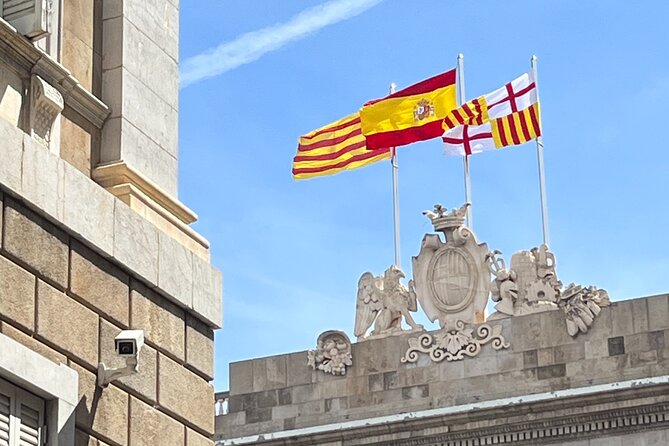
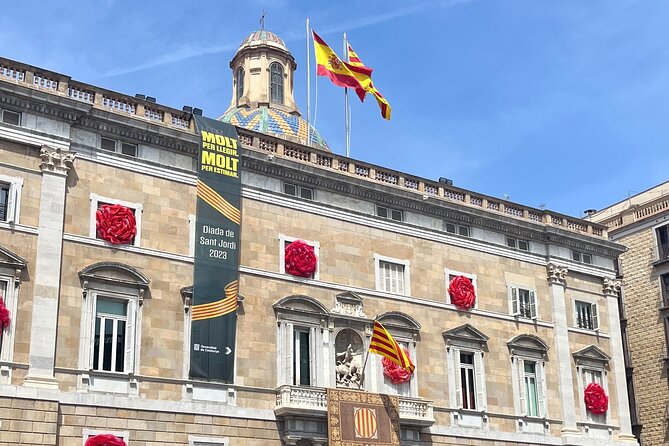
Plaça de Sant Jaume is Barcelona’s main political square. The City Hall, or Ajuntament, faces the Palau de la Generalitat, the seat of the Government of Catalonia.
Your guide explains Catalonia’s autonomous status and the way the city maintains its distinct culture. This is one of the places where the tour moves beyond old stones and legends into present-day identity.
The square can feel active and crowded, and the stop lasts about 15 minutes. That makes it useful for taking in the setting and hearing the basic political background, though it will not cover every side of Catalan history or modern politics.
I appreciate its place in the route. The old quarter is not a museum frozen in time. It remains a working civic center, and the two government buildings show that Barcelona’s historical identity still has a public role.
The former Jewish Quarter and an old synagogue
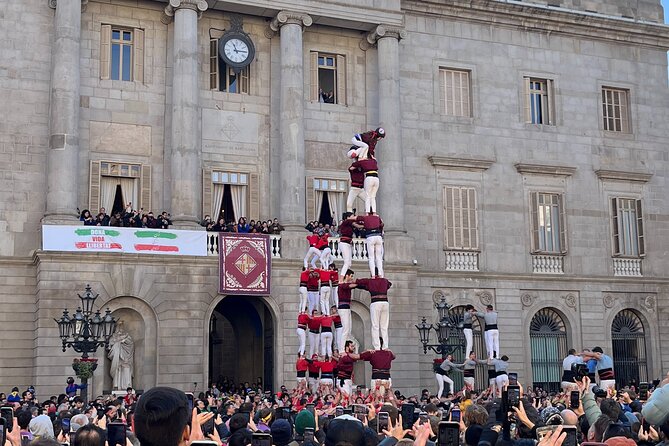
The former Jewish Quarter is among the most atmospheric parts of the walk. Its narrow streets preserve the scale of medieval life, when homes, workshops, religious buildings, and trade all operated within a compact area.
You learn about the customs and work of Barcelona’s medieval Jewish community, along with stories about the people who once lived here. The route also includes one of the oldest surviving synagogues in Europe.
This stop is valuable because it widens the usual story of Barcelona. Many short city walks focus almost entirely on Christian churches and royal power. Here, you get a clearer sense of the different communities that shaped the city and the traditions that once filled these lanes.
The stop is planned for about 15 minutes. That is enough to understand the setting and hear the main story, but anyone especially interested in Jewish Barcelona will want more time on another visit. The tour offers an introduction rather than a full study of the quarter.
You may also see commemorations or events connected with the site. Since those activities can vary, the important point is that this is not only a historical label on a map. It remains a place with meaning in the present.
Saint Philip Neri, wartime scars, and film locations
Church of Saint Philip Neri sits beside a quiet square that feels removed from the city’s main flow. Its walls still show shrapnel marks from the Spanish Civil War.
Those marks give the stop an emotional weight that architecture alone cannot provide. Your guide discusses the people who sought shelter in this part of the city and the wartime atmosphere surrounding the church.
The square has also appeared in films such as Perfume and Vicky Cristina Barcelona. That connection adds a lighter layer, though the film setting should not distract from the evidence of war still visible on the walls.
You have around 20 minutes here, the longest scheduled stop. Use it to look closely rather than simply take a quick photo. The square is well suited to quiet observation, and your guide’s explanation helps connect the damage to the people who lived through the conflict.
Pont del Bisbe and the famous hidden skull
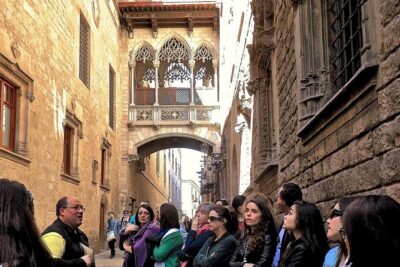
Pont del Bisbe is one of the Gothic Quarter’s most photographed sights. The Neo-Gothic bridge links the Government building with a neighboring Episcopal structure, creating a dramatic view over the narrow street.
Your guide tells the legend of a hidden skull worked into the bridge’s ornament. It is exactly the sort of story that turns a pretty photograph into a small puzzle. You can look closely at the stonework and decide what you make of the tale.
The stop lasts roughly 10 minutes, so expect a quick explanation and time for photos. This can be one of the busiest points on the route, and the bridge is not a place for a long pause in the middle of the passage. Listen first, then step aside when possible for your picture.
The bridge is Neo-Gothic rather than genuinely medieval, a useful distinction your guide can help make clear. Its appeal comes from the way later design was used to create a medieval-looking image of the quarter.
Casa de l’Ardiaca and two good-luck traditions
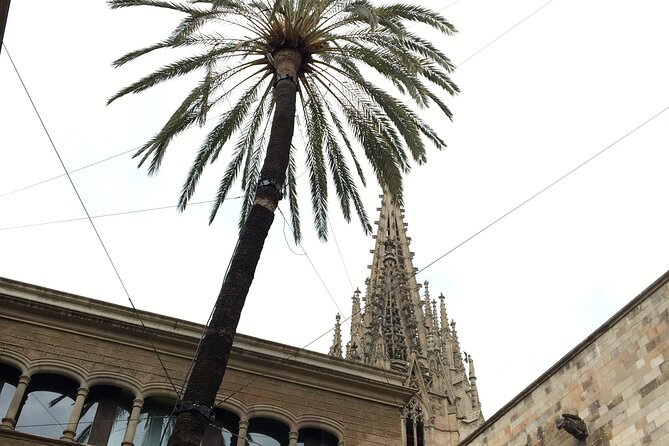
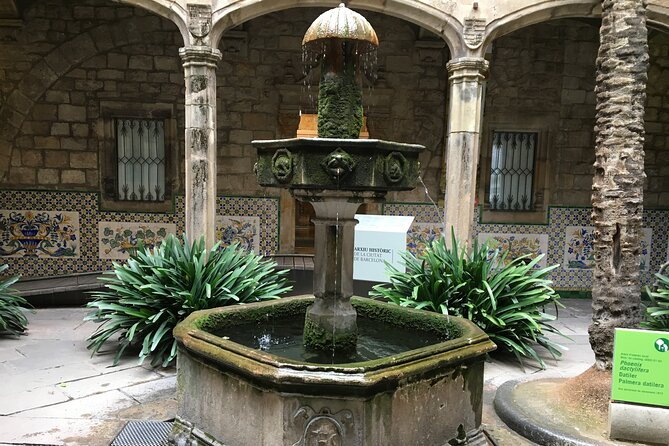
The walk finishes back at Casa de l’Ardiaca, the same area used for the meeting point. The building has a handsome courtyard, a fountain, and Barcelona’s oldest palm tree.
You hear about the house’s ties to church and secular authorities, then get two local traditions to remember. One involves touching the ancient palm tree. The other involves rubbing a small stone turtle on the fountain for good luck.
The turtle is a particularly nice ending because it gives you something simple and physical to notice. It also shows how history in Barcelona is not limited to grand monuments. A small sculpture, a courtyard tree, or an old wall can carry local meaning.
The stop lasts about 15 minutes, and the tour ends at the meeting point. That makes the route easy to fit into a day of sightseeing. You do not have to arrange a pickup across town or guess where the guide will leave you.
Price, group size, and practical limits
At $29.57, this is a reasonably priced orientation walk. The fee pays for a local guide, route planning, and explanations that help you read places you could otherwise pass without noticing.
The value is strongest for a first visit to Barcelona, especially if you want to understand how Roman, medieval, Jewish, royal, political, and wartime stories fit into one neighborhood. It is also useful early in a stay, since the walk can help you decide which sites deserve a second, longer visit.
The maximum group size is 20 people. That is not a private tour, but it is more manageable than a large coach-style group, especially in the quarter’s narrow lanes. Ask questions when the guide pauses, and stay close when the group turns into a new street.
Most people can participate, and service animals are allowed. The stated minimum height is 150 centimeters, or about 4 feet 11 inches. The experience requires good weather, and it may be canceled if too few people book. You can cancel for a full refund up to 24 hours before the start time, but changes or cancellations inside that window are not accepted.
The tour currently carries a 4.6 rating from five reviews. Victoria is specifically praised for making the area’s stories clear and interesting, so if she is your scheduled guide, expect a strong focus on explanation and local tales. Guide assignments can vary, so do not book solely on the assumption that she will lead every departure.
Who should book this walk?
I would choose this tour if you want a compact, guided introduction to Barcelona’s oldest center. It suits first-time visitors, people who prefer stories to silent sightseeing, and anyone who likes seeing famous landmarks alongside less obvious details such as the executioner’s house or the Civil War damage.
It is also a good fit if you worry about getting lost. The guide handles the route while you concentrate on the buildings, legends, and street life around you.
I would hesitate if your main goal is extended time inside museums or churches. The stops are short, and the tour is built around movement and commentary. You will get more out of it if you treat it as a lively orientation walk, then return on your own to the places that catch your interest.
Should you book Barcelona’s Gothic Quarter walk?
Book it if you want the Gothic Quarter explained rather than merely photographed. The route brings together Roman walls, cathedral legends, royal power, Jewish history, Civil War scars, film locations, and small good-luck customs in one manageable outing.
Skip it if you already know the area well or want a private, slow architectural study. For about $30, though, it offers a sensible balance of guidance, local stories, and practical orientation. The most useful tip is to schedule it early in your Barcelona stay, when the map, landmarks, and historical layers can improve the rest of your time in the city.
FAQ
How long does the Gothic Quarter tour last?
The tour lasts approximately 2 to 3 hours.
What language is the tour offered in?
The tour is offered in English.
Where does the tour start?
It starts at the Roman Aqueduct and La Casa de l’Ardiaca, Carrer de Santa Llúcia, 1, Ciutat Vella, Barcelona.
Where does the tour end?
The activity ends back at the meeting point.
What is included in the price?
A local guide is included. The listed stops have no admission ticket charge.
How many people can join the tour?
The maximum group size is 20 people.
Is the tour suitable for everyone?
Most people can participate, and service animals are allowed. The stated minimum height is 150 centimeters, approximately 4 feet 11 inches.
What happens if the weather is poor or the tour is canceled?
The tour requires good weather. If it is canceled because of weather or because the minimum number of participants is not reached, you will be offered another date or experience, or a full refund. You can also cancel up to 24 hours before the start time for a full refund.
Recently added around Barcelona
- Montserrat very early : Hiking, Abbey, very small group★ 5.0 · 127 reviews
- Guided Private Yacht Tour in Barcelona Spain★ 5.0 · 6 reviews
- Private Tour from Barcelona to Montserrat (with guide)★ 4.5 · 6 reviews
- Private Tour from Barcelona to Costa Brava (with guide)★ 5.0 · 5 reviews
- Andorra Tour★ 4.0 · 7 reviews
- Barcelona Gaudi Tour: Sagrada Familia, Casa Batllo & Casa Mila★ 5.0 · 4 reviews
- Street Art, Sculptures & Crime Stories Walking Tour – Barcelona★ 5.0 · 11 reviews
- Barcelona: Bike or eBike Tour, Top Sights & Local Insights★ 5.0 · 47 reviews
Barcelona Gothic Quarter Tours, compared.
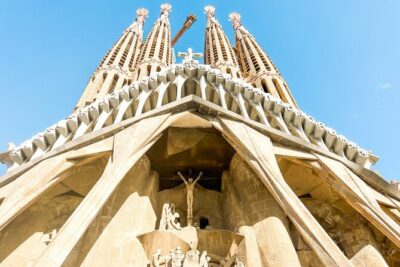
Barcelona all included: Sagrada, Park Güell, Montjuic & Gothic
Read our review →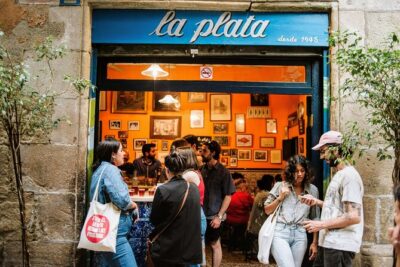
Barcelona Gothic Quarter Tapas & Taverns Food & Wine Tour
Read our review →
Gothic Quarter Ghosts and Legends Walking Tour
Read our review →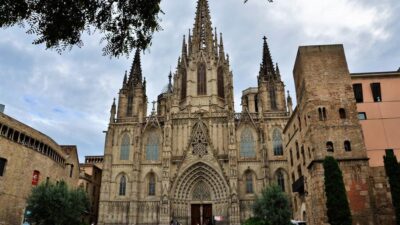
Barcelona Old Town & Gothic Quarter Small Group Tour
Read our review →
Ramblas, Old Town, Gothic and Gaudi Architecture Walking Tour
Read our review →
El Born and Gothic Quarter Wine & Tapas Bar Tour
Read our review →
Kids and Family Gothic Quarter Walking Tour in Barcelona
Read our review →Browse the lists this tour appears in