
Reviewed · 2-HOUR EXPERIENCES
The wonders of architecture 2 hours on foot in Barcelona
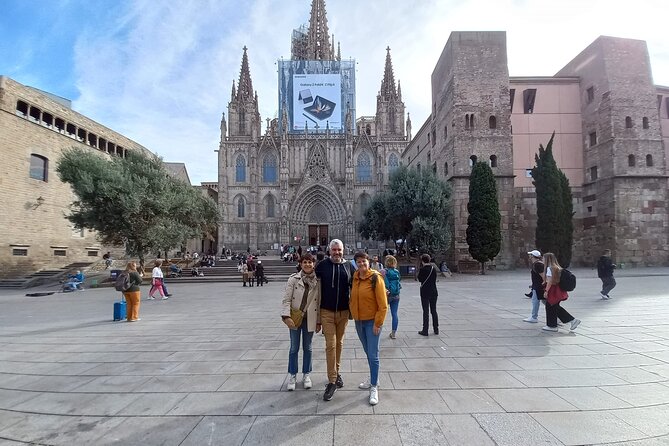
Barcelona’s architectural story makes an excellent walking route because the city changes style block by block. In two hours, you move from medieval stonework at Barcelona Cathedral to the bright Modernisme façades of Passeig de Gràcia, ending at Gaudí’s Casa Batlló.
I like the small maximum of 10 people, and I like the way the tour links buildings to Catalan culture instead of treating them as postcard façades. Guides Florence and Valérie are known for clear storytelling, humor, practical restaurant advice, and adapting the walk to their group. The main drawback is simple: interior admissions are not included, and two hours gives you an informed introduction rather than a full architectural study.
Key points at a glance
- A strong old-to-new route: Begin beside Barcelona Cathedral and finish at Casa Batlló.
- French-language guiding: The experience is designed for visitors who want commentary in French.
- Small-group format: The maximum is 10 people, which suits questions and conversation.
- Architecture with local context: Expect anecdotes about Catalan identity, bourgeois Barcelona, founding myths, and city growth.
- No interior visits included: You examine the exteriors, but admission to the Cathedral, Palau de la Música Catalana, Casa Lleó i Morera, Casa Amatller, and Casa Batlló is not part of the price.
- A useful first-day walk: Guides also offer practical suggestions for food and other parts of Barcelona.
Why this route works in two hours
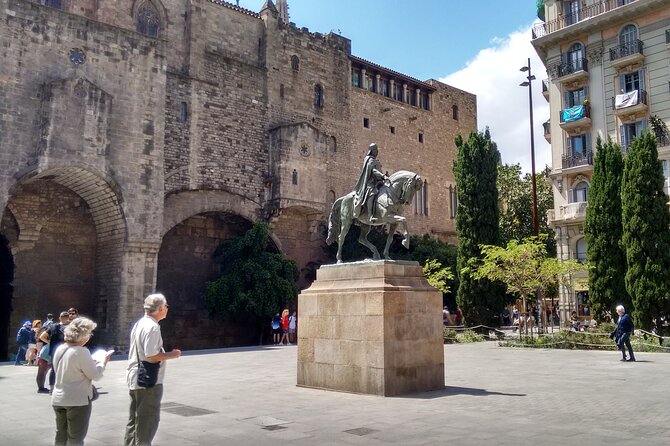
The tour starts at Plaça de Ramon Berenguer el Gran, beside Barcelona Cathedral, at 10:30 a.m. That starting point gives you an immediate lesson in Barcelona’s layers. Medieval walls and Gothic buildings sit close to streets that lead toward the ordered blocks of the Eixample, the expansion district that later became the setting for much of Barcelona’s Modernisme.
The route is not a museum visit with long indoor stops. It is an exterior-focused walk, so your guide can keep the story moving and show how each building fits into the city around it. That matters in Barcelona, where the relationship between a façade and the street often tells as much as the ornament itself.
The French-language format is a major part of the experience. Florence is described as warm, adaptable, and especially good at explaining Barcelona in a natural way. Valérie also leads small outings, and the company’s wider tours include old Barcelona, the Gothic Quarter, fishermen’s areas, Modernisme, and changing parts of the city.
The small group cap helps here. With no more than 10 people, you should have a better chance to hear details on a busy pavement and ask about features that catch your eye. It also makes the walk more personal than a large city tour, though the exact guide depends on availability.
More 2-Hour Experiences in Barcelona:
- Barcelona: Two-Hour Midday or Sunset Sailing Cruise
★ 4.8 · 1,732 reviews - Barcelona: 2-Hour City Sights Guided Segway Tour
★ 4.9 · 453 reviews - Barcelona: 2-Hour Sailboat Tour with Snacks and Drinks
★ 4.8 · 357 reviews
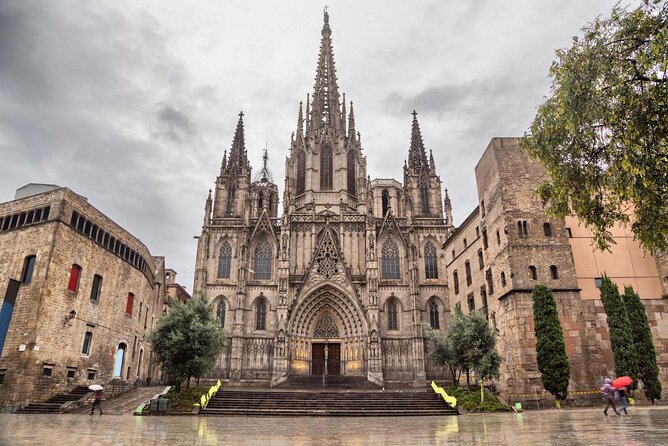
Barcelona Cathedral and the medieval starting point
The first stop lasts about 15 minutes. You will look at the details and stories linked to the cathedral’s construction, with the focus on what you can see from outside. Admission is not included.
This is a useful opening because the cathedral gives you a visual baseline. Its stonework, vertical forms, and accumulated details belong to a very different city from the Modernist Barcelona waiting later in the morning. Your guide can use the building to explain medieval Barcelona before the route shifts toward the grand urban planning and private wealth of the nineteenth century.
Do not expect enough time for a full cathedral visit. If you want to see the interior, cloister, or other paid areas, you will need to arrange that separately. The tour’s value here is the explanation and the position of the building within the old city, not a lengthy stop inside.
The meeting point is specific, but the area can be busy. Arrive a little early so you are not trying to identify the group at the last moment. You receive a mobile ticket, and confirmation is sent within 48 hours of booking, subject to availability.
Palau de la Música Catalana and Catalan identity
The second stop is the Palau de la Música Catalana, also scheduled for about 15 minutes. Again, admission is not included, so the emphasis is on the exterior and on the stories connected with the building.
This is one of the most useful stops for understanding why Barcelona’s architecture is not only about individual designers. The palace is tied to Catalan cultural identity, and the guide introduces anecdotes about the founding myths of Catalonia. That turns the façade into part of a larger conversation about language, pride, music, and local culture.
I would pay close attention to the details your guide points out rather than trying to record every fact. The point of a short stop is to learn how to look: notice color, sculpture, pattern, and the way decoration announces the building’s public purpose.
If the palace is high on your Barcelona wish list, plan a separate interior visit. A two-hour street walk cannot replace seeing its concert hall. Still, the outside commentary helps you decide if you want to return and spend more time there.
Plaça Catalunya and the line between two Barcelonas
After the medieval center, the route reaches Plaça Catalunya, a free stop of roughly 15 minutes. The square is presented as the border between the old city and the modern city.
That description is more useful than it may first sound. Barcelona can feel like several cities stitched together, and Plaça Catalunya is the point where the older, tighter streets give way to the broad avenues and regular blocks of the Eixample. Your guide can make that change easier to read as you walk.
This is also where the tour’s urban story becomes clearer. The route is not simply a parade of famous façades. It explains how the city expanded, how wealth shaped new residential streets, and how architecture became a public display of status and identity.
A short stop in a large square will not offer much architectural detail on its own. Its importance is as a transition point. You are moving from the Gothic city into the district where the famous Modernist houses compete for attention.
A different sort of day out in Barcelona:
- Barcelona: Park Güell Admission Ticket
★ 4.4 · 76,534 reviews - Barcelona: Casa Batlló Entry with Self-Audioguide Tour
★ 4.7 · 25,359 reviews - Barcelona: 24 or 48-Hour Hop-On Hop-Off Bus Tour
★ 4.4 · 20,872 reviews - Barcelona: Park Guell Guided Tour with Skip The Line Entry
★ 4.7 · 17,563 reviews
The Champs-Élysées of Barcelona
The route then follows the part described as the Champs-Élysées of Barcelona. This refers to the grand, prestigious character of the avenue leading toward the Modernist houses on Passeig de Gràcia.
This section helps explain the social setting behind the buildings. Barcelona’s prosperous families wanted attractive homes, and architects were given room to show imagination through stone, tile, ironwork, balconies, windows, and color. The façades were not quiet background scenery. They announced taste, money, and a new confidence in the city.
The avenue is also a reminder that architecture is best read at street level. You can compare one building with the next, see how they share a block, and notice how each architect tried to claim attention. Your guide’s anecdotes about the bourgeoisie add a human edge to what might otherwise become a list of famous names.
Because the route is in a central, heavily visited part of Barcelona, expect city noise and foot traffic. That is part of the setting, but it may make it harder to hear at times. A group of 10 or fewer is helpful here.
Casa Lleó i Morera and the Apple of Discord
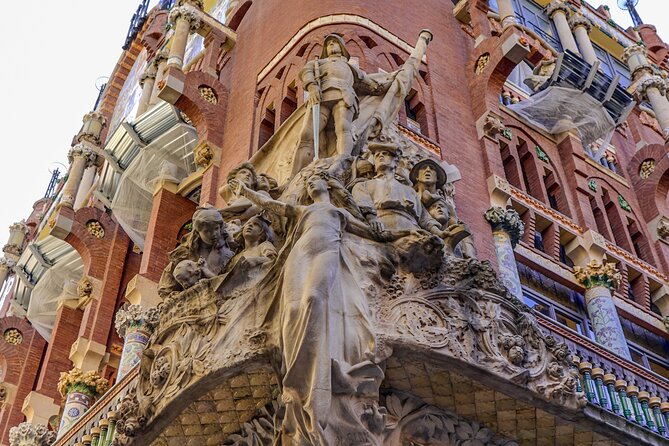
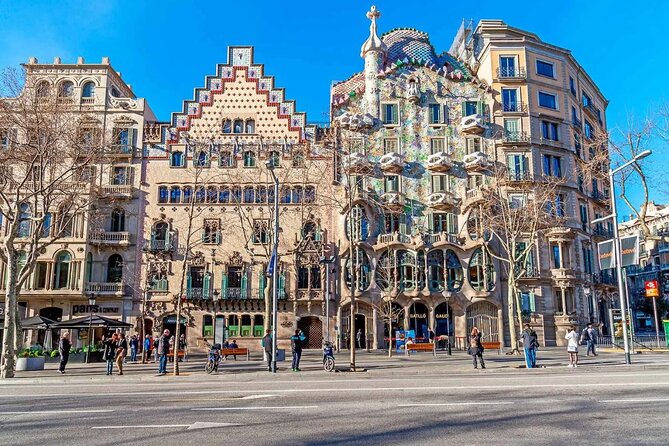
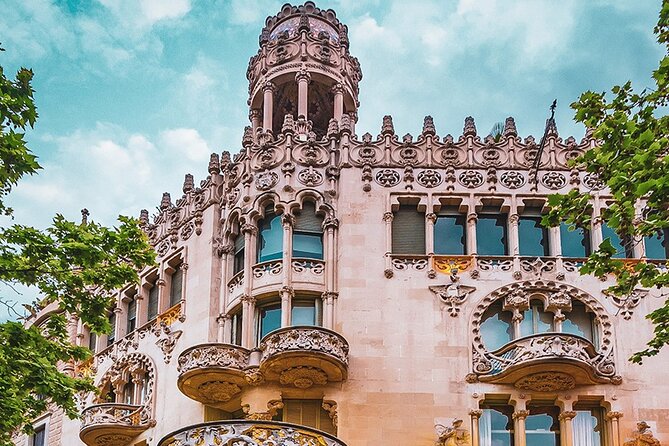
Casa Lleó i Morera receives about 10 minutes. It is one of the buildings grouped with the Apple of Discord, the well-known stretch where Modernist houses compete for attention.
The stop is brief, but the building gives you another way to think about Modernisme. Instead of treating the style as only Gaudí’s invention, the tour places several architects and façades beside one another. That comparison is one of the strongest reasons to take this walk rather than visit Casa Batlló alone.
Admission is not included, so you will study the outside. The guide can draw your attention to the parts that are easy to miss when you are taking photographs, including decorative elements and the way the façade communicates with the avenue.
Ten minutes is enough for an introduction, not a complete examination. If you have a strong interest in Modernist interiors or decorative arts, you will want additional time elsewhere. For a first look, the stop works well because it prepares you to compare the next two buildings.
Casa Amatller and a different Modernist voice
Casa Amatller is the next stop, also planned for about 10 minutes. Its place beside Casa Batlló makes the comparison especially worthwhile.
You are not looking at three versions of the same building. The point is to see how different architects handled the same urban setting. Casa Amatller contributes its own character to the block, and your guide can explain the details that separate it from its neighbors.
This is where a good guide earns the walking-tour fee. On your own, you may photograph the façade and move on. With Florence or another guide, you can connect the decorative choices to the building’s owner, the competitive spirit of the avenue, and the broader culture of Barcelona’s prosperous classes.
There is a practical limitation. Since the stop is exterior only, anyone hoping to tour the inside should schedule that independently. The tour gives you a way to see the building with context, but not an interior visit.
Casa Batlló and the Gaudí finale
The final stop is Casa Batlló, at Passeig de Gràcia 43, with about 15 minutes devoted to Gaudí’s celebrated work. This is the natural finish because the building gathers many of the themes introduced earlier: color, unusual shapes, decorative invention, private wealth, and Barcelona’s delight in visual surprise.
Your guide will point out the features that make Casa Batlló so memorable and explain Gaudí’s contribution to the city’s architectural story. The exact depth of the commentary will depend on the guide and the group, but the stop is intended as an exterior discovery rather than a timed entry.
Admission is not included. That distinction matters because Casa Batlló is one of the places where many people want to go inside. If you plan to visit the interior, leave time in your schedule and arrange a separate ticket. The walking tour will give you useful preparation, but it does not include the full attraction.
Ending here is convenient. You finish in the Eixample, near public transportation, rather than having to return to the old city. The route therefore works well as a morning introduction before lunch or another central Barcelona activity.
What the guide adds beyond the façades
The strongest theme running through this experience is interpretation. Barcelona’s buildings are easy to admire and easy to misunderstand. Without context, the Cathedral, Palau de la Música Catalana, Casa Amatller, Casa Lleó i Morera, and Casa Batlló can become a string of attractive photo stops.
The guides add stories about construction, Catalan identity, urban change, and the eccentricities of wealthy families. Florence is also described as someone who offers practical advice about restaurants and other places to see. That can be especially useful early in a stay, when you are still deciding where to eat and which neighborhoods deserve more time.
The style sounds informal rather than academic. That should suit you if you want clear explanations, humor, and room for questions. It may be less suitable if you want a technical lecture on architectural theory or a long interior visit at each building.
The company also offers adaptable private and small-group walks. Comments about visits with young children and grandparents suggest that the guiding style can work across ages, though this particular route still requires two hours on foot and attention in busy streets.
Price, group size, and practical value
At $29.67 per person, the tour is priced as a compact guided introduction, not as an admissions package. You are paying for two hours of route planning, commentary in French, local stories, and a small group capped at 10 people.
I think the price makes the most sense if you care about understanding what you see. If you only want exterior photographs, you can walk much of this route independently. The fee becomes better value when you want someone to connect the buildings, explain the city’s growth, and point out details you might pass without noticing.
The absence of entry tickets keeps the price lower, but it also means you must budget separately for any interiors. That is not a flaw, as many visitors prefer to choose only one or two buildings for a full visit. Just know what you are buying before you reserve.
The tour is near public transportation, and most people can participate. Service animals are allowed. It requires good weather, and poor conditions can lead to a different date or a full refund. A minimum number of participants is also required, so a cancellation is possible if that minimum is not reached.
You can cancel for a full refund up to 24 hours before the start time. Changes or cancellations within 24 hours are not accepted for a refund.
Who will get the most from this walk
I would recommend this tour if you are visiting Barcelona for the first time and want a clear architectural framework. It is also a good fit if you speak French comfortably and prefer a small, conversational group.
Families may appreciate the short stops and the variety of buildings. The route offers enough changes in style to hold a child’s attention better than a long single-site lecture, though the adult value comes from the historical and cultural links.
You should consider it if you have already seen Casa Batlló in photographs but want to understand its neighbors. The Apple of Discord becomes more interesting when you compare the buildings rather than treating Gaudí as the only name that matters.
I would skip it if your priority is entering several monuments. You would get more from booking individual admissions and spending longer inside. I would also be cautious if you dislike city walking, as the experience is built around moving through central Barcelona on foot.
Should you book The Wonders of Architecture?
Book it if you want two useful hours that connect medieval Barcelona with the Modernist city, and if French-language guiding matters to you. The route is compact, the group is small, and the finish at Casa Batlló gives the morning a strong visual payoff.
The best plan is to take it near the beginning of your stay. Use the guide’s restaurant and sightseeing suggestions, then return later to one or two buildings you want to explore inside. At $29.67, it is a sensible way to learn how Barcelona’s architecture fits together, as long as you remember that admission tickets are extra.
FAQ
Where does the tour begin?
It begins at Plaça de Ramon Berenguer el Gran in Ciutat Vella, Barcelona.
What time does the tour start?
The scheduled start time is 10:30 a.m.
Where does the tour end?
It ends at Casa Batlló, Passeig de Gràcia 43, in Barcelona’s Eixample district.
How long is the experience?
The walking tour lasts approximately two hours.
Is admission to the buildings included?
No. Admission is not included for the Barcelona Cathedral, Palau de la Música Catalana, Casa Lleó i Morera, Casa Amatller, or Casa Batlló stops. Plaça Catalunya is free.
Is the tour conducted in French?
Yes. The experience is designed to introduce Barcelona’s architecture and culture in French.
How many people can join?
The group has a maximum of 10 people. Confirmation is subject to availability and is sent within 48 hours of booking.
Can I cancel for a refund?
Yes. You can cancel at least 24 hours before the start time for a full refund. Poor weather or failure to reach the minimum number of participants may also lead to a new date or a full refund.
Recently added around Barcelona
- Montserrat very early : Hiking, Abbey, very small group★ 5.0 · 127 reviews
- Guided Private Yacht Tour in Barcelona Spain★ 5.0 · 6 reviews
- Private Tour from Barcelona to Montserrat (with guide)★ 4.5 · 6 reviews
- Private Tour from Barcelona to Costa Brava (with guide)★ 5.0 · 5 reviews
- Street Art, Sculptures & Crime Stories Walking Tour – Barcelona★ 5.0 · 11 reviews
- Andorra Tour★ 4.0 · 7 reviews
- Barcelona Gaudi Tour: Sagrada Familia, Casa Batllo & Casa Mila★ 5.0 · 4 reviews
- Wine Tasting in Barcelona (Catalan Varieties) Small Groups★ 5.0 · 10 reviews
2-Hour Experiences, compared.



2-Hour Sailing Tour in Barcelona with Open Bar & Snacks
Read our review →
Jewish Walking Tour Barcelona by Expert Jewish Guide 2h
Read our review →
Browse the lists this tour appears in