

Reviewed · BARCELONA GOTHIC QUARTER TOURS
Barcelona Historical Walking Tour: Gothic Quarter and El Born
Barcelona’s oldest streets reveal their best stories on foot. This two-hour walk moves from the Gothic Quarter into El Born, linking Roman Barcino, medieval churches, Catalan politics, Jewish history, artists, and Civil War scars. Guides such as Juan, Lidia, and Jordan have brought energy, humor, and plenty of local detail to the route.
I like two things here. First, the route reaches tucked-away corners that a sightseeing bus cannot touch, including Plaça Sant Felip Neri and the narrow lanes of El Call. Second, the small maximum of 20 people keeps the walk manageable, while guides often leave time for questions, food advice, and extra stories.
The main drawback is that this is an overview, not a full museum visit. You pause at many places for about 10 minutes, and admission to Barcelona Cathedral and Santa Maria del Mar is not included. One cancellation and one complaint about a guide who spoke too softly also show why guide quality can vary.
Key points before you book
- Two historic districts in two hours: The route covers the Gothic Quarter and El Born without taking up your whole day.
- A story-led walk: Expect legends, local traditions, Roman remains, Catalan memory, and Barcelona’s artistic past.
- Strong guide personalities: Juan, Lidia, Jordan, Petra, Vanesa, Darren, and others have led recent departures, so the exact style may differ.
- Mostly easy walking: The pace is described as relaxed and suitable for most people, with time for photos.
- Good morning option: An early start can mean cooler weather and quieter streets.
- Extra costs to note: Entry to Barcelona Cathedral and Santa Maria del Mar is not part of the $30.25 price.
Why this walk makes sense in Barcelona
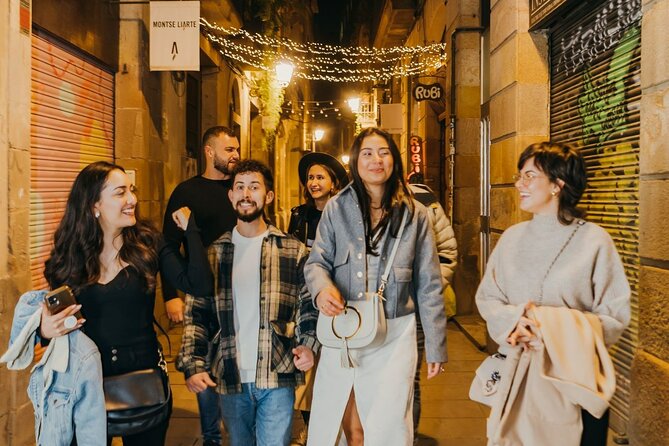
Barcelona can feel like several cities stacked on top of one another. Roman foundations sit below medieval lanes. A modern café recalls Picasso and Gaudi. A quiet square carries the marks of wartime tragedy. This tour gives you a useful thread through those layers.
At $30.25 per person, the value depends on what you want. You are not paying for a long attraction visit or an elaborate transport service. You are paying for an English-speaking guide who connects places that can otherwise look like a series of pretty streets and old walls.
I think the tour works best near the start of your stay. You get a map in your head, a short list of places to return to, and practical suggestions for restaurants, bars, and other sights. Juan, for example, has used an iPad to show how places looked in the past and has offered food and attraction advice at the end.
The format is social but not huge. The stated limit is 20 people, and one account praised the group size and the prompt start. It is still a group walk, so you will not receive the same depth as on a private tour. In return, the price stays reasonable.
More El Born Tours in Barcelona:
- Barcelona: El Born and Gothic Quarter Wine & Tapas Bar Tour
★ 4.8 · 674 reviews - Barcelona: El Born Food Walking Tour with Tapas and Drinks
★ 4.9 · 662 reviews - Luca’s Hidden Old Barcelona: the Gothic and El Born Tour
★ 5.0 · 66 reviews
Starting at Els 4 Gats
The meeting point is Plaça del Vuit de Març in Ciutat Vella, close to the first historic sights. The walk begins with Els 4 Gats, a café and restaurant tied to Barcelona’s modernist and artistic circles.
The name means The Four Cats, and the place is remembered as a meeting point for artists and intellectuals. Pablo Picasso and Antoni Gaudi were among the figures associated with it. The Art Nouveau design gives the stop a clear connection to the city’s creative past.
You spend about 10 minutes here, with no admission fee listed. That timing is enough for an introduction and exterior context, but not a full meal or extended interior visit. If you want to eat here, treat that as a separate plan.
This is a smart first stop because it gives the tour an immediate human angle. Instead of beginning with dates and battles, you begin with a café where ideas, art, and conversation mattered.
Catalan memory at El Mon Neix En Cada Besada
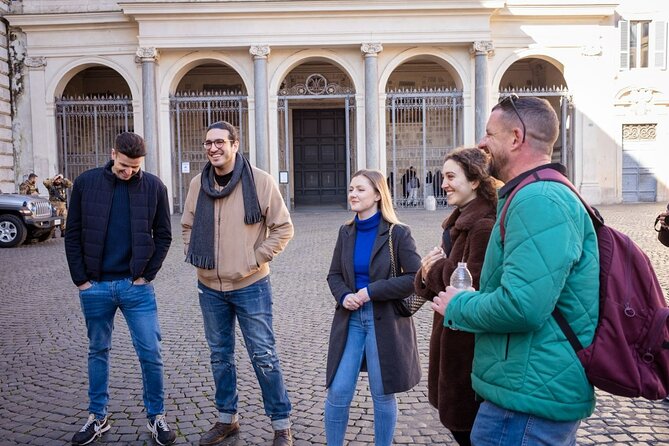
The next stop is the photomosaic El Mon Neix En Cada Besada, or The World Begins with Every Kiss. It was created in 2014 and relates to Catalonia’s defeat on September 11, 1714, during the War of the Spanish Succession.
The image is linked to the meaning of freedom for many people in Barcelona and to La Diada, Catalonia Day. Your guide can use this modern artwork to explain a subject that remains important in Catalan public life.
You get about 10 minutes here without an admission charge. The stop is brief, but it adds a useful modern layer to a route otherwise filled with Roman and medieval remains. I like that balance. Barcelona’s past is not locked behind church doors or museum glass. It still shapes public art and civic identity.
Barcelona Cathedral and the Roman wall
Barcelona Cathedral sits at the center of the Gothic Quarter. It honors Santa Eulalia, the city’s patron saint, whose life and death are tied to Roman persecution.
The church is an important visual pause on the route, with Gothic architecture and a strong connection to the city’s religious past. The tour allocates about 10 minutes, so expect an explanation from outside or a short look rather than a long church visit.
Admission is not included. That matters if you want to enter and explore the interior at your own pace. You may prefer to return later, when you do not have to keep up with the group.
Nearby, Casa de l’Ardiaca brings together Gothic and Renaissance features. The building incorporates part of the Roman wall and aqueducts, showing how Barcelona reused older structures as the city expanded.
This is one of the route’s most useful lessons: the Roman city is not presented as a separate archaeological park. Its remains appear within later buildings and ordinary streets. You begin to notice how old Barcelona is beneath the surface.
More Barcelona Gothic Quarter Tours:
- Barcelona all included: Sagrada, Park Güell, Montjuic & Gothic
★ 5.0 · 2,169 reviews - Barcelona Gothic Quarter Tapas & Taverns Food & Wine Tour
★ 5.0 · 1,470 reviews - Barcelona: Gothic Quarter Ghosts and Legends Walking Tour
★ 4.7 · 1,443 reviews - Barcelona: Old Town and Gothic Quarter Walking Tour
★ 4.8 · 1,393 reviews
The legend of Pont del Bisbe
Carrer de Bisbe follows an important route through the old Roman city of Barcino. Its most photographed feature is Pont del Bisbe, a Neo-Gothic bridge that crosses the narrow street.
The bridge is tied to a superstitious legend. The exact meaning of the story is part of the fun, since the guide can explain the local version while you look up at the carved details.
You spend about 10 minutes in this area. It is a compact stop, and the street can feel crowded, so keep your camera ready and listen closely. This is not a place for a long pause in the middle of the roadway.
The bridge also shows how Barcelona’s old center mixes genuine medieval fabric with later additions designed to fit the Gothic mood. A good guide helps you separate the ancient from the newer, and that distinction is useful in this part of town.
The quiet sadness of Plaça Sant Felip Neri
Plaça Sant Felip Neri is one of the most affecting stops. It is a small, picturesque square with a painful connection to the Spanish Civil War. Marks on the walls remain as reminders of its tragic past.
The setting can catch you off guard. The square is quiet and attractive, yet its damaged surfaces carry a much darker story. This contrast is exactly why it belongs on a history walk. You are not just collecting church façades and photo points. You are seeing how violence left physical traces in the city.
The visit lasts about 10 minutes and is free. Your guide’s tone matters here. This is a place for clear context and respect, not a rushed punchline or a loud presentation.
One criticism of the experience concerned a guide who spoke too softly for the group. That issue would matter most in a quiet square like this, where the story is central. If you cannot hear, say so early and clearly.
Through El Call, Barcelona’s Jewish quarter
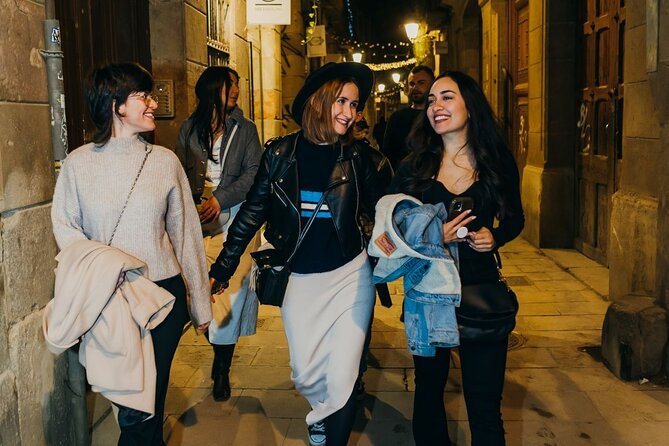
The route then moves through MUHBA El Call, the medieval Jewish quarter. Narrow streets and old architecture offer a glimpse into Barcelona’s Jewish past, including a synagogue and local legends.
This part of the walk rewards close attention. The lanes are not grand boulevards. Their value lies in scale, shape, and the way they preserve a sense of the old quarter. Your guide helps you read the street plan and understand the community that once lived here.
No admission fee is listed for this stop, and the tour allows about 10 minutes. That is enough for orientation, though not a full study of every site connected to the quarter.
I especially like this section for people who want more than the usual Gaudi circuit. Barcelona’s identity is not only modernist architecture and beach views. Jewish Barcelona is part of the city’s story, and this short stop points you toward a subject you can explore further.
Government and power at Plaça de Sant Jaume
Plaça de Sant Jaume is a central civic square surrounded by historic government buildings. It remains a hub of public activity and political life.
This is where the guide can connect the old city to modern Catalonia. The square is not just a backdrop for photographs. It is a place where government, public gatherings, and regional identity meet.
The stop takes about 10 minutes and is free. Because the square is open and central, it also makes a useful orientation point. By now, you should have a clearer sense of how the Gothic Quarter fits together.
The route favors explanation over long indoor visits. If you want to tour government buildings or learn more about Catalan politics, you will need separate plans. The advantage is that the walk keeps moving and covers more ground.
Royal power and darker stories at Plaça del Rei
Plaça del Rei brings a regal note to the route. The Royal Palace gives the square a formal medieval setting, but the guide also introduces a darker side of Barcelona’s past.
That contrast is a recurring strength of the walk. A handsome square may carry stories of power, conflict, and fear beneath its polished appearance. You get a short introduction rather than a full palace tour, with about 10 minutes allocated here.
The square is free to view, but the tour does not list palace admission as included. If you want to enter related museum spaces, check separately. The walk itself is designed to give you context first, then let you decide where to spend more time.
Plaça de l’Àngel and the old grain market
Plaça de l’Àngel was once known as Wheat Square because grain trading took place there. Its current name, Angel’s Square, connects to a local heavenly legend.
This is a good example of how the tour handles small details. A name on a street sign becomes a doorway into commerce, religion, and local storytelling. You might pass through the square alone without realizing what its name recalls.
Again, the visit is about 10 minutes and free. The stop is short, but it helps you notice how ordinary public spaces preserve the work and beliefs of earlier residents.
Finishing at Santa Maria del Mar
The walk ends at the Basilica of Santa Maria del Mar in El Born. This Catalan Gothic church is closely tied to Barcelona’s maritime past and is one of the route’s most impressive architectural stops.
Ending here makes practical sense. You move from the tighter medieval lanes of the Gothic Quarter toward El Born, then finish beside a major church that deserves more time if you have it.
Admission is not included, so decide if you want to return for a proper visit. The tour’s 10-minute stop gives you an introduction, not a complete examination of the building.
The end point is Plaça de Santa Maria, 1. It is also a useful place to continue your day in El Born, though the exact next plan is up to you. The guide may offer food and drink suggestions, as Tammy did by sending detailed recommendations after the walk.
How the guides shape the experience
The strongest pattern in the guide feedback is enthusiasm, clear storytelling, and a willingness to answer questions. Juan is praised for linking Spanish history with entertaining trivia and for offering practical advice. Lidia is described as energetic, warm, and funny. Jordan has used comedy to keep the history moving.
Other guides named in the feedback include Petra, Sonia, Vanesa, Darren, Craig, Justin, Sara, Thami, Tammy, Mariah, Jorge, and David. That long list tells you one important thing: the experience has a rotating guide team. You should expect the route and language to remain consistent, but the personality and depth can vary.
Vanesa has been especially good with children, while Darren has kept a teenager interested. Jorge’s relaxed pace has allowed time for photos, and one guide continued explaining while the group sheltered from heavy rain.
There is one clear caution. A soft-spoken guide made the tour difficult for some people, and several participants left. This appears to be an exception among mostly strong guide feedback, but it is worth considering. Stay near the guide, ask for repetition when needed, and speak up if the group cannot hear.
Timing, walking pace, and group size
The tour lasts about two hours and covers 11 stops. Most stops receive roughly 10 minutes, with walking time between them. That makes the route active without turning it into a strenuous all-day outing.
One useful tip is to book a morning departure if possible. Cooler temperatures and quieter streets can make the walk more pleasant, especially in warmer months. The route is described as easy and manageable for most people, though you should still expect city walking on old streets.
The maximum group size is 20. That is small enough for a guide to answer questions, but it is not a private tour. Your experience will also depend on how well the group stays together and how clearly the guide speaks.
The start is near public transportation, and confirmation is provided at booking. The meeting point is Plaça del Vuit de Març, while the finish is Santa Maria del Mar. Build a little extra time into your morning so you can find the starting point without rushing.
Who should book this Barcelona walk?
I would choose this tour if you have only a short time in Barcelona and want an organized introduction to the oldest center. It is also a good first-day activity because it gives you restaurant ideas, sightseeing suggestions, and a list of places worth revisiting.
Families may like the short format and the mix of legends, artists, churches, and old streets. The route has worked well with children and teenagers when the guide keeps the pace lively.
History-minded visitors will appreciate the range. In two hours, you touch Roman Barcelona, medieval religion, Jewish life, Catalan identity, royal power, the Civil War, and maritime El Born.
I would not book it as your only experience of Barcelona. You will not have much time inside the cathedral or Santa Maria del Mar, and the route cannot explain every stop in depth. Pair it with a separate visit to the interiors that interest you most.
At $30.25, I see good value if you want stories and orientation rather than admission to major attractions. Free cancellation is available up to 24 hours before the start time, but changes or cancellations inside that window are not refunded.
Should you book it?
Book this walk if you want a well-paced introduction to the Gothic Quarter and El Born, especially early in your stay. The route reaches places that are easy to miss, and the best guides add humor, visual aids, food tips, and useful context.
Skip it if you prefer exploring alone, dislike group schedules, or want long interior visits at the cathedral and Santa Maria del Mar. For most first-time visitors, though, the combination of Roman traces, Gothic streets, local legends, and Catalan stories makes this a sensible use of two hours.
FAQ
How long does the Barcelona Historical Walking Tour last?
The tour lasts approximately two hours.
What areas of Barcelona does the tour cover?
It covers the Gothic Quarter and El Born.
What language is the tour offered in?
The tour is offered in English.
How much does the tour cost?
The listed price is $30.25 per person.
Where does the tour start?
It starts at Plaça del Vuit de Març in Ciutat Vella, Barcelona.
Where does the tour finish?
It ends at the Basilica of Santa Maria del Mar, at Plaça de Santa Maria, 1.
Is admission to Barcelona Cathedral included?
No. Admission to Barcelona Cathedral is not included in the tour price.
Is admission to Santa Maria del Mar included?
No. Admission to the Basilica of Santa Maria del Mar is not included.
How large can the group be?
The maximum group size is 20 people.
Can I cancel for a full refund?
Yes. You can cancel at least 24 hours before the experience start time for a full refund. Cancellations made less than 24 hours in advance are not refunded.
More Barcelona History Walks
- Barcelona: 2.5-Hour Bike or E-Bike Historical Tour
★ 4.5 · 1,262 reviews - Barcelona Erotic Museum – Explore Art, History & Fun
★ 4.4 · 450 reviews - Andorra Original History and Sightseeing Tour (Private, Pickup)
★ 5.0 · 350 reviews - Barcelona: Dark History Night Walking Tour
★ 4.8 · 344 reviews
More Barcelona Walking Tours
- Barcelona Tapas and Wine Experience Small-Group Walking Tour
★ 5.0 · 5,804 reviews - Barcelona: Tapas Walking Tour with Food, Wine, and History
★ 4.8 · 4,261 reviews - Barcelona Tapas Walking Tour: Food, Wine & History
★ 4.5 · 1,928 reviews - Barcelona: Tapas Food Crawl Walking Tour with Tastings
★ 4.9 · 1,798 reviews
Recently added around Barcelona
- Montserrat very early : Hiking, Abbey, very small group★ 5.0 · 127 reviews
- Guided Private Yacht Tour in Barcelona Spain★ 5.0 · 6 reviews
- Private Tour from Barcelona to Montserrat (with guide)★ 4.5 · 6 reviews
- Private Tour from Barcelona to Costa Brava (with guide)★ 5.0 · 5 reviews
- Andorra Tour★ 4.0 · 7 reviews
- Barcelona Gaudi Tour: Sagrada Familia, Casa Batllo & Casa Mila★ 5.0 · 4 reviews
- Street Art, Sculptures & Crime Stories Walking Tour – Barcelona★ 5.0 · 11 reviews
- Wine Tasting in Barcelona (Catalan Varieties) Small Groups★ 5.0 · 10 reviews
Barcelona Gothic Quarter Tours, compared.
Barcelona all included: Sagrada, Park Güell, Montjuic & Gothic
Read our review →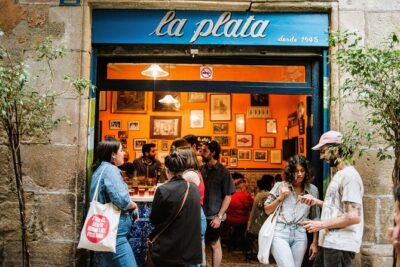
Barcelona Gothic Quarter Tapas & Taverns Food & Wine Tour
Read our review →
Gothic Quarter Ghosts and Legends Walking Tour
Read our review →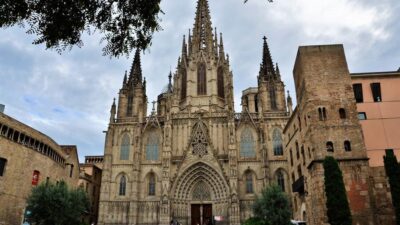
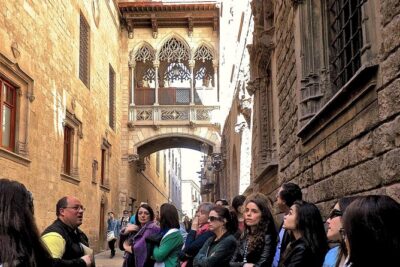
Barcelona Old Town & Gothic Quarter Small Group Tour
Read our review →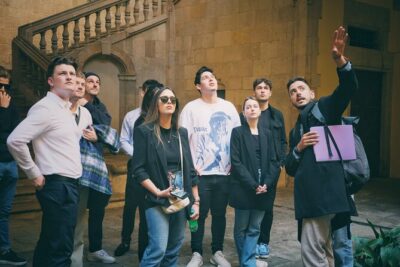
Ramblas, Old Town, Gothic and Gaudi Architecture Walking Tour
Read our review →
El Born and Gothic Quarter Wine & Tapas Bar Tour
Read our review →
Kids and Family Gothic Quarter Walking Tour in Barcelona
Read our review →Browse the lists this tour appears in