
Reviewed · BARCELONA WALKING TOURS
Barcelona Private Walking Tour: Legends, Myths & Old Streets
Barcelona’s old center is a place where you can walk past Roman walls, medieval palaces, Civil War scars, and modern Catalan art within a few minutes. This private evening tour connects those pieces through stories about Barcino, the Inquisition, Catalan identity, and local legends.
I like the private format, since you can ask about exactly what catches your eye instead of keeping up with a large group. I also like the route from the Gothic Quarter into El Born, which gives you a useful first look at two central districts and ends near a good area for dinner.
The main caution is the price: $178.02 per person is a serious outlay for a two-hour walk, especially if your group is small. You should also expect plenty of standing and walking on old streets, and the cathedral and Santa Maria del Mar admissions are not included.
Key points to know before you book
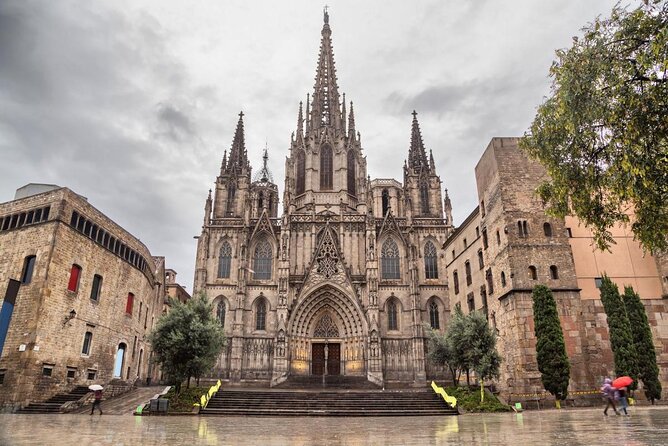
- Private guide and flexible pace: Only your group takes part, so you can ask questions and spend more time on subjects that interest you.
- Eleven historic stops: The route covers Els 4 Gats, the cathedral, Roman remains, El Call, Plaça del Rei, and Santa Maria del Mar.
- A strong storytelling focus: Guides such as Jordan, Tamara, Sara, Rolene, and Vanesa have been praised for clear explanations, humor, and lively delivery.
- The Jewish Quarter gets a brief treatment: You see the old synagogue wall and hear about Barcelona’s Jewish past, but the synagogue interior is not part of the stated route.
- A useful dinner-time finish: The walk begins at 6:00 pm and ends at Santa Maria del Mar in El Born, after roughly two hours.
- Prepare for a real walk: Wear good shoes, eat beforehand, and carry water.
Why this private Barcelona walk can be worth the price
The best reason to choose this experience is not the number of sights. You can see many of these buildings on your own. The value lies in having someone explain what you are looking at, connect one period to another, and point out details you might otherwise walk past.
Barcelona’s Gothic Quarter can feel like a maze of narrow lanes. That is part of its charm, but it also makes the district easy to skim. Without context, an old wall is just an old wall. With a guide, it becomes part of Roman Barcino, later medieval defenses, and the changing shape of the city.
A private tour also gives you room to ask direct questions. If you care about architecture, Catalan politics, the Spanish Civil War, religious history, or food, you can steer the conversation. That is more useful than a fixed script when you already know a little about Barcelona or are traveling with children who need the pace adjusted.
The strongest feedback centers on the guides’ delivery. Jordan is described as funny and full of good stories. Tamara is praised for explaining history and customs in an engaging way, while Sara is noted for answering questions, keeping the group together, and offering restaurant suggestions afterward. Other named guides include Vanesa, Vanessa, George, Mariya, Mariah, Jamie, and Rolene.
The exact guide is not guaranteed, so I would not book on the assumption that one particular person will lead your walk. Still, the repeated praise for storytelling, clear explanations, and personal attention points to the main strength of the experience.
More Barcelona Walking Tours:
- Barcelona Tapas and Wine Experience Small-Group Walking Tour
★ 5.0 · 5,804 reviews - Barcelona: Tapas Walking Tour with Food, Wine, and History
★ 4.8 · 4,261 reviews - Barcelona Tapas Walking Tour: Food, Wine & History
★ 4.5 · 1,928 reviews
Starting at Els 4 Gats and a modern Catalan message
The meeting point is the Barcino sculpture at Plaça Nova, near the cathedral, and the walk begins at 6:00 pm. The first listed stop is Els 4 Gats, a restaurant in Casa Martí, one of Barcelona’s Modernisme buildings.
This is a clever opening. The restaurant was associated with artists including Pablo Picasso and Antoni Gaudí, so it introduces the city as a place where architecture, art, and café culture overlap. You do not need a meal or admission ticket to see the site during the tour, though the stop is short at about ten minutes.
From there, the route moves to El Món Neix en Cada Besada, translated as The World Begins With a Kiss. This photo-mosaic looks like a giant kiss from a distance, but its image is made from small photographs connected to the Catalan struggle for independence and freedom.
That stop gives you a present-day political angle before the walk turns fully toward the medieval quarter. It also shows why a guide matters. The artwork is easy to photograph without understanding what it represents.
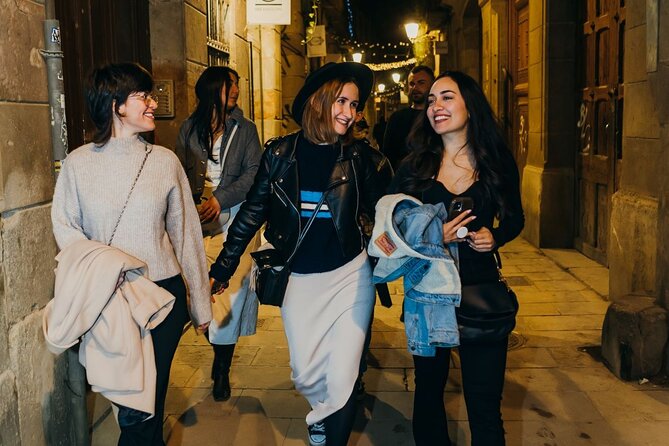
Barcelona Cathedral and the Roman remains beside it
Barcelona Cathedral is the Gothic Quarter’s main church and is dedicated to the city’s patron saint, Santa Eulalia. The story of her death under Roman rule adds a human and religious layer to the building.
The stated stop lasts about ten minutes, so you should expect an outside explanation rather than a long visit inside. Admission is not included. If entering the cathedral matters to you, ask your guide how much time is available and check the conditions on the day.
A short walk brings you to Casa de l’Ardiaca, a small historic house beside the cathedral. Here you can see remains of the Roman wall and aqueducts. This is one of the most useful parts of the route because it makes the city’s age visible.
You may have heard that Barcelona began as Roman Barcino, but the Roman past can be easy to miss beneath later buildings. At Casa de l’Ardiaca, the layers are close together: Roman infrastructure, medieval construction, and a modern city carrying on around them.
Pont del Bisbe and Plaça Sant Felip Neri
Pont del Bisbe is a neo-Gothic bridge linking buildings near the cathedral. It looks medieval, but its style is newer than the surrounding Gothic Quarter suggests. The bridge is also tied to mysterious legends, making it a natural place for a guide to mix architecture with local stories.
This is not a stop that requires a long visit. Its value comes from looking closely and hearing why the structure has become one of the district’s most photographed details. The narrow street can also be busy, so do not expect a quiet pause every time.
Plaça Sant Felip Neri changes the mood. This tucked-away square carries a painful story from the Spanish Civil War. Its walls still show the damage associated with wartime violence, and the small space feels far removed from the main tourist routes.
I appreciate the inclusion of this square because it keeps the walk from becoming a parade of pretty façades. Barcelona’s past includes political conflict and loss, not just palaces and churches. Your guide’s explanation is important here, since the physical clues alone do not tell the whole story.
A different sort of day out in Barcelona:
- Barcelona: Park Güell Admission Ticket
★ 4.4 · 76,534 reviews - Barcelona: Casa Batlló Entry with Self-Audioguide Tour
★ 4.7 · 25,359 reviews - Barcelona: 24 or 48-Hour Hop-On Hop-Off Bus Tour
★ 4.4 · 20,872 reviews - Barcelona: Park Guell Guided Tour with Skip The Line Entry
★ 4.7 · 17,563 reviews
El Call and the limits of the Jewish Quarter stop
The route then enters El Call, Barcelona’s former Jewish Quarter. The district is associated with an ancient synagogue, old legends, and the city’s treatment of Jewish residents during the plague era.
This part of the tour needs a realistic expectation. The stated visit includes a look at the synagogue wall and an explanation of the Jewish community, but not a full interior visit to the synagogue. If you want an extended Jewish-history tour or a detailed visit inside the synagogue, this walk may feel too brief.
That does not make the stop worthless. El Call is compact, and a guide can help you notice how the lanes differ from the broader streets nearby. But the subject is important enough that ten minutes can only offer an introduction. I would ask questions here if this is a major reason for booking.
Plaça Sant Jaume and the public heart of Catalonia

Plaça de Sant Jaume is the main civic square in the center of the Gothic Quarter. It contains both the seat of the Catalan government and Barcelona City Hall.
This is a useful place to discuss Catalan identity and the political life of the city. The earlier mosaic about independence gains more meaning when you are standing in the square where regional and municipal power meet.
The setting also helps explain how Barcelona works as a living city. This is not a preserved museum district. Government offices, public events, local politics, and daily business continue among buildings that are centuries old.
A private guide can make this stop more useful by answering questions about Catalonia, rather than simply naming the buildings. If you want a tour focused only on architecture, this political context may feel like a detour. I see it as one of the better reasons to choose this route over a basic photo walk.
Plaça del Rei and Barcelona’s darker chapters
Plaça del Rei is one of the most atmospheric stops. The former Royal Palace provides the setting for stories about one of Spain’s darkest periods.
The square is visually impressive, but the important part is the narrative attached to it. A guide can help you understand how royal power, religion, law, and punishment shaped Barcelona. The route description specifically includes the Spanish Inquisition, so you should expect difficult material rather than a light history lesson.
The stop is brief, around ten minutes, but that can work well. You get the setting and the main story without spending the whole evening in one place. If a particular building or historical period interests you, the private format lets you ask for more detail.
Plaça de l’Àngel and the turn toward El Born
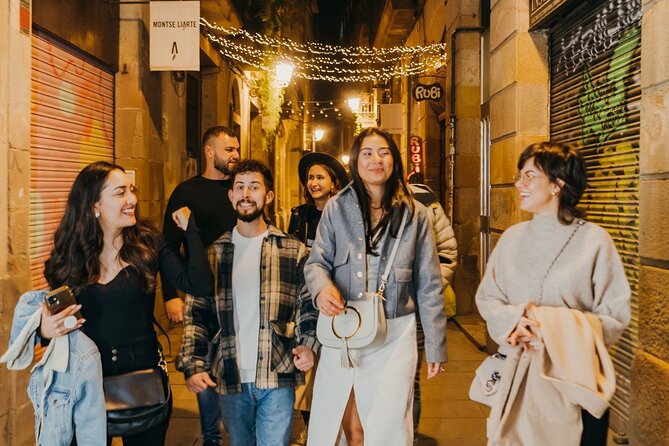
Plaça de l’Àngel brings a legend connected to Santa Eulalia. The story involves a procession and a heavenly apparition that led to the square’s name changing from Wheat Square to Angel Square.
This is the sort of small local tale that gives an old city its personality. It is not as grand as the cathedral or royal palace, but it helps you see how names, religious traditions, and stories shape the map.
From here, the route heads toward El Born. The change in neighborhood is useful because you are not simply walking in circles around the Gothic Quarter. The tour moves from Roman and medieval Barcelona into an area tied to the city’s maritime past and later urban life.
Finishing at Santa Maria del Mar
The final stop is the Basilica de Santa Maria del Mar, in the center of El Born. This imposing church is linked to Barcelona’s maritime history and provides a strong endpoint after the narrow lanes of the old quarter.
Admission is not included, so think of the stop mainly as an exterior visit unless you arrange additional entry separately. The two-hour schedule may not leave much room for a full interior tour, especially if the group pauses for questions along the way.
Ending here works well for practical reasons. El Born is a good place to continue your evening, and one person specifically found the two-hour timing convenient before dinner. A guide may also offer restaurant suggestions, as Sara did for one group. Those recommendations are not guaranteed, but asking at the end is sensible.
How much walking and how to prepare
The tour lasts about two hours and includes roughly eleven listed stops. Ten minutes is allocated to each location, but the total time also includes moving between them and hearing the connecting stories.
You should wear shoes suited to uneven old streets. Eat something before the 6:00 pm start if you do not want to wait until after the walk, and bring water. One useful piece of advice is to fuel up before you go, since two hours of standing and walking can feel longer than the clock suggests.
The tour is near public transportation, and most people can take part. It is still worth considering your own walking comfort, since the experience is entirely on foot and does not include a vehicle break.
The evening start has two advantages. The light can make the old stone streets especially appealing, and you can finish in time for dinner. The tradeoff is that some interiors may have limited opening hours or may not fit into the schedule. The route works best as a guided introduction, not as a full museum visit.
Price, group size, and overall value
At $178.02 per person, this is not a budget walking tour. The price makes more sense for a larger private group, since the attention of one guide is shared only among your own party and group discounts are available.
For a couple, the cost is harder to justify unless personal attention and schedule flexibility are very important to you. For a family or group of friends, the private setup can offer better value than buying several places on a crowded tour, especially if you have different interests or need to ask many questions.
You are paying for interpretation rather than admission tickets. Most stops are viewed from public spaces, and the cathedral and Basilica de Santa Maria del Mar do not include entry. If you want a series of paid interiors, this is not the right product.
You are also paying for a compact route that covers a lot of ground. George’s tour, for example, was described as a useful high-level look at the Gothic Quarter and El Born. That is the right way to judge this experience: it gives you a framework for Barcelona, not an exhaustive study of every site.
The perfect timing is early in your stay. You can use the guide’s suggestions for later walks, meals, and sightseeing. It also works for a return visit if you want stories and corners you missed the first time.
Who should book this experience
I would choose this tour if you want Barcelona explained by a person, not just photographed from a map. It suits first-time visitors who need their bearings, families who benefit from a private pace, and repeat visitors who want more local stories behind familiar streets.
It is especially good for people who enjoy history told through small details: a bridge legend, a damaged wall, a changed square name, or a synagogue remnant beside a modern street.
You may want another option if you need long interior visits, extensive Jewish history, or a low-cost group walk. The Jewish Quarter portion is brief, and the two-hour schedule moves steadily.
The guide matters a great deal. Names connected with strong feedback include Tamara, Jordan, Sara, Rolene, Vanesa, Vanessa, George, Mariya, Mariah, and Jamie. You cannot assume one of them will be assigned, but the recurring strengths are clear: humor, good answers, clear storytelling, and attention to the group.
Free cancellation is available up to 24 hours before the 6:00 pm start for a full refund. Changes or cancellations made less than 24 hours before the tour are not accepted for a refund, so keep that cutoff in mind when planning.
Should you book the Barcelona Legends, Myths and Old Streets tour?
Book it if you want a private, story-led introduction to the Gothic Quarter and El Born, and if the price works for your group size. The route covers a smart mix of Roman remains, churches, royal power, Catalan identity, Civil War memory, Jewish history, and local legend.
I would be more cautious if you are a solo visitor or a couple watching expenses. At $178.02 per person, two hours is a costly way to see public streets, and the paid interiors are not included.
For a family, a group of friends, or anyone who values direct questions and a flexible pace, the experience has a strong case. Bring water, wear sturdy shoes, eat first, and treat the walk as an informed orientation to Barcelona rather than a full visit to every monument.
FAQ
How long is the Barcelona private walking tour?
The tour lasts approximately two hours.
What time does the tour begin?
The stated start time is 6:00 pm.
Where does the tour start?
It starts at the Barcino Sculpture at Plaça Nova, 40, in Barcelona’s Ciutat Vella district.
Where does the tour end?
It ends at the Basilica de Santa Maria del Mar at Plaça de Santa Maria, 1, in El Born.
Is this a private tour?
Yes. Only your group takes part in the private activity.
Which areas does the tour cover?
The route covers the Gothic Quarter and continues into El Born, including El Call, the former Jewish Quarter.
Are cathedral and basilica admission tickets included?
No. Admission to Barcelona Cathedral and the Basilica de Santa Maria del Mar is not included.
Can I cancel for a full refund?
Yes, if you cancel at least 24 hours before the experience start time. Cancellations or changes made less than 24 hours before the start are not refunded or accepted.
Recently added around Barcelona
- Montserrat very early : Hiking, Abbey, very small group★ 5.0 · 127 reviews
- Guided Private Yacht Tour in Barcelona Spain★ 5.0 · 6 reviews
- Private Tour from Barcelona to Montserrat (with guide)★ 4.5 · 6 reviews
- Private Tour from Barcelona to Costa Brava (with guide)★ 5.0 · 5 reviews
- Andorra Tour★ 4.0 · 7 reviews
- Barcelona Gaudi Tour: Sagrada Familia, Casa Batllo & Casa Mila★ 5.0 · 4 reviews
- Street Art, Sculptures & Crime Stories Walking Tour – Barcelona★ 5.0 · 11 reviews
- Wine Tasting in Barcelona (Catalan Varieties) Small Groups★ 5.0 · 10 reviews
Barcelona Walking Tours, compared.

Barcelona Tapas and Wine Experience Small-Group Walking Tour
Read our review →
Tapas Walking Tour with Food, Wine, and History
Read our review →
Barcelona Tapas Walking Tour: Food, Wine & History
Read our review →

Gothic Quarter Ghosts and Legends Walking Tour
Read our review →
Barcelona Helicopter, Sailboat & Old Town Private Walking Tour
Read our review →

Helicopter Flight, Boat Ride, and Walking Tour
Read our review →Browse the lists this tour appears in