
Reviewed · BARCELONA GOTHIC QUARTER TOURS
Luca’s Hidden Old Barcelona: the Gothic and El Born Tour
Barcelona’s old center is best understood one tucked-away square at a time. Luca’s tour links Roman ruins, medieval neighborhoods, Jewish heritage, Gothic churches, the Spanish Civil War, and Catalan political memory in a compact walk from Plaça de Sant Jaume to El Born.
I especially like the small maximum of 15 people and Luca’s habit of bringing photos and extra recommendations to make the past easier to picture. The price, about $13.27 per person, is excellent for more than two hours with a guide who adds context to places you could easily pass without noticing. The main drawback is the pace of information, and the walk can feel hot in full sun.
Key points at a glance
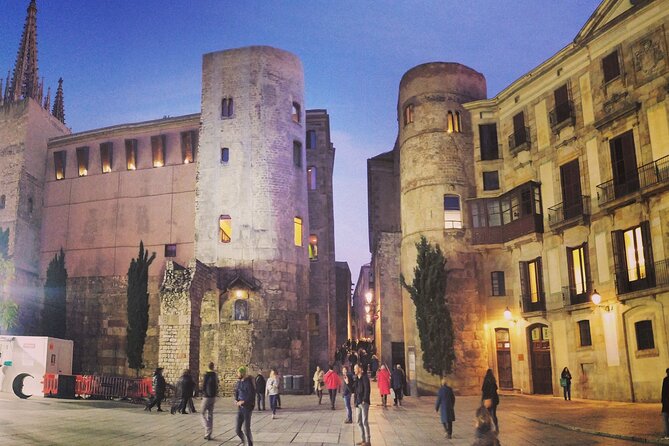
- Roman Barcelona in plain sight: See four surviving columns from the Temple of Augustus at MUHBA Temple d’August.
- Two old neighborhoods in one walk: Move from the Gothic Quarter into El Born, with its medieval streets, churches, and political memorials.
- Luca brings visual aids: He uses photographs and historical references to explain how places looked and why they mattered.
- Strong local recommendations: Expect useful suggestions for food, cafés, shops, ice cream, tapas, and sightseeing after the walk.
- A serious history lesson with humor: The tour covers Catalan and Spanish history, including the Civil War and the conflict between Barcelona and Madrid.
- Plan for walking and heat: The route covers about three miles, and it is not designed for easy mobility access.
Why this old-town walk works so well
I like this tour because it does not treat Barcelona’s old center as a pretty collection of façades. Luca connects the buildings to power, religion, trade, war, identity, and daily life. That makes the Gothic Quarter and El Born easier to read after the tour ends.
The route also works well as an early activity in Barcelona. You get your bearings, learn the shape of the old city, and collect practical ideas for the rest of your stay. Several people who took the walk received restaurant and café suggestions that led them to good ice cream, tapas, pizza, and market stops.
Luca is the clear center of the experience. He brings energy, humor, and a strong interest in the city’s past. He has been praised for answering questions, chatting with each person in the group, and explaining not only what happened but why it happened. His English is generally easy to follow, though he can speak quickly when he gets excited.
This is not a quiet stroll with a few dates and names. You will cover many centuries in a little over two hours. I enjoy that density, but you may prefer a slower tour if you want long pauses, interior visits, or time for photographs at every stop.
More El Born Tours in Barcelona:
- Barcelona: El Born and Gothic Quarter Wine & Tapas Bar Tour
★ 4.8 · 674 reviews - Barcelona: El Born Food Walking Tour with Tapas and Drinks
★ 4.9 · 662 reviews - Barcelona Historical Walking Tour: Gothic Quarter and El Born
★ 5.0 · 217 reviews
Plaça de Sant Jaume and the roots of Barcelona
The walk begins at Plaça de Sant Jaume, the political and social center of Barcelona for roughly 2,000 years. The City Hall and the seat of the regional government face one another here, so the square gives Luca a useful place to explain Barcelona’s civic life and the relationship between Catalonia and Spain.
This is a smart starting point. You are not simply looking at an attractive plaza. You are standing in a place where local government, public demonstrations, ceremony, and political identity meet. Luca uses the setting to introduce Catalan pride and the long tension between Barcelona and Madrid.
The square is also easy to find at the stated meeting point, Pl. de Sant Jaume, 3. Since the tour takes place on foot, wear shoes that can handle old paving and expect frequent stops in busy streets and small squares.
Roman columns at the Temple of Augustus
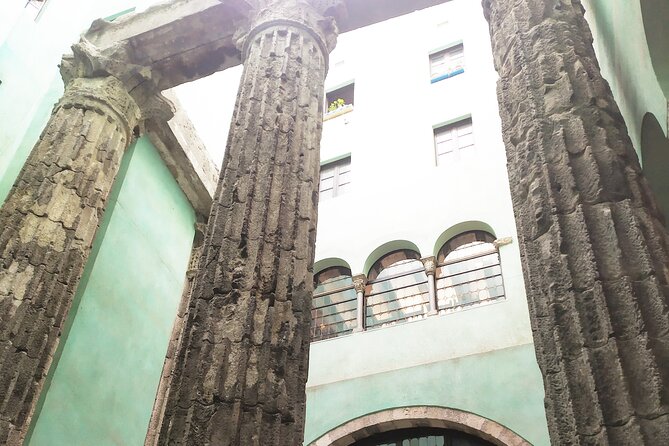
A short walk leads to MUHBA Temple d’August, where four columns from the huge Temple of Augustus remain. These are among the oldest surviving objects in Barcelona, and they are easy to miss if you are exploring without a guide.
I find this stop especially valuable because it changes your sense of the city. Barcelona’s Gothic Quarter is not only medieval. Roman Barcelona lies beneath and among the later streets, and these columns offer a direct link to that earlier city.
Admission to this stop is free. The visit is brief, about 10 minutes, but Luca’s explanation gives the ruins a purpose beyond their age. He is good at pointing out the difference between what is genuinely ancient and what belongs to a later period, a theme he returns to when discussing Gothic architecture.
Barcelona Cathedral from the outside
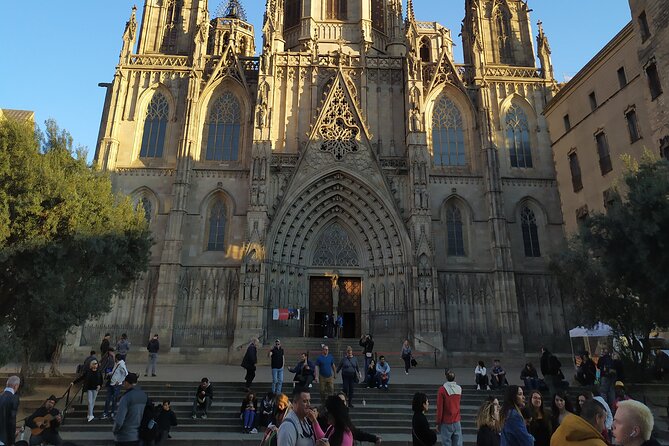
The next stop is Barcelona Cathedral, where the group explores the exterior for about 15 minutes. The cathedral is one of the main features of the Gothic Quarter, but this tour does not include an interior visit, and admission is not included.
That distinction matters if you are comparing walking tours with cathedral visits. You will learn about the outside and its place in the old city, but you should plan a separate visit if you want to go inside.
The advantage of seeing it with Luca is context. He can explain how the cathedral fits into the surrounding streets and the area’s changing architectural story. The stop is also a good example of the tour’s approach: look closely, listen to the story, then continue before the route becomes a formal museum visit.
More Barcelona Gothic Quarter Tours:
- Barcelona all included: Sagrada, Park Güell, Montjuic & Gothic
★ 5.0 · 2,169 reviews - Barcelona Gothic Quarter Tapas & Taverns Food & Wine Tour
★ 5.0 · 1,470 reviews - Barcelona: Gothic Quarter Ghosts and Legends Walking Tour
★ 4.7 · 1,443 reviews - Barcelona: Old Town and Gothic Quarter Walking Tour
★ 4.8 · 1,393 reviews
El Call, Barcelona’s medieval Jewish quarter
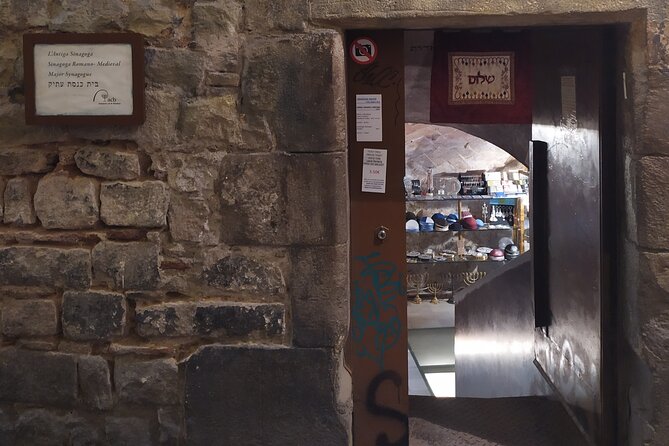
MUHBA El Call introduces the medieval Jewish neighborhood. This is one of the tour’s most important stops because it broadens the old city story beyond kings, churches, and battles.
The narrow streets around El Call can be confusing, and the area’s history is not always obvious from the buildings alone. Luca helps you understand how this neighborhood fit into medieval Barcelona and why its presence matters to the city’s past.
The stop takes about 15 minutes and has no separate admission charge. I would pay close attention here, since this is the kind of place you might walk through without realizing what you are seeing. It is also one of the points where a guide adds far more value than a map or a quick online description.
Sant Felip Neri and the darker side of Barcelona
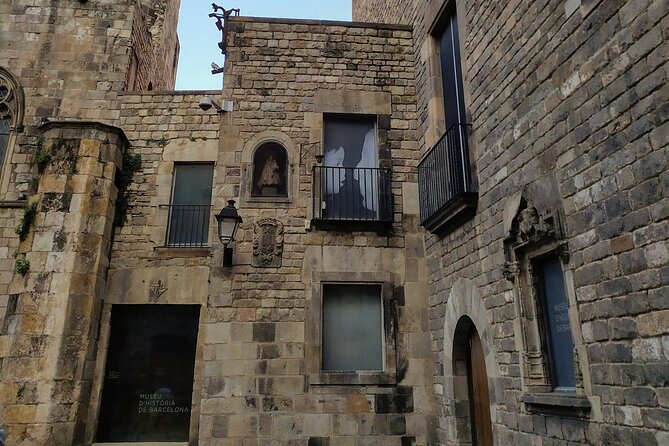
Església de Sant Felip Neri sits beside one of the old city’s most appealing little squares. The setting is calm and intimate, but Luca uses it to discuss the Spanish Civil War and the darker recent past of the area.
That contrast makes the stop memorable. The square may look like a peaceful pause in the route, yet its story is not simply charming. Luca also explains the church’s connection with Antoni Gaudí, who favored it during his lifetime.
The tour allows about 15 minutes here, with no admission charge. I appreciate that the route does not stop at postcard views. Barcelona’s history includes political violence, painful memory, and competing versions of the past. Luca approaches those subjects with energy and clear opinions, including a willingness to question the actions of famous historical figures.
Crossing into El Born and La Ribera
The walk then moves into El Born, also known as La Ribera, a major medieval neighborhood. This section takes about 30 minutes, making it the longest single part of the tour.
This is where the route feels especially useful. The Gothic Quarter and El Born are close together, but they have different identities and different stories. By walking between them, you can compare the political center, religious institutions, Jewish quarter, medieval trade district, and later civic spaces within one continuous route.
The streets can twist and turn, which is one reason this walk is hard to reproduce alone. Luca points out places you might otherwise miss and explains how the neighborhood functioned in the medieval city. You are not simply collecting sights. You are learning how the old districts fit together.
The walk covers about three miles overall. That is manageable for most people who are comfortable walking, but it is more exercise than the short duration may suggest. There are no details about restrooms or scheduled food breaks, so handle those needs before meeting the group.
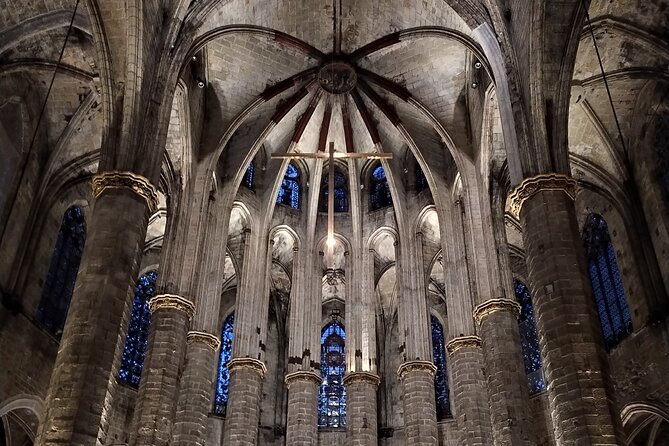
Santa Maria del Mar, a beloved church
The Basilica de Santa Maria del Mar receives a short stop of about 10 minutes. It is described as one of Barcelona’s most loved churches, and its place in El Born makes it a natural highlight of the route.
The tour’s listed stop is free, but the supplied details do not promise an interior visit. Treat this as a guided look at the church and its setting rather than a full basilica tour. If entering the church is important to you, check the arrangements before booking or plan to return separately.
I like the way Santa Maria del Mar follows the longer El Born section. By this point, you have the neighborhood’s medieval setting in mind, so the church is not just another Gothic building. It becomes part of a wider story about the people, institutions, and wealth that shaped the district.
El Fossar de les Moreres and Catalan memory
At El Fossar de les Moreres, Luca explains the political conflict between Madrid and Barcelona. This is a key stop for anyone who wants more than a surface-level introduction to Catalonia.
The site carries strong political meaning, and Luca uses it to clarify Catalan identity and the memory of conflict. His approach is direct rather than bland. He brings historical figures and decisions into question, which many people appreciate, though you should expect interpretation alongside the basic facts.
The stop lasts around 15 minutes and is free. I would listen carefully here, especially if you have heard modern arguments about Catalonia but lack the historical background to place them. The explanation gives later conversations and headlines more context.
Passeig del Born and the finish at El Born Centre
The final stop is Passeig del Born, once the medieval entertainment square of Barcelona. It is a short five-minute visit before the tour ends at El Born Centre de Cultura i Memòria, inside the Mercat del Born area on Plaça Comercial.
Ending here is practical. You are already in El Born, a district where you can continue walking, eat, shop, or revisit a site at your own speed. Luca’s food and sightseeing suggestions are particularly useful at this point, since you can put them to work immediately.
The end point also gives you a clear sense of the route’s movement. You begin with present-day political Barcelona at Plaça de Sant Jaume and finish in a historic market district tied to El Born’s medieval and modern identity.
Luca’s guiding style and the group size
The tour allows a maximum of 15 people, and smaller groups are possible. A group of six, for example, feels close to a private walk, while even a full group of 15 is much easier to manage than a large city tour.
Luca’s best qualities are his passion, humor, and ability to make connections across time. He has been described as friendly, interactive, and generous with personal recommendations. He also uses a binder filled with photographs, which helps when a building has changed or an event is difficult to picture from the street.
His style is energetic. He asks questions, welcomes discussion, and leaves room for the group to raise points. At times, the amount of information can feel heavy, especially because the route covers Roman, medieval, religious, political, and twentieth-century subjects in one session.
You should also know that Luca may speak quickly. If your English is limited, you might miss some of the finer details. For confident English speakers, his pace helps keep the walk lively.
Price, timing, and practical value
At about $13.27 per person, this is strong value. You are paying for roughly 2 hours and 15 minutes with a professional guide, and the route includes several free sites that would still be difficult to understand without explanation.
The value is not in paid entry. It is in the interpretation. The Roman columns, cathedral exterior, old Jewish quarter, Sant Felip Neri, Santa Maria del Mar, and El Fossar de les Moreres are all accessible areas, but a guide helps you see connections that a self-guided walk may miss.
The tour is offered in English and uses a mobile ticket. Confirmation arrives at booking, and free cancellation is available up to 24 hours before the start time. If you cancel later than that, the fare is not refunded.
Plan for weather. One person found the route uncomfortable in extreme heat because parts of the walk stayed in direct sun. I would bring water, wear a hat in hot weather, and choose comfortable shoes. The activity is not suitable for people with reduced mobility, although the route can be adapted to an individual pace, or arranged privately, according to the information provided.
Who should book Luca’s Barcelona walk?
I would choose this tour if you want Barcelona’s old center explained through history and politics rather than just photographed. It suits first-time visitors, people who like architecture, and anyone curious about Catalan identity and the city’s long relationship with Spain.
It is also a good first-day activity. You will leave with a mental map of the Gothic Quarter and El Born, plus a list of places to eat and explore on your own.
I would think twice if you want extensive interior visits, a slow photography walk, or a route designed for limited mobility. The tour is dense, sometimes sunny, and built around continuous walking.
Should you book it?
Book it if you want a lively, personal introduction to old Barcelona at a modest price. Luca’s strong subject knowledge, visual materials, humor, and practical food tips give the walk more substance than a simple list of monuments.
Skip it if you prefer to wander silently or want every major church explored inside. For most visitors who want to understand what they are seeing, this is a smart way to begin your Barcelona stay.
FAQ
How long does Luca’s Hidden Old Barcelona tour last?
The tour lasts approximately 2 hours and 15 minutes.
Where does the tour begin?
It begins at Pl. de Sant Jaume, 3, in Barcelona’s Ciutat Vella district.
Where does the tour end?
The walk ends at El Born Centre de Cultura i Memòria, Mercat del Born, Plaça Comercial, 12.
Is the tour offered in English?
Yes. The experience is offered in English.
How many people can join the group?
The tour has a maximum group size of 15 people.
Is the tour suitable for people with reduced mobility?
The tour is not designed for people with reduced mobility. The route can be adapted to an individual pace, and a private experience may be arranged according to the supplied information.
Recently added around Barcelona
- Montserrat very early : Hiking, Abbey, very small group★ 5.0 · 127 reviews
- Guided Private Yacht Tour in Barcelona Spain★ 5.0 · 6 reviews
- Private Tour from Barcelona to Montserrat (with guide)★ 4.5 · 6 reviews
- Private Tour from Barcelona to Costa Brava (with guide)★ 5.0 · 5 reviews
- Andorra Tour★ 4.0 · 7 reviews
- Barcelona Gaudi Tour: Sagrada Familia, Casa Batllo & Casa Mila★ 5.0 · 4 reviews
- Street Art, Sculptures & Crime Stories Walking Tour – Barcelona★ 5.0 · 11 reviews
- Wine Tasting in Barcelona (Catalan Varieties) Small Groups★ 5.0 · 10 reviews
Barcelona Gothic Quarter Tours, compared.
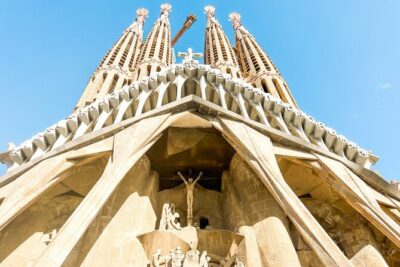
Barcelona all included: Sagrada, Park Güell, Montjuic & Gothic
Read our review →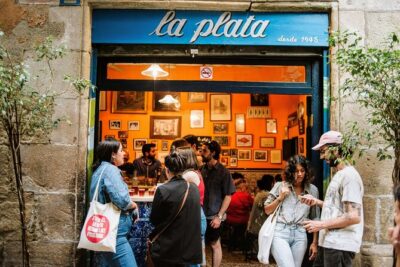
Barcelona Gothic Quarter Tapas & Taverns Food & Wine Tour
Read our review →
Gothic Quarter Ghosts and Legends Walking Tour
Read our review →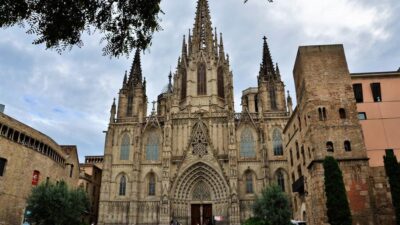
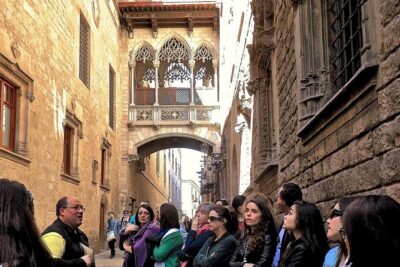
Barcelona Old Town & Gothic Quarter Small Group Tour
Read our review →
Ramblas, Old Town, Gothic and Gaudi Architecture Walking Tour
Read our review →
El Born and Gothic Quarter Wine & Tapas Bar Tour
Read our review →
Kids and Family Gothic Quarter Walking Tour in Barcelona
Read our review →Browse the lists this tour appears in