
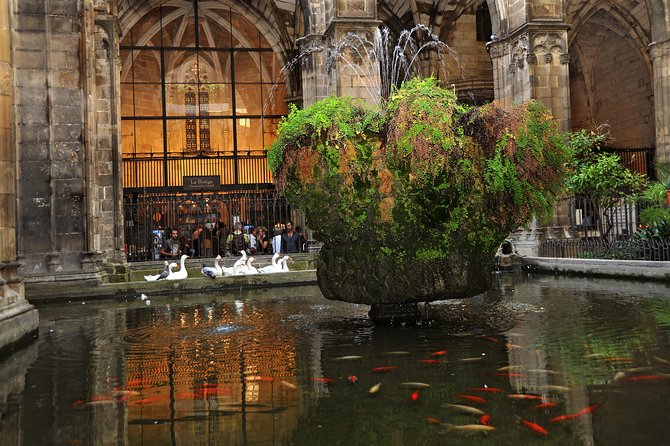
Reviewed · BARCELONA GOTHIC QUARTER TOURS
Barcelona: Gothic Quarter Walking Tour
Barcelona’s old city is best understood on foot, one crooked lane and small square at a time. This German-language tour traces Barcelona from Roman water systems to medieval power struggles, the Jewish Quarter, the Inquisition, the Spanish Civil War, and the waterfront churches of the Ribera.
I like the clear historical sweep, which connects ancient Barcelona with the city you see today. I also like the relaxed pace and practical advice, including restaurant, shopping, and local-food tips. The main limitation is simple: most monuments are viewed from outside, so you will need separate tickets if you want to see their interiors.
Key points at a glance
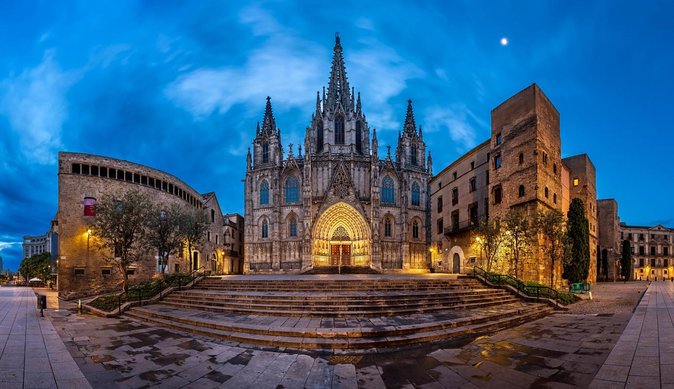
- Roman beginnings to Bourbon revenge: Follow Barcelona’s story across Roman, medieval, royal, and early modern chapters.
- German-language guiding: A guide such as Johannes can adjust the walk to your interests and add photos to explain places that are hard to picture from the street.
- Gothic Quarter and Ribera together: The route links the old city lanes with the district around Santa Maria del Mar and Passeig del Born.
- Exterior sightseeing: You see courtyards, churches, squares, walls, and façades, but interior entry fees are not included.
- A calm 3.5-hour walk: There is time for photos and bathroom breaks, though the stone streets can still make the outing tiring.
- Good value for up to four people: At $212 per group, the price works best when shared by a small family or group of friends.
Why this old-city walk is more than a photo stop
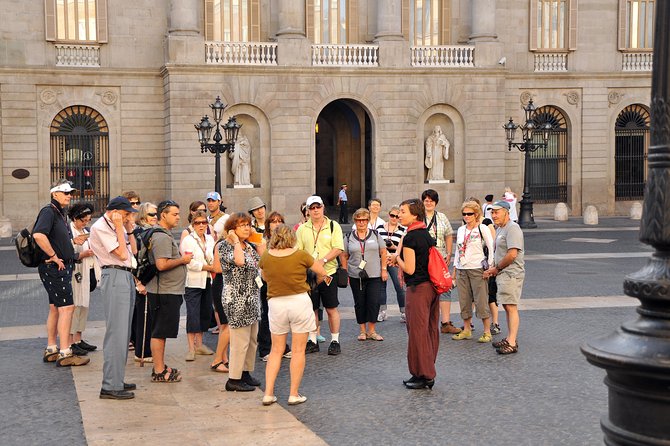
Many people first meet Barcelona through Gaudí, beaches, and wide modern streets. This walk takes you somewhere older and less tidy: a web of narrow lanes, quiet corners, grand civic buildings, religious sites, and worn stone. The point is not to rush from landmark to landmark. It is to understand how the city grew, fought, traded, prayed, and changed.
I like the way the route treats Barcelona as a living port city rather than a museum frozen in the Middle Ages. The guide connects old streets with present-day life, so the tour can help you get your bearings early in a visit.
The subject list is unusually broad. You will hear about Roman luxury, the Crown of Aragon, the Jewish Quarter, the Inquisition, the Bourbon response to rebellion, the Spanish Civil War, and the city’s relationship with the sea. Some themes are grim. That is useful. Barcelona’s past includes religious persecution, political violence, military defeat, and lost communities, not only pretty plazas and romantic legends.
The tour is conducted in German and is listed as a private group experience. The price is $212 for up to four people. If four people join, that works out to $53 each. For two people, it becomes $106 each, so the value depends heavily on your group size and how much you value a German-speaking guide who can respond to your questions.
More Barcelona Gothic Quarter Tours:
- Barcelona all included: Sagrada, Park Güell, Montjuic & Gothic
★ 5.0 · 2,169 reviews - Barcelona Gothic Quarter Tapas & Taverns Food & Wine Tour
★ 5.0 · 1,470 reviews - Barcelona: Gothic Quarter Ghosts and Legends Walking Tour
★ 4.7 · 1,443 reviews
Starting at Plaça de Catalunya
The meeting point is in front of the Hotel Olivia Plaza at Plaça de Catalunya, 19. This is a practical place to begin because the square sits at the meeting point of Barcelona’s newer central districts and the old city.
From here, you move toward the Gothic Quarter rather than starting inside its maze. That gives the guide a useful chance to explain how Barcelona’s central areas relate to one another before the streets tighten and the buildings close in.
I recommend arriving with comfortable shoes and a little water. The walk is described as relaxed, but three and a half hours on old paving can still be tiring. One recent German-language assessment called the experience strenuous while still rating it highly, a fair warning for anyone expecting a short stroll.
The route runs in sun, rain, and wind, including strong showers. In summer, bring a hat, sunglasses, sunscreen, and water. In winter, a jacket or light coat should be enough according to the tour information.
Roman Barcelona and the first layers of the city
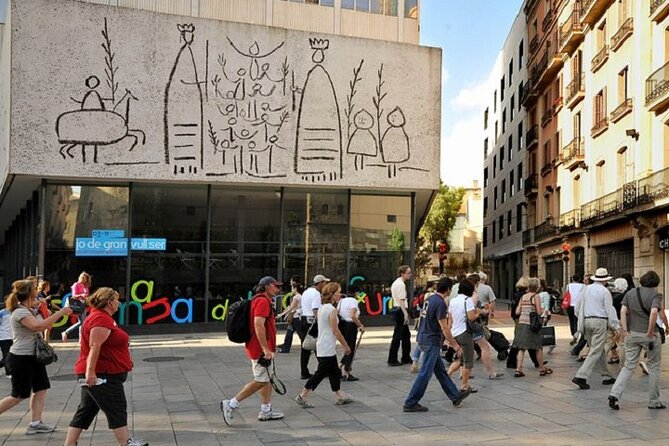
The opening historical material reaches back to Roman Barcelona. One topic is Roman luxury and the use of flowing water for a convalescent colony. That detail helps you picture the city as more than a military outpost. Water, health, and comfort were already part of urban life.
I find Roman material most useful when it is tied to what you can see in the street. You are not simply memorizing dates. You are learning to notice how later Barcelona was built over earlier settlements, with old lines and stones surviving beneath newer façades.
The tour then moves into the growth of a holy city and the birth of a nation. The language used for these themes hints at conflict rather than a neat national story. Expect political and religious power to overlap, with alliances and violence shaping the city’s future.
This section gives the rest of the walk a frame. Barcelona did not suddenly become a medieval capital. It grew through layers of Roman rule, Christian authority, local institutions, royal ambition, and commercial power.
Small lanes, romantic squares, and darker stories
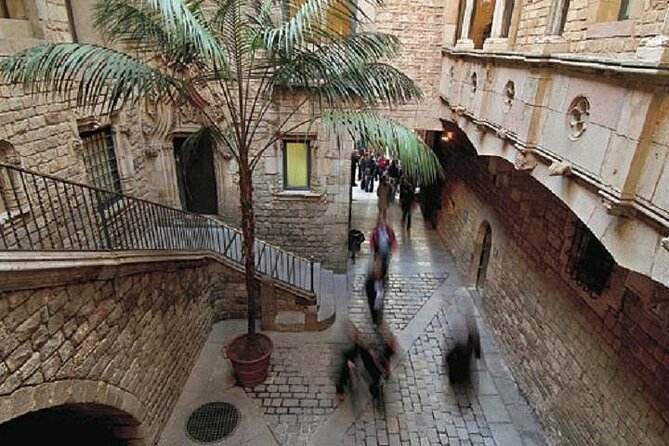
The Gothic Quarter rewards slow walking, but it can also confuse you. Lanes turn sharply, plazas appear without warning, and a building that looks medieval may not be as old as it seems. That is where a guide adds real value.
One of the tour’s more unusual subjects is how a Gothic theme park came to be, including stories of houses being moved stone by stone. That is a useful corrective to the common habit of treating every old-looking wall as untouched medieval fabric.
The walk also includes a slightly spooky brotherhood, the young girl in the pines, and the French soldier’s bayonet. These titles suggest a tour that uses legends and vivid incidents to keep the history human. You will probably remember a strange story longer than a list of rulers.
Still, I would keep your expectations grounded. This is an outdoor history walk, not a theatrical performance. The guide may tell colorful stories, but the tour’s real strength is the connection between those stories and the places around you.
More Barcelona Walking Tours:
- Barcelona Tapas and Wine Experience Small-Group Walking Tour
★ 5.0 · 5,804 reviews - Barcelona: Tapas Walking Tour with Food, Wine, and History
★ 4.8 · 4,261 reviews - Barcelona Tapas Walking Tour: Food, Wine & History
★ 4.5 · 1,928 reviews - Barcelona: Tapas Food Crawl Walking Tour with Tastings
★ 4.9 · 1,798 reviews
The Crown of Aragon and Barcelona’s maritime power
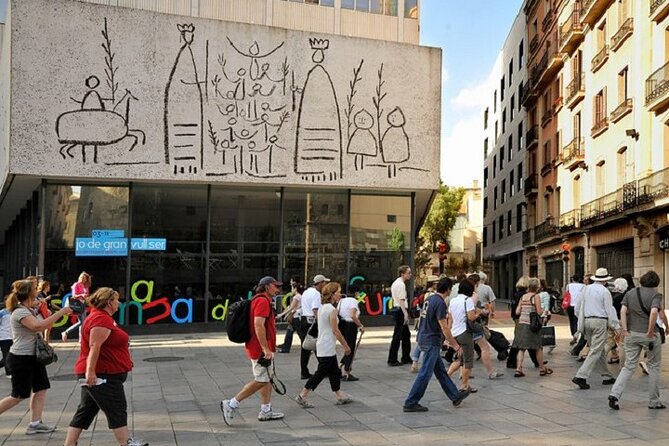
One of the central chapters covers the Crown of Aragon and the change from a small city into a maritime force. This is where Barcelona’s position on the Mediterranean begins to make more sense.
You learn how royal power, trade, civic institutions, and sea routes helped shape the city. The story is not only about kings. It also includes the people and institutions that made decisions in the city, including the advice of the hundreds and the general.
The death of King Martin is presented as a turning point and the beginning of the end of local codetermination. That subject gives you a glimpse of Barcelona’s political tensions without reducing them to a simple tale of good rulers and bad rulers.
I like this part because it explains why the Gothic Quarter contains such a mix of religious buildings, public spaces, royal residences, and merchant influence. The stones are not random decoration. They reflect a city that gained power through administration, commerce, and connections across the Mediterranean.
The Jewish Quarter and the cost of religious control
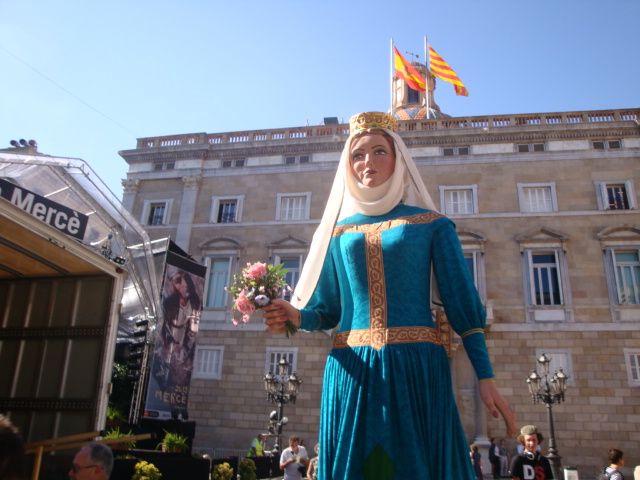
The old Jewish Quarter is one of the most important stops for understanding what disappeared from Barcelona. The walk deals with the remnants of a lost world, then moves toward the Inquisition and the so-called hound kings.
This section should matter to you even if religious history is not your main interest. It shows how a neighborhood can survive physically while the community that gave it meaning is gone. Narrow lanes and old walls cannot tell that story by themselves.
The Inquisition also shifts the mood of the tour. Praise, accusation, and religious control could carry serious danger. The subject list includes a warning that praise was nothing to play with, a memorable way of pointing to the risks of public speech and authority.
The tour does not promise interior visits to religious or historic sites. You will generally view monuments from outside, with a few exceptions. That keeps the walk moving, but it also means you should plan separate visits if a particular interior matters to you.
Royal power, Columbus, and a palace full of tension
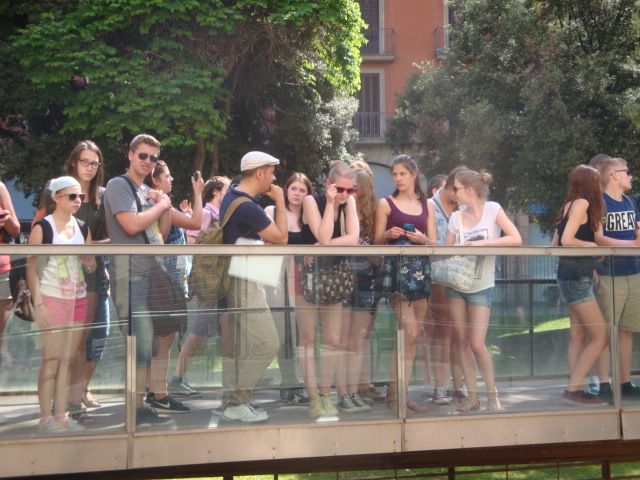
The royal palace section brings together ceremony and fear. You hear about King Fernando confronting his fears and not receiving Columbus at home. Stories like this help move royal history away from a list of names and toward decisions made in real rooms by people under pressure.
The tour also includes Watch that egg dance, a reference to a distinctly Barcelona tradition associated with Corpus Christi. It is the kind of small cultural detail that gives the walk texture. Not every memorable part of the old city is a cathedral or palace. Some are local customs that reward attention.
A guide may also bring photographs to help you understand changes that are difficult to see from the pavement. One especially useful feature of the German-language walk is the use of additional images, which can make past buildings, events, or altered streets easier to picture.
Santa Maria del Mar and the Ribera Quarter
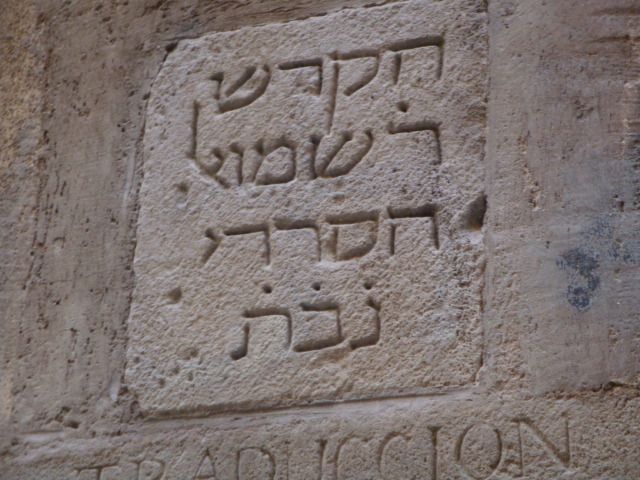
The route finishes in the Ribera Quarter, near Passeig del Born, 22. Santa Maria del Mar is one of the key sights along the way. The church is presented as the first collaborative project, with legends and heroes tied to its story.
Even from outside, Santa Maria del Mar gives the district a strong sense of scale and purpose. Its story belongs not only to kings and bishops, but also to the people who built, funded, and used it. That makes it a natural bridge between Barcelona’s religious life and its commercial neighborhoods.
The Ribera Quarter feels different from the tighter lanes of the Gothic Quarter. The transition helps you see that the old city is not one uniform block. Each area has its own political and commercial past, even when the streets appear close together on a map.
The tour ends at Passeig del Born, 22, so you finish in a useful location for continuing your day. The walk does not include admission to the church or other paid interiors, and the exact access available on the day can depend on the site.
Civil War scars and the mulberry grave
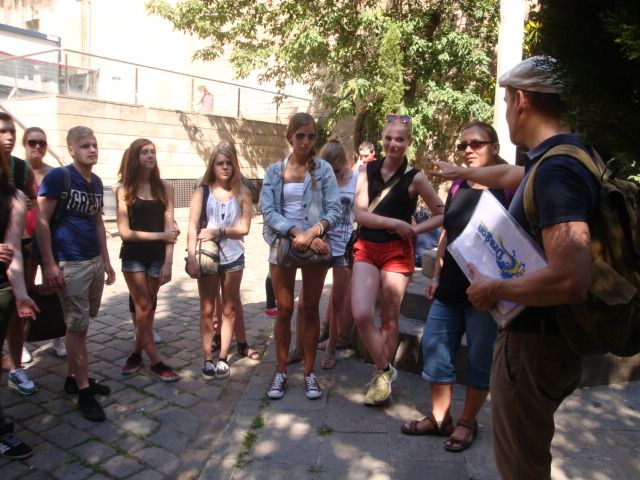
The tour includes a romantic place called My Immortal, followed by the scars of the Spanish Civil War. That pairing captures Barcelona’s habit of holding beauty and pain close together.
You also hear about the mulberry grave, the vengeance of the Bourbon kings, and the head of the general. These subjects point to the harsh aftermath of political defeat. The old city was not only shaped by medieval kings and maritime trade. It was also marked by later repression and the loss of local power.
I appreciate that the walk does not polish away these harder chapters. You should expect some disturbing material alongside the legends, churches, and picturesque squares. If you prefer a light tour focused only on architecture, this may feel heavy at times. If you want a fuller view of Barcelona, the difficult parts are essential.
What the pace and access are really like
The advertised duration is 3.5 hours. The route description also breaks the experience into roughly three hours of city touring and a little over three hours of walking and sightseeing. In practical terms, set aside most of a half day.
You will walk through streets and squares rather than spend long periods inside buildings. The guide allows time for photographs, pauses, and bathroom breaks, so the pace is not meant to be a forced march.
The route is listed as wheelchair accessible, but old-city paving and narrow streets can still affect comfort. The most useful step is to confirm current route conditions if smooth surfaces are important for you.
For a cloister visit, you must wear clothing that reaches at least the knees and covers your shoulders. This is a small point, but it can prevent an awkward interruption. Since interior visits are generally not included, treat the cloister as a specific exception rather than a promise of broad building access.
German guiding and the value of personal attention
This tour makes the most sense for German-speaking visitors who want more than a basic orientation walk. The guide can explain complicated political and religious subjects in your own language, and the private-group format allows the pace and emphasis to respond to your group.
Johannes is one guide associated with the experience. A German-language walk with him has included personal attention to the group’s needs, extra photographs, and practical suggestions for restaurants, shopping, and local specialties. I would see those tips as a useful bonus, especially if this is your first time in Barcelona and you still need help planning the rest of your stay.
The private price is strongest for up to four people. A couple pays more per person, but gains a more personal format. A family or group of friends can spread the cost and ask questions without being lost in a large crowd.
The published rating is 4.9 from 383 reviews, and the repeated praise focuses on structure, detail, personal adjustments, useful local advice, and guides who make the walk enjoyable. I would not treat a high score as a guarantee of a perfect experience. The subject matter is dense, the walk is long, and the old paving can be tiring. Still, those strengths point to the areas where this tour is most likely to deliver value.
Who should book this Gothic Quarter tour?
I would choose this walk if you speak German and want political, religious, and social history alongside architecture. It is also a strong first-day choice because the route gives you a mental map of the old city and ends near the Ribera Quarter.
It suits curious adults, families with older children, and small groups who enjoy stories with some darker turns. The relaxed pacing helps, and the guide can stop for photos or adjust to your interests.
I would hesitate if you want substantial interior access, a short walk, or a tour focused mainly on Gaudí. This is not a ticketed church tour or an art museum visit. Its value comes from the streets, the connections between places, and the guide’s explanation of what happened there.
Should you book it?
Book this tour if your group can use German, values a private experience, and wants Barcelona’s old city explained through several centuries rather than reduced to a few famous façades. At $212 for up to four people, it is a reasonable half-day splurge for a small group, especially when the guide adds practical advice for the rest of your stay.
Skip it if you mainly want interiors or a quick introduction. You will see most sights from outside and should budget extra time and money for museums, churches, and paid attractions. For the right group, though, the walk turns the Gothic Quarter from a maze of photogenic streets into a city with arguments, losses, ambitions, and living traditions.
FAQ
Where does the Barcelona Gothic Quarter walking tour begin?
It begins in front of the Hotel Olivia Plaza at Plaça de Catalunya, 19, 08002 Barcelona.
Where does the tour finish?
The tour finishes at Passeig del Born, 22, 08003 Barcelona.
How long does the experience last?
The stated duration is 3.5 hours. The walk itself is described as a relaxed city tour lasting about three hours, with time for photos and bathroom breaks.
What language is the tour conducted in?
The live tour guide speaks German.
Is this a private tour?
The activity is listed as a private group experience, with a price of $212 for a group of up to four people.
Are interior visits and entry fees included?
No. Interior visits and entry fees are not included. Monuments are generally viewed from the outside, with a couple of exceptions.
What should I wear for the cloister visit?
For the cloister, wear clothing that reaches at least the knees and covers your shoulders.
Recently added around Barcelona
- Montserrat very early : Hiking, Abbey, very small group★ 5.0 · 127 reviews
- Guided Private Yacht Tour in Barcelona Spain★ 5.0 · 6 reviews
- Private Tour from Barcelona to Montserrat (with guide)★ 4.5 · 6 reviews
- Private Tour from Barcelona to Costa Brava (with guide)★ 5.0 · 5 reviews
- Andorra Tour★ 4.0 · 7 reviews
- Barcelona Gaudi Tour: Sagrada Familia, Casa Batllo & Casa Mila★ 5.0 · 4 reviews
- Street Art, Sculptures & Crime Stories Walking Tour – Barcelona★ 5.0 · 11 reviews
- Wine Tasting in Barcelona (Catalan Varieties) Small Groups★ 5.0 · 10 reviews
Barcelona Gothic Quarter Tours, compared.
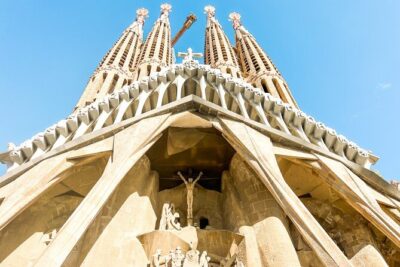
Barcelona all included: Sagrada, Park Güell, Montjuic & Gothic
Read our review →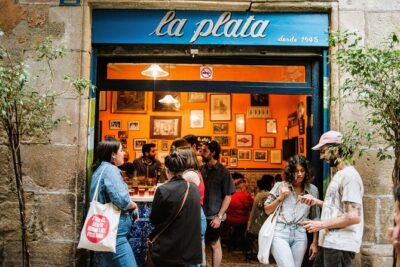
Barcelona Gothic Quarter Tapas & Taverns Food & Wine Tour
Read our review →
Gothic Quarter Ghosts and Legends Walking Tour
Read our review →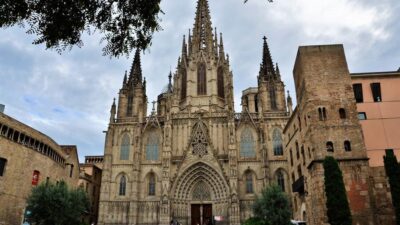
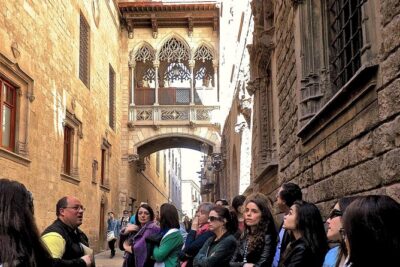
Barcelona Old Town & Gothic Quarter Small Group Tour
Read our review →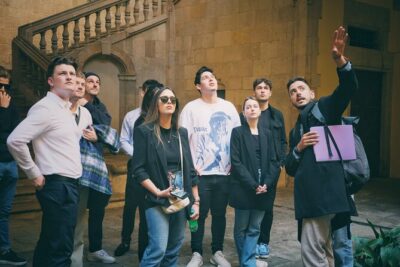
Ramblas, Old Town, Gothic and Gaudi Architecture Walking Tour
Read our review →
El Born and Gothic Quarter Wine & Tapas Bar Tour
Read our review →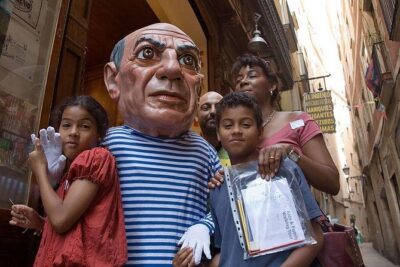
Kids and Family Gothic Quarter Walking Tour in Barcelona
Read our review →Browse the lists this tour appears in