Reviewed · TICKETS
Món Sant Benet Monastery Tickets
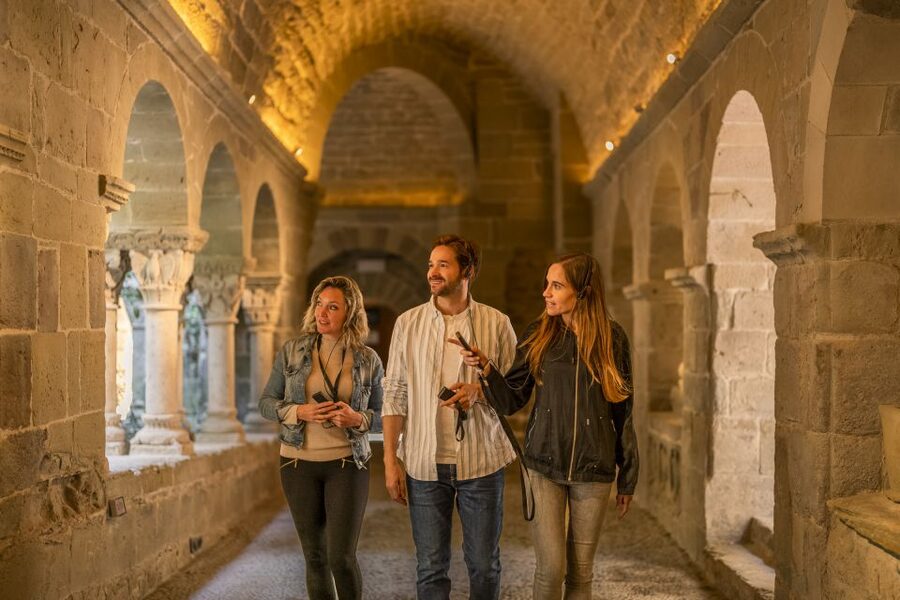
Món Sant Benet turns a 1,000-year-old monastery into a surprisingly vivid visit. As you move through the church, cloister, wine cellar, and monastic cells, recorded voices, old sounds, and images help bring daily life back into the stone rooms.
I like the way the audio presentation makes Catalan history easy to follow, and I like the chance to pair culture with a meal afterward. The main drawback is distance: the monastery is about 68 kilometers from Barcelona, so it works best as a planned outing rather than a quick city stop.
Key points to know before you go
- The monastery visit lasts about 1.5 hours, with an audio guide included.
- The route covers the church, cloister, wine cellar, and Montserrat gallery cells, giving you a broad look at monastic life.
- The museum connects local monastery life with Catalonia’s social history, stretching across roughly a millennium.
- Audio guides are available in Catalan, English, Spanish, and French, so you can follow the story at your own pace.
- Three restaurants are available on site, including Michelin-starred L’Ó, but meals cost extra.
- The site is wheelchair accessible, and you can cancel up to 24 hours ahead for a full refund.
Why Món Sant Benet feels different from a standard monastery visit
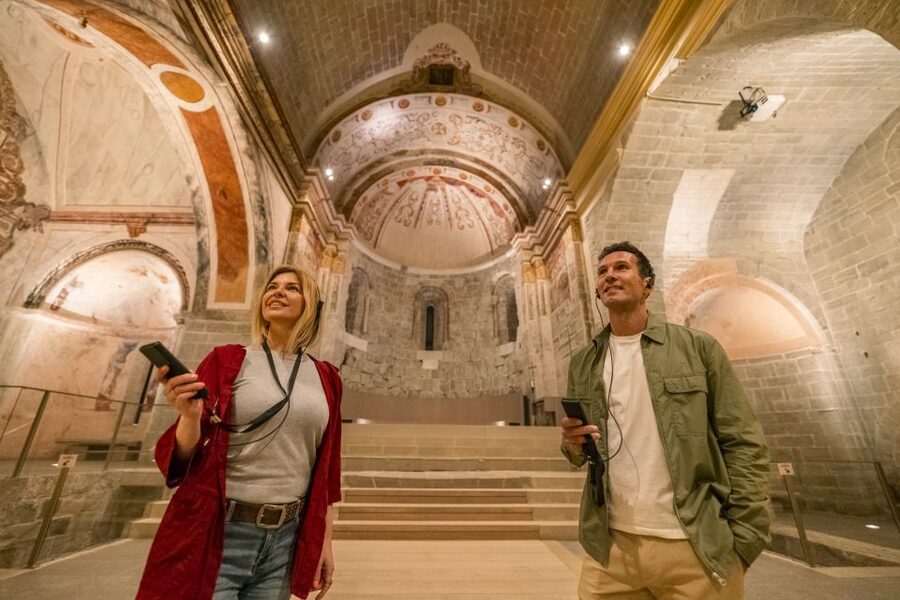
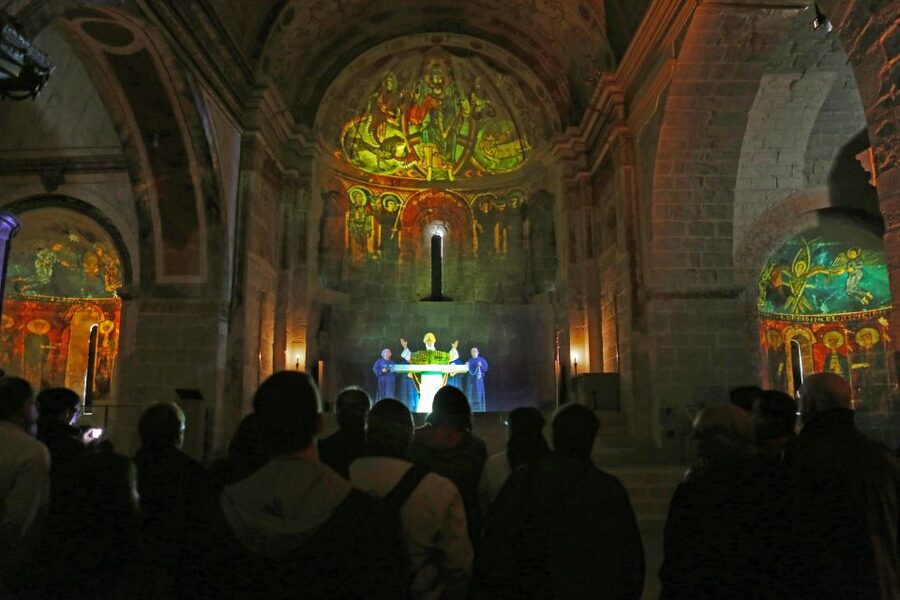
Many old monasteries ask you to admire stonework and imagine the past for yourself. Món Sant Benet takes a more theatrical route. The walls, rooms, voices, everyday noises, and projected images work together to explain how the monastery functioned and how Catalan society changed around it.
That approach makes the visit especially useful if you enjoy history but do not want a long lecture. You are not simply looking at an empty church or a silent cloister. The audio guide gives the rooms a human scale, helping you picture the people who lived, worked, prayed, and ate there.
I would describe the experience as part museum and part historical presentation. It is carefully arranged, but it does not depend only on dates and names. Its strongest feature is the link between physical space and sound. A cellar feels different when you hear its working life explained. A cell feels more meaningful when you consider the routines that once filled it.
The focus also reaches beyond the monastery itself. The museum uses Món Sant Benet to tell a wider story about Catalonia over the last thousand years. That gives the visit more weight than a simple look around a religious building.
More Tickets in Barcelona:
- Barcelona: Park Güell Admission Ticket
★ 4.4 · 76,534 reviews - Barcelona Aquarium: Entry Ticket
★ 4.3 · 13,335 reviews - Barcelona: Sagrada Familia Skip-the-Line Entry Ticket & Tour
★ 4.8 · 12,789 reviews
Starting at La Fabrica reception
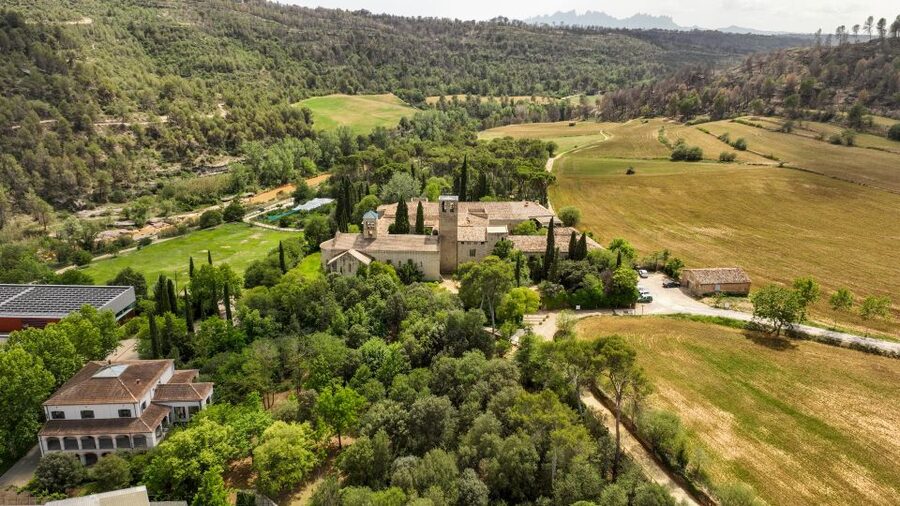
Your visit begins at La Fabrica, the Món Sant Benet reception point on Camí de Sant Benet in Sant Fruitós de Bages. This is also where the activity ends, so you return to the same general meeting point after the route.
That arrangement is simple, but it is worth paying attention to if you are planning your day. The monastery is not in central Barcelona. At roughly 68 kilometers away, you need to allow time to reach Sant Fruitós de Bages and return. The ticket covers the monastery experience, not your transport to the site.
Once you arrive, check the available starting time when booking. The stated visit lasts about 1.5 hours, but you may want extra time around it if you plan to eat at one of the restaurants. The visit itself is fairly focused, while a meal can turn the outing into a longer cultural day.
The church and first look at monastic life
The church is one of the principal spaces on the route. Here, the age of the complex becomes clear through its architecture and atmosphere. The audio guide gives context as you look around, making it easier to connect the building’s design with the religious life once carried out inside it.
The experience is not presented as a dry architectural survey. The sound and image elements are intended to create a sense of the people and routines behind the building. That matters because old churches can be hard to read without help. You may notice the stone, proportions, and decoration, but the audio fills in the daily setting.
If you have an interest in Catalan Romanesque art, this part of the visit should hold particular appeal. The French-language feedback specifically praises the experience as clear and educational for people interested in Catalan Romanesque art. Even if that is not your main interest, the presentation gives you enough background to understand why the church matters.
Do not expect a long guided tour led by a named live guide. The ticket includes an audio guide, and no individual guide is named in the available information. That means you control the pace, but you also need to stay attentive and follow the route yourself.
The cloister, where the monastery opens up
The cloister provides a change from the enclosed church. Its form helps explain how a monastery was organized, with a central open space linking different parts of the complex.
This is the kind of place where an audio guide earns its keep. A cloister can look peaceful and attractive, but its purpose is not always obvious to a first-time visitor. The narration helps connect the architecture with the life of the community.
I especially like the way the route combines broad history with small physical details. You are not asked to learn Catalan history in the abstract. You are given rooms and features that make the story easier to grasp. The result is more direct than reading a timeline in a museum gallery.
Take your time here if the schedule allows. The official duration is 1.5 hours, so the route is not designed as a full-day historical study. Still, the cloister is one of the spaces where pausing can help you absorb the setting rather than simply moving from one stop to the next.
A different sort of day out in Barcelona:
- Barcelona: Casa Batlló Entry with Self-Audioguide Tour
★ 4.7 · 25,359 reviews - Barcelona: 24 or 48-Hour Hop-On Hop-Off Bus Tour
★ 4.4 · 20,872 reviews - Barcelona: Park Guell Guided Tour with Skip The Line Entry
★ 4.7 · 17,563 reviews - Barcelona in 1 Day: Sagrada Familia, Park Guell,Old Town & Pickup
★ 5.0 · 13,541 reviews
The wine cellar and working side of the complex
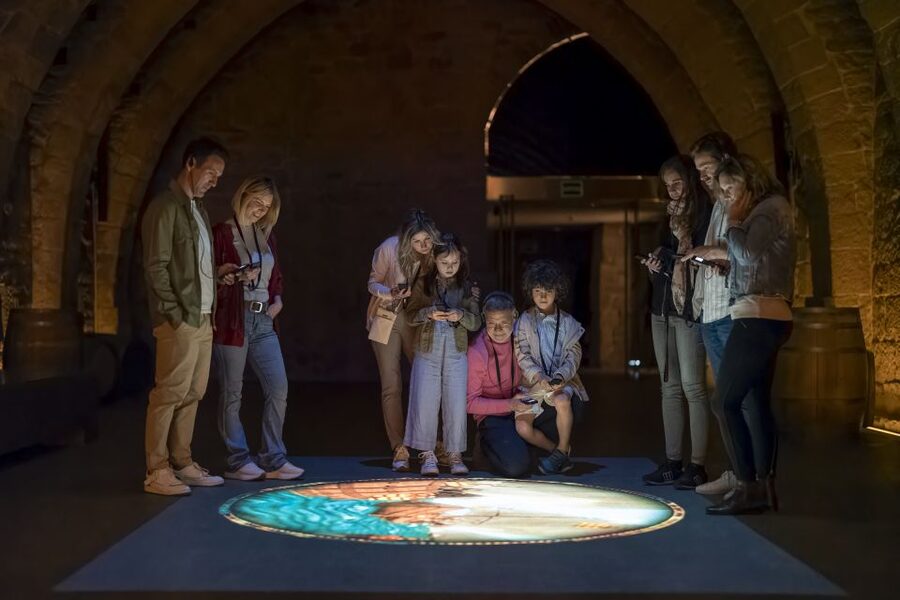
The wine cellar adds a practical side to the visit. It reminds you that a monastery was not only a place of worship. It was also a working community with food, storage, and daily tasks.
This stop broadens the story beyond religious art. The cellar helps show how the complex functioned as a real place, not just as an architectural monument preserved for modern visitors. The guide’s use of voices and everyday sounds is particularly suited to rooms like this, where work and routine are central to the story.
For me, this is one of the most useful parts of the route because it helps balance the grander spaces. The church may attract the eye, but the cellar explains how people actually lived within the wider monastic system.
The visit does not provide a meal or wine tasting as part of the ticket. You are seeing the wine cellar as one element of the monastery museum. If food and drink are a major reason for your visit, plan to use one of the restaurants separately.
The Montserrat gallery cells and personal space
The cells in the Montserrat gallery offer a closer look at individual monastic life. The word monastery can sound grand and impersonal, but cells bring the story down to the level of one person and one room.
The museum uses these spaces to explore the social evolution of Catalonia as well as the monastery’s own past. That wider focus is important. You are not only learning what happened inside Món Sant Benet. You are also seeing how a religious institution fits into a much larger regional story.
The cells may be the most effective part of the visit for anyone interested in ordinary routines. Churches and cloisters show communal and formal life. Cells suggest privacy, discipline, and repetition. Together, the different spaces create a fuller picture of the complex.
The audio format also helps here. Rather than leaving you to guess what a small room meant, the narration gives you a framework. The tone is designed to be emotional and accessible, which may appeal to families and casual sightseers as much as to serious history fans.
A museum about Catalonia, not only a monastery
The museum’s larger purpose is to trace important points in Catalan history and social change over the last millennium. That makes Món Sant Benet a useful stop if you want regional context beyond Barcelona’s famous streets and architecture.
You will not get a full history course in 1.5 hours. The strength is selection. The museum uses the monastery as a doorway into wider subjects, then keeps the story tied to the rooms you are visiting.
This is also why the experience received praise for being highly educational and easy to follow. The content is organized for people who may know little about Catalonia before arriving. At the same time, someone already interested in Catalan Romanesque art can find more to appreciate in the building itself.
The presentation is emotional rather than purely academic. Voices and old sounds are used to make the past feel close. That can make the visit memorable, though visitors who prefer a quiet, label-based museum may find the multimedia style more directed than expected.
The audio guide and available languages
The audio guide is included in the admission price. You can choose from Catalan, English, Spanish, or French, which makes the experience accessible to a wide range of visitors.
An audio guide gives you flexibility. You can listen carefully in one room, move at your own speed, and spend more time on features that interest you. It also avoids the pressure of keeping up with a live group.
The tradeoff is that the experience depends on your willingness to listen as you move through the complex. If you prefer asking questions in real time, you may miss that personal exchange. No live guide or guide name is provided for this activity.
For most people, the audio format suits the site well. The monastery has several distinct areas, and the narration can explain how each one fits into the whole. It also supports the museum’s use of sound and visual material, rather than treating the building as a silent shell.
Three restaurants, including L’Ó
Món Sant Benet is designed as more than a museum stop. You can stay afterward for food at three restaurants on the site, with meals paid separately.
The most notable option is Michelin-starred L’Ó. That makes the outing appealing to people who want to combine history with a serious meal. It also changes how you should think about the $18 admission. The ticket is not a meal package, but it gives you access to a cultural visit that can anchor a longer day of dining.
Fine dining is not essential to enjoying the monastery, and you should not book the ticket expecting restaurant access to be included. Check the restaurant arrangements separately if you have a particular dining plan in mind. The available information confirms the restaurants and L’Ó’s Michelin star, but not menus, opening times, or table availability.
I like the choice this gives you. You can visit the monastery and leave after 1.5 hours, or turn the trip into a relaxed combination of history and food. That flexibility makes the site suitable for different budgets, although the restaurant bill can raise the total cost well beyond the admission price.
Is $18 good value?
At $18 per person, the ticket is reasonably priced if you value guided historical interpretation. You are paying for access to a substantial medieval complex, an audio guide, and a museum presentation that covers both the monastery and Catalonia’s wider story.
The value is strongest when you take time to listen. If you rush through the rooms and treat the visit as a quick photo stop, the ticket may feel less worthwhile. The experience is built around context, sound, and interpretation rather than a large number of separate attractions.
The price also compares favorably with the length of the visit. One and a half hours is long enough to make the trip worthwhile, but short enough to fit around lunch or another plan in the area. Since the monastery is outside Barcelona, remember that transport costs and time belong in your overall budget.
The option to reserve now and pay later may help if you are still arranging your day. Free cancellation up to 24 hours before the visit adds useful flexibility, especially since the site is far enough from Barcelona that plans can change.
Who should book this experience?
I would recommend Món Sant Benet to you if you enjoy medieval buildings but want more than architecture alone. It is also a good match if you are interested in Catalan history, Romanesque art, museum storytelling, or the daily life of religious communities.
Families may appreciate the voices and sounds, which can make old stone rooms easier for younger visitors to understand. The flexible audio format also means you are not locked into the pace of a large group.
Food-focused visitors have another reason to come, since three restaurants are available and L’Ó offers a Michelin-starred option. Just keep the dining cost separate from the $18 ticket.
The main group I would caution is anyone with only a short stay in Barcelona. The 68-kilometer distance means this is not a convenient quick detour. If you have the time for a planned outing, the combination of history, museum presentation, and dining makes more sense.
The site is wheelchair accessible, which is useful for visitors who need an accessible cultural attraction. Specific route details are not provided, so if you need information about particular rooms or surfaces, confirm those details before booking.
Should you book Món Sant Benet?
Book it if you want a clear, sensory introduction to Catalan history inside a real medieval monastery. The strongest reasons are the well-structured 1.5-hour route, the audio guide in four languages, and the way the church, cloister, cellar, and cells each reveal a different part of monastic life.
Skip it if you want a central Barcelona attraction or a completely self-directed visit with no multimedia presentation. The distance takes planning, and the audio-led format may not suit everyone.
For most visitors who can spare the travel time, $18 is a fair price for a focused cultural visit. Add a meal if you want a fuller day, but judge the ticket on the monastery and museum experience alone. That is where Món Sant Benet earns its place on your Catalonia itinerary.
FAQ
Where is Món Sant Benet located?
Món Sant Benet is in Sant Fruitós de Bages, Catalonia, about 68 kilometers from Barcelona. The meeting point is La Fabrica reception on Camí de Sant Benet.
How long does the visit last?
The activity lasts about 1.5 hours. Check availability for the specific starting times.
What is included in the ticket?
The ticket includes entrance to Món Sant Benet with an audio guide.
Which languages are available for the audio guide?
The audio guide is available in Catalan, English, Spanish, and French.
What parts of the monastery can I see?
The route includes the church, cloister, wine cellar, and the cells in the Montserrat gallery.
Is the visit wheelchair accessible?
Yes, the activity is listed as wheelchair accessible.
Are meals included in the ticket?
No. You may eat at one of the three restaurants on site, but dining is at your own expense.
Does Món Sant Benet have a Michelin-starred restaurant?
Yes. One of the three restaurants is L’Ó, which has a Michelin star.
Where does the activity end?
The activity ends back at the meeting point at La Fabrica reception.
Can I cancel the booking?
Yes. You can cancel up to 24 hours in advance for a full refund. You can also reserve now and pay later.
Recently added around Barcelona
- Montserrat very early : Hiking, Abbey, very small group★ 5.0 · 127 reviews
- Guided Private Yacht Tour in Barcelona Spain★ 5.0 · 6 reviews
- Private Tour from Barcelona to Montserrat (with guide)★ 4.5 · 6 reviews
- Private Tour from Barcelona to Costa Brava (with guide)★ 5.0 · 5 reviews
- Barcelona Gaudi Tour: Sagrada Familia, Casa Batllo & Casa Mila★ 5.0 · 4 reviews
- Street Art, Sculptures & Crime Stories Walking Tour – Barcelona★ 5.0 · 11 reviews
- Andorra Tour★ 4.0 · 7 reviews
- Wine Tasting in Barcelona (Catalan Varieties) Small Groups★ 5.0 · 10 reviews
Tickets, compared.

Sagrada Familia Skip-the-Line Entry Ticket & Tour
Read our review →
FC Barcelona Museum “Barça Immersive Tour” Ticket
Read our review →
Park Guell Guided Tour with Skip the Line Ticket
Read our review →
Park Guell and Sagrada Familia Tour with Skip the Line Tickets
Read our review →
Park Güell and Gaudí House Museum Entry Ticket
Read our review →