
Reviewed · BARCELONA
Intensive Ceramic Handbuilding Course
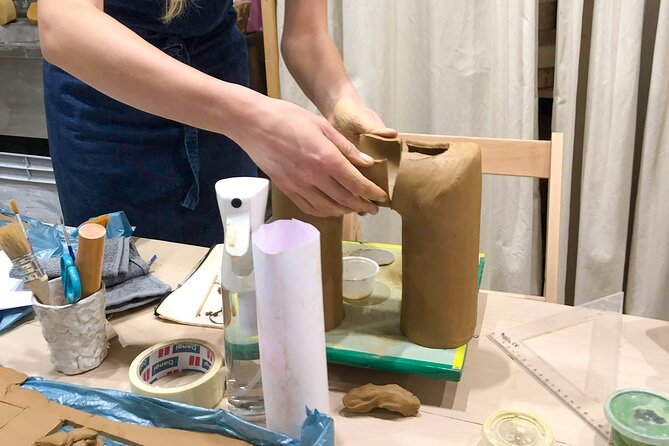
Barcelona has plenty of ways to fill a day, but this course gives you something more lasting than another set of photos. Over five consecutive mornings, you work with clay, learn practical handbuilding methods, and build pieces in a working studio led by Wendy and Eric.
I like the small class size of up to eight and the steady rhythm of two hours of teaching followed by two hours of personal work. I also like that you can follow your own ideas instead of making one standard souvenir. The main catch is time: this is a serious 20-hour course, not a casual one-off workshop, and your finished pieces may not be ready before you leave Barcelona.
Key points to know before booking
- Five four-hour classes: Meet Monday through Friday at 10:00 am for a focused week of studio work.
- Personal instruction: Wendy leads the course, with individual guidance during the construction sessions.
- Good for beginners: No previous ceramics experience is needed, and the course also suits people with existing skills.
- Bring your own ideas: You can create functional or sculptural work, with room for teapots, vases, cups, stamps, and more.
- Five pieces can be fired: Each student may select up to five items for kiln firing.
- Nearly everything is supplied: Clay, tools, aprons, kiln firings, and Wi-Fi are included. Shipping is extra if you want your work sent on.
Five mornings at a Barcelona ceramics studio
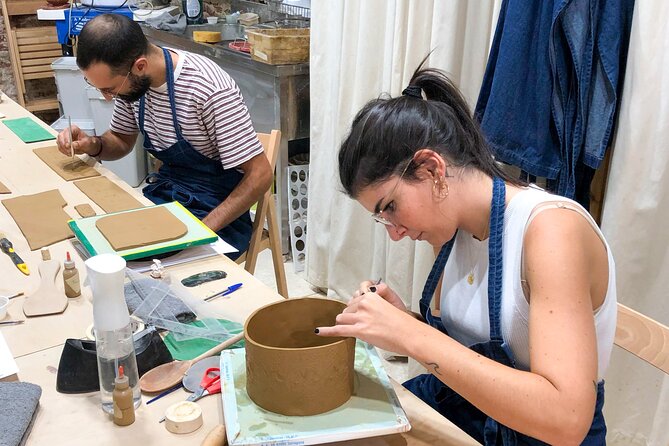
The course takes place at Taller Gingell on Carrer de Salvà, 71, in the Sants-Montjuïc area of Barcelona. You meet at 10:00 am and return to the same studio after each session. The location is near public transportation, which matters because you will be carrying the memory of the previous day in your head, and possibly a growing collection of fragile clay work in your hands.
This is not a sightseeing tour with a short pottery stop. It is a weeklong creative course, so plan your Barcelona days around it. The morning schedule leaves time for lunch, museums, neighborhoods, and other plans, but the five-day commitment is firm. Missing a session could mean missing an important stage of instruction.
The studio setting is part of the appeal. You are working in an active ceramics space rather than a tourist attraction built around a quick demonstration. The atmosphere described by the instructors is friendly and open, and the small enrollment keeps the class from feeling like an assembly line.
Other Barcelona days people weigh up beside this one:
- Barcelona: Park Güell Admission Ticket
★ 4.4 · 76,534 reviews - Barcelona: Casa Batlló Entry with Self-Audioguide Tour
★ 4.7 · 25,359 reviews - Barcelona: 24 or 48-Hour Hop-On Hop-Off Bus Tour
★ 4.4 · 20,872 reviews
How the 20-hour course is organized
Each of the five classes lasts about four hours. The first two hours focus on a particular technique, and the second two hours are set aside for your own construction work with individual help.
That split is smart. You first see how a method works, then use it while the information is fresh. Instead of watching a teacher make a perfect example and hoping you can copy it later, you have time to test the technique yourself and ask for corrections as you go.
Wendy leads the teaching, and Eric is also involved in the studio. The instruction can be given in English, Spanish, or a mixture based on your preference. If you have never touched clay before, you can start with the basics. If you already make pottery, the format allows you to bring specific goals and ask for help with more ambitious work.
The course covers essential handbuilding skills used for both useful objects and sculpture. The supplied details also include sculpting, mold making, and testing glazes and underglazes among the kinds of work possible during the week. Your exact projects depend on your ideas, ability, and the pace of your pieces.
What you learn during the first two hours
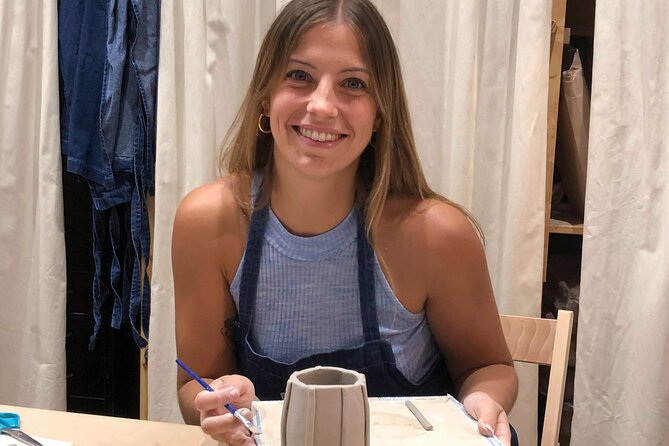
Handbuilding is a broad term. It means forming clay with your hands and simple tools rather than relying mainly on a pottery wheel. That makes it a good starting point because you can create forms directly and see how separate parts come together.
The teaching is designed to give you a base for many future projects. You learn methods that can be used for functional pottery, such as cups and vases, as well as sculptural pieces. The value here is not just taking home one object. You are learning a process you can repeat after returning home.
The course also leaves room for experimentation. One participant made a teapot, vase, cup, and ceramic stamps in a personal style. Another spent time with sculpting, molds, and glaze and underglaze testing. Those examples show the range of the week, but they should not be treated as a guaranteed project list.
If you arrive without a plan, Wendy and Eric can help you find one. If you already have a sketch or a particular form in mind, you can use the instruction to develop it. That flexibility is especially useful for people who dislike workshops where everyone produces the same bowl.
The hands-on construction sessions
The second half of each class is where the course earns its intensive label. You stop watching and spend two hours building, joining, shaping, refining, and solving problems in clay.
This is also when personal attention matters most. Clay can slump, crack, become too dry, or refuse to hold the shape you imagined. With no more than eight participants, Wendy can follow your progress and offer suggestions while there is still time to fix a problem.
You should expect some trial and error. Handmade ceramics rarely come out exactly as planned, and the course is not promising factory-perfect results. The point is to learn why a form works, where it fails, and how to adjust your technique.
The open format lets you choose your own direction. You might make practical tableware, a decorative vessel, stamps, or something more sculptural. The studio team encourages unusual ideas rather than forcing every project into a fixed template. That freedom is one of the strongest reasons to book this course instead of a shorter craft activity.
A different sort of day out in Barcelona:
- Barcelona: Park Guell Guided Tour with Skip The Line Entry
★ 4.7 · 17,563 reviews - Barcelona in 1 Day: Sagrada Familia, Park Guell,Old Town & Pickup
★ 5.0 · 13,541 reviews - Barcelona Aquarium: Entry Ticket
★ 4.3 · 13,335 reviews - Barcelona: Sagrada Familia Skip-the-Line Entry Ticket & Tour
★ 4.8 · 12,789 reviews
What is included, and what you still need to plan
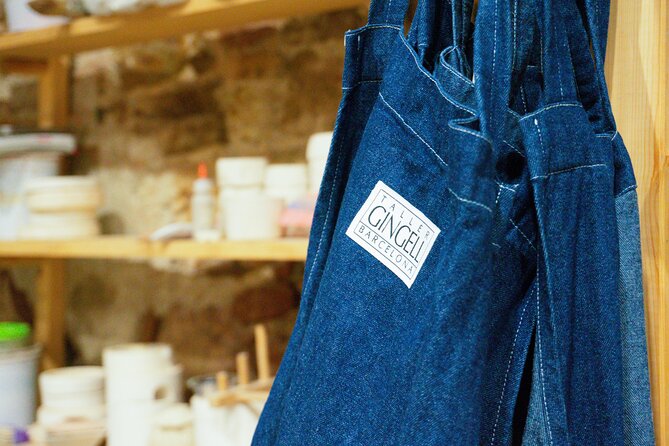
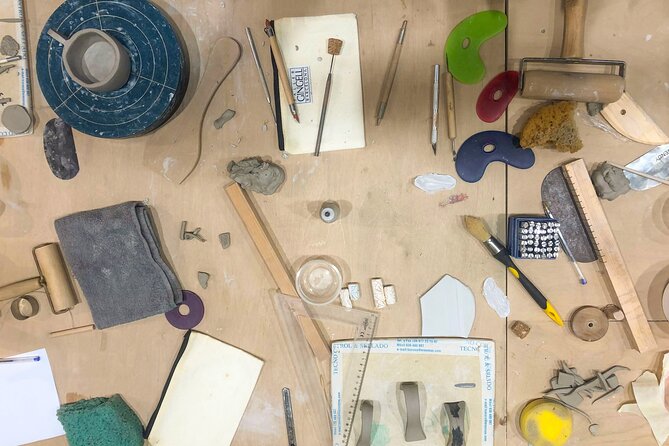
The course includes clay, ceramic modeling tools, an apron, kiln firings, and Wi-Fi. You do not need to bring special equipment. That makes packing simple, especially if you are combining the class with a longer trip.
Each student can select up to five items for kiln firing. Keep that limit in mind from the beginning. You may make more than five small pieces, or several parts that form one project, but you will need to decide which work receives the available firings.
Shipping is not included. If your pieces are not ready for collection before you leave, ask the studio about sending them, with the extra cost handled separately. The information provided confirms that kiln firing is included, but it does not promise a specific completion date or delivery method.
The finishing timeline is the main practical issue for visitors on a tight schedule. Clay needs time to dry and go through firing. One participant planned to collect work a few days after the class, while other projects were still being prepared. Ask Wendy and Eric early in the week how your pieces will be handled and when they are likely to be ready.
The teaching style and studio atmosphere
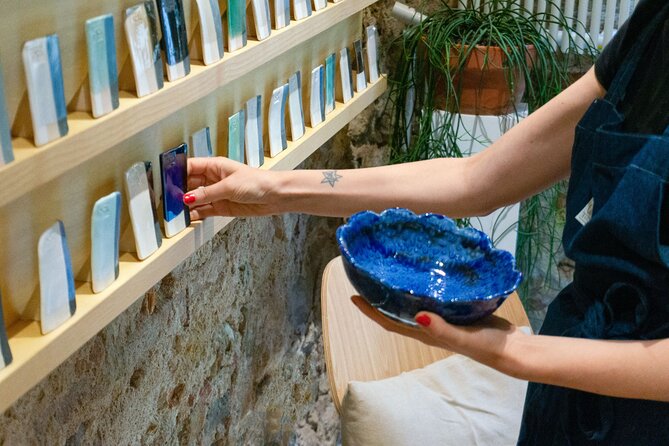
The strongest feature here is personal guidance. Wendy is described as attentive and precise, with a teaching style that follows what each person is doing instead of giving only broad instructions. That is valuable for beginners, who often need help with basic structure, and for experienced makers who want another pair of eyes on a difficult form.
The studio atmosphere also matters. The course is presented as calm, friendly, and encouraging, with space for people to work at different levels. Eric adds a lighter touch, while Wendy provides close support during the making process. The result sounds more like a small creative studio than a formal school classroom.
You should still be comfortable spending long stretches seated or standing while working with clay. The course description says most participants can take part, and service animals are allowed. It does not provide detailed information about accessibility inside the studio, so contact the operator directly if you need specific arrangements.
Instruction is available in English and Spanish. If language is important to your learning, state your preference when booking or before the first session. The course is offered in an open environment, but the exact balance between English and Spanish depends on the group.
Is $612.78 a fair price?
At $612.78 per person, this is not a budget activity. The price works out to about $122.56 per day, or roughly $30.64 per scheduled teaching hour across the 20-hour course.
That comparison helps explain the value. You are paying for five days of instruction, use of a studio, materials, tools, an apron, and kiln firings. A short pottery workshop may cost less, but it usually gives you far less time to develop a skill or make several connected pieces.
The price makes the most sense if you want a real introduction to handbuilding and will use the instruction fully. It is less compelling if you only want a quick Barcelona activity or a single finished souvenir. You are buying time, guidance, and access to equipment, not simply the object you take home.
Group discounts may be available, which could help if you are booking with a friend or family member. The maximum class size is eight, so the setting remains small even when the course is full. It is worth asking about the group rate before booking if you are not coming alone.
Who will enjoy this course most?
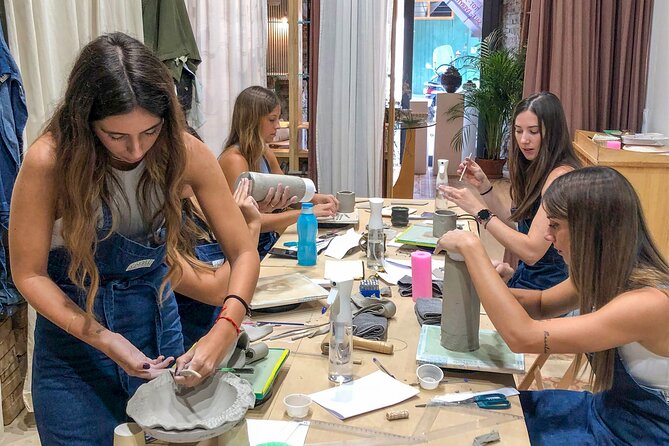
This course fits you well if you want to slow down for part of your Barcelona visit and make something with your hands. It is a strong choice for a first ceramics experience because no prior knowledge is required and the instruction begins with core techniques.
It also works for an experienced pottery maker who wants to explore a different approach, develop a personal project, or get help with sculpting, molds, glazes, or underglazes. The flexible project format gives you more control than a standard beginner class.
Couples and friends can book together, but you should both be ready for a full week of studio time. The course has also worked well as a creative date idea, though it is not a quick evening activity.
This is not the best match if your schedule allows only one free morning, if you want guided sightseeing, or if you need guaranteed finished ceramics in your luggage by the end of the week. The course gives you a creative base in Barcelona, but you must allow for drying, firing, and possible shipping.
Smart ways to prepare for the five days
You do not need to bring special equipment, but you should arrive with a rough idea of what interests you. A sketch, a favorite vessel shape, or a simple list of projects can help you use the individual work time well.
Do not plan an hour-by-hour Barcelona itinerary around the class. The course begins at 10:00 am each day and runs for about four hours, and you may want to think about your clay work after class rather than rush straight to the next sight.
It is also wise to pace yourself. Five consecutive sessions can produce a lot of work, especially if you are learning from scratch. Listen carefully during demonstrations, ask questions early, and do not wait until the final afternoon to decide which five pieces you want fired.
The studio provides aprons and tools, so your main job is to bring curiosity and patience. Free filtered water is available at the studio, a small but useful touch during a hands-on morning.
Booking, timing, and cancellation details
Confirmation is provided when you book. The course starts at Carrer de Salvà, 71, at 10:00 am, and the activity ends back at that meeting point each day.
The experience is usually booked about 19 days ahead, so do not leave it until the last minute if your Barcelona dates are fixed. The class accepts up to eight participants and is offered in English, with Spanish also available for instruction.
You can cancel for a full refund up to 24 hours before the local start time. Cancellations or changes made less than 24 hours ahead are not accepted for a refund. That policy is reasonable for a small, five-day course, but check your schedule carefully before committing.
Should you book the Intensive Ceramic Handbuilding Course?
Book it if you want a substantial creative experience, not a quick holiday diversion. The five-day structure, close instruction from Wendy and Eric, and freedom to create your own pieces give you time to learn instead of simply following a short demonstration.
I especially recommend it for beginners who want a patient start and for experienced makers who want to test new ideas in a supportive studio. The main decision is your schedule. You need five consecutive mornings, and you may need extra time or shipping arrangements before your ceramics are ready.
If that fits your plans, the course offers a useful souvenir: not just a handmade object, but the skills and confidence to keep working with clay after Barcelona.
FAQ
How long does the ceramic course last?
The course lasts five consecutive days, with one four-hour class each day. The total teaching and studio time is about 20 hours.
What time does each class start?
Each class starts at 10:00 am.
Where does the course meet?
The meeting point is Carrer de Salvà, 71, in Barcelona’s Sants-Montjuïc area, postal code 08004. The activity ends back at the same meeting point.
Do I need previous ceramics experience?
No. The course is suitable for beginners and also accommodates people with existing ceramics skills.
Is instruction available in English?
Yes. Instruction is available in English and Spanish, based on your preference.
What supplies are included?
Clay, ceramic modeling tools, aprons, kiln firings, and Wi-Fi are included. You do not need to bring special equipment.
How many pieces can each student have fired?
Each student can select up to five items for kiln firing.
Is shipping included?
No. Shipping is available if desired, but it is not included in the course price.
Recently added around Barcelona
- Montserrat very early : Hiking, Abbey, very small group★ 5.0 · 127 reviews
- Guided Private Yacht Tour in Barcelona Spain★ 5.0 · 6 reviews
- Private Tour from Barcelona to Montserrat (with guide)★ 4.5 · 6 reviews
- Private Tour from Barcelona to Costa Brava (with guide)★ 5.0 · 5 reviews
- Andorra Tour★ 4.0 · 7 reviews
- Barcelona Gaudi Tour: Sagrada Familia, Casa Batllo & Casa Mila★ 5.0 · 4 reviews
- Street Art, Sculptures & Crime Stories Walking Tour – Barcelona★ 5.0 · 11 reviews
- Wine Tasting in Barcelona (Catalan Varieties) Small Groups★ 5.0 · 10 reviews