
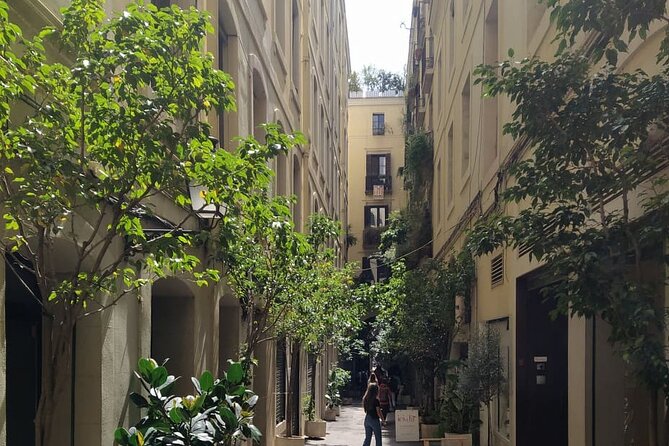
Reviewed · BARCELONA
Hidden Barcelona
Barcelona’s oldest quarter keeps its best stories behind ordinary doors and narrow passages. On this private walk, guide Adi leads you from the civic heart of Plaça de Sant Jaume to Roman ruins, royal halls, a scarred church square, and courtyards most visitors can easily pass.
I like the private format, which gives you room to ask questions and set the pace. I also like the mix of grand landmarks and small details, including an unusual letterbox, old shops, and places connected with Barcelona’s darker past. The main consideration is time: two hours goes quickly, so this is an introduction rather than a complete tour of the Gothic Quarter.
Key points to know
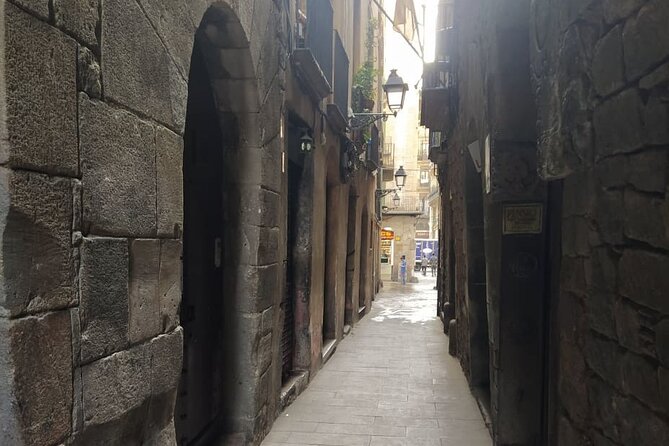
- A private walk with Adi: Your group has the guide’s full attention and can ask questions as you go.
- Roman Barcelona in plain sight: See the Temple of Augustus and Roman remains tucked into later buildings.
- A strong Gothic Quarter route: The walk links Plaça del Rei, Barcelona Cathedral, Casa de l’Ardiaca, and Pont del Bisbe.
- History beyond the postcard: Hear about public executions, the Spanish Inquisition, and the Spanish Civil War.
- Easy, unhurried pacing: The route lasts about two hours and returns to the starting point.
- Good value for curious visitors: At $56.78 per person, the price makes most sense for people who value personal explanations over a quick group overview.
Why this private Barcelona walk works
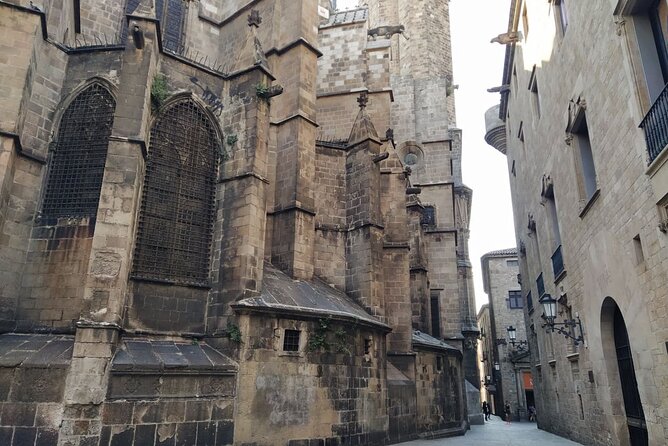
This is not a checklist tour built around Barcelona’s most famous façades. It is a compact walk through Ciutat Vella, the old city, where major events and small traces of daily life sit close together.
You begin at Plaça de Sant Jaume, Barcelona’s main civic square. From there, Adi takes you through a chain of places that reveal how the city changed from Roman settlement to medieval capital and then to modern film set.
The private setup matters here. Barcelona’s old quarter can feel confusing, with streets that bend, buildings that hide courtyards, and historic remains tucked behind later walls. With only your own group, you can stop to ask why a place matters, request more detail, or slow down when a story catches your interest.
The tone also sounds relaxed rather than academic. Adi is described as funny, friendly, and easy to talk with, while still offering plenty of historical detail. That combination should suit you if you want facts without a formal lecture.
Other Barcelona days people weigh up beside this one:
- Barcelona: Park Güell Admission Ticket
★ 4.4 · 76,534 reviews - Barcelona: Casa Batlló Entry with Self-Audioguide Tour
★ 4.7 · 25,359 reviews - Barcelona: 24 or 48-Hour Hop-On Hop-Off Bus Tour
★ 4.4 · 20,872 reviews
Plaça de Sant Jaume and the city’s civic center
The tour starts at Pl. de Sant Jaume, 3, in Ciutat Vella. This is a useful meeting point because it places you right in Barcelona’s political center.
The square is home to the city hall and the seat of Catalan government. That makes it more than a pretty open space. It is a place where local power, public ceremonies, and political life have gathered for generations.
Adi uses the square as a starting point for understanding the old city. You can expect a short introduction here before moving into the smaller streets nearby. The stop lasts about 20 minutes, and there is no admission charge.
I like beginning here because it gives the walk a clear frame. Barcelona is not only churches and stone alleys. It is also a city with a strong civic identity, and Plaça de Sant Jaume makes that clear from the first few minutes.
The Temple of Augustus, hidden behind modern Barcelona
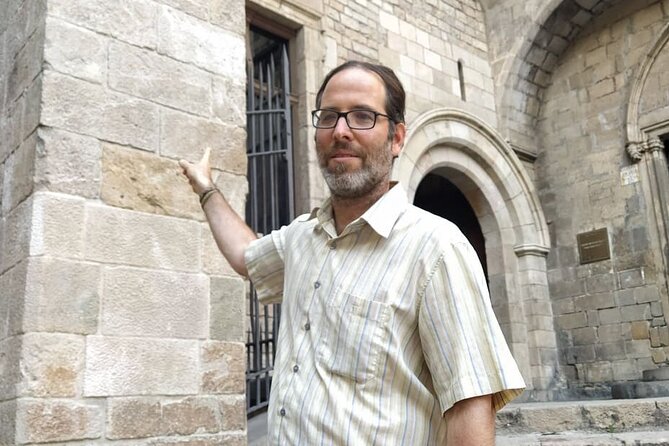
The MUHBA Temple d’August is one of the tour’s best examples of Barcelona’s layered past. The Roman temple is tucked away from the main view, making it easy to miss if you are walking alone.
Its location helps explain why a private guide can add real value. You may pass through a modest entrance or a later building and suddenly find ancient columns and Roman remains. The contrast between the busy old quarter and this quiet archaeological site is part of the appeal.
The stop lasts around 15 minutes and admission is listed as free. You should expect a focused explanation rather than a long museum visit. The guide’s role is to help you understand what you are seeing and how Roman Barcelona fits into the city around it.
If ancient sites are your main reason for booking, keep your expectations sensible. This is one stop on a short walking route, not a full archaeological tour. Still, it gives you a memorable look at how much of Barcelona’s early story remains out of sight.
Plaça del Rei and the darker side of royal power
Plaça del Rei brings you into the medieval royal quarter. It was associated with the palaces of the kings of Catalonia and hosted important events over the centuries.
The square has the grand setting you might expect from a royal center, but the tour does not present only a polished version of the past. You also hear about public executions held here. That detail changes the way you read the space. A beautiful square can also be a place of fear, ceremony, and public control.
The stop lasts about 15 minutes and has no admission charge. It works well as a storytelling pause because the setting itself is compact, with historic buildings gathered closely around the square.
I appreciate this kind of context. You are not simply told to admire medieval architecture. You are reminded that these buildings served powerful institutions and that public life in earlier centuries could be harsh.
A different sort of day out in Barcelona:
- Barcelona: Park Guell Guided Tour with Skip The Line Entry
★ 4.7 · 17,563 reviews - Barcelona in 1 Day: Sagrada Familia, Park Guell,Old Town & Pickup
★ 5.0 · 13,541 reviews - Barcelona Aquarium: Entry Ticket
★ 4.3 · 13,335 reviews - Barcelona: Sagrada Familia Skip-the-Line Entry Ticket & Tour
★ 4.8 · 12,789 reviews
Barcelona Cathedral and the old city’s religious heart
Barcelona Cathedral is the major church on the route and one of the old quarter’s defining landmarks. The cathedral’s construction is associated with the late 13th century, and its scale gives you a sense of the importance of the medieval city.
The stop is planned for about 15 minutes. Based on the supplied details, this tour treats the cathedral mainly as an exterior and historical stop, so you should not assume that an interior visit or special admission is part of the experience.
That short visit is enough to place the cathedral within the surrounding streets, but it will not cover every architectural feature. If you want a close study of the building, its chapels, or its art, you would need extra time on your own.
Still, the cathedral works well in this sequence. After the royal square, it shows another center of medieval authority. Together, the two stops help you see how political and religious power shaped the old quarter.
Casa de l’Ardiaca and a letterbox with a joke
Casa de l’Ardiaca offers one of the more charming pauses on the walk. The building has a beautiful courtyard and was linked with the guild of lawyers.
The detail that makes this stop memorable is its letterbox, designed by Lluís Domènech i Montaner. The box carries a playful meaning, and Adi explains the joke behind it. This is exactly the sort of small detail that can disappear if you only follow a map from one major monument to the next.
You also see Roman remains at the back of the building. That gives the stop two layers at once: a later civic or professional building, with evidence of the Roman city still present behind it.
The planned visit lasts around 15 minutes and is free. I would treat this as a compact courtyard stop, not a full museum visit. Its value is in the combination of setting, design, and story.
Plaça Sant Felip Neri and the marks of war
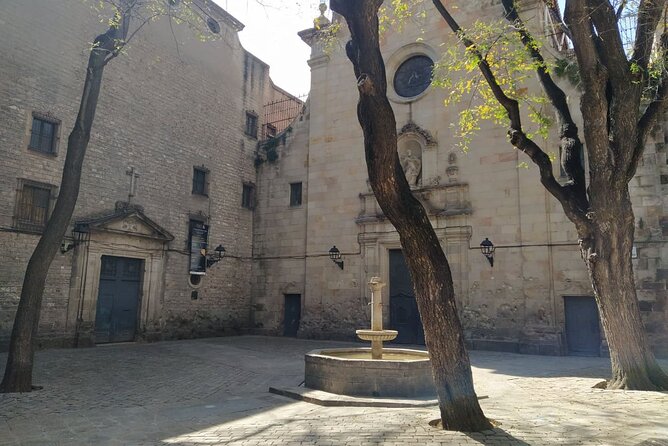
Plaça Sant Felip Neri is one of the most atmospheric stops on the route. It is a small square connected with a church and school, and it carries a painful story from the Spanish Civil War.
The square also has a lighter connection with cinema, since several films were made there. That contrast is useful. A place can be visually beautiful and still hold difficult memories. A film crew may see a striking setting, while local history gives the same walls a far more serious meaning.
The visit lasts about 10 minutes. That is enough for an explanation and a look around, but not enough for a long discussion of the Civil War. If this subject matters deeply to you, use the stop as a starting point and ask Adi for more context.
This is one of the places where a guide’s storytelling style matters. The history is not just a date or name. It is tied to a small physical space, and the setting helps the story stay with you.
Pont del Bisbe and Barcelona’s most photographed passage
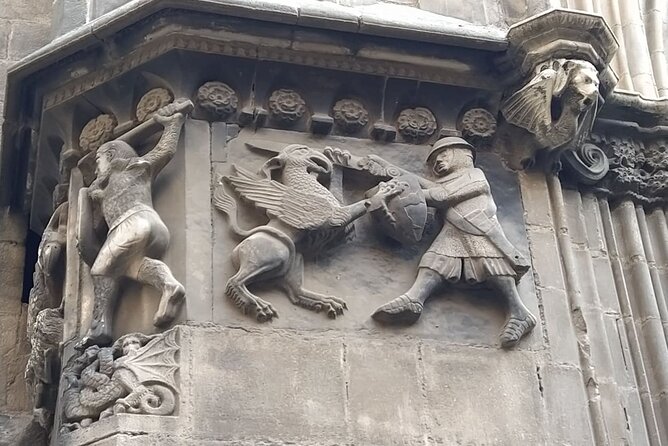
Pont del Bisbe is a familiar Barcelona landmark, with a bridge spanning the narrow street below. It was built for the 1929 World Exposition and has become one of the old quarter’s most recognizable details.
The bridge gives the walk a change of mood. After ancient remains, royal history, and war stories, you get an architectural feature that is strongly tied to Barcelona’s more recent image.
The stop is planned for about 15 minutes and is free. You should expect time to look, take photographs, and hear how the bridge fits into the city’s built story.
Its fame means this may feel less secret than the Temple of Augustus or Casa de l’Ardiaca. That is not a weakness. The route works because it mixes places you might recognize with others you would be unlikely to find without help.
Museu Frederic Marès and the Inquisition connection
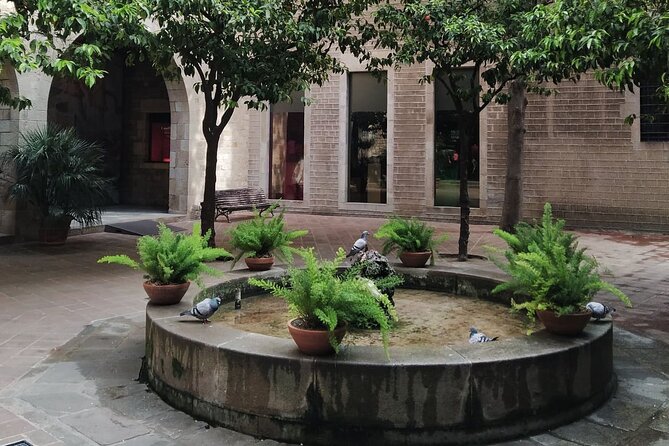
The final stop is the Museu Frederic Marès, where you visit a beautiful patio connected with a darker chapter. The site served as the headquarters of the Spanish Inquisition in Barcelona.
That history gives the courtyard a sharp contrast. The setting may feel calm and attractive, but its institutional past was tied to interrogation and punishment. Adi’s explanation helps you read beyond the architecture.
The stop lasts roughly 15 minutes and is listed without an admission charge. As with the cathedral and other locations, the tour’s purpose appears to be a historical look rather than a full museum visit.
The museum is a fitting ending because it gathers several themes from the walk: old buildings reused over time, attractive spaces with difficult pasts, and stories hidden behind ordinary façades.
A relaxed two-hour pace, with room for questions
The total duration is about two hours. That is long enough to cover eight stops without turning the walk into an endurance test, but short enough to fit into a busy Barcelona day.
Each stop is planned for about 10 to 20 minutes. The schedule suggests a steady route with time for explanation, photographs, and questions. Since the tour is private, you have more freedom than you would in a large group. You can ask Adi to explain a point further or pause over a detail that interests you.
The route begins and ends at Plaça de Sant Jaume. No separate transport is required for the tour itself, and the meeting point is near public transportation.
You should wear comfortable shoes because the experience is a walking tour through the old quarter. The supplied details do not specify the exact walking distance or the amount of uneven paving, so anyone with mobility concerns should confirm those points before booking.
What the $56.78 price buys you
At $56.78 per person, the value depends on how you like to explore. You are paying for a two-hour private experience, not for admission to a long list of museums or monuments.
That price is easier to justify if your group wants personal attention. You can ask questions throughout, move at your own pace, and focus on the subjects that interest you. A private guide can also point out small places that are easy to miss, such as the old pharmacy and other long-running shops included in the walk’s storytelling.
For a solo visitor or a couple, the cost is higher than joining a large group. The tradeoff is control and conversation. For a family or small party splitting the cost, the private format may offer better value, especially if different people want different levels of historical detail.
The tour also avoids the common problem of paying for a long route that leaves you tired and overloaded. Two hours gives you a useful introduction while leaving time for lunch, another attraction, or a return visit to one of the stops.
Who should book this walk
I would recommend it most strongly to people who enjoy urban history, unusual details, and stories with a darker edge. You should also consider it if this is your first visit to Barcelona’s old quarter and you want a clear orientation without committing to a half-day tour.
It suits couples, families, and small groups who prefer conversation over a set speech. Adi’s friendly and humorous approach should work well if you want history presented in a relaxed way.
This may not be the best choice if your main goal is to enter every major building, spend a long time in museums, or focus on Gaudí. The route is centered on old Barcelona, Roman and medieval remains, local stories, and overlooked corners.
The tour is offered in English. Confirmation is provided when you book, service animals are allowed, and most people can participate. Free cancellation is available until 24 hours before the start time. Cancellations made later, or changes made within that period, are not refunded or accepted.
My verdict on Hidden Barcelona
Book this tour if you want Barcelona’s old quarter explained through its lesser-seen details rather than only its famous sights. The strongest features are the private format, Adi’s easy conversation, and the route’s balance of Roman remains, royal history, religious buildings, war memories, and local design.
At two hours, it cannot cover everything. It also does not replace a full cathedral visit or a detailed museum tour. But that compact scope is useful at the start of a Barcelona stay, when you want to understand the city before exploring more on your own.
The best reason to choose it is simple: you get a guide who can connect the grand square with the strange little letterbox, the beautiful courtyard with the Inquisition, and the quiet church square with the scars of war. That is a good way to begin seeing Barcelona as a layered city, not just a collection of postcard views.
FAQ
Where does the tour begin?
It begins at Pl. de Sant Jaume, 3, in Ciutat Vella, Barcelona.
Where does the tour end?
The activity ends back at the meeting point at Plaça de Sant Jaume.
How long does the experience last?
The tour lasts approximately two hours.
Is this a private tour?
Yes. Only your group participates, so you have the guide’s full attention.
What language is offered?
The tour is offered in English.
Who is the guide?
The guide is Adi.
What places are visited?
The route includes Plaça de Sant Jaume, MUHBA Temple d’August, Plaça del Rei, Barcelona Cathedral, Casa de l’Ardiaca, Plaça Sant Felip Neri, Pont del Bisbe, and Museu Frederic Marès.
Is admission included?
The listed stops have free admission, and the tour information does not list a separate admission charge.
Is the tour near public transportation?
Yes. The meeting area is near public transportation.
Can I cancel for a full refund?
Yes, if you cancel at least 24 hours before the experience start time. Cancellations made less than 24 hours before the start time are not refunded.
Recently added around Barcelona
- Montserrat very early : Hiking, Abbey, very small group★ 5.0 · 127 reviews
- Guided Private Yacht Tour in Barcelona Spain★ 5.0 · 6 reviews
- Private Tour from Barcelona to Costa Brava (with guide)★ 5.0 · 5 reviews
- Private Tour from Barcelona to Montserrat (with guide)★ 4.5 · 6 reviews
- Andorra Tour★ 4.0 · 7 reviews
- Barcelona Gaudi Tour: Sagrada Familia, Casa Batllo & Casa Mila★ 5.0 · 4 reviews
- Street Art, Sculptures & Crime Stories Walking Tour – Barcelona★ 5.0 · 11 reviews
- Wine Tasting in Barcelona (Catalan Varieties) Small Groups★ 5.0 · 10 reviews