
Reviewed · MUSEUMS
Guitar Legends Hall: Entrance to the Immersive Rock Museum
Rock history here is told through guitars, lights, projections, old concert culture, and an ending filled with holograms of famous musicians. Guitar Legends Hall is less a quiet display of instruments and more a walk through the changing world of rock, from blues clubs to giant stadium shows.
I like the clear eight-room layout and the mix of real objects with interactive displays. I also like that the visit can be short or slow, depending on your interest. The main caution is simple: you need to enjoy rock, electric guitars, or 20th-century music culture to get the most from it. Someone seeking a traditional museum may find the theatrical style a bit much.
Key points to know
- Eight themed rooms: Follow rock from its blues roots through the 1950s, 1960s, 1970s, 1980s, MTV, concert culture, and holographic performance.
- Guitars lead the story: See iconic instruments and learn how the electric guitar helped shape modern rock.
- Audio guide included: The visit comes with an audio guide in four languages, including English.
- Interactive elements: Expect projections, lights, and displays that ask you to do more than simply look at objects.
- Central Barcelona location: The museum is at Carrer de la Portaferrissa, 16, in Ciutat Vella, near public transportation.
- Allow one to two hours: The stated duration ranges from one to ten hours, but most people will likely find a focused visit fits into a couple of hours.
A rock museum that works like a stage set
Guitar Legends Hall, also called Museu del Rock, takes a broad view of music. The guitar is the main thread, but the visit also touches television, fashion, record buying, festivals, and changing social habits.
That approach matters because rock was never just a sound. It shaped how people dressed, bought music, watched performers, and gathered in large crowds. The eight rooms let you follow those changes without requiring a long background in music history.
I would not approach this as a silent museum where you read labels beside glass cases. The design uses visual effects and performance-style spaces. You move from one setting to another, with each room built around a period or idea.
The included audio guide gives the visit more structure. You can use it to understand the guitars and musicians on display, then pause when a room catches your attention. Since the guide is available in four languages and English is offered, you do not need to rely only on written signs.
More Barcelona Museums and Galleries:
- Barcelona: FC Barcelona Museum “Barça Immersive Tour” Ticket
★ 4.4 · 10,944 reviews - Barcelona: Park Güell and Gaudí House Museum Entry Ticket
★ 4.5 · 6,326 reviews - Barcelona: Picasso Museum Skip-the-Line Guided Tour
★ 4.5 · 3,355 reviews
Finding Guitar Legends Hall in Ciutat Vella
The entrance is at Carrer de la Portaferrissa, 16, in Barcelona’s Ciutat Vella. This puts the museum in the old central part of the city, an area that is easy to include with other sightseeing in the historic center.
The activity begins and ends at the same address. Transport is not included, so you make your own way there. The location is near public transportation, which helps if you are not already walking through the center.
I would plan this as a stop rather than a full-day outing. The official duration is listed as roughly one to ten hours, a very wide range. In practical terms, a person who reads every display and enjoys each interactive section could stay longer, but the experience is designed to work in a shorter visit too.
The group size is limited to a maximum of ten people. That is useful in rooms with displays and projections, since a smaller group should make it easier to see and hear what is happening. This is not described as a guided group tour, though. The audio guide lets you set your own pace.
Room one: blues turns into rock
The first room is arranged like a blues bar. It introduces the point where blues began changing into rock, giving you a sense of the genre’s roots rather than starting with polished stadium performances.
This is a smart opening because it places the electric guitar in context. You are not just looking at famous instruments. You are seeing how a style built around rhythm, feeling, and small venues helped lead to a louder and more forceful form of music.
The bar setting should appeal to anyone who likes atmosphere. It also gives families and casual music fans a starting point, since you can understand the basic idea without knowing specific bands or guitar models.
The limitation is that the supplied information does not identify particular blues musicians or songs featured in this room. If you want a detailed academic account of early blues, this may feel brief. Think of it as an opening chapter that prepares you for the rooms ahead.
Room two: 1950s guitars and concert paper
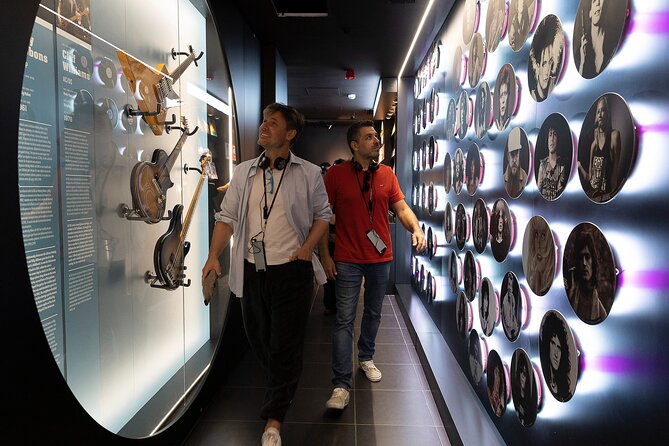
The second space moves into the 1950s, with iconic guitars and programs from the period. The guitars are the main attraction, while the programs help show how music was presented to the public.
Printed concert material can be easy to overlook, but it adds useful detail. It reminds you that music culture was built not only by performers, but also by venues, event promotion, and the people who came to see a show.
This room should be especially useful if you want to understand the early public image of the electric guitar. The instruments become symbols as well as tools. Their shape, status, and connection to musicians helped create the visual language of rock.
An audio guide is valuable here because a guitar’s appearance does not tell you much by itself. Use the commentary to connect the object with its musician and period. One shortcoming is that the available details do not list the specific guitars or programs, so you will need to discover those during the visit.
A different sort of day out in Barcelona:
- Barcelona: Park Güell Admission Ticket
★ 4.4 · 76,534 reviews - Barcelona: Casa Batlló Entry with Self-Audioguide Tour
★ 4.7 · 25,359 reviews - Barcelona: 24 or 48-Hour Hop-On Hop-Off Bus Tour
★ 4.4 · 20,872 reviews - Barcelona: Park Guell Guided Tour with Skip The Line Entry
★ 4.7 · 17,563 reviews
Room three: the festival years of the 1960s
The third room takes you into the era of 1960s festivals. Here, the focus shifts from individual instruments to the shared experience of large music gatherings.
Festivals changed the scale of live music. They brought huge crowds together and made performers part of a larger cultural moment. This room gives you a way to think about how rock moved beyond clubs and theaters.
I like this change in focus. It keeps the visit from becoming a long row of guitars. You begin to see how the audience, the venue, and the event itself helped shape rock culture.
The room may have its strongest effect if you already enjoy the visual side of music history. The supplied description does not name specific festivals, so do not book this expecting a detailed guide to one particular event. It is better understood as a period setting within the larger story.
Room four: a 1970s and 1980s record store
The fourth room recreates a record store from the 1970s and 1980s. This is one of the most relatable settings in the visit, even if you did not grow up buying records.
A record store was once a social space as much as a shop. People discovered new bands, compared album covers, searched for rare releases, and built their musical identity through what they bought. The display connects rock with the everyday habits around music.
The time period also brings a shift in sound and style. The room covers two decades, so it can suggest how the industry and audience changed from the 1970s to the 1980s.
You might find this section more enjoyable than a standard display of album covers because the setting gives the objects a purpose. It also helps younger visitors understand how people found music before streaming and instant online searches.
Still, the room is presented as an experience rather than a complete record-buying history. If you want detailed information about every album or label, the audio guide may not cover everything in depth.
Room five: music videos and the rise of MTV
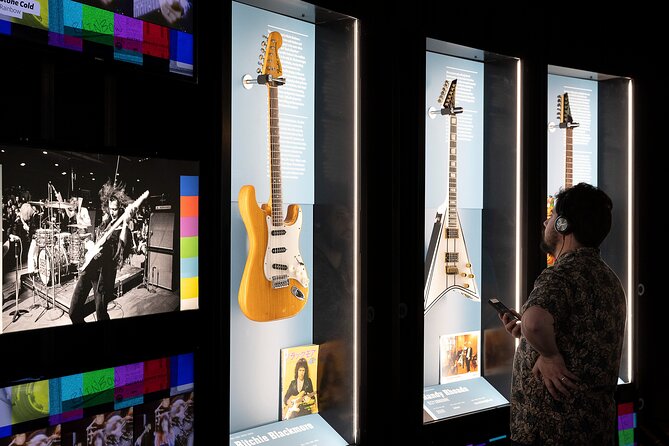
The fifth space looks at music videos and MTV. This is a natural next step after the record store because music discovery moved from shops and radio toward television.
Music videos changed how performers were seen. A song could now have a strong visual identity, and the look of a band became nearly as important as its sound. This room connects rock to fashion, television, staging, and image-making.
For me, this is where the visit’s wider cultural aim becomes clearest. Guitar Legends Hall is not only about instruments. It also explains how music became a visual product that reached people through screens.
The format should work well for people who remember the early days of music television. It can also help younger visitors understand why MTV once mattered so much to popular music.
The trade-off is that the room may favor atmosphere and recognition over a detailed timeline. The information provided does not identify specific videos or artists, so you should expect a broad look at the period rather than an exhaustive catalog.
Room six: the energy of a rock concert
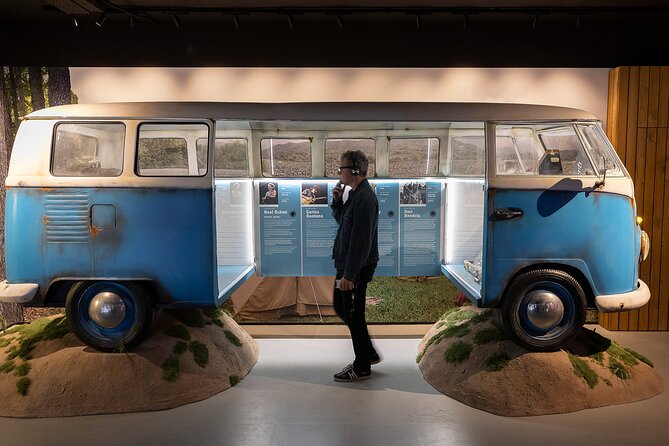
The sixth room places you in a VIP room connected to the energy of a rock concert. This shifts the visit from viewing history to feeling part of a performance setting.
A VIP space is an interesting choice. It suggests the world around major concerts, where access, status, and proximity to the performers became part of the appeal. At the same time, it gives you a different angle on live music than the large festival room.
The room should suit anyone who likes the social side of concerts. You can think about the difference between being one face in a huge audience and having a closer, more exclusive place within the event.
I would keep expectations measured. The details do not say that a live band performs here or that you take part in a staged concert. The point is to recreate the feeling and setting of rock performance through the design of the room.
Room seven: a garage of light and sound
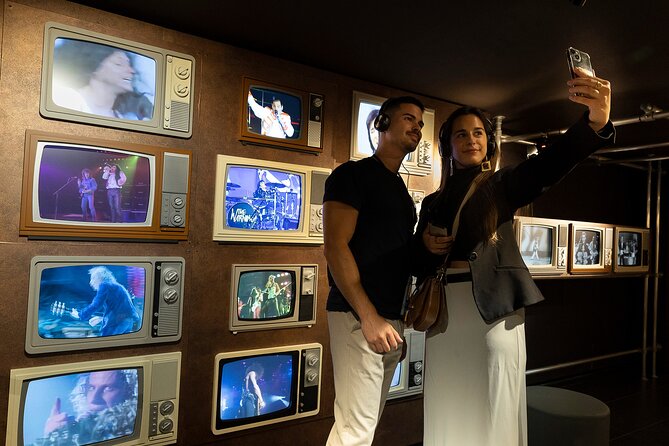
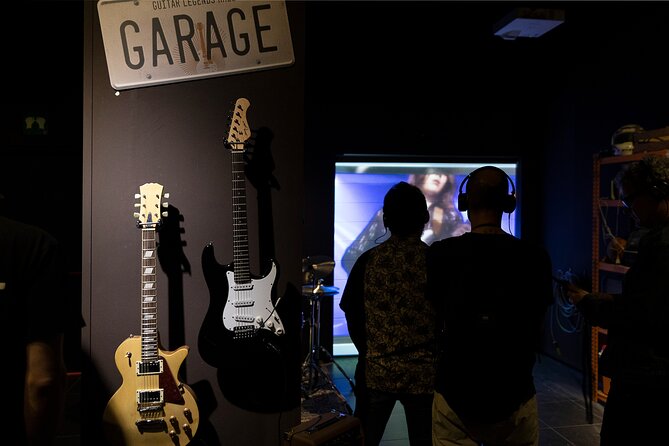
The seventh room brings music into a garage with projections and lights. Garages have long been linked with young bands, rehearsals, and the early stages of making music.
This setting brings the story back down to a smaller scale. After festivals, record stores, television, and VIP concert spaces, the garage suggests the place where a band might begin.
The projections and lights make this room more active than a standard historical display. If you enjoy visual effects, you may spend extra time here. The changing atmosphere can also make the experience easier for children and casual visitors to follow.
The drawback is that lighting effects can sometimes compete with objects and information. If you prefer a calm, label-heavy museum, this room may feel more like a show than a study area.
Room eight: holograms of rock legends
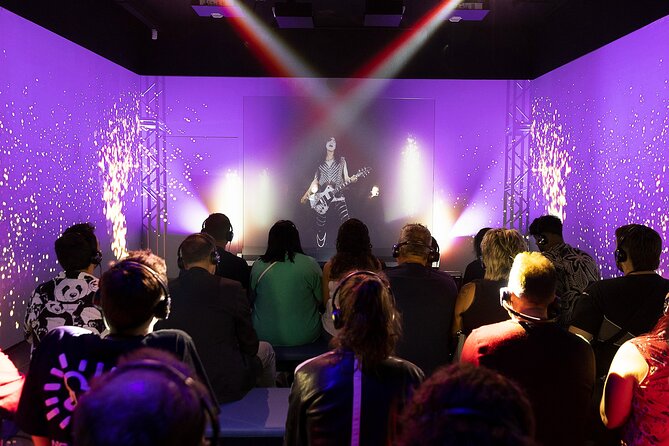
The final room is an immersive concert with holograms of rock legends. It serves as the grand finish, bringing together the performance, technology, and star power that have shaped the rest of the visit.
Holograms are a clear break from the guitars, programs, and record-store setting. They show how technology continues to change the way musicians can appear before an audience.
This ending should be memorable for anyone who enjoys concert spectacle. It also gives the experience a clear finish rather than simply leading you to another case of objects.
You should know what this is and what it is not. It is a simulated concert using holographic figures, not a live performance by the original musicians. Some people will find that exciting; others may prefer real instruments and historical material.
How much time should you allow?
The stated duration is approximately one to ten hours, which leaves room for different visiting styles. The experience is self-paced, with an audio guide included, so you can move quickly through familiar periods or stop longer in rooms that interest you.
A focused visit could fit into about one to two hours. That is also consistent with the practical nature of the displays: you can listen, look, interact, and continue without needing to follow a fixed group schedule.
If you are a serious guitar fan, plan extra time. You may want to listen closely to every audio section and study the instruments and related material. If you are fitting the hall between other central Barcelona sights, a shorter visit should still give you the main arc.
The maximum group size is ten people, but this does not mean you receive a personal guide. The audio guide is the main source of interpretation. That arrangement is helpful if you dislike being hurried, but less appealing if you want to ask questions face to face.
Is the $21.69 price good value?
The listed price is $21.69 per person. At that rate, I would judge the value by the kind of museum visit you want.
You are paying for more than a room of guitars. The ticket includes museum entry, an audio guide, eight themed spaces, interactive displays, projections, and a holographic concert finish. If you enjoy rock and want a lively two-hour stop in central Barcelona, the price can be reasonable.
The value is weaker if you plan to glance at the guitars and leave quickly. It is also less convincing if your main interest is a traditional collection with detailed object labels and a quiet scholarly setting.
One pricing point needs care: the supplied information also labels the admission ticket as free, while the stated booking price is $21.69. Because those details do not match, check the final price and inclusions before payment.
The on-site shop is another small advantage for fans. It sells exclusive guitar and rock items, though purchases are not included in the ticket price.
Who should book Guitar Legends Hall?
I would recommend it most strongly to:
- Rock fans who want to follow the genre from blues roots to stadium culture.
- Guitar players and collectors who enjoy seeing instruments linked with musicians.
- People interested in the connection between music, television, fashion, and social change.
- Families or mixed-age groups who prefer interactive rooms to long blocks of text.
- Visitors looking for a central Barcelona activity that can fit into one or two hours.
- Anyone who enjoys concert-style lighting, projections, and holograms.
I would be more cautious if you want a fully traditional museum. The experience is designed around settings and effects, so its tone is closer to a themed music attraction than a formal instrument collection.
You can use the audio guide in four languages, including English. Service animals are allowed, most people can participate, and the museum is near public transportation. The ticket is non-refundable and cannot be changed, so make sure the date and plans work before booking.
Final call: book it for the setting, not just the guitars
Book Guitar Legends Hall if you want a lively look at how rock grew from blues, electric guitars, festivals, record stores, television, and concert spectacle. The strongest feature is the variety of rooms. You are not stuck with one display style for the whole visit.
I especially like the way the experience links music with wider popular culture. The 1950s programs, the record-store room, and the MTV section help explain how people encountered rock in different decades.
Skip it if you dislike theatrical museum design or want a long, detailed study of named instruments and musicians. For everyone else, the combination of real guitars, audio commentary, interactive displays, lights, and holograms makes this a useful short stop in central Barcelona.
FAQ
Where is Guitar Legends Hall located?
It is at Carrer de la Portaferrissa, 16, in Ciutat Vella, Barcelona, Spain.
How long does the visit take?
The stated duration is approximately one to ten hours. A focused visit can fit into about one to two hours, while people who listen to all the audio and spend more time with the displays may stay longer.
Is an audio guide included?
Yes. An audio guide is included with admission and is available in four languages, including English.
What does the experience include?
The ticket includes museum entrance and the audio guide. Transport is not included.
How many people can be in the group?
The activity has a maximum of ten participants.
Is the museum suitable for most people?
Yes. Most people can participate, and service animals are allowed. The venue is also near public transportation.
Can I cancel or change my booking?
No. The experience is non-refundable and cannot be changed for any reason.
Recently added around Barcelona
- Montserrat very early : Hiking, Abbey, very small group★ 5.0 · 127 reviews
- Guided Private Yacht Tour in Barcelona Spain★ 5.0 · 6 reviews
- Private Tour from Barcelona to Montserrat (with guide)★ 4.5 · 6 reviews
- Private Tour from Barcelona to Costa Brava (with guide)★ 5.0 · 5 reviews
- Barcelona Gaudi Tour: Sagrada Familia, Casa Batllo & Casa Mila★ 5.0 · 4 reviews
- Street Art, Sculptures & Crime Stories Walking Tour – Barcelona★ 5.0 · 11 reviews
- Andorra Tour★ 4.0 · 7 reviews
- Wine Tasting in Barcelona (Catalan Varieties) Small Groups★ 5.0 · 10 reviews
Museums, compared.

FC Barcelona Museum “Barça Immersive Tour” Ticket
Read our review →
Park Güell and Gaudí House Museum Entry Ticket
Read our review →
Girona & Dali Museum Small Group Tour with Pick-up from Barcelona
Read our review →


Dali Museum, House & Cadaques Small Group Tour from Barcelona
Read our review →Browse the lists this tour appears in