

Reviewed · GUIDED
Guided Tour at Catalonia’s Royal Academy of Medicine
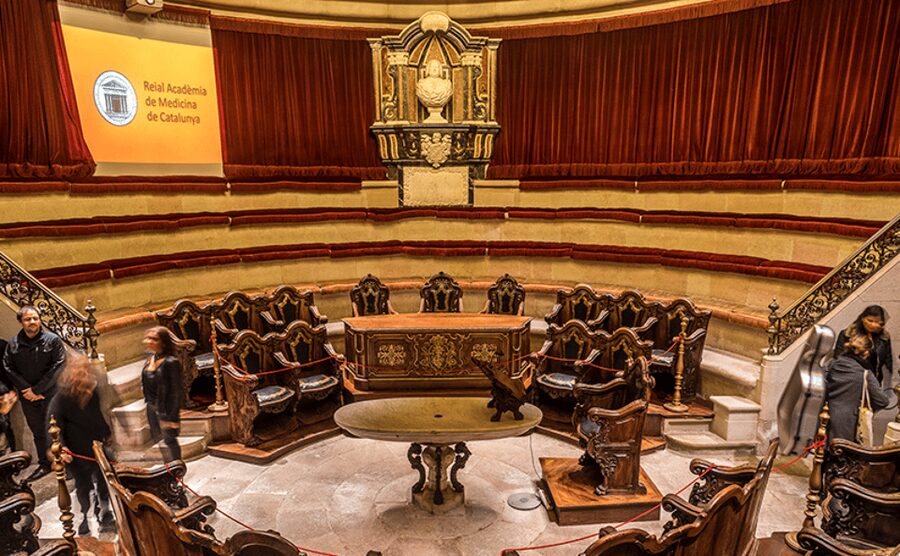
Barcelona’s Royal Academy of Medicine contains something you rarely see: Spain’s last surviving anatomical amphitheater. Built in the 18th century by architect Ventura Rodríguez, this circular teaching room was designed so surgeons could study the human body in front of an audience.
I like the tour for two reasons. First, it connects medicine with architecture rather than treating the building as a dry museum. Second, the $16 price gives you a short, focused look at an unusual Barcelona site, including the place where Spain’s first X-ray experiment took place.
The main drawback is the brief 50-minute duration. There are also steps during the visit, so this is not the easiest stop for everyone despite the building being listed as wheelchair accessible. Bring your confirmation email, and arrive before the door closes between tours.
Key points to know before you go
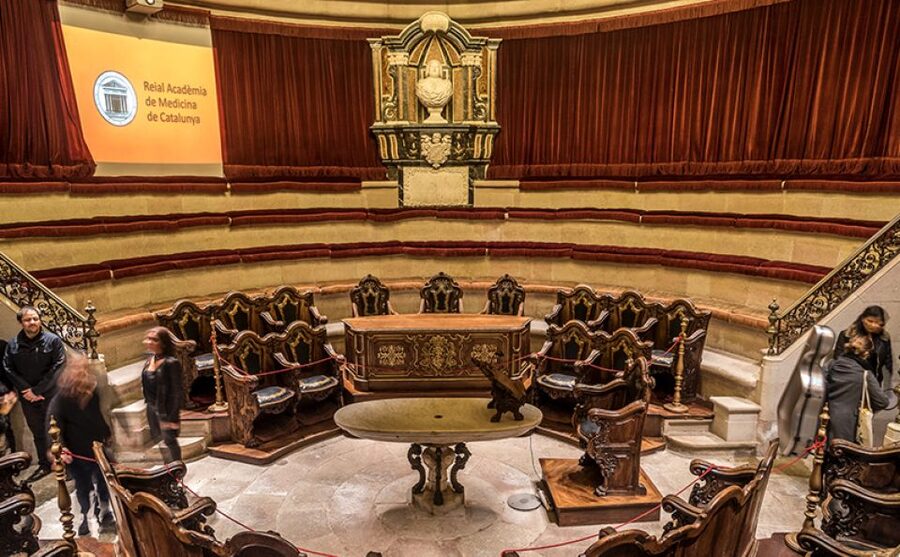
- See Spain’s final surviving anatomical amphitheater, an 18th-century room built for surgical training.
- Learn about Ventura Rodríguez’s architecture and how the building supported medical teaching.
- Hear about major medical figures, including Pere Virgili, Antoni de Gimbernat, and Santiago Ramón y Cajal.
- Visit the site of Spain’s first X-ray experiment, one of the tour’s most unusual details.
- Choose a live tour in English, Spanish, or Catalan, with an audioguide available in seven languages.
- Plan for steps and a short visit, with the Academy at Carme Street 47 in Barcelona’s 08001 postal district.
Why this small Barcelona museum is worth your time
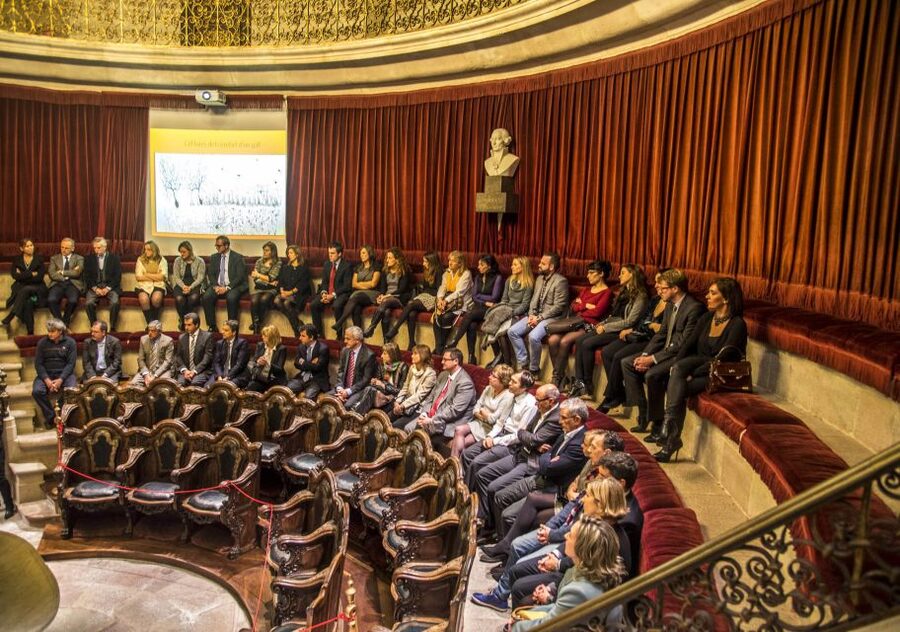
Barcelona has no shortage of grand churches, famous streets, and Gaudí buildings. The Royal Academy of Medicine offers a different kind of stop. It is compact, specialized, and tied to the development of modern surgery.
The Academy occupies one of Barcelona’s important neoclassical buildings, next to the city’s first and main hospital. That location matters. This was not a decorative palace later converted into a museum. The building was connected to the practical business of training doctors and surgeons.
The centerpiece is the anatomical amphitheater. It was built in the 18th century by Ventura Rodríguez for the education of surgeons. The arrangement allowed students to watch demonstrations from around the room, making the architecture part of the lesson.
You will not need a medical degree to follow the visit. The most useful approach is to think of the room as both a classroom and a stage. Its shape, seating, and purpose show how medical education worked before modern laboratories, imaging equipment, and surgical schools.
More Guided in Barcelona:
- Barcelona: Park Guell Guided Tour with Skip The Line Entry
★ 4.7 · 17,563 reviews - Fast Track Sagrada Familia Guided Tour
★ 4.5 · 8,795 reviews - Park Guell Guided Tour with Skip the Line Ticket
★ 4.5 · 6,996 reviews
Entering the 18th-century anatomical amphitheater
The amphitheater is the reason to book this experience. It is described as the last anatomical amphitheater remaining in Spain and one of the oldest in Europe. That makes the room more than an attractive interior. It is a surviving piece of the way medicine was taught.
A guide explains how surgeons trained in this setting. The room was intended for demonstrations, with students gathered around the central working area. You get a direct sense of how architecture could control sightlines, attention, and teaching.
The space also gives the tour its slightly macabre edge. Anatomy lessons were serious work, and this was a place where the human body was studied in detail. If you prefer light sightseeing only, the subject matter may feel intense. For anyone interested in medicine, science, architecture, or the history of education, it is the most rewarding part of the visit.
The room is especially useful for putting medical progress into perspective. Today, a medical student expects advanced imaging, digital records, and carefully equipped operating rooms. Here, you see an earlier stage, when observation and hands-on instruction were central to surgical training.
The people who shaped Catalan medicine

The Academy’s story is linked to several important names in medicine and surgery. The tour introduces figures such as Pere Virgili, Antoni de Gimbernat, and Santiago Ramón y Cajal.
Pere Virgili is connected with the development of surgical education. Antoni de Gimbernat is remembered in the history of surgery and anatomy. Santiago Ramón y Cajal became one of the best-known scientists associated with the study of the nervous system.
You do not need to memorize these names before arriving. Their value on the tour is that they give faces and careers to a broader period of change. Medicine was moving from traditional practice toward more systematic study, research, and training.
This is also where the building becomes more interesting than a collection of old rooms. The Academy links people, institutions, and scientific progress. You are not simply looking at an old amphitheater. You are seeing where professional knowledge was passed from one generation to the next.
The amount of detail depends on the guide and the tour language. Live tours are offered in Spanish, Catalan, and English. Alex is one guide associated with the experience, and his presentation has been singled out positively. If your tour is led by someone else, the structure remains the same, but the personal style may differ.
The first X-ray experiment in Spain
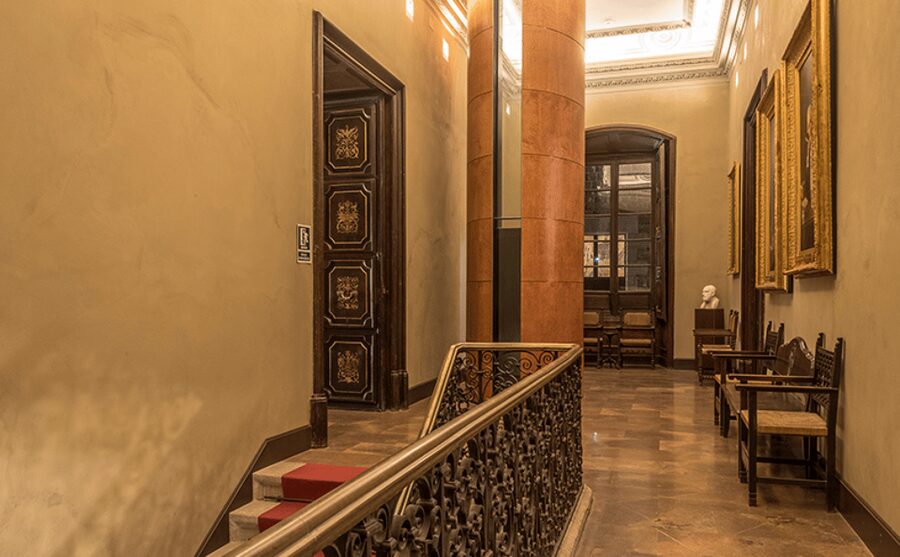
One of the best details to listen for is the Academy’s connection with the first X-ray experiment in Spain. This gives the visit a clear link between old surgical teaching and modern medical technology.
The anatomical amphitheater belongs to an earlier age of medicine, while X-rays point toward a new way of seeing inside the body without direct dissection. That contrast helps tie the rooms together. You can understand the Academy as a place where medical practice changed over time, not as a building frozen in one century.
The X-ray story is also useful for visitors who are less interested in architecture. If the amphitheater feels too specialized, this scientific detail offers another way into the subject. It shows how the institution was connected to new experiments and new tools.
Do not expect a long technical demonstration. The visit lasts only 50 minutes, so this is a concise explanation within a larger tour. Still, it is the kind of fact that can make the Academy memorable after you leave.
A different sort of day out in Barcelona:
- Barcelona: Park Güell Admission Ticket
★ 4.4 · 76,534 reviews - Barcelona: Casa Batlló Entry with Self-Audioguide Tour
★ 4.7 · 25,359 reviews - Barcelona: 24 or 48-Hour Hop-On Hop-Off Bus Tour
★ 4.4 · 20,872 reviews - Barcelona in 1 Day: Sagrada Familia, Park Guell,Old Town & Pickup
★ 5.0 · 13,541 reviews
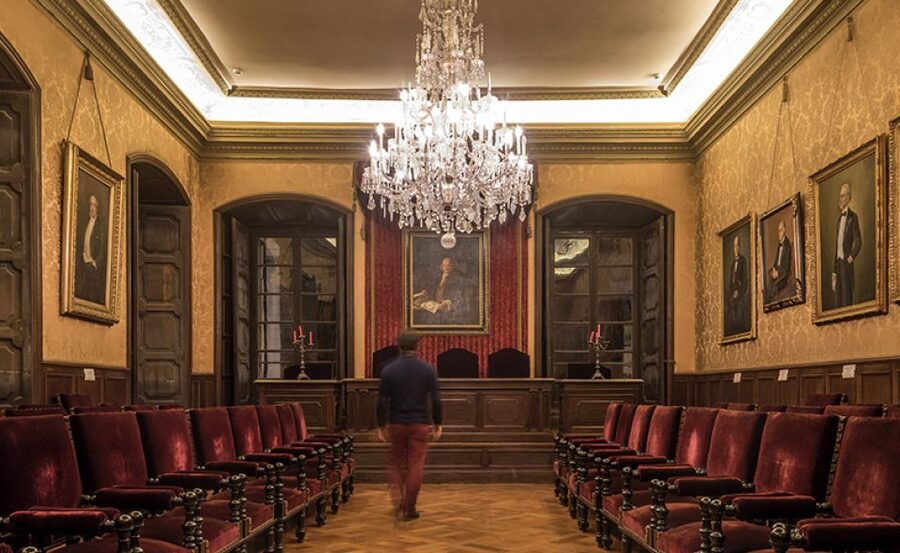
Walking through the Academy’s neoclassical rooms
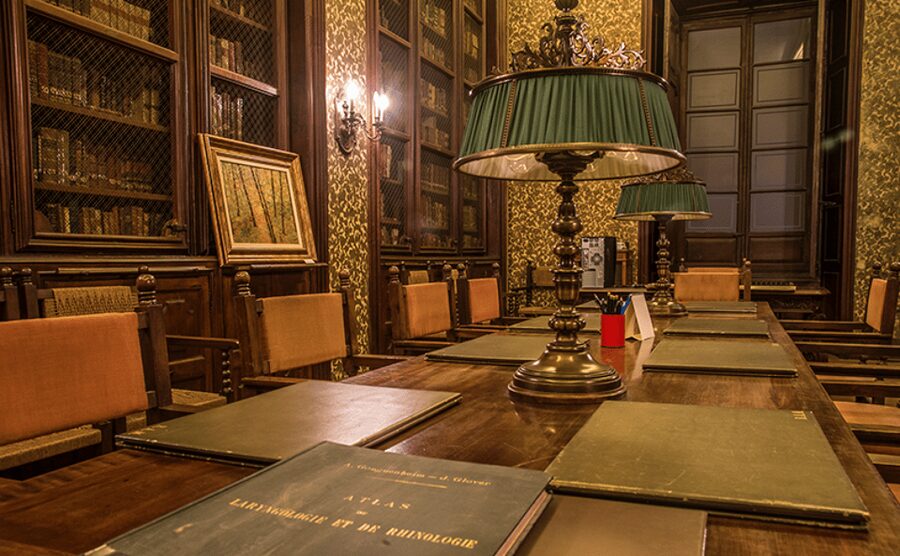
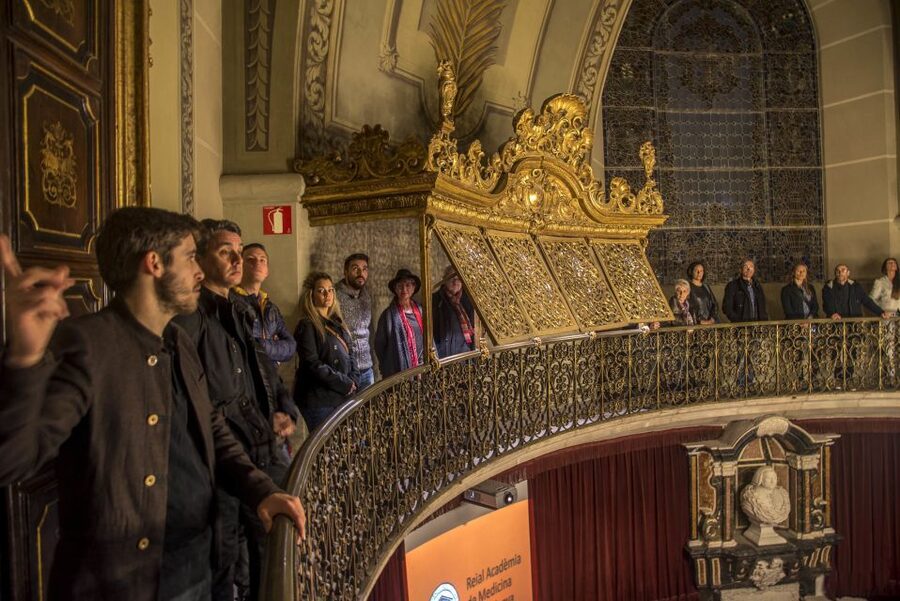
The tour includes time to walk around the Academy’s halls. These rooms provide context for the main amphitheater and show the wider setting in which medical teaching took place.
The neoclassical design gives the building a formal character. It is a useful counterpoint to Barcelona’s better-known modernist architecture. Here, the appeal comes from proportion, order, and institutional purpose rather than colorful tilework or unusual façades.
I would pay attention to how the halls lead you toward the central medical spaces. The Academy is not enormous, and the tour does not try to turn it into a full-day museum. Its strength is concentration. In less than an hour, you see the building, the amphitheater, and the medical stories that give both meaning.
The halls may be most satisfying for visitors who enjoy old institutions and historic interiors. If you are mainly looking for a large collection of medical objects, this may feel limited. The experience is about the building and its role, not a broad display of equipment or artifacts.
What the 50-minute schedule feels like
Fifty minutes is enough to cover the key rooms without making the visit a major commitment. That is helpful in Barcelona, where you may be fitting the Academy between other sights in the old city.
The short format also keeps the subject manageable. A longer tour could become overly technical, especially for visitors without a medical background. Here, you get the central architectural and historical points, then move on.
At the same time, do not expect a slow, open-ended museum visit. The guide needs to keep the group moving through the rooms. If you want time to study every detail or ask many specialist questions, the schedule may feel tight.
The tour is best treated as a focused appointment rather than a place to linger for an afternoon. Check the available starting times when booking. Since tours are scheduled, the main door remains closed between visits and opens again about 5 to 10 minutes before the next one.
Meeting point and arrival advice
The Academy is at Carme Street, number 47, Barcelona, 08001. You need the confirmation email from Sternalia before the tour begins.
The door arrangement is important. If you arrive well before your time, do not assume you can enter immediately. Between tours, the main entrance remains closed. Plan to arrive close to the opening window, about 5 to 10 minutes before the start.
Keep the confirmation email easy to find on your phone. This is a simple step, but it avoids confusion at a small venue with scheduled entry.
Wear comfortable clothes. The visit includes steps, and you may be walking through several halls rather than remaining in one room. Alcohol and drugs are not allowed.
The Academy is listed as wheelchair accessible, but the presence of steps deserves attention. If you have mobility concerns, check the details before committing to a time. The supplied information also says the activity is not suitable for people with pre-existing medical conditions. That warning is worth taking seriously, especially because of the medical and anatomical subject matter.
Live guide or audioguide?
You can take the tour with a live guide in English, Spanish, or Catalan. An audioguide is included in Chinese, English, French, German, and Russian.
The live option is the better choice if you want the building explained as you move through it. A guide can point out the relationship between the amphitheater, the halls, and the Academy’s medical figures. It also gives you a chance to follow the material at a natural pace.
The audioguide adds flexibility for visitors who prefer listening privately or need a language not offered by the live guide. English appears in both formats, while Chinese, French, German, and Russian are available through the audioguide.
Language availability does not mean every tour format runs at every time. Check the starting-time and language options before booking. If you have a strong preference, it is sensible to select it early.
Is $16 a fair price?
At $16 per person, this is a reasonable paid stop for a specialized Barcelona experience. The price includes Academy entrance, a guided tour, and the audioguide.
The value comes from access to a building that is not part of the city’s standard sightseeing circuit. You are paying for a short explanation of an unusual place, not for hours of entertainment or a large museum collection.
The price works best for visitors who care about one or more of these subjects:
- Medical history
- Surgical training
- Historic architecture
- Scientific discoveries
- Barcelona’s institutions
- The development of education
If those topics do not interest you, the visit may feel too narrow. The building is not a substitute for Barcelona’s major art museums or famous architectural attractions. It works as a focused addition to your day.
The high rating attached to the experience fits its purpose: the strongest response comes from the clear subject, the distinctive amphitheater, and the guide’s role. A Spanish-language visitor described the tour as highly interesting and strongly recommended it, while another praised Alex directly. A medical student or anyone with broad scientific interests may get more from the visit than someone seeking only decorative interiors.
Who should book this experience?
I would recommend it to medical students, healthcare workers, science fans, architecture students, and curious visitors who have already seen some of Barcelona’s major sights.
It also suits you if you like places with a clear original purpose. The Academy was tied to medical education, and the amphitheater still communicates that function. You do not have to admire every historic room to understand why this one matters.
Families with older children may find the medical subject interesting, though the anatomical focus may not suit everyone. The tour is also a practical choice when you want a short indoor activity rather than another large attraction.
I would hesitate if you dislike medical subjects, have a pre-existing medical condition that makes the visit unsuitable, or need a completely step-free route. I would also skip it if your schedule is already packed with major sights and you are looking for a broad overview of Barcelona.
Should you book the Royal Academy of Medicine tour?
Book it if you want a concise, unusual look at Barcelona’s medical past. The anatomical amphitheater is the main reason to go, and the connection to Spain’s first X-ray experiment adds a strong scientific detail.
At $16, the tour offers good value for a specialized 50-minute visit. Choose the live guide if you want the building and its people explained together, or use the audioguide if you need one of the additional language options.
The decision comes down to interest. This is not a grand attraction with hours of exhibits. It is a small, distinctive historic institution with one remarkable teaching room. If that sounds like your kind of stop, reserve a time and arrive with your confirmation email ready.
FAQ
Where is the Royal Academy of Medicine of Catalonia?
It is located at Carme Street, number 47, Barcelona, 08001, next to Barcelona’s first and main hospital.
How long does the guided tour last?
The tour lasts 50 minutes.
How much does the experience cost?
The listed price is $16 per person.
Which languages are available?
Live tours are available in Spanish, Catalan, and English. An audioguide is available in Chinese, English, French, German, and Russian.
What will I see during the visit?
You will see the Academy’s neoclassical halls and its 18th-century anatomical amphitheater, built by Ventura Rodríguez for surgical training. The tour also covers the Academy’s medical figures and the site of Spain’s first X-ray experiment.
Is the building wheelchair accessible?
The activity is listed as wheelchair accessible, but there are steps during the visit. Check the access details carefully if you require a step-free route.
Can I cancel the booking?
You can cancel up to three days in advance for a full refund.
Recently added around Barcelona
- Montserrat very early : Hiking, Abbey, very small group★ 5.0 · 127 reviews
- Guided Private Yacht Tour in Barcelona Spain★ 5.0 · 6 reviews
- Private Tour from Barcelona to Montserrat (with guide)★ 4.5 · 6 reviews
- Private Tour from Barcelona to Costa Brava (with guide)★ 5.0 · 5 reviews
- Andorra Tour★ 4.0 · 7 reviews
- Barcelona Gaudi Tour: Sagrada Familia, Casa Batllo & Casa Mila★ 5.0 · 4 reviews
- Street Art, Sculptures & Crime Stories Walking Tour – Barcelona★ 5.0 · 11 reviews
- Wine Tasting in Barcelona (Catalan Varieties) Small Groups★ 5.0 · 10 reviews
Guided, compared.

Park Guell Guided Tour with Skip The Line Entry
Read our review →

Park Guell Guided Tour with Skip the Line Ticket
Read our review →

Montserrat, Girona & Costa Brava Guided Day Trip from Barcelona
Read our review →

Sagrada Familia Guided Tour with Tower Access
Read our review →