
Reviewed · GAUDí TOURS IN BARCELONA
Gaudi’s Modernist Legacy: Small Group Walking Tour
Barcelona’s modernist buildings are not shy. They twist, ripple, sparkle, and seem to grow out of the streets. This 2.5-hour small-group walk connects the city’s grandest examples, from the elegant Passeig de Gràcia to the astonishing Sagrada Família, while explaining the ideas behind the fanciful façades.
I like the maximum group size of 12, which gives your guide room to answer questions. I also like the practical route: you see several major buildings without spending your day inside museums. Guides such as Antonio, Roberto, Montse, Jose Carlos, and Laura have been praised for lively explanations, personal attention, and useful restaurant advice.
The main catch is important: this is primarily an exterior architecture walk. Admission to Sagrada Família, Casa Batlló, and La Pedrera is not clearly included, so do not book it expecting a full interior visit. One tour also ran about an hour over, which suggests that timing can depend on the guide and group.
Key Points Before You Book
- Small group of up to 12: You get a better chance to ask questions and hear your guide clearly.
- A useful introduction to modernisme: Learn how Gaudí, Domènech i Montaner, and other architects reshaped Barcelona.
- Route from the city center to Sagrada Família: The walk begins near Plaça de Catalunya and ends beside Barcelona’s most famous church.
- Major sights are viewed mainly from outside: Casa Batlló, Casa Milà, and Sagrada Família are covered, but entry tickets are not part of the experience.
- Guide quality matters: Antonio, Roberto, Montse, Jose Carlos, Tony, Alfredo, Laura, and others have been praised for clear explanations and warm, flexible hosting.
- Good value at $22.01: The price is modest for a guided introduction, especially if you want context before choosing which buildings to visit inside.
Why This Walk Makes Sense for a First Day in Barcelona
Gaudí is the star of Barcelona’s modernist story, but he was not working alone. This tour helps you see the wider movement, known in Catalan as modernisme, rather than treating every unusual building as a Gaudí creation.
That distinction matters. Barcelona’s early 20th-century architects borrowed from nature, medieval Catalan design, craft traditions, and new construction methods. Your guide explains those connections as you move through the city, so the façades become easier to read.
The experience begins at Carrer de Fontanella, 2, in the Ciutat Vella. From there, the route heads toward the Eixample, the carefully planned district where many of Barcelona’s grand modernist homes were built. You finish at Sagrada Família, giving the walk a strong final view.
I see this as a good first or second activity in Barcelona. You get a broad introduction, then you can decide which buildings deserve the cost and time of an interior visit. It also helps you notice small details you might otherwise walk past, such as sculpted animals, unusual windows, floral motifs, and references to Catalan legends.
More Gaudí Tours in Barcelona
- Barcelona: Park Güell and Gaudí House Museum Entry Ticket
★ 4.5 · 6,326 reviews - Sagrada Familia & Gaudi Tour Private or Small Group with Tickets
★ 4.5 · 1,188 reviews - Complete Gaudi Tour: Casa Batllo, Park Guell & Sagrada Familia
★ 5.0 · 1,152 reviews
Passeig de Gràcia: Barcelona’s Grand Architectural Stage
Passeig de Gràcia is more than a shopping street. It is the city’s grandest outdoor display of modernist architecture, lined with polished apartment houses, luxury boutiques, and some of Barcelona’s most photographed façades.
The walk uses this avenue to explain how wealthy families competed for status through architecture. A private residence could become a public statement, with an elaborate entrance, custom tilework, carved stone, and a façade unlike anything next door.
This part of the route is visually rewarding, but it can also be busy. You will be walking along a major city avenue, so your guide may need to position the group carefully while pointing out details. Keep your eyes up, but watch the pavement and passing pedestrians.
The setting also gives you a practical chance to ask your guide for restaurant ideas. Montse, for example, was praised for offering dining suggestions that proved useful later in the trip. A good guide can turn a sightseeing walk into a helpful orientation to the city.
Casa Amatller and the Architects Before Gaudí
One of the early stops is a house designed by Lluís Domènech i Montaner, who taught Gaudí at university. This building helps place Gaudí within a larger circle of architects rather than presenting him as an isolated genius.
Domènech i Montaner had his own strong style, with detailed decoration, historical references, and a careful blend of structure and ornament. Looking at his work beside Gaudí’s makes the differences easier to understand.
The tour also passes Casa Amatller, a striking modernist home close to Casa Batlló. Its design adds another voice to the architectural conversation on Passeig de Gràcia. You begin to see that the avenue is not simply a collection of Gaudí buildings. It is a comparison course in Barcelona architecture.
This is one reason a guide adds value. Without explanation, you may admire the shapes but miss the rivalry, symbolism, and changing tastes behind them. A guide can show you where one architect favored order and another preferred a more organic effect.
Casa Batlló and the Dragon-Roofed Façade
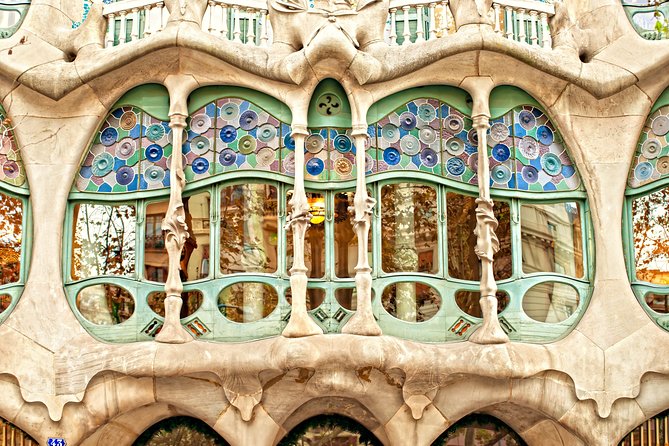
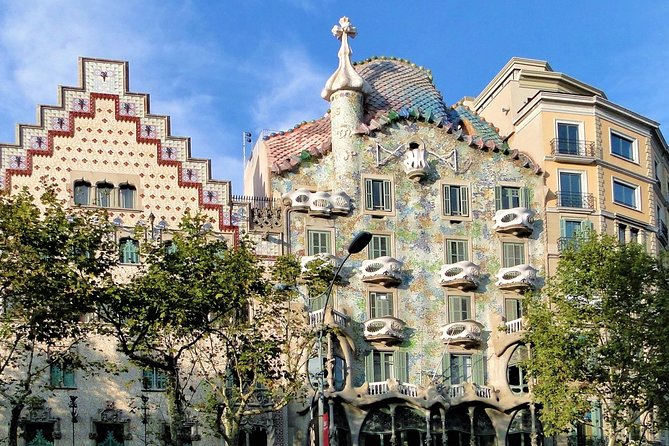
Casa Batlló is the visual high point of the Passeig de Gràcia section. Its colored surface, curved balconies, bone-like details, and scaly roof seem to belong to a fairy tale rather than an apartment block.
Gaudí had unusual creative freedom on this project, and the result reflects it. The façade does not merely decorate the building. It changes how the whole structure appears, softening straight lines and making the house feel almost alive.
Your guide explains the building from the street, including the forms and symbols that make it so memorable. The tour can help you decide if an interior visit is worth adding to your Barcelona schedule.
Here is the practical warning: the walking tour does not clearly include entrance to Casa Batlló. One participant reported confusion because the description suggested free admission at several places, while the group only entered a building next to Casa Batlló. Assume you are seeing the exterior unless your booking confirmation specifically says otherwise.
That is not necessarily a flaw. The outside is impressive, and the short stop keeps the tour moving. But if your main goal is to see Gaudí’s interior light wells, staircases, and rooms, you will need a separate ticket.
More Barcelona Walking Tours:
- Barcelona Tapas and Wine Experience Small-Group Walking Tour
★ 5.0 · 5,804 reviews - Barcelona: Tapas Walking Tour with Food, Wine, and History
★ 4.8 · 4,261 reviews - Barcelona Tapas Walking Tour: Food, Wine & History
★ 4.5 · 1,928 reviews - Barcelona: Tapas Food Crawl Walking Tour with Tastings
★ 4.9 · 1,798 reviews
Casa Milà, Known as La Pedrera
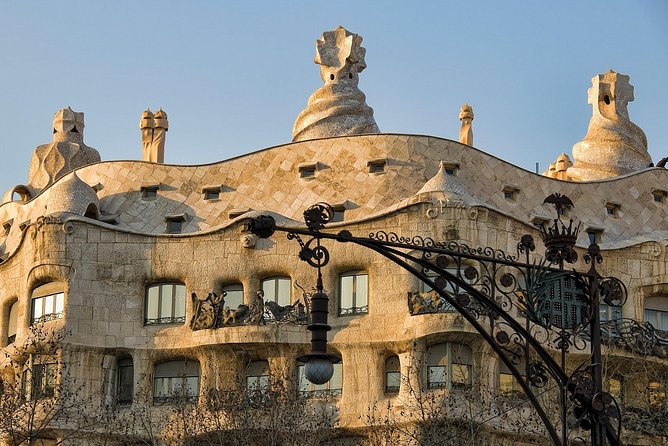
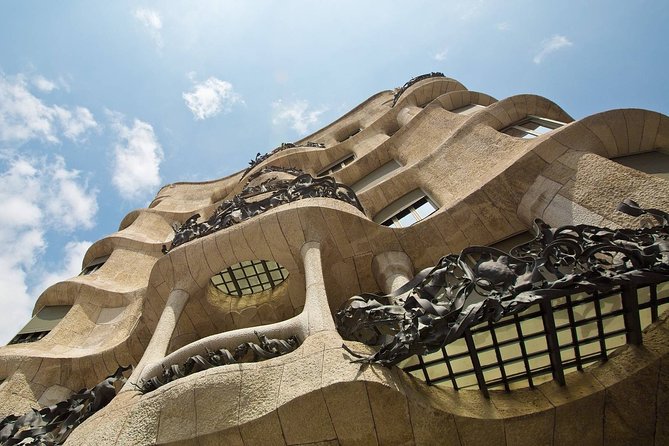
A short walk brings you to Casa Milà, better known as La Pedrera. The building is famous for its rolling stone façade, wrought-iron balconies, and roofline filled with strange sculptural forms.
La Pedrera represents a mature phase of Gaudí’s work. Instead of treating a building as a rigid box, he shaped it around curves and natural forms. The result looks less like a conventional apartment house and more like something formed by wind and water.
The tour explains why nature was such a central source for Gaudí. You will not just hear that the building is unusual. You will learn how organic shapes influenced its appearance and how modernist architects tried to make everyday buildings more expressive.
Again, the outside visit is useful but limited. The rooftop and interior courtyards are among La Pedrera’s main attractions, yet they require admission. If you want to enter, plan that as a separate stop after checking the tour schedule.
Modernist Details and the Legend of Saint George
The route includes another notable modernist building connected with the legend of Saint George, the patron saint of Barcelona and many other places. In Catalonia, Saint George is especially important, and his story appears often in local art and architecture.
This is the kind of detail that makes a walking tour worthwhile. You are not only collecting photographs of unusual buildings. You are learning how local identity, religion, literature, and civic pride shaped the decoration.
The guide may also point out features that are easy to miss at street level. Several participants specifically valued the small architectural details they would not have noticed alone. That is a strong argument for doing this walk early in your stay, before you spend a day wandering the Eixample by yourself.
The route is not hard for most people, but it is still a continuous urban walk. Comfortable shoes are sensible. Since the meeting point and final stop are in different parts of the city, you should also allow time to continue your plans after arriving at Sagrada Família.
Sagrada Família: A Powerful Finish, With an Important Limitation
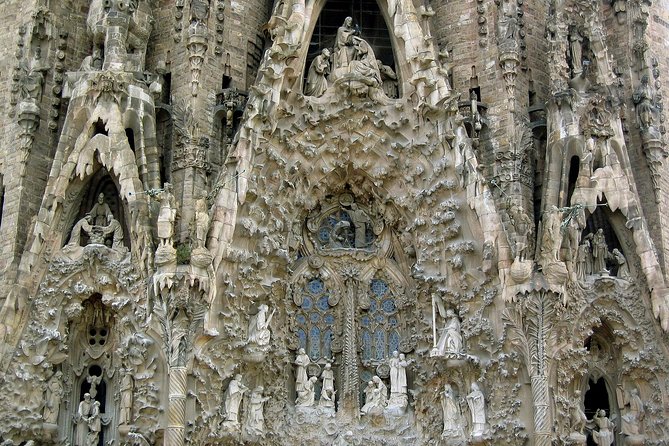
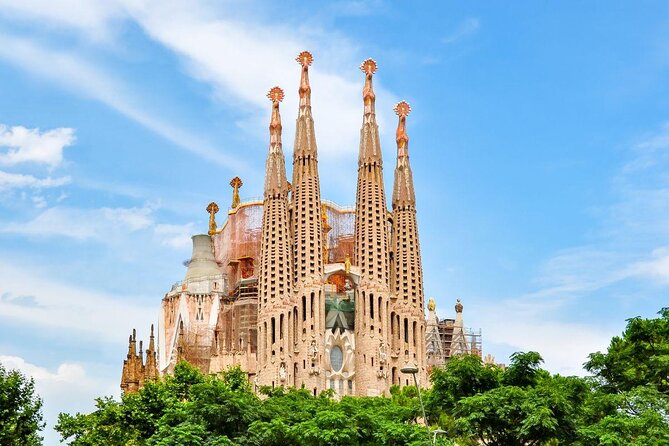
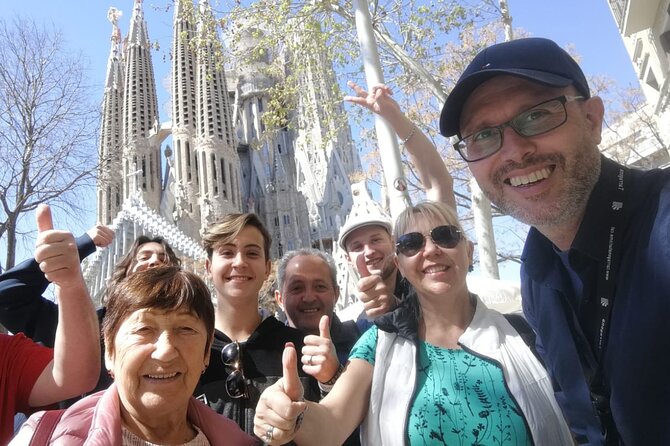
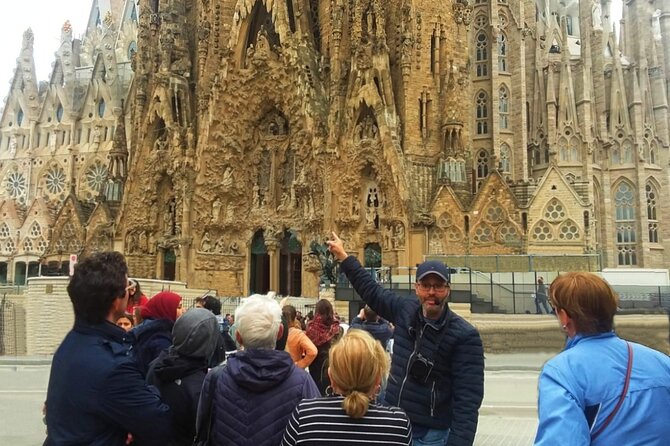
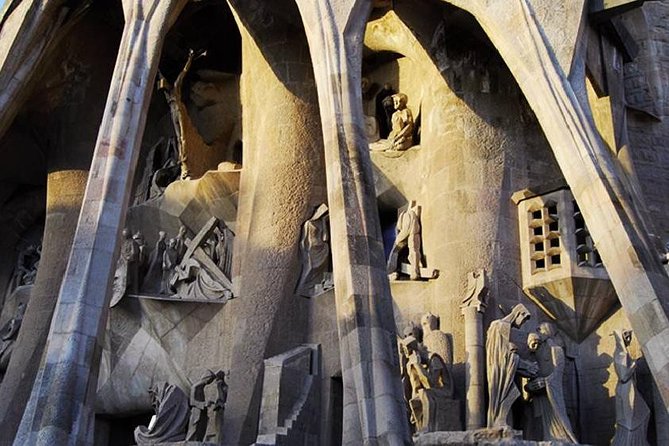
The final stop is Sagrada Família, Gaudí’s unfinished basilica and Barcelona’s most recognizable landmark. Even from outside, the scale and detail can be overwhelming. Towers rise above the surrounding streets, while the façades present a dense mix of figures, symbols, and sculpted scenes.
The guide provides a thorough explanation of modernist architecture and Sagrada Família. This helps you understand the building as Gaudí’s long-term life project, not just as a famous photo stop.
The basilica’s design combines organic forms, religious symbolism, and dramatic use of light. The exterior alone gives you plenty to study, especially if your guide has time to explain the sculpted façade and the meaning behind its shapes.
But you need to understand the schedule. The tour ends at Sagrada Família, and entrance is not listed among the inclusions. The experience therefore gives you an introduction to the basilica, not a full visit inside.
If entering Sagrada Família is a priority, arrange a separate admission for a suitable time. Do not assume that the walking tour includes it. One participant found the wording unclear and expected access that was not provided. Clear planning will prevent that disappointment.
The Guides Make the Difference
The strongest part of this experience is the human element. Different guides lead the walks, so the tone can vary, but the best feedback centers on clear explanations, enthusiasm, humor, and flexibility.
Antonio was praised for careful research, passion, and a fun approach. Jose Carlos was described as friendly and accommodating while sharing Barcelona’s history and architecture. Montse brought strong interest in Catalan culture and helped with restaurant recommendations.
Roberto received especially warm praise for adjusting the pace and approach to suit his group. He also took extra care with a participant using a wheelchair. That suggests a thoughtful guide can make the route more comfortable, though you should still raise mobility needs when booking.
Other named guides, including Laura, Jordi, Alfredo, Tony, and Miguel, were praised for making the subject approachable and giving people time for photographs. These details matter because architecture tours can become dry if the guide simply recites dates and names.
There is one caution. A few tour details depend heavily on the individual guide. One walk ran an hour longer than planned because too much time was spent at earlier sites, leaving less time for Sagrada Família. If you have a fixed appointment afterward, leave a generous buffer.
Group Size, Pace, and Comfort
The group limit is 12 people. That is small enough for a more personal experience without the price of a private tour.
A small group lets you ask why a particular façade looks the way it does, hear the answer without fighting street noise, and move between stops without a long line of people. It also gives the guide a better chance to adjust explanations to the group’s interests.
Most people can take part, and the walk is described as manageable for the average participant. Still, this is not a seated sightseeing experience. You will spend the tour on city streets and move from the central meeting point toward Sagrada Família.
The accessibility feedback is encouraging, with Roberto assisting a participant in a wheelchair. Yet Barcelona’s sidewalks, crossings, and crowded streets can vary, so contact the provider if you need specific arrangements. Service animals are allowed, and the route is near public transportation.
The wide range of start times is useful if you are fitting the walk around museum visits, meals, or a separate Sagrada Família booking. Check the exact time before making other plans, especially because one group finished late.
Is $22.01 a Fair Price?
At $22.01 per person, this is a reasonable price for a guided city walk led by a professional guide. The value comes from interpretation, not admission tickets.
You are paying for a small group, a planned route, and an explanation of modernist architecture that ties together several major sights. If you tried to research the architects and symbolism on your own, you would spend more time preparing and still might miss the connections between the buildings.
The value drops if you expect interior access. Food, drinks, hotel pickup, and drop-off are not included. Most importantly, admission to the major buildings is not part of the stated package.
I would treat the tour as an introduction and orientation. Afterward, choose one or two interiors that interest you most. That approach keeps your sightseeing focused and avoids paying for several buildings simply because they are famous.
Group discounts may be available, which can make the cost even more attractive for families or friends booking together. Confirmation is provided at booking, and free cancellation is available up to 24 hours before the start time. Changes or cancellations inside that window are not accepted for a refund.
Who Should Book This Walk?
I would recommend it to a first-time visitor who wants to understand Barcelona’s modernist architecture without committing to a full day of museum visits.
It suits you especially well if:
- You want a clear introduction to Gaudí and his fellow architects.
- You enjoy city walks and outdoor sightseeing.
- You prefer a small group rather than a large coach tour.
- You want restaurant suggestions and basic orientation from a local guide.
- You plan to visit one or more modernist buildings inside later.
- You want to finish near Sagrada Família.
It is less suitable if your main goal is to enter Casa Batlló, La Pedrera, or Sagrada Família during the tour. In that case, book separate entrance tickets and use this experience for context, or choose a tour that clearly includes admission.
FAQ
How long is the Gaudí modernist walking tour?
The tour lasts approximately 2 hours and 30 minutes. One group reported that its walk ran about an hour longer, so leave extra time before any fixed appointment.
Where does the tour start and finish?
The meeting point is Carrer de Fontanella, 2, in Barcelona’s Ciutat Vella. The tour ends at Sagrada Família in the Eixample district.
How many people can join the tour?
The maximum group size is 12 people. This keeps the group small enough for personal attention from the guide.
Is entrance to Sagrada Família included?
The stated inclusions cover an explanation of Sagrada Família, but they do not list admission inside the basilica. Plan on viewing it as part of the walking route unless your booking confirmation states otherwise.
Are Casa Batlló and La Pedrera included inside the tour?
The tour includes a modernist walking route featuring Casa Batlló and La Pedrera, but entrance tickets are not listed among the inclusions. The itinerary should be understood primarily as an exterior visit.
Can I cancel for a full refund?
Yes. You can cancel at least 24 hours before the experience start time for a full refund. Cancellations and changes made less than 24 hours before the start time are not accepted for a refund.
Should You Book It?
Book this tour if you want an affordable, focused introduction to Barcelona’s modernist architecture, especially if you value a small group and a guide who can explain the details behind the façades.
The strongest reason to choose it is the route and the quality of the guide. The walk brings together Domènech i Montaner, Casa Amatller, Casa Batlló, La Pedrera, Saint George symbolism, and Sagrada Família in one practical outing. Just keep your expectations clear: you are buying an architecture walk, not a package of interior admissions.
For $22.01, that is a good deal for orientation and context. Schedule it early in your Barcelona stay, wear comfortable shoes, ask your guide for dining ideas, and arrange separate tickets if you want to go inside the city’s major modernist buildings.
Recently added around Barcelona
- Montserrat very early : Hiking, Abbey, very small group★ 5.0 · 127 reviews
- Guided Private Yacht Tour in Barcelona Spain★ 5.0 · 6 reviews
- Private Tour from Barcelona to Montserrat (with guide)★ 4.5 · 6 reviews
- Private Tour from Barcelona to Costa Brava (with guide)★ 5.0 · 5 reviews
- Andorra Tour★ 4.0 · 7 reviews
- Barcelona Gaudi Tour: Sagrada Familia, Casa Batllo & Casa Mila★ 5.0 · 4 reviews
- Street Art, Sculptures & Crime Stories Walking Tour – Barcelona★ 5.0 · 11 reviews
- Wine Tasting in Barcelona (Catalan Varieties) Small Groups★ 5.0 · 10 reviews
Gaudí Tours in Barcelona, compared.
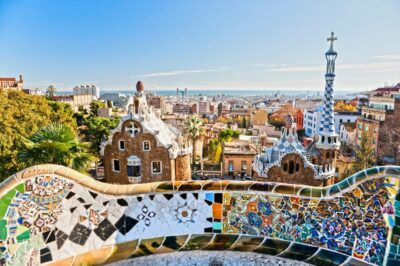
Park Güell and Gaudí House Museum Entry Ticket
Read our review →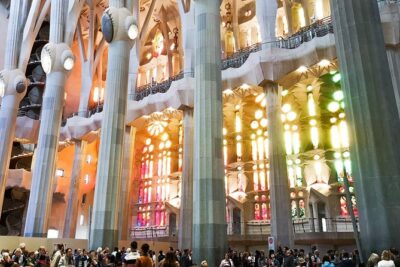
Sagrada Familia & Gaudi Tour Private or Small Group with Tickets
Read our review →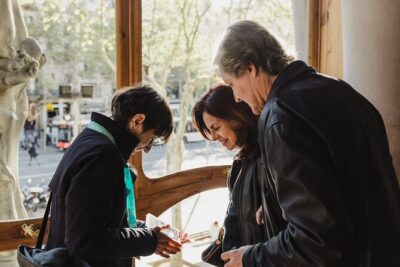
Complete Gaudi Tour: Casa Batllo, Park Guell & Sagrada Familia
Read our review →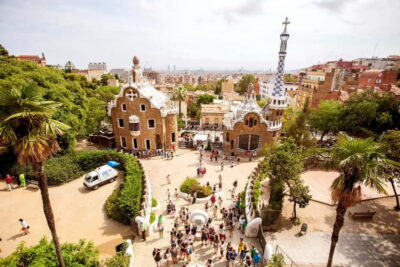
Park Güell: Guided Tour with Optional Gaudí Experience Entry
Read our review →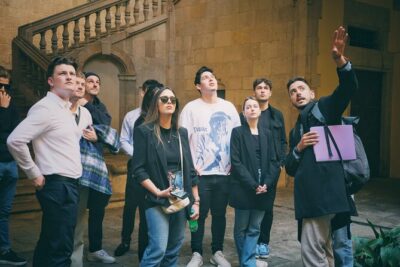
Ramblas, Old Town, Gothic and Gaudi Architecture Walking Tour
Read our review →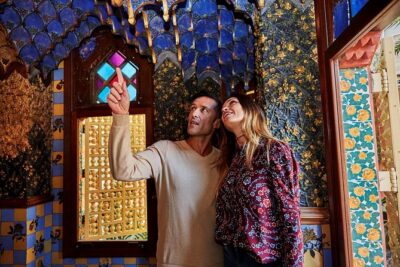
Gaudi´s Casa Vicens Skip the Line Ticket with Audioguide
Read our review →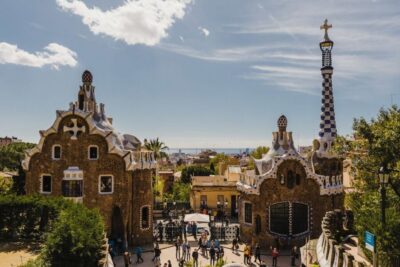
Discover Gaudí, Sagrada Familia, and Park Güell
Read our review →
Browse the lists this tour appears in