
Reviewed · SAGRADA FAMíLIA TOURS
Gaudi & Sagrada Familia Donation-Based Tour in English
Gaudí’s Barcelona is best understood as a story, not a checklist of famous façades. This pay-what-you-want walking tour links his major works from Plaça Reial to Sagrada Família, showing how his style changed over time and how Barcelona’s wealthy industrial families helped shape the city.
I like the way the route combines four major Gaudí buildings with charming streets and squares, rather than keeping you in one neighborhood. I also like the practical touch: your guide teaches you how to handle the Barcelona Metro during the two short rides, which can save time and confusion on your first day.
The main catch is simple: you only see the buildings from outside. You’ll need separate entrance tickets for Palau Güell, Casa Batlló, Casa Milà, and Sagrada Família, and the tour can run longer than its advertised two and a half hours when the guide has plenty to explain.
Key points to know before booking
- See Gaudí’s work in a clear sequence: The route moves from Palau Güell and early work toward Casa Batlló, Casa Milà, and Sagrada Família.
- Expect two short Metro rides: Transportation fares are not included, but the guide helps you understand the system and ticket choices.
- Pay what you want at the end: The $3.63 booking price is only the initial charge. A separate donation to the guide is expected based on your satisfaction.
- All major interiors cost extra: This is an exterior architecture tour, not an admission tour.
- Guides bring strong storytelling: Tati, Julie, Lisa, Jarrod, Ram, and others have been praised for explaining Gaudí’s life, work, and Barcelona customs.
- Plan for weather and city walking: Rain did not stop one group, but comfortable shoes and a rain layer will make the route easier.
A low-cost way to meet Gaudí
At $3.63 per person, this tour is priced more like an introduction than a full sightseeing package. The real payment comes afterward, when you decide what the guide’s time and explanations were worth.
That setup can be excellent value if you want orientation before choosing which buildings deserve an interior visit. You see the outside of several major works, learn the basic story behind them, and finish at Sagrada Família with a better sense of what to book next.
I would not treat the advertised price as the complete cost. You need to budget for two Metro trips, a tip or donation, and any entrance tickets you decide to buy separately. Still, even with those extras, the route gives you a useful first look at several of Barcelona’s most important sights.
The tour starts at 11 a.m. and lasts about two and a half hours. Some guides have taken closer to three hours when they have had more stories to share. That can be a bonus for curious adults and older children, but it may feel long if your group wants a fast photo stop at each building.
More Gaudí Tours in Barcelona
- Barcelona: Park Güell and Gaudí House Museum Entry Ticket
★ 4.5 · 6,326 reviews - Sagrada Familia & Gaudi Tour Private or Small Group with Tickets
★ 4.5 · 1,188 reviews - Complete Gaudi Tour: Casa Batllo, Park Guell & Sagrada Familia
★ 5.0 · 1,152 reviews
Starting under Gaudí’s lamps at Plaça Reial
The meeting point is Plaça Reial, a handsome square just off La Rambla in the old city. Neoclassical buildings frame the space, palm trees rise from the center, and Gaudí-designed lamp posts add an early hint of what is ahead.
This is a good starting point because it gives you a quick sense of Barcelona before the tour focuses on Gaudí. You begin in an older public square, then follow the city’s growth toward the grand avenues of the Eixample.
Your guide will also set the tone here. The strongest guides on this route are not simply reciting dates. Tati has been praised for mixing historical detail with humor, while Julie has been especially good at connecting Gaudí’s personal struggles to the buildings in front of you. Lisa has used photographs to make the architecture easier to understand from the street.
Plaça Reial is also a practical place to meet because it is central and easy to recognize. Arrive early enough to find your guide without rushing through the nearby lanes.
Palau Güell and Gaudí’s first great patron
The first major stop is Palau Güell, a mansion designed for industrialist Eusebi Güell. The building was completed in 1888 and shows Gaudí testing ideas that would become more playful and daring in later work.
From outside, look for the unusual entrance and the careful use of ironwork and stone. The rooftop is one of the palace’s most famous features, though you will not be able to explore it on this tour without a separate ticket.
This stop matters because Güell was not just another client. His support gave Gaudí the chance to develop a personal style, and their partnership shaped several important projects in Barcelona. Your guide uses Palau Güell to explain the link between money, ambition, and experimental architecture in the city.
The allotted time is about 20 minutes. That is enough for a solid exterior explanation and photographs, but not enough for an interior visit. If Palau Güell interests you, plan to return separately.
The Manzana de la Discordia on Passeig de Gràcia
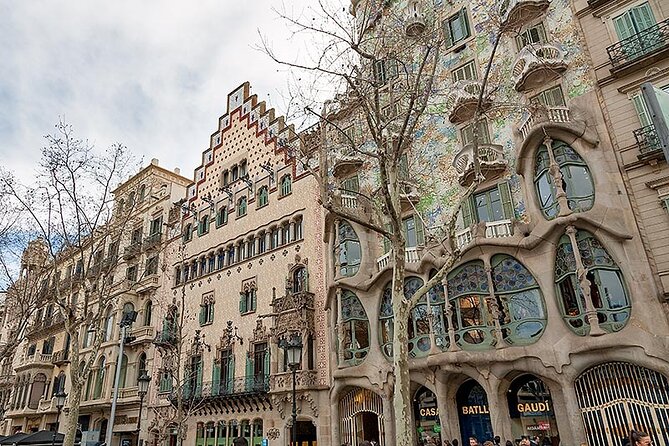
The route then moves toward the Manzana de la Discordia, the famous block on Passeig de Gràcia where Casa Batlló, Casa Amatller, and Casa Lleó-Morera sit close together.
The name refers to the visual competition among the buildings. Each architect used a different style and decorative language, turning one city block into a lesson in Barcelona’s early modern architecture. You can compare the façades without buying a ticket, which makes this one of the best free stops on the route.
The stop is short, around 10 minutes, so listen closely while your guide points out the contrasts. Casa Batlló’s flowing forms feel very different from Casa Amatller’s more structured design. Casa Lleó-Morera adds another layer to the mix.
This is also one of the best photo locations. The buildings face a broad, fashionable boulevard, so you can step back and see the full façades. A small drawback is that Passeig de Gràcia can be noisy and crowded, making it harder to hear a guide. Stay close to the group and do not expect a quiet lecture.
More Sagrada Família Tours in Barcelona:
- Barcelona in 1 Day: Sagrada Familia, Park Guell,Old Town & Pickup
★ 5.0 · 13,541 reviews - Barcelona: Sagrada Familia Skip-the-Line Entry Ticket & Tour
★ 4.8 · 12,789 reviews - Fast Track Sagrada Familia Guided Tour
★ 4.5 · 8,795 reviews - Park Guell and Sagrada Familia Tour with Skip the Line Tickets
★ 5.0 · 6,384 reviews
Casa Batlló and the logic behind the color
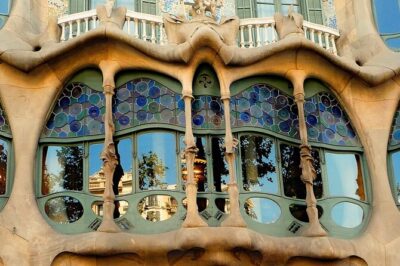
Casa Batlló is the route’s most immediately playful building. Gaudí redesigned it in 1906, creating a façade filled with curved shapes, bright ceramic color, unusual windows, and balconies that seem to shift as you look at them.
From the pavement, the house can look like a fantasy creature or a mask. The guide adds useful context by explaining how the façade, roofline, and colors work together rather than treating them as random decoration.
The building is a UNESCO World Heritage Site, but that status does not include admission to the tour. You only see the exterior here. A separate visit lets you explore the rooms, stairways, roof, and interior details, but the outside alone is enough to make Casa Batlló one of the route’s strongest photo stops.
Allow about 20 minutes. That gives you time to study the façade and hear the main story. If you want photographs without your group in the frame, you may need to wait until the guide finishes speaking.
Passeig de Gràcia, Barcelona’s grand urban stage
Passeig de Gràcia is more than a link between buildings. It shows how Barcelona changed as the Eixample expanded beyond the old city walls.
Today, the avenue is lined with shops, cafés, and grand buildings. During the tour, you see it as both a cultural route and a practical city street. Your guide can help you understand how Gaudí’s work fits into the wider architectural contest along the boulevard.
The walk here is fairly easy, though city traffic and crowds mean you need to stay alert. It is a good place to ask questions about Barcelona’s neighborhoods, Metro tickets, or places to return after the tour.
This part also helps you judge your own interests. If the exteriors leave you wanting more, Casa Batlló and Casa Milà are logical buildings to visit inside later. If you mainly want photographs and background, the street tour may be enough.
Casa Milà, or La Pedrera, and the rooftop you cannot see yet
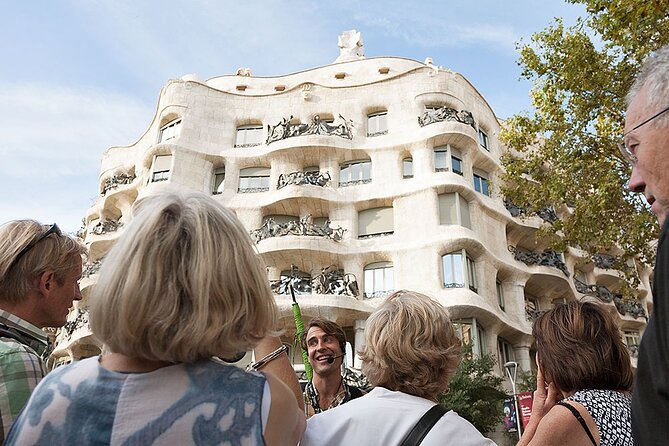
Casa Milà, better known as La Pedrera, brings Gaudí’s work into a more massive and sculptural form. Built in 1912, it has a rippling stone façade, rounded balconies, and a roof filled with distinctive chimneys and ventilation structures.
The building can look heavy from a distance, but the curves keep it from feeling stiff. Your guide explains how Gaudí treated practical features as part of the design. The chimneys and rooftop forms are not just decoration, and that is one reason the interior visit is worthwhile for architecture fans.
Again, the tour only covers the outside. You receive the story and the street-level view, but not access to the rooftop or rooms. A separate ticket is required.
The stop lasts about 20 minutes. I would take a few photos, then focus on the guide’s explanation rather than trying to photograph every balcony. The value here comes from learning what you are seeing. Without that context, La Pedrera can seem like a strange stone apartment block. With it, the design choices make much more sense.
Two Metro rides that make the route work
This is not a continuous walk from start to finish. You take two short Metro trips, and the fare is not included.
That is worth knowing before you book because the route covers several parts of Barcelona. The Metro saves your legs and keeps the tour moving, but you need to have a valid ticket or pass. Guides such as Lisa and Jarrod have been praised for explaining ticket choices and showing visitors how to use the system.
For a first day in Barcelona, this practical help may be one of the tour’s most useful features. You learn enough to make later trips less stressful, and you get a quick lesson in moving between the old city, Passeig de Gràcia, and Sagrada Família.
Have your phone ready for directions and keep your belongings secure. One guide gave direct advice about staying alert around petty theft without making the city sound frightening. That is the right approach in a busy European city.
Arriving at Sagrada Família
The final stop is the Basilica de la Sagrada Família, where the tour ends after about 40 minutes.
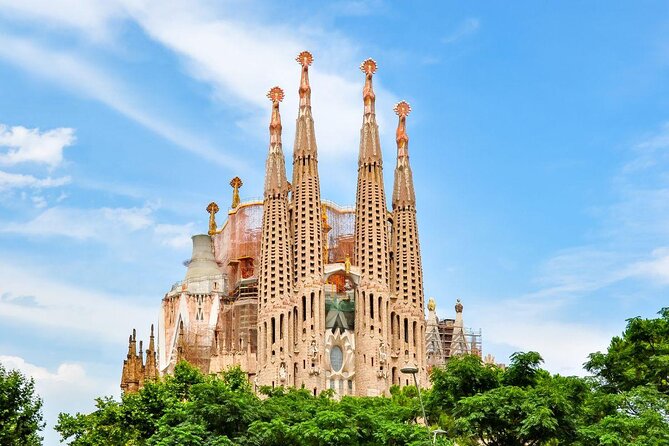
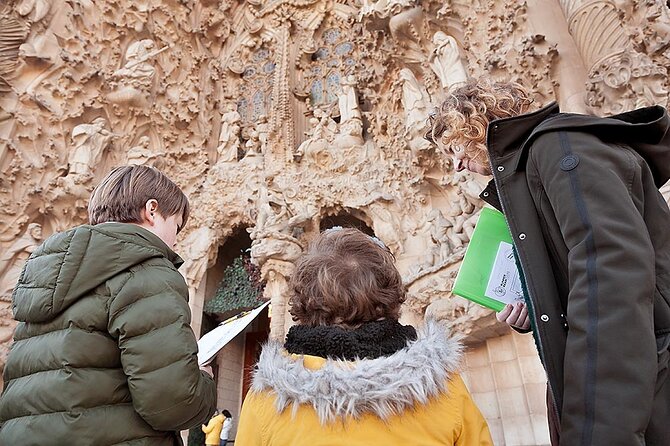
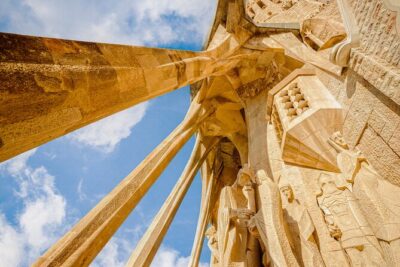
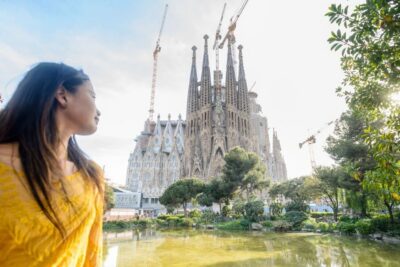
This is the biggest architectural payoff of the day. Gaudí began work on the basilica in 1882, and its Gothic and Art Nouveau influences appear in a form unlike anything else in Barcelona. The towers, sculpted façades, and symbolic details give your guide plenty to explain.
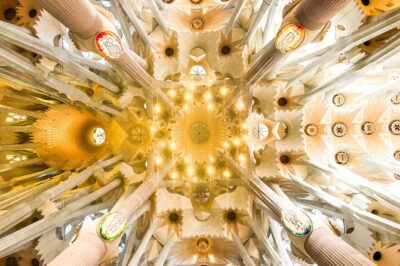
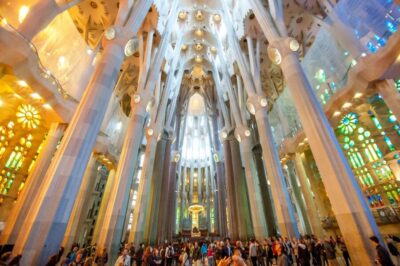
Inside, stained glass changes the character of the building, but you will not enter during this experience. Sagrada Família admission is separate, and advance planning matters. One visitor who took the tour in October on a Saturday could not get inside without booking at least a week ahead.
That is the most important practical tip in this review: if you want to enter Sagrada Família, arrange the ticket separately before your visit. The walking tour can help you understand the outside, but it cannot replace the basilica experience itself.
The tour ends near Sagrada Família, with Metro and bus connections nearby. That makes the finish convenient. You can continue to another neighborhood, find lunch, or return later for your timed admission.
The guides make the difference
The tour depends heavily on who leads it. The guide names associated with this route include Tati, Julie, Lisa, Jarrod, Ram, Ivan, Catherine, Katharyn, and others.
The strongest qualities are clear speech, humor, practical help, and a good grasp of Gaudí’s life. Julie has been especially effective at telling Gaudí’s story from his early career through his later years. Tati has added enough detail to hold the attention of an 11-year-old, which says something about her ability to make architecture accessible.
Jarrod has combined Gaudí stories with Metro advice and basic safety guidance. Lisa has used photographs to explain buildings that can be difficult to read from the sidewalk. These details matter because exterior architecture tours can otherwise become a series of names and dates.
There is one caution about the English format. One Italian-speaking visitor found an Australian guide too fast and left early. The company explained that the tour is conducted in English and that the guide had slowed down. If you are not comfortable following spoken English in a noisy street setting, this may not be the best choice.
Group size, walking pace, and weather
The booking information allows up to six people per reservation, while the full tour can reach 20 people. That difference is important. You may book as a small party, but you should not assume the whole group will have only six people.
A group of 20 can still work, but you need to stay near the guide, especially during Metro transfers and busy street crossings. Smaller groups make it easier to ask questions and hear every explanation.
The route is manageable for most people, but it involves city walking, standing, and public transportation. One French-speaking visitor described the route as suitable for people who are not regular walkers, but you should still wear comfortable shoes.
Rain is another consideration. The tour can continue in wet weather, and one group appreciated a guide who kept everyone moving and handled the Metro well. Bring a rain jacket or umbrella rather than assuming bad weather will cancel the experience.
Service animals are allowed, the route is near public transportation, and most people can participate. The available information does not promise full step-free access at every point, so contact the provider if you have specific mobility needs.
Who should book this Gaudí introduction?
I would choose this tour if you are visiting Barcelona for the first time and want a clear orientation before spending money on several admission tickets.
It suits:
- First-time visitors who want to connect major sights across different neighborhoods
- Architecture fans who want context before choosing interior visits
- Families with older children who respond well to stories and visual details
- Solo visitors who prefer a structured route
- Budget-conscious visitors who want a low upfront cost
- Anyone who wants a quick introduction to the Barcelona Metro
I would choose something else if your main goal is to enter every building. This experience does not include admission, and the exterior stops are too brief for a full museum-style visit.
I would also think twice if you need a very small group or if spoken English is difficult for you in street noise. The maximum overall group size is 20, despite the six-person reservation limit.
Should you book it?
Book it if you want a lively introduction to Gaudí, practical city orientation, and a smart route through several major Barcelona sights for very little upfront cost.
Do not book it expecting skip-the-line access, interior visits, or a private tour. Bring money for the Metro and a fair donation, wear comfortable shoes, and reserve Sagrada Família separately if you want to go inside.
For most first visits, I like this as a starting point rather than a complete Gaudí experience. It gives you the story, the street views, and the confidence to decide which buildings deserve more of your time.
FAQ
How much does the tour cost?
The listed price is $3.63 per person. The experience also asks you to make a donation to the guide at the end based on your satisfaction.
How long does the tour last?
The planned duration is about two hours and 30 minutes. It may run closer to three hours when the guide spends extra time explaining Gaudí and Barcelona.
What language is the tour offered in?
The tour is offered in English.
Where does the tour start and finish?
It starts at Plaça Reial at 11 a.m. and ends at Basílica de la Sagrada Família on Carrer de Mallorca. Metro and bus connections are available near the end point.
Are attraction tickets included?
No. The buildings are viewed from outside, and entrance tickets for Palau Güell, Casa Batlló, Casa Milà, and Sagrada Família are not included.
Do I need to pay for transportation?
Yes. You take two short Metro trips, and transportation fares are not included in the tour price.
What is the group size?
The maximum number of people allowed per reservation is six, while the full tour can have up to 20 people.
Recently added around Barcelona
- Montserrat very early : Hiking, Abbey, very small group★ 5.0 · 127 reviews
- Guided Private Yacht Tour in Barcelona Spain★ 5.0 · 6 reviews
- Private Tour from Barcelona to Montserrat (with guide)★ 4.5 · 6 reviews
- Private Tour from Barcelona to Costa Brava (with guide)★ 5.0 · 5 reviews
- Andorra Tour★ 4.0 · 7 reviews
- Barcelona Gaudi Tour: Sagrada Familia, Casa Batllo & Casa Mila★ 5.0 · 4 reviews
- Street Art, Sculptures & Crime Stories Walking Tour – Barcelona★ 5.0 · 11 reviews
- Wine Tasting in Barcelona (Catalan Varieties) Small Groups★ 5.0 · 10 reviews
Sagrada Família Tours, compared.
Barcelona in 1 Day: Sagrada Familia, Park Guell,Old Town & Pickup
Read our review →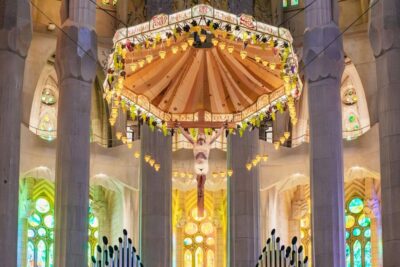
Sagrada Familia Skip-the-Line Entry Ticket & Tour
Read our review →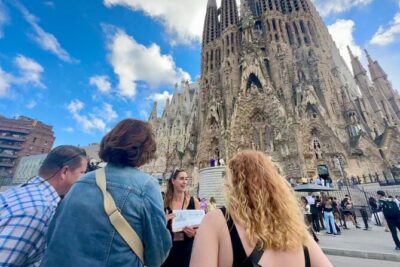
Park Guell and Sagrada Familia Tour with Skip the Line Tickets
Read our review →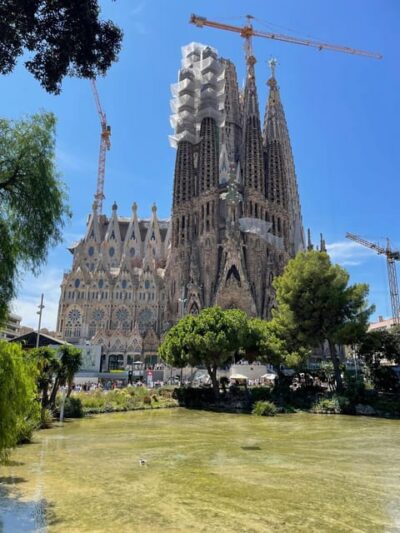
Sagrada Familia Guided Tour with Tower Access
Read our review →Browse the lists this tour appears in