
Reviewed · GAUDí TOURS IN BARCELONA
Gaudí and Modernism – Private Walking Tour
Barcelona’s Modernist story is easiest to understand on foot, where grand façades, sculpted balconies, symbolic lamps, and old family fortunes line the same broad avenue. This private walk connects Plaça de Catalunya, Passeig de Gràcia, and Sagrada Família, giving you the city’s architectural change in one clear route.
I like the relaxed pace and the way guide Patrick links buildings to politics, business, family life, and the Spanish Civil War. I also like the close look at Casa Amatller and Casa Lleó i Morera, two buildings often overshadowed by Gaudí. The main consideration is that the tour is only about two and a half hours, so Sagrada Família is viewed from outside rather than visited inside.
Key points to know before booking
- Private English-language walk: Your group has the guide to itself, with room to ask questions and adjust the pace.
- A useful Barcelona route: The walk begins at the Apple store on Passeig de Gràcia and ends outside Sagrada Família.
- Modernist detail beyond Gaudí: Casa Amatller, Casa Lleó i Morera, Casa Malagrida, and the Bancs Fanals receive attention.
- Strong historical context: Patrick connects architecture with Barcelona’s growth, bourgeois families, tobacco, chocolate, and Civil War damage.
- Good before other Gaudí sights: The tour gives you a framework for understanding Gaudí’s style before visiting his houses or the basilica.
- A short outdoor introduction: You see Sagrada Família’s façades and hear its story, but admission inside is not part of the walk.
Why this route makes Barcelona easier to read
Barcelona can feel like two cities pressed together. Plaça de Catalunya marks the meeting point between the older city and the Eixample, the planned expansion that gave Barcelona its broad streets and grand apartment blocks.
That contrast is the first lesson of the tour. Instead of beginning with a famous building and a pile of dates, you start with the city itself. The opening discussion covers how Barcelona developed and points out marks left by the fighting of the Spanish Civil War that remain visible.
That context matters. Modernist buildings were not simply decorative projects. They reflected the confidence of wealthy Catalan families at the end of the 19th century and the beginning of the 20th century. Their homes advertised money, taste, family identity, and sometimes political or cultural beliefs.
I find this citywide approach more useful than a tour that treats each façade as an isolated work of art. Once you understand the Eixample as a showcase for the rising bourgeoisie, the unusual balconies and carved animals begin to make more sense.
More Gaudí Tours in Barcelona
- Barcelona: Park Güell and Gaudí House Museum Entry Ticket
★ 4.5 · 6,326 reviews - Sagrada Familia & Gaudi Tour Private or Small Group with Tickets
★ 4.5 · 1,188 reviews - Complete Gaudi Tour: Casa Batllo, Park Guell & Sagrada Familia
★ 5.0 · 1,152 reviews
Plaça de Catalunya and the move into Eixample
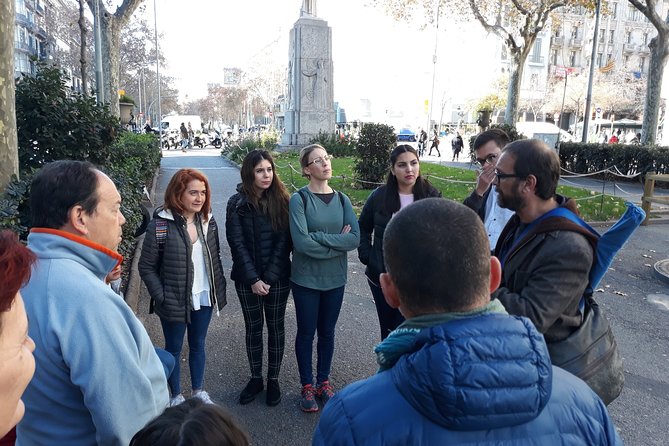
The first stop lasts about 10 minutes and takes place at Plaça de Catalunya. You will discuss the square’s role as the dividing line between the old city and the newer Modernist district.
This is a short introduction, not a long historical lecture. Its value is orientation. You learn why the streets ahead look wider and more orderly than the lanes of the old city, and you begin to see Barcelona’s expansion as a response to urban pressure and changing wealth.
The meeting point is listed at Apple Passeig de Gràcia, at Pg. de Gràcia, 1, in the Eixample. Pickup is offered, but the published starting point is the Apple store, so confirm the exact arrangements when booking.
Because the tour is private, you can ask Patrick to pause over a point that interests you. That makes a difference here. A family interested in architecture may want more time with façades, while another group may prefer the political and social story of the city.
Passeig de Gràcia and the city’s grand avenue
From Plaça de Catalunya, the route follows Passeig de Gràcia. The walk along this avenue takes about 15 minutes as a formal stop, though the buildings around you provide much of the visual material for the rest of the tour.
Passeig de Gràcia was the grand address of Barcelona’s 19th-century and early 20th-century upper class. The broad avenue became a place where prominent families commissioned elaborate homes and competed through architecture.
You will see how Modernist design changed the ordinary parts of a building. A doorway could become a carved sculpture. A balcony could suggest bone, flowers, masks, or animals. Rooflines took on their own character, and façades became public statements.
This is also a practical part of the tour because the route keeps you in one of Barcelona’s most important architectural zones. You are not spending the limited time crossing the city by bus or taxi. The walk is concentrated, easy to follow, and full of details at street level.
Bancs Fanals and the overlooked details overhead
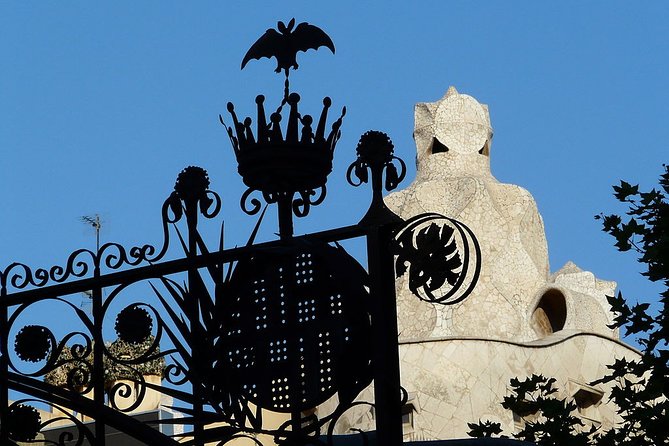
The Bancs Fanals are elaborate Modernist benches and lampposts along Passeig de Gràcia. The tour allows about 10 minutes for them, which is enough to stop, look closely, and hear why these fixtures deserve attention.
They have decorated the avenue for more than a century and contain symbols and small design details that are easy to miss when you are focused on the major houses. This is one of the tour’s best habits: it asks you to look at the whole street, not just the buildings with famous names.
You might normally walk past a lamppost without giving it a second glance. Here, street furniture becomes part of the city’s design language. That makes the avenue feel less like a row of separate attractions and more like a carefully shaped public space.
Bring comfortable shoes, since the experience is entirely built around walking and standing outdoors. The route is not presented as a strenuous hike, and the pace is described as relaxed, but a private tour still works best when you can stop without worrying about keeping up with a large group.
More Barcelona Walking Tours:
- Barcelona Tapas and Wine Experience Small-Group Walking Tour
★ 5.0 · 5,804 reviews - Barcelona: Tapas Walking Tour with Food, Wine, and History
★ 4.8 · 4,261 reviews - Barcelona Tapas Walking Tour: Food, Wine & History
★ 4.5 · 1,928 reviews - Barcelona: Tapas Food Crawl Walking Tour with Tastings
★ 4.9 · 1,798 reviews
Casa Lleó i Morera, the house with a story in its façade
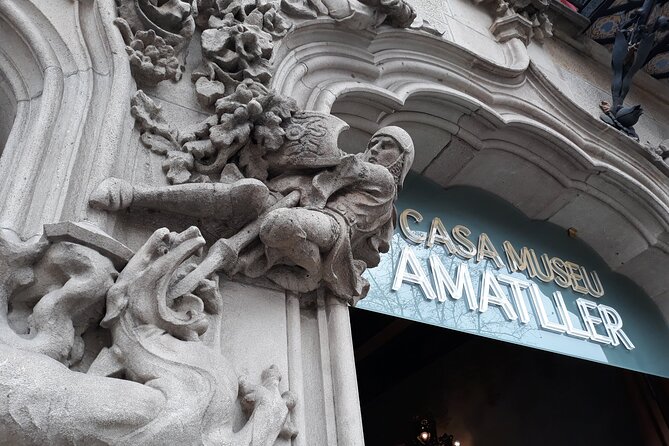
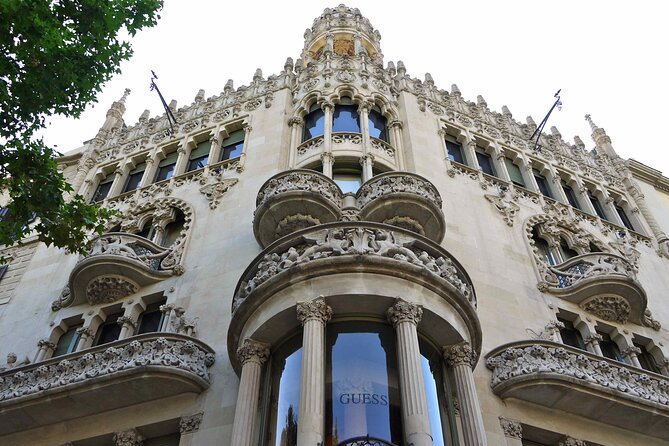
Casa Lleó i Morera is one of the key buildings on the route. Designed by Domènech i Montaner at the beginning of the 20th century, it forms part of the famous Manzana de la Discordia, the block known for its concentration of Modernist architecture.
The exterior is packed with clues about the architect and the owner. Patrick explains the house’s details, its symbols, and the secrets held in the façade. This is precisely the sort of stop that benefits from a guide. Without context, you may admire the decoration but miss why particular figures or patterns were chosen.
Casa Lleó i Morera also helps broaden the story beyond Gaudí. Barcelona’s Modernist movement included several major architects, each with a different approach to ornament, structure, and symbolism. Seeing Domènech i Montaner alongside Gaudí makes the period feel less like a one-person show.
There is a practical limitation. The route focuses on the exterior, so you should not book it expecting a full interior visit to every building. Its strength is learning how to read what you can see from the pavement.
Casa Amatller and symbols from a chocolate family
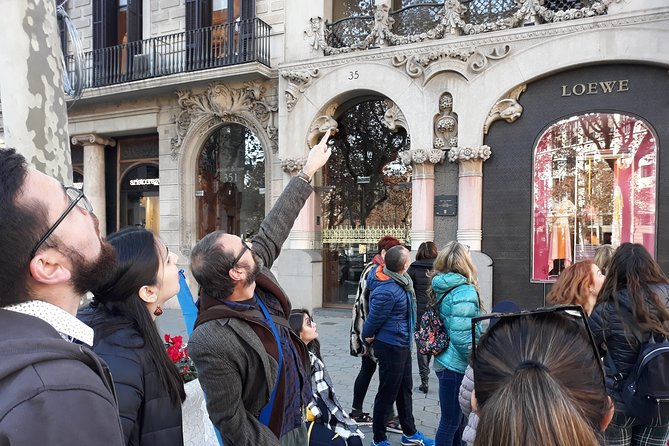
Casa Amatller is another major stop on the Manzana de la Discordia. Architect Puig i Cadafalch designed the house for the Amatller family, owners of a chocolate-producing business.
That ownership adds a useful human angle. You will hear about chocolate production at the time, the Amatller family, and the symbols worked into the façade. The home becomes more than an ornate address. It reflects the business and identity of the people who lived there.
You can also enter the inner courtyard for free, where you may see the staircase, old elevator, and refined sculptures. This is a valuable extra because even a brief look inside changes your sense of how the building functioned. The exterior shows public prestige, while the courtyard gives a glimpse of daily movement through the home.
Access details can vary, so treat the courtyard as a possible inclusion rather than the main reason to book. The tour’s central experience remains the guided walk and exterior interpretation.
I especially like this stop for visitors who want practical visual tools. Look for repeated shapes, creatures, and decorative references rather than simply asking whether the building looks beautiful. Patrick’s explanations help you connect those choices to the family and the period.
Casa Malagrida and the story of tobacco wealth
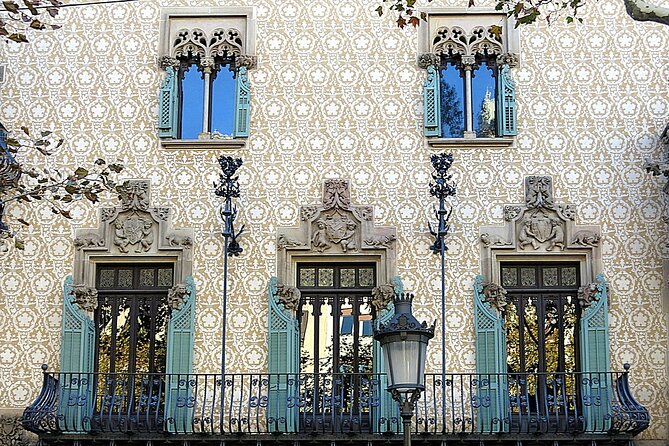
Casa Malagrida is introduced as the first Modernist bourgeois home on the route. It belonged to Señor Malagrida, a wealthy tobacco industrialist, and its façade becomes a way to discuss his life between Argentina and Spain.
This stop gives the tour a useful change of scale. Casa Amatller and the better-known buildings can seem like grand monuments, but Casa Malagrida brings the focus back to one owner and one fortune. The decoration reflects personal biography, showing how travel, commerce, and social position could appear in a Barcelona residence.
You will not spend hours inside the house. The point is to understand how a bourgeois home communicated its owner’s story from the street. That is a recurring theme in the tour and one of its most practical lessons: façades can function like family portraits.
Finishing at Gaudí’s Sagrada Família
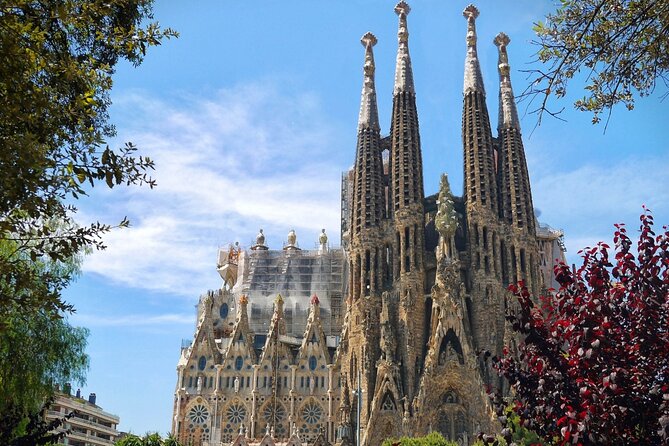
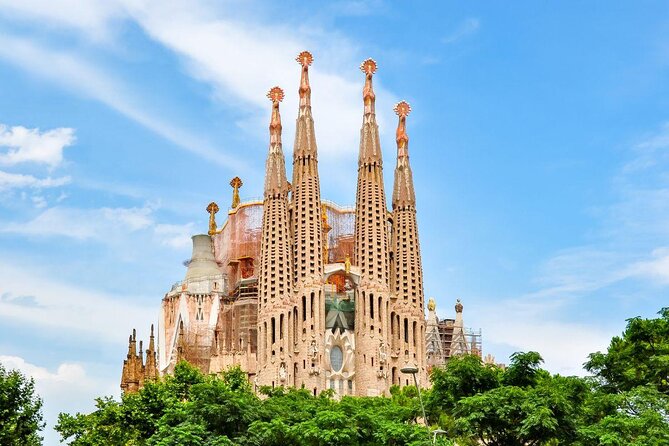
The route ends at Sagrada Família, Barcelona’s most celebrated monument. The final section lasts about 30 minutes and examines the different façades from outside.
Patrick explains the basilica’s long and surprising story, its unfinished state, and details about its construction. You will also look for secrets and design features rather than simply taking the standard postcard view.
This is a strong finish because the earlier stops have prepared you to look closely. After seeing how Modernist architects used symbols, sculpted surfaces, unusual forms, and personal references, you can approach Sagrada Família with more questions. What is structural? What is symbolic? Which details belong to Gaudí’s vision, and what does the unfinished work tell you about the building?
The limitation is clear: this tour does not include entry to Sagrada Família. You view the façades from the outside, and the experience ends in front of the basilica. If you want the interior, tower access, or a timed admission, you will need a separate ticket and visit.
Still, ending here is efficient. You finish at one of Barcelona’s most important sights and can continue with your own plans nearby. The endpoint is in Eixample, directly in front of Sagrada Família.
What Patrick adds to the experience
Patrick’s strongest role is as a connector. He ties architecture to political, social, and economic change instead of presenting a string of building names.
The pace is relaxed enough for discussion and for stopping to study design details. That matters on a route where the best discoveries are often small: a symbol in stone, a sculpted figure, an unusual balcony, or an object above eye level.
He also adapts the walk to the group. The tour works well for visitors who want a conversational experience rather than a fixed speech delivered to a crowd. It has also been adapted to the needs of two older adults, which suggests that the private format can be useful if your party needs a gentler pace.
The tour is offered in English. If you want a specific focus, such as Gaudí’s construction methods or the social history of Barcelona’s upper class, ask at the start. A private format gives you a better chance of shaping the conversation than a large scheduled group would.
Is $66.08 per person good value?
At $66.08 per person, this is not the cheapest way to see Passeig de Gràcia. You are paying for a private guide, a focused route, and the chance to ask questions throughout the two-and-a-half-hour walk.
The value is strongest for a first visit to Barcelona. Patrick’s explanations give you a framework you can use later at Gaudí’s houses and other Modernist sites. One practical tip is to schedule the tour near the beginning of your stay, before visiting the interiors of Gaudí’s major works.
The price makes less sense if you only want quick photographs or if you already know Barcelona’s Modernist architecture well. It also does not cover admission to Sagrada Família, and the key buildings are mainly discussed from outside.
For a private experience, the cost becomes easier to justify when shared by a small group. Group discounts are offered, though the exact reduction is not specified. Only your party participates, so you are not paying for a general crowd experience with an inflexible pace.
Who should book this private walk?
I would choose this tour if you want architecture explained in plain language and tied to real people, businesses, and city change. It suits first-time visitors, architecture fans, couples, families, and older adults who prefer a slower private walk.
It is also a good choice if Gaudí is only part of your interest. You will see the work of Domènech i Montaner and Puig i Cadafalch, examine Modernist street furniture, and hear about families connected with chocolate, tobacco, and Barcelona’s expanding wealth.
You may want something else if your main goal is entering several buildings. This is an outdoor walking tour, and its Sagrada Família segment is exterior only. You should also confirm the starting arrangements if you need pickup, since the listed meeting point is the Apple store on Passeig de Gràcia.
The tour offers free cancellation up to 24 hours before the start time. Changes made inside that window are not accepted, and poor weather can lead to a new date or full refund. Confirmation is supplied when you book, and the route is near public transportation.
Should you book Gaudí and Modernism?
Book it if you want Barcelona’s famous façades to make sense rather than simply look impressive. The private format, Patrick’s adaptable style, and the route from Plaça de Catalunya to Sagrada Família make this a smart opening activity.
I would especially recommend it before visiting Gaudí’s houses or the basilica interior. You will see more once you know how to look for symbols, family identity, construction clues, and the rivalry among Barcelona’s Modernist architects.
Skip it if you want interior admission included or prefer to explore at your own speed without a guide. For most visitors seeking context, though, the walk offers a focused introduction to Barcelona’s architecture at street level, with enough history to make the rest of the city easier to understand.
FAQ
How long does the Gaudí and Modernism private walking tour last?
The tour lasts approximately 2 hours and 30 minutes.
Where does the tour begin?
The listed meeting point is Apple Passeig de Gràcia, at Pg. de Gràcia, 1, in Barcelona’s Eixample district.
Where does the tour end?
The tour ends in front of Sagrada Família in the Eixample district.
Is Sagrada Família admission included?
No. The tour views Sagrada Família from the outside and discusses its façades, history, construction, and details.
Is the tour private?
Yes. Only your group participates in the private tour.
What language is the tour offered in?
The tour is offered in English.
Who is the guide?
The guide identified for this experience is Patrick.
Can I cancel for a full refund?
Yes. You can cancel for a full refund up to 24 hours before the experience start time. If poor weather causes the tour to be canceled, you will be offered another date or a full refund.
Recently added around Barcelona
- Montserrat very early : Hiking, Abbey, very small group★ 5.0 · 127 reviews
- Guided Private Yacht Tour in Barcelona Spain★ 5.0 · 6 reviews
- Private Tour from Barcelona to Montserrat (with guide)★ 4.5 · 6 reviews
- Private Tour from Barcelona to Costa Brava (with guide)★ 5.0 · 5 reviews
- Andorra Tour★ 4.0 · 7 reviews
- Barcelona Gaudi Tour: Sagrada Familia, Casa Batllo & Casa Mila★ 5.0 · 4 reviews
- Street Art, Sculptures & Crime Stories Walking Tour – Barcelona★ 5.0 · 11 reviews
- Wine Tasting in Barcelona (Catalan Varieties) Small Groups★ 5.0 · 10 reviews
Gaudí Tours in Barcelona, compared.
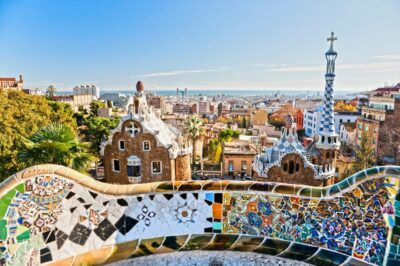
Park Güell and Gaudí House Museum Entry Ticket
Read our review →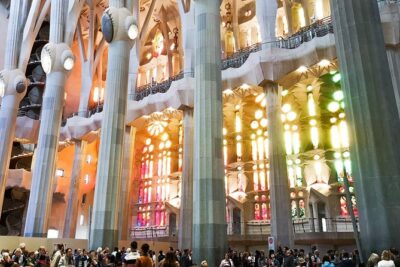
Sagrada Familia & Gaudi Tour Private or Small Group with Tickets
Read our review →
Complete Gaudi Tour: Casa Batllo, Park Guell & Sagrada Familia
Read our review →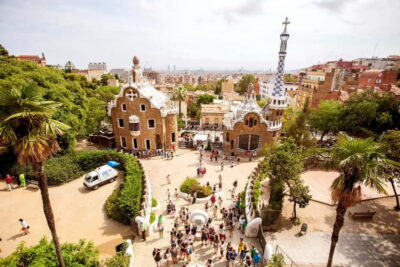
Park Güell: Guided Tour with Optional Gaudí Experience Entry
Read our review →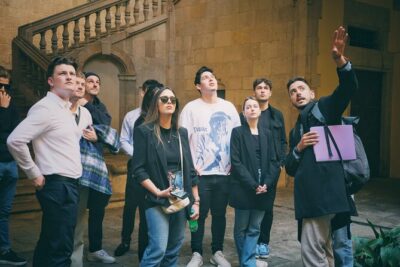
Ramblas, Old Town, Gothic and Gaudi Architecture Walking Tour
Read our review →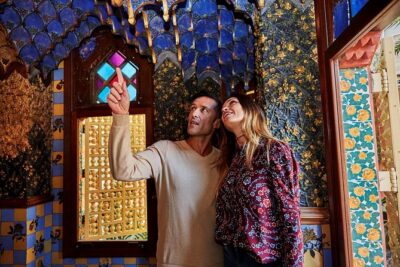
Gaudi´s Casa Vicens Skip the Line Ticket with Audioguide
Read our review →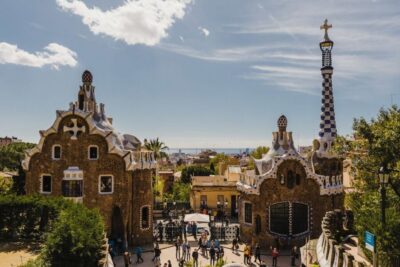
Discover Gaudí, Sagrada Familia, and Park Güell
Read our review →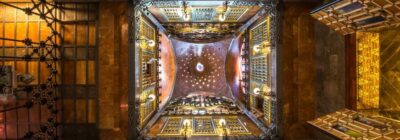
Browse the lists this tour appears in