
Reviewed · GAUDí TOURS IN BARCELONA
Gaudí and Barcelona Legends – Private Tour
Barcelona’s Modernist architecture is easier to understand when you stop treating it as a collection of pretty façades. On this private walking tour, your guide connects Gaudí’s buildings with the artists, architects, cafés, and local legends that shaped the city around them. I like the personal format, and I like that the route includes details most people miss while hurrying along Passeig de Gràcia. The main consideration is simple: at about two hours, this is an introduction from the street, not a full interior tour.
I also like the route’s finish in El Born, after the grand buildings of the Eixample and the Palace of Catalan Music. It gives the walk a change of mood and lets you see Barcelona as a lived-in city rather than only a showcase of architecture. Since admission fees are not included, you should budget separately if you want to enter La Pedrera, Casa Batlló, or the concert hall.
Key points to know before booking
- Private and crowd-free: Your group has its own professional guide, so you can ask questions and set the pace within the two-hour schedule.
- Gaudí with wider context: The route covers La Pedrera and Casa Batlló, then places them beside the work of Casa Amatller, Casa Morera, and the Palace of Catalan Music.
- A story-led walk: Expect anecdotes about Gaudí, Picasso, the architects’ café Els 4 Gats, and the legends tied to El Born.
- Mostly an exterior tour: The main buildings are explained from outside, and entrance tickets are not included.
- Easy central route: The walk begins at La Pedrera on Passeig de Gràcia and ends at the Palace of Catalan Music, near the yellow metro line.
- Best for curious first-time visitors: You get a useful overview of Barcelona’s Modernist center without spending a full day inside museums or monuments.
Why this private Gaudí walk works well
Gaudí is often presented as a lone genius with a very recognizable style. That is only part of the story. Barcelona’s Modernisme was a wider movement, and this tour gives you a chance to compare several architects within a short stretch of the city.
The private setup matters here. On a large group walk, it can be hard to interrupt with a question about a carving, balcony, or bit of local history. With your own guide, you can ask why one façade looks theatrical, why another feels more restrained, or how a particular building fits into Barcelona’s growth.
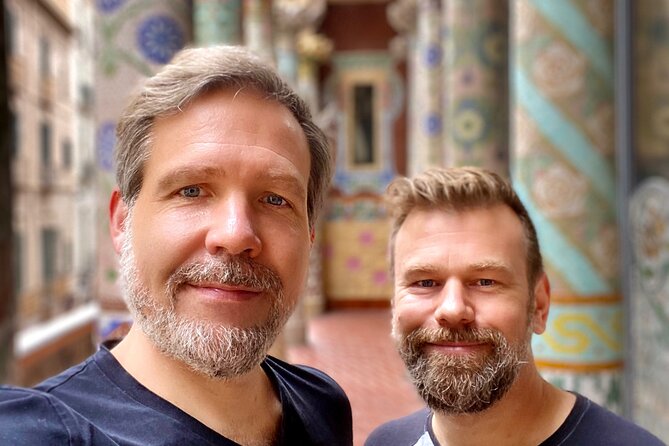
The experience is offered in English and includes a professional tour guide. Michael and Christian are names connected with the guiding team, and the feedback about the guiding style points to clear explanations, strong command of Gaudí’s work, and anecdotes that keep the walk moving. If Michael is your guide, you can also ask him for a restaurant suggestion at the end, a small but useful extra for your final evening in town.
The route is listed at roughly two hours. That makes it easy to fit between meals, museum visits, or a later reservation. It also means you should not expect long stops inside each building. The value comes from interpretation, comparisons, and seeing the city street by street.
More Gaudí Tours in Barcelona
- Barcelona: Park Güell and Gaudí House Museum Entry Ticket
★ 4.5 · 6,326 reviews - Sagrada Familia & Gaudi Tour Private or Small Group with Tickets
★ 4.5 · 1,188 reviews - Complete Gaudi Tour: Casa Batllo, Park Guell & Sagrada Familia
★ 5.0 · 1,152 reviews
Starting at La Pedrera on Passeig de Gràcia
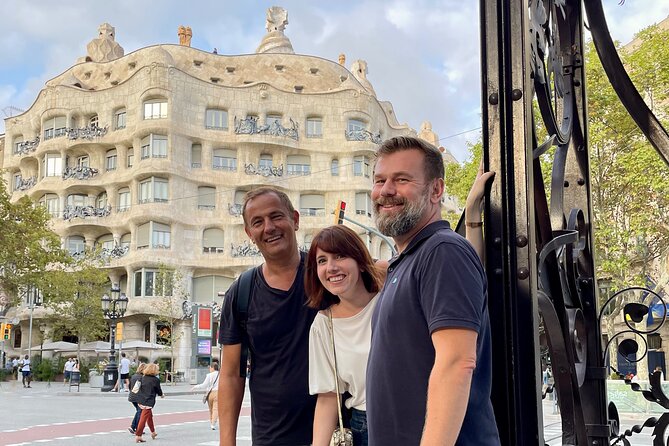
Meet at Farmàcia La Pedrera, at Passeig de Gràcia 90. This puts you beside Casa Milà, better known as La Pedrera, one of Antoni Gaudí’s most famous civic buildings.
Your guide begins with the building’s history and façade. La Pedrera was Gaudí’s last civic commission before he gave the remaining years of his life to the Sagrada Família. That fact helps explain why the building feels like a turning point. It is not simply another stop on a Gaudí checklist. It belongs to the late phase of his work, when architecture, structure, sculpture, and natural forms were becoming hard to separate.
The stop is scheduled for about 10 minutes, and the admission ticket is not included. You will learn from the outside unless you purchase entry separately. That is an important distinction because La Pedrera has interior spaces and rooftop features that require a ticket. This tour explains the building well from the street, but it does not replace a full visit.
I recommend arriving a little early so you can get oriented before the guide begins. Passeig de Gràcia is a major avenue, and the starting point is central and easy to identify.
Walking Passeig de Gràcia from pavement to lamp posts
The walk down Passeig de Gràcia is not just a transfer between famous buildings. The street itself becomes part of the lesson.
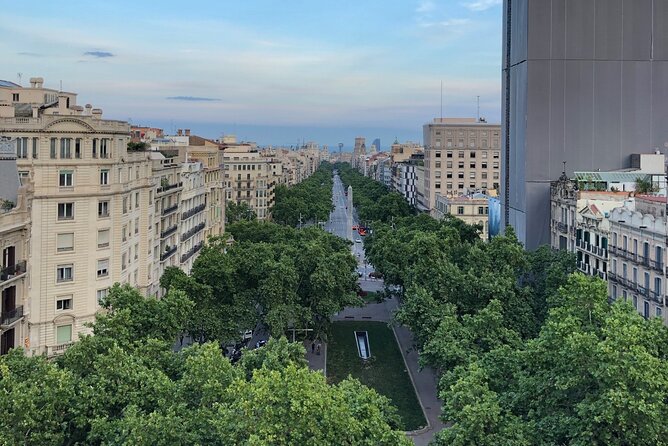
Your guide points out details from the pavement to the lamp posts, showing how Barcelona’s planned Eixample district was shaped as a complete urban setting. This is one of the more useful parts of the tour because it shifts your attention away from façades alone. You begin to notice the smaller design choices that frame the avenue.
The Eixample connects Barcelona’s older center with the newer city laid out beyond it. Passeig de Gràcia is a good place to see that contrast. It has grand buildings, wide sidewalks, and major shops, but it also carries clues about how the city wanted to present itself at the turn of the twentieth century.
This section should suit you if you like architecture in context. If you only want interior visits, it may feel slower than expected. The tour is built around looking closely, not racing from one entrance to the next.
Casa Batlló and Gaudí’s playful façade
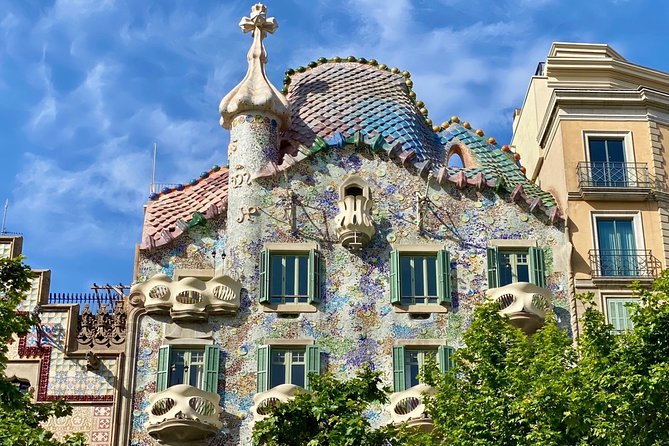
Casa Batlló is the next major Gaudí stop. The guide explains the exterior and the creative choices behind it, with about 10 minutes devoted to the building.
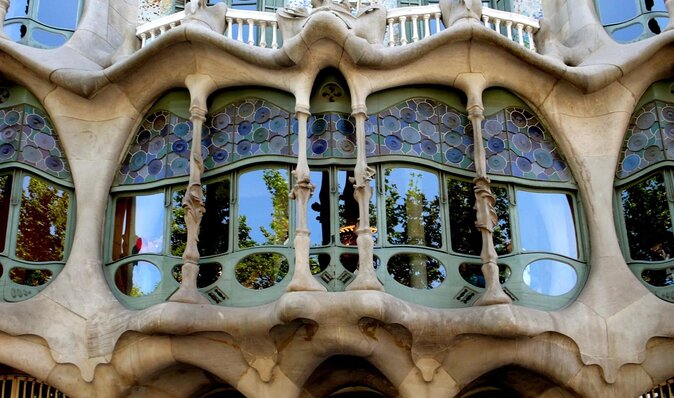
Even from the pavement, Casa Batlló gives you plenty to examine. The façade is one of Gaudí’s most imaginative works in Barcelona, and the guide’s role is to help you read its forms rather than simply photograph them. Look closely while the explanation is happening. The point is not just that the building appears unusual, but that its details work together as a deliberate architectural composition.
Again, admission is not included. If you want to see the interior, you will need to arrange a separate ticket. The short stop is best understood as an introduction that gives you a framework for a later visit, or a satisfying exterior explanation if you are keeping your budget and schedule tight.
Casa Batlló and La Pedrera are close enough to compare during the walk. That comparison is one of the route’s strengths. You can consider how Gaudí handled two prominent buildings on the same avenue, rather than seeing each one in isolation.
More Private in Barcelona:
- Montserrat Monastery Small Group or Private Tour Hotel pick-up
★ 5.0 · 5,144 reviews - Tour Welcome Barcelona with Local Guide in Eco Tuk Tuk Private
★ 5.0 · 1,882 reviews - Barcelona Private Tour by Sidecar Motorcycle
★ 5.0 · 1,750 reviews - Barcelona Helicopter, Sailboat & Old Town Private Walking Tour
★ 5.0 · 1,395 reviews
Casa Amatller and the Block of Discord
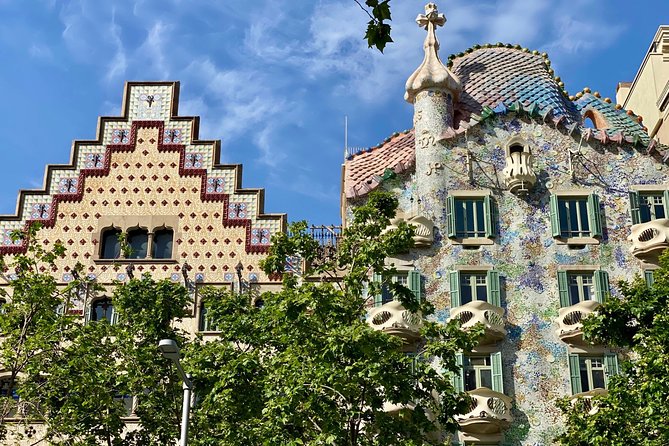
The route then turns to Casa Amatller, one of the Modernist buildings that many people pass without a second look. The supplied stop description labels this section as Casa Mila, but the building discussed is Casa Amatller, designed by Josep Puig i Cadafalch. It receives about 10 minutes of attention.
This is where a private guide can add real value. Casa Amatller is not as instantly famous as Casa Batlló, so it is easy to walk past while focusing on Gaudí. Your guide draws out its history and architecture, giving you a reason to study the façade rather than treating it as background scenery.
The surrounding group of buildings is known as the Block of Discord, or Mansana de la Discordia. Three distinct Modernist façades sit together here, each with its own style and visual language. The name itself becomes easier to understand once you see the buildings side by side. They do not form a single harmonious design. They compete for attention.
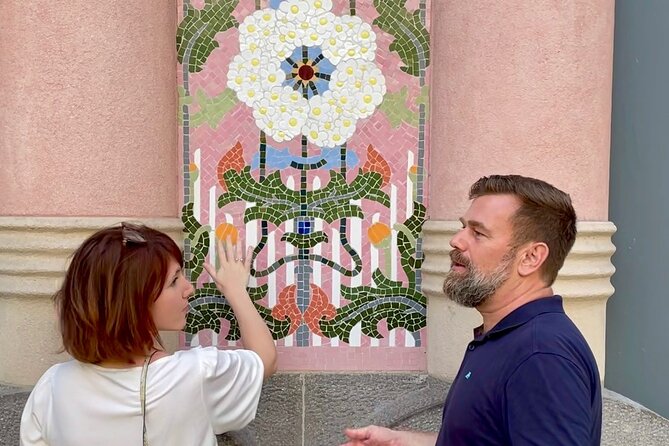
Casa Morera, designed by Lluís Domènech i Montaner, adds another layer. The façade has extensive floral decoration, but the guide points out a surprising detail hidden among the ornament. That small discovery is exactly the sort of thing you can miss without someone directing your eye.
The tour does not turn these buildings into a contest over which architect was best. Instead, it gives you a practical way to compare them. I find that approach more useful than hearing a long list of dates and names.
Plaça Catalunya and the change from new town to old town
The walk continues toward Plaça Catalunya, the broad meeting point between the Eixample and Barcelona’s older districts.
This transition gives the tour a clear shape. You have started among the grand avenues and Modernist façades of the newer city. From here, the route moves toward the tighter streets and older atmosphere of Ciutat Vella.
The plaza itself is not presented as a long formal stop. Instead, it helps you understand where the city’s different sections meet. That context matters because Barcelona’s architecture can seem disconnected when you see it one building at a time. The route shows how the city changes as you move south toward the old center.
Els 4 Gats, Gaudí, and young Picasso
The walk passes Els 4 Gats, the famous art café where architects such as Gaudí socialized. Young Picasso also came here.
The stop is brief, about five minutes, and admission is free. You are not promised an extended interior visit, so think of this as a cultural marker along the route. The café connects architecture, art, and social life in a way that makes the period feel less formal.
This is also where the tour’s storytelling style matters. A list of buildings can make Modernist Barcelona feel like a school lesson. The café adds people and personality. It reminds you that the architects and artists associated with the period met, argued, shared ideas, and built reputations in places like this.
If you are interested in Picasso, the stop offers useful context, but it is not a Picasso-focused visit. You will hear about his connection to the café as part of the wider Barcelona story.
The Palace of Catalan Music as the grand finish
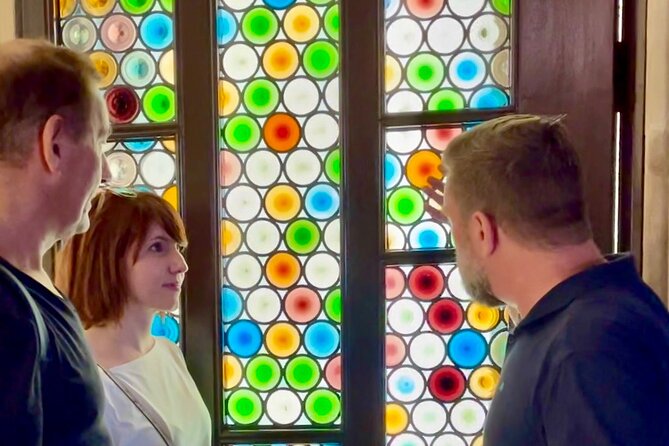
The route ends at the Palace of Catalan Music, at C/ Palau de la Música 4-6. This famous concert hall is another major example of Modernist design, and the guide explains the outer façade before giving you a glimpse into the lobby.
The building makes a fitting final architectural stop because it brings together ornament, structure, and public life. Unlike the private houses along Passeig de Gràcia, this was created as a concert venue. Its design was meant to welcome music and audiences, not only to impress from the street.
The exterior contains many details, so a guide’s explanation helps you know where to look. The brief glimpse into the lobby gives you a little more than a pavement-only view, but the tour does not include full admission. If you want a complete visit to the concert hall, you will need a separate entrance ticket or tour.
The end point is practical. The yellow metro line is close to the concert hall, so you can continue to another part of Barcelona without a long walk back to the starting point.
El Born and the legends behind the buildings
The final part takes about 30 minutes in El Born, with no admission fee.
This neighborhood changes the pace and subject of the walk. After the large avenues and showpiece façades, you move through a district where the tour’s legends can be connected to actual streets and corners. The description promises references to the stories introduced earlier, so this section works as a payoff to the narrative rather than a separate neighborhood tour.
I like having El Born at the end because it prevents the experience from becoming only an architecture lesson. You get a broader sense of Barcelona’s old center and a chance to ask final questions while the stories are still fresh.
The precise corners visited are not specified, so do not book this expecting a fixed list of named monuments in El Born. Treat it as a guided neighborhood exploration tied to the legends of the tour.
Is $94.63 per person good value?
At $94.63 per person, this is not the cheapest way to look at Barcelona’s Modernist buildings. You are paying for a private experience, a professional English-speaking guide, and the ability to ask questions without competing with a large group.
The price makes the most sense for couples, families, or small groups who value flexibility and focused explanation. If several people book together, group discounts may improve the per-person cost. The tour also avoids the time and expense of entering every attraction.
The weak point is that no admission fees are included. La Pedrera, Casa Batlló, and the Palace of Catalan Music are all treated mainly from outside, with only a glimpse into the concert hall lobby. If your goal is to see interiors, rooftops, or exhibition spaces, add those tickets to your budget and schedule.
For an architectural introduction, the price is easier to justify. For a full Gaudí day with interior access, it is only one part of the plan.
Who should book this two-hour experience?
I would recommend it most strongly if you want:
- A private introduction to Barcelona’s Modernist architecture
- An English-speaking guide who can answer personal questions
- A short route that covers several major buildings
- Stories about Gaudí, Picasso, architects, and local legends
- A walk that ends near public transportation
- A useful orientation early in your Barcelona stay
It may be less suitable if you want to spend a long time inside each attraction, take an unhurried photography walk, or focus only on Gaudí. The route includes other architects and cultural landmarks, which is a strength for some people and a distraction for others.
Most people can take part, service animals are allowed, and the walk is near public transportation. Confirmation is provided at booking. You can cancel for a full refund up to 24 hours before the start time, but changes or cancellations inside that window are not accepted. A minimum number of participants is required for the experience to operate.
Should you book Gaudí and Barcelona Legends?
Book this tour if you want the city’s famous façades explained by a personal guide rather than viewed as a string of photo stops. The strongest parts are the comparison between La Pedrera, Casa Batlló, Casa Amatller, and Casa Morera, plus the shift from Passeig de Gràcia into El Born.
Skip it if you mainly want interior access or if $94.63 feels high for a two-hour walk without admission tickets. For everyone else, it is a focused way to get your bearings, learn the stories behind Barcelona’s Modernist center, and leave with better questions for the buildings you choose to visit inside.
FAQ
How long does the Gaudí and Barcelona Legends tour last?
The tour lasts approximately two hours.
Is the tour private?
Yes. Only your group participates in the activity.
What language is the tour offered in?
The tour is offered in English.
Are attraction entrance fees included?
No. Entrance fees to La Pedrera, Casa Batlló, the Palace of Catalan Music, and other attractions are not included.
Where does the tour start?
It starts at Farmàcia La Pedrera, Passeig de Gràcia 90, in Barcelona’s Eixample district.
Where does the tour end?
It ends at the Palace of Catalan Music, C/ Palau de la Música 4-6, in Ciutat Vella.
Is public transportation available near the end point?
Yes. The yellow metro line is close to the Palace of Catalan Music.
Can I cancel for a full refund?
Yes, if you cancel at least 24 hours before the experience start time. Cancellations made less than 24 hours in advance are not refunded.
Are service animals allowed?
Yes. Service animals are allowed, and most people can participate.
Recently added around Barcelona
- Montserrat very early : Hiking, Abbey, very small group★ 5.0 · 127 reviews
- Guided Private Yacht Tour in Barcelona Spain★ 5.0 · 6 reviews
- Private Tour from Barcelona to Montserrat (with guide)★ 4.5 · 6 reviews
- Private Tour from Barcelona to Costa Brava (with guide)★ 5.0 · 5 reviews
- Andorra Tour★ 4.0 · 7 reviews
- Barcelona Gaudi Tour: Sagrada Familia, Casa Batllo & Casa Mila★ 5.0 · 4 reviews
- Street Art, Sculptures & Crime Stories Walking Tour – Barcelona★ 5.0 · 11 reviews
- Wine Tasting in Barcelona (Catalan Varieties) Small Groups★ 5.0 · 10 reviews
Gaudí Tours in Barcelona, compared.
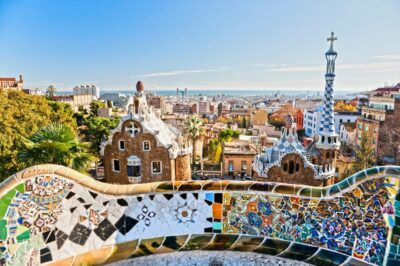
Park Güell and Gaudí House Museum Entry Ticket
Read our review →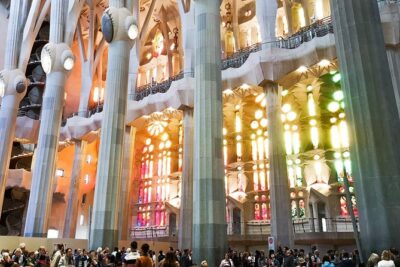
Sagrada Familia & Gaudi Tour Private or Small Group with Tickets
Read our review →
Complete Gaudi Tour: Casa Batllo, Park Guell & Sagrada Familia
Read our review →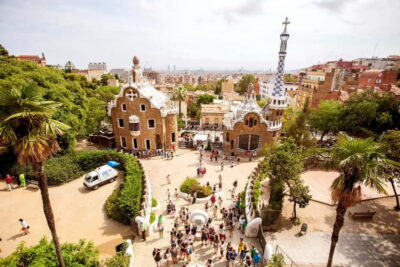
Park Güell: Guided Tour with Optional Gaudí Experience Entry
Read our review →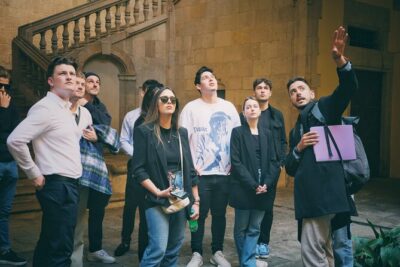
Ramblas, Old Town, Gothic and Gaudi Architecture Walking Tour
Read our review →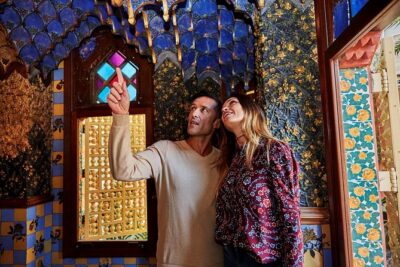
Gaudi´s Casa Vicens Skip the Line Ticket with Audioguide
Read our review →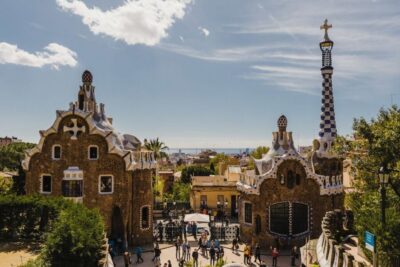
Discover Gaudí, Sagrada Familia, and Park Güell
Read our review →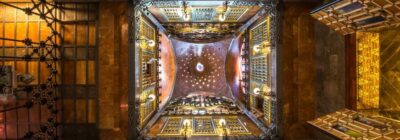
Browse the lists this tour appears in