Reviewed · TOURS
Crimes the tour through the Dark Side of Barcelona
Barcelona’s darkest stories are often tucked behind ordinary streets. This two-hour walk links old crimes, prison tales, war violence, executions, and local legends across El Raval, the Gothic Quarter, and El Born. You begin near La Rambla and finish at Plaça de Sant Pere, seeing parts of the city that a standard Gaudí-focused tour skips.
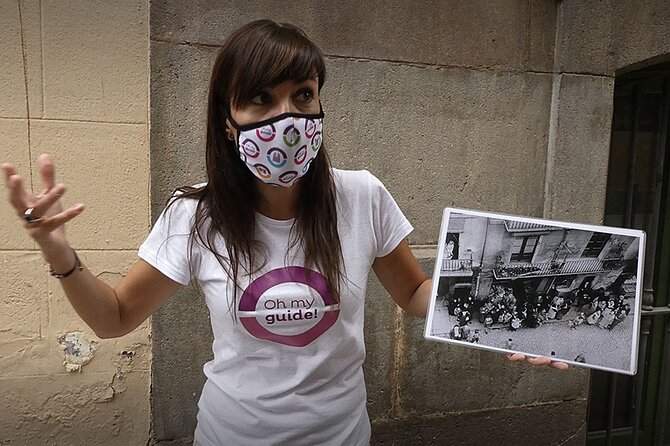
I like the way the route uses real streets and buildings instead of treating crime as a collection of spooky tales. I also like the personal touch of guide Cristina Belenguer, whose enthusiastic storytelling and clear explanations are repeatedly praised. The main drawback is the price: at $254.95 per person, this is costly for a two-hour walk, especially if your main goal is to see Barcelona’s major sights.
Key points to know before booking
- Former crime scenes: Visit the apartment linked with Enriqueta Martí, known as the Vampire of Raval, along with other locations tied to grisly events.
- Three old neighborhoods: The route crosses El Raval, the Gothic Quarter, and El Born, giving you a fresh way to read the city center.
- History beyond murder cases: Expect stories about the Roman colony of Barcino, the Spanish Civil War, medieval warfare, prisons, executions, and religious institutions.
- Cristina’s storytelling: The guide is praised for strong historical preparation, enthusiasm, and an ability to make complicated events easy to follow.
- Private format: The activity is listed as private, with only your group taking part, and a maximum group size of 20.
- A proper walking route: You need moderate physical fitness, and there is no snack or meal included.
Barcelona through its crimes and conflicts
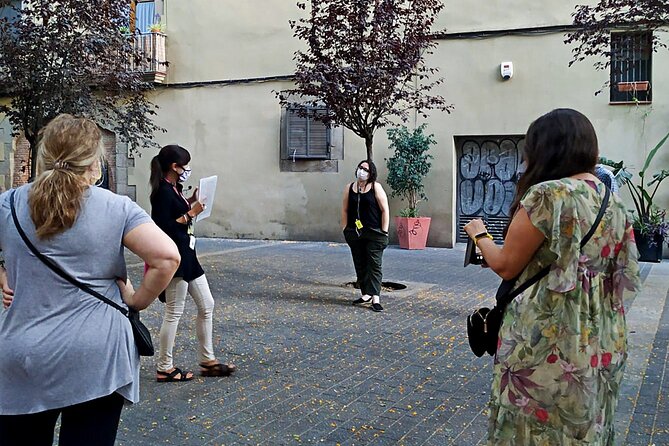
This is not a standard ghost walk. Its subject is crime, but the route also explains how Barcelona worked in different periods. Poverty, religion, political violence, military invasion, public punishment, and social unrest all appear along the way.
That wider frame is the tour’s real strength. A story about a murder means more when you understand the neighborhood around it. A former prison tells you something about punishment and class. A convent connected with wartime violence shows how religious life could be caught in the middle of political upheaval.
The walk is led by a licensed guide, and Cristina Belenguer is the name most closely connected with the experience. Her style appears to suit people who want facts delivered with energy rather than a dry list of dates. The route also has a local feel. Several stops are on small streets and squares that you could easily pass without knowing what happened there.
The subject matter is not light. Some stories involve savage killings, executions, war crimes, and suffering. If you want a cheerful introduction to Barcelona, choose a food walk or an architectural tour instead. If you enjoy true crime, local legends, and political history, this gives you a different way to understand the old city.
Other Barcelona days people weigh up beside this one:
- Barcelona: Park Güell Admission Ticket
★ 4.4 · 76,534 reviews - Barcelona: Casa Batlló Entry with Self-Audioguide Tour
★ 4.7 · 25,359 reviews - Barcelona: 24 or 48-Hour Hop-On Hop-Off Bus Tour
★ 4.4 · 20,872 reviews
Starting at La Rambla and the former Hotel Manila
The meeting point is at Le Méridien Barcelona, at La Rambla 111 near Carrer del Pintor Fortuny. The guide begins by discussing the former Hotel Manila and what is described as the first real crime in Barcelona.
This opening gives you an immediate sense of the tour’s method. You are not simply being led from one famous monument to another. You begin with a particular place, then use its story to open a larger discussion about the city.
La Rambla is usually associated with street performers, shops, restaurants, and heavy foot traffic. Here, the focus shifts to an earlier and less polished version of the boulevard. That contrast helps set the tone for the rest of the walk.
There is no admission charge at this or any other stop. You are viewing streets, squares, and exteriors, not entering a museum or crime-scene exhibit. The experience depends on the guide’s explanation, so staying close and listening carefully matters.
El Raval, poverty, and the Vampire of Raval
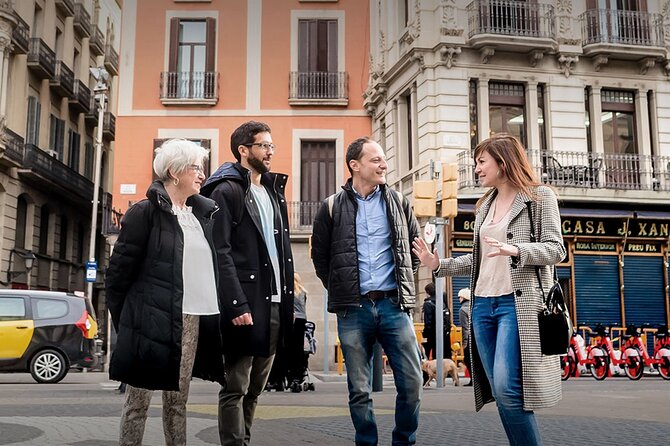
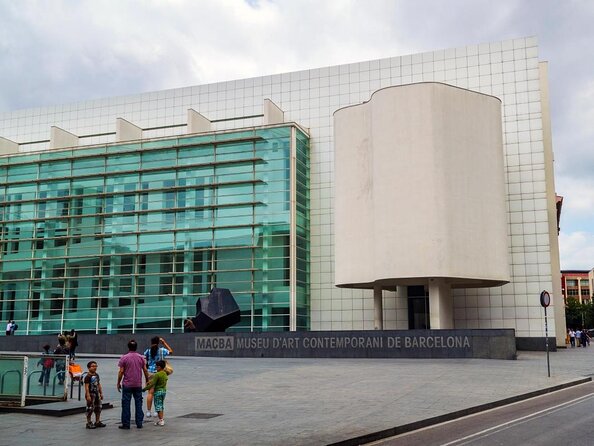
The next stops bring you into El Raval, an area with a long association with poverty, crowded housing, convents, hospitals, nightlife, and social tension. Near the Museu d’Art Contemporani de Barcelona, the guide explains the former convent and the difficult conditions in the Raval quarter during the early 1900s.
MACBA is now one of the city’s major contemporary art museums, but the stop is about what stood there before and what life was like in the surrounding area. This is one of the better examples of the route’s approach: a familiar cultural landmark becomes a doorway into an older story.
The most memorable stop for many people is likely Carrer de Joaquín Costa, 29. This is the apartment building associated with Enriqueta Martí, the woman known as the Vampire of Raval. The story is one of Barcelona’s most notorious crime legends, and seeing the actual building gives the tale a strong sense of place.
You should keep your expectations sensible here. The tour does not advertise entry into the apartment, and the stop is an exterior visit. The value comes from the guide’s account and from seeing how an ordinary residential building fits into a much darker local story.
Queen Amalia prison and the city’s harsh punishments
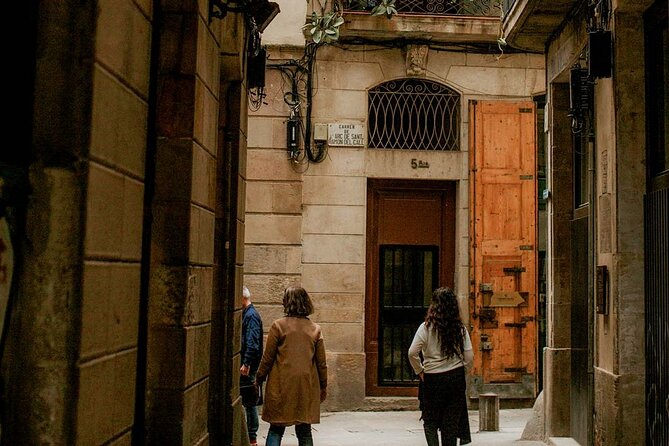
At Carrer de la Reina Amàlia, the route reaches the former Queen Amalia prison. The guide explains the difficult conditions inside and discusses notable prisoners connected with the site.
This stop shifts the focus from individual crime to the way institutions treated people. Prisons tell you about government, poverty, social class, and public attitudes toward punishment. It also helps you see that Barcelona’s darker past was not limited to mysterious killers. Many people suffered through systems that were harsh, crowded, and unequal.
From there, the walk continues to the old Monastery of Sant Pau del Camp. The former convent is connected with war crimes during the invasion of Barcelona in 985. The guide explains the events and their wider setting.
A visit to a religious site can easily become a quick architectural stop on another tour. Here, its importance comes from what happened there. The story adds a medieval layer to the route and reminds you that Barcelona’s violent past reaches far beyond the modern crime cases most people know.
A different sort of day out in Barcelona:
- Barcelona: Park Guell Guided Tour with Skip The Line Entry
★ 4.7 · 17,563 reviews - Barcelona in 1 Day: Sagrada Familia, Park Guell,Old Town & Pickup
★ 5.0 · 13,541 reviews - Barcelona Aquarium: Entry Ticket
★ 4.3 · 13,335 reviews - Barcelona: Sagrada Familia Skip-the-Line Entry Ticket & Tour
★ 4.8 · 12,789 reviews
Plaça George Orwell and the Spanish Civil War
Plaça George Orwell provides a move into the twentieth century. The guide discusses the Spanish Civil War and the crimes committed during that conflict, along with the importance of George Orwell’s Homage to Catalonia.
This is a useful pause in the route because it connects the streets of Barcelona with a famous political book. Orwell was not writing about an abstract war from far away. His account grew from direct experience in Spain, and the square’s name keeps that connection visible in the city.
The stop should appeal to anyone interested in politics, journalism, or modern European history. It also gives the tour a wider purpose. Crime here is not only personal violence. It includes repression, factional conflict, and the damage caused when political ideals turn into armed struggle.
The square is also a practical point in the route because it provides a recognizable place to discuss complicated events. You will get more from this section if you are willing to follow the historical context rather than waiting only for sensational details.
Roman walls, Barcino, and Barcelona’s first recorded crime
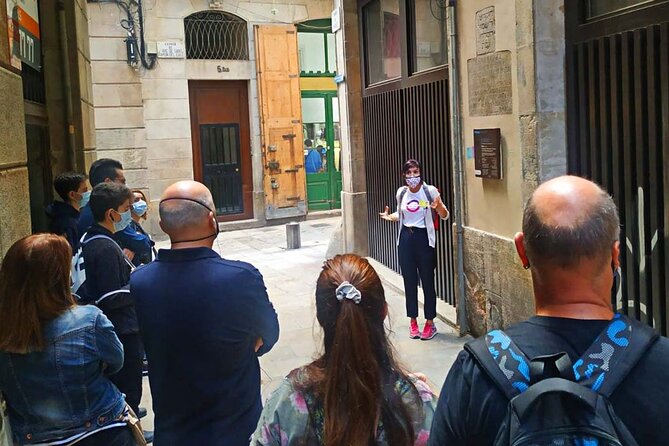
At the Muralla Romana, the guide explains the borders of Barcino, the Roman colony that preceded modern Barcelona. The discussion includes what is described as the first documented crime in the city’s history.
This is one of the route’s strongest changes of pace. After stories of prisons, murder, and war, you are taken back to the city’s Roman beginnings. The old walls make the past visible, even though the modern city has grown around and over them.
The stop also shows how long Barcelona has dealt with lawbreaking and public order. The exact case may appeal most to people who enjoy historical records and early urban life. For others, the larger point is more interesting: even the city’s oldest surviving boundaries can be connected to human conflict.
From there, the route moves to Plaça de l’Àngel, once the main square of the old town. This was a place of public executions, and the guide explains the different methods used.
This may be the most uncomfortable stop. Public executions were designed to be seen, and the square’s former role says a great deal about how authorities used fear as a warning. The modern setting can make the story feel even stranger, since today the area functions as an ordinary city space.
El Born’s alleys and the personal side of crime
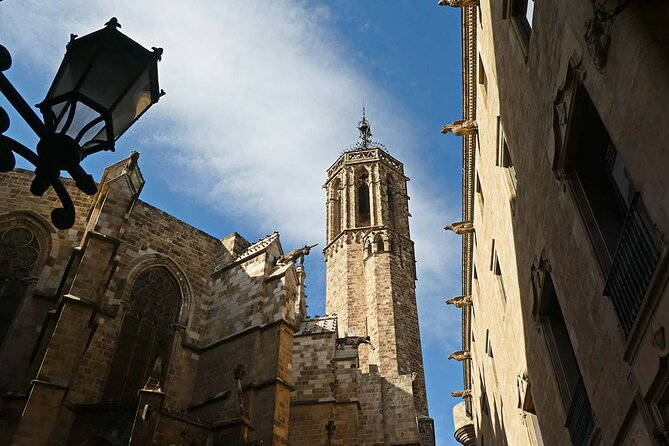
Carrer de l’Allada-Vermell brings the route into the narrow streets of El Born. The guide tells the story of a family member who died there in a tragic event in 1934.
The details provided for this stop are brief, so the guide’s storytelling does much of the work. The location matters because it gives a personal scale to the history. Instead of hearing only about armies, prisons, or famous criminals, you are reminded that violence affected ordinary families in ordinary streets.
At Plaça de Sant Agustí Vell, the subject changes again. The square was the site of a demonstration in 1789 against the price of wheat. This stop places public unrest beside the crime stories and shows how food costs could push people into protest.
For you, the value is in seeing social history at street level. A demonstration over wheat prices may sound less dramatic than a murder mystery, but it explains how economic pressure shaped daily life. It also helps connect Barcelona with wider patterns of unrest in Europe during the late eighteenth century.
The mystery of Benvingut Funes and the final convent story
At Carrer del Portal Nou, the guide discusses the 1936 killing of Benvingut Funes. His death was especially savage, and the circumstances remain a mystery in the city.
This is the kind of story that will appeal to true-crime fans, but it is also a good example of why you should not expect a neat answer at every stop. Some cases remain uncertain. A responsible guide can explain what is known, what is disputed, and what has become part of local memory.
The final stop is Plaça de Sant Pere, where an old convent was connected with terrible war crimes affecting nuns in 985. It is also the end point of the route.
Finishing here gives the tour a fitting historical circle. You begin with an early crime and move across Roman, medieval, eighteenth-century, nineteenth-century, and twentieth-century Barcelona before ending with another medieval account of violence. You are left with a city that feels layered rather than picturesque only.
What the two-hour format feels like
Each listed stop is planned for about 10 minutes, making the full route approximately two hours. That is enough time to cover all 12 locations without turning the experience into an exhausting half-day walk.
The pace should suit you if you like moving through a city while listening. It is not designed for long museum visits, extended photography stops, or detailed architectural study. At most locations, you will hear the story outdoors and then continue.
The activity requires a moderate level of physical fitness. You should be comfortable walking through the old center and standing while the guide speaks. Comfortable shoes are a sensible choice, even though the tour does not provide a formal packing list.
The route starts near La Rambla and ends at Plaça de Sant Pere in the old city. The end point is described as close to the Arc de Triomf and Urquinaona metro stops. Since this is a mobile-ticket experience, keep your ticket available on your phone and arrive at the stated starting point with enough time to identify the guide.
Price, group size, and what you receive
The listed price is $254.95 per person. That is a high price for a two-hour walking tour, so the value depends on what you want from your Barcelona visit.
You are paying for a licensed guide, a specialist subject, and a route built around locations rather than a general introduction to the city. If Cristina is leading your tour, her ability to explain history, religion, art, and local stories is a major part of the experience.
The activity is described as private, meaning only your group participates. It is also presented with a maximum group size of 20. Confirm the exact group arrangement when booking, since those details can matter if you are comparing it with a small public walking tour.
No snacks are included. That is not a serious problem in central Barcelona, where you can easily find food before or after the route, but it is worth knowing because the tour’s price is not a package price with refreshments or admissions.
The cancellation terms are friendly if your plans remain flexible: you can receive a full refund when you cancel at least 24 hours before the start time. Cancellations or changes inside that 24-hour window are not refunded, and the operator may offer another date or a full refund if the minimum number of participants is not reached.
Who will enjoy this Barcelona crime walk
I would choose this tour for several kinds of visitors:
- You already know Barcelona’s main sights and want a different story about the city.
- You enjoy true crime, old legends, public punishment, or political history.
- You prefer walking through real neighborhoods to sitting in a museum.
- You want a guide who can connect individual cases with wider social and religious history.
- You are visiting with a private group and want a specialized experience.
I would think twice if you are visiting Barcelona for the first time and have not yet seen the essential sights. The tour does not replace the Sagrada Família, Park Güell, the Gothic Cathedral, or the city’s major art museums. It works better as a second-layer experience.
It may also be a poor match for young children or anyone who dislikes stories about murder, war crimes, executions, and harsh prison conditions. The tone is historical and informative, but the subject matter remains serious.
Should you book Crimes the Tour through the Dark Side of Barcelona?
Book it if you want to see Barcelona through its less polished stories and can justify the high price for a private, guide-led walk. The combination of El Raval, the Gothic Quarter, and El Born gives you a useful route through the old center, while the cases provide a clear thread from Roman times to the twentieth century.
I especially like it for repeat visitors and locals. Cristina’s route is built to surprise people who think they already know these neighborhoods, and it adds context to streets you might otherwise cross without a second thought.
For a first-time visitor on a tight budget, I would start with a general Barcelona tour and return to this one later. For a history-minded couple, a private group, or a true-crime fan who wants a more personal look at the city, it can be worth the premium.
FAQ
How long does the tour last?
The tour lasts approximately two hours. The route includes 12 stops, with about 10 minutes planned at each location.
Where does the tour begin?
It begins at Le Méridien Barcelona, La Rambla 111, near Carrer del Pintor Fortuny, in Barcelona’s Ciutat Vella.
Where does the tour end?
The tour ends at Plaça de Sant Pere in Ciutat Vella. The end point is described as close to the Arc de Triomf and Urquinaona metro stops.
Is the tour private?
Yes. The activity is described as a private tour in which only your group participates. The listed maximum group size is 20 people.
Who guides the experience?
The experience includes a licensed tour guide. Cristina Belenguer is the guide specifically associated with the route and is praised for her historical preparation, enthusiasm, and communication.
Is anything included besides the guide?
The licensed guide is included. Snacks are not included, and the stops do not require admission tickets.
Can I cancel for a full refund?
Yes, if you cancel at least 24 hours before the experience begins. Cancellations or changes made less than 24 hours before the start time are not refunded.
Recently added around Barcelona
- Montserrat very early : Hiking, Abbey, very small group★ 5.0 · 127 reviews
- Guided Private Yacht Tour in Barcelona Spain★ 5.0 · 6 reviews
- Private Tour from Barcelona to Montserrat (with guide)★ 4.5 · 6 reviews
- Private Tour from Barcelona to Costa Brava (with guide)★ 5.0 · 5 reviews
- Andorra Tour★ 4.0 · 7 reviews
- Barcelona Gaudi Tour: Sagrada Familia, Casa Batllo & Casa Mila★ 5.0 · 4 reviews
- Street Art, Sculptures & Crime Stories Walking Tour – Barcelona★ 5.0 · 11 reviews
- Wine Tasting in Barcelona (Catalan Varieties) Small Groups★ 5.0 · 10 reviews
Tours, compared.
Park Guell Guided Tour with Skip The Line Entry
Read our review →
Sagrada Familia Skip-the-Line Entry Ticket & Tour
Read our review →
FC Barcelona Museum “Barça Immersive Tour” Ticket
Read our review →