
Reviewed · BARCELONA
Barcelona: White Rabbit Catalonia’s Top Immersive Experience
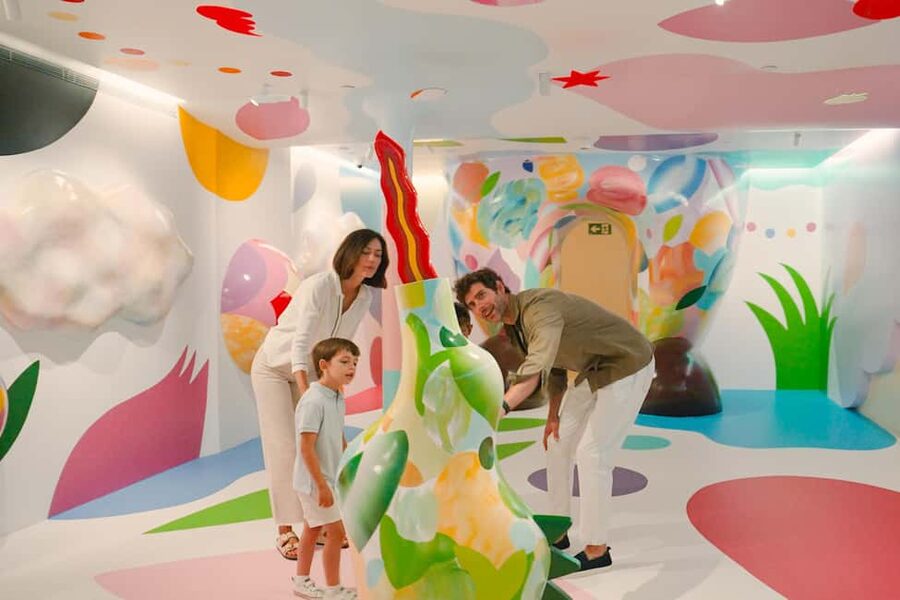
Barcelona’s White Rabbit puts Catalan culture into rooms you can touch, enter, and play with. Instead of quietly studying paintings, you move through 10 lively installations built around Gaudí, Montjuïc, Sant Jordi, castellers, correfoc, and other local traditions.
I like the central location, just two minutes from Casa Batlló, and the way the experience works for both children and adults. The VR, light displays, cube, and infinity room give the visit plenty of visual punch. The main drawback is that the quality varies from room to room, and visitors looking for a traditional museum may find the cultural information fairly light.
Key points to know before you go

- Ten rooms, one hour: The visit is short enough for a busy Barcelona day, but full of visual changes.
- Catalan culture in modern form: Local legends and traditions appear through art, projection, sound, VR, AI, and playful technology.
- Excellent family stop: Children can take part instead of simply looking at displays, while adults get a fresh introduction to Barcelona.
- Passeig de Gràcia address: White Rabbit is close to Casa Batlló, making it easy to pair with Gaudí sightseeing.
- Open-time entry: Your ticket allows entry at any point during opening hours on the selected date, with last admission at 7:00 PM.
- Good practical value: At $18 per person, it offers a compact, air-conditioned activity with culture, entertainment, and photo-friendly rooms.
What White Rabbit is trying to do
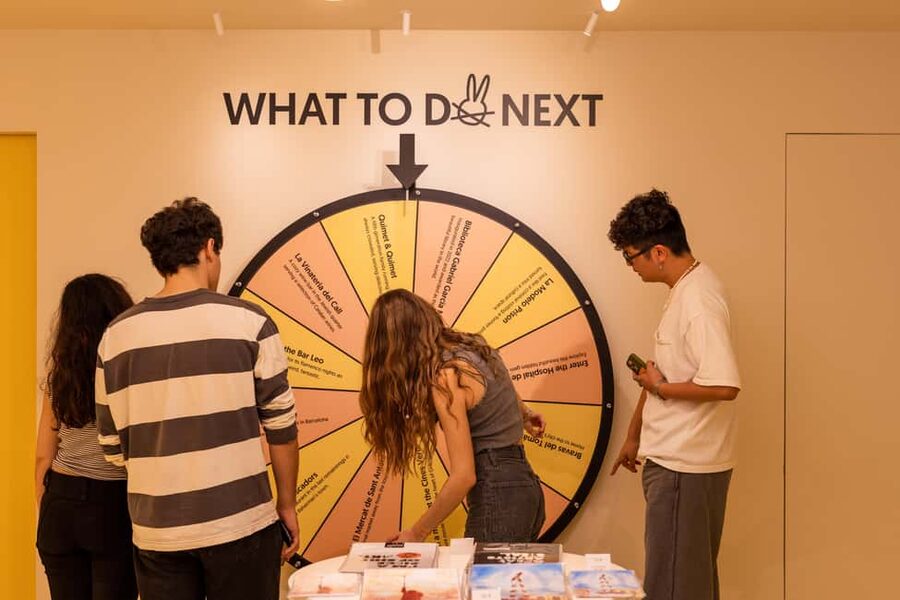
White Rabbit calls itself Barcelona’s OFF-Museum, and that label tells you what to expect. This is not a collection of old objects arranged behind glass. It is a modern cultural attraction that uses technology and play to introduce you to Catalan customs.
That approach can work well when you have only a few days in the city. You may not have time for a detailed study of Catalan identity, but you can spend an hour seeing how local artists interpret it through color, sound, movement, and storytelling.
I would treat White Rabbit as a companion to Barcelona’s major sights, not a replacement for them. You will not leave with a full lesson in Catalan history, but you may recognize Sant Jordi, castells, correfocs, Gaudí’s trencadís style, and Montjuïc with a little more context.
The mood is informal. You are encouraged to look around, interact, laugh, and take in the strange details. One particularly memorable feature is the toilet, which is designed as part of the experience rather than hidden away as a plain utility. That small touch captures White Rabbit’s playful spirit.
Other Barcelona days people weigh up beside this one:
- Barcelona: Park Güell Admission Ticket
★ 4.4 · 76,534 reviews - Barcelona: Casa Batlló Entry with Self-Audioguide Tour
★ 4.7 · 25,359 reviews - Barcelona: 24 or 48-Hour Hop-On Hop-Off Bus Tour
★ 4.4 · 20,872 reviews
Starting on Passeig de Gràcia
The location is one of White Rabbit’s strongest practical advantages. You find it on Passeig de Gràcia, one of Barcelona’s main avenues, about two minutes from Casa Batlló. That puts it within an easy walking route of modernist architecture, shopping, cafés, and central transport connections.
I like this kind of short city-center activity because it fits into the gaps in a sightseeing plan. You can visit Casa Batlló, stop at White Rabbit, and continue along Passeig de Gràcia without giving up half a day to transport.
The central address also makes White Rabbit useful during hot weather or a sudden rain shower. One visitor specifically appreciated the air conditioning, and that matters in Barcelona during the warmer months. After walking through the city, an hour indoors can be a welcome change.
The ticket uses open-time entry on the selected date. That gives you flexibility during opening hours, though you should still check the current availability and remember that the last entry is at 7:00 PM. The visit itself lasts about 60 minutes.
Room one: Catalan ideas through technology
The early rooms establish White Rabbit’s main method: take something strongly linked to Catalonia and show it through a digital or interactive format. The exact order of the rooms may change, but you should expect a quick succession of different visual styles rather than one long display.
That variety is useful. A conventional exhibit can ask you to stand and read for several minutes. Here, the change from projection to virtual reality, from a screen-based display to a space you can enter, keeps the hour moving.
At the same time, the rapid pace means some rooms may feel more satisfying than others. One rating described the visit as good overall but uneven, with certain parts more entertaining and better executed than the rest. That is a fair expectation. White Rabbit is best enjoyed as a playful sequence, not as ten equally detailed works of art.
Gaudí’s trencadís in a 360-degree setting
Gaudí’s broken-tile technique, known as trencadís, is one of Barcelona’s most recognizable visual signatures. White Rabbit reworks that idea into a 360-degree display, giving you a colorful way to connect the city’s architecture with a broader Catalan design tradition.
If you have just visited Casa Batlló, this room should make an especially useful pairing. Outside, you see Gaudí’s materials fixed into a building. Inside White Rabbit, the same visual language is treated as a surround-style art environment.
This is not the place to expect architectural analysis. You will not get a detailed account of Gaudí’s construction methods or a serious discussion of modernisme. What you get is a strong visual reminder of why Barcelona’s colors, curves, tiles, and organic shapes are so easy to recognize.
For families, this is the kind of room that invites movement and observation. Children can search the surfaces for patterns, while adults can make the connection to the buildings they have seen around the city.
A different sort of day out in Barcelona:
- Barcelona: Park Guell Guided Tour with Skip The Line Entry
★ 4.7 · 17,563 reviews - Barcelona in 1 Day: Sagrada Familia, Park Guell,Old Town & Pickup
★ 5.0 · 13,541 reviews - Barcelona Aquarium: Entry Ticket
★ 4.3 · 13,335 reviews - Barcelona: Sagrada Familia Skip-the-Line Entry Ticket & Tour
★ 4.8 · 12,789 reviews
Montjuïc, projection, and the city’s visual memory
Another installation brings in the magic of Montjuïc. The hill is an important part of Barcelona’s identity, and it has long been linked with views, public spaces, culture, and city events.
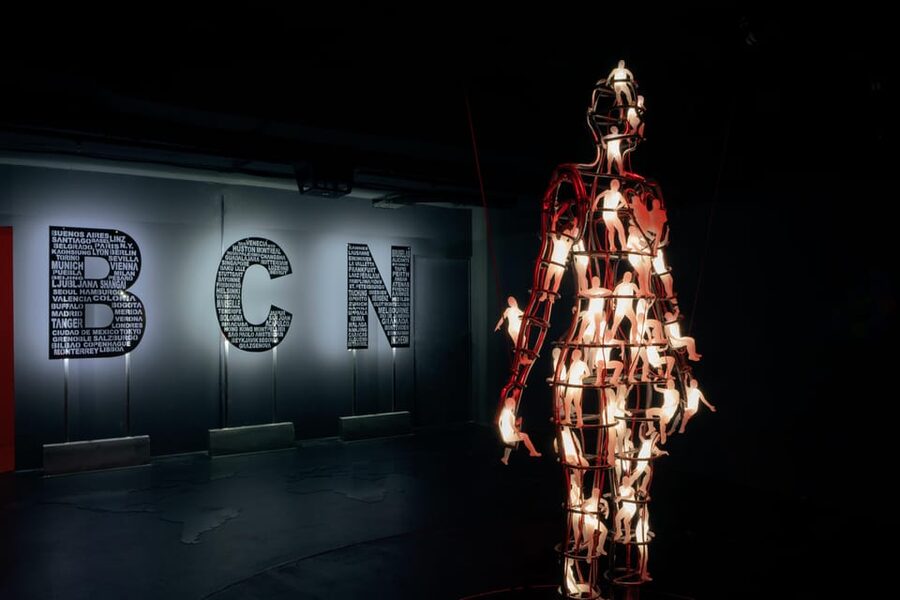
White Rabbit presents it through light and image rather than a conventional map or historical panel. That makes the idea easy to grasp, even if you have not yet visited Montjuïc. You get a sense of the place as part of Barcelona’s emotional and visual character.
This is also where the experience can feel more like a light show than a museum visit. That will appeal to visitors who want striking images and a lively pace. If you prefer quiet galleries and detailed labels, you may find the presentation a little thin.
I would use the room as a prompt for later sightseeing. If you have time, visit Montjuïc separately and see how the real hill compares with the artistic version presented here.
Sant Jordi and the stories Catalonia loves
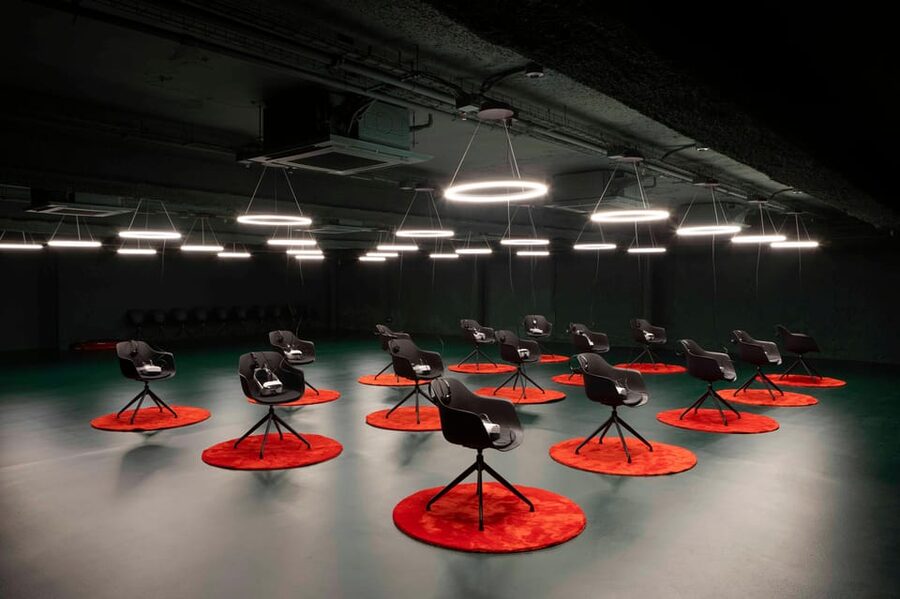
Sant Jordi, the dragon-slaying figure connected with Catalonia’s book and rose tradition, appears as one of the local legends brought to life at White Rabbit. This is a smart choice because Sant Jordi is both a story and a living cultural custom.
The digital format helps you see why local legends remain useful in a modern city. Rather than placing the story in a case, White Rabbit turns it into something more theatrical and visual. You may not get every detail of the legend, but you get a clear sense of its place in Catalan culture.
This room is likely to work best for families and first-time visitors. It offers an accessible entry point to a tradition you might otherwise miss while rushing between architectural sights.
For a deeper understanding, you would need to ask a local guide or read more elsewhere. White Rabbit gives you an introduction, not a full cultural course. That is not a flaw if you know what you are buying.
Castellers and the human side of Catalan tradition
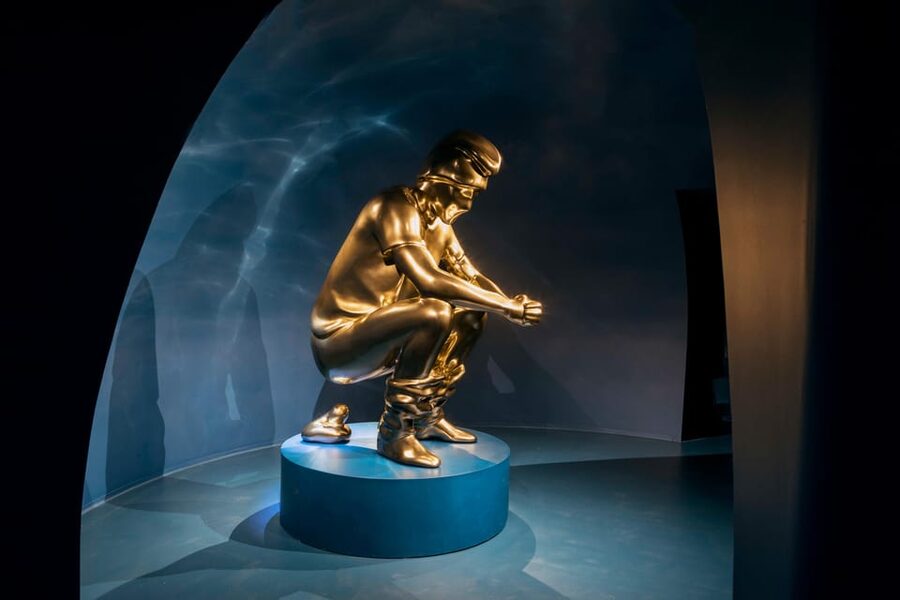
The castellers, or human towers, are another important Catalan tradition included in the experience. They represent cooperation, balance, trust, and local identity, so they fit naturally into an attraction built around participation and movement.
The value here is not only visual. Castellers help explain something about how Catalan traditions work. They are community activities, not simply historic symbols. Even a short presentation can make the idea more memorable than a paragraph in a guidebook.
This is one reason I would recommend White Rabbit to families. A child may not remember a museum label, but a human tower shown through an interactive display is easier to talk about later. Adults also get a useful reminder that Catalan culture is not limited to Gaudí and food.
The presentation remains compact. You will not learn the full structure of a casteller team or the history of every tower. Still, the subject adds a human element to a visit otherwise filled with screens and effects.
Correfoc, color, and controlled chaos

Correfoc, the Catalan fire-run tradition, brings another side of local life into the rooms. Its sparks, costumes, noise, and energy are a natural fit for projection and light effects.
This section helps explain why White Rabbit feels more like a cultural play space than a standard gallery. You are not simply looking at a picture of a festival. The design aims to give you a sense of its excitement without putting you in the middle of a real street event.
That difference matters. The attraction can introduce you to the idea, but it cannot reproduce the full sound, heat, crowd, and unpredictability of an actual correfoc. If you are curious about the tradition, consider it a starting point for learning when local events take place.
The energetic presentation may be fun for children, though anyone sensitive to strong visual effects should take the rooms at their own pace. The available information does not specify sensory warnings, so you should ask the staff if you have concerns.
VR, artificial intelligence, and the story rooms
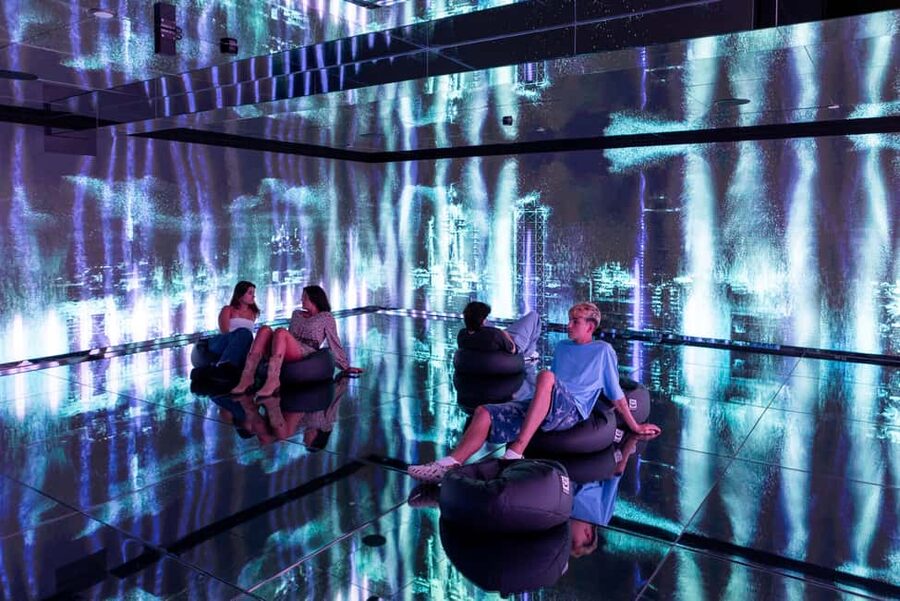
Virtual reality is one of White Rabbit’s more memorable tools. It is used to tell a story connected with Catalonia rather than added simply as a stand-alone gadget.
That gives the technology a clear purpose. You are not using a headset just to look around a random digital world. The VR helps place you inside a local story and gives culture a more personal, immediate form.
The experience also uses artificial intelligence, although the available details do not explain exactly how every AI feature works. You should expect technology to shape the presentation, not a long guided talk from a historian.
The English, Spanish, and Catalan hosts can help explain the rooms. Their role is important because some of the cultural references may be unfamiliar. The experience is not listed as a fully guided tour with a named guide, so you should think of staff support as orientation and explanation rather than a continuous lecture.
The cube and the infinity room
Two of the most talked-about features are the immersive cube and the large infinity room. Since the word immersive is best understood here as visual rather than academic, think of these areas as rooms that surround you with light, screens, reflections, or shifting images.
The cube appears to be one of the strongest moments for many people. It gives you a space that feels separate from the ordinary gallery route and offers a clear change in scale. The infinity room provides a similar effect, using reflections and repeated light to make the room appear larger than it is.
These spaces are also likely to be the most photo-friendly. If you want pictures, keep your phone ready, but do not let the camera become the whole point. The rooms are brief, and a crowd can change how much time you have with the best angles.
A practical note: White Rabbit is popular with families, but the open-time format and a high rating do not guarantee an empty visit. One visitor found it uncrowded, while the supplied information does not promise a fixed group size. Go earlier in the day if you want a calmer pace, but treat that as a sensible strategy, not a guarantee.
How much culture do you really get?
White Rabbit succeeds at making Catalan culture approachable. It shows you local legends and traditions in forms that are easy to understand without preparation. You can walk in knowing little about Catalonia and still follow the basic ideas.
The tradeoff is depth. The displays are designed to entertain first, with cultural information woven into the effects. You may leave curious about Sant Jordi, castellers, or correfoc rather than fully informed about them.
I see that as a good result for a one-hour city attraction. A short visit can give you useful reference points for the rest of your trip. Afterward, you may notice Catalan flags, dragon figures, human-tower references, tile work, and festival posters with more interest.
If your main goal is a serious art collection, a detailed history lesson, or original historic objects, choose a traditional museum instead. If you want a lively introduction that makes you curious, White Rabbit fits better.
Is $18 a fair price?
At $18 per person, White Rabbit sits in the reasonable range for a one-hour Barcelona attraction. The ticket includes entry to all 10 installations and access to the OFF SHOP, with no separate charge listed for the VR, cube, infinity room, or other rooms.
The value depends on how you use it. For a family, the combination of air conditioning, hands-on displays, and a central address can make the price easier to justify. For a solo adult who wants a long cultural visit, one hour may feel short.
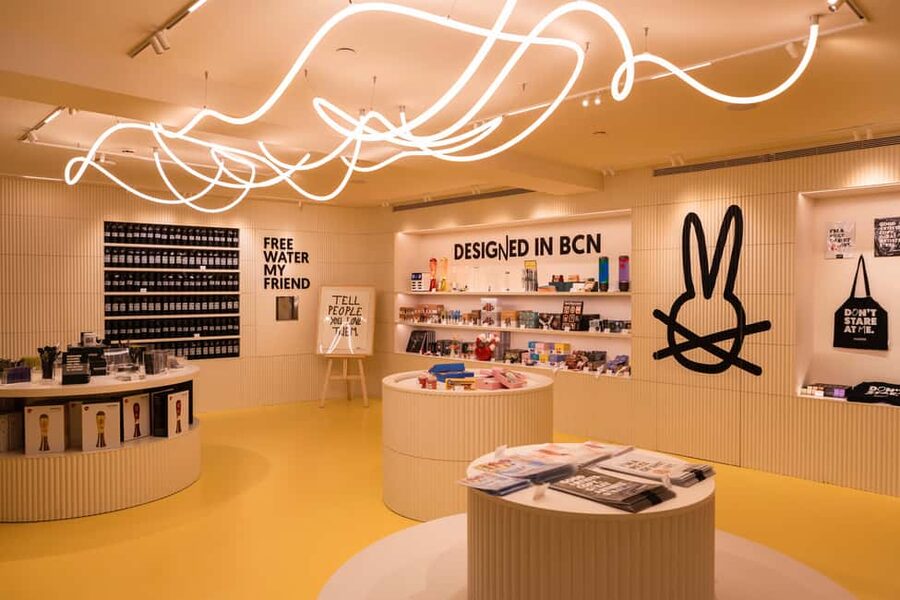
The attraction also offers coffee, ice cream, and gifts from local brands in the OFF SHOP, but food and drinks are not included in the ticket. Think of the shop as an optional finish, not part of the admission value.
I would call the price good for families, couples, and visitors who enjoy digital art. It is less compelling if you are counting on a traditional museum with hours of material to study.
Who should book White Rabbit?
I would put White Rabbit high on the list for families with school-age children and anyone who wants a break from churches, apartment interiors, and historic plaques. The interactive design gives children something to do, while adults can connect the rooms with places and traditions around Barcelona.
It also suits couples and friends looking for a fun stop near Casa Batlló. The rooms offer plenty to look at and get involved with, and the visit does not consume an entire afternoon.
First-time visitors can use it as a quick introduction to Catalan culture. Returning visitors may enjoy it for a different view of a city they already know.
I would be more cautious if you dislike artificial effects, prefer quiet museums, or want detailed academic information. Some rooms are stronger than others, and the cultural material is presented in broad strokes.
Practical details that matter
Your meeting point is White Rabbit, The OFF-Museum of Barcelona, on Passeig de Gràcia. The attraction is wheelchair accessible, and hosts can assist in English, Spanish, or Catalan.
The visit lasts about one hour. Entry is flexible during opening hours on your selected date, but admission ends at 7:00 PM, so do not leave it for the last minute.
You can cancel up to 24 hours in advance for a full refund, and the reserve-now, pay-later option keeps your plans flexible. Hotel pickup and drop-off are not included, so you make your own way to the central address.
Should you book White Rabbit?
Book it if you want a playful hour of Catalan culture, especially if you are traveling with children or already planning to visit Casa Batlló. The location, air conditioning, VR, light displays, and local themes make it an easy addition to a busy Barcelona day.
Skip it if your ideal museum has original objects, long explanations, and quiet rooms. White Rabbit is not trying to be that kind of place. At $18, it offers a focused, entertaining introduction to Barcelona’s traditions, with enough unusual technology to make the visit memorable.
FAQ
How long does the White Rabbit experience last?
The visit lasts approximately one hour and includes access to 10 art installations.
Where is White Rabbit located?
White Rabbit, The OFF-Museum of Barcelona, is on Passeig de Gràcia, about two minutes from Casa Batlló.
What languages are available?
Hosts and greeters are available in English, Spanish, and Catalan.
What does the ticket include?
The ticket includes entry to the OFF-Museum, all 10 art installations, open-time admission on the selected date, and access to the OFF SHOP.
Are food and drinks included?
No. Food and drinks are not included, though the OFF SHOP offers coffee, ice cream, and gifts from local brands.
What time is the last entry?
The last entry is at 7:00 PM.
Is White Rabbit wheelchair accessible?
Yes. The experience is listed as wheelchair accessible.
Recently added around Barcelona
- Montserrat very early : Hiking, Abbey, very small group★ 5.0 · 127 reviews
- Guided Private Yacht Tour in Barcelona Spain★ 5.0 · 6 reviews
- Private Tour from Barcelona to Montserrat (with guide)★ 4.5 · 6 reviews
- Private Tour from Barcelona to Costa Brava (with guide)★ 5.0 · 5 reviews
- Andorra Tour★ 4.0 · 7 reviews
- Barcelona Gaudi Tour: Sagrada Familia, Casa Batllo & Casa Mila★ 5.0 · 4 reviews
- Street Art, Sculptures & Crime Stories Walking Tour – Barcelona★ 5.0 · 11 reviews
- Wine Tasting in Barcelona (Catalan Varieties) Small Groups★ 5.0 · 10 reviews