Reviewed · TOURS
Barcelona & The Sea. Regular Tour
Barcelona’s relationship with the sea is the real subject here. This three-hour architecture walk follows the city from Roman defenses and medieval churches to modern waterfront planning, showing how Barcelona once kept the sea at arm’s length and later made it part of the city’s public face.
I like two things in particular: you get an architect’s eye on familiar sights, and the route connects grand monuments with ordinary urban spaces such as a market, apartment building, beach, and wharf. Guides Pia and Ricard are praised for making architecture, history, and urban planning clear and lively. The main drawback is the walking itself: narrow streets, parks, beaches, and breakwaters require comfortable shoes and decent weather.
Key points
- Roman beginnings: See the defensive walls and Temple of Augustus near Plaça Nova, where Barcelona’s oldest urban story starts.
- Medieval Barcelona: Study Santa Maria del Mar and the streets of the old city before heading toward the waterfront.
- Modern public space: Learn how Moll de la Fusta changed Barcelona’s edge through the work of Manuel de Solà-Morales.
- Everyday design: Visit Barceloneta Market by Josep Miàs and Casa de la Marina by José Antonio Coderch.
- Sea and skyline: Finish at Somorrostro Beach and the waterfront views that show Barcelona’s newer face.
- Small-group format: The maximum group size is 20, with a professional architect or critic leading the walk.
Why Barcelona’s sea story starts far from the beach
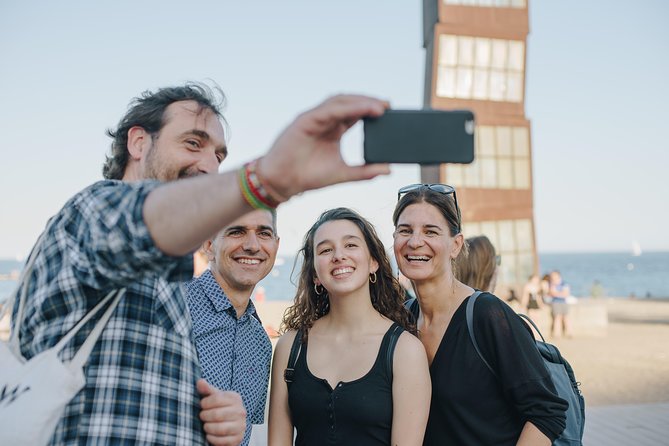
Meet at the Barcino Sculpture on Plaça Nova at 10:30 a.m. This puts you in Ciutat Vella, the old center, where Barcelona’s Roman roots are still visible.
The opening section helps explain a useful contradiction. Barcelona sits beside the Mediterranean, yet for much of its history the city center did not feel closely tied to the water. Walls, industry, roads, port activity, and defensive needs created a barrier. The sea was nearby, but not always part of daily city life.
That idea gives the walk a clear purpose. You are not simply ticking off old buildings. You are watching the city’s relationship with the shore change over time.
The first stops include the Roman defensive walls and the Temple of Augustus. These remains offer a firm starting point because they show Barcelona as a fortified Roman settlement rather than the open waterfront city you see today.
I like beginning here instead of at the beach. You first understand the city as an enclosed place, then follow its gradual movement outward. The contrast makes the modern waterfront easier to appreciate.
Other Barcelona days people weigh up beside this one:
- Barcelona: Park Güell Admission Ticket
★ 4.4 · 76,534 reviews - Barcelona: Casa Batlló Entry with Self-Audioguide Tour
★ 4.7 · 25,359 reviews - Barcelona: 24 or 48-Hour Hop-On Hop-Off Bus Tour
★ 4.4 · 20,872 reviews
Plaça Nova and the Roman foundations
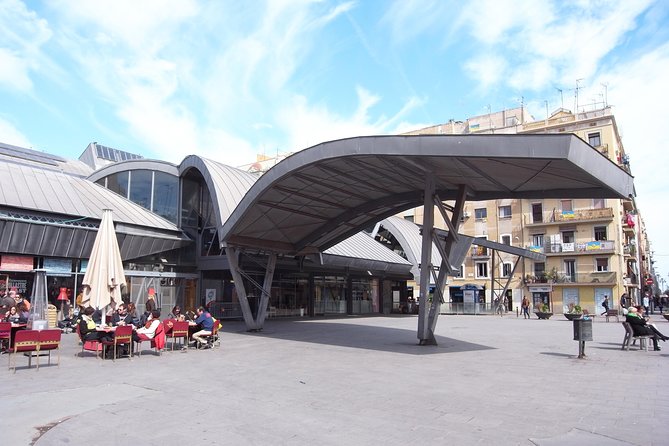
The Barcino Sculpture at Plaça Nova is the meeting point, and it places you close to important Roman remains. The defensive walls are a reminder that early Barcelona was organized around protection, control, and a compact urban core.
The Temple of Augustus adds another layer. Even if you have already seen Roman remains elsewhere in Europe, this stop is useful because it connects the ancient city to the streets around you. Barcelona’s oldest past is not isolated in a distant archaeological park. It appears within the working city.
An architect-guide can help you read scale and structure in a way a standard sightseeing tour may not. You are encouraged to notice how old walls, later buildings, and public spaces occupy the same small area.
The narrow streets also set the walking rhythm. This is not a broad avenue tour with long, easy stretches. You will move through tighter urban spaces, so stay alert to the pavement and wear shoes suited to several hours on foot.
Santa Maria del Mar and the medieval city
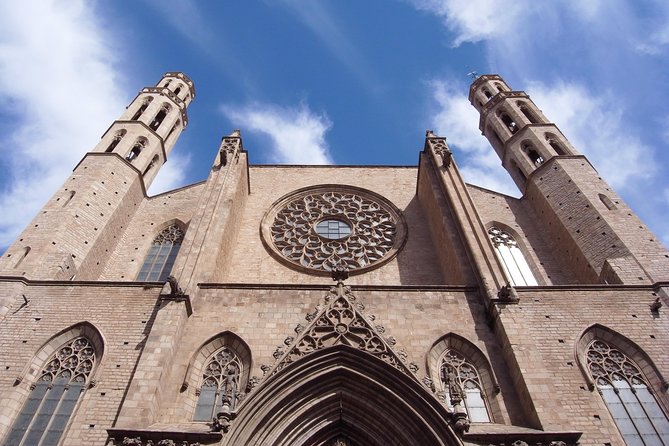
From the Roman center, the route continues toward Santa Maria del Mar. This church is one of Barcelona’s best-known medieval buildings, and its place in the walk is more than a chance to admire an impressive facade.
Santa Maria del Mar helps mark the city’s next stage. Barcelona was no longer only a Roman stronghold. It had become a medieval commercial and religious center, with different demands, different buildings, and a stronger connection to maritime life.
The church’s name itself points toward the sea, but the route asks you to think about how close or distant that sea actually felt from the old streets. You can stand near a church associated with maritime Barcelona while still experiencing the dense fabric of Ciutat Vella.
This is one reason the guided format is worthwhile. A quick photo stop gives you the building. An architect who also works as a critic can draw attention to how the church relates to its surroundings, how the street approaches it, and how the old district controls your view.
The guide may be Pia or Ricard, both specifically praised for making architecture and history easy to follow. The exact guide is not guaranteed, but the experience is designed around professional architectural knowledge rather than a general scripted commentary.
Moll de la Fusta and the city turning outward
The walk then moves toward Moll de la Fusta, the waterfront wharf associated with Manuel de Solà-Morales. This is where the story shifts from old stone and tight streets to urban design on a much larger scale.
A wharf can be a working edge, a traffic corridor, or a public place. Moll de la Fusta shows what happens when a city rethinks that edge. Instead of treating the shoreline as a back area, planners can make it part of the public realm.
The value of this stop is the comparison. Earlier, the city seemed to distance itself from the sea. Here, the waterfront becomes something you can approach, cross, and view as part of everyday Barcelona.
You will likely spend time outdoors, and the route includes parks and waterfront areas. That makes the walk more varied than a standard old-town tour, but it also means there is less shelter from sun, wind, or rain. The weather policy reflects that: poor conditions can lead to a new date or a full refund.
Moll de la Fusta is also a useful reminder that good urban design is not only about individual buildings. It is about movement, access, public space, and the way a city presents its edge.
A different sort of day out in Barcelona:
- Barcelona: Park Guell Guided Tour with Skip The Line Entry
★ 4.7 · 17,563 reviews - Barcelona in 1 Day: Sagrada Familia, Park Guell,Old Town & Pickup
★ 5.0 · 13,541 reviews - Barcelona Aquarium: Entry Ticket
★ 4.3 · 13,335 reviews - Barcelona: Sagrada Familia Skip-the-Line Entry Ticket & Tour
★ 4.8 · 12,789 reviews
Barceloneta Market and design in daily life
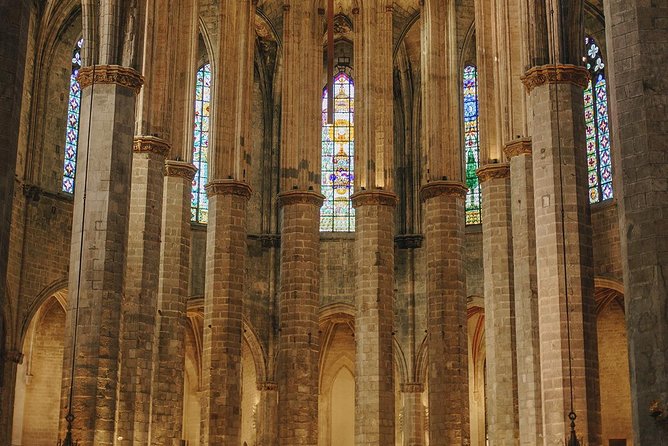
The next part brings architecture down to a human scale at Barceloneta Market, designed by Josep Miàs. A market is not merely an attractive structure. It has to serve shoppers, vendors, deliveries, weather, and the daily pace of a neighborhood.
That makes this a valuable stop for anyone interested in how architecture works outside museums and famous monuments. You can consider how a modern building fits into a district with a strong local identity and a long connection to the sea.
The market also gives the route a welcome change of tone. After Roman ruins, a medieval church, and a major waterfront project, you see a building tied to ordinary routines. I like that mix because it prevents the tour from becoming a procession of grand landmarks.
Barceloneta is compact and heavily visited, so the market can also help you understand the neighborhood beyond its beach reputation. The walk treats it as a real urban district, shaped by housing, commerce, public space, and changing ideas about the waterfront.
Casa de la Marina and Coderch’s residential vision
Casa de la Marina, designed by José Antonio Coderch, adds another important piece: housing. It is easy for architecture tours to focus on monuments and public buildings. Residential design tells you more about how people actually live in a city.
This apartment building gives the guide a chance to discuss proportion, privacy, light, and the relationship between a building and its surroundings. Those subjects may sound technical, but they affect every visitor who walks through Barcelona’s streets.
A professional architect can point out decisions that are easy to miss when you are moving quickly. You might notice how windows are arranged, how balconies meet the street, or how the building handles the demands of a dense coastal neighborhood.
This stop also balances the age range of the tour. You have seen ancient Roman remains and a medieval church, then modern projects and housing. Barcelona’s identity comes from that layering, not from any single period.
Somorrostro Beach and the final waterfront view
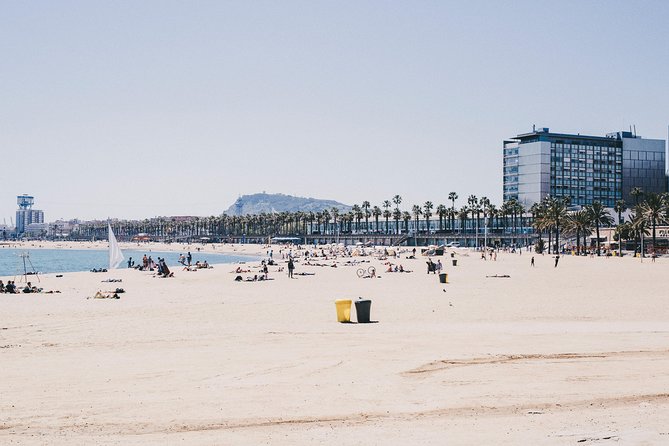
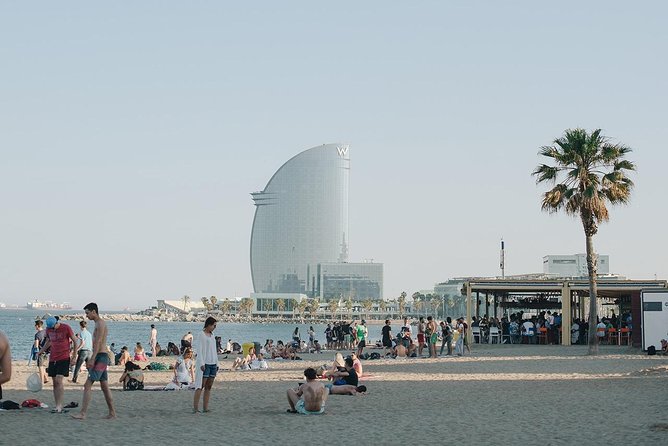
The route continues through Barceloneta to Somorrostro Beach. Here, the city opens up. After the tight lanes of Ciutat Vella and the close quarters of the old neighborhoods, the beach gives you space and a direct view toward the sea.
Somorrostro is useful as a final stop because it brings the tour’s main idea into focus. Barcelona’s waterfront is not just a natural boundary. It is a place shaped by public works, neighborhood life, housing, recreation, and changing attitudes toward the coast.
The final views of the Barcelona skyline let you look back at the city as a whole. You can connect the Roman core, the medieval district, Barceloneta, the wharf, and the newer waterfront projects in one broad scene.
The skyline view is likely to be one of the most memorable parts, but it is also weather-dependent. On a clear day, the open waterfront should give you a strong sense of the city’s scale. In poor conditions, visibility and comfort may be reduced, which is why the operator reserves the right to cancel for weather.
What the $52.06 price gives you
At $52.06 per person, this is not a cheap orientation walk. You are paying for about three hours with a professional architect or critic, a small maximum group of 20, and an architecture microguide to keep.
The value depends on your interests. If you want a quick list of Barcelona’s famous sights, a less specialized tour may cost less and cover more ground. If you want to understand why these places matter together, the price is easier to justify.
I see the strongest value in the interpretation. The route includes buildings and public spaces you might pass without understanding, especially the wharf, market, and apartment building. The guide turns them into parts of a larger story about urban change.
The group limit matters, too. Twenty people is not truly private, but it is small enough for questions to be practical. The quality will depend on the individual guide, yet the format gives you a better chance to engage than a large coach excursion.
The included microguide is a useful extra, especially if you plan to continue exploring Barcelona’s architecture afterward. It will not replace a full guidebook, but it can help you remember names, designers, and ideas from the walk.
Who should book this architecture walk
I would choose this experience if you enjoy cities as built places, not just as collections of photo stops. It suits visitors who want context for Barcelona’s old center, Barceloneta, and the waterfront in one morning.
It is also a good first activity for an architecture-minded visit. The route gives you a broad introduction to Roman, medieval, modern, and contemporary Barcelona without confining you to one period.
Families with older children may find it worthwhile if they can manage several hours of walking and are interested in buildings or city stories. The organizers say most people can participate, and service animals are allowed. Still, the route includes narrow streets, parks, beaches, and breakwaters, so it is sensible to consider your own walking comfort.
You should think twice if you dislike specialized commentary or want a relaxed beach outing. This is an educational walk, not a sightseeing bus and not a stop for swimming. The sea is the subject, but the architecture and city planning come first.
The 10:30 a.m. start is practical for many schedules. You finish back at the original meeting point, though the route itself travels through several distinct parts of the city. Confirm the exact meeting details when booking and allow enough time to reach Plaça Nova.
Practical details before you reserve
Your mobile ticket is confirmed at booking. The experience is offered with free cancellation up to 24 hours before the local start time, which gives you some room to adjust plans. Changes or cancellations inside that window are not refunded.
The tour needs a minimum number of participants. If that minimum is not met, you will be offered another date or experience, or a full refund.
Bring shoes that can handle several types of pavement. The route is not limited to smooth sidewalks, and the beach and breakwater sections make comfort more important than fashion.
Dress for outdoor conditions. The walk moves between enclosed old streets and open waterfront areas, so the temperature and wind can feel different during the same morning.
Should you book Barcelona & The Sea?
Book it if you want to understand how Barcelona moved from a fortified inland core toward a public waterfront. The combination of Roman walls, Santa Maria del Mar, Moll de la Fusta, Barceloneta Market, Casa de la Marina, and Somorrostro Beach gives the morning a clear arc.
I especially recommend it for repeat visitors and architecture fans. You may have already seen the church or walked along the beach, but the guide helps you connect those places through design and urban history.
Skip it if your priority is speed, shopping, or a broad introduction to every major attraction. At $52.06, the price makes most sense when you will listen closely, ask questions, and pay attention to the buildings between the famous stops.
FAQ
Where does the Barcelona & The Sea tour begin?
It begins at the Barcino Sculpture on Plaça Nova, 40, in Ciutat Vella, Barcelona.
What time does the tour start?
The scheduled start time is 10:30 a.m.
How long does the experience last?
The walk lasts approximately three hours.
Where does the tour finish?
The activity ends back at the original meeting point.
What places are included on the walk?
The route includes the Roman defensive walls, the Temple of Augustus, Santa Maria del Mar, Moll de la Fusta, Barceloneta Market, Casa de la Marina, Somorrostro Beach, and views of the Barcelona skyline.
Who leads the tour?
The walk is led by a practicing architect and critic. Guides named in connection with the experience include Pia and Ricard.
Is an architecture guide included?
Yes. An architecture microguide is included.
How many people can join the tour?
The maximum group size is 20 people.
Is the tour suitable for most people?
The activity information says most people can participate. The route includes narrow streets, parks, beaches, and breakwaters, and service animals are allowed.
What happens if the weather is poor?
The experience may be canceled because it requires good weather. You will then be offered a different date or a full refund.
Can I cancel for a refund?
Yes. You can cancel at least 24 hours before the experience start time for a full refund. Cancellations or changes made less than 24 hours before the start are not refunded.
Recently added around Barcelona
- Montserrat very early : Hiking, Abbey, very small group★ 5.0 · 127 reviews
- Guided Private Yacht Tour in Barcelona Spain★ 5.0 · 6 reviews
- Private Tour from Barcelona to Montserrat (with guide)★ 4.5 · 6 reviews
- Private Tour from Barcelona to Costa Brava (with guide)★ 5.0 · 5 reviews
- Street Art, Sculptures & Crime Stories Walking Tour – Barcelona★ 5.0 · 11 reviews
- Andorra Tour★ 4.0 · 7 reviews
- Barcelona Gaudi Tour: Sagrada Familia, Casa Batllo & Casa Mila★ 5.0 · 4 reviews
- Wine Tasting in Barcelona (Catalan Varieties) Small Groups★ 5.0 · 10 reviews
Tours, compared.
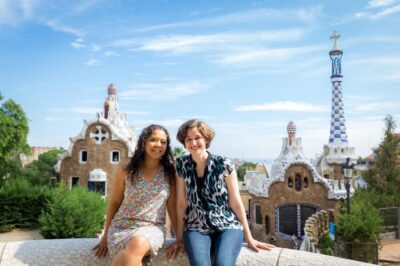
Park Guell Guided Tour with Skip The Line Entry
Read our review →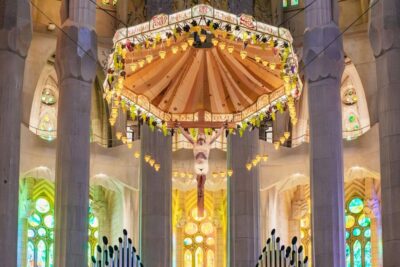
Sagrada Familia Skip-the-Line Entry Ticket & Tour
Read our review →
FC Barcelona Museum “Barça Immersive Tour” Ticket
Read our review →