
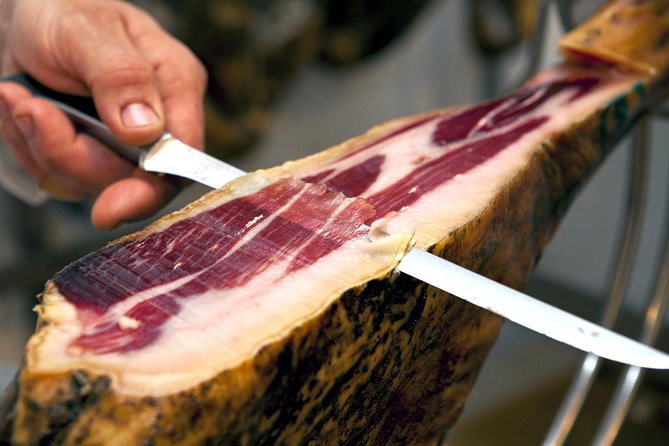
Reviewed · BARCELONA TAPAS TOURS
Barcelona Tapas & Wine Experience as a Local at Hidden Wineries
Barcelona’s best food experiences often happen in places you would miss while following the main sights. This three-hour walk links the Gothic Quarter, El Born, and Barceloneta with several stops for tapas, wine, and local stories. You are not simply sitting down for dinner. You are eating your way through old streets, markets, churches, and a former fishing district.
I like the mix of sightseeing and a full meal, and I like the small maximum of 12 people. Guides such as Libor and Eli have been praised for making the history easy to follow, handling dietary needs, and knowing the family-run places along the route.
The main consideration is the pace. You walk between stops, and the three hours can feel busy if you want long, quiet meals or detailed time inside every sight. The meeting point is on La Rambla, and the tour ends there, but the food stops may take you through crowded old streets and uneven pavements.
Key points to know before booking
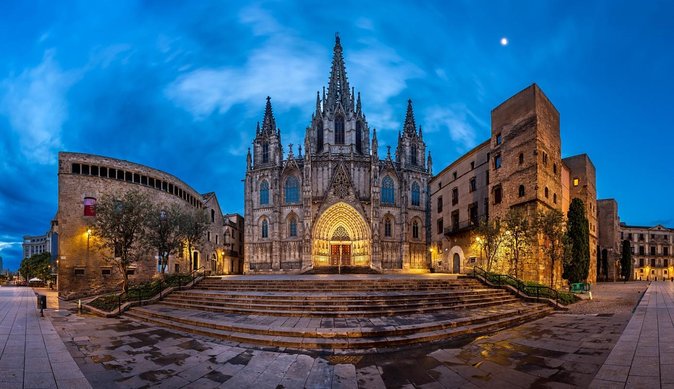
- A walking dinner through three historic districts: The route connects the Gothic Quarter, El Born, and La Barceloneta instead of keeping you in one restaurant.
- A strong Catalan tasting list: Expect Iberian ham, six local cheeses, croquettes, patatas bravas, tortilla, tomato bread, pintxos, cured tuna, and smoked sardine.
- Several drinks are included: Tastings can include Terra Alta white wine, Montsant red wine, and craft vermouth.
- Small groups make a difference: The maximum group size is 12, giving the guide room to answer questions and help with food restrictions.
- A good first-days-in-Barcelona activity: It gives you food ideas, neighborhood bearings, and restaurant leads early in your stay.
- A playful local custom: You may get to drink wine from a porrón, a glass vessel with a long spout. It is fun, but a little practice helps.
Why this tour works as an introduction to Barcelona
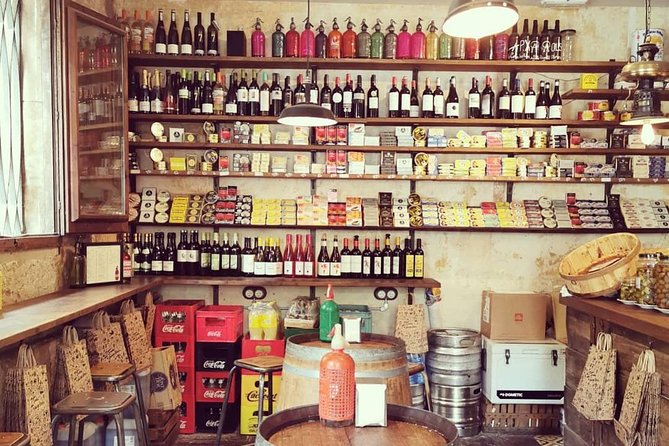
I like food walks that give you a sense of place, not just a parade of dishes. This one moves through neighborhoods that show different sides of central Barcelona. The Gothic Quarter brings medieval lanes and old religious landmarks. El Born adds market life, small bodegas, and the grand Basilica de Santa Maria del Mar. Barceloneta shifts the mood toward the city’s old fishing community.
That range matters. You can taste Catalan food while learning why the city developed around markets, churches, trade, and the sea. The guide’s job is not only to point out buildings. It is to connect each stop with Barcelona’s customs and daily life.
The experience is offered in English and takes about three hours. Dinner and alcoholic beverages are included, so the $102.58 price is best judged as the cost of a guided evening meal, not merely a walking tour. If you paid separately for several tapas plates, multiple drinks, and a guide, the total could add up quickly. The value is strongest if you want an organized introduction and would otherwise spend time guessing where to eat.
This is also useful early in a Barcelona visit. You can learn which foods you like, pick up neighborhood ideas, and ask the guide for suggestions while your trip is still taking shape. It is less suited to you if you prefer to choose each restaurant yourself or avoid alcohol.
More Barcelona Wine and Cava Tours:
- Montserrat & Cogwheel Train, Gourmet Wine Tasting & Tapas/Lunch
★ 5.0 · 6,290 reviews - Montserrat with Black Madonna & Medieval Winery with Tapas/Lunch
★ 5.0 · 5,209 reviews - Barcelona: Montserrat and Winery Tour with Tapas or Lunch
★ 4.8 · 4,695 reviews
Starting near La Rambla and the old market area
The meeting point is La Rambla, 97, in Ciutat Vella. This puts you in the center of old Barcelona, near one of the city’s most famous pedestrian avenues. Some accounts of the evening refer to meeting by an 800-year-old market place, which adds a fitting opening: Barcelona’s food culture begins with buying and sharing ingredients, not with fancy dining rooms.
Do not expect the first few minutes to be a long market visit. The main purpose is to gather the group and begin walking. Still, the location gives the guide a useful setting for explaining how food markets fit into city life.
From here, the group heads into the old quarters. La Rambla can be crowded, so arrive with enough time to locate the meeting point. Late arrivals may miss the opening part of the walk, and the group cannot reasonably wait for everyone once the route begins.
The small group limit of 12 is one of the tour’s practical strengths. A guide can speak to everyone without using a loudspeaker, and you have a better chance to ask about ingredients, customs, or places to return to later.
The Gothic Quarter: history between bites
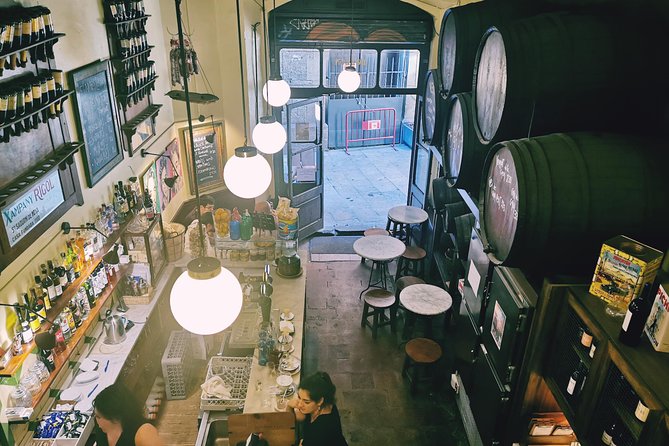
The Gothic Quarter is the natural first chapter. Its lanes are compact and full of turns, so walking with someone who understands the area can save you from seeing only the most obvious streets. The guide introduces the city’s past on the way to the food stops, making the walk feel connected rather than like separate sightseeing and restaurant appointments.
Placeta del Pi is one of the named stops. This small square near the Church of Santa Maria del Pi offers a calmer setting than La Rambla and helps you see how old Barcelona opens into small neighborhood spaces. You may pause here for local context before moving on to the next tasting.
The Gothic Quarter is visually rewarding, but it is not the easiest place for a group walk. Streets can be narrow, surfaces may be uneven, and the group needs to stay together. Wear shoes you can walk in comfortably. If you want extensive time inside churches or monuments, this tour may give you only a short look from the route rather than a full guided visit.
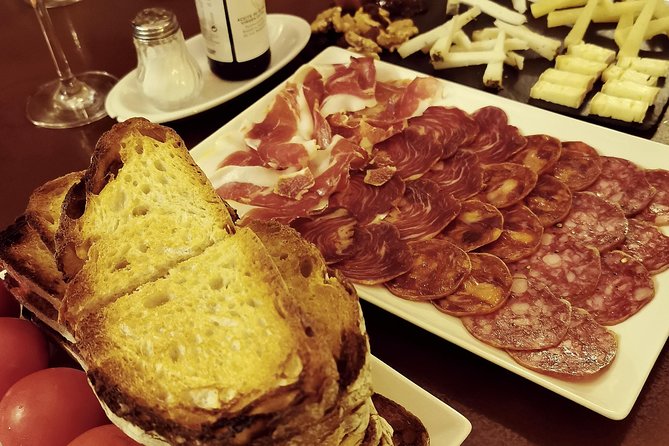
The food helps make the history memorable. A plate of Iberian ham or a slice of tomato-rubbed bread gives the guide something concrete to discuss. Catalan tomato bread is simple, but it is also a good example of how a few familiar ingredients can become a local staple.
El Born and La Ribera: a more intimate food setting
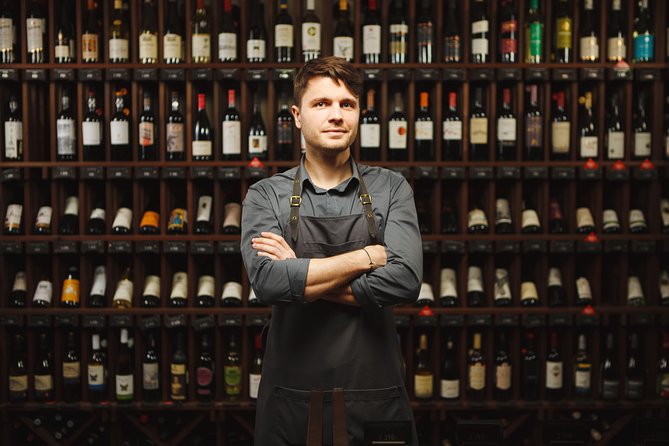
The route continues toward El Born and La Ribera, districts known for old streets, small businesses, and a more neighborhood feel. Here, the appeal is not one grand sight. It is the contrast between large historic buildings and modest places where you stop for a drink or a plate to share.
This is where the bodega theme matters. A bodega is more than a wine bar in this setting. It suggests a long-running local establishment where food and drink are served without much fuss. The stops are described as family-run places with their own character, rather than generic restaurants built around a fixed tourist menu.
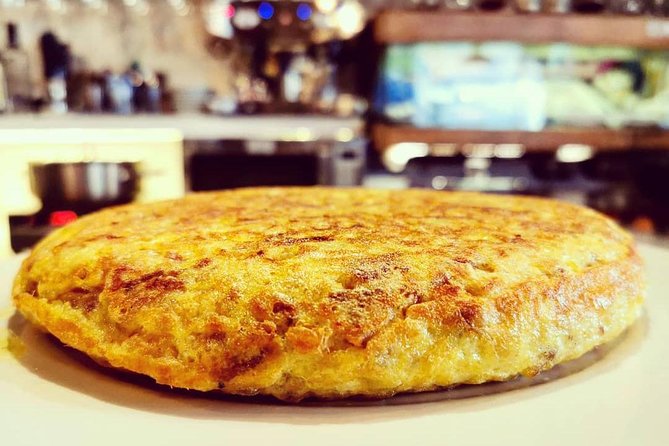
Your tastings may include six local cheeses, croquettes, patatas bravas, tortilla, and a Gilda pintxo. The variety is useful because the dishes cover several Catalan and Spanish bar-food traditions:
- Iberian ham gives you a salty, savory starting point.
- Local cheeses add range and let you compare textures and strength.
- Croquettes provide a warm, crisp bite.
- Patatas bravas bring potatoes with a spicy sauce.
- Tortilla offers the familiar Spanish potato omelette.
- Tomato bread shows a classic Catalan preparation.
- A Gilda pintxo adds a small, sharp bite often built around preserved ingredients.
The exact order of dishes may vary by stop, so think of the list as a guide to the evening rather than a promise that every plate arrives in a particular sequence. The amount is intended to make up dinner, though appetites differ.
More Barcelona Tapas Tours:
- Montserrat Half-Day Tour with Tapas and Gourmet Wines
★ 5.0 · 7,359 reviews - Barcelona Tapas and Wine Experience Small-Group Walking Tour
★ 5.0 · 5,804 reviews - Barcelona: Tapas Walking Tour with Food, Wine, and History
★ 4.8 · 4,261 reviews - Barcelona Paella Cooking Class with Market Visit, Tapas & Sangria
★ 5.0 · 2,531 reviews
Santa Maria del Mar: a landmark with a local setting
The Basilica de Santa Maria del Mar is one of the most important landmarks on the route. Its presence gives the El Born section a clear focal point. You see how a food walk can add meaning to a famous building by placing it among the streets, businesses, and eating habits of the surrounding district.
The basilica is not simply a background for a quick photo. Its location connects the area to Barcelona’s medieval commercial life and the people who built and used the church. Your guide provides the historical context while the group moves through the neighborhood.
Keep your expectations measured. This experience is a food and walking tour, not a dedicated architectural tour. You should not book it if your main goal is a long interior visit or detailed discussion of every artistic feature. You should book it if you like learning the story of a landmark while moving toward your next local meal.
Wine, vermouth, and the Catalan drinking tradition
The drinks are a major part of the value. The sample selection includes Terra Alta DO white wine, craft vermouth, and Montsant DO red wine. These are not random pours. They give you a quick introduction to different Catalan wine areas and styles.
Terra Alta is represented by a white wine, while Montsant appears as a red. Vermouth fills a different role, often linked with relaxed aperitif time and small savory snacks. You get enough variety to notice how the food changes the drink, especially with salty ham, cured tuna, cheeses, and bravas sauce.
Another memorable possibility is drinking from a porrón, a glass vessel with a narrow spout. You tilt it so the wine flows toward your mouth without touching the vessel. It can look easy when someone else does it. It is not always easy on the first try, so treat it as a lighthearted part of the evening rather than a test of skill.
Alcoholic beverages are included, but you should still plan for a walking route after drinking. The tour is not designed for you to consume unlimited wine. If you do not drink alcohol, the supplied details do not specify substitute beverages, so ask before booking.
Barceloneta and the city’s fishing neighborhood

La Barceloneta brings a different atmosphere from the Gothic Quarter and El Born. The neighborhood is tied to the sea and to Barcelona’s old fishing community. It is a fitting place for seafood flavors such as salted cured tuna, or mojama, and smoked sardine served with tomato bread.
These dishes add more than variety to the menu. They show how preserving fish with salt or smoke made it possible to store food and serve it in small portions. The flavors can be stronger than the ham, cheese, or tortilla, so this stop may be the most revealing if you want to try something outside your usual order.
The walk to Barceloneta also gives the evening a sense of movement. You are not circling the same few blocks. You cross from medieval streets toward the waterfront district, seeing how Barcelona’s food identity includes both inland market cooking and seafood traditions.
The tradeoff is time. Three hours is enough for a useful taste, but not enough to explore Barceloneta at leisure. If you want to linger by the water, browse the neighborhood, or sit down for a separate seafood dinner, plan that for another time.
What the food adds up to
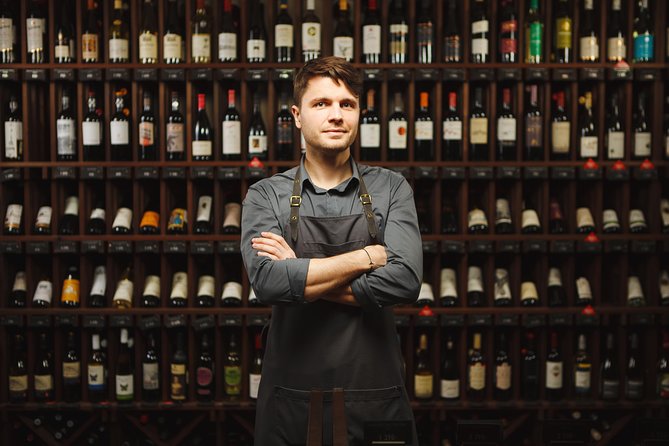
The menu is broad enough to function as dinner rather than a few token samples. You receive cold foods such as ham, cheeses, cured tuna, and tomato bread, along with warm items such as croquettes, bravas, and tortilla. Smoked sardine adds a seafood note, while the wines and vermouth make the stops feel like a sequence of small meals.
I especially like the balance between familiar and less familiar dishes. Most people can find an easy starting point in ham, potatoes, bread, or cheese. Then you can try mojama, a Gilda, or smoked sardine without committing to a full plate.
Dietary needs deserve attention before you go. One guide, Libor, was praised for accommodating restrictions, but that does not guarantee every request can be met. Contact the provider before the tour if you have allergies, avoid specific ingredients, or need a strict diet.
Guides, group style, and the evening mood
The guide can make or break a food walk. Names associated with this experience include Libor, Eli, Ellie, and Naomi. Libor is noted for city knowledge, humor, and a strong connection with the places on the route. Eli and Ellie are described as energetic and deeply familiar with Catalan culture. Naomi led one evening despite it being her first night with the company and still kept the group connected after an unexpected incident.
That range suggests a relaxed, social style rather than a formal lecture. You will likely spend time listening while walking, then eating and talking with the people around you. The group atmosphere is part of the experience, so it suits you if you enjoy sharing plates and meeting people from different places.
It may not suit you if you want a private guide or a quiet, tightly controlled schedule. One evening was disrupted when late arrivals missed part of the opening and someone fell on the pavement. That does not describe the normal plan, but it is a reminder to watch your footing, arrive on time, and stay aware in crowded streets.
Price, timing, and who gets the best value
At $102.58 per person, this is not a cheap snack crawl. It is a three-hour guided evening that includes dinner, alcoholic drinks, neighborhood touring, and a small group capped at 12. The price makes more sense if you value the guide’s local connections and want several stops without planning them yourself.
I would consider it good value for a first or second night in Barcelona, especially if you are interested in food but do not know where to begin. You get a broad sample of traditional dishes and drinks, plus a practical sense of where the old center’s neighborhoods sit in relation to one another.
The value is weaker if you eat lightly, do not drink, or already have a full list of restaurants booked. It is also not a fit for someone who wants a seated fine-dining meal. The evening is social, mobile, and built around tasting several things.
Confirmation is provided when you book. The activity is near public transportation, service animals are allowed, and most people can participate. Free cancellation is available up to 24 hours before the start time. If the minimum number is not reached and the tour is canceled, you are offered another date or experience, or a full refund.
Should you book this Barcelona food walk?
You should book it if you want a friendly, English-language introduction to Catalan food, wine, and the old center in one evening. The strongest reasons are the family-run bodega stops, the wide menu, and the chance to walk from the Gothic Quarter through El Born to Barceloneta with a guide who can explain what you are seeing.
Book it early in your stay if you want restaurant ideas and neighborhood bearings. Skip it if you dislike group dining, cannot walk comfortably for three hours, or want a single long meal with full control over the menu.
For most food-minded visitors, the combination is the point: old streets, local drinks, small plates, and a guide who turns the walk into a usable introduction to Barcelona.
FAQ
How long does the Barcelona tapas and wine experience last?
The experience lasts approximately three hours.
Where does the tour start and finish?
It starts at La Rambla, 97, Ciutat Vella, 08002 Barcelona, Spain, and ends back at the meeting point.
Which Barcelona neighborhoods are included?
The route includes the Gothic Quarter, El Born or La Ribera, and La Barceloneta. It also includes stops at the Basilica de Santa Maria del Mar and Placeta del Pi.
What food is included?
The menu can include Iberian ham, six local cheeses, croquettes, spicy potatoes called bravas, potato omelette, Catalan tomato bread, a Gilda pintxo, cured tuna called mojama, and smoked sardine with tomato bread.
Which drinks are included?
Alcoholic beverages are included. The sample drinks are Terra Alta DO white wine, craft vermouth, and Montsant DO red wine.
How many people can join the tour?
The activity has a maximum of 12 travelers. It is offered in English, and most people can participate. Service animals are allowed.
Recently added around Barcelona
- Montserrat very early : Hiking, Abbey, very small group★ 5.0 · 127 reviews
- Guided Private Yacht Tour in Barcelona Spain★ 5.0 · 6 reviews
- Private Tour from Barcelona to Montserrat (with guide)★ 4.5 · 6 reviews
- Private Tour from Barcelona to Costa Brava (with guide)★ 5.0 · 5 reviews
- Andorra Tour★ 4.0 · 7 reviews
- Barcelona Gaudi Tour: Sagrada Familia, Casa Batllo & Casa Mila★ 5.0 · 4 reviews
- Street Art, Sculptures & Crime Stories Walking Tour – Barcelona★ 5.0 · 11 reviews
- Wine Tasting in Barcelona (Catalan Varieties) Small Groups★ 5.0 · 10 reviews
Barcelona Tapas Tours, compared.
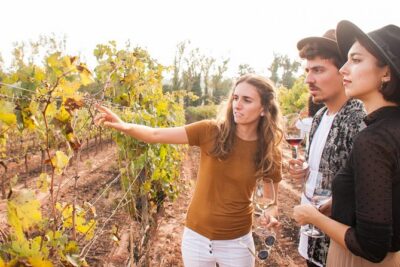
Montserrat & Cogwheel Train, Gourmet Wine Tasting & Tapas/Lunch
Read our review →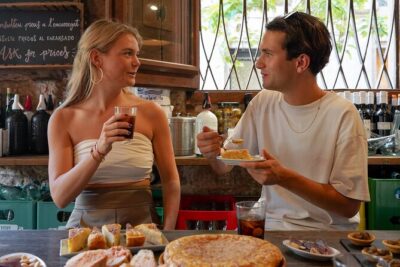
Barcelona Tapas and Wine Experience Small-Group Walking Tour
Read our review →
Montserrat with Black Madonna & Medieval Winery with Tapas/Lunch
Read our review →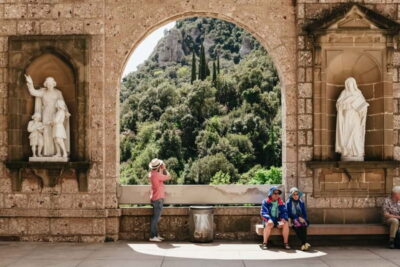
Montserrat and Winery Tour with Tapas or Lunch
Read our review →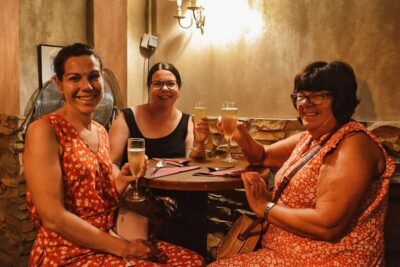
Tapas Walking Tour with Food, Wine, and History
Read our review →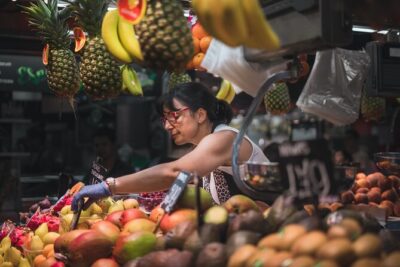
Barcelona Paella Cooking Class with Market Visit, Tapas & Sangria
Read our review →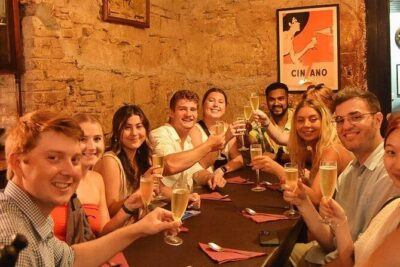
Barcelona Tapas Walking Tour: Food, Wine & History
Read our review →
Browse the lists this tour appears in