Reviewed · TICKETS
Barcelona: Sant Pau Recinte Modernista Entry Ticket
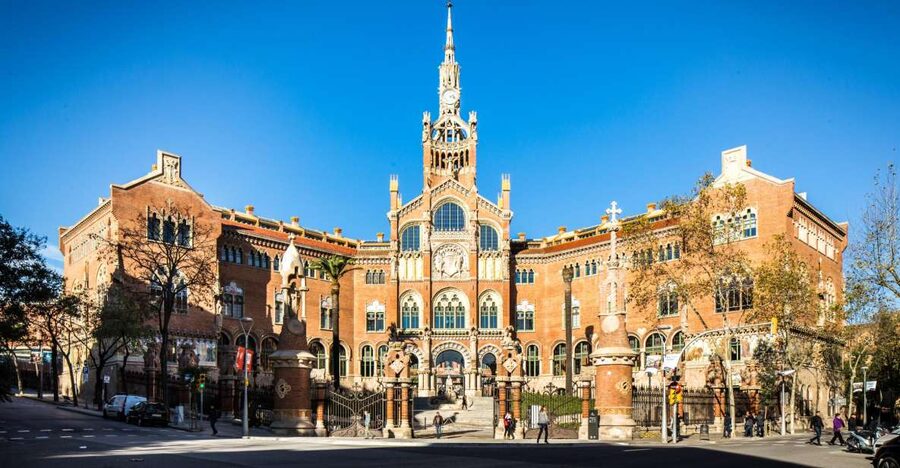
Sant Pau is not simply another pretty Barcelona building. It is a former public hospital designed as a garden city for healing, with ornate pavilions, planted courtyards, underground passageways, and enough tilework to keep your eyes busy for hours. I like the mix of serious social history and joyful Art Nouveau detail, and I like that you can explore without being tied to a group schedule. The main drawback is that this ticket does not include a guide, so the visit can feel less clear if you skip the written or audio interpretation.
- A hospital built for recovery: Sant Pau was planned around light, air, gardens, and hygiene.
- Domènech i Montaner’s masterpiece: The complex was designed between 1905 and 1930 by one of Catalonia’s leading Modernista architects.
- Art in every direction: Look for sculptures, mosaics, stained glass, painted ceilings, and colorful ceramic details.
- More than a facade: Underground passages link the pavilions and reveal how the hospital functioned.
- Easy to visit independently: The ticket is valid for one day, and most people should allow 1.5 to 2 hours.
- A practical Barcelona stop: The complex is near a metro station, close to the Sagrada Família, and wheelchair accessible.
Why Sant Pau feels different from Barcelona’s other landmarks
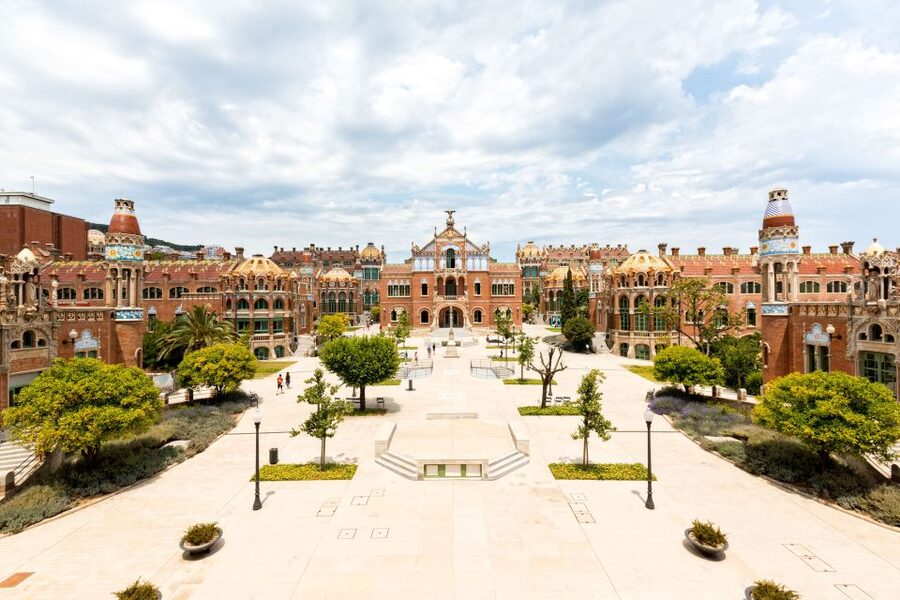
Barcelona has no shortage of grand Modernista buildings, but Sant Pau gives you something unusual: architecture designed around public health. Lluís Domènech i Montaner did not create a single palace or apartment block. He planned an entire medical complex, with separate pavilions set among gardens and connected below ground.
That arrangement made practical sense in the early 20th century. The old Hospital de la Santa Creu in El Raval had become too small, and the new site offered room for a more ambitious institution. Sant Pau was intended to serve sick people, especially those who could not afford private care. Its charitable purpose matters because the decoration was not added for a wealthy household. It was built into a public hospital.
I like this contrast. You are looking at delicate mosaics and elaborate sculptures, yet the original purpose was nursing, treatment, and sanitation. The beauty was meant to support a healthier setting, not merely impress passersby.
The complex operated as a public hospital for about a century. That long working life gives the visit an unusual sense of reality. This was not a decorative set built as a museum. Patients, nurses, doctors, and hospital staff used these buildings until fairly recently.
Entering the 1905 to 1930 Modernista complex
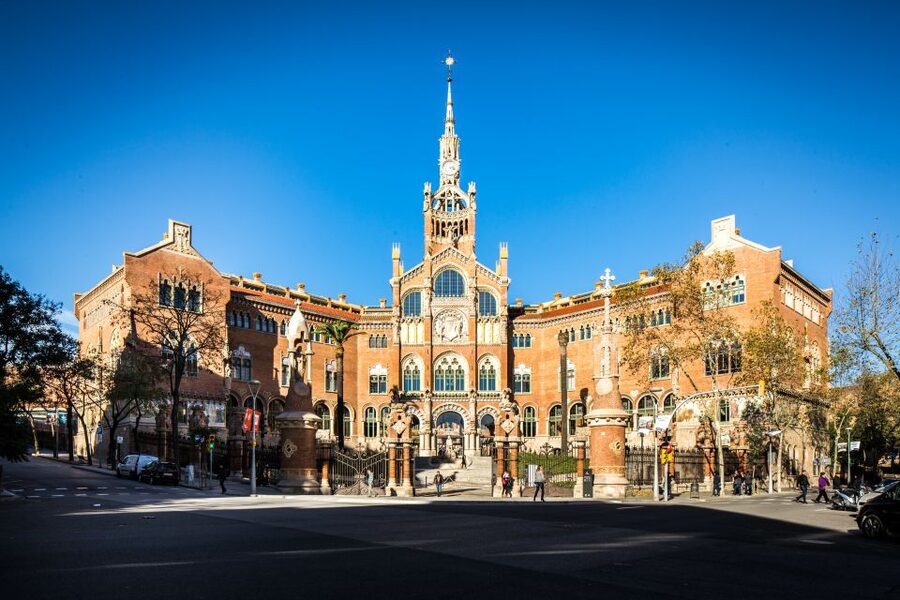
Your visit begins at Calle Sant Antoni Maria Claret, 167, in Barcelona’s 08025 district. The site is close to the Sagrada Família, making it easy to pair with that famous basilica, though I would avoid squeezing both into one rushed hour. Sant Pau rewards a slower look.
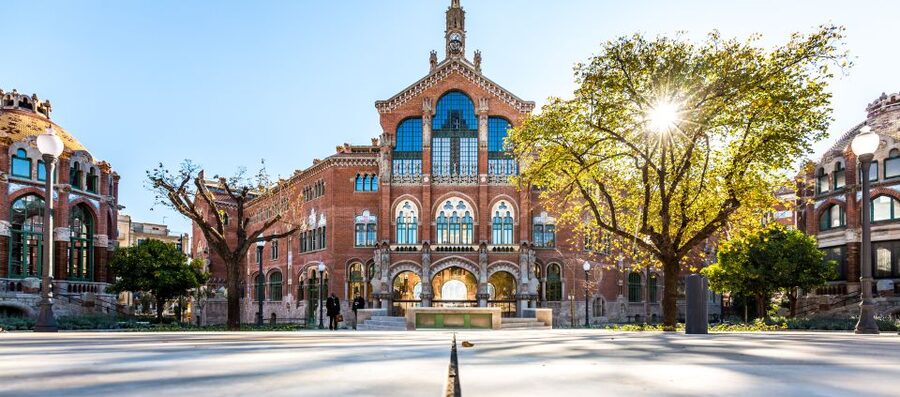
The first impression is scale. The complex is often described as the world’s largest Art Nouveau site, and that claim makes sense once you see the number of pavilions, courtyards, paths, and connecting spaces. Instead of walking into one crowded interior and immediately reaching the exit, you move through a planned group of buildings.
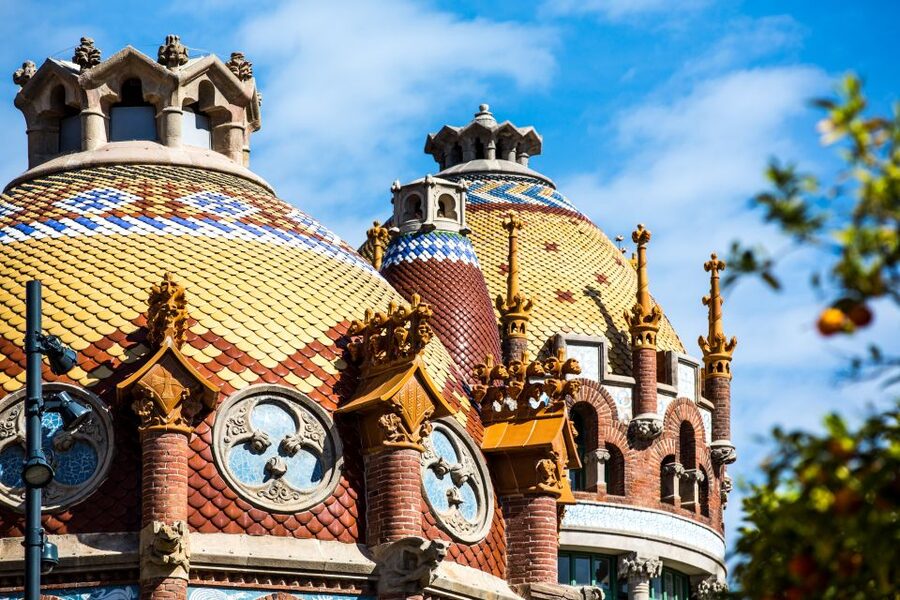
Take a moment before rushing inside. The front buildings contain some of the best exterior details, including colorful mural mosaics that are easy to miss if you only follow the central route. One useful rule here is simple: look up, then look to the sides. Decorative work appears on walls, roofs, doorways, and upper sections of the pavilions.
The architecture is often compared casually with Gaudí’s work, but Sant Pau belongs to Domènech i Montaner’s own style. You will see the same broad Catalan Modernista love of natural forms, ceramic color, sculpture, and symbolic detail, but arranged for a hospital campus rather than a private residence or church.
More Tickets in Barcelona:
- Barcelona: Park Güell Admission Ticket
★ 4.4 · 76,534 reviews - Barcelona Aquarium: Entry Ticket
★ 4.3 · 13,335 reviews - Barcelona: Sagrada Familia Skip-the-Line Entry Ticket & Tour
★ 4.8 · 12,789 reviews
The gardens and pavilions: a hospital planned as a garden city
The gardens are not filler between buildings. They are central to the idea of Sant Pau. The hospital was designed around air, light, greenery, and open space, all considered important to recovery at the time.
Walk slowly through the grounds and notice how the pavilions relate to one another. Their separation allowed different hospital functions to be organized across the site, while the gardens gave patients and staff a calmer setting. I find this one of the most valuable parts of the visit because it explains the design better than a single ornate room can.
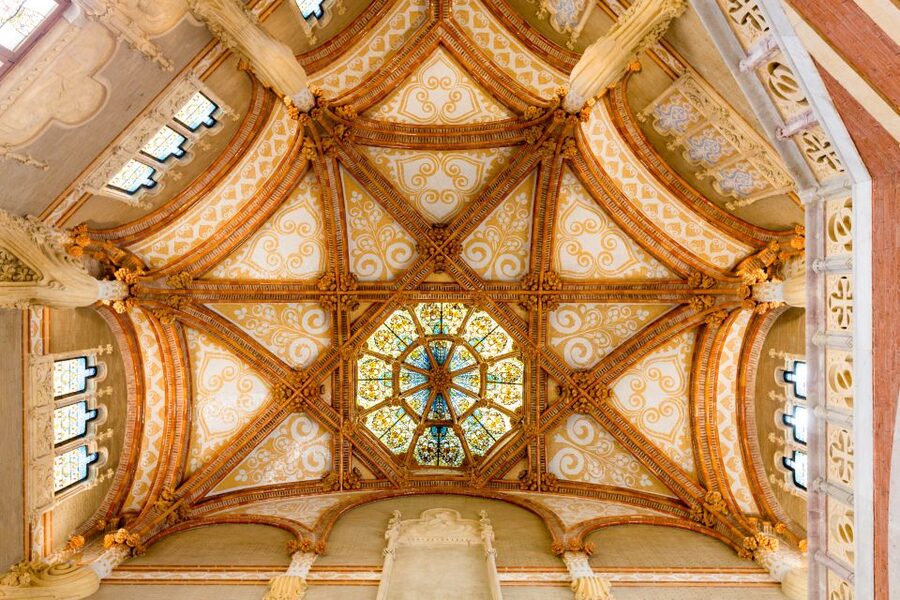
The renovated pavilions show how decoration and function worked together. Ceramic surfaces were practical and easier to clean than some older materials, while large windows and open areas supported ventilation and natural light. The result is a place that feels both highly decorated and carefully planned.
Some sections may feel more polished and museum-like than others, depending on which buildings are open during your visit. The site has received praise for its immaculate courtyards and restored interiors, but you should not expect every part of the original hospital to be open. That is one limitation of a complex this large.
Allow time to sit in a courtyard if the weather is pleasant. The grounds offer a welcome pause from Barcelona’s traffic and heat. One visitor even used the site as a quiet stop before leaving the city, with a nearby metro connection making the location useful at the end of a trip.
Inside the pavilions, where decoration meets medical history
The interiors give the visit its emotional weight. The architecture is impressive from outside, but the former hospital rooms help you understand the people who used the site.
You might see rooms arranged to show hospital life as it looked in the early 20th century, including a ward setup dating from 1932 and medical instruments from the period. These details change the mood. Instead of admiring only a beautiful building, you begin to picture the patients who spent time there and the staff who cared for them.
The medical displays are especially worthwhile if you work in healthcare, nursing, science, or public health. The site shows how medical practice developed over time, while the building itself reveals earlier ideas about cleanliness, nature, and recovery. It is a good place to think about how much hospital design can affect the experience of illness.
Sant Pau also presents the institution’s charitable roots. The hospital was linked to welfare and care for people with limited means, so the architecture carries a social purpose that is easy to overlook beneath the ornament. I appreciate that the visit does not treat the complex as an empty shell. It connects the rooms to the hospital’s long working life.
Signage and orientation can require a little patience. The outdoor route is not always obvious, and a few visitors have wished for clearer directions between buildings. If you prefer a tightly scripted experience, a guided visit or audio guide would likely help. The included entry ticket is independent admission, not a guided tour.
Underground passages and the parts you might miss
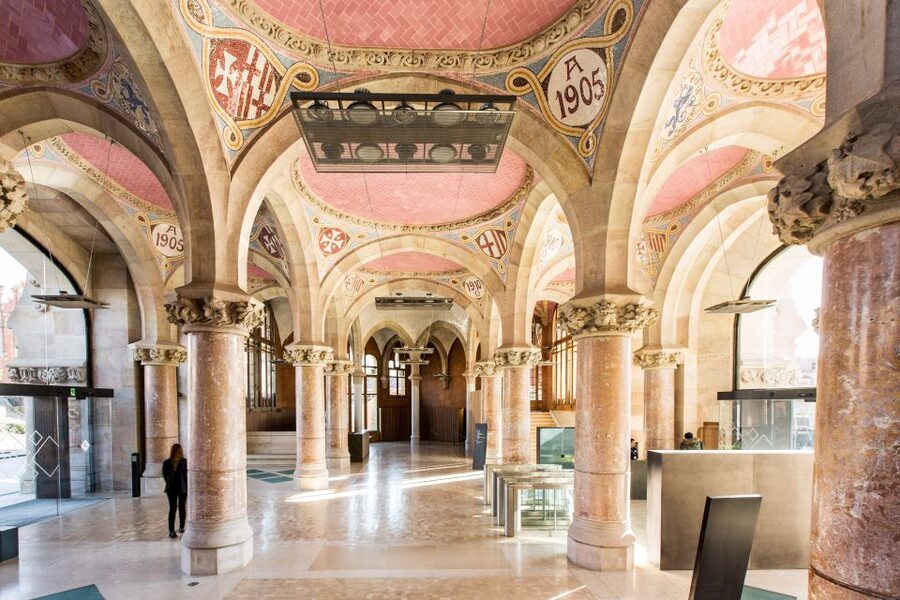
The underground passages are one of Sant Pau’s most interesting features. They connected the separate buildings and allowed movement around the hospital without sending staff and patients across every courtyard.
These corridors also help you understand the complex as a working institution. Above ground, you see the garden-city plan and the decorative facades. Below ground, you see the practical systems that made the hospital operate.
Do not treat the tunnels as a quick link from one building to another. Look at the construction details and imagine the daily movement through the hospital. They are a reminder that Sant Pau combines an artistic vision with very practical planning.
The best visit alternates between the two levels: open gardens and decorated pavilions above, functional connections below. That combination is more revealing than seeing only the grand central areas.
A different sort of day out in Barcelona:
- Barcelona: Casa Batlló Entry with Self-Audioguide Tour
★ 4.7 · 25,359 reviews - Barcelona: 24 or 48-Hour Hop-On Hop-Off Bus Tour
★ 4.4 · 20,872 reviews - Barcelona: Park Guell Guided Tour with Skip The Line Entry
★ 4.7 · 17,563 reviews - Barcelona in 1 Day: Sagrada Familia, Park Guell,Old Town & Pickup
★ 5.0 · 13,541 reviews
How much time to allow for a self-paced visit
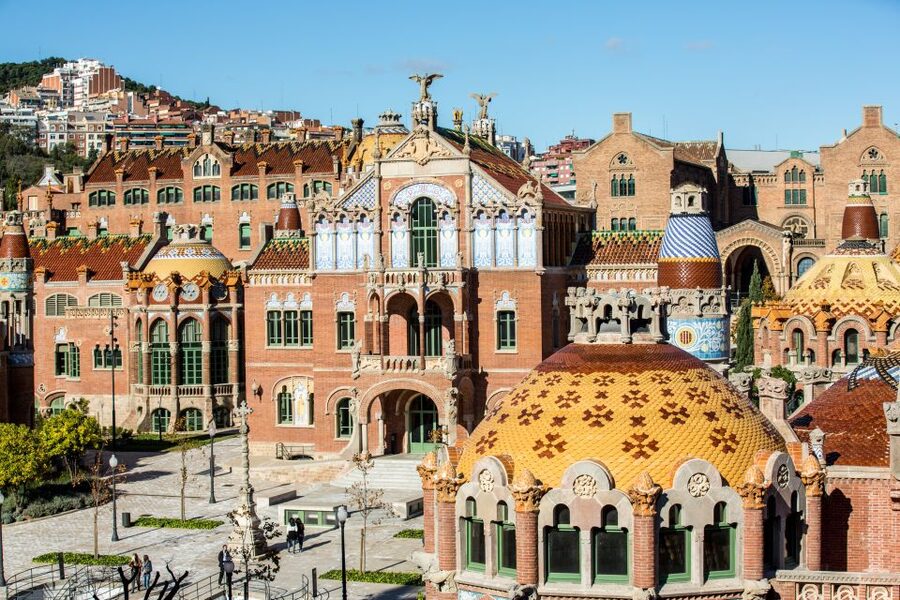
The advertised visit length is about 1.5 hours, but I would plan closer to two hours if you enjoy architecture, photography, or medical history. A fast visit can cover the major buildings in roughly that shorter period. A slower visit gives you time for the gardens, side walls, mosaics, medical displays, and underground sections.
The ticket is valid for one day, so you are not forced into a narrow time window once inside. Check the available starting times when booking, then keep your pace relaxed. The experience is self-paced, which is useful if you want to read every panel or pause for photographs.
Arriving early can make the courtyards feel especially calm. The site has often been less crowded in the morning, and the spacious layout helps prevent the visit from feeling packed even when other people are present.
You can also visit later in the day if your schedule is tight. Just protect enough time to see more than the front facade. Sant Pau is not a two-minute photo stop.
Is the $21 ticket good value?
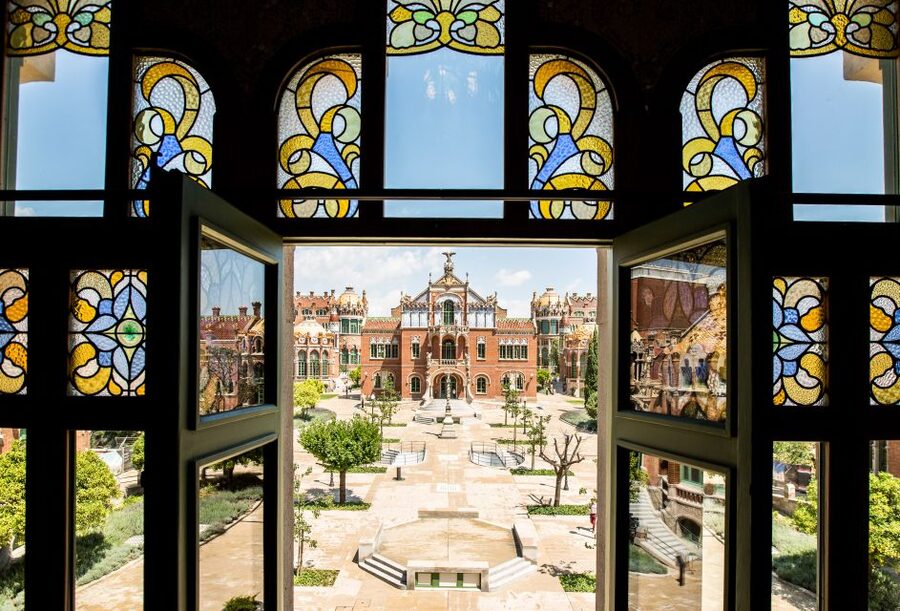
At $21 per person, Sant Pau is not the cheapest quick attraction in Barcelona, but it offers more than a single decorated room. You get access to a large architectural complex, gardens, renovated pavilions, underground passages, and exhibits explaining the hospital’s operation and history.
I consider it good value for visitors who enjoy buildings and museums but want something less predictable than another famous church interior. The visit can also balance a busy day of major sights. After the noise and crowds around central Barcelona, Sant Pau gives you space to slow down.
The value is weaker if you only want a short photo opportunity or if you are unwilling to read any interpretation. Without a guide, some of the hospital’s meaning may pass you by. The architecture is strong enough to carry a brief visit, but the full experience comes from connecting the design to healthcare and social welfare.
A guided tour is not included. That keeps the price lower and gives you freedom, but it also means you need to organize your own understanding. If an audio guide is available when you visit, I would consider adding it, especially if you want more context without joining a group.
Getting there and handling practical details
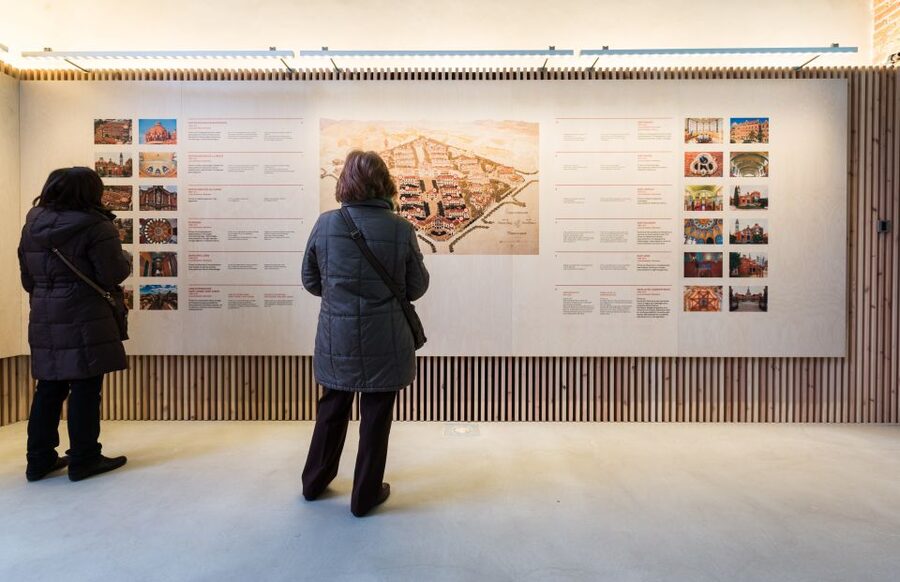
The meeting point is Calle Sant Antoni Maria Claret, 167. A metro station is nearby, and the location is convenient for combining Sant Pau with the Sagrada Família. One practical note: navigation apps can occasionally direct people toward the wrong Sant Pau-related location, so check the full street address before setting off.
The site is wheelchair accessible. Children aged 11 and under may enter free, but a parent or guardian must accompany them. Visitors over 65 can receive free access on the first Sunday of the month, according to the stated admission rules.
Small lockers are available, but they are suitable for carry-on-sized bags rather than large luggage. This can make Sant Pau a useful stop before an airport transfer, though you should not arrive with oversized suitcases expecting storage.
Pets are not allowed, and smoking, alcohol, and drugs are prohibited. There is no cafe included as part of the experience, so bring water or plan a stop at one of the cafes outside the complex.
The ticket allows free cancellation up to 24 hours in advance, and you can reserve now and pay later. Those options help if your Barcelona schedule is still changing.
Who will enjoy Sant Pau most
I would put Sant Pau high on the list for:
- Architecture fans who want more than the best-known Gaudí stops.
- Healthcare workers and nursing students interested in historic hospital design and medical practice.
- Museum lovers who prefer a site where the rooms and structure are part of the exhibit.
- Families with older children who can appreciate tunnels, pavilions, and unusual hospital details.
- Photographers who enjoy tilework, stained glass, sculpture, courtyards, and symmetrical views.
- Visitors needing a calmer stop near the Sagrada Família and public transport.
It may be less suitable if you want a lively guide-led performance or a tightly narrated tour. The ticket gives you freedom, but you must supply some of the structure yourself.
Should you book the Sant Pau entry ticket?
Yes, if you have an interest in Modernista architecture, medical history, or places where beauty serves a real public purpose. Sant Pau is especially useful for repeat visitors who have already seen the Sagrada Família, Park Güell, and the Picasso Museum and want a different side of Barcelona.
I would book it for a first visit too, provided you can spare at least 1.5 hours. Go beyond the main facade, inspect the side mosaics, walk the gardens, and seek out the underground passages. If you want the story delivered in a clear sequence, look for an audio or guided option. If you prefer your own pace, the standard entry ticket gives you plenty to see for $21.
FAQ
Where is Sant Pau Recinte Modernista located?
It is located at Calle Sant Antoni Maria Claret, 167, 08025 Barcelona, near a metro station and a short distance from the Sagrada Família.
How long does a visit to Sant Pau take?
The experience is described as a 1.5-hour visit, but you may want to allow two hours to explore the pavilions, gardens, underground passages, and exhibits at a relaxed pace.
Is a guided tour included?
No. The ticket includes entrance to Sant Pau Recinte Modernista, but not a guided tour.
Is Sant Pau wheelchair accessible?
Yes, the experience is wheelchair accessible.
Can children visit Sant Pau for free?
Children aged 11 and under are permitted to attend free of charge, but a parent or guardian must be present.
Are there any free admission days for older visitors?
Visitors over 65 can receive free access on the first Sunday of the month.
Can I cancel my booking?
Yes. You can cancel up to 24 hours in advance for a full refund. You can also reserve now and pay later.
Recently added around Barcelona
- Montserrat very early : Hiking, Abbey, very small group★ 5.0 · 127 reviews
- Guided Private Yacht Tour in Barcelona Spain★ 5.0 · 6 reviews
- Private Tour from Barcelona to Montserrat (with guide)★ 4.5 · 6 reviews
- Private Tour from Barcelona to Costa Brava (with guide)★ 5.0 · 5 reviews
- Barcelona Gaudi Tour: Sagrada Familia, Casa Batllo & Casa Mila★ 5.0 · 4 reviews
- Street Art, Sculptures & Crime Stories Walking Tour – Barcelona★ 5.0 · 11 reviews
- Andorra Tour★ 4.0 · 7 reviews
- Wine Tasting in Barcelona (Catalan Varieties) Small Groups★ 5.0 · 10 reviews
Tickets, compared.


Sagrada Familia Skip-the-Line Entry Ticket & Tour
Read our review →
FC Barcelona Museum “Barça Immersive Tour” Ticket
Read our review →
Park Guell Guided Tour with Skip the Line Ticket
Read our review →
Park Guell and Sagrada Familia Tour with Skip the Line Tickets
Read our review →
Park Güell and Gaudí House Museum Entry Ticket
Read our review →