
Reviewed · SAGRADA FAMíLIA TOURS
Barcelona: Sagrada Familia, Modernism and Gothic Quarter
Barcelona’s most useful introduction may be the one that connects two very different cities: Gaudí’s modernist Barcelona and the narrow medieval streets of the Gothic Quarter. This three-hour walk begins by the Sagrada Família, then moves through Passeig de Gràcia and the old center, ending at Plaça del Rei.
I like the range of history packed into a short outing, from Roman columns at the Temple d’August to the Crown of Aragon’s royal past. I also like the chance to hear a local guide explain architectural details you could easily miss, with guides such as Anastasia, Nuria, Caio, Christian, and Leo earning especially warm praise for their storytelling and energy.
The key drawback is crucial: you do not enter the Sagrada Família. You see it from outside and learn about Gaudí’s ideas, so anyone expecting an admission ticket will feel misled unless they read the exclusions carefully and arrange a separate church visit.
Key points to know before you book
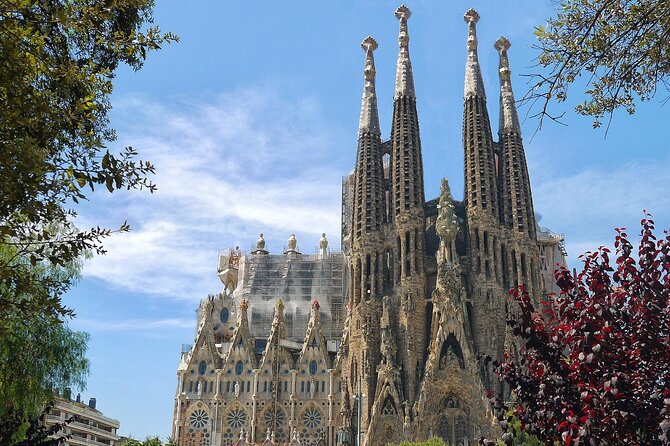
- Sagrada Família from the outside: The opening section explains Gaudí, the cathedral’s details, and the meaning behind its design, but admission is not included.
- Modernist Barcelona in context: Passeig de Gràcia and several Gaudí-era buildings show how Barcelona changed in the late 19th and early 20th centuries.
- Roman ruins in the Gothic Quarter: The MUHBA Temple d’August offers a sharp change of mood, with surviving columns tucked into the old city.
- Royal documents and power: The General Archive of the Crown of Aragon adds political history to the architecture.
- Small maximum group: The tour accepts up to 20 people, though the ability to hear the guide can depend on street noise and group position.
- A practical city walk: The route finishes at Plaça del Rei rather than returning to the start, and a metro ride may be part of the experience.
Two Barcelonas in one three-hour walk
This tour works because Barcelona’s famous modernist avenues and its oldest lanes are not treated as separate sights. You begin with Gaudí’s grandest project, then follow the city backward through modernism, medieval power, and Roman foundations.
The pace is brisk. The published stops add up to roughly three hours, with several explanations lasting 10 to 15 minutes and about 45 minutes devoted to the Sagrada Família area. You should arrive ready to walk, stand, listen, and keep up with the group.
The maximum group size is 20. That is manageable, but it is not a private tour. Street traffic, construction, and city noise can make it hard to hear, especially near the Sagrada Família. Stay close to the guide and ask to move nearer if needed.
The meeting point is Av. de Gaudí, 2, in the Eixample, near the basilica. The tour ends at Plaça del Rei in the old town, in front of the History Museum of Barcelona. This one-way design is useful if you plan to continue sightseeing in the Gothic Quarter, but less convenient if you have left bags or transport plans near the starting point.
More Barcelona Gothic Quarter Tours:
- Barcelona all included: Sagrada, Park Güell, Montjuic & Gothic
★ 5.0 · 2,169 reviews - Barcelona Gothic Quarter Tapas & Taverns Food & Wine Tour
★ 5.0 · 1,470 reviews - Barcelona: Gothic Quarter Ghosts and Legends Walking Tour
★ 4.7 · 1,443 reviews
Sagrada Família without the admission ticket
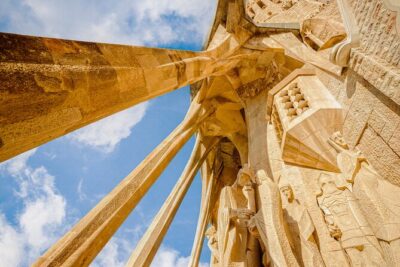
The first major section focuses on the Sagrada Família and Antoni Gaudí. The guide explains the cathedral’s history, the architect’s vision, and the meaning of its decorative details. For a first look, this can be worthwhile because the building is difficult to understand as a single object. Its towers, façades, sculpture, and symbols reward explanation.
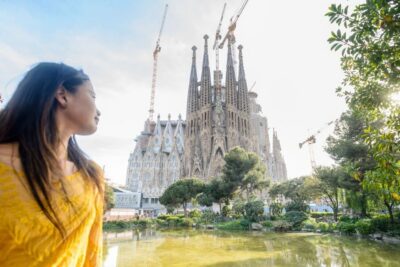
You will have time to examine the exterior rather than simply snap a photograph and move on. The guide’s job here is to point out what you are seeing and connect the design to Gaudí’s broader ideas.
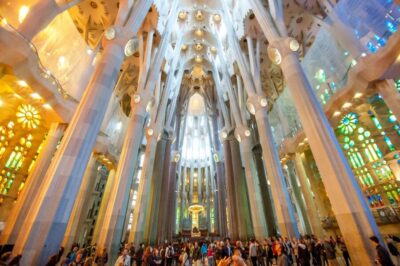
Still, keep expectations precise. The tour does not take you inside the church, and the price does not cover entry. Several poor ratings came from people who assumed Sagrada Família was included, while the strongest ratings praised the guide’s explanations rather than an interior visit.
If entering the basilica is a main reason for coming to Barcelona, book a separate admission ticket and treat this walk as an exterior orientation. Do not count on this activity to provide the church visit.
Street conditions matter here. One detailed account described traffic and construction noise making the guide difficult to hear, and there are no earphones supplied. I would stand close to the guide, avoid drifting toward the edge of the group, and ask questions while you are still near the site.
Passeig de Gràcia and the modernist city
The route then turns to Passeig de Gràcia, Barcelona’s best-known avenue and an important setting for modernist architecture. The guide discusses the avenue’s history before stopping at striking buildings associated with Gaudí and his contemporaries.
The exact attraction list is presented as a series of exterior explanations rather than formal interior visits. You may see façades filled with unusual shapes, color, ornament, and structural ideas. One stop combines chocolate, art, and architectural history, while another asks you to consider who built a particularly detailed building. These short talks help you compare the city’s leading modernist architects instead of treating Gaudí as Barcelona’s only creative force.
This portion is strongest for people who like architecture but do not want a museum-heavy morning. You get a street-level look at how the buildings relate to one another, with a guide interpreting the details in front of you.
The tradeoff is time. Fifteen minutes passes quickly when a building has a complicated design. You will get a useful introduction, not a full architectural study. If a particular modernist house interests you, note its name and return later with more time.
A short break near Plaça de Catalunya follows. The square is Barcelona’s largest, and the 10-minute pause gives you a chance to catch your breath. It is not a long meal break, so have water and use the restroom before starting. One account described the walk as having few built-in pauses, which is worth taking seriously for anyone who needs regular breaks.
Plaça de Catalunya and the shift into the old city

Plaça de Catalunya provides a natural transition. Around you is modern Barcelona, with broad streets and major shopping routes. From here, the group moves toward the older center, where the scale tightens and the route becomes more about layers of history than grand avenues.
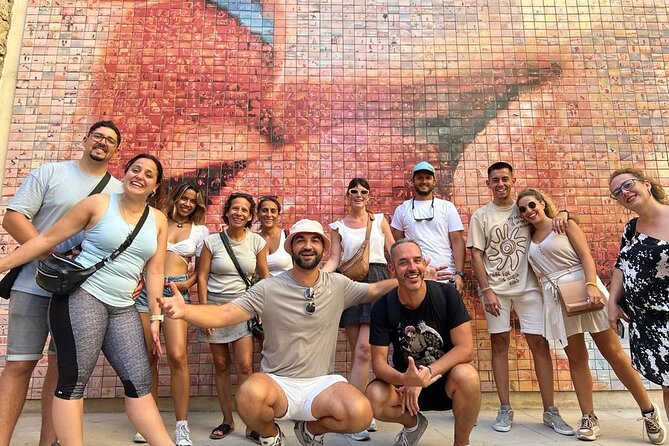
One stop is described as a surprising piece of modern art in the Old Town. That contrast is part of the fun. Barcelona’s historic center is not frozen in one period, and the guide uses the modern work to show how the city continues to add new ideas to old surroundings.
The route is not simply a march between famous buildings. You will hear why the streets are narrow, how the old urban pattern developed, and why the Gothic Quarter can feel like a maze. Those explanations make the walking more useful than a series of disconnected photographs.
Keep your phone charged. Communication about the meeting point may arrive through WhatsApp, and one person had trouble getting started because notifications were turned off. A dead phone also caused serious trouble when two people became separated after a restroom stop. That is an avoidable problem, so check messages before leaving, carry a charger, and stay with the group.
More Sagrada Família Tours in Barcelona:
- Barcelona in 1 Day: Sagrada Familia, Park Guell,Old Town & Pickup
★ 5.0 · 13,541 reviews - Barcelona: Sagrada Familia Skip-the-Line Entry Ticket & Tour
★ 4.8 · 12,789 reviews - Fast Track Sagrada Familia Guided Tour
★ 4.5 · 8,795 reviews - Park Guell and Sagrada Familia Tour with Skip the Line Tickets
★ 5.0 · 6,384 reviews
Roman Barcelona at the Temple d’August
The MUHBA Temple d’August is one of the route’s best historical surprises. Four Roman columns survive inside the Gothic Quarter, where medieval walls and modern life surround them.
The guide explains the Roman Empire and places Barcelona’s oldest remains within the city’s later development. This short stop gives you a clear sense that Barcelona did not begin with the Middle Ages or Gaudí. Different periods sit almost on top of one another.
Admission to the Temple d’August is included. The visit is brief, listed at about five minutes, so do not expect a long museum session. Its value comes from the setting and the explanation, especially if you would otherwise walk past without realizing what is there.
This stop also shows the limits of the tour. The route offers snapshots, not extended time at each site. If ancient Roman Barcelona is your main interest, you will want a separate visit to the city’s archaeological sites.
Casa de l’Ardiaca and the Gothic Quarter
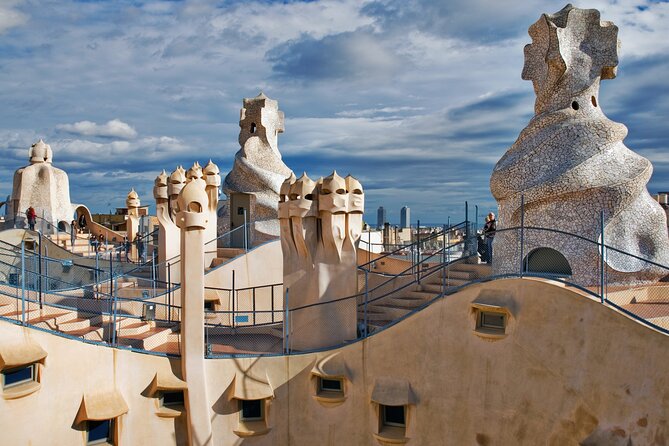
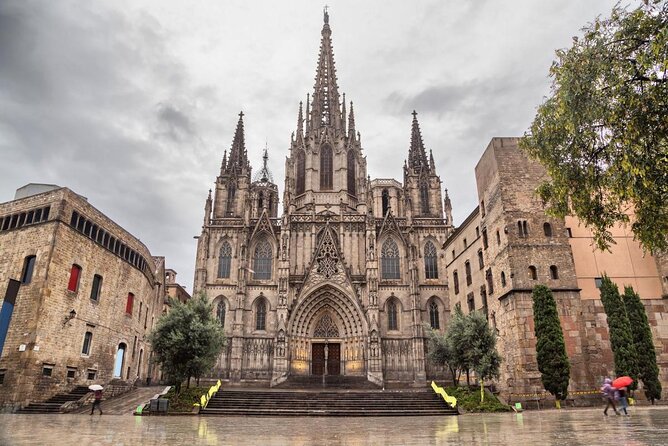
Casa de l’Ardiaca is included, with about 10 minutes inside. Entering the building changes the feel of the walk. After noisy streets and open squares, you step into a historic structure where architectural details and old civic life come closer.
The guide frames the visit as a kind of time travel. That is a fair description of the experience itself, not because the stop is large, but because the building lets you feel the age of the quarter in a more direct way.
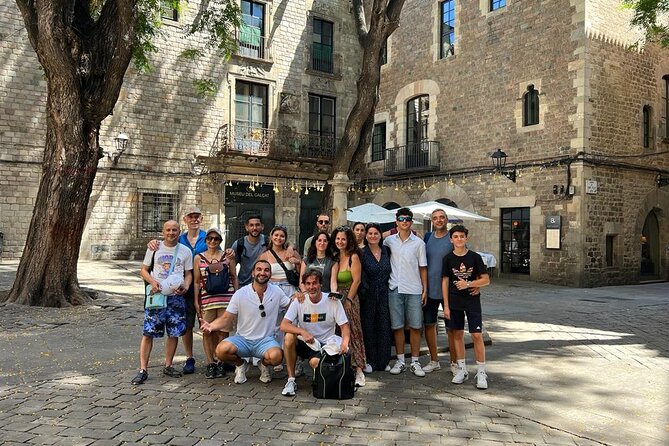
The Gothic Quarter section also includes a small square described as magical and easy to miss. The route then threads through narrow lanes and explains why the streets developed in such a tangled pattern. This is where the tour feels most personal and least like a checklist.
Caio is especially good for this sort of walking history, with clear stories tied to each attraction. Christian is praised for answering questions and keeping the history entertaining. Anastasia is noted for combining strong information about the Sagrada Família with details about the old town and present-day Barcelona.
Guide quality can vary, as it does on any shared tour. One account found the English difficult to follow and felt the group moved too quickly. If you need the guide to slow down or repeat something, speak up early rather than letting the group pull ahead.
The Crown of Aragon at Plaça del Rei
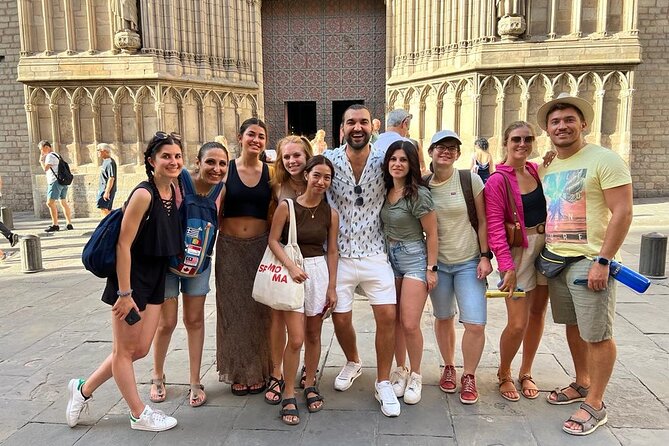
The last major historical stop is the General Archive of the Crown of Aragon. Here the focus shifts from buildings to power, government, and the political story of the Crown of Aragon.
The archive occupies a setting tied to important events in Barcelona’s past. You get a short explanation of why the place matters, followed by a finish in Plaça del Rei, one of the old city’s most atmospheric squares.
This ending makes sense. After Roman remains, medieval streets, and civic buildings, the route closes in a royal setting. It also leaves you in a useful part of the Gothic Quarter, with the History Museum of Barcelona directly in front of you.
Admission to the archive is included. As with the other stops, the visit is short, so think of it as an orientation. The guide gives you the story and the reason to return, rather than covering every document or room.
What $56.75 buys you
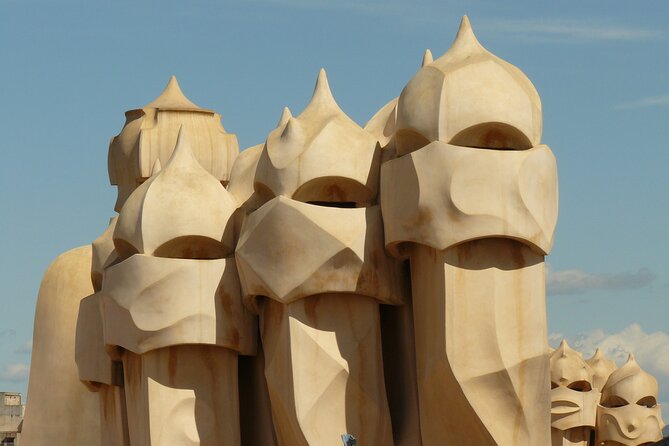
At $56.75 per person, this is not the cheapest way to stroll around Barcelona. The value depends on how much you want interpretation rather than simple sightseeing.
You are paying for a three-hour route, a multilingual professional guide, access to Casa de l’Ardiaca, the Temple d’August, and the General Archive of the Crown of Aragon, plus commentary at the Sagrada Família and modernist buildings. Entry to the Sagrada Família is not part of the price, and metro tickets are also excluded.
I think the price is reasonable for a first-time visitor who wants a structured introduction and would not otherwise know where to look for Roman columns, old archives, or smaller Gothic Quarter spaces. It is less attractive if you already know Barcelona’s architecture or prefer to explore at your own pace.
The included sites are not the kind of expensive major admissions that make the ticket pay for itself. The main value is the guide’s time, route planning, and ability to link different periods. Strong guides such as Nuria, Christina, Christian, Caio, Anastasia, and Leo can make that difference. Their reported strengths include clear visuals, strong historical stories, enthusiasm, and useful suggestions for other things to do in Barcelona.
The tour averages booking about 11 days ahead. That suggests you should not leave it until the last moment if your dates are fixed. Free cancellation is available until 24 hours before the start time. Inside that window, the payment is not refunded.
Who should take this walk
I would choose this for a first visit, especially if you want to see the Sagrada Família area but do not need an interior ticket bundled into the same activity. It gives you a broad first map of Barcelona and places the famous modernist buildings beside the older city.
It suits adults and families with a moderate level of fitness who can walk for three hours and manage uneven, crowded urban streets. Service animals are allowed, and the meeting point is near public transportation.
It is less suitable for anyone with limited walking stamina, anyone who needs frequent restroom breaks, or anyone expecting a relaxed pace. It is also a poor match if the main goal is entering the Sagrada Família.
The metro element can be a pleasant practical touch. One guide used the ride to help the group experience how local people move around the city. Still, metro tickets are not included, so budget for that separately if the route uses public transportation on your date.
Should you book it?
Book this tour if you want a lively overview of Barcelona’s modernist and medieval sides, and you are happy to view the Sagrada Família from outside. The best guides turn short stops into memorable history lessons, and the route includes places you might skip on your own, especially the Temple d’August, Casa de l’Ardiaca, and the Crown of Aragon archive.
Skip it if entering the Sagrada Família is essential, if you dislike brisk group walks, or if you want long visits at each attraction. In that case, arrange a separate basilica ticket and explore the Gothic Quarter at your own pace.
The simple booking rule is this: pay for the guide and the city overview, not for church admission. Keep your phone charged, watch WhatsApp messages, use the restroom before departure, stay close to the group, and plan your next stop from Plaça del Rei rather than assuming you will return to the starting point.
FAQ
Does the tour enter the Sagrada Família?
No. The tour explains the Sagrada Família and views it from outside, but entry to the basilica is not included.
How long does the experience last?
The tour lasts approximately three hours.
Where does the tour start and finish?
It starts at Av. de Gaudí, 2, in Barcelona’s Eixample district. It finishes at Plaça del Rei, in front of the History Museum of Barcelona.
Are metro tickets included?
No. Metro tickets are not included in the tour price.
What sites have included admission?
Admission is included for Casa de l’Ardiaca, the MUHBA Temple d’August, and the General Archive of the Crown of Aragon.
What is the cancellation policy?
You can cancel at least 24 hours before the local start time for a full refund. Cancellations or changes made less than 24 hours before the experience are not refunded.
Recently added around Barcelona
- Montserrat very early : Hiking, Abbey, very small group★ 5.0 · 127 reviews
- Guided Private Yacht Tour in Barcelona Spain★ 5.0 · 6 reviews
- Private Tour from Barcelona to Montserrat (with guide)★ 4.5 · 6 reviews
- Private Tour from Barcelona to Costa Brava (with guide)★ 5.0 · 5 reviews
- Andorra Tour★ 4.0 · 7 reviews
- Barcelona Gaudi Tour: Sagrada Familia, Casa Batllo & Casa Mila★ 5.0 · 4 reviews
- Street Art, Sculptures & Crime Stories Walking Tour – Barcelona★ 5.0 · 11 reviews
- Wine Tasting in Barcelona (Catalan Varieties) Small Groups★ 5.0 · 10 reviews
Sagrada Família Tours, compared.
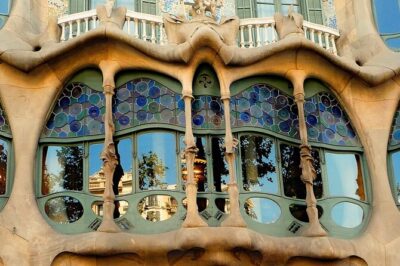
Barcelona in 1 Day: Sagrada Familia, Park Guell,Old Town & Pickup
Read our review →
Sagrada Familia Skip-the-Line Entry Ticket & Tour
Read our review →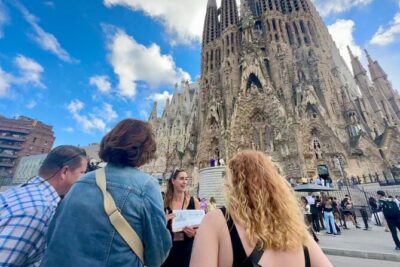
Park Guell and Sagrada Familia Tour with Skip the Line Tickets
Read our review →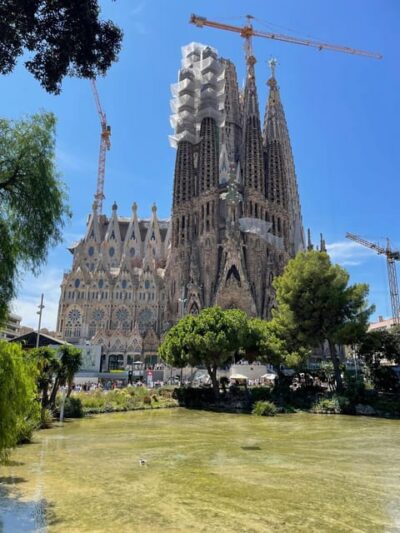
Sagrada Familia Guided Tour with Tower Access
Read our review →Browse the lists this tour appears in