
Reviewed · BARCELONA STREET ART TOURS
Barcelona: Raval Street Art and Graffiti Walking Tour
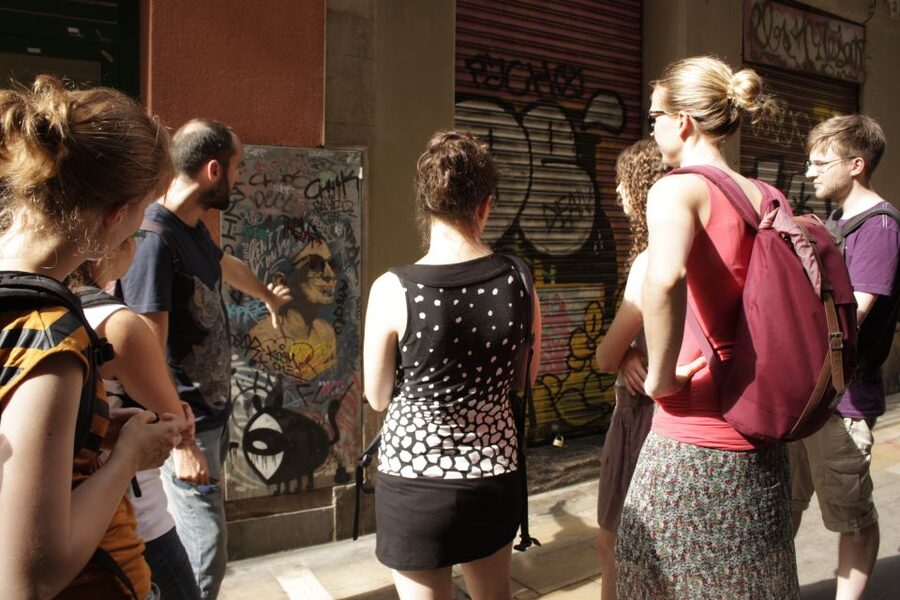
Barcelona’s Raval neighborhood is an open-air art book, with painted shutters, building walls, park surfaces, and quick graffiti tags changing from street to street. This two-hour walk gives you a local guide’s map of that world, from small marks you could easily miss to major works linked with artists such as Keith Haring.
I like the tour’s local focus and its mix of art, hip-hop culture, politics, and neighborhood life. I also like that it takes you to Arnau Gallery and Tres Chimeneas, not just the best-known photo stops. The main drawback is simple: the art changes, so you may see fewer spectacular murals than you would in another European street-art center, and MACBA admission costs extra.
Key points at a glance
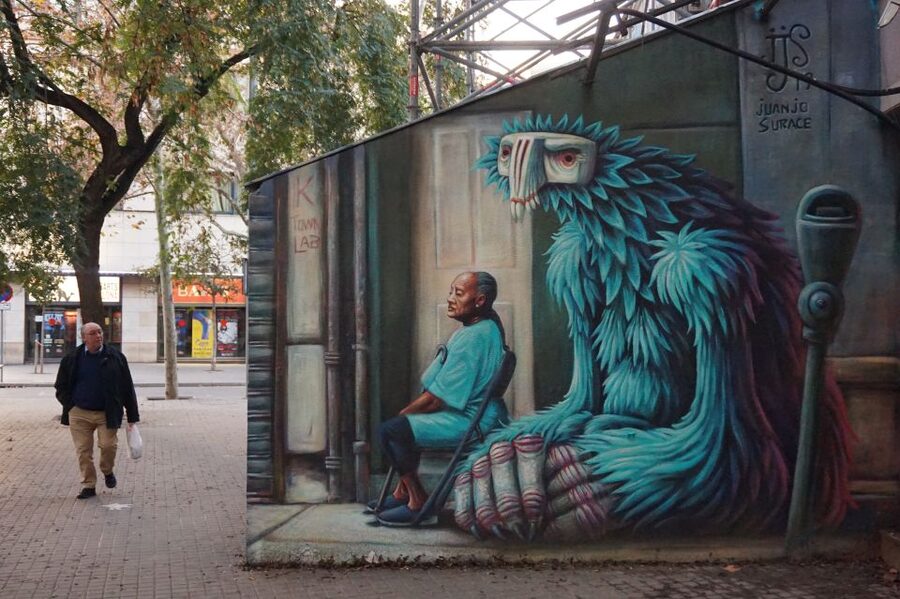
- Raval’s changing walls: See graffiti and murals on homes, apartment blocks, parks, and other everyday surfaces.
- A guide-led art lesson: Learn how graffiti developed, how styles differ, and how local artists work.
- Arnau Gallery: Look at work connected with Barcelona’s local urban-art scene.
- Tres Chimeneas: Visit a famous skate spot that gives the tour a strong connection to youth and hip-hop culture.
- MACBA finish: End outside the Barcelona Museum of Contemporary Art, where skating and modern art meet.
- Practical format: The walk lasts two hours, costs $33 per person, and is offered in English, French, and Spanish.
Why Raval is the right place for a street-art walk
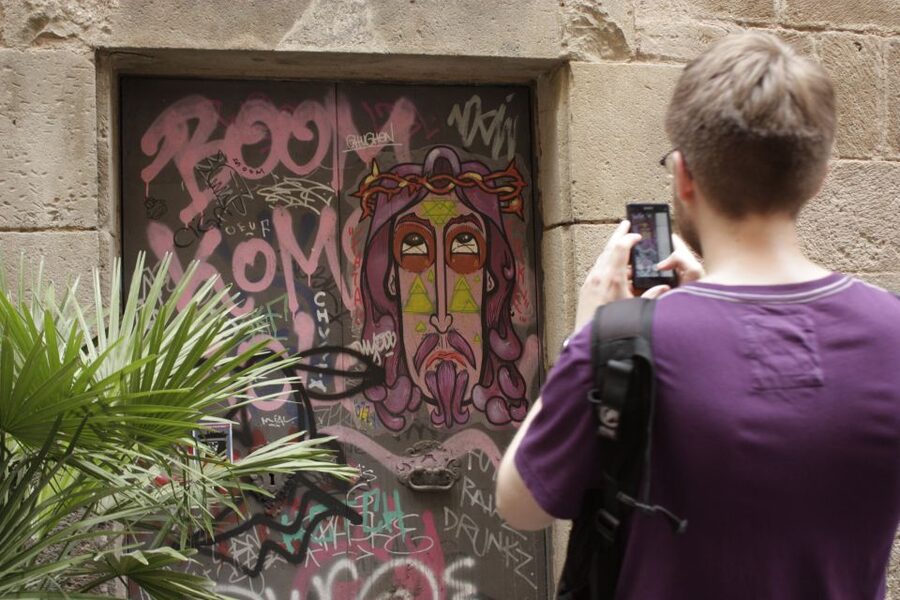
Raval, also known as the barrio Xino, feels different from Barcelona’s grand avenues and polished tourist sights. Its streets carry layers of local life, and the art is part of the setting rather than something kept behind glass.
That matters because graffiti is easy to misunderstand when you see it alone. A guide can point out the difference between a quick tag, a carefully planned mural, a political statement, and a neighborhood project. The walk also helps you notice the tiny details that disappear when you explore by yourself. One past participant specifically appreciated being shown small cans attached to walls, an easy detail to miss unless someone explains what you are seeing.
The art is not fixed. Some pieces may be painted over, altered, or replaced before your visit. That uncertainty is part of the point. You are seeing a living art scene, not a permanent gallery with a set collection.
More Barcelona Street Art Tours:
- Barcelona Street Art and Graffitti Bicycle Tour
★ 5.0 · 361 reviews - Barcelona Street Art Tour with Exclusive Artist Studios Visit
★ 5.0 · 152 reviews - Raval Street Art and Graffiti Guided Tour in Barcelona
★ 5.0 · 81 reviews
Meeting at Jardins Talia and getting your bearings
The stated meeting point is Jardins Talia on Avenida Paralel 100, 08015 Barcelona. The supplied tour information also refers to meeting near Hotel Serhs del Port, so check the exact point on your confirmation before setting off. That small bit of homework is worthwhile, since the tour begins on foot and does not include hotel pickup.
Arrive ready to walk for two hours. Wear comfortable shoes, and keep your phone or camera handy, since the guide may direct your attention to work placed at eye level, high on a facade, or tucked into an ordinary corner.
The group format is intended to be small, according to one of the detailed comments, which should make it easier to ask questions. The provider does not give a fixed maximum group size in the supplied details, so do not assume it will be a private walk.
Reading Raval’s walls with a local guide
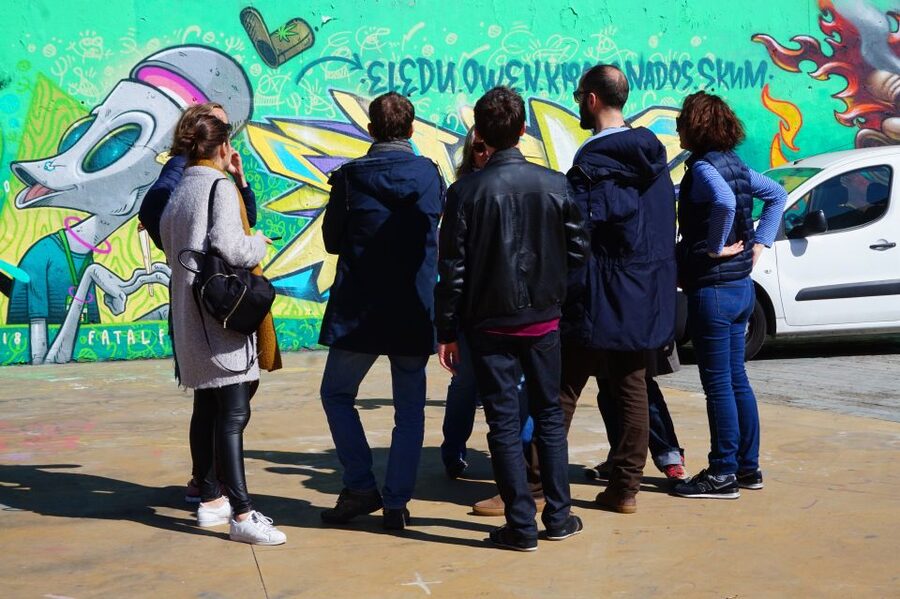
The strongest part of the experience is the explanation. Guides such as Juan, Anais, Jeanne, Sylvia, and others have led this walk, and the guide assigned to your date may differ. The most useful descriptions of the experience point to clear explanations of graffiti’s origins, its different styles, local artists, and urban-art projects.
That turns a wall walk into more than a hunt for colorful backgrounds. You get a basic visual vocabulary. You can begin to ask who made a piece, what sort of mark it is, how long it may have taken, and why it appears in that location.
The conversations can also reach political topics. That is useful in Raval, where art, public space, local identity, and social questions often overlap. You should expect an informed conversation rather than a silent photo walk. If you enjoy asking questions, this is one of the tour’s main strengths.
The guide’s personality matters here. Juan has been praised for sharing personal knowledge generously. Anais has been described as charming with strong English, while Jeanne has been singled out for connecting well with the group and for explaining details people would not have seen alone. These names do not guarantee who will lead your walk, but they give you a sense of the guiding style to expect: personal, conversational, and open to questions.
From quick tags to large murals
Raval’s street art comes in many sizes and forms. You may see work on house walls, apartment blocks, park surfaces, shutters, or other parts of the built environment. Some pieces may look polished and planned. Others may be rougher, smaller, or harder to read at first glance.
That variety is an advantage if you want to understand the scene rather than collect only postcard images. The tour can show you how a neighborhood’s art includes both large public works and small marks that carry meaning for the people who know how to read them.
Do keep your expectations sensible. One careful assessment of the walk noted that other cities may offer more dramatic murals. Barcelona’s appeal here is not a guarantee of giant masterpieces at every stop. Instead, you get a close look at a local scene, along with the context needed to see why less obvious work matters.
You may also hear about major artists with links to Barcelona, including Keith Haring. The information provided does not promise a specific Keith Haring work on the route, so treat that reference as part of the wider artistic context rather than a guaranteed stop.
More Barcelona Walking Tours:
- Barcelona Tapas and Wine Experience Small-Group Walking Tour
★ 5.0 · 5,804 reviews - Barcelona: Tapas Walking Tour with Food, Wine, and History
★ 4.8 · 4,261 reviews - Barcelona Tapas Walking Tour: Food, Wine & History
★ 4.5 · 1,928 reviews - Barcelona: Tapas Food Crawl Walking Tour with Tastings
★ 4.9 · 1,798 reviews
Arnau Gallery and Barcelona’s local art projects
Arnau Gallery adds a useful change of pace. Rather than looking only at anonymous tags and wall pieces, you see examples connected with local residents and organized urban-art projects.
This is important for anyone who wants to understand how street art can move between informal expression and planned community work. The guide can help you compare the two. A quick tag may be made for speed and recognition, while a gallery-linked project may involve a larger concept, a specific site, or collaboration with local artists.
The stop also gives the walk a more grounded feel. You are not being shown a random collection of walls. You are learning about people and projects that shape Barcelona’s art scene today.
Because street art changes, the exact work on view at Arnau Gallery can vary. The tour provides access to the area and the explanation, but it cannot promise a permanent lineup of artists or pieces.
Tres Chimeneas, skateboards, and hip-hop culture
Tres Chimeneas is one of the more memorable stops because it links street art with a real public gathering place. The site is known as a legendary skate spot, so the tour is not focused only on painted surfaces. You also get a sense of how skaters, artists, and hip-hop culture share public space.
That connection gives the walk energy without needing a staged performance. You are visiting a place with its own identity, and the guide can explain why it matters within Barcelona’s street-art culture.
The skate spot may be especially appealing if you like urban photography, skate culture, or the social side of graffiti. If your only goal is to see large murals, however, this stop may feel less important than the art itself. Its value comes from atmosphere and context.
The tour’s cultural range is one of its better qualities. You can learn about art styles while also hearing how music, youth culture, public space, and politics meet on the streets.
Finishing outside MACBA
The walk finishes at the Barcelona Museum of Contemporary Art, commonly known as MACBA. The tour focuses on the exterior and the nearby skating area, not on a guided museum visit.
MACBA is a natural ending point. Its open space is closely linked with skateboarding, and its white modern facade creates a sharp contrast with Raval’s older streets and changing walls. By the end, you have seen two different ways art occupies public space: official contemporary art inside a museum and unofficial or community-linked art outside.
Museum admission is not included. You can visit independently after the walking tour, with displays covering three distinct periods of modern art. This arrangement gives you flexibility. You can stop when the tour ends, continue into the museum if you still have energy, or return another day.
I like that the museum visit is optional. Not everyone wants to pay for another ticket after a walking tour, and not every visitor has the same interest in indoor modern art. The drawback is that the tour’s advertised connection with MACBA may sound more substantial than it is if you expect a guided museum entry. Think of MACBA as the final setting and an optional follow-up, not as part of the included tour.
Is $33 a fair price?
At $33 per person, the tour is reasonably priced for a two-hour guided walk if you want interpretation rather than directions. You are paying for a specialist guide, not transportation, food, or museum entry.
The value is strongest for first-time visitors to Raval, people curious about graffiti, and anyone who would otherwise walk past the art without understanding it. A self-guided stroll costs nothing, but you would miss the explanations about styles, local projects, and political questions. You would also have no reliable way to know which changing pieces are worth your attention.
The value is weaker if you already know Barcelona’s street-art scene or prefer to explore alone. You can see much of the neighborhood without a ticket, and the route does not include museum admission. If you want a long list of monumental murals, another city or a different Barcelona art experience might suit you better.
One practical advantage is the reserve-now, pay-later option, which lets you hold a place without paying at once. You can also cancel up to 24 hours ahead for a full refund. Those terms are useful when your Barcelona schedule is still shifting.
Who will enjoy this walk most?
I would choose this tour for:
- First-time visitors who want a side of Barcelona beyond major monuments.
- Art lovers who enjoy both formal contemporary art and informal public work.
- Visitors interested in graffiti technique, hip-hop culture, and urban politics.
- Photographers who like changing walls and small visual details.
- People who prefer a guide to explain a neighborhood rather than simply point out attractions.
- Anyone planning to visit MACBA and wanting to understand its surrounding skate culture first.
I would think twice if you have limited mobility or dislike walking, although the activity is listed as wheelchair accessible. I would also reconsider if your main goal is guaranteed access to famous permanent works, since the street art changes and the museum is not included.
The tour is offered in English, French, and Spanish. That language choice is useful, but check the available language for your chosen departure before booking.
What to bring and how to plan the rest of the day
Comfortable walking shoes are the obvious choice. You will spend two hours moving through city streets, stopping to look up, across, and sometimes down at details.
Plan MACBA around the end of the walk if you want to go inside. Since admission is separate and the tour ends outside, you can decide on the day rather than committing to the museum in advance.
You might also leave room for your own return walk through Raval. The guide’s explanations can change how you see the neighborhood afterward. Small tags, paint marks, and cans that looked like clutter may begin to register as part of a larger visual language.
The tour does not include hotel transfers, so build in time to reach Jardins Talia on Avenida Paralel 100. Because another part of the supplied information mentions Hotel Serhs del Port, use the meeting point shown in your confirmed booking rather than relying on a general tour description.
My verdict: book it for context, not a mural checklist
Book this walk if you want a friendly, informed introduction to Raval’s street art, with useful stops at Arnau Gallery, Tres Chimeneas, and the MACBA exterior. The best part is not a promise of one huge mural. It is the chance to learn how to look, from tiny wall details to the links between graffiti, skating, music, and public life.
The 4.9 rating from 60 recorded ratings reflects a strong response to the guides, and the most repeated strengths are clear: personal explanations, good English, enthusiasm, and a willingness to discuss local and political issues. Just keep expectations realistic. The art changes, the museum costs extra, and some work may be less dramatic than what you have seen elsewhere.
At $33, I would book it early in a Barcelona stay, especially if you want a local orientation before exploring Raval on your own.
FAQ
How long does the Barcelona street-art tour last?
The walking tour lasts two hours.
How much does the tour cost?
The listed price is $33 per person.
Where does the tour meet?
The stated meeting point is Jardins Talia on Avenida Paralel 100, 08015 Barcelona. Another part of the supplied information mentions Hotel Serhs del Port, so check your confirmed booking for the exact meeting instructions.
Is Barcelona Museum of Contemporary Art admission included?
No. The tour finishes outside the Barcelona Museum of Contemporary Art, and you can visit the museum independently afterward. Admission is not included.
What languages are available?
The live guide is available in English, French, and Spanish.
Is the walking tour wheelchair accessible?
Yes. The activity is listed as wheelchair accessible.
What is included in the price?
The price includes the tour guide and the walking tour.
Does the tour include hotel pickup and drop-off?
No. Hotel pickup and drop-off are not included.
Can I cancel for a full refund?
Yes. You can cancel up to 24 hours in advance for a full refund. The reserve-now, pay-later option is also available.
Recently added around Barcelona
- Montserrat very early : Hiking, Abbey, very small group★ 5.0 · 127 reviews
- Guided Private Yacht Tour in Barcelona Spain★ 5.0 · 6 reviews
- Private Tour from Barcelona to Montserrat (with guide)★ 4.5 · 6 reviews
- Private Tour from Barcelona to Costa Brava (with guide)★ 5.0 · 5 reviews
- Andorra Tour★ 4.0 · 7 reviews
- Barcelona Gaudi Tour: Sagrada Familia, Casa Batllo & Casa Mila★ 5.0 · 4 reviews
- Street Art, Sculptures & Crime Stories Walking Tour – Barcelona★ 5.0 · 11 reviews
- Wine Tasting in Barcelona (Catalan Varieties) Small Groups★ 5.0 · 10 reviews
Barcelona Street Art Tours, compared.
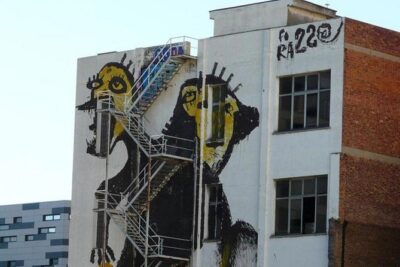
Barcelona Street Art and Graffitti Bicycle Tour
Read our review →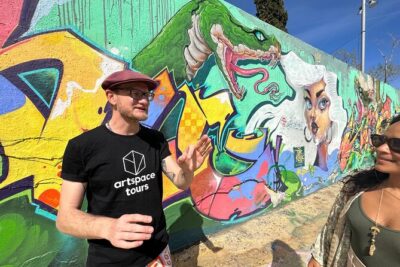
Barcelona Street Art Tour with Exclusive Artist Studios Visit
Read our review →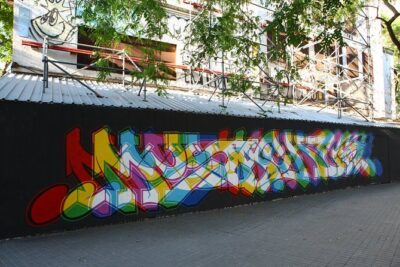
Raval Street Art and Graffiti Guided Tour in Barcelona
Read our review →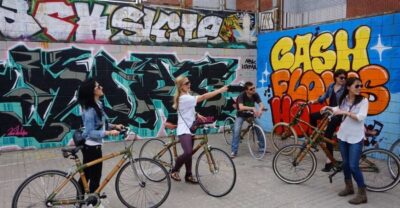
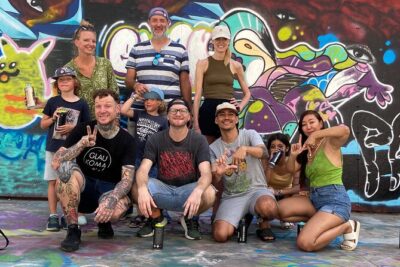
Private Barcelona Street Art Workshop with a Street Artist
Read our review →
Barcelona Art & Wine: Galleries, Studios & Street Art
Read our review →
Insider Street Art Tour with Private Studio Visit
Read our review →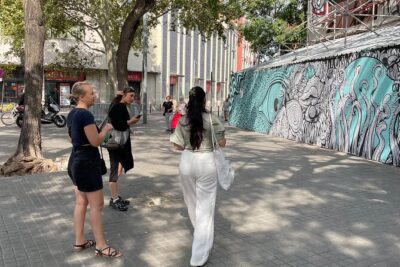
Street Art, Sculptures & Crime Stories Walking Tour – Barcelona
Read our review →Browse the lists this tour appears in