
Reviewed · GAUDí TOURS IN BARCELONA
Barcelona & Gaudi. Regular Tour
Barcelona’s most famous buildings make more sense when you see them as part of a larger argument about faith, industry, class, politics, and art. This three-hour walk follows that argument through the Eixample, with a practicing architect explaining why Gaudí and his Modernist peers built such strange, bold façades.
I especially like the small maximum group of 20, which gives you a better chance to hear the guide on busy city streets. I also like the social and political context, from utopian socialism to the Spanish Civil War, instead of a simple parade of pretty buildings. The catch is clear: you do not go inside, and the walk asks you to stay focused through a fairly dense architectural discussion.
Key points to know before you book
- Led by practicing architects: Expect design insight, not just dates and photo stops.
- Gaudí is part of a bigger story: The walk also covers Domènech i Montaner, Puig i Cadafalch, Antoni Tàpies, and Barcelona’s Modernist movement.
- Five named stops anchor the route: Casa Milà, Casa Batlló, Casa Calvet, La Mansana de la Discordia, and the Antoni Tàpies Foundation.
- The tour stays outside: You see the buildings and discuss their details, but admission to interiors is not included.
- A compact three-hour format: The 10:30 am start ends back at the original meeting point in the Eixample.
- Strong value for architecture fans: At $54.44 per person, the price pays for specialist interpretation rather than entry tickets.
Why this walk is more than a Gaudí photo tour
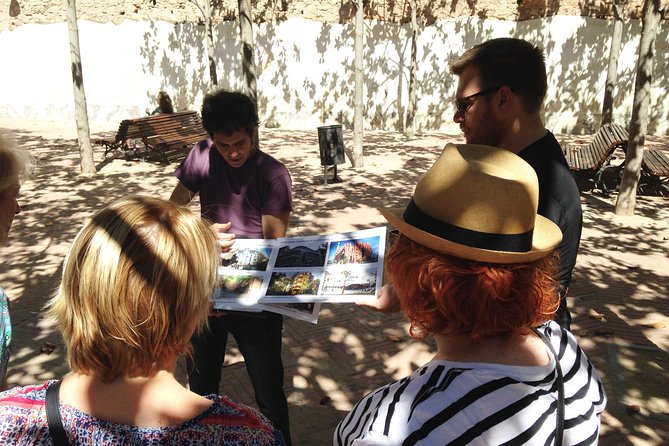
Barcelona’s Modernist buildings can be easy to reduce to colorful tiles, soft stone, and odd-shaped windows. That misses the point. The best part of this walk is the effort to explain what pushed these architects toward such unusual forms.
The route traces Gaudí’s movement from concern with society toward religious devotion. That is a large idea to cover in three hours, but it gives the walk a clear thread. You are not just looking at Casa Batlló, then Casa Milà, then another façade. You are asked to think about how an architect’s ideas changed over time.
The discussion also reaches beyond Gaudí. You hear about eclecticism, the intellectual bourgeoisie, positivist materialism, utopian socialism, anarchism, beatification, and the Spanish Civil War. Some of those subjects are heavy for a morning walk, yet they help explain why Barcelona’s Modernisme was tied to social ambition and political tension.
This is a good choice if you want an architect’s eye. The guides are practicing architects, and Pia has been singled out for combining precise information about Gaudí with humor, kindness, and a lively way of speaking. The exact guide is not guaranteed, but the format is designed around professional architectural knowledge.
More Gaudí Tours in Barcelona
- Barcelona: Park Güell and Gaudí House Museum Entry Ticket
★ 4.5 · 6,326 reviews - Sagrada Familia & Gaudi Tour Private or Small Group with Tickets
★ 4.5 · 1,188 reviews - Complete Gaudi Tour: Casa Batllo, Park Guell & Sagrada Familia
★ 5.0 · 1,152 reviews
Starting at Gran Via and entering the Eixample
The meeting point is the Monument al Llibre on Gran Via de les Corts Catalanes, 634. The tour begins at 10:30 am and returns to that same point, so you do not need to plan a separate pickup or work out where the walk finishes.
The Eixample is the right setting for this subject. The area lets you compare several major architects within a short urban route. You see how Gaudí’s personal language fits into, and breaks away from, the wider Modernist movement.
Because the group is capped at 20, the guide can keep the walk more personal than a large city tour. That matters here. Architectural details are often high above street level or easy to miss, so being close enough to follow the explanation makes a real difference.
The tour is offered in English. It is near public transportation, and most people can take part. Service animals are allowed. The supplied details do not give a precise walking distance or accessibility assessment, so you should be comfortable with a three-hour architecture walk before booking.
Casa Milà, or La Pedrera, and Gaudí’s moving stone
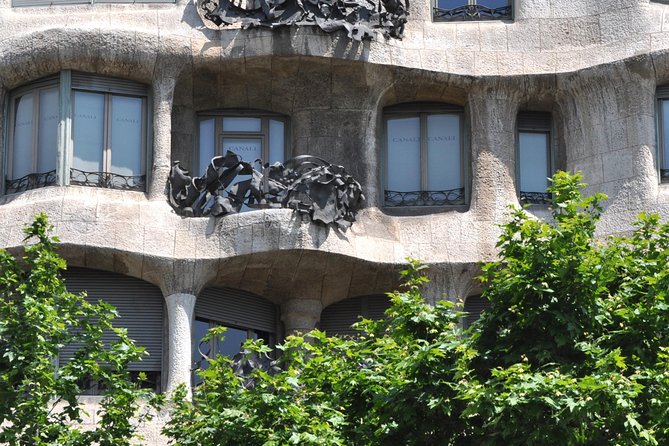
Casa Milà is one of the most useful places to begin thinking about Gaudí. Known as La Pedrera, the building is famous for its rough, wave-like stone exterior and ironwork balconies. From the street, you can study the façade as a whole, then let the guide point out the smaller decisions that make it feel almost alive.
The building is not presented as an isolated oddity. It becomes part of the discussion about Gaudí’s growing freedom from conventional architectural rules. Instead of a flat front with regular windows, the façade seems to shift and fold.
Since this tour does not include interior entry, you will not see the roof, courtyards, or apartments from inside. That is the main limitation of the stop. You get the street-level explanation and the exterior view, but you will need a separate admission if you want to explore the building itself.
Still, an outside discussion can be useful. You can compare what the building looks like to modern eyes with the ideas and social setting that shaped it. The guide’s job is to help you read the façade, not simply point at it.
Casa Batlló and Gaudí’s most theatrical façade
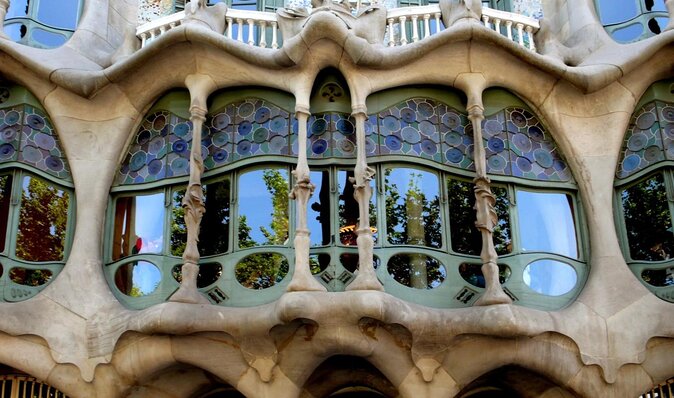
Casa Batlló offers a different mood. Its colored surface, bone-like details, curved balconies, and roofline make it one of the easiest buildings in Barcelona to recognize. It is also one of the places where a good explanation helps you move beyond the standard fairy-tale description.
The guide can connect the building to Gaudí’s interest in organic forms, religious ideas, and the changing role of the urban bourgeoisie. Look carefully at the surface and you will find that the building is not just decorative. Its windows, balconies, colors, and textures work together as a single composition.
Casa Batlló sits within La Mansana de la Discordia, the Block of Discord. This stretch of Passeig de Gràcia places several competing Modernist designs side by side. The name captures the visual effect: different architects used the same urban setting to make very different statements.
Casa Batlló can attract crowds, traffic, and constant photography. A small group helps, but you should not expect a quiet inspection. The advantage is that the building is visually generous. Even if you cannot hear every word, there is plenty to examine while the guide explains the larger picture.
A different sort of day out in Barcelona:
- Barcelona: Park Güell Admission Ticket
★ 4.4 · 76,534 reviews - Barcelona: Casa Batlló Entry with Self-Audioguide Tour
★ 4.7 · 25,359 reviews - Barcelona: 24 or 48-Hour Hop-On Hop-Off Bus Tour
★ 4.4 · 20,872 reviews - Barcelona: Park Guell Guided Tour with Skip The Line Entry
★ 4.7 · 17,563 reviews
La Mansana de la Discordia and Barcelona’s architectural rivalry
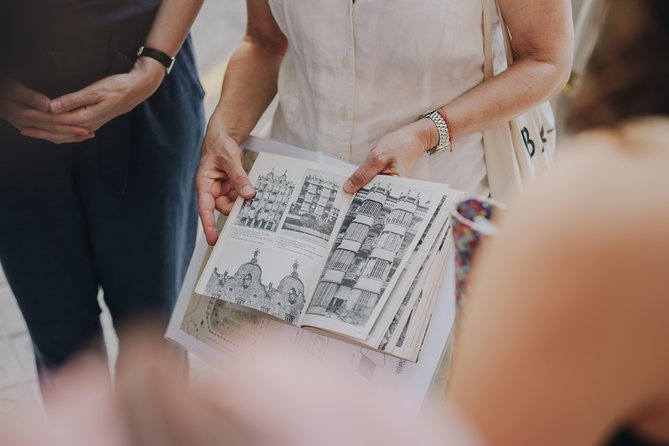
The Block of Discord is one of the strongest parts of the route because it puts architecture into direct comparison. You can see Casa Batlló alongside Casa Amatller by Josep Puig i Cadafalch and Casa Lleó Morera by Lluís Domènech i Montaner.
Each building belongs to the same broad Modernist moment, yet each speaks in a different architectural accent. That contrast makes the movement easier to understand. Instead of treating Modernisme as one fixed style, you see it as a field of competing ideas.
This is also where the walk’s discussion of eclecticism becomes useful. The architects drew from different periods, symbols, materials, and forms. The result is not a tidy style guide. It is a lively argument about how Barcelona should look during a period of social and economic change.
The tour also includes the Antoni Tàpies Foundation. Its building adds another layer, linking Barcelona’s architectural tradition to a later artist. You will not receive a tour of the foundation’s collection as part of this experience, but its exterior helps show that Barcelona’s creative identity did not end with Gaudí.
Casa Calvet and the less obvious side of Gaudí
Casa Calvet is often less instantly familiar than Casa Batlló or Casa Milà, which is one reason it belongs on this route. It gives you a chance to see Gaudí working within a more controlled urban setting.
The building still carries his attention to detail, but it does not make the same dramatic first impression as the wavy façade of La Pedrera. That contrast is valuable. You can see how Gaudí adapted his approach rather than repeating a single visual trick.
This stop works best when you listen for the guide’s explanation of the wider architectural setting. Casa Calvet helps place Gaudí within the professional world of Barcelona, where architects responded to clients, city blocks, social expectations, and changing tastes.
Again, the visit is exterior only. If you mainly want spectacular interiors, this tour will feel limited. If you want to understand how Gaudí’s work developed across different commissions, Casa Calvet adds needed range.
Courtyards, social ideas, and the city behind the façades
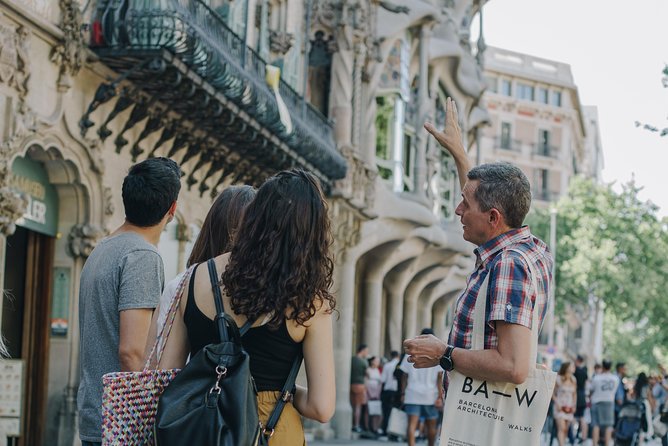
The route includes some less obvious Eixample courtyards. These spaces matter because Barcelona’s Modernist architecture was not only about public façades. The planning and design of the city also shaped how people lived, moved, and gathered.
The courtyards give the walk a brief change of scale. After looking up at grand buildings, you consider the spaces behind them. That helps connect architectural ambition with ordinary urban life.
The intellectual content can be demanding. Terms such as positivist materialism, anarchism, and utopian socialism are not light sightseeing subjects. I see that as a strength for the right audience, but it may feel like too much if you want a relaxed orientation walk with only a few memorable facts.
The guide’s manner matters here. Pia is praised for bringing humor and warmth to serious material, along with a strong command of Gaudí’s life and work. A guide who can explain difficult ideas in plain language makes the difference between an engaging walk and a lecture on pavement.
What the three-hour timing means for you
Three hours is long enough to create a real story, but short enough to fit into a busy Barcelona day. You can schedule this in the morning, then continue exploring the Eixample or visit an interior attraction separately afterward.
The 10:30 am start is practical for most sightseeing plans. It gives you a fixed morning activity without using the entire day. The tour ends where it begins, which simplifies your next move.
The pace is likely to feel more like a walking seminar than a quick sightseeing loop. You will stop to look, listen, compare, and ask questions. Exact walking distances and break arrangements are not provided, so plan for a continuous outdoor activity and wear comfortable shoes.
The group limit of 20 is a useful middle ground. It is small enough for personal attention, but it is not a private tour. If you need a very quiet, flexible experience, a private guide would suit you better. If you want specialist input without private-tour pricing, this format makes sense.
Is $54.44 a fair price?
At $54.44 per person, the value depends on what you want from Barcelona. You are not paying for building admission, food, transport, or a private guide. You are paying for three hours of professional interpretation in one of Europe’s best areas for architectural comparison.
That makes the price reasonable for an architecture-focused walk, especially because the guide is a practicing architect rather than a general city host. You also cover several major works in one route: Casa Milà, Casa Batlló, Casa Calvet, Casa Lleó Morera, Casa Amatller, and the Tàpies Foundation.
The price is less attractive if you only want to collect exterior photos. You can see many of these façades on your own. The added value comes from understanding their relationships, symbols, materials, and social setting.
I would treat this as a companion to interior visits, not a replacement for them. You can use the walk to decide which buildings deserve a separate ticket and to look at them with a sharper eye.
Who should book this Barcelona architecture walk?
I would book it if you enjoy buildings, city planning, or the way art reflects political and social change. It is especially well suited to visitors who already know they want more than a basic Gaudí biography.
It also suits architecture students, design-minded travelers, and anyone who prefers a focused subject tour to a broad Barcelona overview. The historical and political material gives the walk substance, while the named buildings keep it grounded.
Families with older children might enjoy it if they are happy to listen for three hours. Younger children may find the discussion of architecture and political ideas slow, particularly because there is no interior visit or hands-on activity.
You should think twice if you dislike long explanations, have limited walking stamina, or mainly want access inside Casa Batlló and La Pedrera. The tour does not include those admissions.
The experience is highly regarded, with a 5.0 rating from 180 reviews and recommendation from 99 percent of participants. The strongest praise centers on guides who combine accurate information with humor, compassion, and passion. That is exactly the quality to look for on a subject where dry facts can quickly pile up.
My call: book it for insight, not entry tickets
I recommend Barcelona & Gaudí: Regular Tour if you want to understand why the Eixample looks the way it does and how Gaudí fits into Barcelona’s larger Modernist story. The practicing-architect format, small group, and serious social context give it more weight than a basic photo walk.
Skip it if your main goal is to enter the famous buildings or move quickly between postcard views. For everyone else, $54.44 buys a useful architectural framework that can improve the rest of your time in Barcelona.
You can cancel free of charge up to 24 hours before the 10:30 am start for a full refund. The activity requires good weather and a minimum number of participants. If poor weather or low enrollment cancels it, you are offered another date or experience, or a full refund.
FAQ
How long is the Barcelona and Gaudí tour?
The tour lasts approximately three hours.
What time does the tour start?
It starts at 10:30 am.
Where does the tour meet?
The meeting point is the Monument al Llibre at Gran Via de les Corts Catalanes, 634, in Barcelona’s Eixample district.
Where does the tour finish?
The activity ends back at the original meeting point.
Is the tour offered in English?
Yes. English is the listed tour language.
Does the tour go inside Casa Batlló or Casa Milà?
No. The tour discusses the buildings from the outside and does not include interior visits.
Which buildings are included on the route?
The named stops are Casa Milà, Casa Batlló, Casa Calvet, La Mansana de la Discordia, and the Antoni Tàpies Foundation. The route also includes Casa Lleó Morera, Casa Amatller, and some Eixample courtyards.
How large is the tour group?
The maximum group size is 20 people.
Can I cancel for a full refund?
Yes. You must cancel at least 24 hours before the experience’s start time for a full refund. Cancellations or changes made less than 24 hours before the start are not refunded or accepted.
Recently added around Barcelona
- Montserrat very early : Hiking, Abbey, very small group★ 5.0 · 127 reviews
- Guided Private Yacht Tour in Barcelona Spain★ 5.0 · 6 reviews
- Private Tour from Barcelona to Montserrat (with guide)★ 4.5 · 6 reviews
- Private Tour from Barcelona to Costa Brava (with guide)★ 5.0 · 5 reviews
- Andorra Tour★ 4.0 · 7 reviews
- Barcelona Gaudi Tour: Sagrada Familia, Casa Batllo & Casa Mila★ 5.0 · 4 reviews
- Street Art, Sculptures & Crime Stories Walking Tour – Barcelona★ 5.0 · 11 reviews
- Wine Tasting in Barcelona (Catalan Varieties) Small Groups★ 5.0 · 10 reviews
Gaudí Tours in Barcelona, compared.
Park Güell and Gaudí House Museum Entry Ticket
Read our review →
Sagrada Familia & Gaudi Tour Private or Small Group with Tickets
Read our review →
Complete Gaudi Tour: Casa Batllo, Park Guell & Sagrada Familia
Read our review →
Park Güell: Guided Tour with Optional Gaudí Experience Entry
Read our review →
Ramblas, Old Town, Gothic and Gaudi Architecture Walking Tour
Read our review →
Gaudi´s Casa Vicens Skip the Line Ticket with Audioguide
Read our review →
Discover Gaudí, Sagrada Familia, and Park Güell
Read our review →
Browse the lists this tour appears in