
Reviewed · GAUDí TOURS IN BARCELONA
Barcelona: Discover Gaudi Architectural Guided Tour
Barcelona’s Gaudí story makes far more sense when you see it as part of a bigger city project. This three-hour walk links Antoni Gaudí with Domènech i Montaner, Puig i Cadafalch, modern urban planning, and the social changes that reshaped Barcelona. Your guide is a practising architect, not simply a guide with a memorized script.
I especially like two things here. First, you see the three key Gaudí residences, Casa Calvet, Casa Batlló, and Casa Milà, in one walk. Second, the discussion reaches beyond decoration into engineering, city planning, politics, and quality of life. The main limitation is clear: you do not go inside the buildings, so pair this walk with separate admission to Casa Batlló, Casa Milà, or another Gaudí site if interiors matter to you.
Key points to know before booking
- Architecture taught by architects: Guides such as Pia, Daniela, and Tomasz bring professional and teaching experience to the walk.
- Three major Gaudí façades: Study Casa Calvet, Casa Batlló, and Casa Milà from the street.
- Modernisme beyond Gaudí: See Casa Lleó Morera, Casa Amatller, and the Antoni Tàpies Foundation.
- Barcelona’s city plan explained: Learn how urban growth, public health, and social concerns shaped the city.
- Hidden courtyards included: See how private interior spaces became public gardens.
- A useful three-hour format: The walk is in English, wheelchair accessible, and priced at $53 per person, with no building admission included.
Why this Gaudí walk is different
Many Barcelona architecture walks focus on famous façades and leave you with a pile of dates. This one aims to give you a way to read the city. You look at a balcony, window, courtyard, or roofline, then connect it to the architect’s purpose and the period in which it was built.
That approach matters because Gaudí did not work in isolation. His buildings belong to Barcelona’s Modernisme period, a Catalan style linked to new materials, local identity, artistic freedom, and rapid urban change. Once you see how his work fits beside that of Lluís Domènech i Montaner and Josep Puig i Cadafalch, the famous façades become less like odd works of fantasy and more like part of a lively architectural argument.
The tour is led in English by practising architects, many of whom also teach architecture or write as critics. That professional background shapes the experience. You can ask about structure, materials, city planning, or visual design and receive more than a surface-level answer.
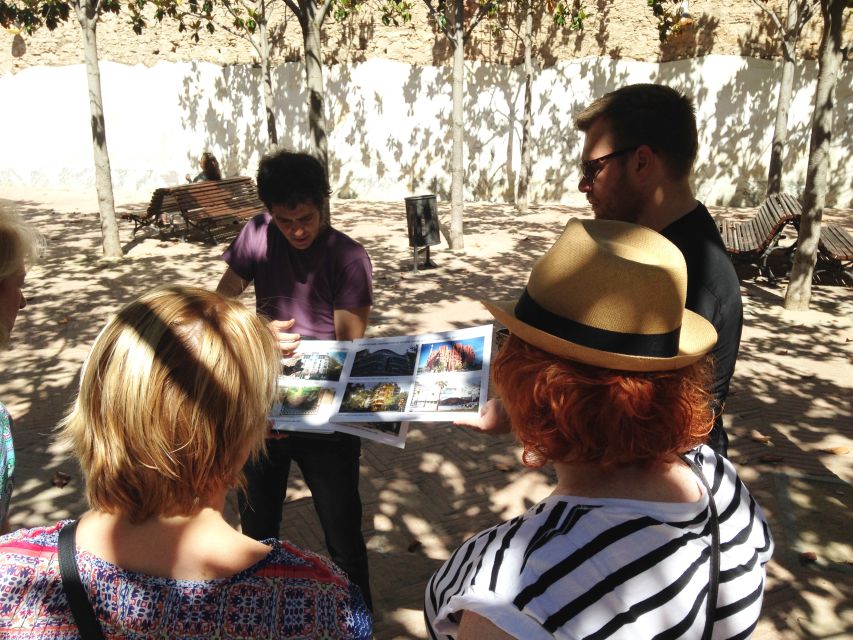
Pia is one of the named guides associated with the walk. Her talks have covered Barcelona’s urban design, social and political setting, and the technical side of Gaudí’s buildings. Daniela and Tomasz have also led the tour, with Tomasz known for using visual aids to make difficult ideas easier to follow. The guide changes, so you should not book expecting one particular person, but the format remains architecture-led.
More Gaudí Tours in Barcelona
- Barcelona: Park Güell and Gaudí House Museum Entry Ticket
★ 4.5 · 6,326 reviews - Sagrada Familia & Gaudi Tour Private or Small Group with Tickets
★ 4.5 · 1,188 reviews - Complete Gaudi Tour: Casa Batllo, Park Guell & Sagrada Familia
★ 5.0 · 1,152 reviews
Meeting at Passeig de Gràcia and Gran Via
The meeting point is the sculpture by Joan Brossa in front of the Comedia Cinema, at the intersection of Passeig de Gràcia and Gran Via. This is a central location, but give yourself enough time to find the sculpture rather than relying on a vague meeting near the cinema.
The walk begins in one of Barcelona’s best areas for comparing architecture. Passeig de Gràcia is not only a grand shopping avenue. It is also a street-level lesson in how Barcelona’s expanding middle class commissioned ambitious homes, how façades competed for attention, and how a planned city could become a stage for private wealth and artistic invention.
You will spend the morning outdoors, so wear shoes suitable for three hours on foot. Barcelona usually has pleasant weather, but the tour operator advises clothing for changing conditions. Tours are cancelled only when weather creates a safety risk.
Barcelona’s urban planning before Gaudí

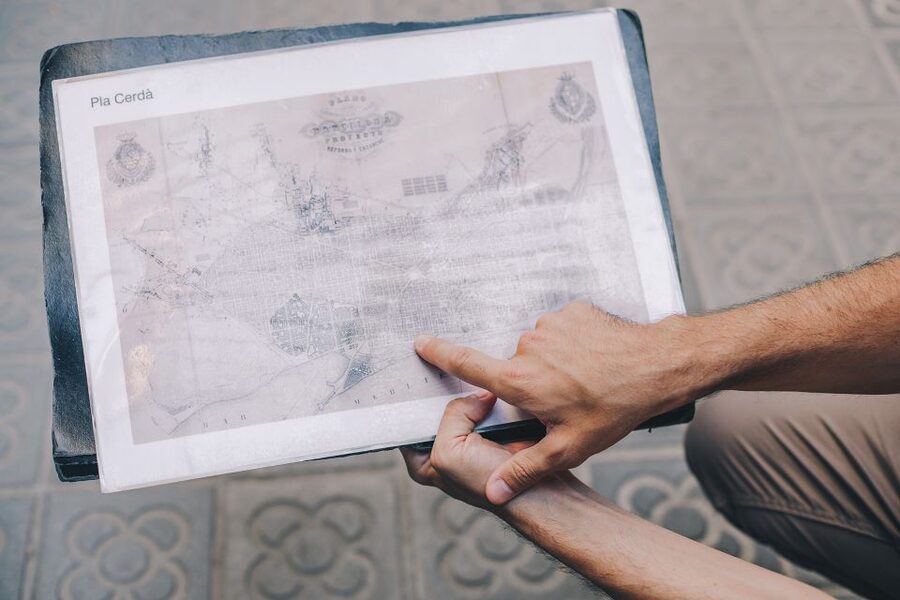
One of the most useful parts of the walk is the explanation of how Barcelona grew beyond its older center. You learn about the beginnings of modern urbanism and the ideas that shaped the city’s wider street pattern.
This context helps you understand why the buildings on Passeig de Gràcia look so different from one another yet belong to the same urban setting. The city’s planning decisions created broad streets, regular blocks, and opportunities for architects to work on prominent corner sites. Those conditions gave Modernisme architects room to experiment with entrances, balconies, stonework, iron, glass, and rooflines.
The conversation also reaches questions of public health and quality of life. Barcelona’s urban design was not only about making impressive streets. It was also tied to concerns about light, air, movement, housing, and the needs of a growing population.
I like this part because it gives you a tool you can use after the tour. You will be better prepared to look at other neighborhoods and ask why the streets, buildings, and open spaces were arranged as they were. The walk is not just a march from one famous façade to another.
Casa Lleó Morera and Casa Amatller
The route includes Casa Lleó Morera, designed by Domènech i Montaner, and Casa Amatller, designed by Puig i Cadafalch. These buildings are essential stops because they place Gaudí beside his leading contemporaries.
Casa Lleó Morera helps show how Modernisme could combine architecture with sculpture, decorative arts, and carefully planned detail. The building is not simply a shell around rooms. Its exterior reflects an era when architects worked closely with artists and craftspeople.
Casa Amatller gives you another point of comparison. Its design has a distinct character and makes clear that Modernisme was not one fixed visual formula. You can look at the neighboring façades and see different answers to the same challenge: how to make an urban residence memorable while fitting it into a busy city street.
This comparison is one of the strongest reasons to take the walk instead of only visiting Gaudí’s most famous buildings. Gaudí’s work becomes more legible when you see what his contemporaries were doing. You also gain a better sense of how Catalan architecture developed as a group effort, not as the work of one isolated genius.
More Guided in Barcelona:
- Barcelona: Park Guell Guided Tour with Skip The Line Entry
★ 4.7 · 17,563 reviews - Fast Track Sagrada Familia Guided Tour
★ 4.5 · 8,795 reviews - Park Guell Guided Tour with Skip the Line Ticket
★ 4.5 · 6,996 reviews - Barcelona: Sagrada Familia Skip-the-Line Guided Tour
★ 4.3 · 5,365 reviews
Casa Batlló and Gaudí’s visual language
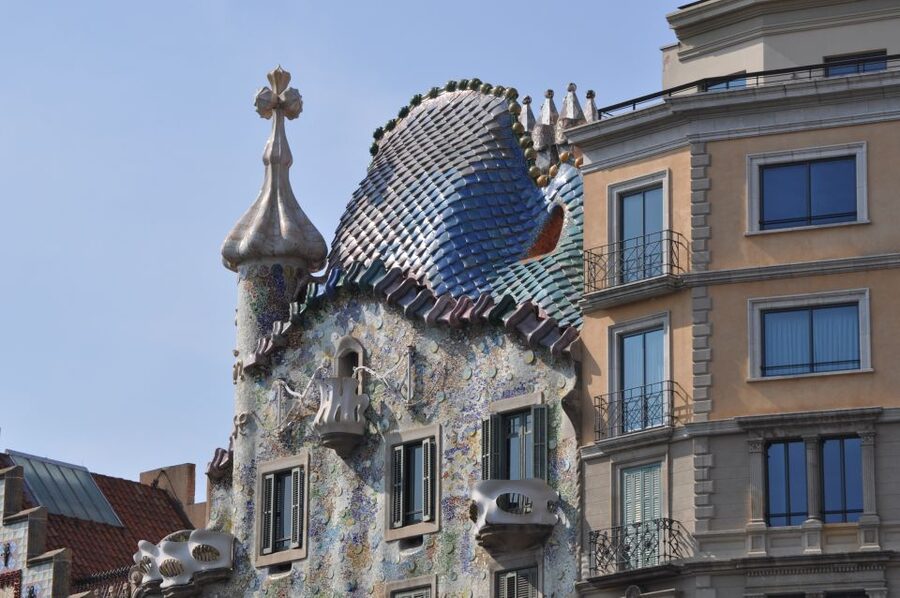
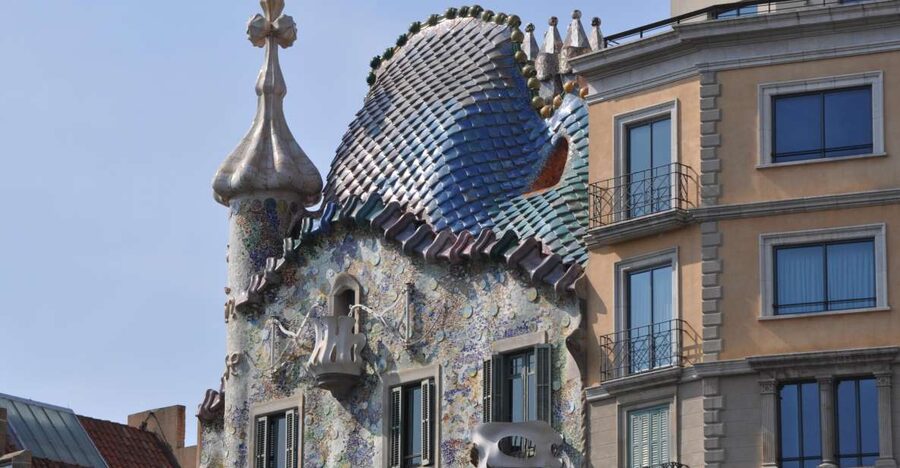
Casa Batlló is one of the tour’s major stops. From the street, your guide can point out the building’s unusual surface, curved forms, colorful details, and visual effects. The point is not only to admire the façade, but to ask how Gaudí made architecture feel alive.
Here you begin to see Gaudí’s power as a designer. He treated the building as a complete composition, including the roof, balconies, windows, stonework, and small decorative elements. The result can look almost dreamlike, which helps explain why his work later inspired Surrealist artists.
A good guide can also show you that fantasy did not replace practical thinking. Gaudí’s buildings involved serious attention to structure, ventilation, light, and the movement of people through space. The technical side may not be visible at first glance, but it gives the strange forms a stronger foundation.
The exterior-only format is the drawback here. Casa Batlló’s interior is a major attraction in its own right, and this walk does not provide entry. Still, the guide can give you a framework that makes a later interior visit more rewarding. If you plan to go inside, schedule that separately and treat this walk as the architectural introduction.
Casa Amatller, Casa Lleó Morera, and the block of discord
Seeing Casa Batlló alongside Casa Amatller and Casa Lleó Morera gives this part of Passeig de Gràcia unusual value. The three façades show how several architects transformed one block into a visual conversation.
The differences are easy to spot once someone explains what to look for. One building may emphasize floral decoration, another geometry, another sculptural movement or a distinctive roofline. The comparison also reveals how architecture can express identity and status without using the same vocabulary.
This is a place where a guide’s ability to adjust the level of detail matters. The tour welcomes people who enjoy architecture but are not architects. You can follow the main ideas without a technical background, while someone with professional interest can ask more exact questions about form and construction.
Past tour groups have included people who asked about social, political, and environmental issues. A strong guide can address those subjects without letting the discussion lose its direction. The format is best for curious visitors who want more than a quick photo stop but do not want a university lecture.
Casa Milà and the engineering behind the spectacle
Casa Milà, often called La Pedrera, is another major Gaudí stop. Its rough stone exterior and flowing lines can seem almost impossible when viewed from the street. The guide uses it to explain Gaudí’s structural ideas and his willingness to move away from conventional straight lines.
This is where the engineering side of the tour becomes especially useful. You will hear how these buildings were not merely decorative objects. Their shapes required practical solutions, and Gaudí’s imagination was tied to new ways of thinking about support, space, and movement.
A previous guide, Pia, has been praised for explaining Gaudí’s technological innovations alongside the visual qualities of his work. That combination is important. If you only hear that a building is beautiful, you miss why it was difficult to design and build. If you only hear about the structure, you miss the emotional force of the finished form.
Casa Milà is also a good reminder that the tour is a street experience. You will study the exterior rather than explore the rooms or roof. For many visitors, that is enough to understand the building’s place in Gaudí’s career, but anyone eager to see the interior should budget for a separate visit.
Casa Calvet and Gaudí’s changing career
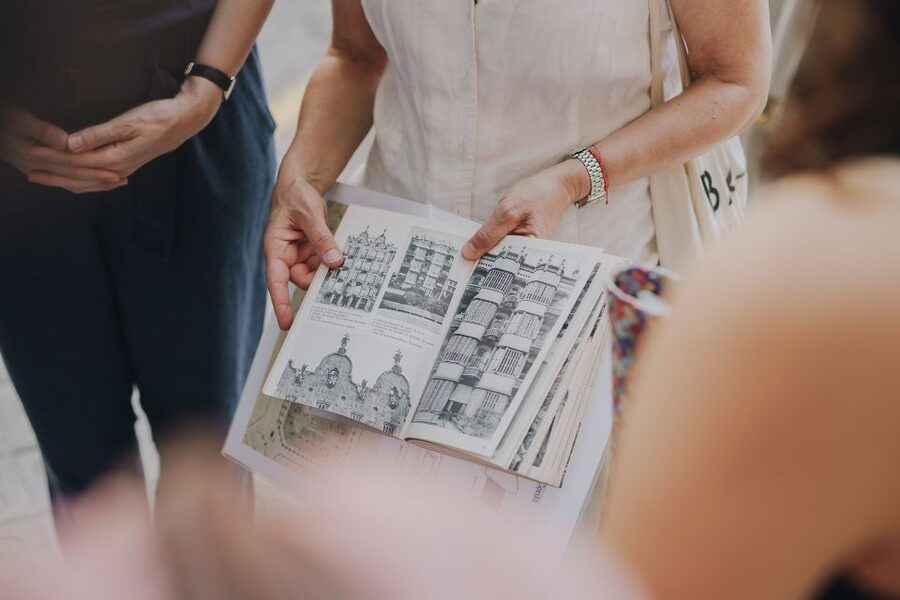
Casa Calvet gives you another view of Gaudí. Compared with Casa Batlló and Casa Milà, it can appear more restrained, which makes it useful for tracing the changes in his career.
The guide connects Gaudí’s work to a series of turning points. These include his early steps with the Sagrada Família, a project proposed for Manhattan, and his later work for Eusebi Güell. The aim is to show how his architectural thinking developed rather than treating each building as a separate curiosity.
The tour also follows Gaudí’s movement from social concerns toward a greater absorption with the divine. That shift eventually led to his reputation as the last great cathedral builder. You do not need a background in religious architecture to follow the idea. The guide presents it as a change in priorities, from practical and social questions toward a more total spiritual vision.
Casa Calvet helps keep that story grounded. It shows a Gaudí who could work within an urban commission and engage with the conventions of a city building, even as his later work became more personal and symbolic.
Courtyards turned into public gardens
The route includes courtyards that are easy to miss if you are walking through Barcelona on your own. These spaces help explain another side of urban life: the relationship between private buildings, shared open space, and public gardens.
A courtyard can seem like a small feature compared with Gaudí’s façades, but it gives the tour a welcome change of scale. You move away from grand avenues and look at how enclosed spaces can be used, improved, and opened to the public.
The guide explains how some courtyards became public gardens. That story connects architecture with city policy and everyday life. It also supports the broader theme of the walk: good urban design is not only about iconic buildings. It is about light, air, access, and places where people can spend time.
These courtyards are among the most distinctive parts of the experience because they are less obvious than the main Gaudí stops. Do not expect a secret entrance into a private residence. The tour includes accessible courtyard spaces as part of the city walk, with the guide explaining their role in Barcelona’s urban fabric.
Three hours with a professional guide
Three hours is long enough to build a coherent story without turning the outing into a full-day commitment. The pace includes several major buildings and stops for explanation, so you should expect a walking tour rather than a rapid photo circuit.
The guides have different styles. Pia has been described as energetic and especially good at connecting architecture with city history and planning. Daniela is praised for a passionate presentation, while Tomasz has used visual materials to help a large group follow the discussion.
Your experience will depend partly on group size and the guide assigned that day. One guide handled an unusually large group successfully, but a smaller group may make it easier to ask questions and stay close during explanations. The tour is pitched at an accessible level, yet it can also support detailed questions from people with a serious interest in architecture.
The entire route is wheelchair accessible. That is useful for visitors who need step-free access, though Barcelona’s streets can still be busy and uneven in places, so practical clothing and comfortable footwear remain sensible.
Is $53 a fair price?
At $53 per person, this is not the cheapest way to see Barcelona’s architecture. You are paying for a three-hour guided walk led by a practising architect, not for admission to a building.
The value depends on what you want. If you only need a list of Gaudí sites for photographs, you can see several façades independently. If you want to understand the connection between Gaudí, Modernisme, urban planning, and Barcelona’s social changes, the price is easier to justify.
The architectural city guide provided at the end adds practical value. It includes suggestions for places to have a drink and additional architecture to see, which can help you continue exploring after the tour. The guide is especially useful if you want to use the walk as a starting point for the rest of your time in Barcelona.
I would consider the tour good value for first-time visitors who want a strong introduction and for architecture fans who prefer a professional explanation. I would be less likely to recommend it to someone who mainly wants interior access, since the $53 does not include entry to Casa Batlló, Casa Milà, Casa Calvet, or other buildings.
Who should book this walk?
You should consider booking if you:
- Want to understand Gaudí within Barcelona’s wider Modernisme movement
- Enjoy city planning, architecture, engineering, or design
- Prefer a guide who can answer technical and social questions
- Want to compare Gaudí with Domènech i Montaner and Puig i Cadafalch
- Need a wheelchair-accessible walking tour
- Plan to visit Gaudí interiors separately and want context first
You may want a different activity if you have limited walking time, dislike architectural discussion, or specifically want to go inside the buildings. This tour is about looking carefully from outside and making sense of what you see.
The free cancellation period is up to 24 hours before the tour, and you can reserve while paying later. That gives you some flexibility if your Barcelona schedule is still shifting.
Final verdict: book it for context, not entry
I would book this tour if I wanted Barcelona’s architecture to become easier to understand during the rest of my visit. The best parts are the architect-led explanations, the comparison between Gaudí and his contemporaries, the urban-planning context, and the courtyard stops.
Book it early in your stay if you can. The walk can give you a useful lens for later visits to the Sagrada Família, Casa Batlló, Casa Milà, and other neighborhoods. Just remember what you are buying: three hours of expert outdoor interpretation, not admission to Gaudí’s interiors.
With a 4.9 rating from 40 bookings, the tour has earned strong marks for clear explanations, passion, visual aids, and the guides’ ability to make technical ideas approachable. For $53, it is a sensible choice for curious visitors who want to see more than beautiful façades.
FAQ
How long does the Barcelona Gaudí architecture tour last?
The tour lasts three hours.
What language is the tour conducted in?
The live guided tour is conducted in English.
Who leads the tour?
The guides are practising architects. Named guides associated with the experience include Pia, Daniela, and Tomasz, although the guide assigned to your tour may vary.
Which Gaudí buildings are included?
The route includes Casa Calvet, Casa Batlló, and Casa Milà.
Will I go inside the buildings?
No. The tour visits the buildings from the outside, and admission to their interiors is not included.
What other architecture will I see?
You will see the Antoni Tàpies Foundation, Casa Lleó Morera by Domènech i Montaner, and Casa Amatller by Puig i Cadafalch. The walk also includes hidden courtyards that became public gardens.
Is the tour wheelchair accessible?
Yes. The entire tour is wheelchair accessible.
Where is the meeting point?
Meet by the Joan Brossa sculpture in front of the Comedia Cinema, at the intersection of Passeig de Gràcia and Gran Via.
What should I bring?
Wear clothing suitable for the weather. Barcelona’s weather is often pleasant, but suitable clothing for changing conditions is recommended.
Can I cancel the booking?
You can cancel up to 24 hours in advance for a full refund. You can also reserve now and pay later.
Recently added around Barcelona
- Montserrat very early : Hiking, Abbey, very small group★ 5.0 · 127 reviews
- Guided Private Yacht Tour in Barcelona Spain★ 5.0 · 6 reviews
- Private Tour from Barcelona to Montserrat (with guide)★ 4.5 · 6 reviews
- Private Tour from Barcelona to Costa Brava (with guide)★ 5.0 · 5 reviews
- Street Art, Sculptures & Crime Stories Walking Tour – Barcelona★ 5.0 · 11 reviews
- Andorra Tour★ 4.0 · 7 reviews
- Barcelona Gaudi Tour: Sagrada Familia, Casa Batllo & Casa Mila★ 5.0 · 4 reviews
- Wine Tasting in Barcelona (Catalan Varieties) Small Groups★ 5.0 · 10 reviews
Gaudí Tours in Barcelona, compared.
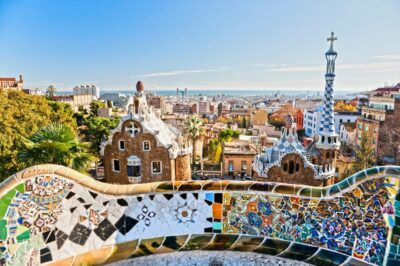
Park Güell and Gaudí House Museum Entry Ticket
Read our review →
Sagrada Familia & Gaudi Tour Private or Small Group with Tickets
Read our review →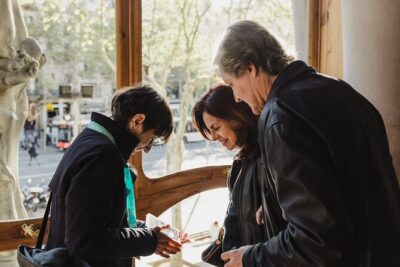
Complete Gaudi Tour: Casa Batllo, Park Guell & Sagrada Familia
Read our review →
Park Güell: Guided Tour with Optional Gaudí Experience Entry
Read our review →
Ramblas, Old Town, Gothic and Gaudi Architecture Walking Tour
Read our review →
Gaudi´s Casa Vicens Skip the Line Ticket with Audioguide
Read our review →
Discover Gaudí, Sagrada Familia, and Park Güell
Read our review →
Browse the lists this tour appears in