
Reviewed · PALAU DE LA MúSICA TOURS
Barcelona: Palau de la Música Self-Guided Tour
The Palau de la Música Catalana is not a concert hall you simply walk through. It is a jewel-box of Catalan Modernism, where flowers climb the staircase, glass and iron catch the light, and the Concert Hall glows with color from every angle. I especially like the freedom to linger over the details and the chance to hear a live piano or organ recital during the visit.
I also like the central location, just minutes from Las Ramblas and Plaça de Catalunya, and the fact that the tour takes only about 50 minutes. The main drawback is that $21 can feel high if you use only the short brochure and move quickly. The optional audio guide adds useful context, but you must bring your own phone and headphones.
Key points to know before you go
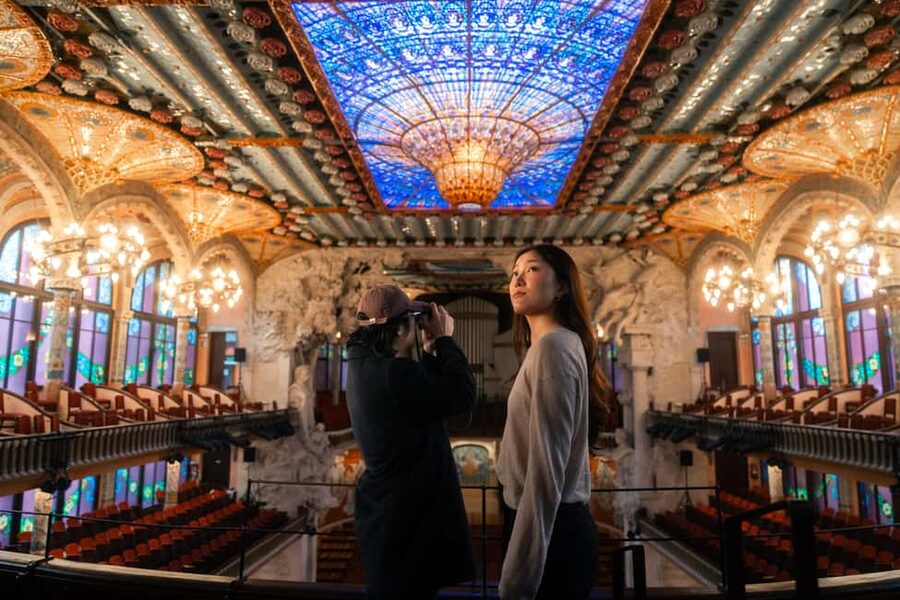
- The Concert Hall is the main event: Look up at the stained-glass ceiling and the large central light source from the second floor.
- The grand staircase rewards slow looking: Floral decoration, ironwork, glass, and Catalan flags fill the entrance route.
- The visit is self-guided: You set the pace with a printed brochure and optional audio guide.
- Live music adds real atmosphere: Piano or organ music may round off the visit, with the pipe organ often filling the hall.
- The location is easy to fit into a day: You are close to Las Ramblas and Plaça de Catalunya.
- Bring headphones and leave large bags behind: Food, drinks, luggage, and large bags are not allowed.
Why the Palau de la Música feels different from a normal concert visit
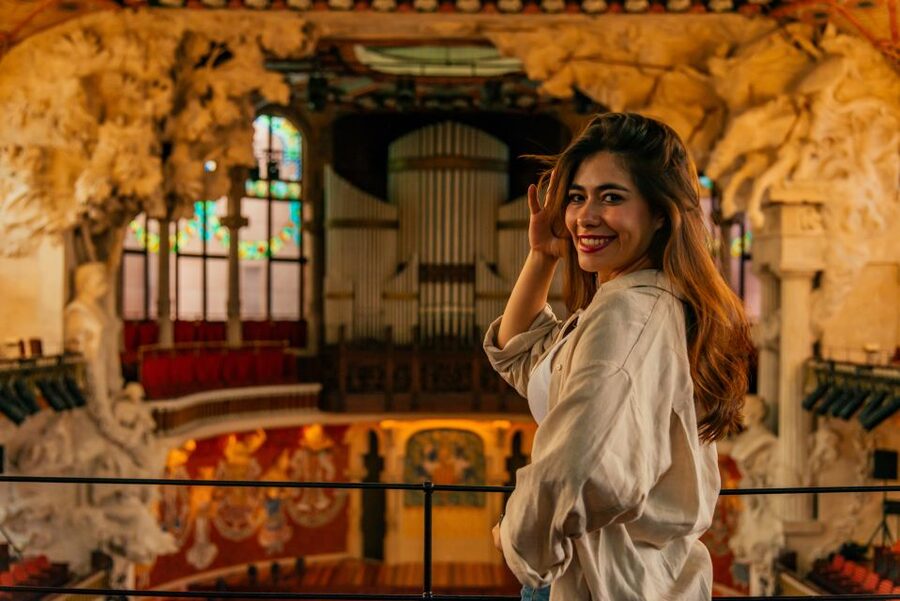
Many concert halls keep their decoration restrained. The Palau de la Música Catalana does the opposite. Architect Lluís Domènech i Montaner designed a building where music, sculpture, floral patterns, colored glass, and natural forms work together.
I would treat this as an architectural visit with music attached, rather than a substitute for attending a full concert. You can admire the hall, hear a short recital, and learn about the venue without buying a ticket for an evening performance.
The building is also a UNESCO World Heritage Site, which gives the visit extra weight. That title matters less than what you see in front of you, but it helps explain why this concert hall is such an important part of Barcelona’s cultural story.
Because the tour is self-guided, you are not locked into someone else’s pace. If one flower, column, or ceiling panel catches your eye, you can stop and study it. If you are mainly interested in the auditorium, you can move along faster.
More Palau de la Música Tours in Barcelona:
- Barcelona: Palau de la Música Guided Tour
★ 4.7 · 3,273 reviews - Palau de la Musica Catalana Guided Tour
★ 4.5 · 632 reviews - Barcelona: Guitar Trio & Dance @ Palau de la Música
★ 4.8 · 449 reviews
Starting in the foyer beside the cafeteria
Your visit begins in the foyer area, beside the cafeteria. This is a simple meeting point, but it is worth arriving with your ticket ready so you can get started without fuss.
The foyer gives you the first sense of the building’s decorative approach. This is not a plain waiting room that leads to the main attraction. The design begins as soon as you enter, preparing you for the staircase and concert hall ahead.
The cafeteria is useful before or after the visit. Several people have enjoyed stopping for coffee or a drink, and the setting gives you more time to look at the exterior and interior without hurrying off. Food and drinks are not allowed during the tour itself, so plan your café break outside the touring areas.
The self-guided setup works best for independent visitors. You do not need to follow a guide holding up a sign, and you can take photographs at your own pace. A brochure explains the main history and features, while the audio guide is available in Catalan, French, German, Italian, Spanish, English, and Korean.
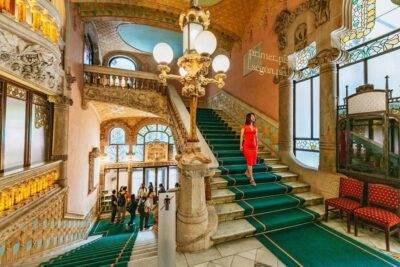
Taking your time on the floral grand staircase
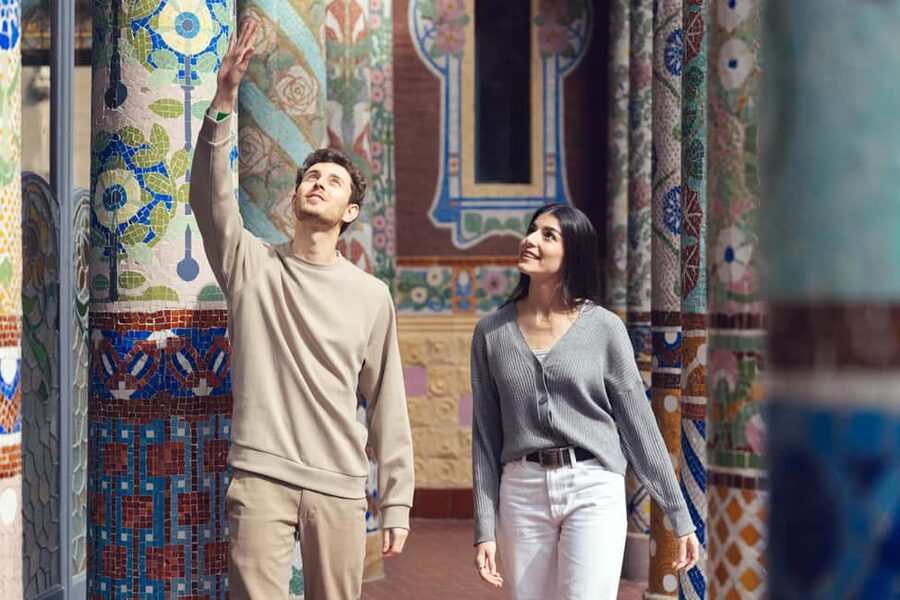
The grand staircase is one of the first places where the Palau’s decorative style fully takes over. Floral elements and flags line the route, while iron and glass add a lighter, more delicate quality to the structure.
I recommend slowing down here. The staircase is easy to treat as a passage to the Concert Hall, but it contains enough detail to deserve several minutes of attention. Look at how the flowers repeat across different materials and how the metalwork adds texture without making the space feel heavy.
This is also one of the better areas for photographs. The decoration gives you layered views rather than one flat wall, so step back when possible and let the patterns connect. The building is opulent, but the natural forms keep it from feeling cold.
The self-guided format is an advantage on the staircase. You can pause to match the brochure’s notes with the details around you. If you use the audio guide, headphones will make the experience much easier, especially if other people are moving through the area.
Pausing in the Lluís Millet Hall
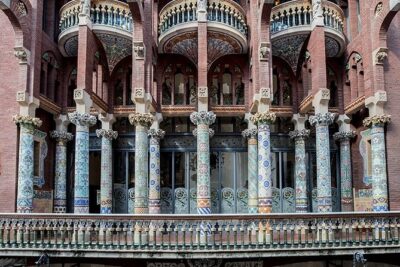
Next comes the Lluís Millet Hall, named for the composer and conductor who helped shape Catalonia’s choral tradition. The hall provides another view of the building’s close relationship with nature.
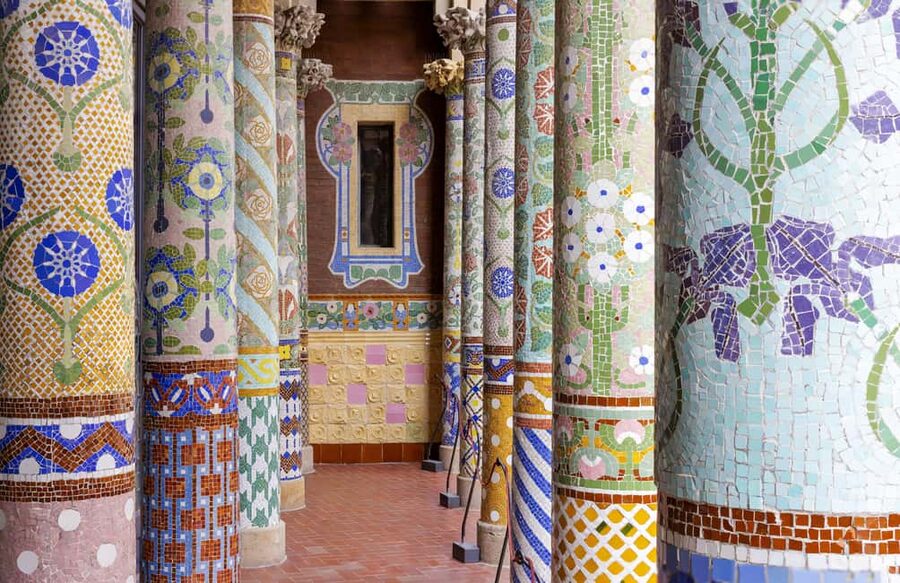
Its balcony is lined with columns and flowers of many kinds. This is a good place to shift your attention from the grand scale of the staircase to smaller decorative choices. The floral theme is not limited to one feature. It appears again and again, giving the building a clear visual language.
I like this part of the tour because it prevents the visit from becoming a single-stop dash to the main auditorium. The Palau is rewarding partly because each room adds another layer. You can see how the architect used repeated forms to connect spaces without making them identical.
The Lluís Millet Hall may also be a calmer spot for taking in the atmosphere. It is worth looking out toward the balcony and studying the columns before continuing. If some areas are closed during your visit, do not be surprised. Access can vary, and a few visitors have found parts of the building unavailable at times.
More Barcelona Self-Guided Tours:
- Casa Batllo Admission Ticket with Intelligent Audio Guide
★ 4.5 · 3,168 reviews - Barcelona: Mies van der Rohe Pavilion Ticket and Audio Guide
★ 4.6 · 380 reviews - Barcelona: Montjuïc Cable Car Ticket with Audio Guide
★ 3.9 · 270 reviews - Montjuïc Cable Car Entry Voucher with Audio Tour on Your Phone
★ 3.5 · 37 reviews
Entering the Concert Hall and looking up
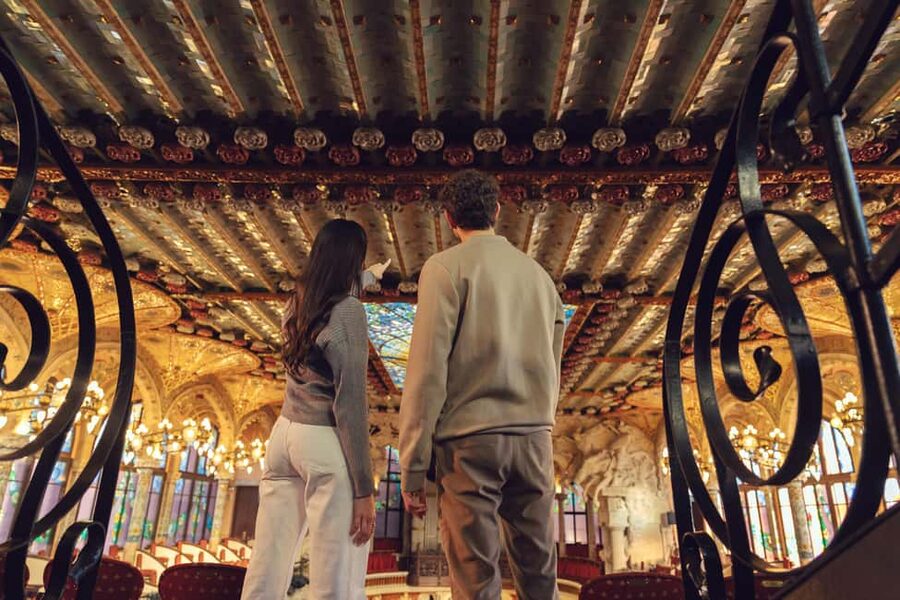
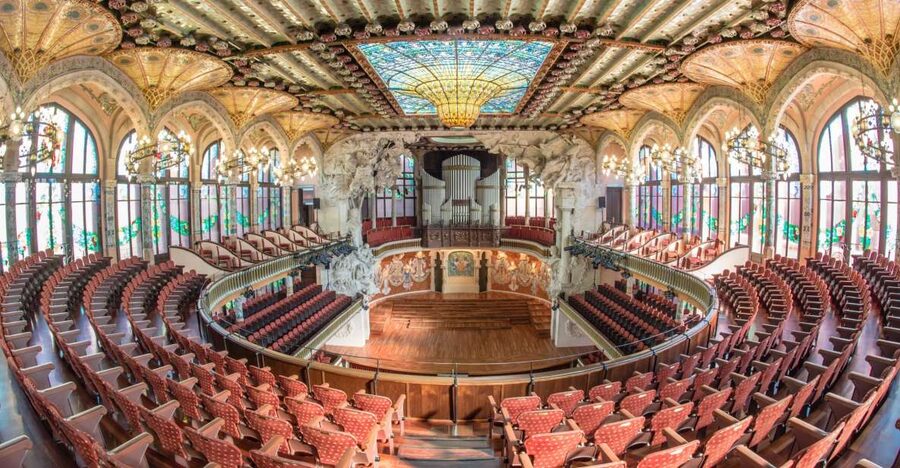
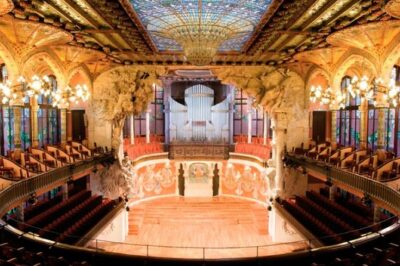
The Concert Hall is the payoff. Its color, light, shapes, and decorative detail arrive all at once, and it is difficult to know where to look first.
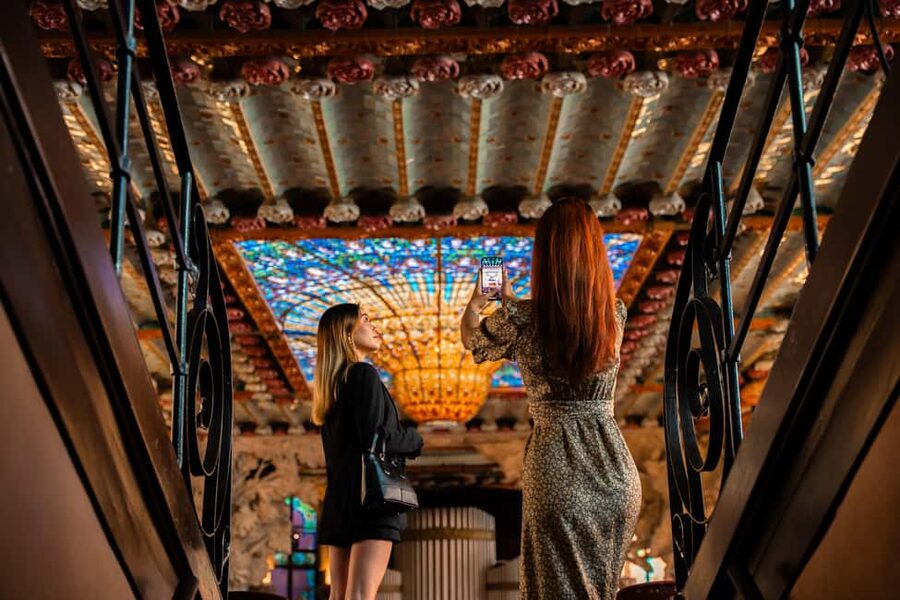
The ceiling is particularly memorable. A large stained-glass light source hangs above the seating area, giving the hall a bright, almost sky-like focus. From the second floor, you can get closer to this feature and see how it changes the room below.
Take a few minutes to look from more than one level. From the main area, you understand the scale of the hall. From the second floor, you can study the light source and the surrounding decoration more closely. The view is valuable because this is a room designed to be appreciated from different angles.
The hall is also a working musical space, not just a museum display. You might see musicians training, hear a piano being tuned, or catch a choir rehearsal if the schedule allows. These moments cannot be promised, but they show how the building still functions as a place for music.
The organ is another major feature. A pipe organ recital may fill the Concert Hall with sound during your visit, and the contrast between the ornate room and the music can be especially effective. The experience includes a live piano or organ recital, so listen carefully rather than rushing straight back outside.
What the audio guide adds, and what the brochure does well
You receive an informative brochure explaining the concert hall’s history and main features. For a 50-minute visit, that may be enough, especially if you prefer to look around without listening to a recording.
The optional audio guide gives you more structure. It is available on your own phone in eight languages, including English, Spanish, French, German, Italian, Catalan, Korean, and another language selection listed with the booking information. Bring headphones. This is the most important practical tip from the whole visit.
There has been some confusion between the printed brochure and the audio guide. They are not quite the same thing. The brochure is included, while the audio guide is accessed on your phone. Check what you have booked and download or open the audio material before you begin if possible.
I would choose the audio guide if architecture is a main reason for visiting. It helps explain what you are looking at and makes it easier to connect the staircase, Lluís Millet Hall, and Concert Hall. If your priority is photography and free movement, the brochure may be sufficient.
How much time you need for the 50-minute visit
The advertised duration is about 50 minutes. That is enough time to see the main rooms and hear the essential explanations, but it is not a long museum visit.
I would reserve extra time around the tour if you want coffee at the cafeteria, take many photographs, or hope to hear music without feeling rushed. The tour itself is short enough to fit between other Barcelona plans, particularly because the location is close to major central sights.
Morning can be a smart choice if you prefer a quieter start to the day. The exact entry times vary, so check availability when booking. If your schedule changes, cancellation is free up to 24 hours in advance, and the reserve-now-pay-later option can help keep your plans flexible.
The visit ends back at the foyer. There is no hotel pickup or drop-off, so you make your own way to the Palau and continue independently afterward.
Price, access, and the small practical details
At $21 per person, this is not Barcelona’s cheapest quick attraction. The value depends on how you use it.
If you move through in 20 minutes with only the leaflet, the price may feel steep. If you take time with the staircase, Lluís Millet Hall, second-floor view, and Concert Hall, the fee makes more sense. The inclusion of a live piano or organ recital also adds something a bare architectural entry would not provide.
The building is wheelchair accessible. Food and drinks are not allowed inside the touring areas, and luggage or large bags are prohibited. Pack light, especially if you are combining this with other central Barcelona sights.
You do not need a private guide to appreciate the building. The self-guided format is best for people who like independence, photography, and the ability to pause. Families may also appreciate the shorter length, particularly if children enjoy music or dramatic interiors.
Music lovers should consider pairing this visit with a full concert on another evening. The tour gives you the setting and a taste of the acoustics, but a complete performance would offer a different experience.
Who should book this Palau de la Música visit?
I would book it if you care about architecture, decorative arts, Catalan culture, or historic music halls. It is also a strong choice if you want a central Barcelona activity that takes less than an hour and does not require a fixed guided group.
I would think twice if you dislike ornate interiors or want a long, detailed museum tour. The brochure is useful but brief, and the audio guide depends on your own phone and headphones. Some parts of the building may also be closed, so the exact visit can vary.
For the best experience, bring headphones, keep your schedule loose enough to listen to the recital, and give the Concert Hall more time than the other rooms. Do not rush the staircase. Much of the pleasure is in the small details.
Should you book the self-guided Palau de la Música tour?
Yes, if you want to see one of Barcelona’s great interiors without committing to a full concert. The Concert Hall and pipe organ music are the strongest reasons to go, while the central location and short duration make the visit easy to fit into a busy day.
Book it with realistic expectations. This is a 50-minute self-guided visit, not a long expert-led tour. Bring your own headphones, use the brochure or audio guide properly, and take time to look upward. For many people, that is where the $21 earns its keep.
FAQ
Where does the Palau de la Música self-guided tour begin?
It begins in the foyer area of the Palau de la Música Catalana, beside the cafeteria.
How long does the visit take?
The stated duration is approximately 50 minutes. Starting times vary, so check availability when selecting your visit.
Is the tour guided by a person?
No. This is a self-guided visit using an informative brochure and an optional audio guide on your own phone.
What languages are available for the audio guide?
The audio guide is available in Catalan, French, German, Italian, Spanish, English, and Korean.
Do I need to bring headphones?
Yes. A phone and headphones are not included, so bring your own if you want to use the audio guide.
Is the Palau de la Música wheelchair accessible?
Yes, the activity is listed as wheelchair accessible.
Can I bring food, drinks, or luggage?
No. Food, drinks, luggage, and large bags are not allowed during the visit.
Recently added around Barcelona
- Montserrat very early : Hiking, Abbey, very small group★ 5.0 · 127 reviews
- Guided Private Yacht Tour in Barcelona Spain★ 5.0 · 6 reviews
- Private Tour from Barcelona to Montserrat (with guide)★ 4.5 · 6 reviews
- Private Tour from Barcelona to Costa Brava (with guide)★ 5.0 · 5 reviews
- Barcelona Gaudi Tour: Sagrada Familia, Casa Batllo & Casa Mila★ 5.0 · 4 reviews
- Street Art, Sculptures & Crime Stories Walking Tour – Barcelona★ 5.0 · 11 reviews
- Andorra Tour★ 4.0 · 7 reviews
- Wine Tasting in Barcelona (Catalan Varieties) Small Groups★ 5.0 · 10 reviews
Palau de la Música Tours, compared.

Barcelona Guitar Trio & Dance at the Palau de la Musica
Read our review →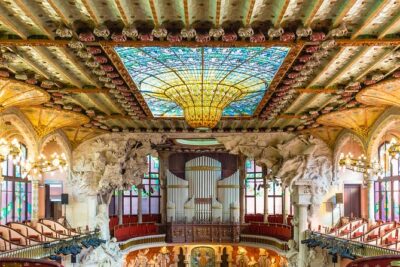
Palau de la Musica Catalana Admission Ticket with Audioguide
Read our review →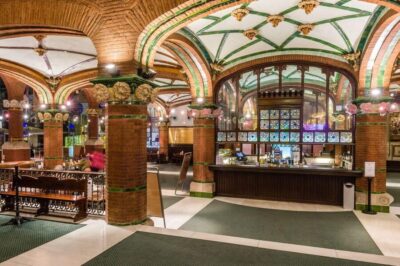

Sailing Experience & Flamenco at Palau de la Musica
Read our review →Browse the lists this tour appears in