
Reviewed · AUDIO TOURS
Barcelona: Mies van der Rohe Pavilion Ticket and Audio Guide
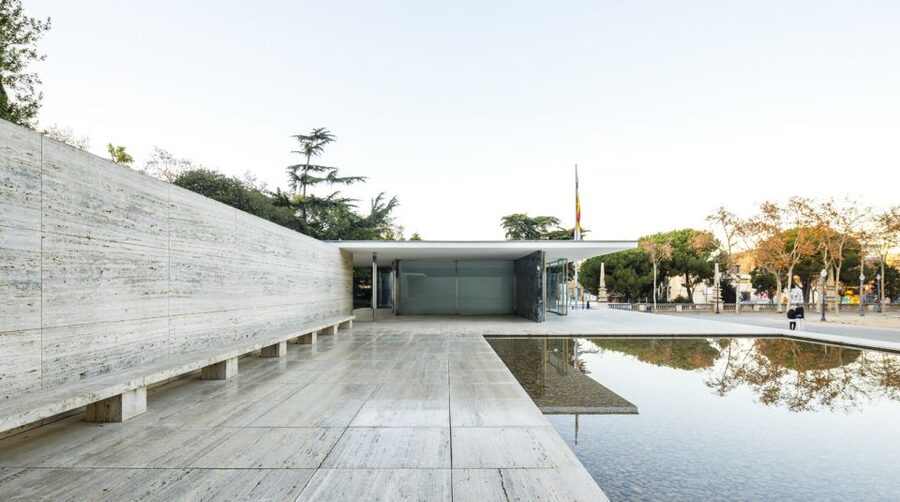
The Mies van der Rohe Pavilion is a small building with a very big reputation. Designed by Mies van der Rohe and Lily Reich for the 1929 Barcelona International Exhibition, it reduces architecture to marble, glass, water, and carefully judged space. I like the calm atmosphere and the chance to look closely at materials that do most of the talking. I also like that the audio guide explains both the original pavilion and its 1986 reconstruction.
The main consideration is value. At $10, the ticket is modest, but the pavilion is not a long, packed attraction. Some visitors also feel a building this important should be free. Photographers and models may be working in the space, and temporary artistic installations can change its appearance. Go for the quality of the design, not the quantity of things to see.
Key points to know before you go
- Built for 1929 and rebuilt in 1986: The original pavilion was dismantled after the exhibition, then recreated on its first site.
- Designed by two important figures: Mies van der Rohe and Lily Reich created the German national pavilion together.
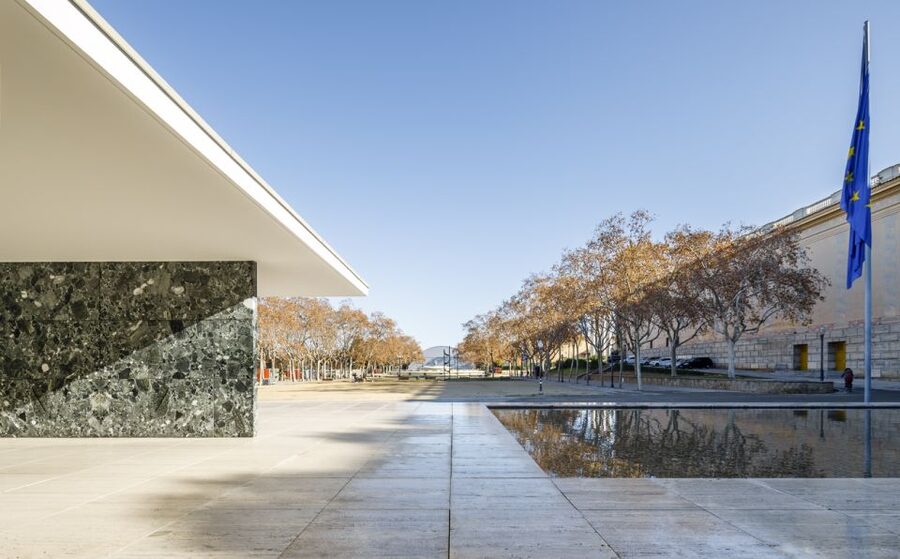
- Materials are the main event: Marble from the Alps, Tivoli, Atlas, and Tinos is set against glass, water, and clean geometric lines.
- Audio guide in five languages: Choose English, Spanish, Catalan, French, or German as you explore.
- A quiet Barcelona stop: The pavilion offers a calm break from the city, with a short nature trail nearby.
- Good value for architecture fans: The $10 price buys access without a ticket line, but the visit suits curious, design-minded readers best.
Why this little pavilion matters
You may walk in expecting a quick look at a modern building and walk out thinking differently about walls, rooms, and empty space. That is the point of the Mies van der Rohe Pavilion. It does not depend on decoration or a long list of historic objects. Its effect comes from proportion, reflection, texture, and the way one area leads into another.
The pavilion was the German national pavilion at the 1929 Barcelona International Exhibition. That role gave Mies and Reich a chance to present an idea of modern architecture based on simplicity and precision. The result was not a conventional exhibition hall filled with displays. It was the display.
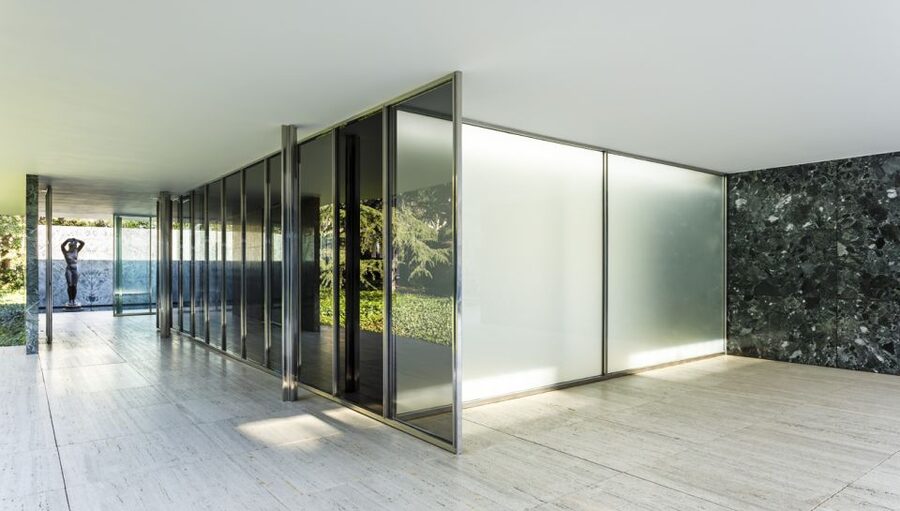
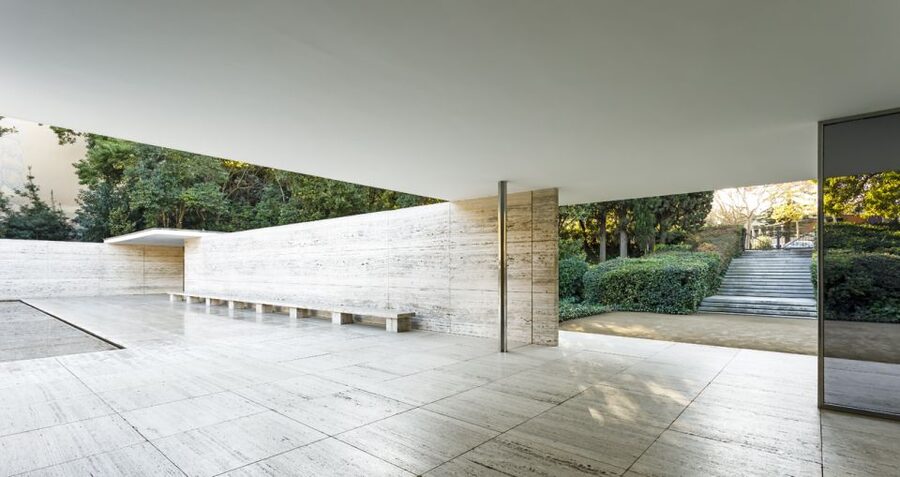
The building uses a restrained palette of glass, polished stone, steel, and water. The materials are expensive, but the design does not feel showy. Each surface has a job. Marble divides space without creating heavy walls. Glass lets you see through and beyond the building. Water slows your eye and gives the structure a reflective edge.
I especially like the way the pavilion asks you to pay attention to things you might normally ignore. A corner is not just a corner. It controls the view into the next space. A slab of stone is not just a wall. Its veining becomes part of the design.
More Barcelona Self-Guided Tours:
- Casa Batllo Admission Ticket with Intelligent Audio Guide
★ 4.5 · 3,168 reviews - Barcelona: Montjuïc Cable Car Ticket with Audio Guide
★ 3.9 · 270 reviews - Montjuïc Cable Car Entry Voucher with Audio Tour on Your Phone
★ 3.5 · 37 reviews
Entering the rebuilt 1986 pavilion
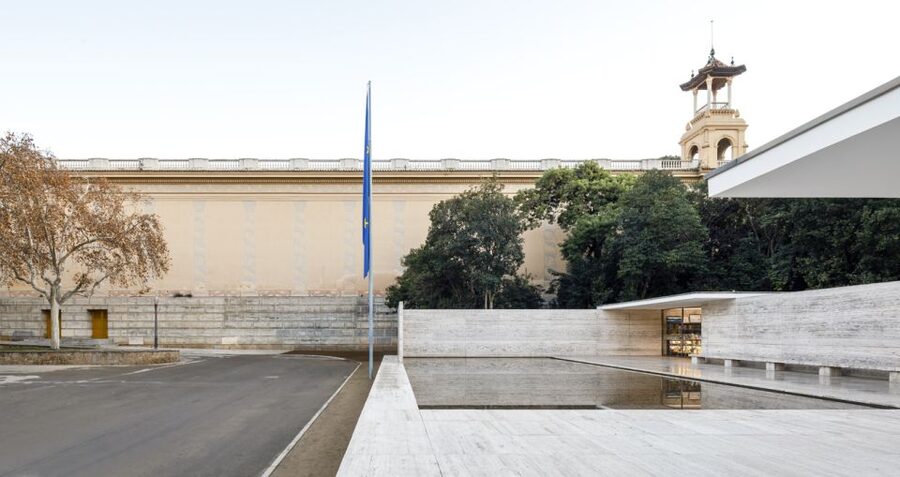
The structure you see today is a reconstruction. The original pavilion was taken apart after the 1929 exhibition, but its importance became clearer with time. Architects and artists continued to study its clean forms and open plan, and the pavilion was rebuilt on its original site in 1986.
That detail matters because you are looking at both a historic idea and a later act of preservation. The reconstruction lets you experience the design where it was first presented, while also reminding you that modern architecture can be fragile. Unlike a stone cathedral built to last for centuries, this pavilion was made for a temporary event.
The rebuilt structure serves as a working example of the Modern Movement. You do not need formal training in architecture to appreciate it. The audio guide helps explain the design choices and gives useful background on the building’s history and reconstruction.
Allow yourself time to look before you press through the audio commentary. The pavilion is easy to photograph, but a camera can make the visit feel flatter than it really is. Move slowly. Notice how the view changes as you pass from one material to another.
Marble, glass, water, and carefully controlled space
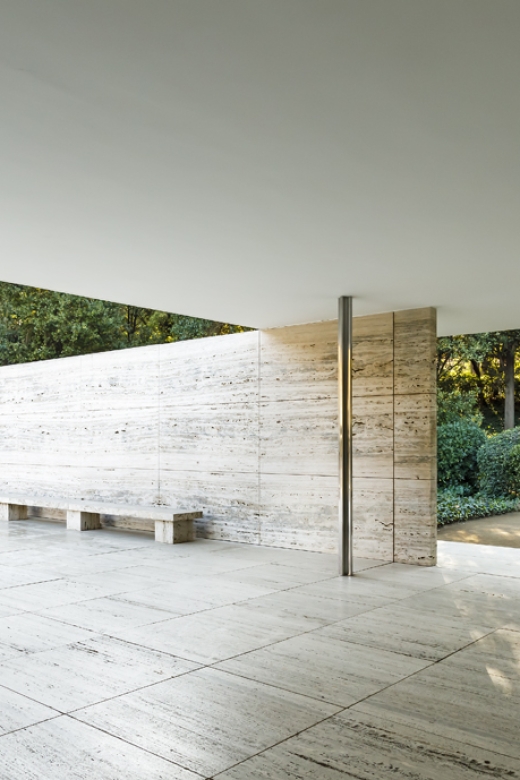
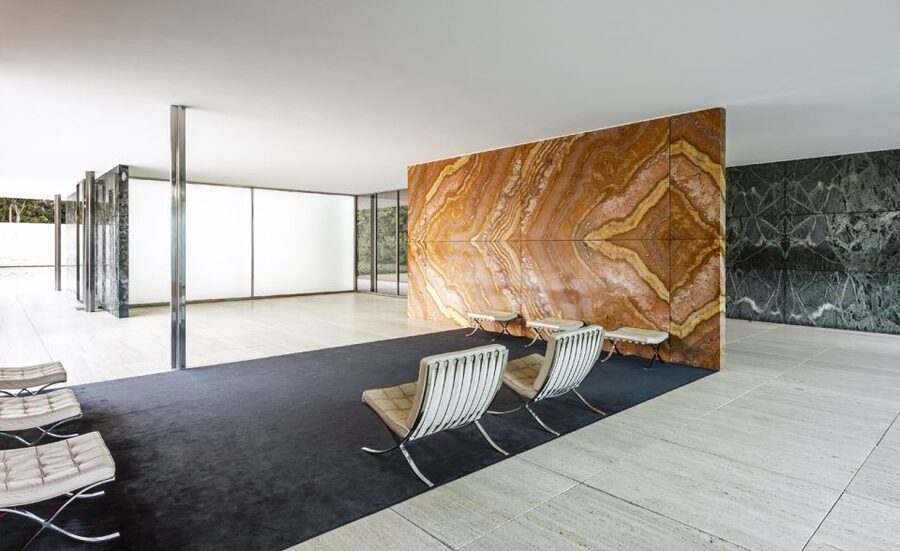
The materials are the star attractions here. Marble used in the pavilion came from the Alps, Tivoli, Atlas, and Tinos. Their patterns and colors create contrast without relying on paint or ornament.
This is where the pavilion rewards a slower visit. Stand near one wall and look at its veining. Then shift your position and watch how the surface changes against the glass and water. You begin to see that the building’s simple appearance is not easy or casual. It depends on exact choices.
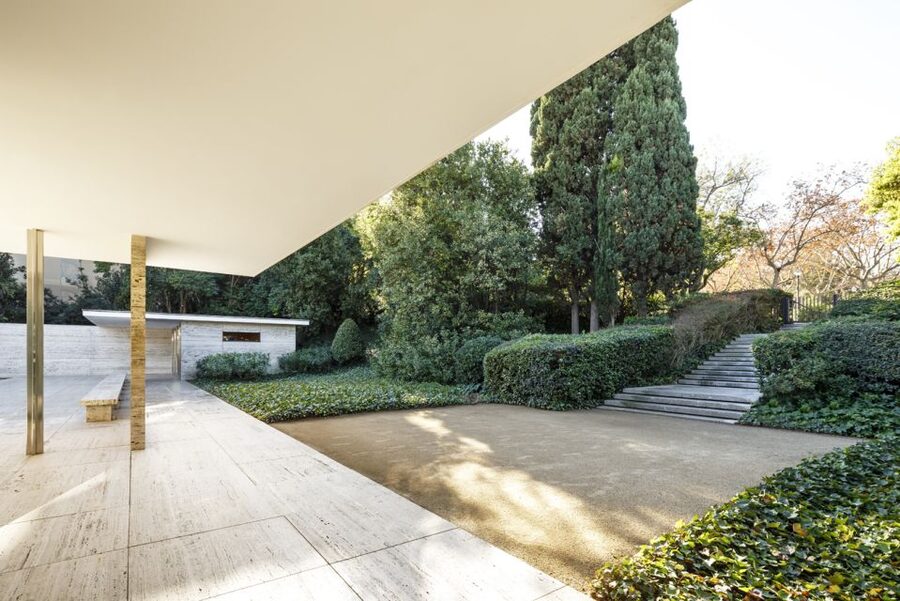
The interior and exterior flow into each other. You can read the pavilion as a sequence of rooms, but the boundaries are never as firm as they would be in a typical building. The clear glass and open plan create a conversation between inside and outside.
That openness can also be a drawback. If you prefer grand interiors, elaborate decoration, or a collection of objects, you may find the pavilion spare. There is no long route filled with exhibits. The building itself is the subject, and its appeal grows with your attention.
The place is generally suited to a calm visit. That makes it a useful pause in a busy Barcelona day. It is not designed to overwhelm you with scale. Instead, it offers a controlled space where small visual details matter.
How the audio guide changes the visit
The audio guide is included with the ticket and is available in Spanish, Catalan, English, French, and German. For many people, this is the feature that turns a beautiful building into a more understandable one.
Without explanation, you can appreciate the clean lines and impressive stone. With the commentary, you can connect the pavilion to the 1929 exhibition, the work of Mies van der Rohe and Lily Reich, the Modern Movement, and the 1986 reconstruction.
I would use the guide in short sections rather than listening without looking around. Let each explanation send you back to the building. If the commentary discusses the relationship between interior and exterior, study the glass and the open plan. If it explains the stone, examine the surface rather than simply moving on.
There has been at least one report of audio guides not being provided during a visit, leaving the visitor confused. That appears to be an occasional practical problem, not part of the advertised experience, but it is worth knowing. If the guide is not immediately clear at entry, ask staff before beginning. The visit is still possible without it, but the historical context is less complete.
The audio guide also makes this a good choice for independent visitors. You do not need to join a group or keep pace with a live guide. You can spend more time with the parts that interest you and less time on material you already understand.
A different sort of day out in Barcelona:
- Barcelona: Park Güell Admission Ticket
★ 4.4 · 76,534 reviews - Barcelona: Casa Batlló Entry with Self-Audioguide Tour
★ 4.7 · 25,359 reviews - Barcelona: 24 or 48-Hour Hop-On Hop-Off Bus Tour
★ 4.4 · 20,872 reviews - Barcelona: Park Guell Guided Tour with Skip The Line Entry
★ 4.7 · 17,563 reviews
A quiet stop near Montjuïc
The pavilion is in Barcelona, in Catalonia, and the experience is well suited to adding a peaceful architectural stop to a day in the city. The site itself is calm, which can be a welcome change from Barcelona’s busier sights.
A short nature trail near the pavilion can extend your time in the area. It is not part of the ticketed pavilion visit, so treat it as an optional nearby addition rather than part of the formal experience. If you want to see the pavilion and then continue outdoors, this can help make the stop feel less abrupt.
The calm setting is one of the strongest reasons to choose this experience. You can focus on form and space without needing to race through a large museum. Still, the atmosphere is not guaranteed to be completely empty. Professional photographers and models may be working in the pavilion, and they become part of the scene.
That activity can be interesting, especially if you enjoy seeing how photographers use architecture. It can also affect the clean, quiet feeling you may be seeking. If you want the most peaceful visit possible, arriving at your scheduled time and avoiding peak periods may help, although no specific quiet period is promised.
How long should you plan?
The ticket is valid for one day, with starting times available according to the booking calendar. The information does not set a fixed length for the visit. That flexibility is useful because the pavilion works for different travel styles.
You can make it a focused architectural stop, listen to the audio guide, study the materials, and move on. Or you can take more time with the design and add the nearby nature trail.
Do not judge the experience by the size of the building. A short visit can still be worthwhile if you are interested in architecture, photography, design, or Barcelona’s modern history. On the other hand, if you want a major attraction that fills several hours, this ticket will not provide that scale.
Arrive at the time you select. One French visitor specifically advised arriving on time, and that is sensible for any timed cultural site. The pavilion is compact, so keeping entry organized helps preserve the calm mood.
Is the $10 ticket good value?
At $10 per person, the ticket is reasonably priced for a specialized architectural site. You are paying for access to a building that influenced generations of architects and artists, plus an audio guide in five languages.
The value depends on your interest. If you enjoy modern design, the price is easy to justify. You get to examine a major work rather than view it only in books or photographs. The audio commentary adds context without the cost or schedule of a private guide.
If you are mainly looking for a free sightseeing stop, you may hesitate. Two Spanish visitors felt the pavilion should not charge admission, and that view is understandable because the structure is small and the visit may be brief. The ticket is not a bargain in the same way as a large museum pass. It is a focused purchase for a focused experience.
I would compare it with the cost of a coffee and a short attraction in Barcelona. For a design-minded visitor, $10 buys a quiet, memorable hour or less, depending on your pace. For someone who does not care about architecture, the same money may be better spent elsewhere.
Access, rules, and changing displays
The pavilion is wheelchair accessible. Smoking, food, drinks, pets, and tripods are not allowed, although assistance dogs are permitted.
The tripod rule matters if you are planning serious architectural photography. Handheld photography may still be possible, but you should not count on setting up professional equipment inside. Photographers and models may sometimes be present, so the space can have an active working quality even when the general mood is quiet.
Opening hours can change. Check the available time before you go, especially if you are fitting the pavilion between other Barcelona plans.
The appearance may also change because the site occasionally hosts artistic interventions. This means your visit may not look exactly like the classic photographs of the pavilion. I see that as both a benefit and a risk. An installation may give repeat visitors something new to consider, but it can also interrupt the pure architectural view you came to see.
Who will enjoy this experience most?
I would recommend the pavilion to you if you like modern architecture, clean design, photography, art, or places that reward careful looking. It is also a good option if you want a calm cultural stop instead of another crowded blockbuster attraction.
The audio guide makes it more approachable for first-time architecture visitors. You do not need to know the vocabulary of the Modern Movement before arriving. Listen, look, and compare the explanation with the space in front of you.
Families may enjoy the building, but younger children could find the visit short or too quiet if they need hands-on displays. The experience is based on observation rather than entertainment.
It is also a good fit for repeat visitors to Barcelona. If you have already seen the city’s major landmarks, the pavilion offers a different kind of sight. Its importance is not based on size or spectacle. It is based on influence.
Architecture students, photographers, and design professionals may want extra time. The careful arrangement of stone, glass, water, and open space provides plenty to study. Just remember that tripods are not allowed, and working photographers may occasionally share the space.
Should you book the Mies van der Rohe Pavilion?
Book it if you want to see a landmark of modern architecture in person and you are willing to spend time noticing small choices. The $10 price is fair for the admission and multilingual audio guide, especially if the pavilion’s design interests you.
Skip it if you need a large attraction, a long itinerary, or a free stop with lots of exhibits. This is a precise, quiet experience. Its rewards come from proportion, materials, and atmosphere rather than from spectacle.
For the best visit, arrive on time, choose the audio guide language you prefer, leave the tripod at your accommodation, and check for possible artistic installations or changed opening hours. Add the nearby nature trail if you want to extend the stop. If you approach the pavilion with patience, you will understand why such a small building has influenced so many people.
FAQ
What does the ticket include?
The ticket includes entrance to the Mies van der Rohe Pavilion and an audio guide.
Which languages are available for the audio guide?
The audio guide is available in Spanish, Catalan, English, French, and German.
How long is the visit?
The activity is valid for one day, but no fixed visit length is provided. You can plan a focused stop or spend longer studying the building and nearby area.
Is the pavilion wheelchair accessible?
Yes, the pavilion is wheelchair accessible.
Can I bring food, drinks, pets, or a tripod?
No. Smoking, food, drinks, pets, and tripods are not allowed. Assistance dogs are allowed.
Can I cancel the booking?
Yes. You can cancel up to 24 hours in advance for a full refund. A reserve now and pay later option is also available.
Recently added around Barcelona
- Montserrat very early : Hiking, Abbey, very small group★ 5.0 · 127 reviews
- Guided Private Yacht Tour in Barcelona Spain★ 5.0 · 6 reviews
- Private Tour from Barcelona to Montserrat (with guide)★ 4.5 · 6 reviews
- Private Tour from Barcelona to Costa Brava (with guide)★ 5.0 · 5 reviews
- Andorra Tour★ 4.0 · 7 reviews
- Barcelona Gaudi Tour: Sagrada Familia, Casa Batllo & Casa Mila★ 5.0 · 4 reviews
- Street Art, Sculptures & Crime Stories Walking Tour – Barcelona★ 5.0 · 11 reviews
- Wine Tasting in Barcelona (Catalan Varieties) Small Groups★ 5.0 · 10 reviews
Audio Tours, compared.
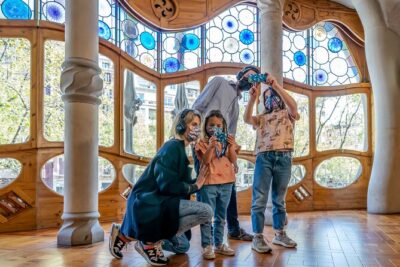
Casa Batllo Admission Ticket with Intelligent Audio Guide
Read our review →
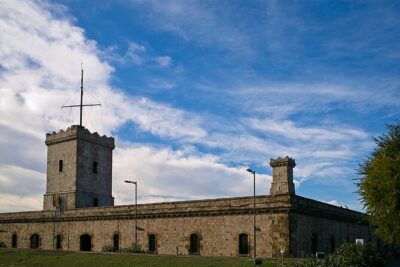
Montjuïc Cable Car Entry Voucher with Audio Tour on Your Phone
Read our review →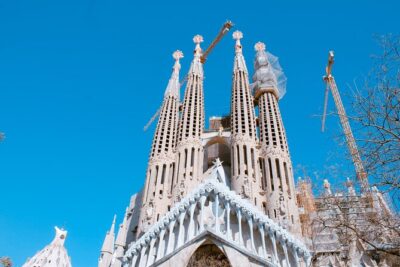
Gaudi and La Sagrada Familia Exterior Self-Guided Audio Tour
Read our review →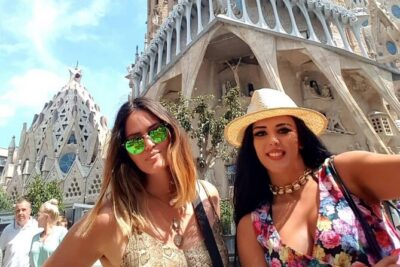
Sagrada Familia Skip The Queue With Audio Guide Tour
Read our review →
Reserved Entrance to Casa Batlló with Audio Guide in Barcelona
Read our review →
Reserved Entrance to Casa Mila (La Pedrera) with Audio
Read our review →
Barcelona’s El Raval and the Gothic Quarter: A Self-Guided Audio Tour
Read our review →Browse the lists this tour appears in