
Reviewed · BARCELONA
The Secret of Cerdà – Barcelona
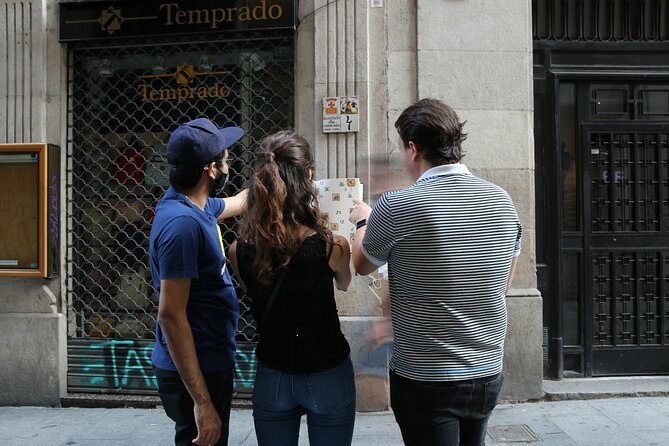
Barcelona’s city plan becomes your puzzle board in The Secret of Cerdà. Instead of simply walking past grand façades, you look for clues in the streets, connect them to Ildefons Cerdà’s 19th-century expansion, and solve the story as you go. The 3-kilometer route gives you a reason to notice details that are easy to miss.
I especially like the way this activity mixes real Barcelona history with play, and I like that your private group can set its own pace. Families can stop for a snack, adults can work through the clues together, and even locals may spot familiar streets in a new way.
The main drawback is value. At $26.36 per person, the price can feel high for a game that largely runs without staff after the introduction, particularly for a large adult group. People who regularly play escape rooms may also find the puzzles fairly easy.
Key points to know before you book
- Cerdà’s city plan becomes the mystery: The game uses Barcelona’s Eixample expansion as its central story rather than treating the city as a backdrop.
- A 3-kilometer urban route: You walk through the center for about two hours, beginning and ending at Carrer de Trafalgar, 17.
- Four useful landmarks: The route includes the Palace of Catalan Music, Eixample, Manzana de la Discordia, and Plaça de Catalunya.
- Good for mixed-age groups: Children around 10 to 12 and adults can work together, with breaks for food or drinks along the way.
- Available in four languages: You can play in English, Spanish, Catalan, or French.
- A self-guided format: A staff member provides the starting explanation, then your group handles the clues and route on its own.
Barcelona’s expansion turns into a city puzzle
In 1856, Barcelona needed room to grow. Ildefons Cerdà designed the plan for the new district, now known as the Eixample, and this game asks you to look at that expansion as a set of clues.
That idea gives the activity a clear purpose. You are not just moving from one attractive building to the next. You are trying to understand why the streets, blocks, monuments, and buildings fit together as they do. The story about Cerdà’s secret plans provides a thread that keeps the walk moving.
I like this kind of sightseeing because it rewards attention. Barcelona’s center can become a blur of ornate balconies, tiled details, grand squares, and traffic. A puzzle gives you a reason to stop and inspect what is around you. You may find yourself looking above street level, checking a building edge, or comparing one part of the city plan with another.
The history is presented through the game rather than through a long lecture. That makes it easier to share with children or with friends who would not choose a formal history tour. One local participant used the activity to explain how life in Barcelona had changed over time, which points to one of its strengths: the game can work for newcomers and for people who already know the city.
Other Barcelona days people weigh up beside this one:
- Barcelona: Park Güell Admission Ticket
★ 4.4 · 76,534 reviews - Barcelona: Casa Batlló Entry with Self-Audioguide Tour
★ 4.7 · 25,359 reviews - Barcelona: 24 or 48-Hour Hop-On Hop-Off Bus Tour
★ 4.4 · 20,872 reviews
Starting at Carrer de Trafalgar, 17
The activity begins at Carrer de Trafalgar, 17, in the L’Eixample area. A staff member explains how to play and gives some historical context before you set off. That opening matters because the rest of the activity is designed for your private group rather than for a guide-led walking tour.
You should pay close attention at the start. One useful tip is to keep the game diary with you throughout the route. It is described as essential for working through the clues, so do not treat it as something to tuck away once the introduction ends.
Because this is a private activity, only your group participates. That makes it easier to discuss possible answers without waiting for strangers or worrying about keeping up with a larger party. It also means the pace belongs to you. If the children need a break, or if you want to stop for food and drink, you can do so.
The tradeoff is that you are responsible for keeping the game moving. After the initial explanation, you should not expect a guide beside you at every stop. If your group enjoys independent problem-solving, this is part of the appeal. If you want constant commentary and instant help, a traditional guided walk may suit you better.
The Palace of Catalan Music starts the visual hunt
The Palace of Catalan Music is one of the route’s first featured stops. Even without the game, it is an important place to see, with its elaborate architecture and strong connection to Barcelona’s cultural identity.
Here, the activity begins training your eye. You are encouraged to observe the building and its surroundings as part of the puzzle rather than simply taking a quick photograph and moving on. The stop works well because it gives the route an impressive beginning and shows how much information can be found in Barcelona’s façades and public spaces.
The Palace is also a useful reminder that the route is not only about Cerdà as an architect. It is about the city that grew around his plan, and about the many layers of Barcelona you can read while walking. You get architecture, urban planning, and local stories in the same outing.
One practical point: the Palace of Catalan Music is a stop on the route, not a promise of an interior visit or performance. The information provided describes an outdoor puzzle walk, so you should expect to explore the area and use the surroundings for clues rather than enter as part of the experience.
Eixample explains the big idea
The Eixample is the heart of the story. Cerdà’s expansion changed Barcelona’s shape, and the game uses that plan to explain how the city moved beyond its older central limits.
This section gives the activity more substance than a standard treasure hunt. You are not solving random riddles placed around town. The clues connect to a real urban decision and to the way Barcelona developed. That makes each answer feel more useful: it helps you understand the city instead of simply announcing the next location.
The route covers about 3 kilometers, which is manageable for most people but still long enough to make the experience feel like an outing. You should allow roughly two hours for play time, with extra time if your group stops for refreshments or takes photographs.
The walk is not designed as a speed contest. You can take the challenge at your own pace, and that flexibility is especially helpful for families. Children can search for clues while adults handle the reading and discussion. In a group of friends, the puzzle can become a friendly contest, though the game still works if your group prefers to solve everything together.
A different sort of day out in Barcelona:
- Barcelona: Park Guell Guided Tour with Skip The Line Entry
★ 4.7 · 17,563 reviews - Barcelona in 1 Day: Sagrada Familia, Park Guell,Old Town & Pickup
★ 5.0 · 13,541 reviews - Barcelona Aquarium: Entry Ticket
★ 4.3 · 13,335 reviews - Barcelona: Sagrada Familia Skip-the-Line Entry Ticket & Tour
★ 4.8 · 12,789 reviews
Manzana de la Discordia brings Barcelona’s rival architects into view
Manzana de la Discordia, often translated as Block of Discord, is one of the route’s most rewarding areas for architecture. The name refers to a stretch of buildings associated with competing styles and architectural ambition.
This stop fits the game format well because the buildings offer plenty to inspect. You may find yourself comparing façades and looking for the detail that answers a clue. The activity encourages you to slow down and notice contrasts that might otherwise get lost during a general city walk.
It is also a good example of the experience’s off-the-main-route character. You still visit famous parts of Barcelona, but you approach them through questions and small observations rather than simply following a guide from one headline sight to another.
The game does not replace a specialist architecture tour. If you want a full explanation of every building, architect, and decorative feature, you will need another source or a dedicated guide. Here, the architecture serves the puzzle and the wider story of the city.
Plaça de Catalunya gives the route a central finish
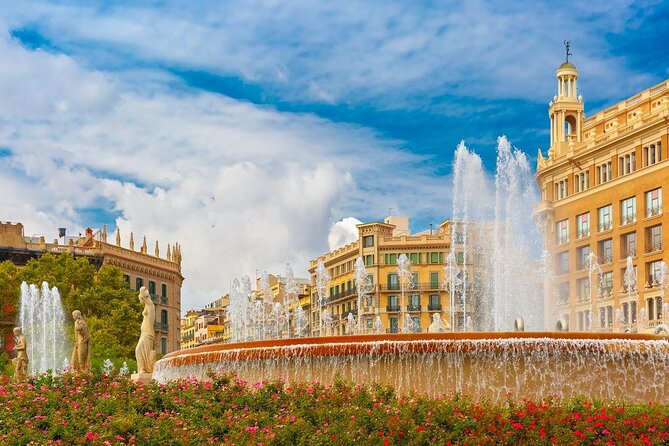
Plaça de Catalunya is one of Barcelona’s best-known meeting points, linking the older central districts with the Eixample. Including it gives the route a familiar reference point after the more focused architectural stops.
The square helps show how the city’s older core and newer expansion meet. It is also a lively public space, so your group may need to pay close attention to the instructions and stay aware of your surroundings while solving the final clues.
The itinerary returns you to the original meeting point at Carrer de Trafalgar, 17. That makes the route easier to manage than an activity that leaves you across town. You can finish where you began and then choose your next plan without having to arrange transport back to a distant ending point.
The information provided does not promise a special final prize. One participant expected a reward and received only a pin, so you should book this for the walk, the puzzle, and the city stories, not for a substantial souvenir.
How difficult are the puzzles?
The difficulty appears best suited to newcomers to escape rooms and treasure hunts. The clues are meant to keep the group engaged while you walk, but they are not presented as advanced challenges.
That is good news if you want an easy introduction to this style of sightseeing. Children can take part, and adults can help without turning the activity into a test. A family with children aged 10, 10, and 12 found the format engaging, especially because the group could pause when needed.
Experienced escape-room players may want more. If you have completed many similar games, the puzzles may feel simple and the route may be more interesting than the challenge itself. The company offers other games, so regular puzzle players may prefer to compare the options before booking.
Your group can also choose how seriously to take the competition. You can race toward the answer, split up to inspect clues, or solve each step together. The experience works best when everyone gets a role, especially in a larger group where one or two confident players could otherwise take over.
What the $26.36 price really buys you
The cost is $26.36 per person. For a small private group, I think the price is easiest to justify if you value an organized route, a themed story, and a flexible activity that combines sightseeing with a game.
You are paying for more than a standard printed walking route. The game gives your group a structure, a sequence of clues, and a way to connect several parts of Barcelona. It can also save you from planning a family activity yourself, which has real value on a city break.
Still, the price deserves a close look. Once the initial explanation is finished, the group plays independently. For seven adults, the total would be about $184.52, and that can feel expensive when there is no guide walking with you throughout the two hours.
I would consider it better value for a family or a group of friends who will actively solve the puzzles and discuss the history. I would be less likely to choose it for adults who mainly want a guided architectural tour, or for experienced escape-room players seeking difficult puzzles.
The best fit for families, friends, and curious locals
This activity suits groups with different interests. Children get a mission, adults get city history, and everyone has a reason to keep walking. The fact that you can stop for food and drinks makes it less demanding than a tightly timed guided tour.
It also works for Barcelona residents. The route is built around facts and details that can surprise people who have lived in the city for years. Familiar streets may look different when you are searching for a specific clue or trying to explain a building to someone else.
I would be cautious about booking it for very young children who cannot follow written clues, or for anyone who prefers passive sightseeing. The supplied information says most people can participate, but the central activity is walking, reading, observing, and solving.
The private format is useful for families because you do not have to worry about slowing down another group. It is equally useful for friends who want a shared activity rather than a standard meal or bar stop.
Languages, access, and practical details
You can play in English, Spanish, Catalan, or French. That makes the experience easier to share in mixed-language groups, though you should select the language you need when booking.
The activity accepts mobile tickets, and confirmation is provided at booking. The starting point is near public transportation, which is helpful in central Barcelona. The route ends back at the starting point.
Service animals are allowed, and the activity is described as suitable for most people. Keep in mind that the route covers about 3 kilometers through city streets, so comfortable walking shoes and attention to traffic and crowds are sensible choices, even though the supplied details do not set out a separate accessibility specification.
Free cancellation is available if you cancel at least 24 hours before the start time. Cancellations made less than 24 hours in advance, along with late changes, are not eligible for a refund.
Should you book The Secret of Cerdà?
Book it if you want to explore Barcelona through a shared challenge rather than a standard guided walk. Families with school-age children, first-time escape-room players, and curious locals are likely to get the most from the mix of clues, architecture, and city stories.
Think twice if you are an experienced puzzle player, need a guide beside you for the full route, or are watching the budget for a large adult group. The price is easier to defend when the activity itself is the main event, not just a way to reach famous sights.
The strongest reason to choose it is the fresh point of view. Cerdà’s plan gives the walk a real subject, and the puzzles encourage you to notice Barcelona instead of merely passing through it.
FAQ
How long does The Secret of Cerdà take?
The activity lasts about two hours, with a route of approximately 3 kilometers.
Where does the activity start?
It starts at Carrer de Trafalgar, 17, in L’Eixample, Barcelona, postal code 08010.
Where does the activity finish?
It finishes back at the meeting point where the activity begins.
Which landmarks are included?
The route includes the Palace of Catalan Music, Eixample, Manzana de la Discordia, and Plaça de Catalunya.
Is the activity guided the whole way?
A staff member explains how to play and provides some history at the start. After that, your private group completes the game independently.
Which languages are available?
The game is available in English, Spanish, Catalan, and French.
Is this a private activity?
Yes. Only your group participates.
Can I cancel for a full refund?
Yes, if you cancel at least 24 hours before the scheduled start time. Cancellations or changes made less than 24 hours before the start are not refunded or accepted.
Recently added around Barcelona
- Montserrat very early : Hiking, Abbey, very small group★ 5.0 · 127 reviews
- Guided Private Yacht Tour in Barcelona Spain★ 5.0 · 6 reviews
- Private Tour from Barcelona to Montserrat (with guide)★ 4.5 · 6 reviews
- Private Tour from Barcelona to Costa Brava (with guide)★ 5.0 · 5 reviews
- Andorra Tour★ 4.0 · 7 reviews
- Barcelona Gaudi Tour: Sagrada Familia, Casa Batllo & Casa Mila★ 5.0 · 4 reviews
- Street Art, Sculptures & Crime Stories Walking Tour – Barcelona★ 5.0 · 11 reviews
- Wine Tasting in Barcelona (Catalan Varieties) Small Groups★ 5.0 · 10 reviews