
Reviewed · MUSEUMS
MNAC Barcelona: National Art Museum of Catalonia Admission Ticket
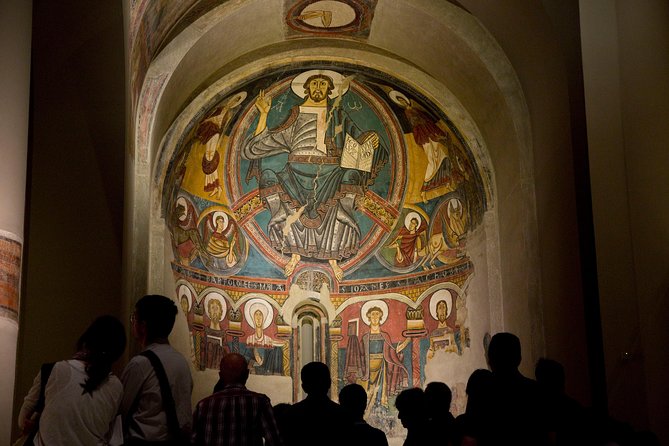
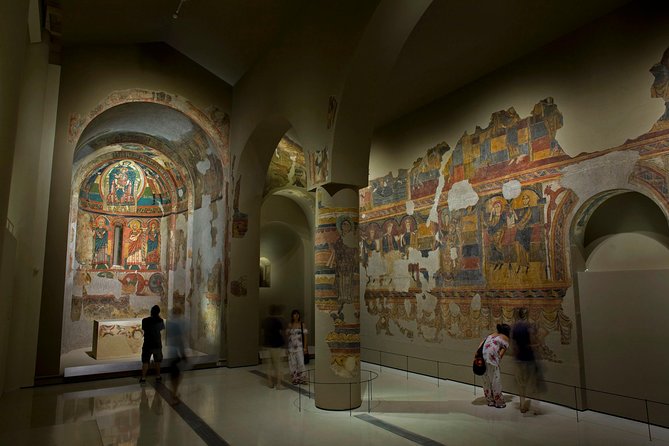
The great surprise at Barcelona’s MNAC is not just the art. It is the setting: a grand palace on Montjuïc Hill, with broad city views and galleries that trace roughly 1,000 years of Catalan, Spanish, and European art. The Romanesque frescoes, displayed inside reconstructed church interiors, are the museum’s essential stop.
I like the freedom to move at your own pace, and I like the mix of famous names such as Titian, Goya, Gainsborough, and Gaudí with works you are unlikely to see elsewhere. The main caution is that this is admission only, not a guided tour. You will need to bring your own plan, and the museum is large enough to overwhelm a rushed visit.
Key points before you book
- Romanesque frescoes in reconstructed churches: See medieval wall paintings in settings that help you understand how they originally looked.
- A broad 1,000-year art tour: Move from Romanesque and Gothic works through Renaissance, Baroque, Romantic, and modern Catalan art.
- Gaudí’s furniture collection: Look for curved wooden chairs, doors, and other Modernist pieces beyond the architect’s famous buildings.
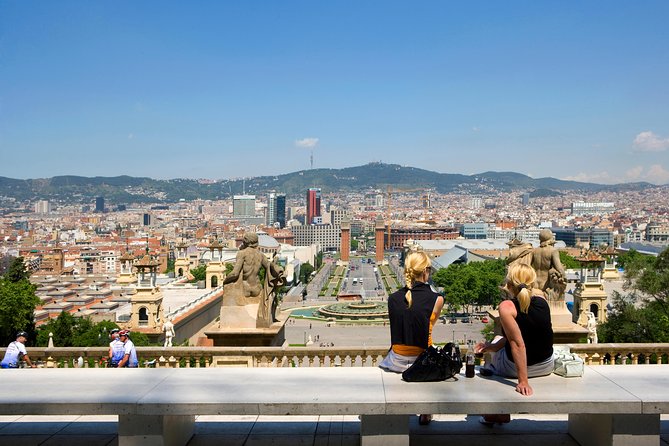
- Montjuïc views included: The palace, gardens, roof terrace, and city outlooks are part of the appeal.
- Self-guided and flexible: Spend roughly three hours, or stay longer if you want to read and explore every section.
- Check hours and free-entry rules: Sunday closing times and free admission periods can affect the value of a prepaid ticket.
Why MNAC deserves a place in your Barcelona plans
Barcelona has plenty of museums devoted to one artist or one period. MNAC gives you a wider picture. Its collection moves from medieval religious art to Catalan Modernism, with European painting and sculpture filling the centuries between.
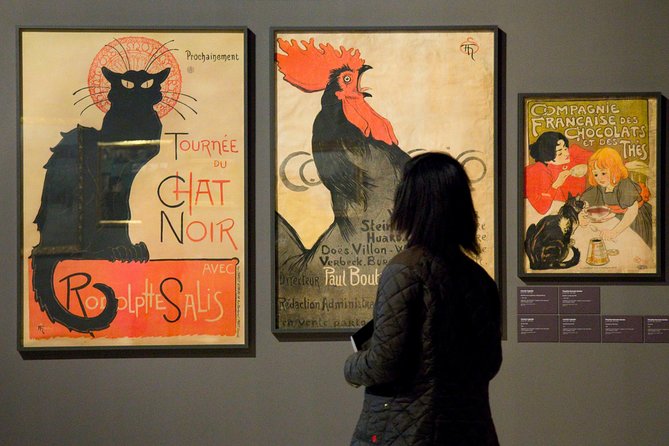
That makes this a particularly useful museum if you want context for Barcelona. You may already plan to see Gaudí’s architecture, but the Modern Art galleries show how Catalan artists worked across painting, furniture, posters, sculpture, and decorative art. The museum also gives you a better sense of the art that once filled churches and palaces across the region.
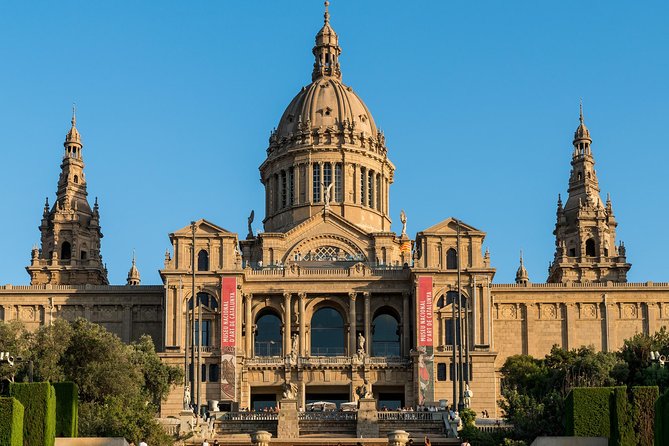
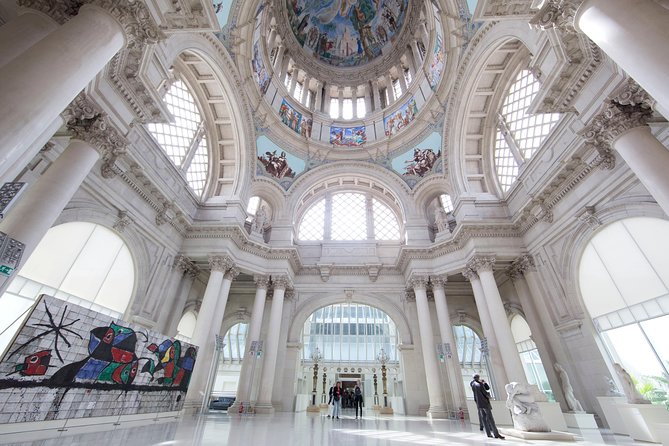
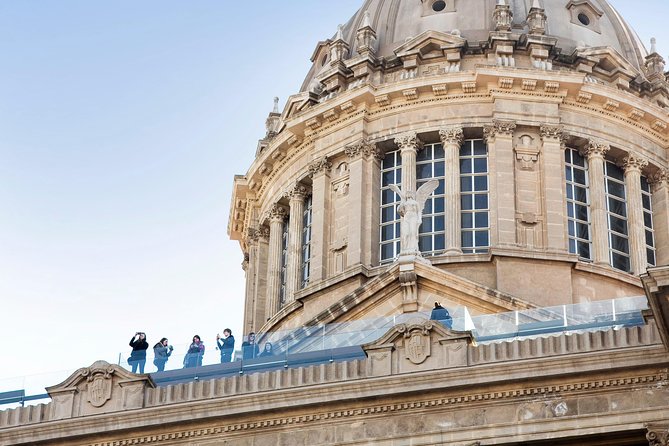
The building itself helps set the tone. MNAC occupies the National Palace on Montjuïc, an imposing structure with formal facades, towers, gardens, and grand interior spaces. You can enjoy the architecture even if your attention span for medieval altarpieces runs short.
I would allow at least three hours. A quick visit can cover the main periods, but the collection is large, and the building takes time to cross. If you enjoy art museums, four hours is quite reasonable, especially if you include the roof terrace, café, or restaurant.
More Barcelona Museums and Galleries:
- Barcelona: FC Barcelona Museum “Barça Immersive Tour” Ticket
★ 4.4 · 10,944 reviews - Barcelona: Park Güell and Gaudí House Museum Entry Ticket
★ 4.5 · 6,326 reviews - Barcelona: Picasso Museum Skip-the-Line Guided Tour
★ 4.5 · 3,355 reviews
Getting to the National Palace on Montjuïc
The museum sits above Barcelona in the Montjuïc area, rather than in the old center. It is near public transportation, and the location works well as part of a larger Montjuïc day.
The approach matters. The palace, open spaces, and views make this feel like more than a single indoor attraction. You can pair the museum with Parc de Montjuïc, spend time in the gardens, and enjoy the outlook over the city.
The ticket includes access to the museum, while the nearby Montjuïc area costs nothing to explore. Set aside about an hour for the park and surroundings if you want to make the most of the setting. The broad views are one of the most repeated reasons to come here, even for people who are less interested in every gallery.
Bring sensible shoes if you plan to walk around Montjuïc before or after the museum. The supplied information does not specify a particular entrance route, so follow the signs and allow time to reach the palace from your transport stop.
Start with the Romanesque frescoes
If you have limited time, begin with the Romanesque collection. These frescoes are the museum’s signature works, and they are displayed in reconstructed church interiors rather than simply hung on modern gallery walls.
That presentation changes the experience. You can see how large-scale religious images occupied walls and ceilings, rather than viewing each painting as an isolated panel. The arrangement also makes the scale of medieval art easier to grasp.
The famous 12th-century Christ in Majesty is a natural first target. Christ sits on a rainbow, rendered in a luminous, formal style that feels both powerful and strange to modern eyes. Even if religious art is not normally your favorite, this work gives you a clear sense of why the collection matters.
The Romanesque rooms can feel repetitive if you prefer portraits, landscapes, or secular scenes. Much of the art was made for churches, so the subjects are heavily religious. I would treat that repetition as part of the story, then move on when your attention starts to fade.
From Gothic altarpieces to European masters
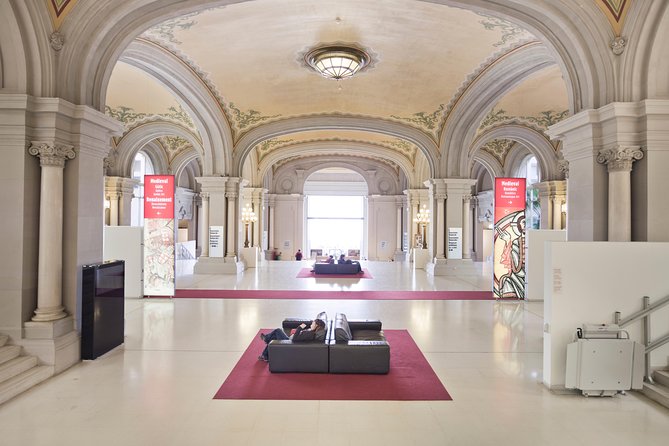
After the Romanesque galleries, continue through the later periods. The museum’s layout follows a broad chronological path, making it fairly easy to understand which era you are entering.
The Gothic, Renaissance, and Baroque sections expand the visual range. You will see paintings and sculptures from Europe between the 1400s and 1900s, including works linked with Canaletto, Titian, and Goya. Gainsborough is also represented.
Do not expect a museum built around one universally famous masterpiece in the way Madrid’s Prado or Paris’s Louvre is. MNAC’s strength is the way it brings Catalan art into a larger European story. Some rooms will feel familiar, while others introduce artists and subjects that are less visible outside Spain.
The museum is a good choice if you enjoy comparing periods. You can watch religious painting become more dramatic, notice changes in portrait style, and see how decorative arts gain importance. The variety also helps break up the medieval material.
More Tickets in Barcelona:
- Barcelona: Park Güell Admission Ticket
★ 4.4 · 76,534 reviews - Barcelona Aquarium: Entry Ticket
★ 4.3 · 13,335 reviews - Barcelona: Sagrada Familia Skip-the-Line Entry Ticket & Tour
★ 4.8 · 12,789 reviews - Park Guell Guided Tour with Skip the Line Ticket
★ 4.5 · 6,996 reviews
The modern Catalan collection and Gaudí’s furniture
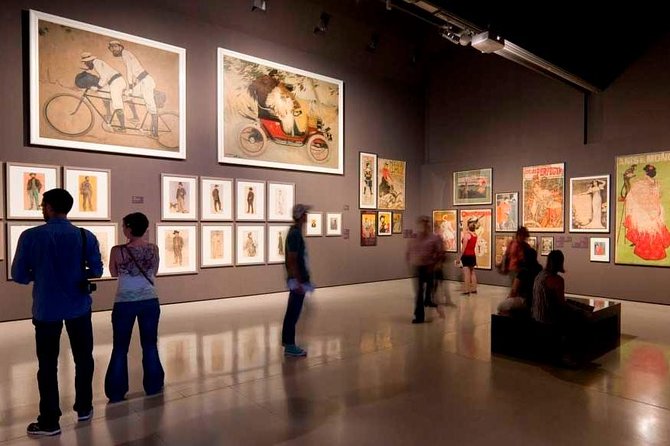
The Modern Art section is where many visitors find the museum’s most local character. It includes paintings, sculptures, posters, and Art Nouveau works by Catalan artists from the 19th and 20th centuries.
The Gaudí furniture deserves special attention. Look for sinuous wooden chairs, doors, and other pieces that show his ideas in smaller, more practical forms. Seeing the furniture alongside paintings and decorative objects helps you understand Modernism as a broad design movement, not just a collection of unusual buildings.
This section is also useful if your Barcelona plans already include Gaudí sites. You will see another side of the same creative world, one that involves touch, shape, wood, and daily life. The pieces are easier to study here than they are in a busy architectural interior.
Temporary exhibitions may add another reason to visit, but they change over time. One particularly well-received exhibition focused on war propaganda, showing that the museum’s program can extend beyond its permanent collection. Do not book solely for a temporary display unless you confirm its dates separately.
A self-guided visit, not a guided tour
This ticket gives you admission, not a guide. No guided tour is included, and the audio guide is also not included in the basic price.
That arrangement suits independent visitors. You can linger over Christ in Majesty, skip a room that does not interest you, or spend more time with the Gaudí furniture without following a group. You also avoid the fixed pace and meeting point that come with a guided excursion.
The tradeoff is simple: you need to create your own route. The museum has an easy-to-read map, which helps you understand the different sections. A free app is also available with information about the art, although audio features may not work perfectly on every phone or for every visitor.
I would download anything you plan to use before entering and bring headphones if you want commentary. Since the ticket is offered in English but does not include a guide, do not expect a staff member to lead you through the collection in English.
How much time should you allow?
Three hours is a sensible first estimate. That gives you enough time for the major Romanesque rooms, selected Renaissance and Baroque works, the Modern Art section, and a look at the building.
Art lovers should consider four hours. One visitor spent that long and still found the museum rewarding. The collection is spread across many periods, and the palace itself gives you plenty to inspect between rooms.
If you have only one hour, focus on three things:
- The Romanesque frescoes and Christ in Majesty
- A short selection from the Renaissance and Baroque rooms
- The Modern Art galleries, especially the Gaudí furniture
The roof terrace is worth planning rather than treating as an accidental extra. It offers panoramic views, and one practical tip is to go early if you want to avoid a wait for the small elevator. A full roof visit can take longer than expected, so do not leave it until the last few minutes before closing.
Ticket value at $14.48
At $14.48 per person, the ticket is reasonably priced for a major museum in a landmark building, especially if you use the full three hours and include the views and Montjuïc setting.
The value is strongest when you want a planned visit at a busy time. Advance tickets may help you avoid a long walk-up line, and some visitors found the pre-purchased entrance especially useful on hot days. The actual redemption process can require exchanging the voucher at the ticket office before proceeding inside, so this is not always a completely direct barcode scan at the door.
There is an important catch. Some dates offer free admission, including certain first Sundays of the month and other no-charge periods mentioned in visitor information. Seniors may also qualify for free entry. Rules and hours can change, so check the museum’s current conditions before paying for a third-party ticket.
That is also why you should check Sunday hours carefully. One serious problem arose when the museum closed at 3 p.m. on a Sunday instead of the expected later time. If your visit falls on a Sunday, verify the closing hour and arrive early.
Free cancellation is available if you cancel at least 24 hours before the experience start time. Changes made inside that period are not accepted for a refund.
Food, gardens, and the Montjuïc setting
You do not need to leave immediately after seeing the last gallery. The palace has gardens, views, a café, a shop, and an on-site restaurant.
The restaurant can make the visit feel like a complete half-day outing, though the menu prices may seem high. The museum shop is a useful place to browse for an art-related gift, especially if you want something connected to Catalan design rather than a generic souvenir.
Parc de Montjuïc adds another hour of easy sightseeing. The grounds are scenic, and some people may enjoy them more than the collection itself. That is not a criticism of the museum so much as a reminder that this is a good location for a slower Barcelona day.
A fountain and music show may also take place near the palace on certain evenings. The exact schedule is not included here, so check locally if you hope to combine the museum with a late-night fountain visit.
Who will enjoy MNAC most?
I would recommend this ticket to art lovers, architecture fans, and anyone who wants a strong introduction to Catalan art. It is also a good fit for repeat visitors who have already seen the most famous Gaudí buildings and want a broader cultural picture.
Families can manage it because the visit is flexible. You can shorten the medieval section, take a break outdoors, and use the views as a reward. The sheer size of the museum may be tiring for young children, so three hours should not be treated as a requirement.
This is less ideal if you want only famous Spanish painters. The museum has Goya, Titian, Canaletto, Gainsborough, and other important names, but its purpose is wider. Much of the collection focuses on Catalan art, church art, decorative pieces, posters, and regional culture.
It may also disappoint if you dislike religious subjects. The Romanesque and Gothic collections contain a large amount of religious material, and that is central to the museum rather than a small side display.
Should you book this MNAC ticket?
Book it if you want a flexible museum visit in a remarkable palace, care about Catalan art, or plan to spend time on Montjuïc. The Romanesque frescoes, Gaudí furniture, gardens, roof terrace, and city views give you several good reasons to come, even if one section is not your favorite.
Before paying, check the date for Sunday hours, free-entry periods, and senior concessions. If your date falls during a free period, the $14.48 ticket may add little value. On a busy day, though, advance admission can save time and give your schedule some structure.
For most visitors, I would plan three hours, arrive early, begin with the Romanesque rooms, and save time for the Modern Art galleries and roof terrace. That approach gives you the museum’s strongest experiences without trying to inspect every painting.
FAQ
How long does the MNAC admission experience last?
The suggested visit lasts about three hours, but you decide how long to stay. Art lovers may want four hours because the museum contains many periods and collections.
What does the ticket include?
It includes admission to the permanent collection of the National Art Museum of Catalonia. The museum is located in the National Palace on Montjuïc.
Is a guided tour included?
No. This is an independent visit. A guided tour is not included.
Is an audio guide included?
No. The audio guide is not included with the admission ticket. A free museum app may provide additional information about the art.
What kind of art can I see at MNAC?
You can see Catalan, Spanish, and European art from roughly 1,000 years, including Romanesque frescoes, Renaissance and Baroque works, modern Catalan art, posters, sculpture, decorative art, and Gaudí furniture.
Are the Romanesque frescoes displayed in a special setting?
Yes. Many of the frescoes are shown in reconstructed church interiors, which helps you understand their original scale and purpose.
Can I visit Parc de Montjuïc during this experience?
Yes. Parc de Montjuïc is listed as part of the visit, and you can spend about an hour exploring the surrounding area and grounds.
Is the ticket mobile?
Yes. A mobile ticket is provided, and confirmation is received when you book. The voucher may need to be exchanged at the museum ticket office.
Can I cancel for a refund?
Yes, if you cancel at least 24 hours before the experience start time. Cancellations or changes made less than 24 hours in advance are not accepted for a refund.
Recently added around Barcelona
- Montserrat very early : Hiking, Abbey, very small group★ 5.0 · 127 reviews
- Guided Private Yacht Tour in Barcelona Spain★ 5.0 · 6 reviews
- Private Tour from Barcelona to Montserrat (with guide)★ 4.5 · 6 reviews
- Private Tour from Barcelona to Costa Brava (with guide)★ 5.0 · 5 reviews
- Andorra Tour★ 4.0 · 7 reviews
- Barcelona Gaudi Tour: Sagrada Familia, Casa Batllo & Casa Mila★ 5.0 · 4 reviews
- Street Art, Sculptures & Crime Stories Walking Tour – Barcelona★ 5.0 · 11 reviews
- Wine Tasting in Barcelona (Catalan Varieties) Small Groups★ 5.0 · 10 reviews
Museums, compared.

FC Barcelona Museum “Barça Immersive Tour” Ticket
Read our review →
Park Güell and Gaudí House Museum Entry Ticket
Read our review →
Girona & Dali Museum Small Group Tour with Pick-up from Barcelona
Read our review →
Dali Museum, House & Cadaques Small Group Tour from Barcelona
Read our review →Browse the lists this tour appears in