
Reviewed · BARCELONA FOOD TOURS
Made in Catalonia, Barcelona with Culinary Backstreets
Barcelona’s Catalan character comes through most clearly at the table. This five-and-a-half-hour walk starts with coffee and traditional pastries, then moves through La Boqueria, Mercat de la Llibertat, and a string of local food stops in Gràcia. It is less about famous sights than about how people shop, eat, and spend an ordinary day.
I like the small maximum of seven people, which gives the guide room to answer questions and adjust the pace. I also like the full meal structure: breakfast, snacks, and lunch are built in, so you get much more than a quick market sampling. The main drawback is simple: you will walk a lot, and the early 9 a.m. start may not suit late risers.
Key points at a glance
- Breakfast starts the day: Coffee and traditional pastries set the tone in a century-old sweets shop.
- Two markets show different sides of Barcelona: La Boqueria is famous, while Mercat de la Llibertat offers a more neighborhood-focused stop.
- Gràcia is the real focus: The route uses food to explain Catalan habits, local businesses, and daily life.
- A small group makes a difference: The maximum is seven people, with guides such as Ivan, Pamela, Senem, and Lynda leading past groups.
- The food can be adventurous: Seasonal specialties such as snails and mushrooms may appear, with some flexibility around preferences.
- Wear comfortable shoes: The walk lasts about 5.5 hours and includes many stops on foot.
What this Catalan food walk is really about
Made in Catalonia is not a sightseeing tour with a few snacks tacked on. It is a full morning and early afternoon built around the food culture of Barcelona, especially the Gràcia neighborhood.
You begin at Plaça de Gal·la Placídia at 9 a.m. and return to the same meeting point. From there, your guide leads you through markets, shops, and eating places, explaining how Catalan food fits into local life.
The political question of Catalan identity sits in the background, but the tour approaches it through ordinary habits rather than debate. You learn about the region through what people buy, cook, share, and eat. That makes the subject easier to understand and far more enjoyable.
The group size matters here. With no more than seven people, you are not trailing behind a flag or waiting for a large crowd to squeeze around a stall. A small group also makes it easier to ask about ingredients, customs, and dishes that may be new to you.
More Barcelona Food Tours:
- Montserrat Half-Day Tour with Tapas and Gourmet Wines
★ 5.0 · 7,359 reviews - Montserrat & Cogwheel Train, Gourmet Wine Tasting & Tapas/Lunch
★ 5.0 · 6,290 reviews - Barcelona Food Tour: Tapas, Paella, Sangria & 8+ Local Tastings
★ 5.0 · 1,275 reviews
Breakfast at a century-old sweets shop
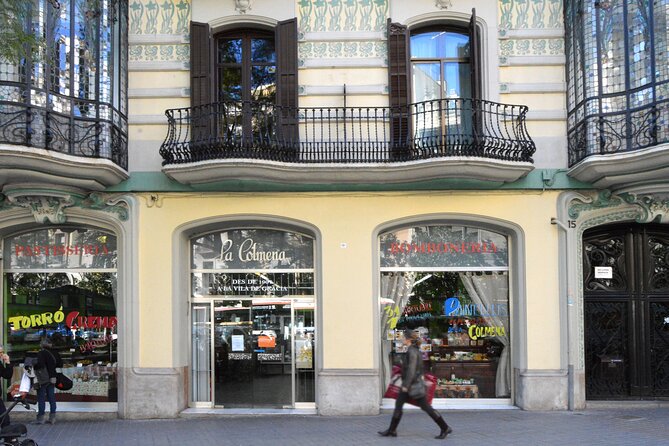
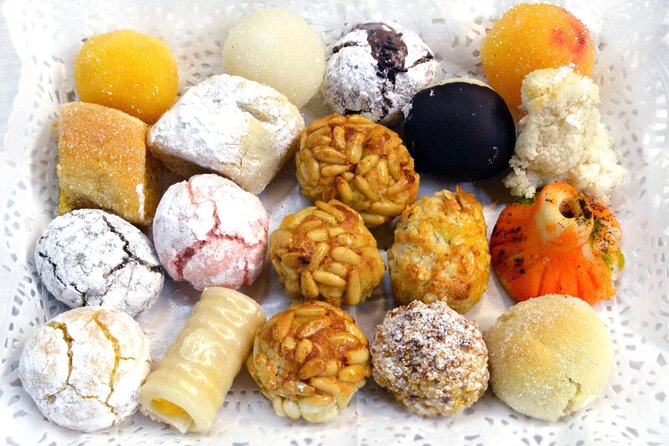
The first food stop sets a relaxed pace. You begin with coffee and traditional pastries at a sweets shop that has been operating for a century.
That opening is useful for two reasons. First, it gives you a proper breakfast before the market tastings begin. Second, it introduces the idea that Catalan food is not only about big restaurant meals. Pastries, coffee, and small daily rituals matter just as much.
You may also find this a good moment to get comfortable with the group and your guide. Past guides have included Ivan, Pamela, Pam, Senem, Sinem, and Lynda. The exact guide can vary, but the strongest descriptions consistently point to friendly, food-focused leaders who connect each bite with the neighborhood around it.
Do not expect a long sit-down breakfast. This is the beginning of a moving food walk, so the meal unfolds in stages. If you prefer a large breakfast, you may want to eat lightly before meeting the group, but avoid arriving completely full. The tour is designed around repeated tastings.
La Boqueria, Barcelona’s famous market stop
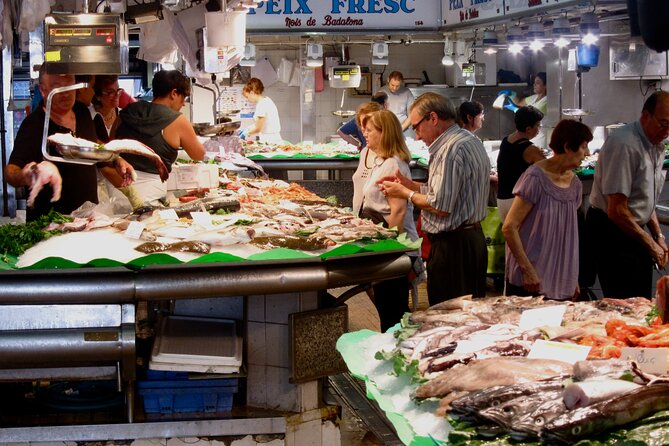
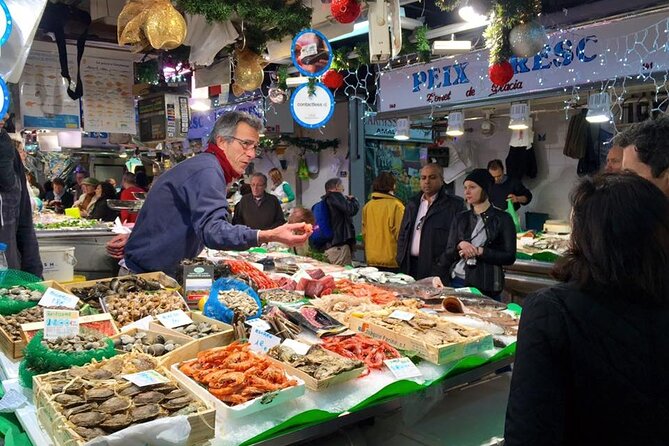
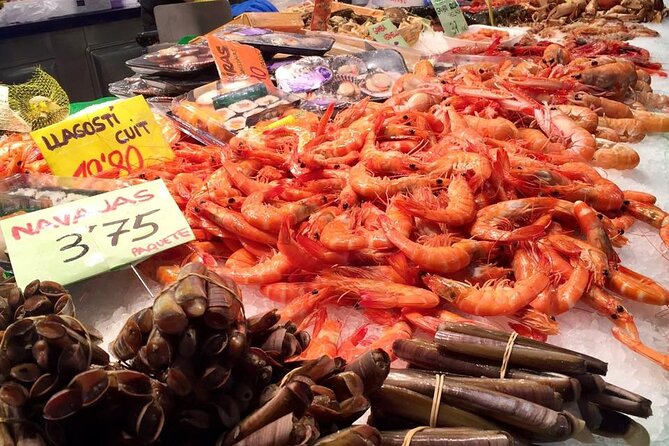
The route then spends about two hours around Mercat de la Boqueria and the surrounding food scene. La Boqueria is one of Barcelona’s best-known markets, and it can be busy and highly visited. That is part of its appeal, but it also means this section may feel less quiet and local than the later stops.
A guide makes the market easier to read. Instead of wandering past colorful displays without context, you can ask what people buy for home cooking, which products matter in Catalan cuisine, and how market food fits into the city’s daily routine.
The tastings are the point, but the setting gives them meaning. You are not simply checking off cheese, cured products, pastries, or other market foods. You are seeing how food is sold and discussed in a place that has long served Barcelona residents as well as curious visitors.
The market portion also helps you understand the difference between a food market and a restaurant. You will likely move between stalls and shops rather than sit in one place for a full meal. That keeps the morning varied, though it can be less restful than a traditional food tour based around tables.
Because the tour lasts several hours, pace yourself. You do not need to eat every bite quickly, and it is sensible to tell the guide about preferences or restrictions at the start. One past guide, Pamela, was able to adjust some choices around seasonal foods such as snails and mushrooms. That suggests the experience can have some flexibility, but you should still communicate your needs clearly before the tastings begin.
Mercat de la Llibertat and the neighborhood view
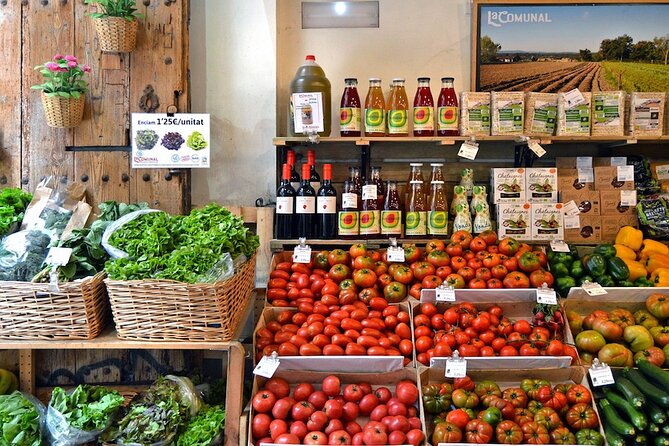
After the famous market, the experience moves to Mercat de la Llibertat. This stop lasts about an hour and offers a different feel from La Boqueria.
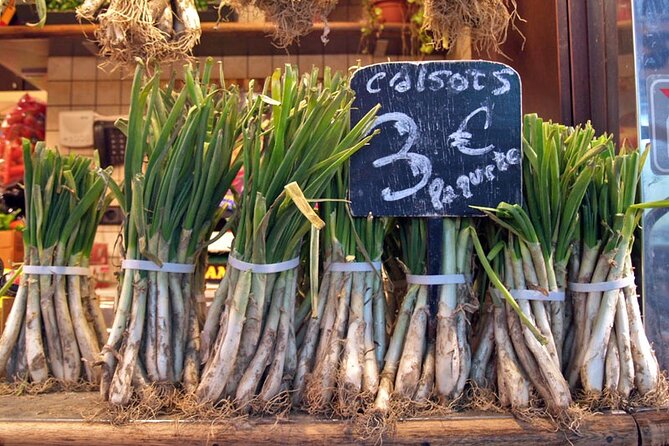
Mercat de la Llibertat is one of Barcelona’s public markets, but it is less widely known outside the city. The guide introduces you to vendors and lets you taste some of their offerings. That personal contact is valuable because it shifts the focus from market architecture and display to the people who work there.
I especially like this part of the route because it helps correct the usual Barcelona pattern. Many visitors see the city through major landmarks and central streets. This tour gives you time in a neighborhood market where shopping and eating are tied to local routines.
You should not expect every stop to be polished or theatrical. The appeal is the mix of the rustic and the refined. Some places may feel simple, while others are more carefully presented. That contrast tells you more about the food culture than a uniform series of restaurants would.
The market visit also breaks up the walking. You continue on foot, but the tastings and conversations give the route a natural rhythm. If you like food tours that explain ingredients, vendors, and neighborhood habits, this is likely to be one of the most rewarding sections.
A different sort of day out in Barcelona:
- Barcelona: Park Güell Admission Ticket
★ 4.4 · 76,534 reviews - Barcelona: Casa Batlló Entry with Self-Audioguide Tour
★ 4.7 · 25,359 reviews - Barcelona: 24 or 48-Hour Hop-On Hop-Off Bus Tour
★ 4.4 · 20,872 reviews - Barcelona: Park Guell Guided Tour with Skip The Line Entry
★ 4.7 · 17,563 reviews
Passeig de Gràcia and the Catalan kitchen
The final part centers on Passeig de Gràcia and the wider Gràcia area. The route includes roughly a dozen food and cultural stops, ranging from modest local businesses to more refined places.
The supplied route description places strong emphasis on Gràcia, and that is important when deciding if this tour suits you. This is not a general survey of every part of Barcelona. It is a close look at one area and its Catalan identity.
You will learn about the Catalan kitchen as you eat, but you will also hear about day-to-day life in the neighborhood. The food acts as a guide to customs, shopping, and social habits. Guides such as Ivan and Lynda have been praised for pairing local history with each tasting, while Pamela has been noted for showing a less tourist-focused side of Barcelona.
Passeig de Gràcia is associated with some of Barcelona’s grandest streets and architecture, but this experience does not treat it only as a photo stop. The food route gives you a more practical view. You see how a neighborhood works at street level, where shops and markets support ordinary meals.
Expect plenty of movement. One participant specifically warned that comfortable shoes are essential, and that is sound advice. Five and a half hours on foot can be tiring even when the food is excellent. You may also want water between tastings, although the core breakfast, lunch, snacks, and drinks are provided as part of the experience.
How much food do you get?
The tour includes breakfast, lunch, snacks, and local specialties across the morning and early afternoon. It is meant to replace a substantial part of your day’s eating, not serve as a quick appetizer crawl.
The exact dishes are not fixed in the information provided, and that is probably useful. Markets change with the season, and a flexible food route can respond to what is available. You might encounter familiar Catalan staples, or you might be offered something less expected.
The seasonal examples of snails and mushrooms show the range. If you enjoy trying unfamiliar foods, you can treat those moments as part of the fun. If you are cautious with new dishes, you can still take part, but tell your guide what you are comfortable eating.
This is also a good choice for solo visitors. The group limit keeps the setting social without making it hard for one person to join in. One solo participant found the changing food stops and steady movement helpful, especially because there was always something to taste or discuss.
Guide quality and the human side of the tour
The guide is central to the experience. Food alone does not explain Catalan culture, and the route depends on someone who can connect a pastry, market stall, or neighborhood shop to the larger story.
Ivan has been recognized for combining local cuisine with Barcelona history in an easygoing way. Senem has been praised for her grasp of food and Catalan culture, while Pamela and Lynda have also led warmly received walks. Those names do not guarantee who will lead your departure, but they show the sort of guide the company uses.
You should expect conversation rather than a formal lecture. The best moments are likely to come when you ask why a dish is eaten, how a market serves the neighborhood, or what makes Catalan food different from other Spanish cooking.
The small group helps the guide respond to personal interests. If you care more about markets than politics, or more about food traditions than architecture, you can steer some of the discussion. That personal attention is difficult to provide on a large walking tour.
Is $160 a fair price?
At $160 per person, this is not a budget food walk. You are paying for about 5.5 hours, a small group, a guide, and enough food to cover breakfast, lunch, snacks, and drinks at multiple stops.
The value depends on how you normally explore a city. If you would spend a morning buying food on your own, you might spend less in cash. But you would not automatically get introductions to vendors, a route through two markets, cultural context, or help deciding what to taste.
The limited group is the strongest value point. Seven people or fewer allows a more personal experience than the large groups common in central Barcelona. The food also covers a meaningful portion of the day, so you should not need to budget for a separate breakfast and full lunch.
I would not book this tour solely to save money. I would book it if you want guidance, context, and a carefully planned introduction to Catalan food. For someone who values local explanation and does not mind paying more for a small group, the price is reasonable.
Timing, meeting point, and practical matters
The tour starts at 9 a.m. at Plaça de Gal·la Placídia, 30, in Gràcia. It returns to the same meeting point, which makes the ending simple if you plan another activity afterward.
The experience is offered in English and uses a mobile ticket. It is near public transportation, but you should still allow time to find the exact meeting point. One person had trouble locating the guide because the meeting instructions were not clear enough, so arrive early and check the details carefully.
Most people can participate, and service animals are allowed. The tour requires suitable weather, and it also has a minimum number of participants. If poor weather or low numbers force a cancellation, you can choose another date or receive a full refund.
You can cancel for a full refund up to 24 hours before the start time. Changes or cancellations inside that 24-hour window are not accepted for a refund.
Who should book Made in Catalonia?
I would recommend this walk to you if food is one of your main ways of understanding a place. It also fits visitors who want a neighborhood-focused Barcelona experience rather than a standard run through major sights.
It is especially suitable for:
- Solo visitors who want a friendly small-group setting
- Couples and families interested in local food and culture
- Repeat Barcelona visitors looking beyond the most famous attractions
- Curious eaters willing to try seasonal or unfamiliar specialties
- Anyone who likes a full morning of walking with frequent food stops
I would think twice if you dislike long walks, prefer a fixed restaurant meal, or want a tour centered on architecture. The experience includes markets and Passeig de Gràcia, but food and neighborhood life remain the main subjects.
Should you book it?
Book Made in Catalonia if you want Barcelona explained through breakfast, markets, vendors, and everyday Catalan cooking. The combination of two public markets, Gràcia food stops, and a maximum of seven people gives the tour a more personal feel than a standard city food crawl.
Bring comfortable shoes, arrive early, and keep an open mind about the menu. If $160 feels high, remember that the price includes a half-day of food and guiding. If you want a cheap sampling tour, choose something else. If you want a thoughtful, filling introduction to Catalan life, this is a strong choice.
FAQ
How long is the Made in Catalonia tour?
The experience lasts approximately 5 hours and 30 minutes. It starts at 9 a.m. and ends back at the meeting point.
Where does the tour start?
The meeting point is Plaça de Gal·la Placídia, 30, in the Gràcia neighborhood of Barcelona.
What food is included?
The tour includes a Catalan breakfast, lunch, snacks, coffee, traditional pastries, local specialties, and tastings at markets and other food stops. Specific dishes can vary.
How many people can join the tour?
The group has a maximum of seven participants.
Is the tour offered in English?
Yes. The experience is offered in English and uses a mobile ticket.
What happens if I need to cancel?
You can cancel up to 24 hours before the start time for a full refund. Cancellations or changes made less than 24 hours before the start time are not refunded. If poor weather or an insufficient number of participants causes the tour to be canceled, you can choose another date or receive a full refund.
Recently added around Barcelona
- Montserrat very early : Hiking, Abbey, very small group★ 5.0 · 127 reviews
- Guided Private Yacht Tour in Barcelona Spain★ 5.0 · 6 reviews
- Private Tour from Barcelona to Montserrat (with guide)★ 4.5 · 6 reviews
- Private Tour from Barcelona to Costa Brava (with guide)★ 5.0 · 5 reviews
- Street Art, Sculptures & Crime Stories Walking Tour – Barcelona★ 5.0 · 11 reviews
- Andorra Tour★ 4.0 · 7 reviews
- Barcelona Gaudi Tour: Sagrada Familia, Casa Batllo & Casa Mila★ 5.0 · 4 reviews
- Wine Tasting in Barcelona (Catalan Varieties) Small Groups★ 5.0 · 10 reviews
Barcelona Food Tours, compared.
Montserrat & Cogwheel Train, Gourmet Wine Tasting & Tapas/Lunch
Read our review →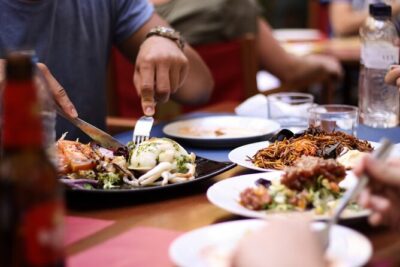
Barcelona Food Tour: Tapas, Paella, Sangria & 8+ Local Tastings
Read our review →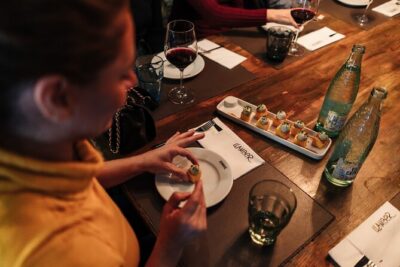
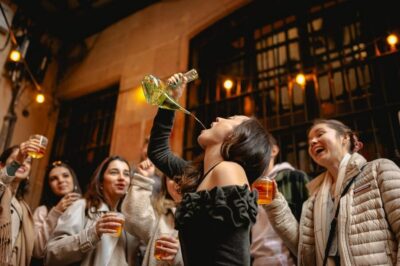
El Born Food Walking Tour with Tapas and Drinks
Read our review →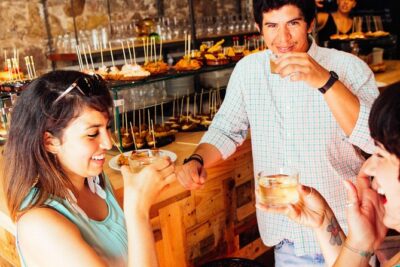
Barcelona Private Food Tour With Locals: 6 or 10 Tastings
Read our review →
Ultimate Barcelona Food Tour with visit to a Local Market
Read our review →
Barcelona Food Tour: Tapas, Drinks and Delights with a Local
Read our review →
Barcelona Gourmet Food & Wine Tour with Local Expert
Read our review →Browse the lists this tour appears in