Reviewed · PRIVATE
Private Tour Spanish Civil War & Franco’s Dictatorship
Barcelona’s Civil War past comes into sharper focus on this private walk through the city center. You’ll connect ordinary streets with the fight over the Telefonica building, George Orwell’s wartime Barcelona, working-class resistance in Raval, and the bombing damage still visible at Plaça Sant Felip Neri.
I like the private format, which gives you room to ask questions and follow the subjects that interest you most. I also like the route’s mix of famous places and small clues, including a remnant of the International Brigades at Santa Maria del Pi. The drawback is the price: at $181.41 per person, it makes the most sense for a small group that values personal attention.
Key points
- See Civil War Barcelona as a connected story: The route links political conflict, street fighting, social unrest, military aid, bombing, and dictatorship.
- Start at Plaça de Catalunya: Learn how the Telefonica building became part of the struggle during the war.
- Walk through Orwell’s Barcelona: La Rambla and the Raval reveal the city’s competing political forces.
- Look for overlooked evidence: Santa Maria del Pi holds a little-known connection to the International Brigades.
- End at visible bombing damage: Plaça Sant Felip Neri gives the tour its most immediate physical reminder of wartime violence.
- Ask questions freely: Since only your group participates, the guide can adjust the discussion to your interests.
Why this private Barcelona history walk matters
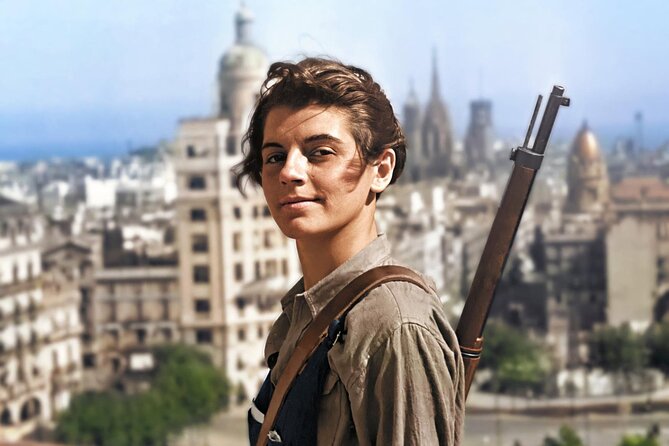
The Spanish Civil War is easy to miss on a first visit to Barcelona. You see Gaudí, markets, churches, and handsome boulevards, but the political crisis that transformed the city is less obvious. This tour helps you read the streets as places of conflict rather than just scenic backdrops.
I like that the walk covers both the war itself and the long period that followed it. You are not given a narrow military account. The route also deals with class struggle, anarchism, civilian suffering, foreign involvement, cultural oppression, and the difficult end of the conflict.
The private arrangement is important here. This is a subject that can raise questions about politics, ideology, violence, and memory. With your own guide, you can pause when a topic catches your attention instead of staying with a fixed group discussion.
The tour is conducted in English and lasts about two and a half hours. The listed stops add up to roughly that amount, so expect a steady walking experience rather than a quick introduction. Wear comfortable shoes, and leave room in your schedule for the route to take its full length.
More Private in Barcelona:
- Montserrat Monastery Small Group or Private Tour Hotel pick-up
★ 5.0 · 5,144 reviews - Tour Welcome Barcelona with Local Guide in Eco Tuk Tuk Private
★ 5.0 · 1,882 reviews - Barcelona Private Tour by Sidecar Motorcycle
★ 5.0 · 1,750 reviews
Plaça de Catalunya and the fight for Telefonica
The tour begins outside Foot Locker at Plaça de Catalunya, 20. This is a convenient central meeting point, close to public transportation and easy to reach from many parts of Barcelona.
The opening discussion focuses on the Telefonica building and the fight over it during the Spanish Civil War. That choice gives you a strong starting point because it shows how the conflict reached into the center of daily city life. A telephone building may sound ordinary, but communications were politically and militarily important. Control of such a site meant control over information and contact.
Your guide uses the square to set out the larger story before the walk moves into narrower streets. I find this useful because the war can otherwise seem like a string of disconnected events. Here, you begin with a specific struggle and then place it within the wider conflict.
The stop lasts about 30 minutes and has no admission charge. Since the discussion takes place outdoors, the weather matters. The experience requires good weather, and poor conditions can lead to a new date or a full refund.
La Rambla and George Orwell’s Barcelona

From Plaça de Catalunya, the route continues to La Rambla. This is one of Barcelona’s best-known streets, but the tour asks you to see it through the eyes of a wartime observer rather than as a shopping and sightseeing corridor.
You’ll visit the hotel where George Orwell stayed during the Spanish Civil War. The stop offers a useful link between the city’s street-level conflict and the international writers, journalists, and political observers who came to understand the war firsthand.
The discussion lasts around 20 minutes. That is enough time to introduce Orwell’s connection to Barcelona without turning the tour into a literary lecture. If you have read his account of the war, you’ll have a direct place to connect with it. If you have not, the stop still gives you a clear sense of why Barcelona drew so much outside attention.
I appreciate the way this part of the route keeps the focus on the city. Orwell is not treated as the entire story. Instead, his presence helps open a window onto the political divisions and uncertainty that shaped Barcelona at the time.
Raval, working-class hardship, and anarchism
At Plaça de Vicenç Martorell, the tour turns toward the Raval neighborhood. This section deals with working-class suffering, resistance, and anarchism, giving you a social view of the war that is often missing from broad political summaries.
The Raval was a key setting for the city’s working population, and the guide uses the area to discuss how hardship and political belief fed into resistance. You’ll hear about the distinctive role anarchism played in Barcelona and why the city’s political culture could not be reduced to a simple struggle between two sides.
This is one of the most useful stops for understanding the conflict from the point of view of people who lived through shortages, danger, and political upheaval. The focus is not only on leaders or armies. It is also on neighborhoods, workers, and residents who had to endure the consequences.
The stop takes about 20 minutes. The short time means the discussion will remain focused, but it also means you may want to ask direct questions. On a private tour, you can ask the guide to clarify political terms or explain how this part of the story connects with later repression.
A different sort of day out in Barcelona:
- Barcelona: Park Güell Admission Ticket
★ 4.4 · 76,534 reviews - Barcelona: Casa Batlló Entry with Self-Audioguide Tour
★ 4.7 · 25,359 reviews - Barcelona: 24 or 48-Hour Hop-On Hop-Off Bus Tour
★ 4.4 · 20,872 reviews - Barcelona: Park Guell Guided Tour with Skip The Line Entry
★ 4.7 · 17,563 reviews
Antic Hospital de la Santa Creu and the war’s human cost
The Antic Hospital de la Santa Creu brings the human cost of the war into view. This 15th-century hospital received wounded soldiers and civilians, so it provides a natural setting for discussing injury, medical care, and the impact of fighting on the city’s population.
The building itself also helps bridge the war and the dictatorship that followed. Here, the guide talks about the end of the conflict and cultural oppression under Franco’s rule. That wider time frame is one of the tour’s strengths. The story does not stop when the fighting ends.
You’ll spend about 20 minutes at this location. No entrance ticket is included or needed for the listed outdoor visit, and no food or drink is provided anywhere on the tour. Plan to eat before or after the walk rather than expecting a café break during it.
For me, this stop gives the route emotional weight without relying only on dramatic sights. A hospital connected the battlefield to civilian life. It also helps explain why the effects of the war continued through language, culture, and public life after the military conflict was over.
Santa Maria del Pi and the International Brigades
The Basilica de Santa Maria del Pi contains a little-known reminder of the Spanish Civil War in plain sight. The guide uses this stop to discuss the International Brigades, the foreign volunteers who came to fight in support of the Republican side.
This is exactly the kind of detail that makes a walking tour worthwhile. You might pass the basilica for its architecture or location, yet the wartime connection adds another layer to the place. The stop asks you to look closely and consider how an international conflict left traces in a local religious setting.
The discussion lasts around 30 minutes, making it one of the longer stops. That gives the guide time to explain who the International Brigades were and why their presence mattered. Since the tour is private, you can also ask about the relationship between foreign volunteers and the local political factions discussed earlier.
The stop helps broaden the story beyond Barcelona alone. The war was fought in Spain, but it also drew international involvement. That makes the route useful for anyone interested in the way political conflicts attract outside powers, idealists, and military volunteers.
Plaça Sant Felip Neri and the scars of aerial bombing
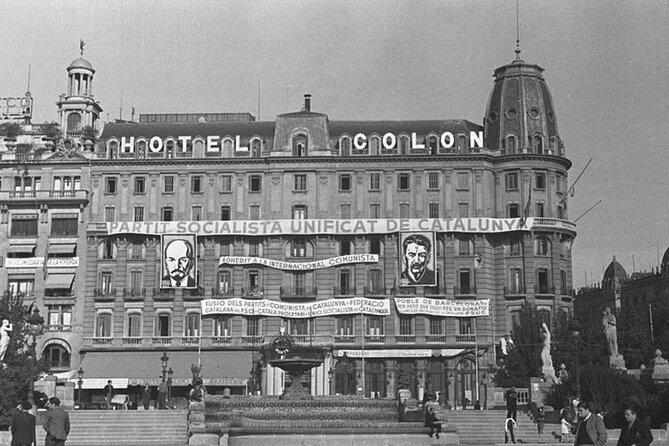
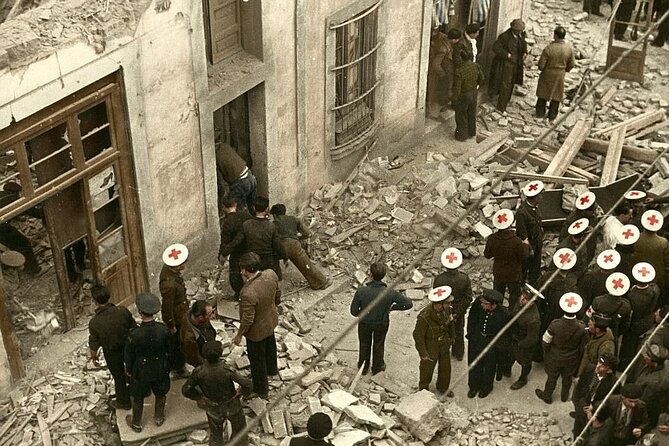
The final stop is Plaça Sant Felip Neri, where Barcelona has some of its most visible damage from aerial bombing. The guide discusses the tragic bombing there and the involvement of the Axis powers in the war.
This is likely to be the most powerful physical stop on the walk. Earlier locations connect the conflict to communications, politics, literature, hospitals, and international volunteers. Here, the marks on the square make the damage easier to grasp. You are not only hearing about bombing as a military tactic. You are standing in a place where the impact remains visible.
The discussion lasts about 30 minutes, giving the guide time to explain the bombing and the role of outside powers. That context matters because the Spanish Civil War was also a testing ground for military methods and international intervention.
The tour ends at Plaça Nova, close to the Cathedral. This is a practical finish. You are left in the historic center, where you can continue sightseeing or reach public transportation. The route does not return to the starting point, so keep the ending location in mind when planning your day.
What the private format adds
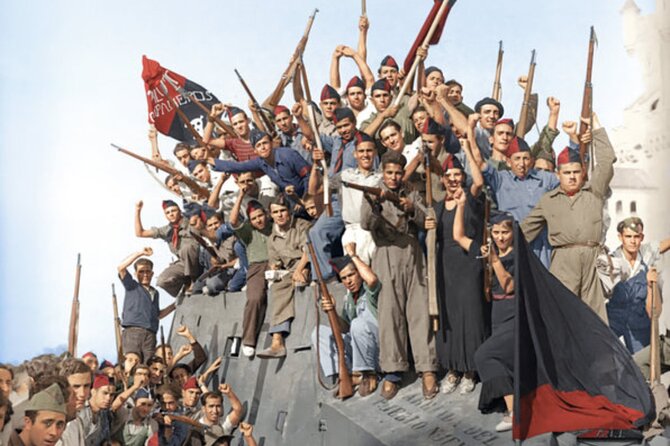
A private tour means only your group participates. That makes the $181.41 per-person price easier to assess. For one or two people, it is a major expense compared with a standard group walk. For a larger party, the cost may feel more reasonable because you are paying for a dedicated guide rather than a seat in a general departure.
I like the flexibility of the private format. Tour times can fit more easily around your schedule, and the guide can spend more time on subjects that matter to you. If Orwell interests you, you can ask for more context at La Rambla. If you want to understand anarchism or Franco’s cultural restrictions, you can use the Raval and hospital stops for follow-up questions.
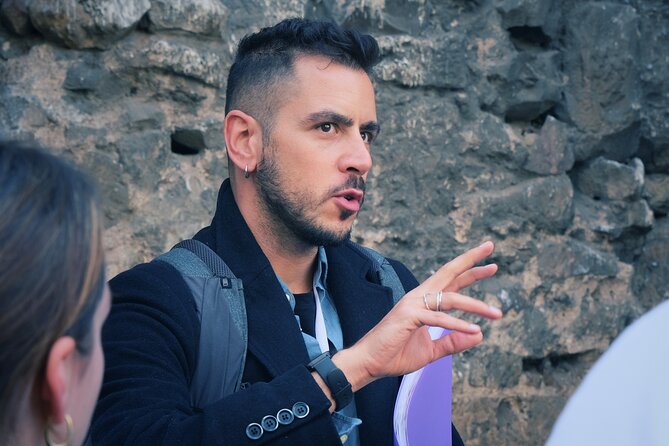
The guide is the main value of the experience. Yannis is specifically associated with the tour, and the available feedback describes him as passionate and highly informed, with a strong ability to explain the conditions that led to the Civil War. Since guides can vary, I would request Yannis when booking if that option is available, though the supplied details do not promise that he will lead every departure.
This is not a sightseeing tour with grand interiors or included attractions. Each stop is free, and much of the value comes from explanation, connections, and careful observation. You should book it for the guide-led interpretation, not for entry tickets or extras.
Timing, walking, and practical planning
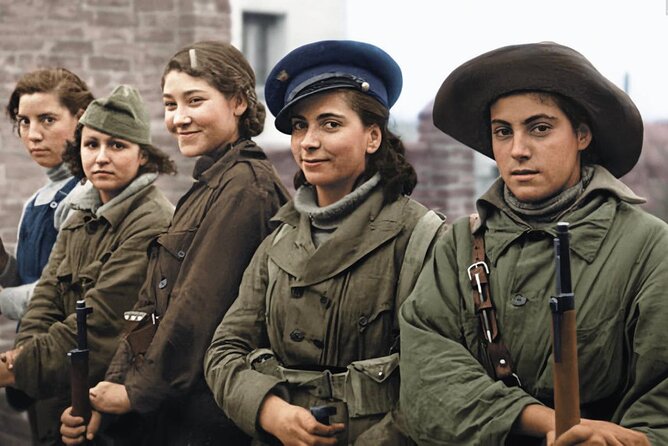
The experience lasts about two hours and 30 minutes. It is a walking route through central Barcelona, with six main stops and no included meal. You should arrive ready to stay outdoors and walk between locations.
The meeting point is at Foot Locker, Plaça de Catalunya, 20, in Ciutat Vella. The end point is Plaça Nova, also in Ciutat Vella, near the Cathedral. Because the start and finish differ, do not assume you will return to Plaça de Catalunya.
The tour is offered in English. Confirmation is normally received at booking, although bookings made within two days of the tour may take up to 48 hours to confirm, subject to availability. That is worth remembering if your Barcelona plans are being finalized at the last moment.
Service animals are allowed, and the activity is near public transportation. Most people can participate, but the route involves walking and outdoor stops. If mobility is a concern, ask about the route before booking rather than assuming every section will suit you.
You can cancel free of charge up to 24 hours before the start time for a full refund. Changes or cancellations made inside that 24-hour window are not accepted for a refund. If poor weather cancels the experience, you’ll be offered another date or a full refund.
Who will get the most from this tour
I would choose this walk if you want political and social context during a Barcelona visit. It suits readers of Orwell, students of modern European history, and anyone who wants to understand why the Civil War still matters in Catalonia.
It is also a good choice if you prefer a small, question-friendly experience. The private format works well for couples, families with older children, or friends who want to discuss the material at their own pace.
I would think twice if you want a relaxed stroll with only light historical commentary. The subject includes political violence, wounded civilians, repression, bombing, and dictatorship. It is serious material, and the walk gives it most of its time.
The price is the main question. At $181.41 per person, you are paying for a private guide and a focused route, not for meals, museum admission, or transport. If personal attention matters to you, the cost can be fair. If you are mainly looking for a low-cost introduction, a group tour or self-guided visit may suit your budget better.
Should you book the Spanish Civil War and Franco’s Dictatorship tour?
Book it if you want to understand Barcelona through the places where political conflict was lived: the Telefonica building, Orwell’s hotel, Raval, a wartime hospital, Santa Maria del Pi, and the bomb-damaged Plaça Sant Felip Neri.
I especially recommend it for visitors who value a strong guide and the freedom to ask questions. Request Yannis if possible, plan for the full two and a half hours, and remember that the walk ends near the Cathedral rather than at the starting point.
Skip it if you want major-ticket attractions, food, or a light city walk. This experience earns its price through interpretation and personal attention. For the right audience, it gives Barcelona a sharper, more human wartime story.
FAQ
How long does the tour last?
The tour lasts approximately two hours and 30 minutes.
Where does the tour begin?
It begins at Foot Locker, Plaça de Catalunya, 20, Ciutat Vella, Barcelona.
Where does the tour end?
It ends at Plaça Nova in Ciutat Vella, close to the Cathedral.
Is the tour private?
Yes. Only your group participates in the activity.
Is the tour offered in English?
Yes. The tour is offered in English.
What happens if bad weather cancels the tour?
You’ll be offered a different date or a full refund.
Recently added around Barcelona
- Montserrat very early : Hiking, Abbey, very small group★ 5.0 · 127 reviews
- Guided Private Yacht Tour in Barcelona Spain★ 5.0 · 6 reviews
- Private Tour from Barcelona to Montserrat (with guide)★ 4.5 · 6 reviews
- Private Tour from Barcelona to Costa Brava (with guide)★ 5.0 · 5 reviews
- Andorra Tour★ 4.0 · 7 reviews
- Barcelona Gaudi Tour: Sagrada Familia, Casa Batllo & Casa Mila★ 5.0 · 4 reviews
- Street Art, Sculptures & Crime Stories Walking Tour – Barcelona★ 5.0 · 11 reviews
- Wine Tasting in Barcelona (Catalan Varieties) Small Groups★ 5.0 · 10 reviews
Private, compared.

Montserrat Monastery Small Group or Private Tour Hotel pick-up
Read our review →
Tour Welcome Barcelona with Local Guide in Eco Tuk Tuk Private
Read our review →
Barcelona Private Tour by Sidecar Motorcycle
Read our review →
Barcelona Helicopter, Sailboat & Old Town Private Walking Tour
Read our review →
Sagrada Familia & Gaudi Tour Private or Small Group with Tickets
Read our review →