
Reviewed · MUSEUMS
Barcelona Card: Museums + Transport for 72h, 96h or 120h
Barcelona’s best value here is not a guided tour but a museum-and-transport pass that lets you build your own days. You can ride the metro and buses as often as you like, then walk into places such as the Picasso Museum, Joan Miró Foundation, and MNAC without paying another admission fee.
I like two things especially: the card covers airport train travel from Terminal 2, and it gives you the freedom to visit a museum for 30 minutes or stay for two hours. The choice of 72, 96, or 120 hours also fits short city breaks well.
The catch is important: this is a physical card, not simply a barcode in your phone wallet. You must collect it before using the museum benefits, and Barcelona’s famous Gaudí attractions, including Sagrada Família and Park Güell, are not free with it.
Key points to know before buying
- Twenty-seven museums and city venues are included, with free entry at major art, history, science, and cultural institutions.
- Unlimited public transport covers the metro, city buses, and eligible city-center train services during the selected 3-, 4-, or 5-day period.
- The airport train benefit is specific: it covers the train from Barcelona Airport Terminal 2 to the city, but you must transfer from Terminal 1 to Terminal 2 if needed.
- Pick up the physical card first. A mobile voucher or Apple Wallet barcode may not be accepted at museums.
- Gaudí’s headline buildings are discounted, not free, and some require advance reservations or timed tickets.
- Best value comes from museum-focused sightseeing, particularly if you plan to visit four or more included venues and use public transport several times daily.
What the Barcelona Card really gives you
The Barcelona Card is best understood as two products joined together: a transit pass and a museum pass. You select a validity period of 72, 96, or 120 hours, then use public transport without buying separate tickets during that period.
The museum side includes free admission to 27 museums and venues, though the attraction list contains a few repeated entries and some sites offer discounts rather than free entry. You also receive a city map, metro map, and guide in English, Catalan, Spanish, French, German, and Italian.
The price provided for this option is $72.89 per person. That can be good value, but not automatically. If you visit only one museum and make a few short metro trips, separate tickets may cost less. If you visit several museums and use the network throughout the day, the arithmetic improves quickly.
I would aim for at least four included museums, plus regular public transport use. A five-day card makes the most sense for someone who enjoys museums at a relaxed pace. The three-day version suits a compact city break, especially if you plan your days before arriving.
More Barcelona Museums and Galleries:
- Barcelona: FC Barcelona Museum “Barça Immersive Tour” Ticket
★ 4.4 · 10,944 reviews - Barcelona: Park Güell and Gaudí House Museum Entry Ticket
★ 4.5 · 6,326 reviews - Barcelona: Picasso Museum Skip-the-Line Guided Tour
★ 4.5 · 3,355 reviews
Using the card from Barcelona Airport
The airport connection is one of the most useful benefits. The card covers the train from Terminal 2 to Barcelona city, and the transport is unlimited once the card has been activated.
There is one practical wrinkle. If your flight arrives at Terminal 1, you need to transfer to Terminal 2 to use this airport train benefit. The supplied information does not present the airport service as a blanket pass for every airport transfer, so do not assume that every airport bus or private service is included.
You can collect the card at the airport, but timing matters. The airport information point closes at 8:30 pm, according to the operating details provided by users of the pass. A late arrival can mean collecting it later at the Plaça Catalunya information point instead.
That pickup issue is the biggest avoidable headache. Save the confirmation voucher, check the pickup instructions before leaving home, and do not rely only on a barcode stored in Apple Wallet. Several museums require the actual physical Barcelona Card. One tourist information point also refused a screenshot when a visitor could not produce the requested format.
The art museums are the strongest part
The included museums make this pass particularly useful for art lovers. Barcelona gives you a good spread of Catalan art, modern painting, contemporary work, photography, and design, rather than one narrow museum circuit.
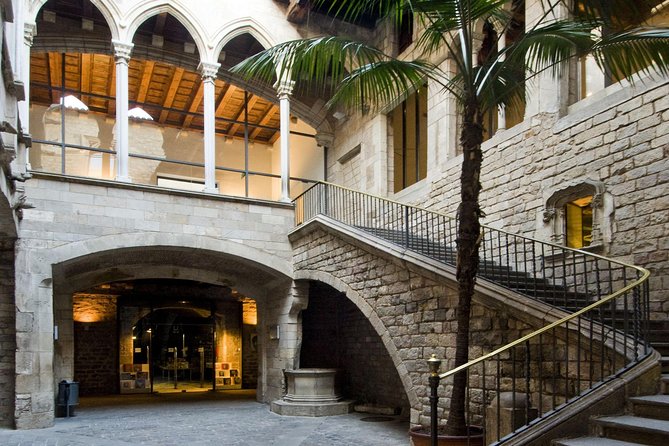
Museu Picasso
The Picasso Museum is one of the card’s most valuable inclusions. It suits a one-hour visit, though you could stay longer if you want to study the collection carefully.
Its location in the old city makes it easy to pair with the Gothic Quarter and MUHBA sites. It is a good first museum because it gives you a clear cultural anchor before you move on to Barcelona’s wider art scene.
A different sort of day out in Barcelona:
- Barcelona: Park Güell Admission Ticket
★ 4.4 · 76,534 reviews - Barcelona: Casa Batlló Entry with Self-Audioguide Tour
★ 4.7 · 25,359 reviews - Barcelona: 24 or 48-Hour Hop-On Hop-Off Bus Tour
★ 4.4 · 20,872 reviews - Barcelona: Park Guell Guided Tour with Skip The Line Entry
★ 4.7 · 17,563 reviews
Joan Miró Foundation
The Joan Miró Foundation is another strong inclusion. It works well as part of a Montjuïc day, alongside MNAC, the Olympic venues, and the botanical garden.
Allow about an hour, though the building and exhibitions may easily hold your attention longer. If you like modern art, this is one of the card’s better uses.
Museu Nacional d’Art de Catalunya
MNAC is one of the grandest stops on the pass. The museum covers Catalan art, including important medieval material, and the building itself gives you a memorable setting above the city.
Plan on two hours if you want more than a quick look. It is particularly useful on a rainy day because you can combine a major museum visit with nearby Montjuïc attractions without spending extra admission money.
MACBA
The Barcelona Museum of Contemporary Art, or MACBA, offers a modern contrast to Picasso and MNAC. The listed visit time is about two hours, making it one of the places where the pass can pay for itself through a substantial museum stop.
You will want to check current opening arrangements before setting out, since contemporary art museums sometimes organize admission and exhibitions differently from historic institutions.
Fundació Antoni Tàpies
This is a shorter stop, listed at about an hour, and gives your art day a different voice. It is a sensible addition if you are already moving between central Barcelona museums.
CaixaForum and CCCB
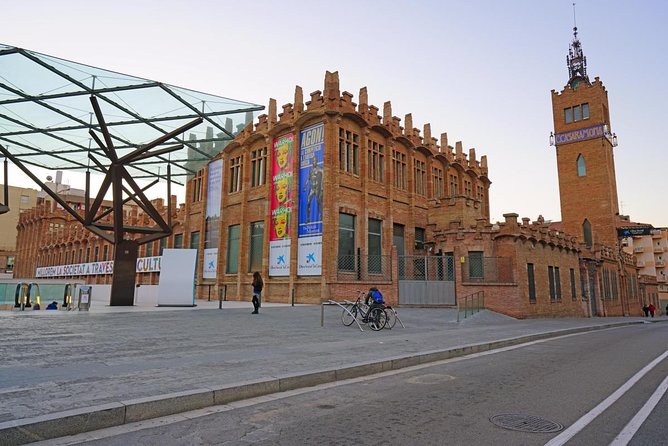
CaixaForum presents changing exhibitions covering ancient, modern, and contemporary art. CCCB, the Center of Contemporary Culture of Barcelona, adds another exhibition-focused stop.
These are useful choices when you want variety rather than another traditional art collection. The card lets you sample an exhibition without feeling that you have wasted a full-price ticket if the subject does not suit you.
Moco Museum Barcelona
Moco Museum is included with free admission. Its presence broadens the pass beyond municipal and traditional collections, although you should still check the current exhibition program before assigning it a place in your day.
History, archaeology, and smaller museums

The card works best when you use its smaller venues as building blocks. You do not need to spend an entire afternoon at every museum. A one-hour stop followed by lunch or a neighborhood walk can make the pass feel flexible rather than rushed.
MUHBA and the Roman burial road
The Barcelona History Museum, MUHBA, appears more than once in the attraction information, along with MUHBA Via Sepulcral Romana. The Roman burial road offers a direct look at the city’s ancient past beneath the modern streets.
These sites are especially useful if you are already exploring the Gothic Quarter. The Via Sepulcral Romana is compact, so it can fit neatly between larger visits rather than taking over your day.
Royal Monastery of Santa Maria de Pedralbes
The Royal Monastery of Santa Maria de Pedralbes is one of the more distinctive choices on the card. Founded in 1326 by Queen Elisenda of Montcada, it preserves the setting and artistic record of the Poor Clare community that lived there for centuries.
You can see exhibitions on the monastery’s treasures, plants and remedies, and the murals in St. Michael’s Chapel. Allow about an hour, though the setting rewards a slower visit.
Egyptian Museum and Archaeology Museum
The Egyptian Museum of Barcelona provides a focused collection, while the Museum of Archaeology of Catalonia covers a wider span of ancient cultures.
Be careful with the latter. The attraction information gives it a 25 percent discount in one place, while the museum stop is also shown among the card venues. Check the current terms when collecting the card so you know if your visit is free or discounted.
Frederic Marès, perfume, chocolate, music, and ceramics
The smaller museums give the card personality. The Museum of Perfume, Chocolate Museum, Museum of Music, and Ceramics Museum are not the grand headline sights, but they can be rewarding when you want something lighter or more specialized.
The Chocolate Museum is an easy family choice. The Music Museum suits anyone interested in instruments and sound. The perfume collection is compact and unusual. These places are precisely where a pass earns its keep: you can enter for an hour without worrying about paying a full ticket for a brief visit.
The information also includes the Museum of Natural Sciences of Barcelona and the city’s design and ceramics collections. Check each venue’s current schedule, since smaller institutions may have narrower opening hours.
Montjuïc makes the transport benefit count
Montjuïc is where the combination of free museums and public transport becomes especially practical. You can use the metro and city buses to reach the area, then build a full day from MNAC, the Joan Miró Foundation, the Olympic venues, and the botanical garden.
The Estadi Olímpic and Joan Antoni Samaranch Olympic and Sports Museum give you a look at Barcelona’s Olympic past. The Botanical Garden offers a change of pace after indoor galleries.
The card does not automatically make every cable car or private transport service free. The Telefèric de Montjuïc is listed with a 15 percent discount, not free travel, so budget for it separately if you want that ride.
Gaudí is where expectations need correcting
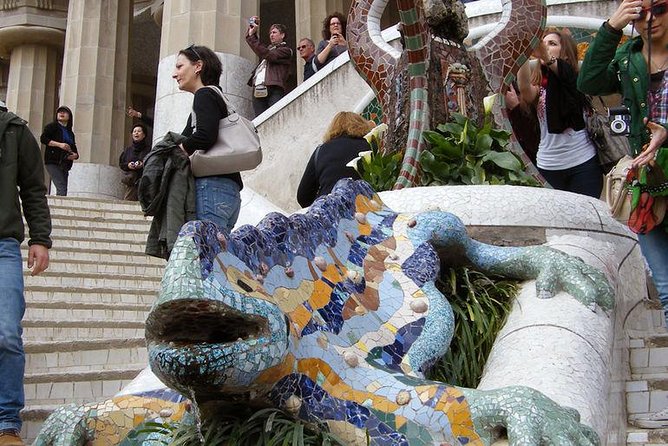
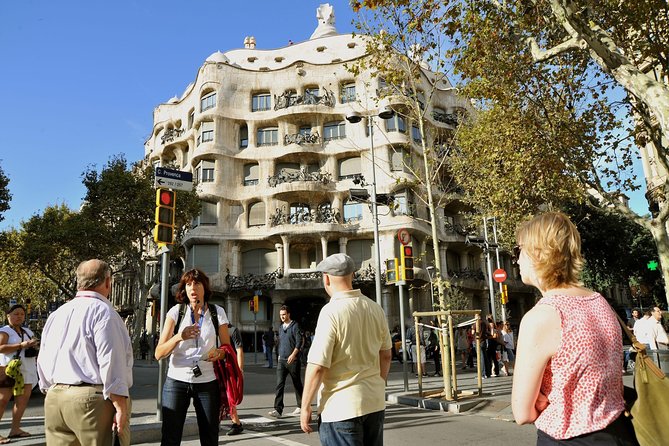
Barcelona’s most famous architecture is not the strongest free-entry part of this card. Casa Batlló, Casa Milà, Casa Vicens, Casa Amatller, Palau Güell, and other major attractions offer discounts ranging from 20 to 25 percent, or a fixed reduction such as €3.
Sagrada Família is not included in the supplied benefits. Park Güell is also not listed among the free venues. This matters because many people buy a Barcelona pass expecting the city’s main Gaudí sights to be covered.
You can still use the card around a Gaudí-focused day, but treat the discounts as a small saving rather than the main reason to buy. Some attractions require advance reservations, and a discount does not guarantee entry when timed spaces have sold out.
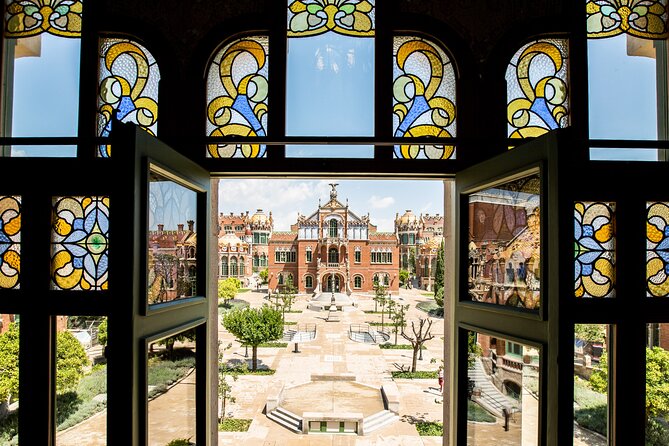
Other discounted attractions include Sant Pau Recinte Modernista, the Aquarium, Barcelona Zoo, the Mies van der Rohe Pavilion, Palau de la Música Catalana, and the Glòries Tower viewpoint. Flamenco shows and additional attractions may also offer reductions.
How to plan three, four, or five days
For a 72-hour card, I would group attractions by area. Put Picasso, MUHBA, and the Roman burial road together. Use another day for Montjuïc, with MNAC and the Miró Foundation as the main events. Save smaller central museums for gaps in the schedule.
The 96-hour option gives you breathing room. You can take one substantial museum each morning, add a shorter venue in the afternoon, and still use public transport for dinner or an evening walk.
The 120-hour card favors a slower rhythm. You might visit five to seven museums over five days, with time for neighborhoods and meals between them. The pass is not designed for rushing through every included door. It is better used as permission to choose according to the weather and your energy.
The transit benefit also has value on days when you do not visit museums. Barcelona is easy to explore on foot in sections, but the metro and buses save time when you cross the city from the old center to Montjuïc, Pedralbes, or CosmoCaixa.
What the pass does not solve

The card does not remove the need for planning. You still need to know which museums are open, which attractions require reservations, and which benefits are free rather than discounted.
Some people find Barcelona’s public transport network overwhelming, particularly when comparing metro lines, buses, trams, and private cable cars. The included metro map helps, but you still need to choose your route. If you dislike transit planning, you may use only the airport and a few metro rides, which weakens the value.
The pass also does not replace a sightseeing bus. One person used the card mainly for a discount on a hop-on hop-off bus, while another found the transit network easy and used the metro several times a day. Those are different travel styles. You should buy this card for museums and ordinary public transport, not as a substitute for a bus tour.
The overall rating is 3.7 out of 5 from 909 ratings, which fits the product’s profile: very useful when planned carefully, disappointing when purchased mainly for Gaudí monuments or used without collecting the physical card.
Is the $72.89 price good value?
At $72.89, the pass needs active use. Four or five free museum admissions can make a noticeable dent in the cost, particularly at major institutions such as Picasso, MNAC, MACBA, and the Miró Foundation. Add several metro and bus journeys, plus the airport train, and the total can become reasonable.
The value drops if you visit only one or two museums. It also drops if your chosen attractions are mostly discounted rather than free, or if you spend much of your stay walking within one neighborhood.
I would make a short list before buying:
- At least four included museums you genuinely want to see
- Several public transport journeys each day
- An arrival plan that lets you collect the physical card
- Separate funds for Sagrada Família, Park Güell, and other Gaudí sites
The card is not a magic key to Barcelona. It is a practical tool for a museum-heavy visit.
Who should book the Barcelona Card?
You should book it if you like choosing your own museums, expect to use public transport often, and want a pass that works across art, history, science, sports, and small specialist collections. It is especially suitable for a three- to five-day visit with several indoor stops.
I would skip it if your main goals are Sagrada Família, Park Güell, Casa Batlló, and other headline sights, since those are not free. I would also skip it if you prefer walking everywhere or plan only one museum.
For the right schedule, the Barcelona Card makes the city easier to manage. Collect the physical card early, check the free and discounted attractions carefully, reserve the major Gaudí sights separately, and use the pass on museums you would actually pay to visit.
FAQ
How long can I use the Barcelona Card?
You can choose a card valid for 72, 96, or 120 hours, covering roughly three, four, or five days.
Is public transport included?
Yes. The card includes unlimited use of Barcelona’s public transport, including the metro, city buses, and eligible train services from the city center.
Can I use it to travel from Barcelona Airport?
The card covers the train from Barcelona Airport Terminal 2 to Barcelona city. If you arrive at Terminal 1, you must transfer to Terminal 2 to use this airport train benefit.
Are Sagrada Família and Park Güell included?
No. They are not listed among the free attractions. Several Gaudí sites instead offer discounts, including Casa Batlló, Casa Milà, and Casa Vicens.
Do I need a physical card?
Yes. You must collect the Barcelona Card before using the museum benefits. A mobile voucher, Apple Wallet barcode, or screenshot may not be accepted at participating museums.
What languages are available in the guide?
The guide is available in English, Catalan, Spanish, French, German, and Italian.
Recently added around Barcelona
- Montserrat very early : Hiking, Abbey, very small group★ 5.0 · 127 reviews
- Guided Private Yacht Tour in Barcelona Spain★ 5.0 · 6 reviews
- Private Tour from Barcelona to Montserrat (with guide)★ 4.5 · 6 reviews
- Private Tour from Barcelona to Costa Brava (with guide)★ 5.0 · 5 reviews
- Andorra Tour★ 4.0 · 7 reviews
- Barcelona Gaudi Tour: Sagrada Familia, Casa Batllo & Casa Mila★ 5.0 · 4 reviews
- Street Art, Sculptures & Crime Stories Walking Tour – Barcelona★ 5.0 · 11 reviews
- Wine Tasting in Barcelona (Catalan Varieties) Small Groups★ 5.0 · 10 reviews
Museums, compared.

FC Barcelona Museum “Barça Immersive Tour” Ticket
Read our review →
Park Güell and Gaudí House Museum Entry Ticket
Read our review →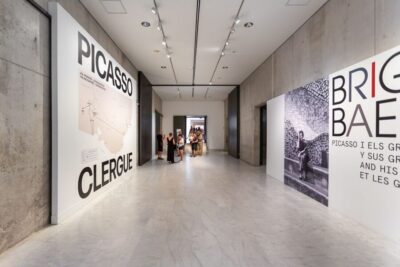
Girona & Dali Museum Small Group Tour with Pick-up from Barcelona
Read our review →
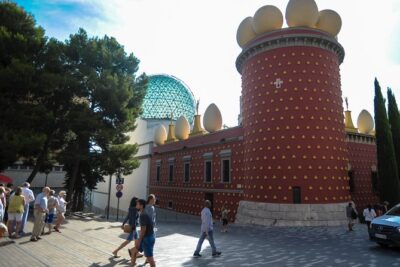
Dali Museum, House & Cadaques Small Group Tour from Barcelona
Read our review →Browse the lists this tour appears in