
Reviewed · GAUDí TOURS IN BARCELONA
Private Barcelona Modernism and Gaudí Walking Tour
Barcelona’s Modernisme is best understood on foot, where one block can shift from Gaudí’s melting stonework to Domènech i Montaner’s floral detail and Puig i Cadafalch’s medieval-inspired designs. I like that this tour puts Sagrada Familia and Passeig de Gràcia into one clear story, rather than treating each building as an isolated photo stop. I also like the guide-led approach, with past tours praised for lively explanations, useful city tips, and guides such as Stephanie, Isabel, Antonio, André, and Jordi.
The main tradeoff is simple: this is a three-hour walking tour, and the buildings are spread across the Eixample. You will see many façades from the street, but the experience does not list interior admission, and the exact meeting point and route can vary by booking. Bring good shoes, and do not expect to carry large luggage.
Key points to know before booking
- Gaudí is only part of the story: You also see major works by Lluís Domènech i Montaner and Josep Puig i Cadafalch.
- The route covers a lot of ground: Sagrada Familia and the Passeig de Gràcia buildings are not all clustered together.
- Street views are the focus: The tour includes guided admiration of the exteriors, not stated entry into every building.
- The guides are a major strength: Stephanie, Isabel, Antonio, André, Olga, Jordi, Miguel, and others have led tours praised for clear explanations and friendly conversation.
- The group is capped at 12 people: A private option is available, and children up to age two can join free.
- The price is modest for a guided introduction: At $21 per person, you are paying mainly for orientation, context, and a well-planned walk.
Why Barcelona’s Modernisme makes a better walking tour than a checklist
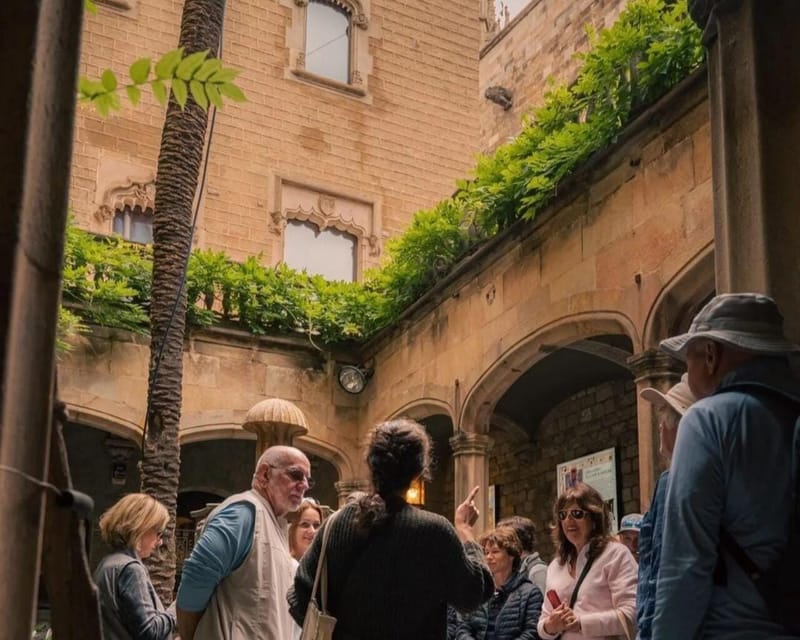
Barcelona’s famous buildings can look like a parade of pretty façades if you see them without context. A good guide gives you the missing thread: the city was expanding beyond its medieval walls, new wealth was filling the Eixample, and architects were competing to create something unmistakably Catalan.
That is what makes this outing useful. You are not only pointed toward Gaudí’s strangest windows and balconies. You also learn how Ildefons Cerdà planned the Eixample with a broad grid, open corners, and a more orderly urban pattern than the old city.
The tour connects architecture with Barcelona’s growth. The buildings were not random artistic experiments. They were homes, civic projects, and statements of status commissioned during a period when Barcelona’s business families wanted distinctive addresses.
I like this wider view because it keeps Gaudí from taking over the whole story. His work is the star attraction, but Barcelona’s Modernisme was a larger movement. Domènech i Montaner and Puig i Cadafalch produced buildings every bit as rewarding to study, even when their names are less familiar.
More Gaudí Tours in Barcelona
- Barcelona: Park Güell and Gaudí House Museum Entry Ticket
★ 4.5 · 6,326 reviews - Sagrada Familia & Gaudi Tour Private or Small Group with Tickets
★ 4.5 · 1,188 reviews - Complete Gaudi Tour: Casa Batllo, Park Guell & Sagrada Familia
★ 5.0 · 1,152 reviews
Starting with Sagrada Familia and Gaudí’s unfinished vision
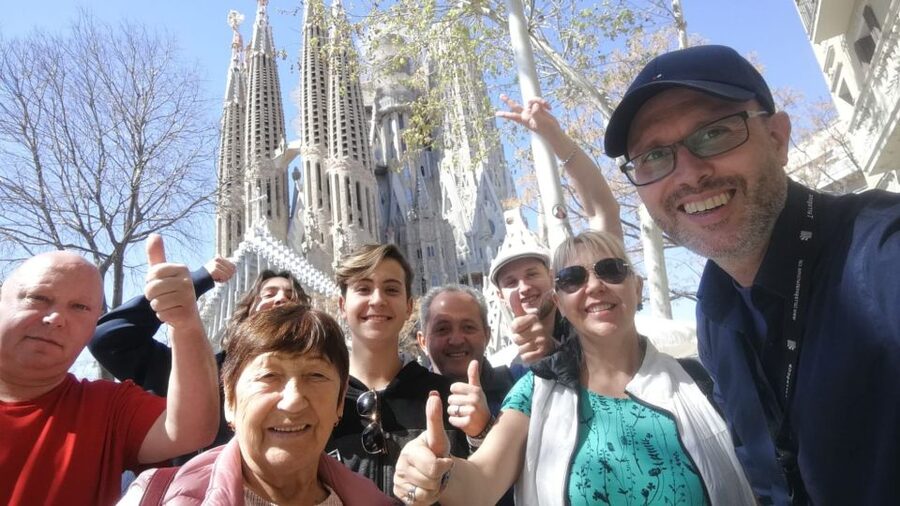
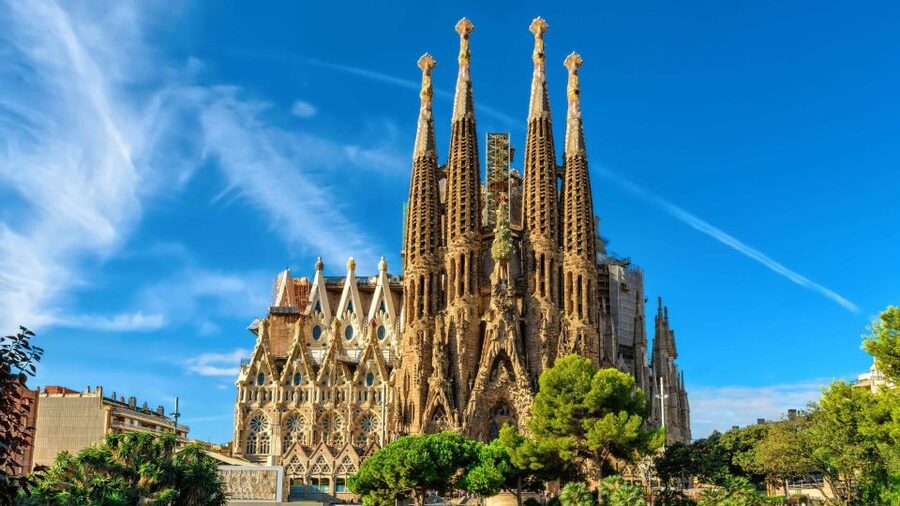
La Sagrada Familia is the emotional high point of the route for many people. Even from outside, the basilica gives you a lot to study: towers, sculpted façades, religious symbols, and an overall design that seems to grow rather than sit still.
Your guide explains Gaudí’s approach to structure and decoration, along with the long construction process. The basilica has been under construction for more than a century, so it is also a lesson in how architecture can continue changing after its original creator is gone.
The Passion façade offers a useful point of discussion. Its sculptural program was created by Josep Subirachs, Gaudí’s successor, and its harder, more angular forms differ from the more organic quality associated with Gaudí. That contrast gives you a way to think about authorship, interpretation, and the difficult question of how to finish a famous unfinished work.
Pay attention to what the tour actually promises here. You will admire Sagrada Familia and hear about its design, but interior entry is not listed as part of the experience. If you want to go inside, plan a separate visit or check the exact option carefully before booking.
The route may begin with Sagrada Familia, but one published experience description and past tour details indicate that some walks can end there. Since the meeting point may vary, confirm the start and finish before planning a meal, museum visit, or timed ticket afterward.
Walking through the Eixample grid
The Eixample is more than a backdrop for grand houses. Its orderly streets help explain why Barcelona’s Modernisme became so visible. The district offered architects wider streets and new blocks where wealthy families could commission elaborate homes with unusual façades.
Your guide introduces Cerdà’s urban plan and the idea of balancing buildings, open space, traffic, and daily life. You do not need to be an urban-planning specialist to appreciate the point. The grid makes the city easier to navigate, while the decorated buildings keep the long walks visually rewarding.
There is also a practical benefit. If you are new to Barcelona, this tour helps you get your bearings between the old city, Sagrada Familia, and Passeig de Gràcia. One past participant specifically appreciated receiving extra context about the historic area where they were staying, and another praised the guide’s useful advice for the rest of a Barcelona visit.
The Eixample walk is not a short stroll between two monuments. The buildings are spread across the district, and one past participant noted that there was a lot of walking. That is not a flaw for most architecture fans, but it matters if you have limited mobility, young children who tire easily, or a packed schedule immediately afterward.
Passeig de Gràcia and the famous architectural trio
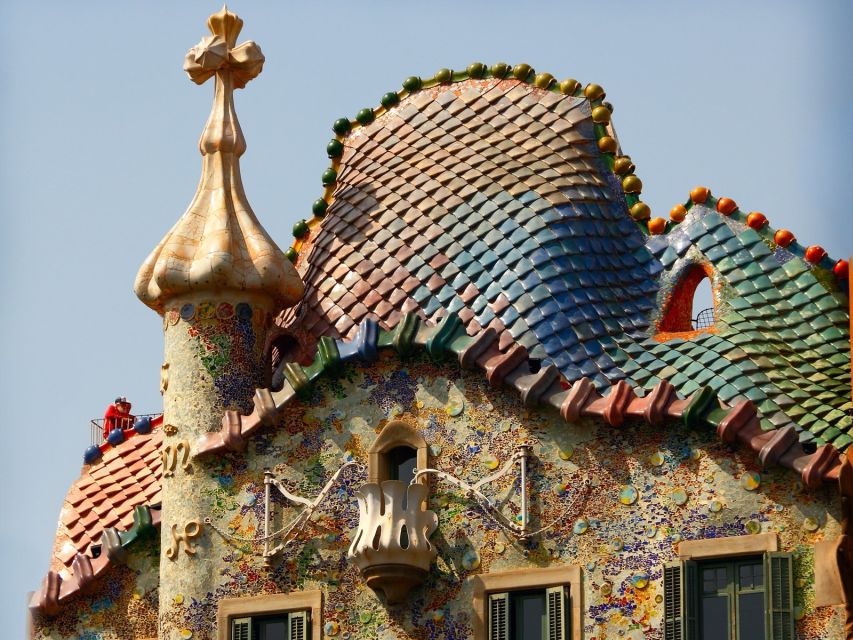
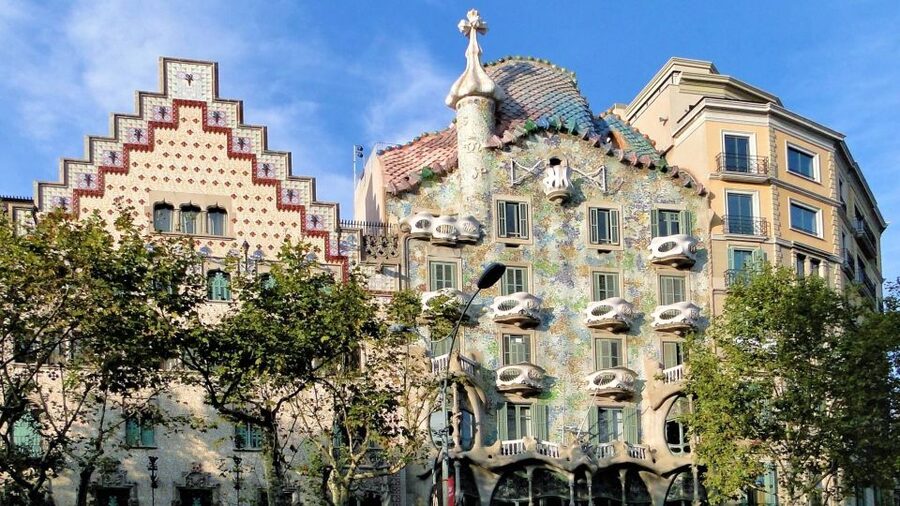
Passeig de Gràcia is Barcelona’s grandest showcase of Modernisme. Here, three adjoining or nearby façades create one of the city’s most memorable architectural comparisons: Casa Lleó Morera by Lluís Domènech i Montaner, Casa Amatller by Josep Puig i Cadafalch, and Casa Batlló by Antoni Gaudí.
The three buildings are often treated as a friendly architectural contest. Each architect had a different visual language, and the comparison works best when your guide points out the details side by side.
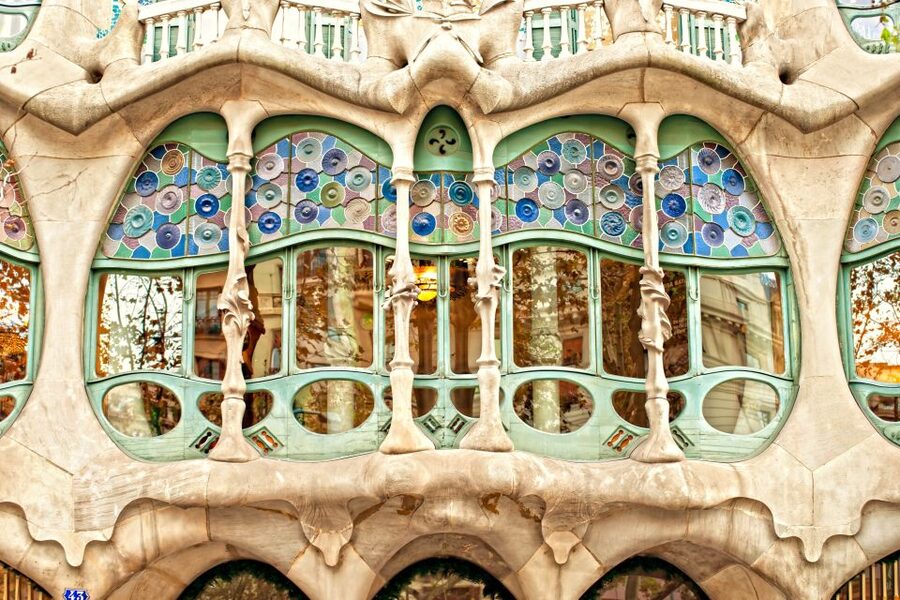
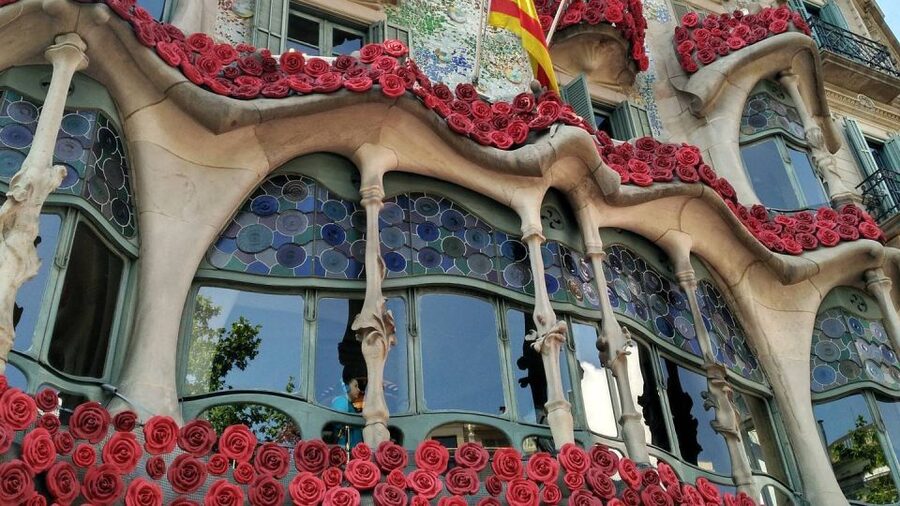
Casa Batlló is the most immediately theatrical. Its curving forms and colorful surface are often compared with the sea, while the roofline and windows give the building an almost creature-like quality. You can expect the guide to explain Gaudí’s unusual shapes and the ideas behind his design rather than simply point out its most photographed features.
Casa Amatller has a different mood. Puig i Cadafalch used a more historic style, with a façade influenced by northern European and medieval forms. Its pointed roof and careful decorative work show that Catalan Modernisme was not one single look.
Casa Lleó Morera, designed by Domènech i Montaner, brings another layer of ornament and craft. The building is known for its refined decoration, and it helps show how Modernisme joined architecture with sculpture, ceramics, stonework, and other decorative arts.
This is one of the strongest parts of the route because you can compare the architects without needing a long transfer between separate attractions. It is also a good place to take notes or photos, since the differences are easier to remember when the buildings are presented together.
More Barcelona Walking Tours:
- Barcelona Tapas and Wine Experience Small-Group Walking Tour
★ 5.0 · 5,804 reviews - Barcelona: Tapas Walking Tour with Food, Wine, and History
★ 4.8 · 4,261 reviews - Barcelona Tapas Walking Tour: Food, Wine & History
★ 4.5 · 1,928 reviews - Barcelona: Tapas Food Crawl Walking Tour with Tastings
★ 4.9 · 1,798 reviews
La Pedrera and Gaudí’s final civil project
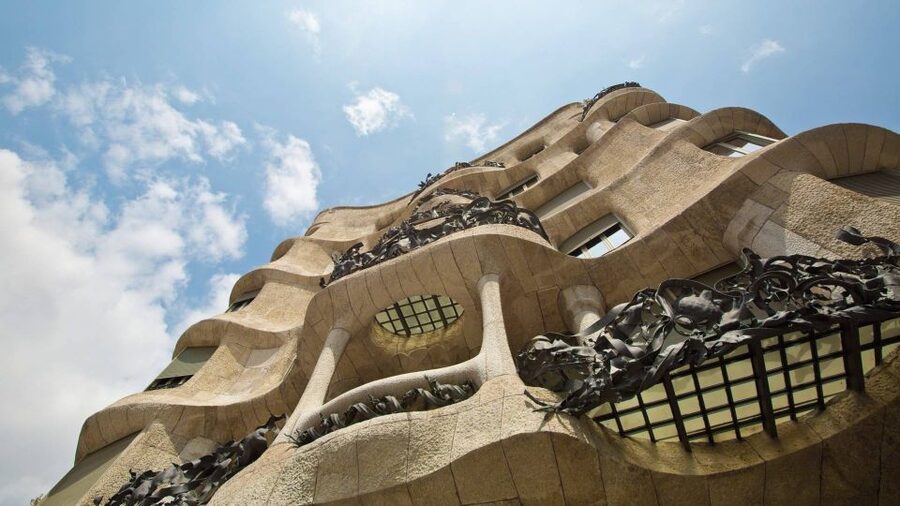
La Pedrera, also called Casa Milà, is one of Gaudí’s most recognizable residential buildings. Its rippling stone façade does not behave like a conventional apartment block. The surface seems to move, and the wrought-iron balconies add to the impression that the building has been shaped rather than constructed.
The guide places La Pedrera within Gaudí’s career as his last civil project. That context matters because you can look at it not simply as an odd building, but as a mature example of his way of handling structure, light, decoration, and movement.
From the street, the building’s scale is part of the effect. It is less like a single decorated house and more like a complete urban wall with its own rhythm. You will want time to look upward, so avoid rushing through this section.
Again, the tour describes an exterior visit and guided explanation. La Pedrera has paid interior areas, but entry is not included in the information provided for this walking experience. If the roof, courtyards, or exhibitions are high on your list, arrange that separately.
The lesser-known stops that make the tour worthwhile
The best reason to choose a guided walk instead of simply following a Gaudí map is the wider selection of buildings. You see Casa Calvet, an earlier and more restrained example of Gaudí’s work, along with Casa Comalat, whose organic forms show the influence of Gaudí’s style.
Casa Calvet helps you notice how Gaudí developed. It is not as flamboyant as Casa Batlló or La Pedrera, and that makes it useful in a chronological story. You can see a more controlled version of his design before his later buildings became increasingly daring.
Casa Comalat gives the route another visual turn. Its shapes and decoration reflect the pull of Gaudí’s organic ideas, but it is not simply another Gaudí building. Your guide can help you distinguish direct authorship from influence, which is a useful skill when many Modernisme façades begin to blur together.
Palau del Baró de Quadres, by Puig i Cadafalch, adds a more formal and historic tone. Casa Terradas, commonly called Casa de les Punxes, brings a fairytale quality with its pointed towers and unusual silhouette. Palau Montaner rounds out the walk with another example of the period’s decorative ambition.
These stops are important because they keep the tour from becoming a greatest-hits circuit. You see celebrated landmarks, but you also learn to look at Barcelona’s less famous Modernisme buildings with more confidence.
What the guides add to the experience
The guide can make or break a walking tour, and this experience has a strong record on that point. Stephanie has been praised for combining art and architecture with a personable style. Isabel has led tours described as relaxed and conversational, more like walking through the city with a friend than listening to a formal lecture.
Antonio is noted for clear explanations of Barcelona’s monuments and history. André has been praised for connecting the buildings with the artists who made them and for adding interesting facts about the city. Other named guides include Roberto, Olga, Jordi, Miguel, and Flora.
You cannot choose a specific guide unless the booking option allows it, so treat these names as examples of the guide pool rather than a guarantee. The important pattern is the teaching style: the tour works best when you ask questions and tell the guide what interests you.
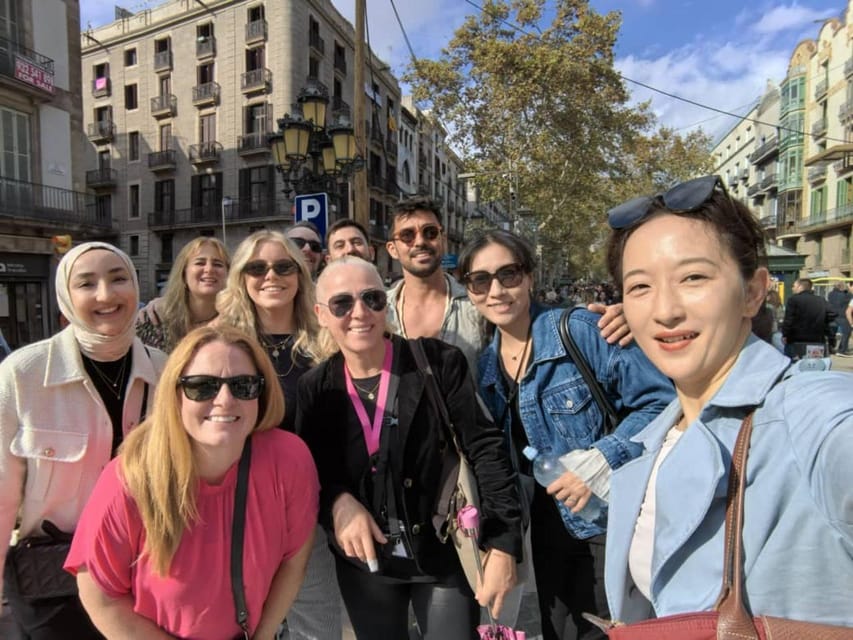
Past participants especially valued guides who paused to answer questions, explain artistic inspiration, and suggest ways to spend the rest of the visit. That is a real advantage of a small group. With a maximum of 12 people, the guide has a better chance of hearing you than on a large coach tour.
A private group option is also available. That may be worthwhile for families, architecture students, or anyone who wants to set the pace and ask a lot of questions. The standard wording also describes a small group, so check the selected option carefully rather than assuming every booking is fully private.
Is $21 a good price for three hours?
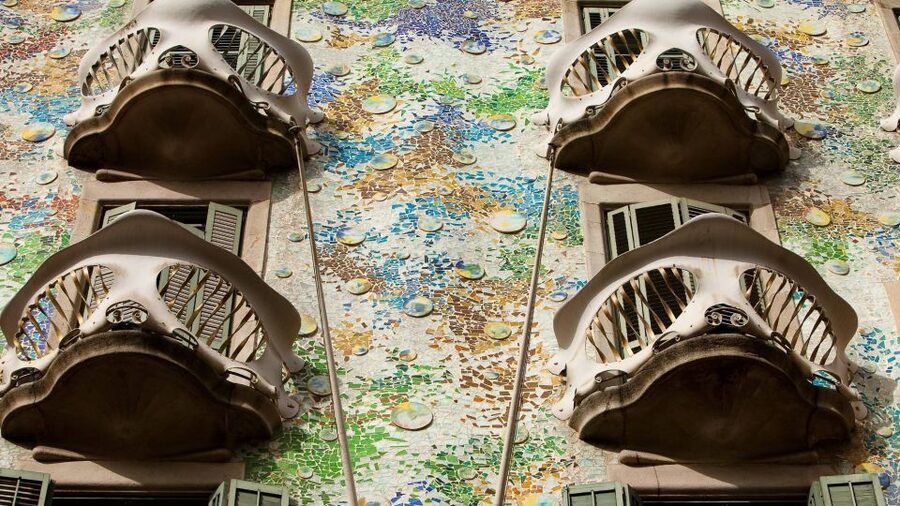
At $21 per person, this is inexpensive for a three-hour guided introduction to Barcelona’s Modernisme. You are not buying admission to several major attractions. You are paying for a local guide who organizes the route and gives meaning to buildings you could otherwise pass without understanding.
That distinction helps you judge the value. If you only want exterior photographs, you can walk Passeig de Gràcia yourself. If you want to know why Casa Batlló looks different from Casa Amatller, how the Eixample developed, and where Gaudí fits among his rivals, the fee is easier to justify.
The value is strongest on a first visit. You can use the tour to decide which buildings deserve an interior visit later. It also prevents you from spending half a day wandering between landmarks without a clear sense of how they connect.
The price is less compelling if you already know Barcelona’s architecture well or have booked separate guided visits inside Sagrada Familia, Casa Batlló, and La Pedrera. In that case, the street-level overview may repeat material you already understand.
Timing, footwear, and practical planning
Set aside three to three and a half hours. Starting times vary, and the meeting point may change with the option you choose, so check those details before booking your day around it.
Wear comfortable shoes. This sounds obvious, but the distance between the main buildings makes it essential, and the walk is on city streets rather than inside one compact museum.
Leave large luggage behind. It is not allowed on the tour, and carrying a big bag would make the route less pleasant anyway. Children up to age two can join free, but the walking distance still matters when deciding if the outing suits your family.
English and Spanish tours are available. Cancellation is free up to 24 hours before the start, and you can reserve now and pay later, useful if your Barcelona schedule is still shifting.
Who should book this Barcelona architecture walk?
I would choose this tour for a first-time visitor who wants a clear introduction to Gaudí and the wider Modernisme movement. It is also a good match for anyone who enjoys city walks, decorative arts, urban planning, or the small details around famous landmarks.
Families can benefit from the variety of buildings and the guide’s storytelling, though younger children may find three hours of walking demanding. The private option may help if you need more flexibility.
I would skip it if your main goal is going inside the monuments. This experience is built around a guided walk and exterior appreciation, so pair it with separately booked admission to the interiors you care about.
Should you book it?
Book this tour if you want context, comparison, and a strong first look at Barcelona’s Modernisme for a low price. The combination of Sagrada Familia, La Pedrera, Casa Batlló, Casa Amatller, Casa Lleó Morera, Casa de les Punxes, and lesser-known façades gives you a useful overview in one morning or afternoon.
Before paying, confirm the meeting point, route direction, and whether your chosen option is private. If you are comfortable with several hours on foot and do not need interior admission included, this is a practical way to understand why Barcelona looks the way it does.
FAQ
How long does the Barcelona Modernism and Gaudí tour last?
The tour lasts approximately three to three and a half hours. Starting times depend on availability.
Which languages are available?
The live guide is available in English or Spanish.
Is the tour private?
A private group option is available. The small-group format has a maximum of 12 participants, but the exact arrangement depends on the option selected.
Does the tour include entry inside Sagrada Familia, Casa Batlló, or La Pedrera?
The provided details describe a guided walking tour and exterior visits. Interior admission is not listed as included, so check the selected option and plan separate tickets if needed.
What should I bring?
Bring comfortable shoes for the three-hour walking route. Large bags and luggage are not allowed.
Can children join the tour?
Children up to two years old can join free of charge. The tour involves substantial walking, so consider the route length when planning for young children.
Recently added around Barcelona
- Montserrat very early : Hiking, Abbey, very small group★ 5.0 · 127 reviews
- Guided Private Yacht Tour in Barcelona Spain★ 5.0 · 6 reviews
- Private Tour from Barcelona to Montserrat (with guide)★ 4.5 · 6 reviews
- Private Tour from Barcelona to Costa Brava (with guide)★ 5.0 · 5 reviews
- Street Art, Sculptures & Crime Stories Walking Tour – Barcelona★ 5.0 · 11 reviews
- Andorra Tour★ 4.0 · 7 reviews
- Barcelona Gaudi Tour: Sagrada Familia, Casa Batllo & Casa Mila★ 5.0 · 4 reviews
- Wine Tasting in Barcelona (Catalan Varieties) Small Groups★ 5.0 · 10 reviews
Gaudí Tours in Barcelona, compared.
Park Güell and Gaudí House Museum Entry Ticket
Read our review →
Sagrada Familia & Gaudi Tour Private or Small Group with Tickets
Read our review →
Complete Gaudi Tour: Casa Batllo, Park Guell & Sagrada Familia
Read our review →
Park Güell: Guided Tour with Optional Gaudí Experience Entry
Read our review →
Ramblas, Old Town, Gothic and Gaudi Architecture Walking Tour
Read our review →
Gaudi´s Casa Vicens Skip the Line Ticket with Audioguide
Read our review →
Discover Gaudí, Sagrada Familia, and Park Güell
Read our review →
Browse the lists this tour appears in