Reviewed · TICKETS
Barcelona: Museu Nacional d’Art de Catalunya Entrance Ticket
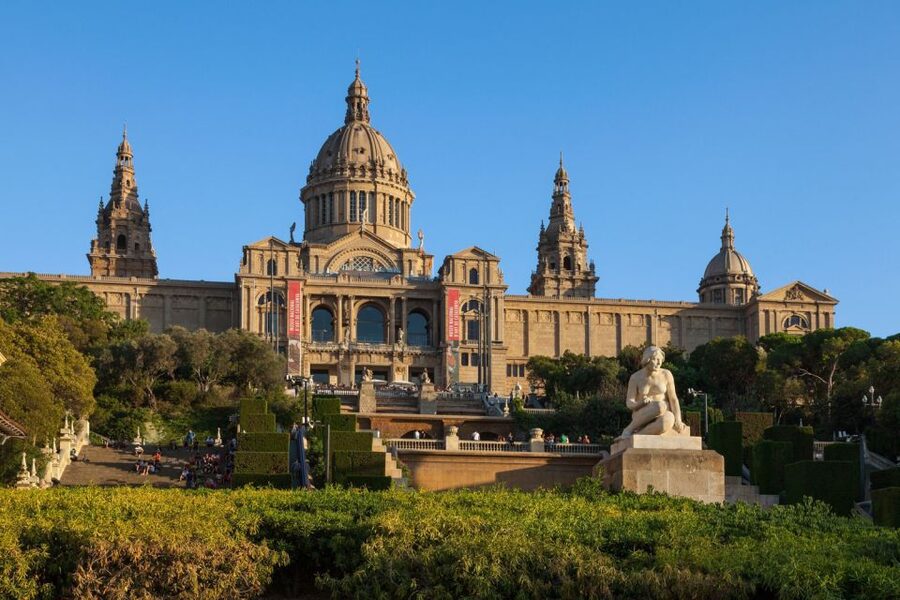
Barcelona’s Museu Nacional d’Art de Catalunya is as much about the building and setting as the paintings inside. Housed in the grand Palau Nacional, built for the 1929 International Exposition, it gives you Romanesque frescoes, Catalan Modernism, Renaissance art, and Baroque painting in one visit.
I especially like two things here: the rescued medieval wall paintings are displayed in a way that helps you understand their original scale, and the hilltop location gives you wide views across Barcelona. The main caution is time. A quick hour will barely scratch the surface, and the rooftop and terraces are currently closed under the stated operating restrictions.
Key points to know before you go
- Romanesque frescoes are the museum’s great specialty: The collection is considered one of the finest of its kind in the world, with paintings removed from old churches and preserved indoors.
- The collection crosses centuries: You can move from medieval Catalonia to Gaudí and Casas, then on to Tiziano, Velázquez, photography, and temporary exhibitions.
- Plan at least two hours: Four hours is more realistic if you want to read labels and see the galleries without rushing.
- The Palau Nacional is part of the experience: Its monumental exterior, grand entrance, and Montjuïc setting make the visit feel larger than a standard gallery stop.
- Your smartphone is the audio guide: Bring a charged phone and headphones. Audio is available in Catalan, Spanish, English, French, German, Italian, Russian, Japanese, and Chinese.
- Check free-entry dates before paying: Admission is free on Saturday afternoons, the first Sunday of each month, and several Catalan and Barcelona festival days.
Arriving at the Palau Nacional on Montjuïc
The museum sits at Palau Nacional s/n in Parc de Montjuïc, above the broad approach to the palace. You can see the building from a distance, and the approach itself helps explain why this is more than a quick stop between other Barcelona sights.
The setting is grand and open, with Barcelona spread below the hill. You should allow extra energy for reaching the entrance, especially in summer. One visitor found the climb tiring in the heat, although there are bars along the steps and escalators where you can pause.
Once inside, the contrast is striking. The exterior has the formal character of an exhibition palace, while the galleries are modern and practical. Clear maps and signage make the two-floor layout easier to manage, which matters in a museum with several periods and a large number of works.
I suggest taking a few minutes at the entrance to get your bearings before heading straight to the art. The building is part of the story, and rushing through the opening spaces means missing one of the museum’s strongest features.
More Tickets in Barcelona:
- Barcelona: Park Güell Admission Ticket
★ 4.4 · 76,534 reviews - Barcelona Aquarium: Entry Ticket
★ 4.3 · 13,335 reviews - Barcelona: Sagrada Familia Skip-the-Line Entry Ticket & Tour
★ 4.8 · 12,789 reviews
The Romanesque galleries and rescued frescoes
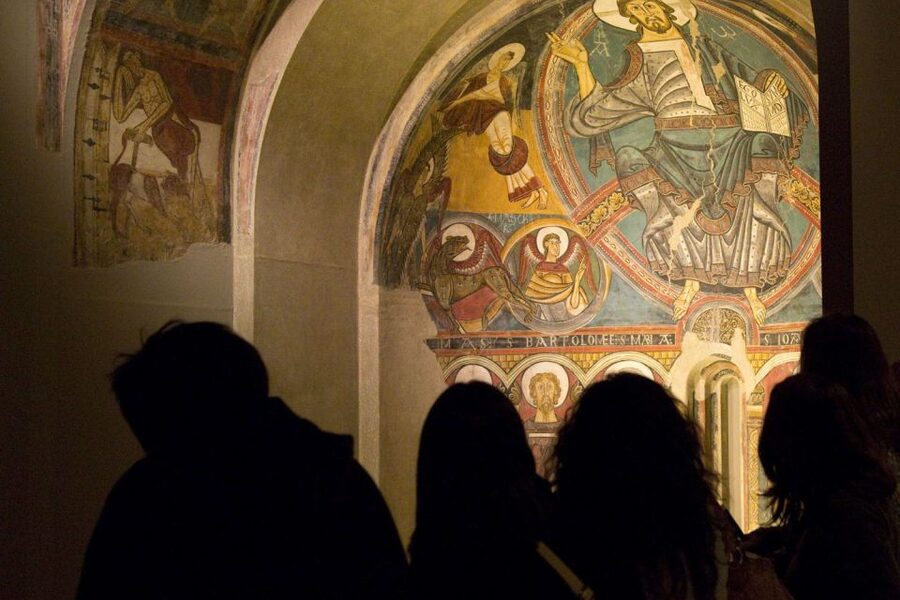
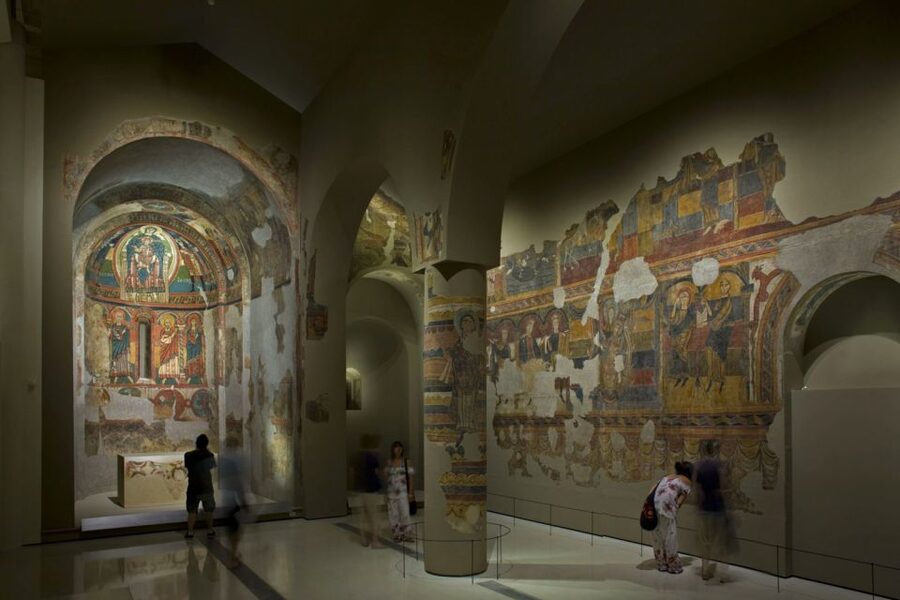
Begin with the Romanesque collection if medieval art interests you. This is the section that gives MNAC its special identity. The museum is famous for mural paintings taken from old churches, conserved, and shown in settings that help you grasp how they once filled religious interiors.
You are not simply looking at small framed pictures. The scale and arrangement make these works feel architectural. One of the most worthwhile parts of the visit is seeing how the frescoes were removed from buildings that could no longer protect them and preserved for public viewing.
The displays also give you a close look at the details. You can study faces, patterns, gestures, and painted decoration that would have been far harder to see in an original church. If you have little background in Spanish or Catalan art, this section can feel dense, since English explanations are not always available beside every medieval work.
That is where the audio guide app can help, though you need your own charged smartphone and headphones. If you want detailed explanations rather than a quick look, download or open the guide before your attention is divided by the galleries.
Allow at least an hour for the medieval sections if they appeal to you. If you are mainly interested in modern art, use the museum map to plan your route rather than treating every room as equally important.
Gothic, Renaissance, and Baroque works
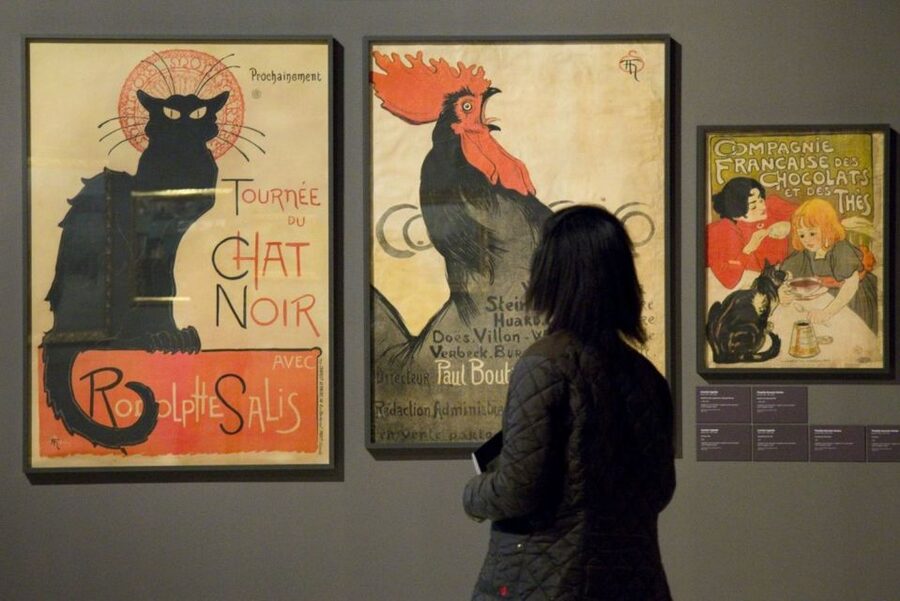
The museum continues beyond Catalan Romanesque art into Gothic painting and later European traditions. The shift in style gives you a useful visual lesson: religious figures, portraiture, color, and composition change noticeably as you move through the centuries.
The European Renaissance and Baroque holdings include names such as Tiziano and Velázquez. These rooms add weight to the collection, but the museum’s strongest personality remains its connection to Catalonia. I would not come here expecting a rival to the Prado or the Louvre. I would come to see how local art fits into a wider European story.
The amount of work can feel overwhelming if you try to see every object. A better approach is to choose a few periods and give them proper attention. The layout is divided into sections, so you can move at a reasonable pace without feeling lost.
Some rooms may appeal more to adults or to anyone already interested in art. Families with mixed interests should agree on a shorter route in advance. One young visitor became bored while the rest of the group wanted to linger, so a focused plan can prevent the museum from turning into a long march.
Catalan Modernism, Gaudí, Casas, and photography
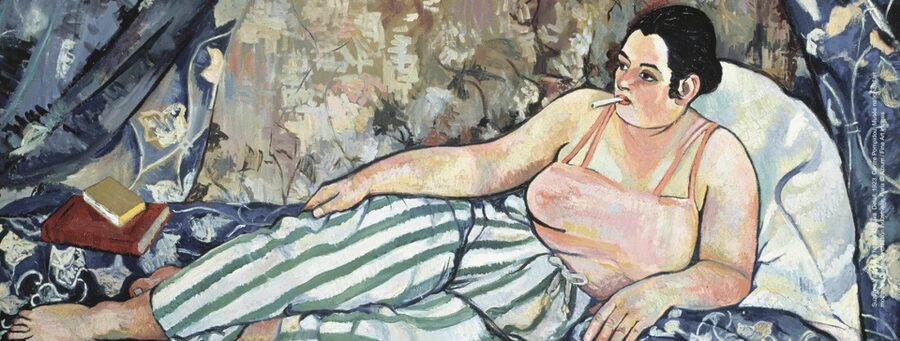
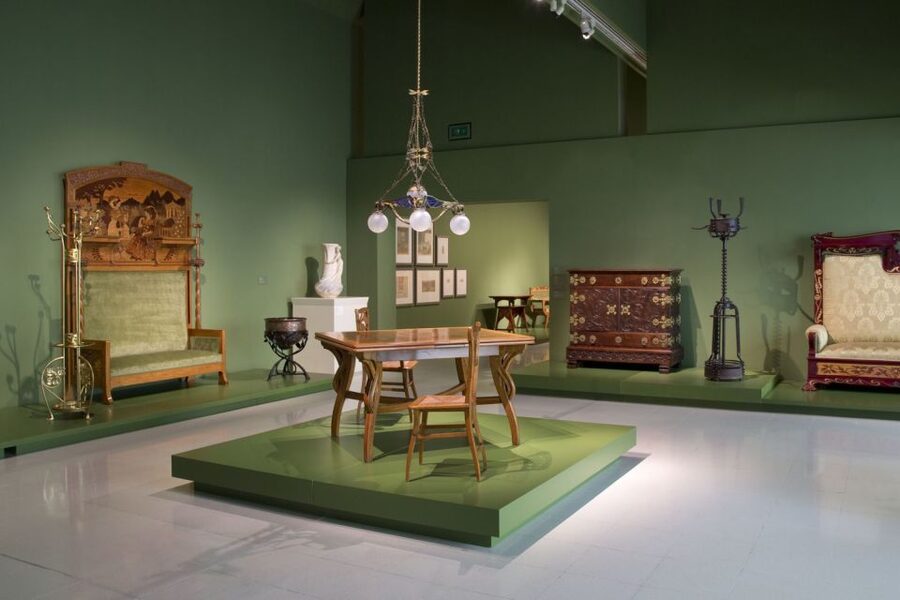
The Catalan Modernism displays are likely to be the highlight for many people visiting Barcelona. Works connected with artists such as Antoni Gaudí and Ramon Casas help place the city’s famous architecture within a wider artistic movement.
This section feels closer to the Barcelona most people picture: expressive design, changing urban life, and a strong local voice. I like seeing Modernist work here because it gives context to the buildings you encounter elsewhere in the city. You are not just checking off another Gaudí connection. You are seeing how Catalan artists worked across painting, design, and visual culture.
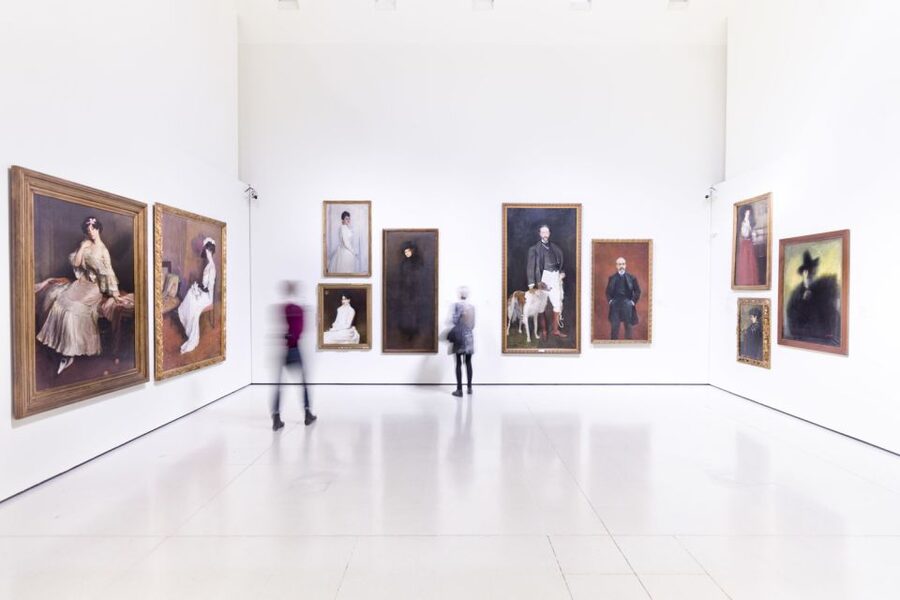
The modern art section has also received strong praise for its range and for the quality of individual works. Some visitors spend most of their time on the upper floor, where the nineteenth-century and modern displays include striking paintings.
Photography adds another change of pace. If you need a break from painted surfaces, the photography collection gives you a different way to look at Catalonia and Europe. The displays can also help younger visitors stay engaged because the medium feels more familiar than medieval painting.
Do not assume that the word modern means only contemporary art. Here it refers in large part to nineteenth- and early twentieth-century work, so check the map and labels to see which rooms fit your interests.
A different sort of day out in Barcelona:
- Barcelona: Casa Batlló Entry with Self-Audioguide Tour
★ 4.7 · 25,359 reviews - Barcelona: 24 or 48-Hour Hop-On Hop-Off Bus Tour
★ 4.4 · 20,872 reviews - Barcelona: Park Guell Guided Tour with Skip The Line Entry
★ 4.7 · 17,563 reviews - Barcelona in 1 Day: Sagrada Familia, Park Guell,Old Town & Pickup
★ 5.0 · 13,541 reviews
Temporary exhibitions and special displays
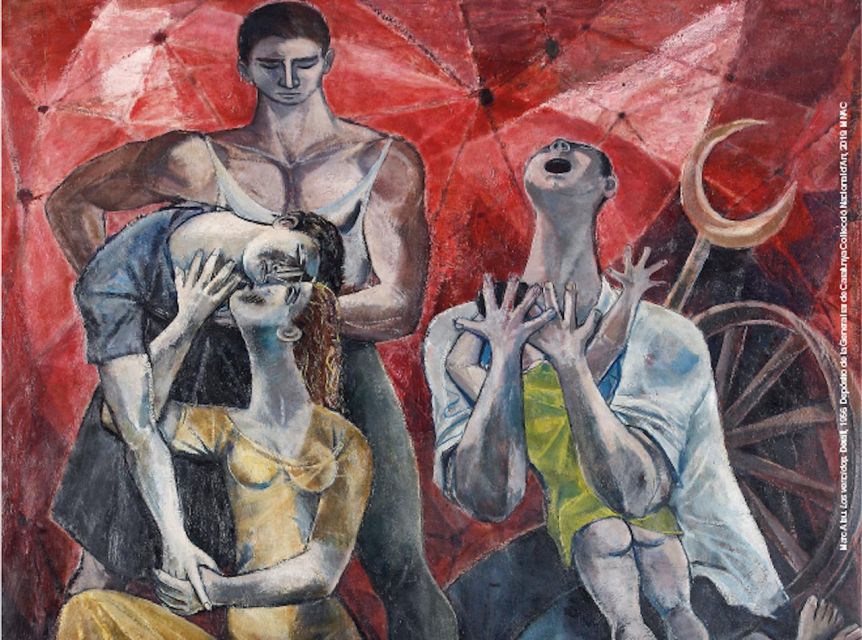
Admission includes the temporary exhibition as well as the permanent collection. That makes the $14 ticket more useful than a ticket limited to the main galleries, though the exact temporary show will change over time.
A Spanish Civil War exhibition was singled out as especially moving. If a historical display is running during your visit, give it time rather than treating it as an optional add-on. Temporary exhibitions can provide social and political context that the chronological art galleries may not cover in detail.
Because the museum’s material spans so many periods, temporary displays can also give your visit a sharper focus. If you have only a couple of hours, check the current exhibition first, then choose the permanent galleries you most want to see.
The museum’s own history is part of the visit as well. You have a chance to learn about the Palau Nacional and its role in the 1929 International Exposition. That background helps explain the building’s scale and formal design.
The views from Montjuïc and the rooftop limitation
The location is one of the museum’s major rewards. From the front of the Palau Nacional, you can look down toward Barcelona and take in a broad city view. The approach, steps, and open areas provide several places for photographs.
The rooftop has been a popular feature, but it is currently out of service because of the difficulty of managing current health regulations. This is important: do not book the museum expecting access to the roof during the current restriction.
Earlier visitors enjoyed the rooftop and described it as a major part of the experience, while others found it closed late in the afternoon. Conditions can change, so check the museum’s current notice before you go. For now, treat the city views from the building and surrounding Montjuïc area as the reliable reward.
The outdoor setting also makes this a good stop before or after other Montjuïc activities. You can spend time around the palace, take photographs, and stop for a drink or snack at one of the on-site cafés. The views are free of charge once you are in the area, but the museum ticket is still needed for the galleries.
How long should you spend inside?
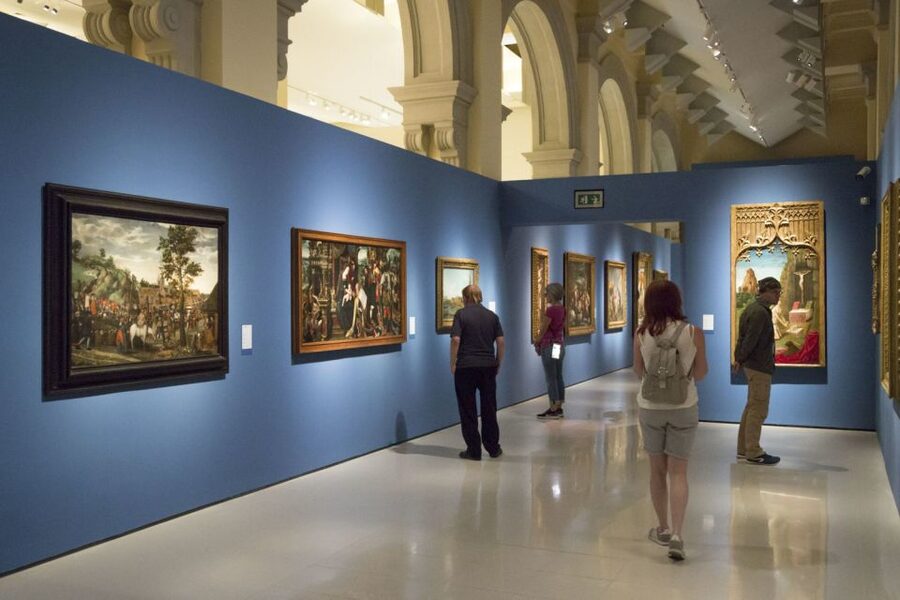
The official guidance suggests a couple of hours, and that is a fair minimum for a purposeful visit. I would plan two hours if you want the main highlights, three hours for a comfortable visit, and four hours if you enjoy reading labels and studying the frescoes.
The museum is open for one day with the ticket, and the ticket offices close 30 minutes before closing. Rooms begin emptying 15 minutes before the museum closes, so a late arrival can leave you with much less usable time than expected.
Do not make the mistake of arriving near closing and expecting to see the whole collection. One person had only an hour at 5 p.m. and managed to see a single gallery. A late slot may work if you have one clear target, but it is poor value for a first visit.
The ticket has also offered a return visit within the following month or two, depending on the ticket conditions in effect. Check the terms attached to your booking. If a return visit is available, it changes the calculation: you can see the medieval rooms one day and return for Modernism without forcing everything into one long afternoon.
Is the $14 ticket good value?
At $14 per person, the admission is good value if you spend enough time inside. You are paying for the permanent collection, a temporary exhibition, and the audio guide app, not just one small gallery.
The value becomes stronger if you care about Catalan art or want a museum with a clear sense of place. The combination of rescued Romanesque murals, Modernist work, European masters, photography, and the Palau Nacional building would cost much more in time and separate admissions if experienced elsewhere.
The calculation changes on free-entry dates. Admission is free from 3 p.m. on Saturdays, on the first Sunday of each month, and on February 12, May 18, September 11, and September 24. These dates can save money, but you may face more pressure on your schedule or find that limited opening time leaves too little room.
If you qualify for a free visit, check the details before purchasing. Paying for a ticket on a free-entry day is an avoidable mistake, and one booking was made for a first Sunday when entry was free.
Audio guide, access, and practical comfort
The audio guide app is available in nine languages: Catalan, Spanish, English, French, German, Italian, Russian, Japanese, and Chinese. Bring headphones and a fully charged smartphone. Without them, you can still see the art, but you lose an important layer of explanation.
English text is not available beside every medieval work, so English-speaking visitors who want context should make a point of using the app. The quality of individual language tracks may vary, and one Russian-language user found the narration less polished than expected.
The museum is wheelchair accessible. Elevators are available near the route upward, although reaching the building still involves the Montjuïc setting and some walking.
There are cafés and restaurants on site. They give you an easy place to rest after the galleries, and the museum can comfortably fill a large part of a day. Toilet conditions have received mixed comments, so do not assume every facility will match the grandeur of the building.
Who should book the MNAC ticket?
I recommend this museum to anyone who wants more than Barcelona’s headline architecture. It is especially good for art lovers, fans of Catalan Modernism, people interested in medieval frescoes, and anyone who appreciates a dramatic building with city views.
It also suits independent visitors. You move at your own pace, choose the sections that matter most to you, and use the audio guide rather than joining a fixed group. The layout is organized enough for a first-time visit, and the ticket does not force you into a short guided route.
I would be more cautious if your Barcelona schedule is packed or if you have only one hour. The museum is large, the hill takes effort, and the temporary closure of the rooftop removes one attraction that once helped justify a short stop.
Book ahead if you want flexible planning or skip-the-line access, especially during a busy period. But first check the free-entry dates. At $14, it is already a sensible buy for a two- to four-hour visit, yet it is not a good purchase when the same admission is available for free.
Should you book this Barcelona museum experience?
Yes, if you can give MNAC at least two hours and want to understand Catalan art beyond Gaudí’s buildings. The Romanesque frescoes, Modernist works, grand palace, and Montjuïc views create a visit with several distinct rewards.
Skip it only if your schedule allows a rushed hour or if your main reason for going is the rooftop, since that area is currently closed. Check the free dates, bring headphones and a charged phone, and arrive early enough to enjoy the museum rather than racing the closing bell.
FAQ
Where is the Museu Nacional d’Art de Catalunya?
It is in the Palau Nacional at Palau Nacional s/n, Parc de Montjuïc, 08038 Barcelona.
What does the $14 ticket include?
It includes admission to the permanent collection, admission to the temporary exhibition, and a smartphone audio guide app.
How long is the ticket valid?
The ticket is valid for one day. Check availability for the available starting times.
How much time should I allow for the museum?
Plan at least two hours for the main collection. You may need three or four hours if you want to see the galleries carefully.
Is the rooftop open?
The terraces and rooftop are currently out of service because of the difficulty of managing current health regulations.
Is the museum wheelchair accessible?
Yes, the museum is wheelchair accessible.
Is an audio guide included?
Yes. The audio guide app is included and is available in Catalan, Spanish, English, French, German, Italian, Russian, Japanese, and Chinese.
What should I bring?
Bring headphones and a charged smartphone for the audio guide app.
When is admission free?
Admission is free from 3 p.m. on Saturdays, on the first Sunday of each month, and on February 12, May 18, September 11, and September 24.
Can I cancel the booking?
You can cancel up to 24 hours in advance for a full refund. A reserve-now, pay-later option is also available.
Recently added around Barcelona
- Montserrat very early : Hiking, Abbey, very small group★ 5.0 · 127 reviews
- Guided Private Yacht Tour in Barcelona Spain★ 5.0 · 6 reviews
- Private Tour from Barcelona to Montserrat (with guide)★ 4.5 · 6 reviews
- Private Tour from Barcelona to Costa Brava (with guide)★ 5.0 · 5 reviews
- Andorra Tour★ 4.0 · 7 reviews
- Barcelona Gaudi Tour: Sagrada Familia, Casa Batllo & Casa Mila★ 5.0 · 4 reviews
- Street Art, Sculptures & Crime Stories Walking Tour – Barcelona★ 5.0 · 11 reviews
- Barcelona: Bike or eBike Tour, Top Sights & Local Insights★ 5.0 · 47 reviews
Tickets, compared.

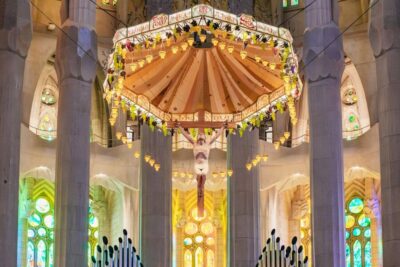
Sagrada Familia Skip-the-Line Entry Ticket & Tour
Read our review →
FC Barcelona Museum “Barça Immersive Tour” Ticket
Read our review →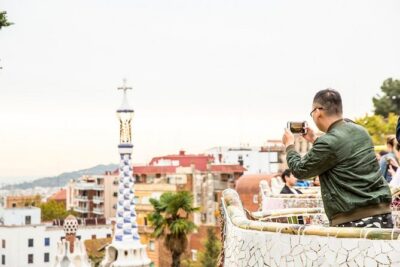
Park Guell Guided Tour with Skip the Line Ticket
Read our review →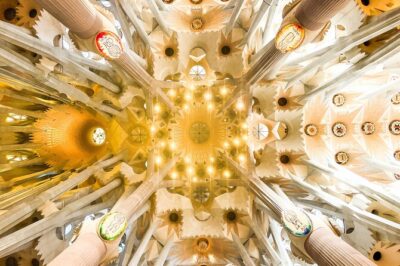
Park Guell and Sagrada Familia Tour with Skip the Line Tickets
Read our review →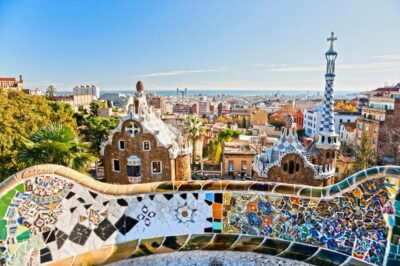
Park Güell and Gaudí House Museum Entry Ticket
Read our review →