
Reviewed · GAUDí TOURS IN BARCELONA
Barcelona: Art Nouveau & Gaudí Tour
Barcelona’s Eixample is a grand urban experiment wrapped in stone, tile, iron, and glass. This private walk follows the district created after the old city walls came down, when wealthy industrialists hired Catalonia’s boldest architects to turn new streets into a display of money, politics, and local pride.
I like the clear historical story, from the 1714 war and the cramped walled city to Ildefons Cerdà’s orderly expansion. I also like the chance to see several major Modernisme façades without spending the day queuing indoors. The named guide connected with this experience is Johannes, also called Hannes, whose lively explanations link architecture with politics, art, and odd local details.
The main consideration is that this is chiefly an exterior walking tour. Entry fees are not included, and museum visits or interior explorations are generally outside the plan, apart from a few possible exceptions. If you want to go inside every Gaudí masterpiece, you will need separate tickets and extra time.
Key points to know before you book
- Eixample tells the story of a city breaking free: The district grew after Barcelona’s medieval walls were demolished in 1854.
- The Golden Square is the architectural heart: Passeig de Gràcia and nearby streets bring together the work of Gaudí, Domènech i Montaner, and Puig i Cadafalch.
- The history goes beyond pretty façades: Expect discussion of the War of the Spanish Succession, Catalan identity, industrial wealth, and social unrest.
- The pace is relaxed: You have time for photographs, explanations, and a bathroom stop rather than racing from one address to the next.
- It is a private group for up to four: At $212 per group, the cost works out to $53 per person when four people share it.
- The walk runs in any weather: Bring sun protection in summer and a light jacket in winter, with sensible footwear for several hours on city streets.
Why Eixample makes such a good architecture walk
Barcelona’s old center can feel like a maze. Eixample is the opposite: wide streets, repeated blocks, angled corners, and long views down avenues such as Passeig de Gràcia. That contrast is the first useful lesson of the tour.
The name Eixample means expansion. The district was built in the open ground between the packed old city and the separate town of Gràcia. Before this expansion, Barcelona’s population had been pressed inside defensive walls for roughly two centuries. Once those walls came down, the city had room to rethink itself.
The planner Ildefons Cerdà imagined more than a pretty suburb. His plan aimed at healthier streets, better airflow, sunlight, and a more even distribution of homes and services. The broad blocks with cut-off corners were part of that plan. In practice, later developers packed the blocks more densely than Cerdà wanted, but the basic street pattern remains one of Barcelona’s defining features.
I find this context useful because it stops the buildings from becoming a parade of famous names. You see why the neighborhood exists, who paid for it, and why its architecture became a public display of status.
More Gaudí Tours in Barcelona
- Barcelona: Park Güell and Gaudí House Museum Entry Ticket
★ 4.5 · 6,326 reviews - Sagrada Familia & Gaudi Tour Private or Small Group with Tickets
★ 4.5 · 1,188 reviews - Complete Gaudi Tour: Casa Batllo, Park Guell & Sagrada Familia
★ 5.0 · 1,152 reviews
The Golden Square and Barcelona’s new money
The section often called the Golden Square, or Quadrat d’Or, gathered some of the city’s wealthiest families. Industrialists, aristocrats, and Catalans who had made fortunes in South America commissioned houses that looked nothing like the severe apartment buildings of earlier eras.
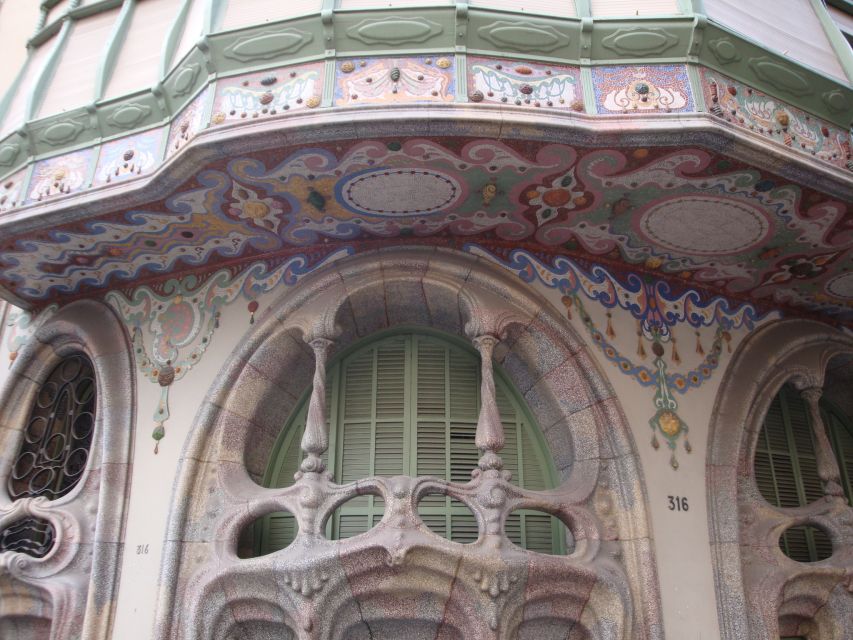
They spent freely on carved stone, colored ceramic, stained glass, wrought iron, and sculpted balconies. A private residence could become a family emblem. Its doorway, roofline, interior courtyard, and window frames all announced the owner’s taste and social position.
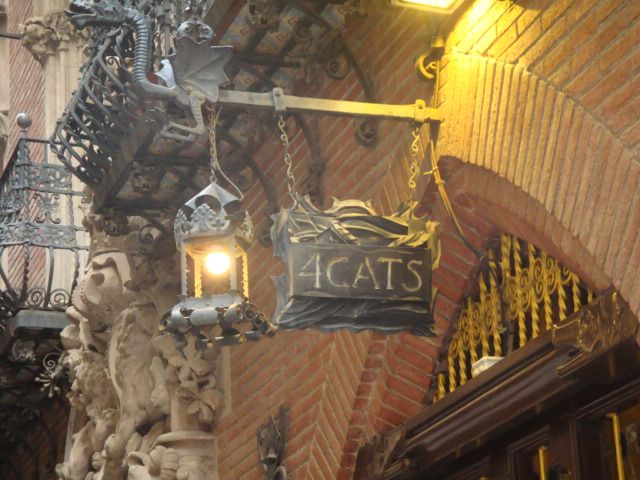
This is where the tour earns its keep. A guide can point out the details you would otherwise pass without noticing: a strange roof shape, a symbolic animal, a patch of ceramic mosaic, or a façade designed to look like something from nature. The buildings are not simply decorated. They are arguments in stone about modernity, Catalan culture, and wealth.
You will mainly admire them from the pavement. That is both a strength and a limit. From outside, you can compare many buildings in a short time. You will not, however, see the full effect of staircases, courtyards, private rooms, or painted ceilings unless you arrange separate interior visits.
Gaudí, Domènech i Montaner, and Puig i Cadafalch
The walk brings together the three names most associated with Catalan Modernisme.
Antoni Gaudí needs little introduction, but the useful part is seeing his work beside that of his rivals and contemporaries. His buildings can look playful, skeletal, animal-like, or almost geological. The tour’s references to trencadís, the mosaic style made from broken ceramic pieces, help explain how irregular fragments became a deliberate design language.
Domènech i Montaner approached Modernisme with a strong interest in Catalan art, craft, and public culture. His Palau de la Música Catalana is especially important in the story. The building treats music as an architectural idea, using stone, sculpture, ceramic, and glass to suggest Catalan folk songs. Even if you do not enter, the exterior gives the guide a way to explain how architecture could carry political and cultural meaning.
Puig i Cadafalch brought his own version of medieval references, ornament, and civic pride. Comparing his work with Gaudí’s is far more useful than treating every decorated building as simply Gaudí style. You begin to see different personalities competing along the same streets.
The tour also touches on Gaudí’s wider ambitions, including references to New York, his use of geometric planning, and his famous string model. The string experiment helped him work out how gravity could shape arches and structural forms. That is a small but valuable detail because it connects the wild-looking exterior to careful engineering.
The Block of Discord on Passeig de Gràcia
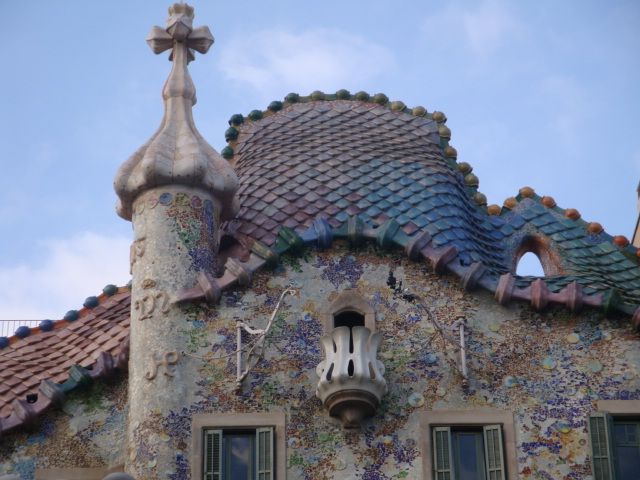
Passeig de Gràcia is the natural stage for the city’s architectural rivalry. One block is known as the Block of Discord because several striking buildings sit close together, each making a different claim for attention.
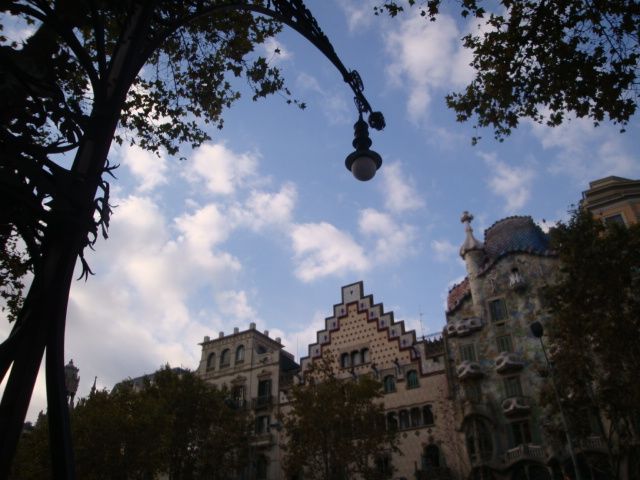
The precise stops can vary, but the tour’s themes include Gaudí’s Casa Batlló, the neighboring Casa Amatller by Puig i Cadafalch, and Domènech i Montaner’s Casa Lleó Morera. Their façades make a useful comparison exercise.
Casa Batlló is famous for its curved forms, colorful ceramic surface, bone-like columns, and roof that suggests a dragon’s back. You may hear the building described through the legend of Saint George and the dragon, a story that connects Gaudí’s design to Catalan identity.
Casa Amatller has a more sharply cut, almost northern European appearance, with a stepped roof and strong geometric detail. Casa Lleó Morera adds another voice, with elaborate ornament and sculptural work. Together, the buildings show that Modernisme was not one man’s invention. It was a broad cultural movement with competing architects and patrons.
The guide also brings in lighter material, including references to Salvador Dalí and the Chupa-Chups empire. These links help place Barcelona’s design culture in a longer story of commercial art, eccentric public figures, and memorable visual branding. They also keep the walk from becoming a dry architecture lecture.
A different sort of day out in Barcelona:
- Barcelona: Park Güell Admission Ticket
★ 4.4 · 76,534 reviews - Barcelona: Casa Batlló Entry with Self-Audioguide Tour
★ 4.7 · 25,359 reviews - Barcelona: 24 or 48-Hour Hop-On Hop-Off Bus Tour
★ 4.4 · 20,872 reviews - Barcelona: Park Guell Guided Tour with Skip The Line Entry
★ 4.7 · 17,563 reviews
La Pedrera and the most famous quarry in town
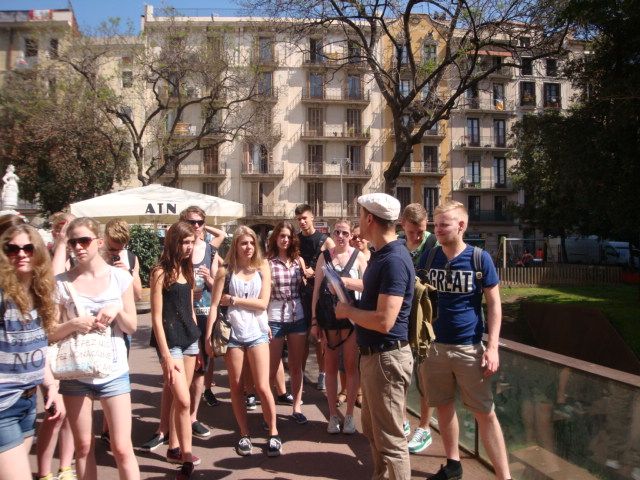
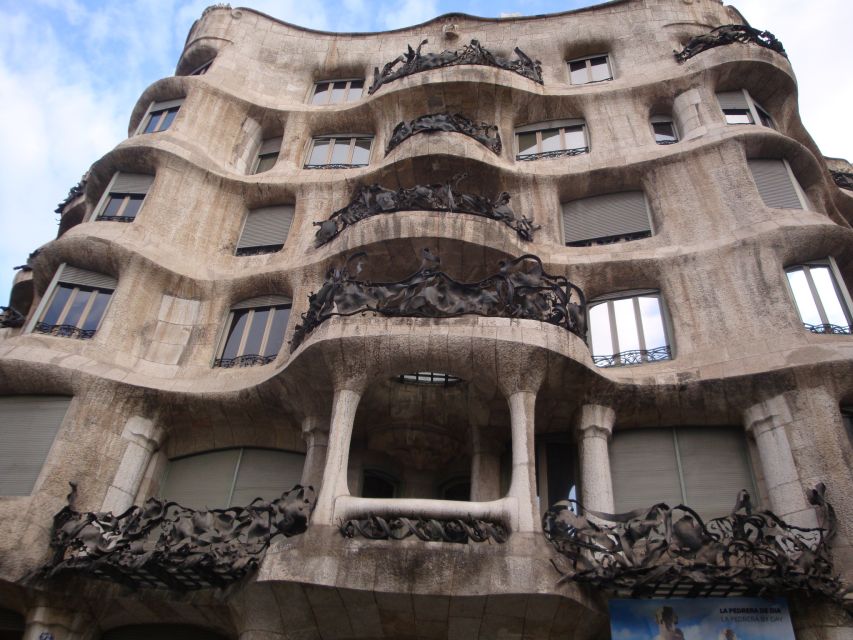
Gaudí’s Casa Milà, better known as La Pedrera, is one of the route’s major visual rewards. Its undulating stone façade looks less like a normal apartment house than a carved cliff face. That is why the nickname La Pedrera, meaning the quarry, fits so well.
From the street, notice how little the façade behaves like a flat wall. Balconies curl and twist, windows sit inside irregular openings, and the wrought iron seems to grow rather than be attached. The building’s roof, chimneys, and ventilation towers are equally famous, though a street-level walk cannot give you the full rooftop experience.
This is a good place to understand the trade-off between a walking tour and an admission ticket. The guide can explain the building’s design, its place in the Golden Square, and its connection to Gaudí’s structural ideas. To walk across the roof or see the apartments, you must pay separately.
The route may also raise a practical question: how can a house have so many rooms yet seem to leave no place for a piano? Such anecdotes are part of the appeal here. They make the architecture human and slightly funny, rather than treating it as untouchable art.
From Catalan Renaissance to social conflict
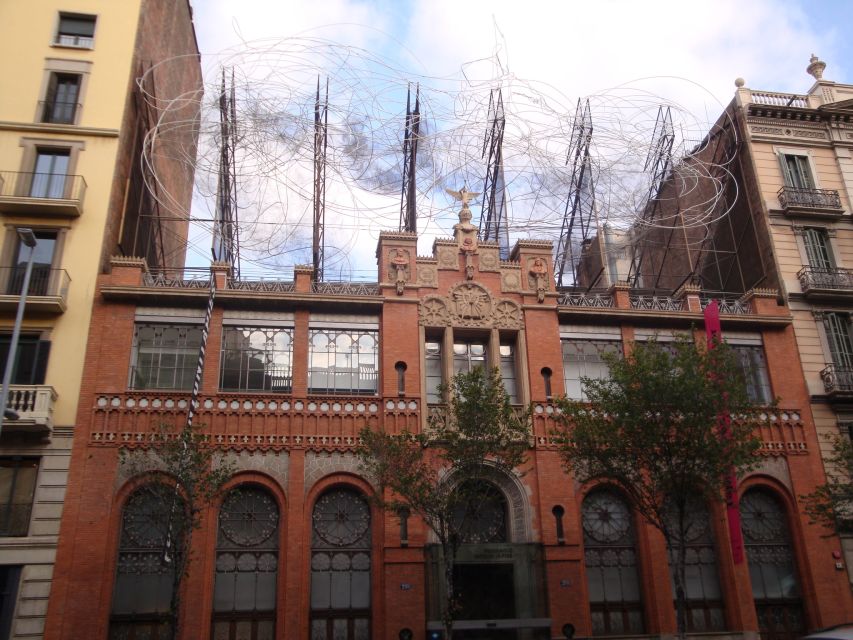
Modernisme did not appear in a vacuum. The tour sets the architecture against the Catalan Renaissance, a cultural revival that encouraged renewed interest in Catalan language, history, literature, and folk traditions.
At the same time, Barcelona was a city of sharp class divisions. New wealth sat close to crowded working districts. Industrial growth brought jobs and influence, but also difficult labor conditions, political tension, and unrest.
The program includes references to the Raval, the industrial barons, the bourgeoisie, and the Week of Tragedy. These subjects add needed balance. The elegant façades of Eixample were funded by wealth, and wealth was not distributed evenly. The city’s decorative optimism existed beside anger, poverty, and disputes over religion and political control.
The discussion of the 1714 defeat and its later effects is also important. Barcelona’s political relationship with Madrid shaped local identity for generations. A walk through beautiful houses becomes more meaningful when you understand that Catalan symbols were not just decorative choices. They could express memory, pride, and a desire for greater autonomy.
The route, timing, and walking effort
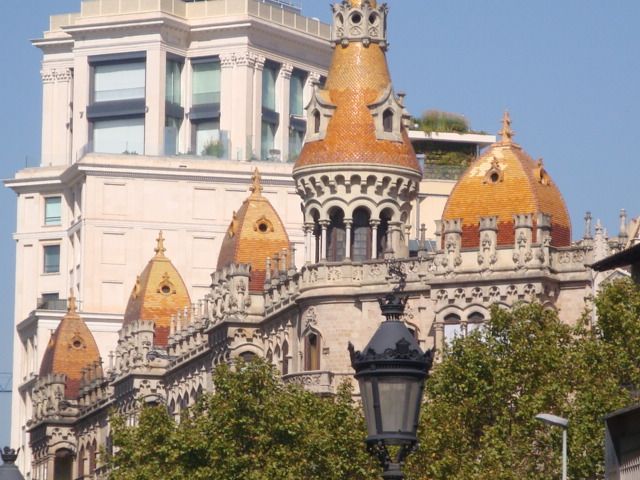
The experience lasts 3.5 hours, long enough to build a connected story rather than offer a quick photo stop. It is described as a relaxed walk, with time to stop for pictures and use a bathroom. You should still expect to be on city streets for most of the session, so comfortable shoes matter.
The meeting point is Plaza de Urquinaona, in front of Theater Borrás. From there, the route heads into the Eixample area and uses the city’s streets and squares as its classroom. A subway ticket is included, which can help connect sections of the walk if the guide uses the U-Bahn during the route.
Because it is a private group, the pace can suit your party better than a large scheduled walk. A family can pause for photographs. Architecture fans can spend longer on a façade. People who prefer a lighter history lesson can ask for the main points without being lost in a crowd.
The walk runs in sun, rain, wind, and strong showers. That is worth taking seriously. In summer, carry a hat, sunglasses, sunscreen, and water. In winter, a jacket or thin coat should be enough according to the tour information. There is no promise of ideal weather, so dress for the forecast rather than for the photographs you hope to take.
The route is wheelchair accessible, which is useful in a district with broad streets and planned blocks. You should still confirm any personal mobility needs when booking, since a city walk can involve changing surfaces and busy public spaces.
What $212 means for the value
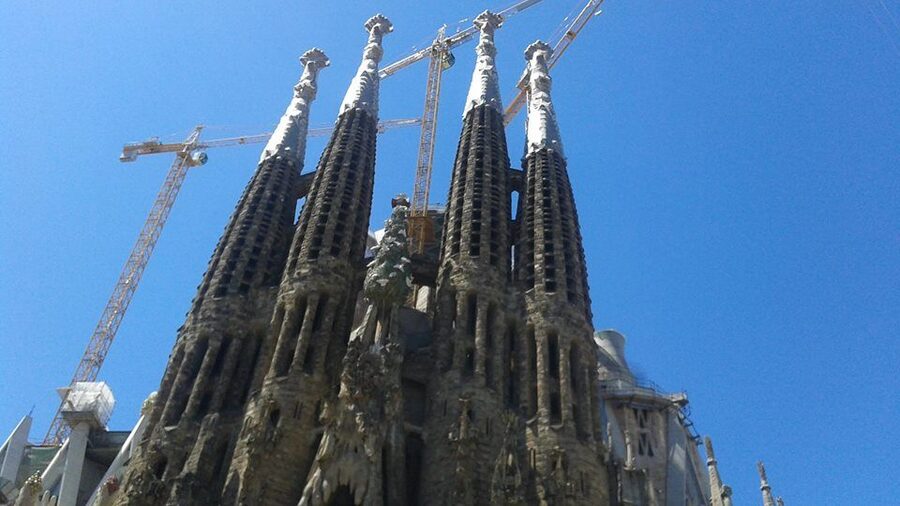
The price is $212 per group of up to four people. For four, that is $53 each. For two, it becomes $106 per person, so the value depends heavily on your group size.
For a private architecture walk, the price can make sense if you want a tailored pace and a guide who can connect buildings with politics, engineering, and local culture. It is less attractive if you are happy with a large group, a short introduction, or self-guided sightseeing using plaques and a map.
Entry fees are not included. That matters because the best-known buildings in the area may charge separately for interiors. Think of this tour as a guided framework for Eixample, not a ticket bundle.
The included subway ticket is a modest practical benefit. The bigger value is the guide’s interpretation. Johannes, also called Hannes, is associated with the tour, and his style is described through quick connections between local events, political figures, architectural styles, and memorable stories. The strongest praise centers on his ability to keep three hours moving without relying on notes or a dull lecture.
Who will get the most from this walk?
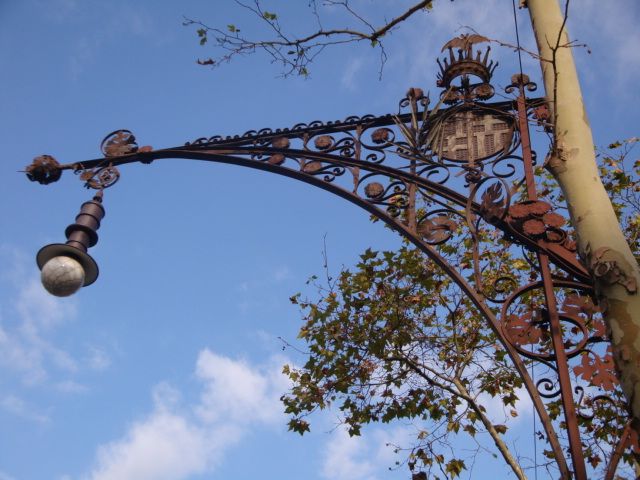
I would recommend it to first-time visitors who want Barcelona’s architecture placed in context. It also suits repeat visitors who have admired Casa Batlló or La Pedrera but want to understand how they fit into the city’s wider cultural struggle.
History-minded couples and small families should appreciate the private format. The tour also works well for people who prefer seeing many exteriors rather than spending most of a morning inside one building.
It may not suit you if your priority is interior access. It is also not the best choice if you want a food tour, a museum visit, or a short route with little walking. The experience is about streets, façades, stories, and connections.
The language options are German and English. If you want a German tour, confirm the language at booking. The experience is private, and cancellation is free up to 24 hours in advance. You can also reserve now and pay later, which helps if your Barcelona schedule is still shifting.
Should you book the Barcelona Art Nouveau and Gaudí Tour?
Book it if you want more than a list of famous buildings. The best reason to choose this walk is its combination of Modernisme architecture and political history. You will see the Golden Square, the Block of Discord, La Pedrera, and other important façades while learning why Eixample was built and what Barcelona hoped to become.
At $212, it offers fair value for four people who want a private guide. For one or two people, compare the cost with a group tour. Also set aside extra money and time if you want to enter major buildings.
Choose this experience for a thoughtful street-level introduction to Barcelona’s most decorative district. Skip it if your main goal is interior access or a very short sightseeing loop.
FAQ
Where does the tour meet?
The meeting point is Plaza de Urquinaona, in front of Theater Borrás.
How long does the tour last?
The tour lasts 3.5 hours.
What languages are available?
The tour is available in German and English.
Is this a private tour?
Yes. It is offered as a private group experience for up to four people.
What is included in the price?
The city tour and a U-Bahn, or subway, ticket are included.
Are entry fees included?
No. Entry fees are not included, and interior visits are generally not part of the tour.
Is the tour wheelchair accessible?
Yes, the experience is listed as wheelchair accessible.
Does the tour run in bad weather?
Yes. It runs in sun, rain, wind, and even strong showers.
Can I cancel or pay later?
You can cancel up to 24 hours in advance for a full refund. You can also reserve now and pay later.
Recently added around Barcelona
- Montserrat very early : Hiking, Abbey, very small group★ 5.0 · 127 reviews
- Guided Private Yacht Tour in Barcelona Spain★ 5.0 · 6 reviews
- Private Tour from Barcelona to Montserrat (with guide)★ 4.5 · 6 reviews
- Private Tour from Barcelona to Costa Brava (with guide)★ 5.0 · 5 reviews
- Andorra Tour★ 4.0 · 7 reviews
- Barcelona Gaudi Tour: Sagrada Familia, Casa Batllo & Casa Mila★ 5.0 · 4 reviews
- Street Art, Sculptures & Crime Stories Walking Tour – Barcelona★ 5.0 · 11 reviews
- Wine Tasting in Barcelona (Catalan Varieties) Small Groups★ 5.0 · 10 reviews
Gaudí Tours in Barcelona, compared.
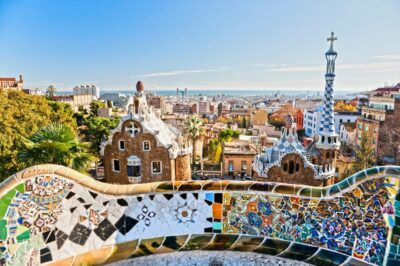
Park Güell and Gaudí House Museum Entry Ticket
Read our review →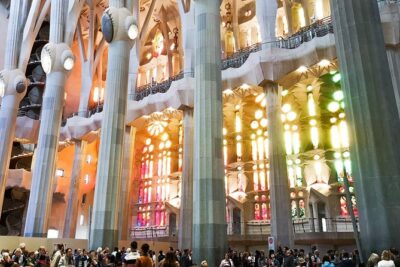
Sagrada Familia & Gaudi Tour Private or Small Group with Tickets
Read our review →
Complete Gaudi Tour: Casa Batllo, Park Guell & Sagrada Familia
Read our review →
Park Güell: Guided Tour with Optional Gaudí Experience Entry
Read our review →
Ramblas, Old Town, Gothic and Gaudi Architecture Walking Tour
Read our review →
Gaudi´s Casa Vicens Skip the Line Ticket with Audioguide
Read our review →
Discover Gaudí, Sagrada Familia, and Park Güell
Read our review →
Browse the lists this tour appears in